Our Great Awakening looks more and more like a snooze button lately, few people really get up and make progress. We are still too “shy” to even look truth in the face say it like it is. So I will try, because silence can be murder, genocide and even extinction now. And I don’t want my hands bloodied like any normie’s.
Here’s a bunch of premises I find to be factual:
1. We can’t trust any of their reports, but we can observe that a massive chunk of society has been injected with artificial mRNA technology. By the order of hundreds millions. Even if this graph is 100% exaggerated…
If your nightmare is not Covid, but covidiots with their insane genetic modification and transhumanist spree…
The Centers for Disease Control define an epidemic as “an increase, often sudden, in the number of cases of a disease above what is normally expected in that population in that area.”
If mRNA jabbing is infection to you, as it is to me, the current campaign is an extinction level event.
2. All COVID-19 vaccines are in the clinical trial stage, and, according to the ethical principles of clinical research, subjects of experimental medical treatments cannot be blood donors. For blatantly obvious reasons:
“Experimental Medication or Unlicensed (Experimental) Vaccine is usually associated with a research study, and the effect on the safety of transfused blood is unknown” – Mayo Clinic
3. Despite some reality-denialists, RNA modification does alter our genetics and can program more genetic modifications, there’s a whole field of science dealing with just that, as I’ve already reported.
And we can’t even guess what new effects on our genetics will be discovered in the future. This is just the earliest phase of the trials. We’re on uncharted territory, the data they have collected so far is jack-shit compared to the infinite range of possibilities ahead, basically few sci-fi scenarios are excluded now. They needed 10-20 years for a traditional vaccine, and they still kept coming out disastrous. This one is not just a new type of injection, it’s a whole new science in which they’ve just made first baby-steps. They’re toddlers crying and begging to compete in the grown-ups Olympics. No can do!
The spike protein that altered humans will produce non stop is already proven or suspected to cause several types of damage; most importantly, in my view:
“The spike protein produced by the new COVID-19 vaccines may also affect the host cells. We should monitor the long-term consequences of these vaccines carefully, especially when they are administered to otherwise healthy individuals. Further investigations on the effects of the SARS-CoV-2 spike protein on human cells and appropriate experimental animal models are warranted.”
3. The mRNA technology is transmissible in more than one way, and it will be made even more contagious, they’re already priming us for that. “Second hand vaccination” has been a thing for over 50 years, under different names. Now it’s set for a turbo-boost.
Either this or “vaccines don’t shed”. You can’t have both.
ALL OF THE 7 FACT-CHECKERS dealing with the mRNA jab shedding that I’ve read discuss VIRAL shedding only. IDGAF about that, we’re talking about shedding modified DNA / RNA and the spike protein, So, as per usual, they debunk jack shit, just their own straw men.
And I’m pretty sure that’s what’s just killed my father!
4. There are more methods available right now for contaminating people who refuse vaccination and they will use them if they need to, they are on a self-authorization spree.
5. The only significant difference between the Walking Dead and our lives right now is that our lives also have Star Trek elements, such as the Borg that assimilates everyone and subjugates them to its program. Un-funnily enough, one of the main methods for the Borg to take over other organisms was a DNA-altering injection which also served as a communication device with the hive-mind (cloud / Internet of All Things ). I’ve started to wonder if The Borg wasn’t predictive programming too. Regardless, the Borg is here and it’s covidiotic. There’s really a lot to learn from this parable.
I thought I’m starting to divagate here, but quite the opposite is true. Plazma hit me back later with more goodies, he is a very aware guy, and he’s gonna blow your mind even beyond this.
At least the Walking Dead were free and independent, subjugated only by their thirst for blood.
6. Denial of reality is what brought us here. No citation.
From the verifiable premises above, I infer:
Altered genetics are already so widespread, as of May 2021, that no conceivable scenario can stop them from 100% contamination. Quite the opposite.
Half a billion mutants are only encouraged to infect more. This is beyond any movie script we’ve ever seen.
What’s slowed the Great Resetters down so far is that the people who don’t test also don’t vaccinate. But they were prepared for this.
There is nowhere to hide, there is no “outside” anymore, there is no antidote and no alternative option. Not for plebs like myself anyway.
Blood and organ banks for transfusions are compromised too. No one has tried to prevent contamination in these banks and I’m afraid now it’s too late, another fundamental rule has been broken. Another genie that can’t be shoved back in the lamp. They haven’t even shown consideration to the thought of giving us an option here. Any transfusion or transplant is a Russian roulette now.
The afore-mentioned reality-denialism is also on steroids, not trending favorably to Mother Nature.
An mRNA jab, like any vaccine, but to a deeper extent, has no undo button. And there’s no “detox”. Once you did that, we don’t know who you are anymore, the old you has been fundamentally altered, for ever. Whatever follows may turn out better or worse, but the persona before the shot gets discontinued. This may not be detectable in many, may happen gradually over a long time span, or may be attributed to something else, any option is on the table. So many options that this technology turns lottery.
Even if we find a way to protect natural humans from mutagens, mutants will terminate us “manually” eventually, because we will be a reminder of everything they’ve lost.
I’d love to hear about any viable antidote, but I’m afraid the virus is in more heads than vaccinated, it’s ideologic.
We have already crossed the Rubicon, and only covidiots await on the other side
And it’s not like we haven’t been warned.
Now we can only make the best of what we have left. Let’s do just that!
2024 UPDATE: NPC’S ARE STARTING TO GET IT, BUT LIFE HAS NO UNDO OR SAVE OPTIONS
To be continued? Our work and existence, as media and people, is funded solely by our most generous supporters. But we’re not really covering our costs so far, and we’re in dire needs to upgrade our equipment, especially for video production. Help SILVIEW.media survive and grow, please donate here, anything helps. Thank you!
! Articles can always be subject of later editing as a way of perfecting them
I have a feeling most of the World will be surprised to find out it was enrolled without informed consent in a vaccine trial
Australian Health Minister Greg Hunt has spilled the beans recently on live TV, for millions to hear, but when the mind is blind, you need to wait until the clip reaches some Romanian researcher stranded in Morocco, or something. Luckily the Internet can make this possible and here we are, maybe more people “click” now.
Normally, I avoid posting this type of sound-bites here without a consistent context, but I think this one deserves an exceptions because it speaks volumes in seconds and doesn’t really require much more context than I’ve already added.
Worth mentioning that, according to the ethical principles of clinical research, trial subjects for experimental medical treatments cannot be blood or organ donors.
A plethora of sources have confirmed, since I’ve first published this post, that they did the human testing on the general public, without consent, deliberately misleading the general population, in absolute defiance of the main Nuremberg Code tenant: no medical procedures or experimentation without informed consent.
Here’s just the most recent, nailing the nazi Zwastika on the walls of every government and every Pharmafia institution that participated in this, as much as on the walls of every vaxxer that helped the genocide efforts in any way.
To be continued? Our work and existence, as media and people, is funded solely by our most generous supporters. But we’re not really covering our costs so far, and we’re in dire needs to upgrade our equipment, especially for video production. Help SILVIEW.media survive and grow, please donate here, anything helps. Thank you!
! Articles can always be subject of later editing as a way of perfecting them
Sometimes my memes are 3D. And you can own them. Or send them to someone. You can even eat some of them. CLICK HERE
Imagine that the brutal experiments at Auschwitz were better concealed and the prisoners were drugged and brainwashed to believe that’s the best world out there for them. Then find out that the management has never stopped winning, expanding and perfecting their business model, up to today’s Great Reset.
The Anti-Defamation League in the US is supportive of Prescott Bush and the Bush family. In a statement last year they said that “rumours about the alleged Nazi ‘ties’ of the late Prescott Bush … have circulated widely through the internet in recent years. These charges are untenable and politically motivated … Prescott Bush was neither a Nazi nor a Nazi sympathiser.” However, one of the country’s oldest Jewish publications, the Jewish Advocate, has aired the controversy in detail.
Founded in Binghamton, New York, in 1901, Ansco was a manufacturer of photographic products and film. Ansco was originally founded through the merger of E. Anthony & Company and Scovill Manufacturing. In 1928, Ansco merged with Agfa to form Agfa-Ansco. The new corporation was a division of General Aniline and Film (GAF) Corporation, which was controlled by the German chemical cartel IG Farben. After Germany declared war on the United States in 1941, the United States Government seized the assets of GAF, including Agfa-Ansco. In 1943, the company removed “Agfa” from its name, once again becoming Ansco. The United States Justice Department oversaw Ansco’s operation until 1965, when government-held stock in GAF was sold to the public. In 1977, GAF eliminated its line of consumer photography products, including those manufactured by Ansco at the Binghamton facility. GAF also sold the Ansco trademark to Haking Enterprises. GAF continued to manufacture film at the Binghamton plant for industrial and medical use until 1981, when it sold the plant to Anitec Image Corporation. Over the next two decades, the former Ansco facility was sold several times, and in 2000, it was demolished.
Prior to the late 1970s, dozens of asbestos-containing materials were utilized in the construction and maintenance of buildings at Ansco’s Binghamton facility, including fireproof insulation, pipe covering and insulating cement. Inhaling dust from the application and removal of asbestos-containing materials placed workers at risk for developing an asbestos-related disease, such as mesothelioma or lung cancer.
Fireproof insulation was applied to structural steel during the construction of buildings at Ansco. Fireproofing materials were manufactured as a dry mixture of asbestos, linen and cement, packaged in fifty-pound paper bags. The dry mixture was mixed with water and sprayed onto the structural steel using a hose. Pouring, mixing and spraying fireproof insulation created clouds of asbestos-containing dust. After the fireproofing material was applied, it was typical for tradesmen, such as electricians or pipefitters, to scrape the fireproofing material from structural steel in order to install pipes and conduits. When the fireproof insulation was disturbed, asbestos fibers and dust became airborne.
Workers applied asbestos-containing pipe covering to pipes at the Binghamton Ansco facility. Pipe covering was applied to numerous piping systems in order to maintain stable internal temperatures and to protect pipes from damage. When pipe covering was applied, asbestos fibers were emitted. Insulating cement was also applied to pumps, valves and other equipment. It was manufactured as a powder and mixed with water to prepare it for application. Mixing insulating cement caused asbestos-containing dust to become airborne.
What’s Bayer been up to lately? We find out from their website:
The Bio Revolution is redefining innovation in the life sciences. How this might be a game changer.
The life sciences have made great advances in the past years. Biology, life sciences and the megatrend of digitization are growing closer together, enabling new inventions that impact our daily lives in a scope that we speak of a Bio Revolution. This revolution is reinforced by rapid increases in computing power and the emergence of new capabilities in AI, automation, and data analytics. These trends are further accelerating the pace of innovation and the potential for higher R&D productivity in the life sciences.
All this has led to new ways to understand and explore biology. The range of life forms on earth is incredibly complex and diverse. However, the methods to analyze them can be remarkably similar. Technologies and methods are transcending disciplinary boundaries even faster.
The implications across the life sciences can be enormous:
For human health, for example, a deeper understanding of the relationship between genetics and disease has led to the emergence of precision medicine, which can potentially be more effective than the one-size-fits-all therapies of the past. In the future, new technologies could help the healthcare industry not only treat, but cure or even prevent diseases. New gene and cell therapies, for example, aim to cure genetic diseases, potentially enabling sustainable organ replacement or reversing autoimmune diseases.
The Bio Revolution has the potential to help address some of the most critical global challenges, from climate change to pandemics, chronic diseases, and worldwide food security. Experts estimate that a significant portion of the economic impact of biological applications will be in health care, agriculture, and consumer products.3 Already today, the Bio Revolution with its convergence of science and technology has created an explosion of research projects in science and business. Each year, the amount of Intellectual Property related to the Bio Revolution is increasing.4 This can be seen, for example, by the number of patents in CrispR or plant biotech. In short: the revolution is gaining momentum and holds a great promise for health and food alike.
Total number of CRISPR patent applications worldwide per year from 1984 to 2018.
Fueled by digitalization, growing connectivity, and falling costs, important advances in biotechnology are intertwined with more systemic shift in how bio-innovation is undertaken and who is involved. Microbiome technologies, advanced genomics, gene editing and synthetic biology are among key enabling technologies that have the potential to change the face of bio-innovation. This broader redefinition of bio-innovation creates new prospects to help address important nutrition, environmental and development needs.
World Economic Forum, Bio-Innovation Dialogue Initiative
As a leading life science company, Bayer is aligned with the long-term market trends in health and nutrition and offers innovative and sustainable solutions to tackle some of the key challenges for humanity. Bayer brings to the table an extensive knowledge of human and plant science, supported by its expertise in regulatory processes and an impressive global footprint to ultimately bring innovations from labs to market. https://www.youtube-nocookie.com/embed/EYE1gya7XiM?autoplay=1&start=0&rel=0
The Bio Revolution marks the beginning of a new era: Innovations enabled by the convergence of biology and technology have the potential to significantly improve our lives, our nutrition, and our health.
Did you know that Bayer is at the forefront of the wave of innovation coming from the Bio Revolution?
The Bio Revolution is expected to transform healthcare and agriculture over the next decades – but the revolution is already happening now. With its newly established cell and gene therapy platform in Pharmaceuticals and innovative gene-editing tools such as CRISPR, Bayer operates at the core of the Bio Revolution and has tremendous opportunities to improve health and nutrition.
In Pharma, Bayer’s new Cell & Gene Therapy (CGT) platform steers our strategy in the area and orchestrates our activities along the value chain providing an innovation ecosystem for the companies – including BlueRock Therapeutics and Asklepios BioPharmaceutical (AskBio), which are fully owned by Bayer but operate autonomously. These therapies hold the potential to significantly impact patients’ lives by moving from treating symptoms to potentially curative approaches.
Bayer’s development portfolio of cell and gene therapies already comprises eight advanced assets in different stages of clinical development. These are applicable in multiple therapeutic areas with high unmet need, such as neurodegenerative, neuromuscular and cardiovascular indications, with programs in Pompe disease, Parkinson’s disease, hemophilia A, and congestive heart failure. With over 15 preclinical assets in the cell and gene therapy field, the pipeline is expected to grow steadily year by year.
Yet Bayer is not only using biotechnology to advance health – the promise for agriculture is just as inspiring. In the Crop Science Division, for example, tools like CRISPR can make changes to plant DNA with more precision than ever before and make plants more weather- or disease-resistant, enabling farmers to grow more or better-quality products under changing conditions.
Advancing genetic solutions for a sustainable future (1)PreviousNext
Did you know that Leaps by Bayer invests into potentially disruptive technologies to tackle some of the largest, unsolved challenges in the life sciences?
With Leaps by Bayer – our impact investment approach utilizing venture capital – we are constantly scanning for additional potential breakthroughs that hold promise to either cure or treat people from diseases or help feed a growing population with less impact on the environment.
$1 Billion
Since 2015, Leaps by Bayer has invested over $1 billion in ventures that tackle fundamental breakthroughs and shift core paradigms in our industries.
Leaps by Bayer has an investment focus on potentially disruptive solutions in the fields of healthcare and agriculture. The Leaps investment approach is remarkable: It aims to invest into or build up new innovative companies. Bayer supports those companies by enabling the exchange of proprietary assets, which can include sharing own patents or providing access to the Bayer network’s technical capabilities and 150 years of expertise. The companies remain autonomous with respect to decision making, while Leaps facilitates and supports them in a so-called active incubation process. Experienced team members actively engage in the young companies’ development by providing resources and helping them to steer the initial strategic direction. Today, the investment portfolio includes more than 35 companies advancing potential breakthrough technologies.
Leaps is our way of thinking big.
Werner Baumann, CEO of Bayer AG
Many Leaps ventures have made significant progress towards unlocking the potential of new technology platforms with a promising and transformative potential. BlueRock Therapeutics, for example, started as a Leaps investment and is now an integral part of Bayer’s CGT platform and just received clearance to proceed with a phase I trial in Parkinson’s disease.
Other companies, like the biopharmaceutical player Triumvira, are specialized on next generation immuno-oncology treatments. Triumvira focuses on novel T-cell therapies that aim to be safer and more efficacious than current cell therapy cancer treatments. Treating, curing and preventing cancer is one of the focus areas of Leaps by Bayer, since this group of diseases still represents one of today’s biggest health challenges with limited curative or preventative therapies available.
We face a huge disease burden, and the way we produce food isn’t sustainable for the planet. I believe the Bio Revolution can help us overcome these issues.
Jürgen Eckhardt, Head of Leaps by Bayer
Leaps is also investing in the development of sustainable biotechnological solutions in the field of agriculture. One of the ventures in this field is Joyn Bio, a company that aims to significantly reduce the environmental impact of synthetic nitrogen fertilizers through a technology that fixes nitrogen into the soil. Nitrogen is one of the most important nutrients essential for every plant to grow, however, its use and production as a fertilizer is estimated to contribute 3-5% to all global greenhouse gas emissions. Joyn Bio is working on an engineered microbe that enables cereal crops like corn, wheat, and rice to convert nitrogen from the air into a form they can use to grow. This technology may have the potential to help farmers use nitrogen in new ways, and as a result, reduce agriculture’s environmental footprint.
The Leaps by Bayer investment portfolio includes more than 35 companies.
At least that’s what Bayer says. All I know is that they’re still running the show.
To be continued? Our work and existence, as media and people, is funded solely by our most generous supporters. But we’re not really covering our costs so far, and we’re in dire needs to upgrade our equipment, especially for video production. Help SILVIEW.media survive and grow, please donate here, anything helps. Thank you!
! Articles can always be subject of later editing as a way of perfecting them
We gave up on our profit shares from masks, if you want to help us, please use the donation button! We think frequent mask use, even short term use can be bad for you, but if you have no way around them, at least send a message of consciousness. Get it here!
The missing PDF on the website has been found and it supports the website statement!
Most of our habitual readers have already seen this post’s cover image and, probably, the web page it depicts. It’s been making rounds on the Internet for quite a few days now. Some of you have been thinking just like myself until recently: it’s a case of Bidementia – a Joe Biden kind of slip.
I suspect much less people have seen the contents of that PDF document linked there, but deleted at the time they found the page. “Page reviewed 10 March 2021”
As you can see, the word “poison” in that headline was no accident, it’s being repeated twice in the PDF document.
The document comes with a brochure that’s made for a large audience, so no surprise it doesn’t mention poisons. But the authorization mentions the Australian Public Health Act of 2016, which contains this:
Consider it’s not unusual for governments around the world to authorize themselves to commit the most incredible atrocities. Many of them are exposed on this website and its extensions.
To be continued? Our work and existence, as media and people, is funded solely by our most generous supporters. But we’re not really covering our costs so far, and we’re in dire needs to upgrade our equipment, especially for video production. Help SILVIEW.media survive and grow, please donate here, anything helps. Thank you!
! Articles can always be subject of later editing as a way of perfecting them
Initially I didn’t pay much attention to these reports because first ones were pretty vague and seemed unsubstantiated. They kind of were. But then they started to become more and more detailed, coherent and very specific. My own research on #biohacking started to intersect more often, to the point where today they almost coincide.
Video by Tim Truth
To better understand where I’m coming from, your journey needs to start here:
SOUTH SAN FRANCISCO, Calif., July 12, 2016 /PRNewswire/ — Profusa, Inc., a leading developer of tissue-integrated biosensors, today announced that it was awarded a $7.5 million dollar grant from the Defense Advanced Research Projects Agency (DARPA) and the U.S. Army Research Office (ARO) to develop implantable biosensors for the simultaneous, continuous monitoring of multiple body chemistries. Aimed at providing real-time monitoring of a combat soldier’s health status to improve mission efficiency, the award supports further development of the company’s biosensor technology for real-time detection of the body’s chemical constituents. DARPA and ARO are agencies of the U.S. Department of Defense focused on the developing emerging technologies for use by the military.
“Profusa’s vision is to replace a point-in-time chemistry panel that measures multiple biomarkers, such as oxygen, glucose, lactate, urea, and ions with a biosensor that provides a continuous stream of wireless data,” said Ben Hwang, Ph.D., Profusa’s chairman and chief executive officer. “DARPA’s mission is to make pivotal investments in breakthrough technologies for national security. We are gratified to be awarded this grant to accelerate the development of our novel tissue-integrating sensors for application to soldier health and peak performance.”
Tissue-integrating Biosensors for Multiple Biomarkers Supported by DARPA, ARO and the National Institutes of Health, Profusa’s technology and unique bioengineering approach overcomes the largest hurdle in long-term use of biosensors in the body: the foreign body response. Placed just under the skin with a specially designed injector, each tiny biosensor is a flexible fiber, 2 mm-to-5 mm long and 200-500 microns in diameter. Rather than being isolated from the body, Profusa’s biosensors work fully integrated within the body’s tissue — without any metal device or electronics — overcoming the effects of the foreign body response for more than one year.
Each biosensor is comprised of a bioengineered “smart hydrogel” (similar to contact lens material) forming a porous, tissue-integrating scaffold that induces capillary and cellular in-growth from surrounding tissue. A unique property of the smart gel is its ability to luminesce upon exposure to light in proportion to the concentration of a chemical such as oxygen, glucose or other biomarker.
“Long-lasting, implantable biosensors that provide continuous measurement of multiple body chemistries will enable monitoring of a soldier’s metabolic and dehydration status, ion panels, blood gases, and other key physiological biomarkers,” said Natalie Wisniewski, Ph.D., the principal investigator leading the grant work and Profusa’s co-founder and chief technology officer. “Our ongoing program with DARPA builds on Profusa’s tissue-integrating sensor that overcomes the foreign body response and serves as a technology platform for the detection of multiple analytes.”
Lumee Oxygen Sensing System™ Profusa’s first medical product, the Lumee Oxygen Sensing System, is a single-biomarker sensor designed to measure oxygen. In contrast to blood oxygen reported by other devices, the system incorporates the only technology that can monitor local tissue oxygen. When applied to the treatment of peripheral artery disease (PAD), it prompts the clinician to provide therapeutic action to ensure tissue oxygen levels persist throughout the treatment and healing process.
Pending CE Mark, the Lumee system is slated to be available in Europe in 2016 for use by vascular surgeons, wound-healing specialists and other licensed healthcare providers who may benefit in monitoring local tissue oxygen. PAD affects 202 million people worldwide, 27 million of whom live in Europe and North America, with an annual economic burden of more than $74 billion in the U.S. alone.
Profusa, Inc. Profusa, Inc., based in South San Francisco, Calif., is leading the development of novel tissue-integrated sensors that empowers an individual with the ability to monitor their unique body chemistry in unprecedented ways to transform the management of personal health and disease. Overcoming the body’s response to foreign material for long-term use, its technology promises to be the foundational platform of real-time biochemical detection through the development of tiny bioengineered sensors that become one with the body to detect and continuously transmit actionable, medical-grade data for personal and medical use. See http://www.profusa.com for more information.
The research is based upon work supported by DARPA, the Biological Technologies Office (BTO), and ARO grant [W911NF-16-1-0341]. The views and conclusions contained herein are those of the authors and should not be interpreted as necessarily representing the official policies or endorsements, either expressed or implied, of DARPA, BTO, the ARO, or the U.S. Government. The U.S. Government is authorized to reproduce and distribute reprints for Governmental purposes notwithstanding any copyright annotation thereon.
So I can’t say with 100% certainty that what DARPA did and what people found are one and the same thing, but this hits close enough, if this is possible, that is possible, and altogether give 200% x reasons to freak out.
I will keep adding resources and details here, but my point is made.
To be continued? Our work and existence, as media and people, is funded solely by our most generous supporters. But we’re not really covering our costs so far, and we’re in dire needs to upgrade our equipment, especially for video production. Help SILVIEW.media survive and grow, please donate here, anything helps. Thank you!
! Articles can always be subject of later editing as a way of perfecting them
Sometimes my memes are 3D. And you can own them. Or send them to someone. You can even eat some of them. CLICK HERE
To be continued? Our work and existence, as media and people, is funded solely by our most generous supporters. But we’re not really covering our costs so far, and we’re in dire needs to upgrade our equipment, especially for video production. Help SILVIEW.media survive and grow, please donate here, anything helps. Thank you!
! Articles can always be subject of later editing as a way of perfecting them
If you enabled this Covidiocracy in any way, I’m sorry for you! Even if you have a long life ahead of you, you’ll never experience peace of soul and happiness again. And in no way you’re welcome to rule over or dictate to any living soul.
Rumours of a link between the US first family and the Nazi war machine have circulated for decades. Now the Guardian can reveal how repercussions of events that culminated in action under the Trading with the Enemy Act are still being felt by today’s president
George Bush’s grandfather, the late US senator Prescott Bush, was a director and shareholder of companies that profited from their involvement with the financial backers of Nazi Germany.
The Guardian has obtained confirmation from newly discovered files in the US National Archives that a firm of which Prescott Bush was a director was involved with the financial architects of Nazism.
His business dealings, which continued until his company’s assets were seized in 1942 under the Trading with the Enemy Act, has led more than 60 years later to a civil action for damages being brought in Germany against the Bush family by two former slave labourers at Auschwitz and to a hum of pre-election controversy.
The evidence has also prompted one former US Nazi war crimes prosecutor to argue that the late senator’s action should have been grounds for prosecution for giving aid and comfort to the enemy.
The debate over Prescott Bush’s behaviour has been bubbling under the surface for some time. There has been a steady internet chatter about the “Bush/Nazi” connection, much of it inaccurate and unfair. But the new documents, many of which were only declassified last year, show that even after America had entered the war and when there was already significant information about the Nazis’ plans and policies, he worked for and profited from companies closely involved with the very German businesses that financed Hitler’s rise to power. It has also been suggested that the money he made from these dealings helped to establish the Bush family fortune and set up its political dynasty.
Remarkably, little of Bush’s dealings with Germany has received public scrutiny, partly because of the secret status of the documentation involving him. But now the multibillion dollar legal action for damages by two Holocaust survivors against the Bush family, and the imminent publication of three books on the subject are threatening to make Prescott Bush’s business history an uncomfortable issue for his grandson, George W, as he seeks re-election.
While there is no suggestion that Prescott Bush was sympathetic to the Nazi cause, the documents reveal that the firm he worked for, Brown Brothers Harriman (BBH), acted as a US base for the German industrialist, Fritz Thyssen, who helped finance Hitler in the 1930s before falling out with him at the end of the decade. The Guardian has seen evidence that shows Bush was the director of the New York-based Union Banking Corporation (UBC) that represented Thyssen’s US interests and he continued to work for the bank after America entered the war.
Tantalising
Bush was also on the board of at least one of the companies that formed part of a multinational network of front companies to allow Thyssen to move assets around the world.
Thyssen owned the largest steel and coal company in Germany and grew rich from Hitler’s efforts to re-arm between the two world wars. One of the pillars in Thyssen’s international corporate web, UBC, worked exclusively for, and was owned by, a Thyssen-controlled bank in the Netherlands. More tantalising are Bush’s links to the Consolidated Silesian Steel Company (CSSC), based in mineral rich Silesia on the German-Polish border. During the war, the company made use of Nazi slave labour from the concentration camps, including Auschwitz. The ownership of CSSC changed hands several times in the 1930s, but documents from the US National Archive declassified last year link Bush to CSSC, although it is not clear if he and UBC were still involved in the company when Thyssen’s American assets were seized in 1942.
Three sets of archives spell out Prescott Bush’s involvement. All three are readily available, thanks to the efficient US archive system and a helpful and dedicated staff at both the Library of Congress in Washington and the National Archives at the University of Maryland.
The first set of files, the Harriman papers in the Library of Congress, show that Prescott Bush was a director and shareholder of a number of companies involved with Thyssen.
The second set of papers, which are in the National Archives, are contained in vesting order number 248 which records the seizure of the company assets. What these files show is that on October 20 1942 the alien property custodian seized the assets of the UBC, of which Prescott Bush was a director. Having gone through the books of the bank, further seizures were made against two affiliates, the Holland-American Trading Corporation and the Seamless Steel Equipment Corporation. By November, the Silesian-American Company, another of Prescott Bush’s ventures, had also been seized.
The third set of documents, also at the National Archives, are contained in the files on IG Farben, who was prosecuted for war crimes.
A report issued by the Office of Alien Property Custodian in 1942 stated of the companies that “since 1939, these (steel and mining) properties have been in possession of and have been operated by the German government and have undoubtedly been of considerable assistance to that country’s war effort”.
Prescott Bush, a 6ft 4in charmer with a rich singing voice, was the founder of the Bush political dynasty and was once considered a potential presidential candidate himself. Like his son, George, and grandson, George W, he went to Yale where he was, again like his descendants, a member of the secretive and influential Skull and Bones student society. He was an artillery captain in the first world war and married Dorothy Walker, the daughter of George Herbert Walker, in 1921.
In 1924, his father-in-law, a well-known St Louis investment banker, helped set him up in business in New York with Averill Harriman, the wealthy son of railroad magnate E H Harriman in New York, who had gone into banking.
One of the first jobs Walker gave Bush was to manage UBC. Bush was a founding member of the bank and the incorporation documents, which list him as one of seven directors, show he owned one share in UBC worth $125.
The bank was set up by Harriman and Bush’s father-in-law to provide a US bank for the Thyssens, Germany’s most powerful industrial family.
August Thyssen, the founder of the dynasty had been a major contributor to Germany’s first world war effort and in the 1920s, he and his sons Fritz and Heinrich established a network of overseas banks and companies so their assets and money could be whisked offshore if threatened again.
By the time Fritz Thyssen inherited the business empire in 1926, Germany’s economic recovery was faltering. After hearing Adolf Hitler speak, Thyssen became mesmerised by the young firebrand. He joined the Nazi party in December 1931 and admits backing Hitler in his autobiography, I Paid Hitler, when the National Socialists were still a radical fringe party. He stepped in several times to bail out the struggling party: in 1928 Thyssen had bought the Barlow Palace on Briennerstrasse, in Munich, which Hitler converted into the Brown House, the headquarters of the Nazi party. The money came from another Thyssen overseas institution, the Bank voor Handel en Scheepvarrt in Rotterdam.
By the late 1930s, Brown Brothers Harriman, which claimed to be the world’s largest private investment bank, and UBC had bought and shipped millions of dollars of gold, fuel, steel, coal and US treasury bonds to Germany, both feeding and financing Hitler’s build-up to war.
Between 1931 and 1933 UBC bought more than $8m worth of gold, of which $3m was shipped abroad. According to documents seen by the Guardian, after UBC was set up it transferred $2m to BBH accounts and between 1924 and 1940 the assets of UBC hovered around $3m, dropping to $1m only on a few occasions.
In 1941, Thyssen fled Germany after falling out with Hitler but he was captured in France and detained for the remainder of the war.
There was nothing illegal in doing business with the Thyssens throughout the 1930s and many of America’s best-known business names invested heavily in the German economic recovery. However, everything changed after Germany invaded Poland in 1939. Even then it could be argued that BBH was within its rights continuing business relations with the Thyssens until the end of 1941 as the US was still technically neutral until the attack on Pearl Harbor. The trouble started on July 30 1942 when the New York Herald-Tribune ran an article entitled “Hitler’s Angel Has $3m in US Bank”. UBC’s huge gold purchases had raised suspicions that the bank was in fact a “secret nest egg” hidden in New York for Thyssen and other Nazi bigwigs. The Alien Property Commission (APC) launched an investigation.
There is no dispute over the fact that the US government seized a string of assets controlled by BBH – including UBC and SAC – in the autumn of 1942 under the Trading with the Enemy act. What is in dispute is if Harriman, Walker and Bush did more than own these companies on paper.
Erwin May, a treasury attache and officer for the department of investigation in the APC, was assigned to look into UBC’s business. The first fact to emerge was that Roland Harriman, Prescott Bush and the other directors didn’t actually own their shares in UBC but merely held them on behalf of Bank voor Handel. Strangely, no one seemed to know who owned the Rotterdam-based bank, including UBC’s president.
May wrote in his report of August 16 1941: “Union Banking Corporation, incorporated August 4 1924, is wholly owned by the Bank voor Handel en Scheepvaart N.V of Rotterdam, the Netherlands. My investigation has produced no evidence as to the ownership of the Dutch bank. Mr Cornelis [sic] Lievense, president of UBC, claims no knowledge as to the ownership of the Bank voor Handel but believes it possible that Baron Heinrich Thyssen, brother of Fritz Thyssen, may own a substantial interest.”
May cleared the bank of holding a golden nest egg for the Nazi leaders but went on to describe a network of companies spreading out from UBC across Europe, America and Canada, and how money from voor Handel travelled to these companies through UBC.
By September May had traced the origins of the non-American board members and found that Dutchman HJ Kouwenhoven – who met with Harriman in 1924 to set up UBC – had several other jobs: in addition to being the managing director of voor Handel he was also the director of the August Thyssen bank in Berlin and a director of Fritz Thyssen’s Union Steel Works, the holding company that controlled Thyssen’s steel and coal mine empire in Germany.
Within a few weeks, Homer Jones, the chief of the APC investigation and research division sent a memo to the executive committee of APC recommending the US government vest UBC and its assets. Jones named the directors of the bank in the memo, including Prescott Bush’s name, and wrote: “Said stock is held by the above named individuals, however, solely as nominees for the Bank voor Handel, Rotterdam, Holland, which is owned by one or more of the Thyssen family, nationals of Germany and Hungary. The 4,000 shares hereinbefore set out are therefore beneficially owned and help for the interests of enemy nationals, and are vestible by the APC,” according to the memo from the National Archives seen by the Guardian.
Red-handed
Jones recommended that the assets be liquidated for the benefit of the government, but instead UBC was maintained intact and eventually returned to the American shareholders after the war. Some claim that Bush sold his share in UBC after the war for $1.5m – a huge amount of money at the time – but there is no documentary evidence to support this claim. No further action was ever taken nor was the investigation continued, despite the fact UBC was caught red-handed operating a American shell company for the Thyssen family eight months after America had entered the war and that this was the bank that had partly financed Hitler’s rise to power.
The most tantalising part of the story remains shrouded in mystery: the connection, if any, between Prescott Bush, Thyssen, Consolidated Silesian Steel Company (CSSC) and Auschwitz.
Thyssen’s partner in United Steel Works, which had coal mines and steel plants across the region, was Friedrich Flick, another steel magnate who also owned part of IG Farben, the powerful German chemical company.
Flick’s plants in Poland made heavy use of slave labour from the concentration camps in Poland. According to a New York Times article published in March 18 1934 Flick owned two-thirds of CSSC while “American interests” held the rest.
The US National Archive documents show that BBH’s involvement with CSSC was more than simply holding the shares in the mid-1930s. Bush’s friend and fellow “bonesman” Knight Woolley, another partner at BBH, wrote to Averill Harriman in January 1933 warning of problems with CSSC after the Poles started their drive to nationalise the plant. “The Consolidated Silesian Steel Company situation has become increasingly complicated, and I have accordingly brought in Sullivan and Cromwell, in order to be sure that our interests are protected,” wrote Knight. “After studying the situation Foster Dulles is insisting that their man in Berlin get into the picture and obtain the information which the directors here should have. You will recall that Foster is a director and he is particularly anxious to be certain that there is no liability attaching to the American directors.”
But the ownership of the CSSC between 1939 when the Germans invaded Poland and 1942 when the US government vested UBC and SAC is not clear.
“SAC held coal mines and definitely owned CSSC between 1934 and 1935, but when SAC was vested there was no trace of CSSC. All concrete evidence of its ownership disappears after 1935 and there are only a few traces in 1938 and 1939,” says Eva Schweitzer, the journalist and author whose book, America and the Holocaust, is published next month.
Silesia was quickly made part of the German Reich after the invasion, but while Polish factories were seized by the Nazis, those belonging to the still neutral Americans (and some other nationals) were treated more carefully as Hitler was still hoping to persuade the US to at least sit out the war as a neutral country. Schweitzer says American interests were dealt with on a case-by-case basis. The Nazis bought some out, but not others.
The two Holocaust survivors suing the US government and the Bush family for a total of $40bn in compensation claim both materially benefited from Auschwitz slave labour during the second world war.
Kurt Julius Goldstein, 87, and Peter Gingold, 85, began a class action in America in 2001, but the case was thrown out by Judge Rosemary Collier on the grounds that the government cannot be held liable under the principle of “state sovereignty”.
Jan Lissmann, one of the lawyers for the survivors, said: “President Bush withdrew President Bill Clinton’s signature from the treaty [that founded the court] not only to protect Americans, but also to protect himself and his family.”
Lissmann argues that genocide-related cases are covered by international law, which does hold governments accountable for their actions. He claims the ruling was invalid as no hearing took place.
In their claims, Mr Goldstein and Mr Gingold, honorary chairman of the League of Anti-fascists, suggest the Americans were aware of what was happening at Auschwitz and should have bombed the camp.
The lawyers also filed a motion in The Hague asking for an opinion on whether state sovereignty is a valid reason for refusing to hear their case. A ruling is expected within a month.
The petition to The Hague states: “From April 1944 on, the American Air Force could have destroyed the camp with air raids, as well as the railway bridges and railway lines from Hungary to Auschwitz. The murder of about 400,000 Hungarian Holocaust victims could have been prevented.”
The case is built around a January 22 1944 executive order signed by President Franklin Roosevelt calling on the government to take all measures to rescue the European Jews. The lawyers claim the order was ignored because of pressure brought by a group of big American companies, including BBH, where Prescott Bush was a director.
Lissmann said: “If we have a positive ruling from the court it will cause [president] Bush huge problems and make him personally liable to pay compensation.”
The US government and the Bush family deny all the claims against them.
In addition to Eva Schweitzer’s book, two other books are about to be published that raise the subject of Prescott Bush’s business history. The author of the second book, to be published next year, John Loftus, is a former US attorney who prosecuted Nazi war criminals in the 70s. Now living in St Petersburg, Florida and earning his living as a security commentator for Fox News and ABC radio, Loftus is working on a novel which uses some of the material he has uncovered on Bush. Loftus stressed that what Prescott Bush was involved in was just what many other American and British businessmen were doing at the time.
“You can’t blame Bush for what his grandfather did any more than you can blame Jack Kennedy for what his father did – bought Nazi stocks – but what is important is the cover-up, how it could have gone on so successfully for half a century, and does that have implications for us today?” he said.
“This was the mechanism by which Hitler was funded to come to power, this was the mechanism by which the Third Reich’s defence industry was re-armed, this was the mechanism by which Nazi profits were repatriated back to the American owners, this was the mechanism by which investigations into the financial laundering of the Third Reich were blunted,” said Loftus, who is vice-chairman of the Holocaust Museum in St Petersburg.
“The Union Banking Corporation was a holding company for the Nazis, for Fritz Thyssen,” said Loftus. “At various times, the Bush family has tried to spin it, saying they were owned by a Dutch bank and it wasn’t until the Nazis took over Holland that they realised that now the Nazis controlled the apparent company and that is why the Bush supporters claim when the war was over they got their money back. Both the American treasury investigations and the intelligence investigations in Europe completely bely that, it’s absolute horseshit. They always knew who the ultimate beneficiaries were.”
“There is no one left alive who could be prosecuted but they did get away with it,” said Loftus. “As a former federal prosecutor, I would make a case for Prescott Bush, his father-in-law (George Walker) and Averill Harriman [to be prosecuted] for giving aid and comfort to the enemy. They remained on the boards of these companies knowing that they were of financial benefit to the nation of Germany.”
Loftus said Prescott Bush must have been aware of what was happening in Germany at the time. “My take on him was that he was a not terribly successful in-law who did what Herbert Walker told him to. Walker and Harriman were the two evil geniuses, they didn’t care about the Nazis any more than they cared about their investments with the Bolsheviks.”
What is also at issue is how much money Bush made from his involvement. His supporters suggest that he had one token share. Loftus disputes this, citing sources in “the banking and intelligence communities” and suggesting that the Bush family, through George Herbert Walker and Prescott, got $1.5m out of the involvement. There is, however, no paper trail to this sum.
The third person going into print on the subject is John Buchanan, 54, a Miami-based magazine journalist who started examining the files while working on a screenplay. Last year, Buchanan published his findings in the venerable but small-circulation New Hampshire Gazette under the headline “Documents in National Archives Prove George Bush’s Grandfather Traded With the Nazis – Even After Pearl Harbor”. He expands on this in his book to be published next month – Fixing America: Breaking the Stranglehold of Corporate Rule, Big Media and the Religious Right.
In the article, Buchanan, who has worked mainly in the trade and music press with a spell as a muckraking reporter in Miami, claimed that “the essential facts have appeared on the internet and in relatively obscure books but were dismissed by the media and Bush family as undocumented diatribes”.
Buchanan suffers from hypermania, a form of manic depression, and when he found himself rebuffed in his initial efforts to interest the media, he responded with a series of threats against the journalists and media outlets that had spurned him. The threats, contained in e-mails, suggested that he would expose the journalists as “traitors to the truth”.
Unsurprisingly, he soon had difficulty getting his calls returned. Most seriously, he faced aggravated stalking charges in Miami, in connection with a man with whom he had fallen out over the best way to publicise his findings. The charges were dropped last month.
Biography
Buchanan said he regretted his behaviour had damaged his credibility but his main aim was to secure publicity for the story. Both Loftus and Schweitzer say Buchanan has come up with previously undisclosed documentation.
The Bush family have largely responded with no comment to any reference to Prescott Bush. Brown Brothers Harriman also declined to comment.
The Bush family recently approved a flattering biography of Prescott Bush entitled Duty, Honour, Country by Mickey Herskowitz. The publishers, Rutledge Hill Press, promised the book would “deal honestly with Prescott Bush’s alleged business relationships with Nazi industrialists and other accusations”.
In fact, the allegations are dealt with in less than two pages. The book refers to the Herald-Tribune story by saying that “a person of less established ethics would have panicked … Bush and his partners at Brown Brothers Harriman informed the government regulators that the account, opened in the late 1930s, was ‘an unpaid courtesy for a client’ … Prescott Bush acted quickly and openly on behalf of the firm, served well by a reputation that had never been compromised. He made available all records and all documents. Viewed six decades later in the era of serial corporate scandals and shattered careers, he received what can be viewed as the ultimate clean bill.”
The Prescott Bush story has been condemned by both conservatives and some liberals as having nothing to do with the current president. It has also been suggested that Prescott Bush had little to do with Averill Harriman and that the two men opposed each other politically.
However, documents from the Harriman papers include a flattering wartime profile of Harriman in the New York Journal American and next to it in the files is a letter to the financial editor of that paper from Prescott Bush congratulating the paper for running the profile. He added that Harriman’s “performance and his whole attitude has been a source of inspiration and pride to his partners and his friends”.
The Anti-Defamation League in the US is supportive of Prescott Bush and the Bush family. In a statement last year they said that “rumours about the alleged Nazi ‘ties’ of the late Prescott Bush … have circulated widely through the internet in recent years. These charges are untenable and politically motivated … Prescott Bush was neither a Nazi nor a Nazi sympathiser.”
However, one of the country’s oldest Jewish publications, the Jewish Advocate, has aired the controversy in detail.
More than 60 years after Prescott Bush came briefly under scrutiny at the time of a faraway war, his grandson is facing a different kind of scrutiny but one underpinned by the same perception that, for some people, war can be a profitable business.
To be continued? Our work and existence, as media and people, is funded solely by our most generous supporters. But we’re not really covering our costs so far, and we’re in dire needs to upgrade our equipment, especially for video production. Help SILVIEW.media survive and grow, please donate here, anything helps. Thank you!
! Articles can always be subject of later editing as a way of perfecting them
But I’m not going to post that, I’m linking you to something better:
The New York Times has published a lengthy article revealing how the world is undergoing a “paradigm shift” of rapidly declining fertility rates, but fails to mention the possibility that environmental pollutants such as plastic chemicals are playing any role in the decline.
In an article entitled ‘Long Slide Looms for World Population, With Sweeping Ramifications’, the NYT reveals how there is a global “fertility bust” which represents “a dizzying reversal unmatched in recorded history that will make first-birthday parties a rarer sight than funerals, and empty homes a common eyesore.”
The piece notes how a demographic time bomb has the potential to cause social and economic catastrophe, but celebrates the notion that it would be good for the environment.
“A planet with fewer people could ease pressure on resources, slow the destructive impact of climate change and reduce household burdens for women,” write the authors.
The authors highlight how virtually every area of the world except for Africa, where the population will continue to grow, will be hit by rapidly dropping fertility rates.
“Like an avalanche, the demographic forces — pushing toward more deaths than births — seem to be expanding and accelerating,” states the piece, adding, “Demographers now predict that by the latter half of the century or possibly earlier, the global population will enter a sustained decline for the first time.”
Nowhere in the lengthy article is it mentioned that there could be cultural or environmental factors causing the drop in birth rates or anything beyond prosaic economic factors.
As we previously highlighted, a top environmental scientist recently warned that plastic pollution is shrinking penises and making men infertile, meaning most of them won’t be able to produce sperm by 2045.
“Phathalates mimic the hormone oestrogen and thus disrupt the natural production of hormones in the human body, which researchers have linked to interference in sexual development in infants and behaviours in adults,” reported Sky News.
The chemical, which is used to make plastics more flexible, is being transmitted to humans via toys, food and other items.
Exposure to such chemicals has also worsened as a result of face masks becoming ubiquitous since the start of the COVID pandemic.
Last year, a CNN piece acknowledged that if sperm was an animal it might be “heading toward extinction in western nations” and that one of the potential causes of testosterone and sperm counts are plummeting across Europe and North America was “pollution and chemicals in our food, clothes and water.”
The establishment has also relentlessly promoted the ‘virtues’ of not having children to westerners for decades, one of the latest examples being a piece about “the benefits of being single” published by CNN on Valentine’s Day.
The NYT piece also completely fails to mention how many of the same people now pushing global warming alarmism also pushed the ‘population bomb’ myth for decades from the 1960’s onwards.
America’s fertility rate currently stands at 1.8 births per woman.
From 2007 to 2011 the fertility rate in the U.S. declined 9% in the space of just 4 years.
In 2016, the U.S. fertility rate fell to 59.8 births per 1,000 women, the lowest since records began.
Fertility rates for white women were down in every US state in 2017, while among black and Hispanic women, fertility rates were up in 12 and 29 states, respectively.
To be continued? Our work and existence, as media and people, is funded solely by our most generous supporters. But we’re not really covering our costs so far, and we’re in dire needs to upgrade our equipment, especially for video production. Help SILVIEW.media survive and grow, please donate here, anything helps. Thank you!
! Articles can always be subject of later editing as a way of perfecting them
Political correctness and the war on privilege are like blue hair, in Eastern Europe: something crazy that teenagers and music performers do while searching for their personality. The rest of us have been sick and tired of virtue-signaling defenders of the oppressed since the communist era.
I was born in Romania, and for the past 10 years I’ve been signaling to Murica that communism is coming there, so have people from the former USSR and Yugoslavia. Muricans have been busy chasing the debate agenda set by CNN. They still are. Doom is impending there. I saw my family robbed and persecuted because some of my grandparents were land-owners, not even big ones, just average. I saw my family folding to survive. My father has been pushed down in his professional career because his wife’s parents were normal in their world. They paid for the labor and did the agriculture that saved the country from starvation on occasions. Then I witnessed NATO’s coup against the communist regimes in Eastern Europe, as they’ve had previously installed a friend in Moscow, a dude named Gorbatchev, with an interesting past and origin. And right after that I’ve witnessed the Overton Window sliding in US from total vilification of communism to active flirting. I saw who pushed it, openly, the same people who made up over three quarters of the early Communist or Bolshevik parties’ highest echelons.
The privileged who led the propaganda there are the same ones leading the mainstream media and the communist propaganda in US now. The most privileged people in the world, always at the controls of both sides, sponsoring the war against privilege.
These thoughts above were re-ignited by the positive news that part of America is starting to find out about it and I want to salute and support that. I publish them as a way to confirm from the witness stand this really good new piece from The Revolver:
These Key Similarities Between Lenin’s Red Terror and America’s Woke Culture Reveal Left’s Blueprint For Complete Takeover
April 24, 2021
Thursday marked the 151st birthday of the most successful revolutionary of all time, Vladimir Lenin. With only a tiny cabal of diehard followers, Lenin seized control of the world’s largest country and inaugurated a reign of darkness and terror that lasted seventy years.
There are many lessons to draw from the blood-soaked life of Lenin. But one of the most important is this takeaway for the terrifying “woke” moment America is living through right now. Things are not going to naturally get better. Things will not organically “calm down.” Until there is a fundamental reset of America’s treasonous leadership class, today’s unthinkable witch hunt is merely a prelude of an even darker globalist terror to come.
The Bolsheviks were indisputably more murderous than today’s left (if only because they lived in a more violent age), but even they had to ramp up how much terror they engaged in.
At the beginning of their rule, in fact, the Bolsheviks were even willing to run a fair election. Just days after the October Revolution, they held the preplanned elections for Russia’s Constituent Assembly, anticipating an easy win. To their surprise, they were easily defeated by the Socialist Revolutionaries. And so, like any good leftists, they simply nullified the election and dissolved the Constituent Assembly. Since it was 100 years ago and the Bolsheviks were well-armed, it was enough to simply announce that the Constituent Assembly was closed. Today, they might concoct a more elaborate narrative, perhaps that the Socialist Revolutionaries engaged in “collusion” with a foreign power.
Once they had taken power, the Bolsheviks didn’t immediately launch Stalin-style mass purges. Instead, the Bolsheviks started off in a way modern Americans would find disturbingly familiar: By legitimizing criminal anarchy and co-opting the justice system.
In their earliest days, the Bolsheviks framed their political abuses as a “war on privilege.” In a tactic eerily reminiscent of 2020’s riots, the Bolsheviks of 1918 encouraged a decentralized campaign by the masses to plunder and crush class enemies.
In January 1918, at a meeting of party agitators on their way to the provinces, Lenin explained that the plunder of bourgeois property was to be encouraged as a form of social justice by revenge. It was a question of ‘looting the looters’. Under this slogan, which the Bolsheviks soon made their own, there was an orgy of robbery and violence in the next few months. Gorky described it as a mass pogrom. Armed gangs robbed the propertied — and then robbed each other. Swindlers, thieves and bandits grew rich, as law and order finally vanished. [Figes, A People’s Tragedy, p. 525-526]
This class-based economic warfare was coupled with a revolution in criminal justice. First, the mob replaced the old system of law and order, and then the Bolsheviks came in to lend it a gloss of structure. Crime became a class issue, where mundane criminals went free while class enemies were targeted for the most brutal repression on the flimsiest grounds:
Since the police and the old criminal courts had virtually disappeared, there was a common feeling that the only way to deal with the problem of crime was by mob trials in the street.
…
As the socioeconomic crisis deepened, and the popular belief developed that the burzhoois were responsible for it, so these mob trials began to assume an overtly class nature. They became a weapon in the war against privilege, focusing less on petty thieves from the urban poor and much more on merchants and shopkeepers, factory owners and employers, army officers, former tsarist officials and other figures of superordinate authority.
The Bolsheviks gave institutional form to the mob trials through the new People’s Courts, where ‘revolutionary justice’ was summarily administered in all criminal cases. The old criminal justice system, with its formal rules of law, was abolished as a relic of the ‘bourgeois order’.
…
The sessions of the People’s Courts were little more than formalized mob trials.
…
[R]obbers — and sometimes even murderers — of the rich were often given only a very light sentence, or even acquitted altogether, if they pleaded poverty as the cause of their crime. The looting of the looters had been legalized and, in the process, law as such abolished: there was only lawlessness.
Lenin had always been insistent that the legal system should be used as a weapon of mass terror against the bourgeoisie. The system of mob law which evolved through the Peoples Courts gave him that weapon of terror. [Figes, A People’s Tragedy, p. 533-4]
Reading about the Bolshevik system, it becomes much easier to understand events in our own time. In South Carolina, Army sergeant Jonathan Pentland has been charged with assault for shoving a black man on the sidewalk. The facts of the case overwhelmingly favor Pentland. The man he shoved had a history of harassing the women of the neighborhood, and Pentland was stepping in to stop just such a case of harassment.
But the facts of the case are nothing compared to the facts of the participants. Pentland is white, and he therefore represents a figure of authority in the minds of the underclass. This makes him a second-class citizen in 2021. His every action is presumptively racist and to be punished with maximum viciousness. Not only is he facing criminal charges, but he’s under investigation by the Army and DoJ, he was condemned by his superiors, and police let a mob surround and vandalize his home. Meanwhile, in San Francisco, a far worse assault on an elderly Asian man ended in no charges at all, because the attacker was from one of the left’s more privileged races.
It’s a strategy Cheka officer Martin Latsis would understand well:
[Do not] look for evidence as proof that the accused has acted or spoken against the Soviets. First you must ask him to what class he belongs, what his social origin is, his education and profession. These are the questions that must determine the fate of the accused. That is the meaning of the Red Terror. [Alpha History]
Crucially, from their oppressive beginnings, the Bolsheviks only grew more fanatical and more violent over time. The decentralized wave of mob justice and plunder gave way to a more centralized and ruthless campaign to exterminate enemies of the regime.
“We must put an end once and for all to the papist-Quaker babble about the sanctity of human life,” said Trotsky, one of the chief apostles of the so-called “Red Terror.”
The chief catalyst of the Terror was Fanny Kaplan’s attempted assassination of Lenin in August 1918. The Bolsheviks, always prone to paranoia, reacted to that attack with the rage of a berserker. They immediately announced the revival of the death penalty, which had been abolished after the overthrow of the tsar. Hundreds of political opponents were shot immediately, and orders went out across the country for the Cheka to round up hostages and shoot them in response to the slightest opposition.
As the Terror spread, the torments grew more creative:
Each local Cheka had its own speciality. In Kharkov they went in for the ‘glove trick’ — burning the victim’s hands in boiling water until the blistered skin could be peeled off: this left the victims with raw and bleeding hands and their torturers with ‘human gloves’. The Tsaritsyn Cheka sawed its victims’ bones in half. In Voronezh they rolled their naked victims in nail-studded barrels. In Armavir they crushed their skulls by tightening a leather strap with an iron bolt around their head. In Kiev they affixed a cage with rats to the victim’s torso and heated it so that the enraged rats ate their way through the victim’s guts in an effort to escape. In Odessa they chained their victims to planks and pushed them slowly into a furnace or a tank of boiling water. A favourite winter torture was to pour water on the naked victims until they became living ice statues. Many Chekas preferred psychological forms of torture. One had the victims led off to what they thought was their execution, only to find that a blank was fired at them. Another had the victims buried alive, or kept in a coffin with a corpse. [Figes, A People’s Tragedy, p. 646]
The press played in integral role in radicalizing the masses and justifying the Terror. “Only rivers of blood can atone for the blood of Lenin,” cried one paper. Pravda announced that “the time has come for us to crush the bourgeoisie or be crushed by it.” It sounds ghoulish to us, but then again, our own papers run headlines like this:
The Reds were initially radicalized by the sense of being under threat. But once their full depravity was unleashed, it crucially did not start to moderate simply because they were winning. At the end of the Russian Civil War, thousands of soldiers and officers in the White Army surrendered after receiving a promise of amnesty. Once they were rounded up, all of them were shot. The next three decades of the Soviet regime brought one round after another of purges, famines, de-kulakization, and terror.
Lenin’s Red Terror carries important lessons for America in 2021.
Every time the terror in America seems to have peaked, it gets worse.
In 2017, people lost their jobs for attending the Charlottesville march. It didn’t matter if they engaged in any violence or broke any laws. Merely being there was enough.
Many normal Americans shrugged.
“It was some racist march anyway,” thought most conservatives. “They should have known better than to go.”
But of course, it didn’t stop there. Throughout the Trump administration, it became acceptable to target people for pettier and pettier offenses: Anonymous posts online, leaked emails, decade-old articles (or decade-old tweets), attending conferences with the wrong people.
April 2021 has brought us to a new low. In Minnesota, Derek Chauvin is going to prison, likely for decades, for using a routine policing method to subdue a man twice his size who was resisting arrest. In Virginia, a police officer’s twenty-year career has ended in termination after he sent a $25 anonymous donation to the defense fund of Kyle Rittenhouse.
Lt. William Kelly was placed on administrative duty Friday, April 16, after reports were made that he donated and expressed support for the actions of Rittenhouse, who is accused of killing two people and injuring another during a Wisconsin protest in August 2020.
Norfolk Police Chief Larry Boone said Lt. Kelly violated city and department policies by donating money to Rittenhouse’s defense fund.
“I have reviewed the results of the internal investigation involving Lt. William Kelly. Chief Larry Boone and I have concluded Lt. Kelly’s actions are in violation of city and departmental policies. His egregious comments erode the trust between the Norfolk Police Department and those they are sworn to serve. The City of Norfolk has a standard of behavior for all employees, and we will hold staff accountable,” City Manager Chip Filer said. [NBC12]
Before Joe Biden took office, one of the lies told to get Middle America to accept him was that Biden would allow America to “calm down.” One piece in Slate was typical:
Joe Biden will make a difference. Things will be better. And sooner than you may think.
I am sure of this. I am sure of this the way that I am sure that kindness matters, that violence causes pain, that American democracy will prevail, regardless of the hurdles that it must repeatedly surmount. I am sure of this the way that I am sure an object in motion remains in motion, until something interferes to still it. Biden will be that stilling force. … The violence and unrest, the hatred and division that have bloodied this country since Donald Trump took office in January 2017, are an inevitable consequence of this man and the infectiousness of his beliefs, which he spread in roars across stadiums and in capital letters on social media. It spread person to person, mouth to mouth, hovering in the air, invisible and deadly. [Slate]
After Derek Chauvin conviction, Fox’s Greg Gutfeld sarcastically invoked the cowardly stance of many who welcomed Chauvin going to prison even if he was innocent because this would magically calm down the left and spare the country further riots.
Greg Gutfeld: "I'm glad [Chauvin] was found guilty on all charges, even if he might not be guilty of all charges. I am glad that he is guilty of all charges because I want a verdict that keeps this country from going up in flames." (Note the groans from his Fox News colleagues.) pic.twitter.com/DulsFEMwcO
Such thinking is not just morally repugnant, it is stupid. Mere hours after the Derek Chauvin verdict came down, the left began fomenting a new outrage. This time, the target was the Columbus police officer who shot and killed Ma’Khia Bryant to stop her from stabbing another girl.
The Biden Administration eagerly racialized the matter, with press secretary Jen Psaki suggesting the officer, motivated by racism, had executed a “child.”
Basketball star Lebron James ogreishly tweeted “YOU’RE NEXT #ACCOUNTABILITY” with a photo of the hero cop.
The left will not be placated by handing it victories. They are on a crusade, and as long as they are not stopped they will only become more extreme, more vengeful, and more dangerous.
Cancel culture is only the prelude to the rape, torture, and murder of the American people by a resentful underclass goaded on by a parasitic globalist ruling class.
Why are there so many similarities between the Bolsheviks of old and the radical left of today? If there’s one constant in the 230 years since the French Revolution, it’s that extreme left-wing movements can’t deliver on their promises. There’s a reason online leftists have to retreat to the embarrassing anthem that “real Communism has never been tried.
When left-wing movements start to fail, they become paranoid. Unable to accept the shortcomings of their ideology, they hunt for wreckers, saboteurs, spies, and traitors, any scapegoat that can be used to avoid admitting that their policies are the root of failure.
That’s just as true of today’s left as it is of their intellectual forebears. Despite uprooting every part of American life and spending trillions of dollars, liberalism has totally failed to abolish inequality in America. Instead of bringing universal prosperity, liberalism has produced homeless hellscapes, catastrophic public schools, gutted neighborhoods, and fragmented families. Finding the causes within liberalism is unthinkable. Again and again, big-city governments, private colleges, elite newspapers, and left-wing non-profits have been convulsed by witch hunts to root out “sexism” and “systemic racism.” Decades-old statements and stray words are sufficient proof to end a career, and sometimes not even that is needed. Rather than accept the reality that black Americans are more likely to commit crimes than other groups, liberals have declared war on the police. They would rather send good police to prison and subject millions of Americans to criminal terror than admit to a truth that is right in front of them.
But the second reason why the left constantly escalates its terrorism is more basic: Keeping power. Marx’s colleague Friedrich Engels wrote that “Terror is the needless cruelties perpetrated by terrified men.” The left is already inclined toward cruelty by disposition, but once frightened at the prospect of actual defeat, they go into a frenzy. For the Bolsheviks, it was the attempted murder of Lenin and the Russian Civil War. For the Globalist American Empire, it was the election of Donald Trump. Rather than accept an outcome that might bring about their demise, the empire struck back.
What will the future of America look like? Hopefully, it will never get as horrific as it did under past failing liberal states. But this regime is already one that will denounce a police officer for saving someone’s life. This is a regime that tries to imprison a teenager for life for defending himself while trying to protect his community from a rioting mob. This is a regime that foments war in Ukraine to avoid admitting it lost an election. This is a regime that takes children from their parents so they can be put on hormone pills and have their genitals mutilated.
This regime will never show mercy of its own free will. It will grow more and more tyrannical, and more and more extreme, until it stops or until it collapses. The worst of the terror is yet to come.
To be continued? Our work and existence, as media and people, is funded solely by our most generous supporters. But we’re not really covering our costs so far, and we’re in dire needs to upgrade our equipment, especially for video production. Help SILVIEW.media survive and grow, please donate here, anything helps. Thank you!
! Articles can always be subject of later editing as a way of perfecting them
At least this is how I receive this post on the World Doctors Alliance website linking to our work. It’s quite a medal of honor to me.
I can never fully trust an MD because I know the roads to those diplomas are paved with lies and often with human suffering, if not death. By the time you earn your stripes as an MD, if you don’t get appalled with the lies and their consequences, something is broken in you and that makes you untrustworthy.
However, during the Plandemic, these doctors stood out morally, principally and in actions, often much above some of the fellow truthers. They became essential pillars of the Resistance. If it wasn’t for them counter-balancing the propaganda like real mf-ing science bad-asses, we would’ve been in a much worse place now, or no place at all.
Before I reconcile internally these two sides of the situation, I have to bow for this little thing that I hope helps everyone, but definitely makes me very proud and happy.
I wrote this post to boast (of course, I’m not even trying to hide it), to show gratefulness, and, not lastly, to entice more people to discover more of the knowledge I brought to light, with a lot of work and sacrifices that I never mention, but just look at the volume of work in the past year!
Thank you too, each and everyone who has ever contributed a little something, I don’t have many satisfactions left available under the new regime, but this one did it!
Now Imma rest just a bit and you rest assured the upcoming report here is going to reward your attention biiiig time! Oh boy! Stay tuned!
To be continued? Our work and existence, as media and people, is funded solely by our most generous supporters. But we’re not really covering our costs so far, and we’re in dire needs to upgrade our equipment, especially for video production. Help SILVIEW.media survive and grow, please donate here, anything helps. Thank you!
! Articles can always be subject of later editing as a way of perfecting them
The USA TODAY Network’s “Biolabs in Your Backyard” investigation, published since 2015, has revealed hundreds of accidents at corporate, university, government and military labs nationwide. It also has exposed a system of fragmented federal oversight and pervasive secrecy that obscures failings by facilities and regulators.
In January 2015, in an effort to determine the extent of lab accidents at the agency’s facilities, USA TODAY filed a FOIA request seeking copies of all incident reports at CDC labs in Atlanta and Fort Collins during 2013 and 2014. The CDC granted the request “expedited” processing status because USA TODAY demonstrated a compelling public need for the information. But the agency has said it will likely be 2018 before the records are released.
The newly disclosed 2009 incident in the BSL-4 decontamination shower is among about 4,000 pages of records the agency released in late January in response to two FOIA requests USA TODAY filed in June 2012. Those requests sought records about airflow and security door incidents at CDC’s $214 million, 368,000-square-foot Emerging Infectious Diseases Laboratory in Atlanta, commonly referred to by the agency as Building 18.
Most of these released records — which focus on airflow engineering issues in labs — involve a 2012 incident that USA TODAY reported four years ago based on documents obtained from sources. The issue involved air from inside a potentially contaminated lab briefly blowing outward into a “clean” corridor where a group of visitors weren’t wearing any protective gear. Among other incidents revealed in the records:
In 2011, a worker feeding animals in an enhanced biosafety level 3 lab used for studies on dangerous strains of avian flu, was unable to shower out of the lab after a construction contractor mistakenly closed the wrong water valve in a service tunnel. Not knowing when the water would come back on, the worker removed her protective equipment, put on a clean protective suit and left the lab without taking a shower. “I escorted her through the service tunnel to building (redacted) where she signed into our (redacted) select agent laboratory. She disposed of the tyvek suit in a biohazard bag, placed her scrubs in the laundry bin, and took a personal shower.” The CDC told USA TODAY that because the potential for any exposure was considered low risk, a medical evaluation was not required.
In 2008 an unvaccinated repair worker was potentially exposed to an undisclosed pathogen when a door containing contaminated items unexpectedly opened in a malfunctioning device, called an autoclave, that is used to sterilize equipment and other items. The infectious materials inside the device included bedding from infected mice and used laundry. While a report of the incident said that any material that may have escaped through the clean-side door that opened “was likely to be drawn upward toward the exhaust,” the worker was told to shower and his clothes, shoes, wallet, watch and other personal items were disinfected. He was escorted to the clinic for evaluation. The report notes that the autoclave “was installed backwards during building construction” and that as a result, the manual override controls for doors are reversed “which ultimately resulted in the incident.”
Building 18, which opened in 2005 has had a series of significant issues over the years. While the building’s many other high-containment and lower security labs were in operation from the start, its suite of BSL-4 labs did not go “hot” and start working with pathogens until around early 2009. The lab complex made news in 2007 when backup generators didn’t work to keep airflow systems working during a power outage and in 2008 for high-containment lab door that was being sealed with duct tape. The duct tape was applied after a 2007 incident where the building’s ventilation system malfunctioned and pulled potentially contaminated air out of the lab and into a “clean” hallway. Nine CDC workers were tested for potential exposure to Q fever bacteria. None were infected.
Read all the records released by CDC in response to USA TODAY’s 2012 Freedom of Information Act requests here and here.
The full coverage of USA TODAY’s investigation used to be hosted on its own separate website, biolabs.usatoday.com , but they deleted it, unsurprisingly.
As we’ve shown in our video too, a wide range of mainstream media outlets have reflected the situation over the years, not just USA Today, being quite critical of it, but with almost no impact on the general population. Ah, well…
Why some labs work on making viruses deadlier — and why they should stop
The pandemic should make us question the value of gain-of-function research.
Editor’s note, June 7, 2021: Since this article was originally published in May 2020, scientific consensus has shifted. Now some experts say the “lab leak” theory warrants an investigation, along with the natural origin theory. The article has been updated to reflect this, but other information may be out of date. For our most up-to-date coverage of the coronavirus pandemic, visit Vox’s coronavirus hub.
Earlier this week, Newsweek and the Washington Post reported that the Wuhan Institute of Virology, a lab near the site of the first coronavirus cases in the world, had been studying bat coronaviruses.
The Newsweek report revealed an alarming tidbit: The Wuhan lab at the center of the controversy had for years been engaged in gain-of-function research. What exactly is it? It’s a line of research where scientists take viruses and study how they might be modified to become deadlier or more transmissible. Why would they do this? Scientists who engage in such research say it helps them figure out which viruses threaten people so they can design countermeasures.
To be clear, there is no evidence that the novel coronavirus, SARS-CoV-2, was released on purpose, and many experts believe it is likely to have been the result of accidental transmission through human contact with wild animals, like almost all disease outbreaks in history have been.
But the emerging reports about the lab in Wuhan are making many people aware for the first time that gain-of-function research happens at all. I wouldn’t blame you if your response to this news is this: The government gives grants to researchers to make potentially pandemic viruses deadlier and to make them transmissible more easily between people? Why are we doing that?
The increased attention to gain-of-function research is a good thing. This kind of highly controversial research — banned under the Obama administration after safety incidents demonstrated that lab containment is rarely airtight — began again under the Trump administration, and many scientists and public health researchers think it’s a really bad idea. Our brush with the horrors of a pandemic might force us to reconsider the warnings those experts have been sounding for years.
The US stopped funding gain-of-function research. Then it started again.
In 2019, Science magazine broke the news that the US government resumed funding two controversial experiments to make the bird flu more transmissible.
The two experiments had been on hold since 2012 amid a fierce debate in the virology community about gain-of-function research. In 2014, the US government, under the Obama administration, declared a moratorium on such research.
It was in that context that scientists and biosecurity experts found themselves embroiled in a debate about gain-of-function research. The scientists who do this kind of research argue that we can better anticipate deadly diseases by making diseases deadlier in the lab. But many people at the time and since have become increasingly convinced that the potential research benefits — which look limited — just don’t outweigh the risks of kicking off the next deadly pandemic ourselves.
While internally divided, the US government came down on the side of caution at the time. It announced a moratorium on funding gain-of-function research — putting potentially dangerous experiments on hold so the world could discuss the risks this research entailed.
But in 2017, the government under the Trump administrationreleased new guidelines for gain-of-function research, signaling an end to the blanket moratorium. And the news from 2019 suggests that dangerous projects are proceeding.
Experts in biosecurity are concerned the field is heading toward a mistake that could kill innocent people. They argue that, to move ahead with research like this, there should be a transparent process with global stakeholders at the table. After all, if anything goes wrong, the mess we’ll face will certainly be a global one.
Should we really be doing this kind of research?
Advocates of this kind of gain-of-function research (not all gain-of-function research uses pathogens that can cause pandemics) point to a few things they hope it will enable us to do.
In general, they argue it will enhance surveillance and monitoring for new potential pandemics. As part of our efforts to thwart pandemics before they start — or before they get severe — we take samples of the viruses currently circulating. If we know what the deadliest and most dangerous strains out there are, the argument goes, then we’ll be able to monitor for them and prepare a response if it looks like such mutations are arising in the wild.
“As coordination of international surveillance activities and global sharing of viruses improve,” some advocates wrote in mBio, we’ll get better at learning which strains are out there. Then, gain-of-function research will tell us which ones are close to becoming deadly.
“GOF data have been used to launch outbreak investigations and allocate resources (e.g., H5N1 in Cambodia), to develop criteria for the Influenza Risk Assessment Tool, and to make difficult and sometimes costly pandemic planning policy decisions,” they argue.
“The United States government weighed the risks and benefits … and developed new oversight mechanisms. We know that it does carry risks. We also believe it is important work to protect human health,” Yoshihiro Kawaoka, an investigator whose gain-of-function research was approved, told Science magazine.
According to this logic, if we’d known for years that the SARS-CoV-2 coronavirus — the virus now keeping us all indoors — was a particularly dangerous one, maybe we could have had disease surveillance systems out to alert us if it made the jump to humans.
Others are skeptical. Thomas Inglesby, director of the Center for Health Security at Johns Hopkins, told me last year that he doesn’t think the benefits for vaccine development hold up in most cases. “I haven’t seen any of the vaccine companies say that they need to do this work in order to make vaccines,” he pointed out. “I have not seen evidence that the information people are pursuing could be put into widespread use in the field.”
Furthermore, there are unimaginably many possible variants on a virus, of which researchers can identify only a few. Even if we stumble across one way a virus could mutate to become deadly, we might miss thousands of others. “It’s an open question whether laboratory studies are going to come up with the same solution that nature would,” MIT biologist Kevin Esvelt told me last year. “How predictive are these studies really?” As of right now, that’s still an open question.
And even in the best case, the utility of this work would be sharply limited. “It’s important to keep in mind that many countries do not have mechanisms in place at all — much less a real-time way to identify and reduce or eliminate risks as experiments and new technologies are conceived,” Beth Cameron, the Nuclear Threat Initiative’s vice president for global biological policy and programs, told me.
With the stakes so high, many researchers are frustrated that the US government was not more transparent about which considerations prompted them to fund the research. Is it really necessary to study how to make H5N1, which causes a type of bird flu with an eye-popping mortality rate, more transmissible? Will precautions be in place to make it harder for the virus to escape the lab? What are the expected benefits from the research, and which hazards did the experts who approved the work consider?
“The people proposing the work are highly respected virologists,” Inglesby said. “But laboratory systems are not infallible, and even in the greatest laboratories of the world, there are mistakes.” What measures are in place to prevent that? Will potentially dangerous results be published to the whole world, where unscrupulous actors could follow the instructions?
These are exactly the questions the review process was supposed to answer, but didn’t.
Sometimes pathogens escape from the lab. Here’s how it happens.
The reason the subject of gain-of-function research can inspire such heated opposition is because the stakes can be so high. Pathogens have escaped labs before.
Take smallpox, once one of the deadliest diseases.
In 1977, the last case of smallpox was diagnosed in the wild. The victim was Ali Maow Maalin of Somalia. The World Health Organization tracked down every person he’d been in face-to-face contact with to vaccinate everyone at risk and find anyone who might have caught the virus already. Thankfully, they found no one had. Maalin recovered, and smallpox appeared to be over forever.
That moment came at the end of a decades-long campaign to eradicate smallpox — a deadly infectious disease that killed about 30 percent of those who contracted it — from the face of the Earth. Around 500 million people died of smallpox in the century before it was annihilated.
But in 1978, the disease cropped back up — in Birmingham, England. Janet Parker was a photographer at Birmingham Medical School. When she developed a horrifying rash, doctors initially brushed it off as chicken pox. After all, everyone knew smallpox had been chased out of the world — right?
Parker got worse and was admitted to the hospital, where testing determined she had smallpox after all. She died of it a few weeks later.
How did she get a disease that was supposed to have been eradicated?
It turned out that the building Parker worked in also contained a research laboratory, one of a handful where smallpox was studied by scientists who were trying to contribute to the eradication effort. Some papersreported the lab was badly mismanaged, with important precautions ignored because of haste. (The doctor who ran the lab died by suicide shortly after Parker was diagnosed.) Somehow, smallpox escaped the lab to infect an employee elsewhere in the building. Through sheer luck and a rapid response from health authorities, including a quarantine of more than 300 people, the deadly error didn’t turn into an outright pandemic.
In 2014, as the Food and Drug Administration did cleanup for a planned move to a new office, hundreds of unclaimed vials of virus samples were found in a cardboard box in the corner of a cold storage room. Six of them, it turned out, were vials of smallpox. No one had been keeping track of them; no one knew they were there. They may have been there since the 1960s.
Panicked scientists put the materials in a box, sealed it with clear packaging tape, and carried it to a supervisor’s office. (This is not approved handling of dangerous biological materials.) It was later found that the integrity of one vial was compromised — luckily, not one containing a deadly virus.
The 1979 and 2014 incidents grabbed attention because they involved smallpox, but incidents of unintended exposure to controlled biological agents are actually quite common. Hundreds of incidents occur every year, though not all involve potentially pandemic-causing pathogens.
In 2014, a researcher accidentally contaminated a vial of a fairly harmless bird flu with a far-deadlier strain. The deadlier bird flu was then shipped across the country to a lab that didn’t have authorization to handle such a dangerous virus, where it was used for research on chickens.
The mistake was discovered only when the Centers for Disease Control and Prevention conducted an extensive investigation in the aftermath of a different mistake — the potential exposure of 75 federal employees to live anthrax, after a lab that was supposed to inactivate the anthrax samples accidentally prepared activated ones.
The CDC’s Select Agents and Toxins program requires “theft, loss, release causing an occupational exposure, or release outside of primary biocontainment barriers” of agents on its watchlist be immediately reported. Between 2005 and 2012, the agency got 1,059 release reports — an average of one incident every few days. Here are a few examples:
In 2009, a new high-security bioresearch facility — rated to handle Ebola, smallpox, and other dangerous pathogens — had its decontamination showers fail. The pressurized chamber kept losing pressure and the door back into the lab kept bursting open while the scientists leaned against it to try to keep it closed. Building engineers were eventually called to handle the chemical showers manually.
In 2011, a worker at a lab that studied dangerous strains of bird flu found herself unable to shower after a construction contractor accidentally shut off the water. She removed her protective equipment and left without taking a decontaminating shower. (She was escorted to another building and showered there, but pathogens could have been released in the meantime.)
Now, the vast majority of these mistakes never infect anyone. And while 1,059 is an eye-popping number of accidents, it actually reflects a fairly low rate of accidents — working in a controlled biological agents lab is safe compared to many occupations, like trucking or fishing.
But a trucking or fishing accident will, at worst, kill a few dozen people, while a pandemic pathogen accident could potentially kill a few million. Considering the stakes and worst-case scenarios involved, it’s hard to look at those numbers and conclude that our precautions against disaster are sufficient.
Reviewing the incidents, it looks like there are many different points of failure — machinery that’s part of the containment process malfunctions;regulations aren’t sufficient or aren’t followed. Human error means live viruses are handled instead of dead ones.
Now imagine such an error involving viruses enhanced through gain-of-function research. “If an enhanced novel strain of flu escaped from a laboratory and then went on to cause a pandemic, then causing millions of deaths is a serious risk,” Marc Lipsitch, a professor of epidemiology at Harvard University, told me last year.
The cost-benefit analysis for pathogens that might kill the people exposed or a handful of others is vastly different from the cost-benefit analysis for pathogens that could cause a pandemic — but our current procedures don’t really account for that. As a result, allowing gain-of-function research meansrunning unacceptable risks with millions of lives. It’s high time to rethink that.
nyt: Deadly Germ Research Is Shut Down at Army Lab Over Safety Concerns
Problems with disposal of dangerous materials led the government to suspend research at the military’s leading biodefense center.
Denise Braun prepared to demonstrate lab work during a media tour at the Army Medical Research Institute of Infectious Diseases in Fort Detrick, Md., in 2011.CreditCreditPatrick Semansky/Associated Press
Safety concerns at a prominent military germ lab have led the government to shut down research involving dangerous microbes like the Ebola virus.
“Research is currently on hold,” the United States Army Medical Research Institute of Infectious Diseases, in Fort Detrick, Md., said in a statement on Friday. The shutdown is likely to last months, Caree Vander Linden, a spokeswoman, said in an interview.
The statement said the Centers for Disease Control and Prevention decided to issue a “cease and desist order” last month to halt the research at Fort Detrick because the center did not have “sufficient systems in place to decontaminate wastewater” from its highest-security labs.
But there has been no threat to public health, no injuries to employees and no leaks of dangerous material outside the laboratory, Ms. Vander Linden said.
In the statement, the C.D.C. cited “national security reasons” as the rationale for not releasing information about its decision.
The institute is a biodefense center that studies germs and toxins that could be used to threaten the military or public health, and also investigates disease outbreaks. It carries out research projects for government agencies, universities and drug companies, which pay for the work. It has about 900 employees.
The shutdown affects a significant portion of the research normally conducted there, Ms. Vander Linden said.
The suspended research involves certain toxins, along with germs called select agents, which the government has determined have “the potential to pose a severe threat to public, animal or plant health or to animal or plant products.” There are 67 select agents and toxins; examples include the organisms that cause Ebola, smallpox, anthrax and plague, and the poison ricin.
In theory, terrorists could use select agents as weapons, so the government requires any organization that wants to handle them to pass a background check, register, follow safety and security procedures, and undergo inspections through a program run by the C.D.C. and the United States Department of Agriculture. As of 2017, 263 laboratories — government, academic, commercial or private — had registered with the program.
The institute at Fort Detrick was part of the select agent program until its registration was suspended last month, after the C.D.C. ordered it to stop conducting the research.
The problems date back to May 2018, when storms flooded and ruined a decades-old steam sterilization plant that the institute had been using to treat wastewater from its labs, Ms. Vander Linden said. The damage halted research for months, until the institute developed a new decontamination system using chemicals.
The new system required changes in certain procedures in the laboratories. During an inspection in June, the C.D.C. found that the new procedures were not being followed consistently. Inspectors also found mechanical problems with the chemical-based decontamination system, as well as leaks, Ms. Vander Linden said, though she added that the leaks were within the lab and not to the outside world.
“A combination of things” led to the cease and desist order, and the loss of registration, she said.
Dr. Richard H. Ebright, a molecular biologist and bioweapons expert at Rutgers University, said in an email that problems with the institute’s new chemical-based decontamination process might mean it would have to go back to a heat-based system “which, if it requires constructing a new steam sterilization plant, could entail very long delays and very high costs.”
Although many projects are on hold, Ms. Vander Linden said scientists and other employees are continuing to work, just not on select agents. She said many were worried about not being able meet deadlines for their projects.
To be continued? Our work and existence, as media and people, is funded solely by our most generous supporters. But we’re not really covering our costs so far, and we’re in dire needs to upgrade our equipment, especially for video production. Help SILVIEW.media survive and grow, please donate here, anything helps. Thank you!
! Articles can always be subject of later editing as a way of perfecting them
Sometimes my memes are 3D. And you can own them. Or send them to someone. You can even eat some of them. CLICK HERE
DNA harvesting, mRNA technologies, mind-reading and more – this was the official race start signal at the Transhumanist Olympics, all the way back in 2013
The vision for the BRAIN Initiative is to combine these areas of research into a coherent, integrated science of cells, circuits, brain and behavior.
Not often mentioned, IARPA is CIA’s DARPA, an even more secretive, dark and psychopathic agency.
How The BRAIN Initiative® workS
Given the ambitious scope of this pioneering endeavor, it was vital that planning be informed by a wide range of expertise and experience. Therefore, NIH established a high level working group of the Advisory Committee to the NIH Director (ACD) to help shape this new initiative.
This working group, co-chaired by Dr. Cornelia “Cori” Bargmann (The Rockefeller University) and Dr. William Newsome (Stanford University) sought broad input from the scientific community, patient advocates, and the general public. Their report, BRAIN 2025: A Scientific Vision, released in June 2014 and enthusiastically endorsed by the ACD, articulated the scientific goals of The BRAIN Initiative® and developed a multi-year scientific plan for achieving these goals, including timetables, milestones, and cost estimates.
Of course, a goal this audacious will require ideas from the best scientists and engineers across many diverse disciplines and sectors. Therefore, NIH is working in close collaboration with other government agencies, including the Defense Advanced Research Projects Agency (DARPA), National Science Foundation (NSF), the U.S. Food and Drug Administration (FDA) and Intelligence Advanced Research Projects Activity (IARPA). Private partners are also committed to ensuring success through investment in The BRAIN Initiative®.
Five years ago a project such as this would have been considered impossible. Five years from now will be too late. While the goals are profoundly ambitious, the time is right to inspire a new generation of neuroscientists to undertake the most groundbreaking approach ever contemplated to understanding how the brain works, and how disease occurs. Source: NIH
Remarks by the President on the BRAIN Initiative and American Innovation
East Room 10:04 A.M. EDT
THE PRESIDENT:
Thank you so much. (Applause.)
Thank you, everybody. Please have a seat. Well, first of all, let me thank Dr. Collins not just for the introduction but for his incredible leadership at NIH. Those of you who know Francis also know that he’s quite a gifted singer and musician. So I was asking whether he was going to be willing to sing the introduction — (laughter) — and he declined. But his leadership has been extraordinary. And I’m glad I’ve been promoted Scientist-in-Chief. (Laughter.)
Given my grades in physics, I’m not sure it’s deserving. But I hold science in proper esteem, so maybe that gives me a little credit. Today I’ve invited some of the smartest people in the country, some of the most imaginative and effective researchers in the country — some very smart people to talk about the challenge that I issued in my State of the Union address: to grow our economy, to create new jobs, to reignite a rising, thriving middle class by investing in one of our core strengths, and that’s American innovation. Ideas are what power our economy. It’s what sets us apart. It’s what America has been all about. We have been a nation of dreamers and risk-takers; people who see what nobody else sees sooner than anybody else sees it. We do innovation better than anybody else — and that makes our economy stronger.
When we invest in the best ideas before anybody else does, our businesses and our workers can make the best products and deliver the best services before anybody else. And because of that incredible dynamism, we don’t just attract the best scientists or the best entrepreneurs — we also continually invest in their success. We support labs and universities to help them learn and explore. And we fund grants to help them turn a dream into a reality. And we have a patent system to protect their inventions. And we offer loans to help them turn those inventions into successful businesses.
And the investments don’t always pay off. But when they do, they change our lives in ways that we could never have imagined. Computer chips and GPS technology, the Internet — all these things grew out of government investments in basic research. And sometimes, in fact, some of the best products and services spin off completely from unintended research that nobody expected to have certain applications.
Businesses then used that technology to create countless new jobs.
So the founders of Google got their early support from the National Science Foundation. The Apollo project that put a man on the moon also gave us eventually CAT scans. And every dollar we spent to map the human genome has returned $140 to our economy — $1 of investment, $140 in return.
Dr. Collins helped lead that genome effort, and that’s why we thought it was appropriate to have him here to announce the next great American project, and that’s what we’re calling the BRAIN Initiative.
As humans, we can identify galaxies light years away, we can study particles smaller than an atom. But we still haven’t unlocked the mystery of the three pounds of matter that sits between our ears. (Laughter.) But today, scientists possess the capability to study individual neurons and figure out the main functions of certain areas of the brain. But a human brain contains almost 100 billion neurons making trillions of connections.
So Dr. Collins says it’s like listening to the strings section and trying to figure out what the whole orchestra sounds like. So as a result, we’re still unable to cure diseases like Alzheimer’s or autism, or fully reverse the effects of a stroke. And the most powerful computer in the world isn’t nearly as intuitive as the one we’re born with. So there is this enormous mystery waiting to be unlocked, and the BRAIN Initiative will change that by giving scientists the tools they need to get a dynamic picture of the brain in action and better understand how we think and how we learn and how we remember. And that knowledge could be — will be — transformative. In the budget I will send to Congress next week, I will propose a significant investment by the National Institutes of Health, DARPA, and the National Science Foundation to help get this project off the ground.
I’m directing my bioethics commission to make sure all of the research is being done in a responsible way. And we’re also partnering with the private sector, including leading companies and foundations and research institutions, to tap the nation’s brightest minds to help us reach our goal. And of course, none of this will be easy. If it was, we would already know everything there was about how the brain works, and presumably my life would be simpler here. (Laughter.) It could explain all kinds of things that go on in Washington. (Laughter.) We could prescribe something. (Laughter.)
So it won’t be easy. But think about what we could do once we do crack this code. Imagine if no family had to feel helpless watching a loved one disappear behind the mask of Parkinson’s or struggle in the grip of epilepsy. Imagine if we could reverse traumatic brain injury or PTSD for our veterans who are coming home. Imagine if someone with a prosthetic limb can now play the piano or throw a baseball as well as anybody else, because the wiring from the brain to that prosthetic is direct and triggered by what’s already happening in the patient’s mind. What if computers could respond to our thoughts or our language barriers could come tumbling down. Or if millions of Americans were suddenly finding new jobs in these fields — jobs we haven’t even dreamt up yet — because we chose to invest in this project. That’s the future we’re imagining. That’s what we’re hoping for. That’s why the BRAIN Initiative is so absolutely important. And that’s why it’s so important that we think about basic research generally as a driver of growth and that we replace the across-the-board budget cuts that are threatening to set us back before we even get started.
A few weeks ago, the directors of some of our national laboratories said that the sequester — these arbitrary, across-the-board cuts that have gone into place — are so severe, so poorly designed that they will hold back a generation of young scientists. When our leading thinkers wonder if it still makes sense to encourage young people to get involved in science in the first place because they’re not sure whether the research funding and the grants will be there to cultivate an entire new generation of scientists, that’s something we should worry about. We can’t afford to miss these opportunities while the rest of the world races ahead. We have to seize them. I don’t want the next job-creating discoveries to happen in China or India or Germany. I want them to happen right here, in the United States of America. And that’s part of what this BRAIN Initiative is about. That’s why we’re pursuing other “grand challenges” like making solar energy as cheap as coal or making electric vehicles as affordable as the ones that run on gas. They’re ambitious goals, but they’re achievable. And we’re encouraging companies and research universities and other organizations to get involved and help us make progress. We have a chance to improve the lives of not just millions, but billions of people on this planet through the research that’s done in this BRAIN Initiative alone.
But it’s going to require a serious effort, a sustained effort. And it’s going to require us as a country to embody and embrace that spirit of discovery that is what made America, America. They year before I was born, an American company came out with one of the earliest mini-computers. It was a revolutionary machine, didn’t require its own air conditioning system. That was a big deal. It took only one person to operate, but each computer was eight feet tall, weighed 1,200 pounds, and cost more than $100,000. And today, most of the people in this room, including the person whose cell phone just rang — (laughter) — have a far more powerful computer in their pocket. Computers have become so small, so universal, so ubiquitous, most of us can’t imagine life without them — certainly, my kids can’t. And, as a consequence, millions of Americans work in fields that didn’t exist before their parents were born. Watson, the computer that won “Jeopardy,” is now being used in hospitals across the country to diagnose diseases like cancer. That’s how much progress has been made in my lifetime and in many of yours. That’s how fast we can move when we make the investments.
But we can’t predict what that next big thing will be. We don’t know what life will be like 20 years from now, or 50 years, or 100 years down the road. What we do know is if we keep investing in the most prominent, promising solutions to our toughest problems, then things will get better. I don’t want our children or grandchildren to look back on this day and wish we had done more to keep America at the cutting edge. I want them to look back and be proud that we took some risks, that we seized this opportunity. That’s what the American story is about. That’s who we are.
That’s why this BRAIN Initiative is so important. And if we keep taking bold steps like the one we’re talking about to learn about the brain, then I’m confident America will continue to lead the world in the next frontiers of human understanding. And all of you are going to help us get there.
So I’m very excited about this project. Francis, let’s get to work. God bless you and God bless the United States of America. Thank you. (Applause.)
A LITTLE EARLIER, AT DARPA’S
DARPA Fold F(x) Program to Advance Synthetic Biomedical Polymers
The Defense Advanced Research Projects Agency (DARPA) is soliciting proposals for advancing “Folded Non-Natural Polymers with Biological Function” under a new Broad Agency Announcement for the Fold F(x) program.
While the biopharmaceutical industry has realized many outstanding protein and oligonucleotide reagents and medicines by screening large biopolymer libraries for desired function, significant technical gaps remain to rapidly address the full suite of existing and anticipated national security threats in DoD medicine (e.g., diagnostics and remediation strategies for chemical/biological warfare agents and infectious disease threats).
The objective of Fold F(x) is to develop processes enabling the rapid synthesis, screening, sequencing and scale-up of folded, non-natural, sequence-defined polymers with expanded functionality. The program will specifically address the development of non-natural affinity reagents that can bind and respond to a selected target, as well as catalytic systems that can either synthesize or degrade a desired target.
While non-natural folding polymers (e.g., foldamers) are known, broad utilization of these systems is currently limited because there is no available approach for rapidly developing and screening large non-natural polymer libraries. Fold F(x) will address this technical gap to create new molecular entities that will become future critical reagents in sensor and diagnostic applications, novel medicine leads against viral and bacterial threats, and new polymeric materials for future material science applications.
DARPA anticipates that successful efforts will include (1) novel synthetic approaches that yield large libraries (>109 members) of non-natural sequence-defined polymers; (2) flexible screening strategies that enable the selection of high affinity/specificity binders and high activity/selectivity catalysts from the non-natural libraries; (3) demonstration that the screening approach can rapidly (<4 days) yield affinity reagents or catalysts against targets of interest to the DoD; and (4) demonstration of scalability and transferability to the DoD scientific community.
DARPA seeks proposals that significantly advance the area of non-natural polymer synthesis, screening and sequencing for DoD-relevant threats. Proposals that simply provide evolutionary improvements in state-of-the-art technology will not be considered.
A Proposers’ Day Webinar for the Fold F(x) Program will be held on January 28, 2014. Further details are available under Solicitation Number: DARPA-BAA-14-13. White papers are due by February 6, 2014.
Source: FBO.gov
They deleted this from their website, but not from Internet
Health threats often evolve more quickly than health solutions. Despite ongoing research in the government and the biopharmaceutical industry to identify new therapies, the Department of Defense currently lacks the tools to address the full spectrum of chemical, biological, and disease threats that could impact the readiness of U.S. forces. DARPA created the Folded Non-Natural Polymers with Biological Function program (Fold F(x)) to give DoD medical researchers new tools to develop medicines, sensors, and diagnostics using new libraries of synthetic polymers.
The human body contains natural, folded polymers such as DNA, RNA, and proteins. These are made up of strings of specific biological molecules, or monomers, with the potential for massive variation in sequence, structure, and function. The body’s library of natural polymers is massive, but ultimately limited by the number of naturally present monomers. Through Fold F(x), DARPA is looking to expand the body’s biomolecular arsenal using non-natural, sequence-dictated polymers built from lab-created monomers.
Broad use of folded, non-natural polymers has been limited because no approach yet exists for rapidly developing large libraries of such sequence-dictated polymers. However, recent advances in the theory for predicting folds in polymer structure enable a more targeted search for polymers with specific attributes. Additionally, new, high-throughput analytical chemistry tools may enable researchers to efficiently screen massive subsets of polymers to essentially find the needle in the haystack to confront a given health threat. Finally, recently developed tools for determining polymer structure, function, and in vivo effects can further accelerate the characterization of promising non-natural polymers once they have been identified.
To achieve its objective, Fold F(x) seeks to develop the following capabilities: 1) processes that enable rapid, high-fidelity synthesis of monomers and polymer libraries at scale; 2) automated screening of polymers against a target; and 3) automated sequencing and characterization of successful polymers. The capabilities developed will need to be generalized and extendable so they can be applied to a broad range of potential applications.
If Fold F(x) is successful, synthetic polymers, produced at low cost in libraries containing trillions of combinations, would give scientists vastly more molecules to work with in the search for new health solutions and greatly increase the likelihood that a molecule can be found to combat a given health threat. Synthetic polymers would also offer other benefits over natural polymers including greater lifetime in the blood and less immunogenicity.
LATER…
DOES THIS REMIND YOU OF ANY PARTICULAR IMPLANT: SRI Biosciences DARPA Fold F(X) Synthetic Polymers Contract
SRI Biosciences, a division of SRI International, has been awarded a $10 million contract under a Defense Advanced Research Projects Agency (DARPA) program to reimagine how proteins are constructed and to develop novel medicines and diagnostics as countermeasures to chemical and biological threats.
The new contract is part of DARPA’s Folded Non-Natural Polymers with Biological Function program, known as Fold F(x). The initial goal of the program will be to develop biologically active non-natural polymers that are structurally similar to naturally occurring proteins, but without their limitations, such as sensitivity to heat denaturation or chemical degradation.
To develop the new polymers, SRI is combining its expertise in medicinal chemistry and biopolymer design with a breakthrough approach to screening vast numbers of compounds. The novel polymers are being made from entirely new types of monomer structures based on drug-like scaffolds with high functional group densities.
SRI’s compound screening innovation is based on its proprietary Fiber-Optic Array Scanning Technology (FASTcell™). Originally developed to identify circulating tumor cells in a blood sample, FASTcell can distinguish a single tumor cell among tens of millions of healthy ones in a few minutes.
With DARPA support, SRI is expanding this technology to screen 25 million compounds in just one minute.
“Our goal is to develop a method that can enable rapid, large-scale responses to a bioterrorism threat or an infectious disease epidemic,” said Peter Madrid, Ph.D., program director in SRI Biosciences’ Center for Chemical Biology and co-principal investigator and leader of the chemistry effort of the project. “We are looking for non-natural polymers to detect or neutralize identified chemical or biological threats. Once we find potent molecules, we will be able to produce them at mass scale.”
The overall goal of the Fold F(x) program is to expand on the utility of proteins and DNA, and to overcome their limitations byre-engineering their polymer backbones and side chain diversity—creating new molecules with improved functionality such as stability, potency and catalytic function in environments usually hostile for biopolymers.
The knowledge to design new functional molecules from first principles doesn’t exist yet. The alternative is to synthesize enormous libraries of non-natural polymers and screen for sequences that have a desired action. Finding a single effective compound, such as one that can block a virus, may require screening hundreds of millions of compounds.
“We are taking a full departure from how nature does things to come up with new ways of mimicking protein function in a highly tailored and controlled way,” said Nathan Collins, Ph.D., executive director of SRI Biosciences’ Discovery Sciences Section and principal investigator of SRI’s Fold F(x) project. “Our breakthrough has been to adapt SRI’s FASTcell technology to screen libraries of non-natural polymers. It’s very exciting to be doing such novel research.”
Initially the program will focus on screening massive numbers of non-natural polymers for potential uses against security threats.
As a proof of concept, the team will design, synthesize and screen chemically unique libraries of 100 million non-natural polymers for activity against a variety of agents, including toxins such as ricin and viruses such as the H1N1 bird flu strain of influenza.
As the program evolves it may progress to include a range of possibilities, such as how to synthesize molecules to fold such that they emit light, have enhanced levels of strength or elasticity, or store power.
Sources: SRI International, DARPA
Stargate Project
From Wikipedia, the free encyclopedia
Stargate Project was the 1991 code name for a secret U.S. Army unit established in 1978 at Fort Meade, Maryland, by the Defense Intelligence Agency (DIA) and SRI International (a California contractor) to investigate the potential for psychic phenomena in military and domestic intelligence applications. The Project, and its precursors and sister projects, originally went by various code names—GONDOLA WISH, GRILL FLAME, CENTER LANE, PROJECT CF, SUN STREAK, SCANATE—until 1991 when they were consolidated and rechristened as “Stargate Project”.
Stargate Project work primarily involved remote viewing, the purported ability to psychically “see” events, sites, or information from a great distance.[1] The project was overseen until 1987 by Lt. Frederick Holmes “Skip” Atwater, an aide and “psychic headhunter” to Maj. Gen. Albert Stubblebine, and later president of the Monroe Institute.[2] The unit was small-scale, comprising about 15 to 20 individuals, and was run out of “an old, leaky wooden barracks”.[3]
The Stargate Project was terminated and declassified in 1995 after a CIA report concluded that it was never useful in any intelligence operation. Information provided by the program was vague and included irrelevant and erroneous data, and there was reason to suspect that its project managers had changed the reports so they would fit background cues.[4] The program was featured in the 2004 book and 2009 film, both titled The Men Who Stare at Goats,[5][6][7][8] although neither mentions it by name.
THE LIST OF RESEARCHES THEY FUNDED MIGHT BLOW YOUR BRAIN
Key private sector partners have made important commitments to support the BRAIN Initiative, including:
The Allen Institute for Brain Science: The Allen Institute, a nonprofit medical research organization, is a leader in large-scale brain research and public sharing of data and tools. In March 2012, the Allen Institute for Brain Science embarked upon a ten-year project to understand the neural code: how brain activity leads to perception, decision making, and ultimately action. The Allen Institute’s expansion, with a $300M investment from philanthropist Paul G. Allen in the first four years, was based on the recent unprecedented advances in technologies for recording the brain’s activity and mapping its interconnections. More than $60M annually will be spent to support Allen Institute projects related to the BRAIN Initiative.
Howard Hughes Medical Institute: HHMI is the Nation’s largest nongovernmental funder of basic biomedical research and has a long history of supporting basic neuroscience research. HHMI’s Janelia Farm Research Campus in Virginia was opened in 2006 with the goal of developing new imaging technologies and understanding how information is stored and processed in neural networks. It will spend at least $30 million annually to support projects related to this initiative.
Kavli Foundation: The Kavli Foundation anticipates supporting activities that are related to this project with approximately $4 million dollars per year over the next ten years. This figure includes a portion of the expected annual income from the endowments of existing Kavli Institutes and endowment gifts to establish new Kavli Institutes over the coming decade. This figure also includes the Foundation’s continuing commitment to supporting project meetings and selected other activities.
Salk Institute for Biological Studies: The Salk Institute, under its Dynamic Brain Initiative, will dedicate over $28 million to work across traditional boundaries of neuroscience, producing a sophisticated understanding of the brain, from individual genes to neuronal circuits to behavior. To truly understand how the brain operates in both healthy and diseased states, scientists will map out the brain’s neural networks and unravel how they interrelate. To stave off or reverse diseases such as Alzheimer’s and Parkinson’s, scientists will explore the changes that occur in the brain as we age, laying the groundwork for prevention and treatment of age-related neurological diseases.
“National Institutes of Health chief Francis Collins says the brain initiative builds on recent advances in attaching electronic implants to brain cells. That was demonstrated last year in dramatic scenes of fully paralyzed patients manipulating robot arms to sip coffee and grasp rubber balls. And through increased computer power, scientists are now better able to collect data from the 86 billion vastly interconnected cells within the 3-pound human brain.”
April 2, 2013, 12:00 PM CESTBy Peter Alexander and Alastair Jamieson, NBC News and Maggie Fox, Senior Writer
President Obama pitched a human brain research initiative on Tuesday that he likened to the Human Genome Project to map all the human DNA, and said it will not only help find cures for diseases such as Alzheimer’s and autism, but create jobs and drive economic growth…
It’s not clear just what the initiative will do. Obama and collins said they’d appointed a “dream team” of experts to lay out the agenda — they should report back before the end of the summer. They are led by neurobiologists Cori Bargmann of Rockefeller University and William Newsome of Stanford University.
The public-private initiative, with money from groups such as the Howard Hughes Medical Institute and Microsoft co-founder Paul Allen’s brain mapping project, aims to find a way to take pictures of the brain in action in real time.
“We want to understand the brain to know how we reason, how we memorize, how we learn, how we move, how our emotions work. These abilities define us, yet we hardly understand any of it,” said Miyoung Chun, vice president of science programs at The Kavli Foundation, which is taking part in the initiative and which funds basic research in neuroscience and physics.
The project has some big money and some big science to build on. Allen pumped another $300 million into his institute’s brain mapping initiative a year ago, and has published freely available maps of the human and mouse brains. The Howard Hughes Medical Institute built a whole research campus devoted to brain science, called Janelia Farm, in Virginia.
Arati Prabhakar, director of the Defense Advanced Research Projects Agency (DARPA) pointed to a project that allowed a quadriplegic woman to control a robot arm with her thoughts alone.
“There is nothing like a project to inspire people to go to that next level,” Collins told a telephone briefing.
Not everybody is happy about a centralized, administration-led project. Michael Eisen, a biologist at the University of California at Berkeley, said earlier this year that grand projects in biology such as Project ENCODE for DNA analysis were emerging as the “greatest threat” to individual discovery-driven science.
“It’s one thing to fund neuroscience, another to have a centralized 10-year project to ‘solve the brain,’” Eisen wrote in a Twitter update in February.
“It’s great to see the president supporting basic neuroscience research. And the amount of money is enough to seed new initiatives, which is the way to start something,”
An MRI scan reveals the gross anatomical structure of the human brain. (Image credit: Courtesy FONAR Corporation)
The initial funding for a major new brain research initiative will come largely from the National Institutes of Health and the Defense Advanced Research Projects Agency (DARPA), with contributions from the National Science Foundation and private foundations, officials said today (April 2).
After President Obama announced the launch of the BRAIN Initiative this morning, the directors of the National Institutes of Health (NIH) and DARPA took public questions via the Internet about specific plans for the project and who will pay. The agencies expect about $100 million in 2014 to start the initiative.
BRAIN stands for Brain Research through Advancing Innovative Neurotechnologies. In it’s planning stages, the project was called the Brain Activity Map, because the goal is to understand how neural networks function. Currently, researchers can detect the activities of single brain cells; they can also measure brain activity on the macro level using technology such as functional magnetic resonance imaging. But the middle level — the actions of hundreds and thousands of neurons working together in circuits — remains largely mysterious.
“This initiative is an idea whose time has come,” NIH director Francis Collins said in the White House Q&A session. He called the human brain the “greatest scientific frontier you could think of.” [Gallery: Slicing Through the Brain]
Funding the brain map
President Obama announced this morning that the Fiscal Year 2014 budget would include about $100 million in seed funding for the BRAIN Initiative. Collins broke those numbers down: The NIH will provide about $40 million, much of that from the Neuroscience Blueprint, an NIH collaboration with a rolling investment fund for nervous system research. Some NIH discretionary funds will also go toward the project, Collins said.
The National Science Foundation will provide about $20 million in funding, Collins said, and DARPA will contribute about $50 million. Private foundations, including the Howard Hughes Medical Institute, the Salk Institute for Biological Studies and the Kavli Institute, will also provide funds.
DARPA’s interest in the project stems largely from concerns about “wounded warriors,” said director Arati Prabhakar. The agency hopes the BRAIN Initiative will provide answers about how to treat post-traumatic stress disorder, brain injuries and other neurological problems for injured soldiers. The project may also inspire new computing processes as scientists learn how the brain works and use that as inspiration for artificial circuits, Prabhakar said.
Bumps ahead?
Federal funding for research has been flat in recent years, and the federal budget sequester has further squeezed agencies such as the NIH and NSF with 9 percent cuts across the board. The BRAIN Initiative is projected to last more than a decade, with no guarantee the fiscal situation will bounce back. Some neuroscience researchers, including Donald Stein of the Emory School of Medicine, have argued that funding is a “zero-sum game” and that the BRAIN Initiative will take resources from other worthy brain research causes.
Collins acknowledged the budget challenge.
“One might well ask, ‘Is this the wrong time to be starting something new and innovative?’” he said.
But with the technology needed to measure large neural networks just coming into its own, delaying would be counterproductive, Collins argued.
“If you could see the opportunity for the next big advance … it would be very hard to say we’re going to hunker down for awhile and wait until the budget gets better,” he said.
2019: Around min 11, they present the tech that they hope to develop into a brain recording implant for humans
Magnetic nanoparticles used to make massive advancements in brain imaging.
A $4.5 Billion Price Tag for the BRAIN Initiative?
The price of President Barack Obama’s BRAIN may have just skyrocketed. Last year, the White House unveiled a bold project to map the human brain in action, the Brain Research through Advancing Innovative Neurotechnologies (BRAIN) Initiative, and commanded several federal agencies to quickly develop plans to make it reality. To kick-start the project, the president allocated about $100 million this year to BRAIN, spread over the National Institutes of Health (NIH), the National Science Foundation, and the Defense Advanced Research Projects Agency.
Now, after more than a year of meetings and deliberations, an NIH-convened working group has fleshed out some of the goals and aspirations of BRAIN and tried to offer a more realistic appraisal of the funding needed for the agency’s share of the project: $4.5 billion over the course of a decade.
Neuroscientist Cornelia Bargmann, of Rockefeller University in New York City, who led the working group, sought to put that cost in perspective at a press conference today, saying it amounted to “about one six-pack of beer for each American over the entire 12 years of the program.”
NIH, which provides $40 million of BRAIN’s current funding, doesn’t have a plan in place for where to get extra money called for in the new report, NIH Director Francis Collins told reporters. “It won’t be fast, it won’t be easy, and it won’t be cheap,” he says. Regardless, Collins, who commissioned the new report to guide his agency’s role in the initiative, embraced the plan wholeheartedly:
86 billion neurons take note: I’ve accepted a scientific vision for #BRAINI that will transform neuroscience: http://t.co/12xluad54U#NIH
The report lays out a 10- to 12-year plan for investing $300 million to $500 million per year to develop new tools to monitor and map brain activity and structure, beginning in fiscal year 2016. It suggests focusing on tool development for the first 5 to 6 years, then ramping up funding as new techniques come online. A key goal is to produce cheaper, more accessible tools that all researchers can use without needing special training, so that the overall cost of doing neuroscience research goes down over time, Bargmann says.
The panel acknowledges the uncertainty of their cost estimate. “While we did not conduct a detailed cost analysis, we considered the scope of the questions to be addressed by the initiative, and the cost of programs that have developed in related areas over recent years. Thus our budget estimates, while provisional, are informed by the costs of real neuroscience at this technological level,” the group writes.
The first round of requests for NIH grant applications already went out last fall, and awardees will be announced in September, according to Collins. Additional opportunities to apply for NIH funding will open up by fall, based on this new, more detailed report, he says. Researchers planning to apply “may now consider that [the report] is a blueprint of where we want to go,” Collins added.
*Correction, 10 June, 12:17 p.m.: This article has been corrected to reflect that the $4.5 billion proposed price tag for the BRAIN initiative refers only to NIH’s portion of the project, not all funding. – Science Mag.
Advisory Committee to the Director, Brain Research through Advancing Innovative Neurotechnologies® (BRAIN) Initiative Working Group
The National Institutes of Health (NIH) convened a BRAIN Working Group of the Advisory Committee to the Director, NIH, to develop a rigorous plan for achieving this scientific vision. This report presents the findings and recommendations of the working group, including the scientific background and rationale for The BRAIN Initiative® as a whole and for each of seven major goals articulated in the report. In addition, we include specific deliverables, timelines, and cost estimates for these goals as requested by the NIH Director. Read more in the BRAIN 2025 Report.
As the NIH BRAIN Initiative rapidly approached its halfway point, the ACD BRAIN Initiative Working Group 2.0 was asked to assess BRAIN’s progress and advances within the context of the original BRAIN 2025 report, identify key opportunities to apply new and emerging tools to revolutionize our understanding of brain circuits, and designate valuable areas of continued technology development. Alongside, the BRAIN Neuroethics Subgroup was tasked with considering the ethical implications of ongoing research and forecasting what the future of BRAIN advancements might entail, crafting a neuroethics “roadmap” for the Initiative. Read more in the BRAIN 2.0 companion reports (BRAIN Initiative 2.0 report and Neuroethics report).
Wireless linkage of brains may soon go to human testing
Wireless communication directly between brains is one step closer to reality thanks to $8 million in Department of Defense follow-up funding for Rice University neuroengineers.
The Defense Advanced Research Projects Agency (DARPA), which funded the team’s proof-of-principle research toward a wireless brain link in 2018, has asked for a preclinical demonstration of the technology that could set the stage for human tests as early as 2022.
“We started this in a very exploratory phase,” said Rice’s Jacob Robinson, lead investigator on the MOANA Project, which ultimately hopes to create a dual-function, wireless headset capable of both “reading” and “writing” brain activity to help restore lost sensory function, all without the need for surgery.
MOANA, which is short for “magnetic, optical and acoustic neural access,” will use light to decode neural activity in one brain and magnetic fields to encode that activity in another brain, all in less than one-twentieth of a second.
“We spent the last year trying to see if the physics works, if we could actually transmit enough information through a skull to detect and stimulate activity in brain cells grown in a dish,” said Robinson, an associate professor of electrical and computer engineering and core faculty member of the Rice Neuroengineering Initiative.
Jacob Robinson (Photo by Tommy LaVergne/Rice University)
“What we’ve shown is that there is promise,” he said. “With the little bit of light that we are able to collect through the skull, we were able to reconstruct the activity of cells that were grown in the lab. Similarly, we showed we could stimulate lab-grown cells in a very precise way with magnetic fields and magnetic nanoparticles.”
Robinson, who’s orchestrating the efforts of 16 research groups from four states, said the second round of DARPA funding will allow the team to “develop this further into a system and to demonstrate that this system can work in a real brain, beginning with rodents.”
If the demonstrations are successful, he said the team could begin working with human patients within two years.
Ethics in a void of regulation? No probs, we self regulate, we’re used to that, we’re the Government!
“Most immediately, we’re thinking about ways we can help patients who are blind,” Robinson said. “In individuals who have lost the ability to see, scientists have shown that stimulating parts of the brain associated with vision can give those patients a sense of vision, even though their eyes no longer work.”
The MOANA team includes 15 co-investigators from Rice, Baylor College of Medicine, the Jan and Dan Duncan Neurological Research Institute at Texas Children’s Hospital, Duke University, Columbia University, the Massachusetts Institute of Technology and Yale’s John B. Pierce Laboratory.
The project is funded through DARPA’s Next-Generation Nonsurgical Neurotechnology (N3) program. – RICE University
The BRAIN Initiative has never been concluded. We’re living it now.
Silview.media
UPDATE JULY 25, 2021
My conclusion above just got fully confirmed a few days ago, more so, BRAIN went woke, if you can imagine that:
To be continued? Our work and existence, as media and people, is funded solely by our most generous supporters. But we’re not really covering our costs so far, and we’re in dire needs to upgrade our equipment, especially for video production. Help SILVIEW.media survive and grow, please donate here, anything helps. Thank you!
! Articles can always be subject of later editing as a way of perfecting them
We gave up on our profit shares from masks, if you want to help us, please use the donation button! We think frequent mask use, even short term use can be bad for you, but if you have no way around them, at least send a message of consciousness. Get it here!
UPDATE: LATER JOSH ROGIN APPEARANCE ON JOE ROGAN’S PODCAST
Washington Post’s Josh Rogin Calls Out Media for Ignoring Fauci’s Potential Connection to Wuhan Lab
Rudy Takala April 25, 2021
Washington Post columnist Josh Rogin lamented the media’s refusal to discuss aspects of the Covid-19 pandemic, including Dr. Anthony Fauci’s potential connection to a Wuhan lab, in an interview with Megyn Kelly.
“This body of research, this gain-of-function research, the whole world of virologists … it’s very insular,” Rogin said in an interview on Kelly’s podcast. “I often talk to scientists who say the same thing, who say, ‘Listen, we really want to speak out about this, but we can’t do it.’ Why can’t we do it? Well, We get all of our funding from NIH, or NIAID, which is run by Dr. Fauci. … And so we can’t say anything like ‘Oh, gain-of-function research might be dangerous, or it might have come from a lab, because we’re going to lose our careers, we’re going to lose our funding, we’re not going to be able to do our work.’
“Gain-of-function” research focuses on artificially enhancing the transmissibility of pathogens. In the five years prior to the coronavirus pandemic, that research was spearheaded in China by the Wuhan Institute of Virology. The U.S. National Institute of Allergy and Infectious Diseases, which Fauci has led since 1984, oversees funding for most of the related research in America. The agency falls under the National Institutes of Health, which Rogin referenced.
“The head of the funding, the head of the entire field, really, is Anthony Fauci,” Rogin said. “He’s the godfather of gain-of-function research as we know it. That, what I said right there, is too hot for TV, because people don’t want to think about the fact that our hero of the pandemic … might also have been connected to this research, which might also have been connected to the outbreak.
“The problem is not that they were doing something wrong or illegal,” he noted. “The problem is that nobody knows what this legal stuff was that was going on. And now, all of a sudden, we have to take a look at it.”
Fauci has inspired critics in some quarters for his role in approving a $3.7 million grant to the Wuhan lab in 2015 to engage in related research, which came just a year after the Obama administration issued a moratorium on conducting such research in the U.S.
Rogin claimed in a book published last month that sources informed him China engaged in that research more aggressively than was previously understood, arguing that it contributed to evidence the Covid-19 pandemic stemmed from the lab in Wuhan.
“The Wuhan Institute of Virology had openly participated in gain-of-function research in partnership with U.S. universities and institutions,” Rogin noted in the book. “But [an] official told me the U.S. government had evidence that Chinese labs were performing gain-of-function research on a much larger scale than was publicly disclosed, meaning they were taking more risks in more labs than anyone outside China was aware of. This insight, in turn, fed into the lab-accident hypothesis in a new and troubling way.”
Rogin expanded on that statement in his interview with Kelly, saying, “Dr. Fauci, the hero of the pandemic, might also have had a role in the research that may have caused the pandemic.”
“People can’t get it through their heads, but that’s the reality,” he added, before lamenting that the topic was largely absent from public dialogue. “We don’t have a media environment where we can have that kind of discussion.”
To be continued? Our work and existence, as media and people, is funded solely by our most generous supporters. But we’re not really covering our costs so far, and we’re in dire needs to upgrade our equipment, especially for video production. Help SILVIEW.media survive and grow, please donate here, anything helps. Thank you!
! Articles can always be subject of later editing as a way of perfecting them
This is a corroboration of a few recent reports from various news outlets in India and external sources. We face another grave under-reported fact in a “top-shelf authoritative source” CV. Or CR. The ramifications are vast. We have much more of these to disclose in the near future.
<< India has asked the American frontline public health agency, the Centre for Disease Control and Prevention (CDC) to stop funding virus research studies in the country. CDC was caught funding Karnataka’s Manipal Center for Virus Research (MCVR) for secretly carrying out research on the lethal Nipah virus – a pathogen considered potential bioweapon. The fact that an under-qualified private laboratory was secretly handling a dangerous virus under government’s nose at the behest of a foreign agency has raised major concerns within the health ministry apparatus.
The matter is more complicated with the fact that the CDC has a checkered history in India. The Indian defense establishment believes that the CDC was involved in the plague outbreak in the western Indian city of Surat in 1994, which they consider to be a case of bioterrorism. Earlier in February this year the Indian government launched an investigation into another secret research being conducted on bat hunters in the eastern Indian state of Nagaland, funded by the US Department of Defense in collaboration with Wuhan Institute of Virology and the Bill and Melinda Gates Foundation.
India Blacklists US CDC For Secretly Funding Bioweapons Research At Manipal Institute Of Virology | GreatGameIndia https://t.co/VpwWNp7Y19
A $3.6 million donation from Atlanta-based US health agency CDC to Indian research agencies for tackling the COVID-19 pandemic has been put on hold by the Ministry of Home Affairs (MHA). The CDC has been placed on the watchlist since December 2019 for its involvement in funding virus research without government’s approval.
The Nipah research fiasco that came into light in October last year was the primary reason behind the MHA decision. As of now, any funding or donation from the U.S government body CDC would be first cleared by the MHA itself. They can no longer send funds directly to any government or private institution in India without MHA’s clearance.
No translation availables, sorry!
CDC secretly funds risky virus research in India
In October 2019, Hindustan Times reported that the Union health ministry wrote to both CDC and Manipal Center for Virus Research, ordering them to shut down the study related to Nipah virus that belongs to Risk Group 4 (RG4) classification. The RG4 viruses are considered highly dangerous and have no treatment or vaccine. They can only be tested in BSL4 lab which is the highest level of biological safety. The health ministry was upset that a study related to high risk pathogens like Nipah was being carried out at MCVR which is BSL2+ level facility.
A memorandum sent out by the health ministry said:
“It has been brought to our notice that CDC had trained MCVR for diagnosis of Nipah virus disease (NIV) in spite of the known fact that NIV is BSL 4 level pathogen whereas MCVR is a level BSL2+lab. Prior to this training to MCVR, CDC has not consulted national/govt agencies as per norm. Since Nipah is a high risk pathogen with potential for being used as agent of bio-terrorism the samples were to be handled more carefully and tested only in a BSL4.”
While CDC admitted that the training program didn’t have the necessary approval due to some confusion, it maintained that they did not commission the research directly. “The training was done through the Global Health Security Agenda (GHSA) and was aimed at strengthening laboratory systems in India which allowed for detection of Nipah virus.”
International collaborations of Manipal Center of Virus Research
CDC has partnered with MCVR to carry out illness surveillance across India under the project known as AFI surveillance which tracks mysterious diseases in the government hospitals. The Indian government has now asked both agencies to stop the surveillance project. It also warned CDC to ensure all funding is approved by the government.
In its defence, MCVR denied carrying out any risky virus isolation work at their lab. Dr. Arunkumar, Director of MCVR, said:
“We did not take approval from HMSC. Prior to testing, MCVR inactivated the virus. Inactivation of the virus was carried out in BSL3 facility at MCVR. Once inactivated, the virus cannot spread. Molecular testing was carried at MCVR in its BSL2 facility. No Nipah virus sample was transferred from MCVR to any other lab (except NIV Pune) within and outside the country.”
Investigation on secret research on Bat Hunters
This is not the first time a dangerous research took place in India without keeping the government in loop. Back in February this year, the officials confirmed to that foreign funded researchers were conducting study on bats and bat hunters (humans) in the northeastern state of Nagaland. Bats are known to often carry viruses such as ebola, SARS coronavirus, rabies,etc.
After Indian scientists were forced to withdraw their study concluding #Coronavirus was injected with HIV AIDS virus amidst massive online criticism, now Indian authorities have launched an investigation against China’s Wuhan Institute of Virology.https://t.co/T0mZ1uG9Y5
What’s more alarming was that two of the 12 researchers belonged to the Wuhan Institute of Virology’s Department of Emerging Infectious Diseases – the same institute from where COVID-19 outbreak is believed to have originated. The Nagaland study was funded by the United States Department of Defense’s Defense Threat Reduction agency (DTRA).
The results of the study were published in October last year in the PLOS Neglected Tropical Diseases journal, originally established by the Bill and Melinda Gates Foundation.
To conduct a high-risk study in India, they would have needed special permissions from the Indian authorities which was not sought by the parties involved in the study. The fact that scientists from foreign countries were allowed to handle live samples of bats and bat hunters without permission prompted Indian Council of Medical Research (ICMR) to send a five-member committee to investigate the matter.
Funding of controversial Gain-of-Function research
Even before the coronavirus outbreak, a number of controversial studies were being carried out at China’s Wuhan lab under the patronage of United States’ National Institutes of Health (NIH). One of the studies is the gain-of-function research on bat coronaviruses which involves mutating viruses in the lab to explore their potential for infecting humans.
The gain-of-function research has been widely criticized by the scientists around the world due to the risk of starting a pandemic from accidental release.
However, last year the National Institute for Allergy and Infectious Diseases, the organization led by Dr. Anthony Fauci, funded scientists at the Wuhan Institute of Virology and other institutions for work on gain-of-function research. A total of $7.5 million of American tax dollars have been spent since 2014 for conducting GoF studies.
Role of CDC in Surat plague
The plague outbreak in the western Indian city of Surat in 1994 has been mired in controversy just as COVID-19. Around 55 people died and close to a half of the city of 1.2 million people fled Surat for fear of the plague and of being quarantined.
EXCLUSIVE
The origin of 1994 Surat plague has been mired in controversy just as COVID-19. Indian defense establishment believe it is a case of bioterrorism involving American CDC with the germ with an extra protein ring developed at CDC lab in Kazakhstanhttps://t.co/TN8CD91F6g
The origin of the outbreak is still a mystery. Indian defense establishment believes the 1994 Surat Plague is a case of bioterrorism. Numerous media outlets at the time reported the involvement of American CDC. It was suspected that the germ with an extra protein ring was developed by a CDC lab in Almaty, Kazakhstan.
Thus it comes as no surprise that Indian authorities are taking no chances this time around with CDC, especially since the world is already under the grip of a virus pandemic and the role of CDC is increasingly being seen as suspicious. >> GGI
Dear @GreatGameIndia It appears that one of your study concerning HIV insertions inside coronavirus made it to a Nobel prize winner, Luc Montagnier https://t.co/82BMeFiAhq
He discovered HIV was nominated for a Nobel prize in 2008/2009. He was inspired by an Indian group.
Additionally, The Week Magazine from India reported recently:
<< Did the novel coronavirus leak similarly through a worker in a biowar lab in Wuhan? The Washington Times, which is known for its CIA links, has raised the suspicion in an article quoting Dany Shoham, a former Israeli military intelligence officer who has studied Chinese biowarfare.
Indian scientists would not rule out the possibility. The Wuhan lab, said Dr William Selvamurthy, a former chief controller of the Defence Research and Development Organisation who was in charge of the life science labs, could have been keeping the virus under BSL-4 (biosafety level-4)—the most secure condition for reseach. So, the possibility of someone having been infected from the lab and inadvertently spreading it could not be ruled out, said Selvamurthy.
The Wuhan Institute is officially acknowledged to be China’s most advanced virus research lab complex. China, a signatory to the Biological Weapons Convention (BWC) since 1985, had, in 1993, declared the Wuhan Institute of Biological Products as one of eight biowarfare research facilities covered by the BWC. Yet, last year’s US state department report on arms control compliance had accused China of working on military pathogens for offensive purposes. It said the US had concerns with respect to “Chinese military medical institutions’ toxin research and development because of the potential dual-use applications and their potential as a biological threat”.
China has maintained that the virus has originated from wild animals sold at a market in Wuhan. The lab under suspicion is just about 30km from the market. The virus has been identified as a virulent strain, much like any classical germ warfare strain—they were designed to be virulent initially, but quickly controllable. The idea, as a military scientist explained, was for the germ to be released in hostile territory to disable the enemy, but the territory would have to be quickly sanitised for your own forces to capture it.
During the 1994 plague outbreak in Surat and Beed, it was found that the germs had an extra protein ring which could only have been inserted artificially. Indian scientists had raised concerns about a US biowar experiment having gone awry. THE WEEK had carried reports giving details of germ war research being carried on in labs under the Centre for Disease Control in Atlanta and about a newly developed germ detector being tested. The US embassy had denied the allegations. There were also reports that the Surat germ could have been developed in a lab in Almaty, Kazakhstan.
There have been rumours and reports in Chinese cybermedia in the last few days suggesting that the Wuhan outbreak could have been a US biowar attack. This, US officials consider, was an attempt to preempt charges that the new virus had escaped from the Wuhan lab, which had been in the crosshairs of the west especially after a team of Chinese virologists working in a lab in Winnipeg, Canada, unauthorisedly sent samples of some of the deadliest viruses on earth to China.” >> – The Week Mag
To be continued? Our work and existence, as media and people, is funded solely by our most generous supporters. But we’re not really covering our costs so far, and we’re in dire needs to upgrade our equipment, especially for video production. Help SILVIEW.media survive and grow, please donate here, anything helps. Thank you!
! Articles can always be subject of later editing as a way of perfecting them
HOLLY MACARONI: CDC confirmed piecing together the code for the virus from scraps and apparently different places use different codes, which better explains some incidents. See from minute 5 here
ADDENDUM 3 (SEPT 1ST 20201): FOUND A GEM! PROF. DAVID RASNICK LITERALLY AND INDEPENDENTALY SAID SAME THING: “THIS VIRUS EXISTS ONLY ON COMPUTERS”. AND GOES ON CONFIRMING ALL MY THESIS AND MORE
Prof. David Rasnick PhD is a reputed researcher, a friend of Kari Mullis’ and one of the first to whistleblow on the AIDS hoax. A bit of a hero to me, which makes it all more exciting.
And yet another loud and clear confirmation that no one notices because…
“A bipartisan pair of lawmakers want information from the National Institutes of Health (NIH) about the deletion of data on the genetic sequence of the SARS-CoV-2 virus that could provide answers as to the virus’s origin.
In a letter sent Friday and shared first with The Hill, Reps. Raja Krishnamoorthi (D-Ill.) and Mark Green (R-Tenn.) ask for answers about the missing genetic sequences, and press NIH Director Francis Collins to ensure there are safeguards in place to protect scientific data.
The letter comes after a scientist last month said he found some of the genetic sequences of the virus that had previously been uploaded to an NIH server in March 2020 were subsequently deleted at the request of the Chinese researchers from Wuhan who initially uploaded them.
Jesse Bloom, a principal researcher at the Fred Hutchinson Cancer Research Center, wrote in a preprint paper that he recovered 13 missing sequences that purportedly show the virus was circulating in the Chinese city of Wuhan before a December outbreak of COVID-19 that was linked to a “wet market” selling live animals.
The NIH said the requestor wanted the data removed from the agency’s Sequence Read Archive and indicated it was being submitted to another database. Submitting investigators hold the rights to their data and can request withdrawal of the data, the agency said.
…
Top U.S. public health officials and experts are increasingly lending credibility to the need for a deeper investigation into the origins of the coronavirus.
Scientists haven’t discovered definitive proof the virus leaked from a lab. But they also have not found hard evidence that shows the virus started in animals before naturally infecting humans, which is why some now argue an investigation is needed.” – The (S)Hill
ALL THEY EVER TALK ABOUT IS DATA, A STREAM OF CHARACHTERS. I mean it’s hard to feel sorry for the human race when it’s this dumb, eugenicists are not totally wrong, just not in position to decide who dies, because no one is.
Ah, and a “Nature publication”, I loled. What kind of people use “there is no question” as scientific argument/evidence? Pseudo-scientists, snake-oil salesmen and con artists of all kinds.
The sub-zeroes from the CBS-affiliate WUSA9 try to lend a helping hand to their owners, but they double down for us:
They link, as evidence, to this NIH page which ONLY MENTIONS GENBANK, which is the same fridge on which China stuck that “post it” note. THAT IS ALL THEY HAVE.
WTH ever happened to “verify from three independent sources”? It used to be Rule #0 in journalism, back when I studied it in college.
Here are a bit over three sources to support something:
“Would a sane person mix a patient sample (containing various sources of genetic material and never proven to contain any particular virus) with transfected monkey kidney cells, fetal bovine serum and toxic drugs, then claim that the resulting concoction is “SARS-COV-2 isolate” and ship it off internationally for use in critical research (including vaccine and test development)?
Because that’s the sort of fraudulent monkey business that’s being passed off as “virus isolation” by research teams around the world.
If you are new to the topic of “virus isolation/purification”, I strongly recommend that you begin by reading the Statement On Virus Isolation by Dr. Andrew Kaufman, Dr. Thomas Cowan and Sally Fallon Morell, MA: https://andrewkaufmanmd.com/sovi/ or watch this5 minute videofrom Dr. Cowan.
“Most of our readers are interested in consumer DNA testing for genealogy and ancestry research. Illumina played a massive role in making these services affordable. All the big DNA testing companies use Illumina’s chip technology. But some companies are even more closely intertwined with Illumina. I mention briefly in an article on who owns 23andMe that the chip company was an investor in the 2015 funding found of its customer.”
“If you’ve ever used 23andMe, Ancestry.com, or any other genetics-testing service, chances are that your genes were sequenced on machines made by the $25 billion biotech behemoth. Now the undisputed leader in the emerging field of DNA sequencing in the U.S., Illumina has outstripped its rivals by selling its sequencing hardware to medical researchers around the world.”
As we’ve shown in previous reports, 23andMe is owned by Richard Branson and a former wife and current partner of Google’s founder Sergey Brin. She also happens to be the sister of YouTube CEO.
“23andMe is owned by a sizeable number of large investors spearheaded by Anne Wojcicki (YouTube CEO sister and former Google owner wife – S.m) and Richard Branson. The list of investors with recent ownership stakes in the company includes Altimeter Capital, Fidelity, Casdin Capital, and Foresite Capital. Since the company was founded in 2006, it has been involved in multiple funding rounds. There were at least 60 investors in 2020 before the merger, including GlaxoSmithKline and Sequoia Capital. Early investors include Alphabet (Google’s parent company) and WuXi Healthcare Ventures (a Chinese company). When 23andMe merged with Richard Branson’s acquisition company, the existing stakeholders retained ownership of 81% of the merged company.”
In 2010, Cornell University and Life Technologies filed a lawsuit against Illumina, alleging that its microarray products infringed on eight patents held by the university and exclusively licensed to the start-up. The case was settled in April 2017 without any finding of fault. In September 2017 both parties asked to have the settlement reviewed, with Cornell accusing both Illumina and Life Technologies of misrepresentation and fraud.[44]
In February 2020, Illumina filed a patent infringement suit against BGI relating to its “CoolMPS” sequencing products.[48] In return BGI has filed patent infringement lawsuits for violation of federal antitrust and California unfair competition laws, claiming use of “fraudulent behavior” to obtain or enforce sequencing patents that it has asserted against BGI, preventing the firm from entering the US market.[49]“
To be continued? Our work and existence, as media and people, is funded solely by our most generous supporters. But we’re not really covering our costs so far, and we’re in dire needs to upgrade our equipment, especially for video production. Help SILVIEW.media survive and grow, please donate here, anything helps. Thank you!
! Articles can always be subject of later editing as a way of perfecting them
The Okanagan Valley in British Columbia, Canada is typically best known for its wineries, fruit orchards, and beautiful Okanagan Lake. But this week it’s making headlines based on a misguided misinterpretation of how the Covid-19 vaccines work. Steve Miller, owner of Sun City Silver and Gold Exchange, in the Okanagan city of Kelowna, spoke to Global News earlier this week: “We would rather not be exposed to people who have been vaccinated and who could shed the virus…Shedding is real, it’s a problem now and it is going to be a bigger problem as more and more people line up for these experimental vaccines.” There is also a sign banning mask-wearing inside the store. According to the city’s risk manager, the store is operating without a business license, and is promoting orders against those stated by local and regional public health officials.
Where does this notion of viral shedding after vaccination stem from, and is there any validity to this? As detailed in Victoria Forster’s recent Forbes piece, not only can’t you contract Covid-19 infection from the Covid-19 vaccine, you also cannot spread or shed virus from receiving the vaccine. This goes for any of the currently available Covid-19 vaccines, including those made by Pfizer-BioNTech, Moderna, Johnson & Johnson, and AstraZeneca.
Historically, and in some instances currently, some vaccines were made with either a reduced amount of live virus, such as smallpox, chickenpox, or measles, mumps rubella (MMR) or a small amount of inactivated/killed virus, such as hepatitis A, flu, or polio. Other vaccines, such as hepatitis B, human papillomavirus (HPV), and shingles (herpes zoster) use a tiny piece of a protein or sugar fragment from the pathogen. Still others are what’s know as toxoids, and are much shorter acting, as they provide only a miniscule amount of a toxin from the germ. Toxoid vaccines include diphtheria and tetanus, which last only five to ten years and require regular booster shots.
Both mRNA vaccines (Pfizer-BioNTech and Moderna) as well as both adenovirus-vector DNA vaccines (Johnson & Johnson and AstraZeneca) provide protection by enabling the recipient’s cells to produce the now infamous spike protein of SARS-CoV-2, or Covid-19. None of these vaccines enable the recipient to internally manufacture a virus. None of them. As Dr. Forster explained, “It’s like four tires on the starting grid of a racetrack, you know that they are car parts, but there’s no way someone can drive them around without the rest of it.” Spike proteins alone do not make a virus. The virus is comprised of RNA at its core, nucleoproteins, and the critical viral envelope, which protects it when it’s floating around looking for a host cell to grab onto with those spikes. Picture the image below with just the red spikes. They would fall to the bottom, as if a toddler smashed a well-constructed Lego set after you’ve already thrown out the instruction book, and managed to throw out a random number of critical pieces.
ATTENTION: PAY ATTENTION TO THE TRICK THEY’RE PLAYING ON SHORT-ATTENTION-SPANNED SUCKERS: They debunk the viral shedding, NOT the spike protein shedding or other genetically modified compounds! All fact-checkers I’ve read, about seven of them, play the same trick. They’re pulling coins from covidiot ears.
At least one private school to place restrictions on teachers who are vaccinated before the end of the school year, as The New York Times reported, and even to threaten teachers who receive the vaccine over the summer:
“Even among our own population, we have at least three women with menstrual cycles impacted after having spent time with a vaccinated person,” In the letter, Ms. Centner gave employees three options:
Inform the school if they had already been vaccinated, so they could be kept physically distanced from students;
Let the school know if they get the vaccine before the end of the school year, “as we cannot allow recently vaccinated people to be near our students until more information is known”;
Wait until the school year is over to get vaccinated.
Teachers who get the vaccine over the summer will not be allowed to return, the letter said, until clinical trials on the vaccine are completed, and then only “if a position is still available at that time” — effectively making teachers’ employment contingent on avoiding the vaccine.
I am actually an early supporter of vaxxtards who insist on marking themselves with bracelets and other forms of yellow stars, makes them much easier to avoid, which is all I wish from the new emerging world! If you volunteer for Auschwitz ad yellow stars, maybe that’s your vocation and you shouldn’t be stopped. We also shouldn’t crowd your space with people like myself, who hate it to be around.
To be continued? Our work and existence, as media and people, is funded solely by our most generous supporters. But we’re not really covering our costs so far, and we’re in dire needs to upgrade our equipment, especially for video production. Help SILVIEW.media survive and grow, please donate here, anything helps. Thank you!
! Articles can always be subject of later editing as a way of perfecting them
We gave up on our profit shares from masks, if you want to help us, please use the donation button! We think frequent mask use, even short term use can be bad for you, but if you have no way around them, at least send a message of consciousness. Get it here!
I survived many tough times focusing on the humor in them. And I find this highly amusing. But even more disturbing, when I look around and I see most people don’t flinch hearing such a claim.
As for insurances and vaccines, the topic of that Forbes article… oh boy, oh boy… Check this out! And then THIS!
Follow up:
To be continued? Our work and existence, as media and people, is funded solely by our most generous supporters. But we’re not really covering our costs so far, and we’re in dire needs to upgrade our equipment, especially for video production. Help SILVIEW.media survive and grow, please donate here, anything helps. Thank you!
! Articles can always be subject of later editing as a way of perfecting them
Sometimes my memes are 3D. And you can own them. Or send them to someone. You can even eat some of them. CLICK HERE
Remember Silverstein, the dude who cashed some billions insurance for the WTC towers that fell on 9/11? I’ve often likened that event and the Plandemic and guess what: the Plandemic has its own Silversteins. Possibly same ones at the top of the tops.
May 2016 – The World Bank announces the creation of the Pandemic Emergency Financing Facility (PEF)
The event took place at the G7 Finance Ministers and Central Governors meeting in Sendai, Japan. The PEF is a scheme to channel funding to countries facing a major disease outbreak with pandemic potential.
2017 – The creation of theGlobal Preparedness Monitoring Board
The Global Preparedness Monitoring Board (GPMB) is an independent monitoring and accountability body co-convened by the World Bank and World Health Organization, created in response to recommendations by the UN Secretary General’s Global Health Crises Task Force in 2017.
Despite progress made since the West Africa Ebola crisis in 2014/15, GPMB’s 2019 report, A World At Risk noted an increasingly dire risk of widespread epidemics, and found that the world remained unprepared. GPMB warned that epidemic-prone diseases like Ebola, influenza and SARS were increasingly difficult to manage in the face of prolonged conflict, fragile states, and forced migration.
June 2017 – World Bank Launches First-Ever Pandemic Bonds to Support $500 Million Pandemic Emergency Financing Facility
Washington, DC, June 28, 2017 – The World Bank (International Bank for Reconstruction and Development) today launched specialized bonds aimed at providing financial support to the Pandemic Emergency Financing Facility (PEF), a facility created by the World Bank to channel surge funding to developing countries facing the risk of a pandemic.
This marks the first time that World Bank bonds are being used to finance efforts against infectious diseases, and the first time that pandemic risk in low-income countries is being transferred to the financial markets.
The PEF will provide more than $500 million to cover developing countries against the risk of pandemic outbreaks over the next five years, through a combination of bonds and derivatives priced today, a cash window, and future commitments from donor countries for additional coverage.
The transaction, that enables PEF to potentially save millions of lives, was oversubscribed by 200% reflecting an overwhelmingly positive reception from investors and a high level of confidence in the new World Bank sponsored instrument. With such strong demand, the World Bank was able to price the transaction well below the original guidance from the market. The total amount of risk transferred to the market through the bonds and derivatives is $425 million.
“With this new facility, we have taken a momentous step that has the potential to save millions of lives and entire economies from one of the greatest systemic threats we face,” World Bank Group President Jim Yong Kim said. “We are moving away from the cycle of panic and neglect that has characterized so much of our approach to pandemics. We are leveraging our capital market expertise, our deep understanding of the health sector, our experience overcoming development challenges, and our strong relationships with donors and the insurance industry to serve the world’s poorest people. This creates an entirely new market for pandemic risk insurance. Drawing on lessons from the Ebola Outbreak in West Africa, the Facility will help improve health security for everyone. I especially want to thank the World Health Organization and the governments of Japan and Germany for their support in launching this new mechanism.”
The World Bank announced the creation of the PEF in May 2016 at the G7 Finance Ministers and Central Governors meeting in Sendai, Japan. The PEF will quickly channel funding to countries facing a major disease outbreak with pandemic potential. Its unique financing structure combines funding from the bonds issued today with over-the-counter derivatives that transfer pandemic outbreak risk to derivative counterparties. The structure was designed to attract a wider, more diverse set of investors.
The PEF has two windows. The first is an ‘insurance’ window with premiums funded by Japan and Germany, consisting of bonds and swaps including those executed today. The second is a ‘cash’ window, for which Germany provided initial funding of Euro 50 million. The cash window will be available from 2018 for the containment of diseases that may not be eligible for funding under the insurance window.
The bonds and derivatives for the PEF’s ‘insurance’ window were developed by the World Bank Treasury in cooperation with leading reinsurance companies Swiss Re and Munich Re. AIR Worldwide was the sole modeler, using the AIR Pandemic Model to provide expert risk analysis. Swiss Re Capital Markets is the sole book runner for the transaction. Swiss Re Capital Markets and Munich Re are the joint structuring agents. Munich Re and GC Securities, a division of MMC Securities LLC are co-managers.
Swiss Re Capital Markets Limited, Munich Re and GC Securities were also joint arrangers on the derivatives transactions.
The bonds will be issued under IBRD’s “capital at risk” program because investors bear the risk of losing part or all of their investment in the bond if an epidemic event triggers pay-outs to eligible countries covered under the PEF.
The PEF covers six viruses that are most likely to cause a pandemic. These include new Orthomyxoviruses (new influenza pandemic virus A), Coronaviridae (SARS, MERS), Filoviridae (Ebola, Marburg) and other zoonotic diseases (Crimean Congo, Rift Valley, Lassa fever).
PEF financing to eligible countries will be triggered when an outbreak reaches predetermined levels of contagion, including number of deaths; the speed of the spread of the disease; and whether the disease crosses international borders.
The determinations for the trigger are made based on publicly available data as reported by the World Health Organization (WHO).
Countries eligible for financing under the PEF’s insurance window are members of the International Development Association (IDA), the institution of the World Bank Group that provides concessional finance for the world’s poorest countries. The PEF will be governed by a Steering Body, whose voting members include Japan and Germany. WHO and the World Bank serve as non-voting members.
The World Bank has developed some of the most innovative catastrophe risk insurance instruments in the market to help developing countries manage risk. In the past ten years the institution has executed approximately $1.6 billion in catastrophe risk transactions.
IBRD Pandemic Bonds Distribution by Investor Type and Location
Distribution by Investor Type
Class A
Class B
Dedicated Catastrophe Bond Investor
61.7%
35.3%
Endowment
3.3%
6.3%
Asset Manager
20.6%
16.3%
Pension Fund
14.4%
42.1%
Distribution by Investor Location
Class A
Class B
US
27.9%
15.0%
Europe
71.8%
82.9%
Bermuda
0.1%
2.1%
Japan
0.2%
0.0%
IBRD Pandemic Bonds Summary Terms and Conditions*
Type of Note
Class A
Class B
Issuer:
International Bank for Reconstruction and Development
International Bank for Reconstruction and Development
Trade Date:
June 28, 2017
June 28, 2017
Final Size (Bond only)**
USD 225 million
USD 95 million
Settlement Date:
July 7, 2017
July 7, 2017
Scheduled Maturity Date:
July 15, 2020 extendable monthly in whole or in part, up to a maximum of 12 months following the Scheduled Maturity Date
July 15, 2020 extendable monthly in whole or in part, up to a maximum of 12 months following the Scheduled Maturity Date
Issue Price:
100%
100%
Bond Coupon:
6m USD LIBOR +6.50%
6m USD LIBOR +11.10%
Covered Perils:
Flu, Coronavirus
Filovirus, Coronavirus, Lassa Fever, Rift Valley Fever and Crimean Congo Hemorrhagic Fever
Redemption Amount:
The Notes will not be fully repaid if an event occurs
The Notes will not be fully repaid if an event occurs
(*) Please see the Supplemental Prospectus for a detailed description of the Terms and Conditions of the bonds, the related risks with regard to an investment in the bonds and the relevant offering restrictions. Any offer of the bonds will solely take place on the basis of the Supplemental Prospectus prepared by the World Bank or on behalf of the World Bank. (**) There was an additional $105 million size done in the derivatives market.
Our take out from this? Remember the strange numbers reported during the first “casedemic of 2020”? They determined how much money WB pays and to whom. But WB and the funky bunch are also behind WHO, so it’s safe to say controlled the situation at all times and could arbitrarily decide whatever.
2018 – World Bank Group’s Pandemic Emergency Financing Facility (PEF) Welcomes Australia as New Donor
WASHINGTON, JUNE 21, 2018 — The World Bank Group’s Pandemic Emergency Financing Facility (PEF) welcomes Australia as a donor to the PEF, joining Japan and Germany. Australia is contributing US$7.2 million to the PEF’s Cash Window, which was set up through an initial contribution from Germany. Australia will also now be a voting member of the PEF Steering Body.
“With this contribution to the PEF, Australia is supporting the scaling up of national and international responses to infectious disease outbreaks,”said the Hon Julie Bishop MP, Minister for Foreign Affairs, Australia. “We are committed to working with international partners to reduce the risk of global pandemics and improve health security for all.”
“The PEF ensures that we break the cycle of panic and neglect which has so far characterized the global approach to pandemics,” said Annette Dixon, Vice President, Human Development at the World Bank Group. “It is a key example of the World Bank Group’s commitment to creating innovative financing mechanisms to tackle complex global challenges, working with country governments, donors, international partners and the private sector.”
“The robust and swift contribution of the PEF just in the past week has underlined its role as a new model for financing pandemic response with speed and flexibility,” said Mukesh Chawla, Coordinator of the PEF and Advisor, World Bank Group. “It ensures that money is never the reason holding back effective response.”
The PEF, set up by the World Bank Group in partnership with Japan, Germany, the World Health Organization (WHO), and private sector partners, has been operational since July 2017 and consists of both a cash and an insurance component. The PEF’s $425 million Insurance Window with premiums funded by Japan and Germany, consists of bonds placed on the capital markets. This would be triggered if a much larger, multi-country response is needed. All activation criteria are based upon publicly available data provided by the WHO. The PEF covers 78 of the world’s poorest countries against pandemic threats and is the first mechanism to be expressly designed for this purpose.
The Pandemic Emergency Financing Facility (PEF) – a financing mechanism housed at the World Bank – is designed to provide an additional source of financing to help the world’s poorest countries respond to cross-border, large-scale outbreaks. The PEF complements the much larger role that IDA, the World Bank’s fund for the poorest countries, and other international organizations and donors play in financing outbreak response. The PEF’s design is unique in that payments can go directly to governments and pre-approved frontline responder organizations (such as WHO & UNICEF) and it can do so through either its cash window — or once triggered through its insurance window.
February 2020 – Is the whole thing is designed to fail?
The Street does a really good job at explaining the scheme: “In June 2017, the World Bank — the international financial institution that provides loans to poorer countries — sold around $425 million (€391 million) worth of bonds and derivatives aimed at providing financial support to developing countries facing the risk of a pandemic.
The less risky tranche of the bonds will not be paid back to investors if there are more than 2,500 deaths in developing countries as a result of a pandemic. Although China has recorded more than this number of deaths, the World Bank does not designate it a developing country.
By far the riskier of the two bonds is “Class B,” which sold $95 million in bonds (compared to $225 million for the less risky “Class A,” explained above). For Class B, if the disease crosses an international border and if there are at least 20 deaths in that second country, the investors’ money will be paid to developing countries dealing with the outbreak.
I do not come up with $425 million total. $225 million plus $95 million does not total $425 million.
Only those class B bonds are going to trigger.
An international crisis is brewing. There are 19 deaths in Iran, 12 in Italy, and 12 in South Korea.
One more death in Iran is all it takes unless there are other restrictions.
Designed to Fail
Bodo Ellmers, the director of the Global Policy Forum’s sustainable development finance program told the Financial Times the instrument was “useless.”
“You obviously want to prevent a pandemic but it only pays out when it becomes a pandemic,” he said.
Olga Jones, who worked as an economist at the World Bank for three decades, said it was absurd that discussions for a second round of bonds for what is known officially as the Pandemic Emergency Financing Facility (PEF) had begun, as they were effectively “designed to fail.”
Many critics have also pointed to the fact that the severe attack of Ebola that hit the Democratic Republic of Congo in 2018 did not meet the conditions to trigger payment of the pandemic bonds despite the fact that almost 500 people died and that it was one of the largest outbreaks ever recorded.
Payout and Maturity
The Class A bonds feature an interest rate of 7% while the Class B bonds’ rate is 11%.
According to the PEF, around $75.5 million had been paid to bondholders in the form of premiums as of August 2019. The full amount paid in interest and coupons has not been disclosed. The bonds are set to mature in July 2020.
“The idea behind pandemic bonds, issued by the World Bank in 2017, is simple: They pay investors a solid return, but if a pandemic breaks out, the principal is redirected to help low-income countries pay for their emergency response.
An investor who doesn’t do the legwork is liable to get burned when the bonds don’t behave as expected. At 386 pages, the prospectus for the World Bank’s class-B securities isn’t a light read.
The second and larger problem with pandemic bonds is one they don’t share with other catastrophe-related securities. During extreme events, they don’t offer a source of returns uncorrelated with major capital markets—one of the things buyers like most about the asset class.
Pandemic bonds are most likely to be triggered just as equities tumble and concerns about companies’ ability to finance themselves come to the fore, as now. In short, the asset class is uncorrelated with wider markets—except at the exact moment when that matters most. Then it is suddenly very correlated.”
Questions Abound
These bonds pay interest. How does the Wold Bank pay that interest?
Generally, companies issue bonds for expansion and expect to pay the debt back from future profits or current income.
What is the World Bank invested in or doing with the money to pay way above market rates?
Only the $95 million in class B bonds will trigger. But at 11% interest with a maturity date coming up, most of that money has been paid out.
Even if some developing nations do end up receiving pandemic bond money, it will be a trivial sum when compared with the economic damage from a sustained coronavirus pandemic.
Meanwhile the class A bond buyers have been collecting 7% with virtually no chance of losing their money by July of 2020 because China is not a developing nation.
The whole setup makes no sense unless failure was the intent all along.” – The Street
Or, unless it’s designed to not trigger more than conveniently, like electronic poker. – Silview
Intent is the hardest thing to demonstrate in the justice system. Except in this case. WB put years of effort in elaborating a “maze of confusion” when it comes to the bonds’ triggers, to avoid payment, as a former WB expert testifies in the Bloomberg video below. All that effort weighs now as evidence of premeditation. There’s literally a few kilos of evidence available, if printed.
World Bank’s $500m pandemic scheme accused of ‘waiting for people to die’
Bonds designed to provide fast funding for poor countries branded ‘obscene’ because of complex payout criteria
A flagship $500m World Bank scheme to help the poorest countries deal with a health emergency is “too little too late” for the coronavirus outbreak, say health experts.
The first pandemic emergency financing (PEF) bonds were launched in 2017 by Jim Yong Kim, the bank’s president at the time, after the Ebola outbreak in west Africa. Designed to potentially “save millions of lives and entire economies” by speedily funnelling money to nations facing pandemics.
But critics say the “insanely complicated” terms of the high-interest bonds are heavily skewed towards investors, while for the victims any payouts may come too late, if at all.
One economist described the bonds, payouts from which depend on how deadly the outbreak is, as “obscene”.
Olga Jonas, a senior fellow at Harvard Global Health Institute who was an economist at the World Bank for three decades, said: “The whole mechanism is highly unfortunate. The objectives were to help the poorest countries respond quickly to outbreaks. Infectious disease spreads exponentially and the coronavirus has a very rapid growth rate. But the bonds only get triggered when the disease has spread for a long time.”
Jonas, who has analysed the bonds’ terms, said they were “so convoluted, it is not at all clear whether they will pay out at all. It is too little, too late – and in this case, maybe never.
“What’s obscene is that the World Bank set it up this way. It waits for people to die.”
Funds can only be released after a certain amount of time and in accordance with complex criteria including outbreak size, growth rate, deadlines and death tolls. In the case of coronavirus, the bonds would not pay out until 12 weeks after the World Health Organization (WHO) publishes its first “situation report”, which would not be until 23 March. Another criterion is that the outbreak is still growing.
The bonds, funded by donor nations Japan and Germany, deliver interest payments to investors until the conditions for an infectious disease outbreak are triggered.
The value of the bonds has halved as the coronavirus outbreak has spread, raising fears investors could face losses.
Meanwhile, the WHO has appealed for £520m for “frontline efforts” to contain coronavirus. The disease has infected more than 82,000 people and killed over 2,800 people in 51 countries to date, but has not yet been declared a pandemic by the WHO.
Clare Wenham, assistant professor in global health policy at the London School of Economics, said: “If you really wanted to ensure global health security you would link the payout of the bonds to a decision around declaring a public health emergency of international concern or a national emergency.”
Wenham co-authored a paper criticising pandemic bonds in which it was found that more money was paid out to investors than to countries facing disease outbreaks. Payments would have only been triggered in two out of more than 60 disease outbreaks analysed – Ebola in west Africa and rift valley fever in 2006, the paper found.
Wenham said: “If the aim of it is to prevent pandemics, why would you wait for arbitrary numbers? Global health security is predicated on prevention rather than response, so waiting for it to get to a certain number of deaths in a certain number of countries before they pay out, is counterintuitive. It is not fit for purpose.
“No one has thought about it holistically. If public health officials have made a declaration of a global health emergency of international concern, there should be some mechanism for financing so that the WHO doesn’t have to go around the houses asking for money.”
Bodo Ellmers, director of Global Policy Forum’s sustainable development finance programme, said: “The idea was that it would be a quick instrument, but it was set up with such stringent criteria that the risk for investors is very low. The design, taking the number of dead people as a criteria, is very cynical.”
The scheme’s “fundamental flaw” is that it was aimed at preventing a pandemic but would only pay out when a pandemic was already underway, said Ellmers.
The World Bank said a PEF payout had been triggered after the Ebola outbreak of 2018 and 2019 in the Democratic Republic of the Congo, providing a total of $61.4m to fight the disease.
The bank added that it has rolled out a series of tools to better assist countries during critical outbreaks, epidemics and pandemic threats.
It is capable of fast-tracking funds via existing projects and could fund emergency operations within three months – although in past cases, such as Ebola, it had provided support within two weeks.
Around the same time, February 2020, Washington Examiner doesn’t have the guts to put out such conclusion, but confirms pretty much everything else:
“Investors betting big against catastrophic diseases are watching the World Health Organization closely as insurance bonds tied to whether the organization labels COVID-19 a pandemic are set to mature in June.
In 2017, the World Bank designed a new way to raise money: Pandemic Emergency Financing bonds. Over $425 million worth of such bonds, which bet against a global outbreak of infectious diseases and will default if WHO declares the coronavirus a pandemic, were sold by the World Bank in its first-ever issuance of catastrophe bonds. In the event of no pandemic, investors would be paid a healthy annualized return. Meanwhile, the World Bank could use the bonds to insure itself against the risk of a global outbreak.
“As an investor, we do not want to lose money,” said Chin Liu, a portfolio manager at Amundi Pioneer, a Boston-based firm that purchased the bonds as a way to diversify the company’s $1 billion catastrophe fund. “But then, we also understand if it’s unfortunately triggered, it benefits every single person, including ourselves, to keep the virus controlled.”
For large-scale investors looking for above-average returns in a bloated market, the bonds were the next logical place to hedge against disaster. At the time of issuance, then-World Bank President Jim Yong-Kim heralded the bonds as an opportunity to leverage “capital market expertise to serve the world’s poorest people.”
The bonds were administered in two tranches, with Class A bond investors receiving a return of 6.9% annually. Class B bond investors received 11.5% annually. The World Bank raised $225 million in Class A bonds and $95 million in Class B bonds.
The investors, mainly endowments and pension funds, have long bet against natural disasters such as hurricanes, but the 2017 issuance of the bonds marked a shift in the market. Before, investors were betting on the wind speed of hurricanes, but now, they were betting on the likelihood of an infectious disease that could tear through nations across the globe.
“This marks the first time that World Bank bonds are being used to finance efforts against infectious diseases, and the first time that pandemic risk in low-income countries is being transferred to the financial markets,” read a statement from the World Bank at the time of issuance.
The conditions under which the payout on bonds will default are staggered based on how rapidly the disease spreads, the number of deaths associated with the illness, and whether the virus crosses international borders.
March 2020 -more people start to wake up to the scam.
Jacobin Mag: “Twelve weeks passed on March 23, and death is raining down on countries rich and poor. More than 770,000 cases of coronavirus have been reported worldwide, and in some places, infections and deaths are doubling every few days. Yet the World Bank says that eligible countries — so far Afghanistan, Pakistan, Nigeria, Cambodia, Senegal, and Nepal — won’t know if they will get any money until April 9 at the earliest.
This is despicable. Even wealthy countries are failing to contain the deadly virus. Poor countries that, for centuries, have seen their wealth and resources pilfered and plundered by rich nations, are facing down a tidal wave of infection and death without adequate medical supplies and facilities. Millions of people in these countries have compromised immune systems due to malnutrition, live in housing and communities that make social distancing impossible, and lack even the most basic necessities of disease prevention, such as access to water and soap for handwashing.
However, in this moment of crisis, when every second counts, global capital is sitting on its hands, holding desperately needed funds hostage as investors decide whether they are required to honor their end of the deal.
The pandemic bonds were advertised by the World Bank as a great way to “tackle social ills through private investment.” Instead, the bonds are yet another example of how hollow most so-called ESG investment is. They demonstrate how private investors have an uncanny ability to profit from social ills — and how, even in times when global solidarity is desperately needed, global capital can’t seem to look past the bottom line.”
APRIL 2020 – THE WORLD IS SCANDALIZED, THE WORLD BANK ACCEPTS TO PAY A LITTLE OVER HALF THE MONEY
The beginning of the month sees surprising attacks on WB, even from usual allies, who probably have to think of their media reputation before WB’s
So, finally, on April 20, 2020, WB makes the big announcement:
“All activation criteria including outbreak size, spread and growth have been met,” the World Bank said in an update on its website, referring to the coronavirus outbreak, adding PEF bonds and swaps were expected to pay out $195.84 million. (Out of 322 milion – S.m)
A steering body will now meet to determine how to allocate the funds to so-called IDA countries – a group of 76 of the world’s poorest nations, the World Bank said. The committee is made up of Australia, Germany, Japan, the World Health Organization, UNICEF, the World Bank, and two IDA countries – currently Haiti and Liberia…
Campaigners have also been critical of the complex structure of the instrument, which requires five variables on the number of deaths, the velocity of its spread and its geographical spread to be reached before paying out.
This had been an obstacle to quick deployment, said Bodo Ellmers, director of sustainable development finance at Global Policy Forum, an independent policy watchdog.
“If those funds had been paid out earlier they could have been used to prevent the spread in some of those poor countries – the later you intervene the costlier it gets, in terms both of lives and money needed to remedy the situation,” he said.
Deutsche Welle reports: “The World Bank’s bond sale was 200% oversubscribed, meaning investors saw moneymaking opportunities with the high-yield returns on offer. Most buyers came from Europe, and included specialized catastrophe bond investors as well as asset managers and pension funds.
According to Bloomberg, asset managers including Bailie Gifford, Amundi and Stone Ridge Asset Management are among those who hold the riskier Class B bonds.
The interest and coupon payments made to investors have been funded largely by the donor nations Japan and Germany. The Class A bonds feature an interest rate of 7% while the Class B bonds’ rate is 11%.
According to the PEF, around $75.5 million had been paid to bondholders in the form of premiums as of August 2019. The full amount paid in interest and coupons has not been disclosed. The bonds are set to mature in July 2020.”
We later found out that investors made about 96 million in 2020. The governments who donated for this have no money of their own, they spend your money.
December – 2020 WB still pounded by media and investors for PEF’s failure:
India Times delivered the best indictment in mainstream media, from what I’ve seen so far:
How pandemic bonds became the world’s most controversial investment
In late January 2015, just after the deadliest outbreak of Ebola in history, then-World Bank President Jim Yong Kim stood in front of a group of Georgetown University students and professors to introduce a new approach to fighting pandemics.
Fresh from the annual gathering of power brokers and policy makers in Davos, Kim described a new type of financial product – “pandemic bonds” – that he hoped would persuade private investors to swell the World Bank’s coffers. …
Five years later, Summers had some different words for Kim, though you probably won’t hear the former World Bank president repeat them in public. The approach was “a dumb idea,” Summers said in a February 2020 email to a Harvard colleague seen by Bloomberg News. Modeled on catastrophe debt that pays insurance claims on natural disasters, the program was too complicated and ultimately unnecessary, he suggested, “like me insuring my toaster.”
Trumpeted by the World Bank at their launch as an innovative example of a public-private partnership, pandemic bonds have since become the subject of intense criticism for failing to divert money fast enough to battle deadly waves of Ebola and Covid-19. Academics from Harvard to the London School of Economics have lambasted the program for being ineffective and expensive, and the World Bank has confirmed it won’t issue a second round of the debt.
…
But the pandemic bonds weren’t designed to default at the earliest sign of a pandemic. The 386-page prospectus for the debt covered a range of outbreaks including Ebola, influenza and coronaviruses and spelled out very specific conditions for writedown – an effort to automate the typically political process of distributing funds. The list of triggers was long and complex, balancing investors’ desires for a long payout stream with the World Bank’s need to disburse the money to countries that need it. “We had to think through how this instrument should actually function, what kind of diseases should be addressed,” said Ivo Menzinger, who leads the group responsible for public sector solutions at Swiss Re. “During that process it got considerably broader.”…
when Ebola returned in 2018 to ravage West Africa again, the bonds failed to trigger. The virus killed almost 2,300 in the Democratic Republic of Congo, but per the criteria in the prospectus, it didn’t spread far enough, fast enough to qualify as a pandemic. In an effort to avoid political grappling over donor funds, the pandemic bonds relied on mechanical triggers that failed to fire. So investors kept getting paid interest and retained their principal. Meanwhile, the World Bank allocated $61 million from the PEF’s “cash window” – the discretionary portion of money funded by donor contributions – to help fight the outbreaks.
Even when Covid-19 began to sweep the globe earlier this year, it was unclear whether the bonds would get written down. The coronavirus had killed almost 150,000 people in dozens of countries before the casualty rates aligned with the “exponential growth” requirement set out in the bond prospectus. On April 16, more than five weeks after the WHO had declared a global pandemic, AIR Worldwide issued a report confirming that the conditions for a writedown had been met, diverting $132.5 million to the World Bank for disbursement. A further $63.3 million came from the swaps struck with Munich Re and Swiss Re.
“The triggers had to be late and they had to be convoluted and complex to reduce the probability that the financing would be triggered,” says Olga Jonas, a critic of the bonds who worked for more than three decades at the World Bank …
Meanwhile, the World Bank quietly announced it would not be issuing a second round of the debt. Unlike the launch of the pandemic bonds, the news came with little fanfare; it was just one line added to their website.
“The issues raised by COVID-19 are profound and require a deep rethinking of our pandemic response infrastructure,” Kim said. “If we can say that the PEF got it wrong, it wouldn’t be the only institution or instrument that got it wrong.”
Learning what we have learned about the World Bank worrying about an impending economic collapse and, in parallel, setting up this pandemic, one may be confused how all this falls together in the grand scheme. Failing to see it is due to overcomplication, I suspect. Brush off the meaningless details and go for the essential questions:
How did this work, most basically? Fabricated disease fearmongering and unrealistic promises persuaded some fools to transfer money to some con artists, under various pretenses. WHO benefitted? The con artists and the Great Reset budgets. Who lost? The total morons who haven’t yet learned why it’s not good to swim with sharks, no matter how you see yourself. And if it’s not good to swim with them, giving them money sounds even dumber. Where have we seen this “business model” before? Vaccines / WHO / GAVI…
EPILOGUE
APRIL 2021: WHO BOSS MENTIONS THE BONDS ON THE LIST OF THEIR PAST SUCCESSES
Around min. 13 in the video below.
MARCH 2021: WB RELAUNCHES CATASTROPHE BONDS
POP QUIZ: IF YOU PAID ATTENTION, BESIDES CORONAVIRUSES, WHAT OTHER VIRUSES ARE COVERED BY THESE BONDS?
To be continued? Our work and existence, as media and people, is funded solely by our most generous supporters. But we’re not really covering our costs so far, and we’re in dire needs to upgrade our equipment, especially for video production. Help SILVIEW.media survive and grow, please donate here, anything helps. Thank you!
! Articles can always be subject of later editing as a way of perfecting them
March 31, 2021 (LifeSiteNews) –– A host of global leaders issued a call for a global pandemic treaty, purportedly in order to prevent future pandemics, distribute vaccinations, and implement a unilateral approach to global governance.
U.K. Prime Minister Boris Johnson, French President Emmanuel Macron, German Chancellor Angela Merkel, the head of the World Health Organisation (WHO), as well as 20 other world leaders, joined forces in penning a joint letter with the apparent intent of winning popular support for the globalist plan.
Writing in U.K. paper The Telegraph, as well as other publications such as Le Monde in France, the leaders declared their intent to “build a more robust international health architecture that will protect future generations.”
Calling COVID-19 the “biggest challenge to the global community since the 1940s,” the 24 leaders predicted that there “will be other pandemics and other major health emergencies.”
“No single government or multilateral agency can address this threat alone,” they declared. “The question is not if, but when. Together, we must be better prepared to predict, prevent, detect, assess and effectively respond to pandemics in a highly co-ordinated fashion. The Covid-19 pandemic has been a stark and painful reminder that nobody is safe until everyone is safe.”
This final phrase could indicate the influence which World Economic Forum (WEF) founder and committed globalist Klaus Schwab enjoys over the 24 leaders. Just weeks ago, Schwab declared, “As long as not everybody is vaccinated, nobody will be safe,” a statement which in itself poses an interesting question about the trust which such leaders are placing in their much praised, but dangerous, experimental injections.
The leaders re-affirmed their joint aim of global vaccination, describing it as “global public good.”
In order to achieve that “public good,” and to ensure swift roll-out of vaccines across the globe, the 24 globalists initiated their new international treaty: “[W]e believe that nations should work together towards a new international treaty for pandemic preparedness and response. Such a renewed collective commitment would be a milestone in stepping up pandemic preparedness at the highest political level.”
This treaty would be based on the principles of the WHO, drawing from the WHO’s constitution, as well as calling on “other relevant organisations key to this endeavour.” The WHO’s director-general, Dr. Tedros Adhanom Ghebreyesus, was one of the signatories of the statement.
“The main goal of this treaty would be to foster an all of government and all of society approach, strengthening national, regional and global capacities and resilience to future pandemics,” the leaders declared.
“This includes greatly enhancing international co-operation to improve, for example, alert systems, data-sharing, research and local, regional and global production and distribution of medical and public health counter-measures such as vaccines, medicines, diagnostics and personal protective equipment.”
Nor would it be centered purely on globalist vaccination agendas. Due to the leaders’ “One Health” approach, it would build on the principle of a connection between “the health of humans, animals and our planet.”
In language reminiscent of the Great Reset agenda, promoted by the WEF and Klaus Schwab, the leaders mentioned that the new treaty would lead to a lack of national interests, and increased international concerns: “[S]uch a treaty should lead to more mutual accountability and shared responsibility, transparency and co-operation within the international system and with its rules and norms.”
No section of society would be exempt from becoming involved in the new treaty, whatever it may turn out to look like, with the world leaders pointing out that “we will work with heads of state and governments globally, and all stakeholders including civil society and the private sector.”
Declaring that the coronavirus, which originated in Wuhan, China, had “exploited our weaknesses and divisions,” the leaders pronounced it to be their “responsibility” to “ensure that the world learns the lessons of the Covid-19 pandemic,” and to “seize this opportunity and come together as a global community for peaceful co-operation that extends beyond this crisis.”
The proposal is due to be further discussed among national leaders at the June G7 summit in Cornwall in the U.K., where Boris Johnson will join his counterparts from Canada, France, Germany, Italy, Japan, the U.S., and the E.U. Meanwhile, the 24 signatories warned that their new plan “will take time and require a sustained political, financial and societal commitment over many years.”
Speaking to BBC Radio, the WHO’s special COVID envoy Dr. David Nabarro, echoed the language employed by the 24 leaders, noting that it would be 2022 before the globalist agenda of world vaccination was complete, and thus hinted at “all sorts of problems with variants,” before that goal was complete.
The planned treaty appears to align very closely with the Great Reset goals of Klaus Schwab. The World Economic Forum’s promotion of the Reset even employs matching terminology, describing “leaders” who “find themselves at a historic crossroads.”
The societal disruption caused by the Wuhan virus presents “a unique window of opportunity to shape the recovery” for Schwab, who added that “this initiative will offer insights to help inform all those determining the future state of global relations, the direction of national economies, the priorities of societies, the nature of business models and the management of a global commons.”
Indeed, the link between the new international treaty and the Great Reset caused veteran presenter Richie Allen to write, “This is terrifying. For many years, I have been featuring writers, researchers and academics who warned us that this would happen. This is the end game.”
Such a treaty was simply about “concentrating power in the hands of a tiny elite,” explained Allen. “It’s what globalists have been working towards for decades.”
The full list of signatories is found below:
J. V. Bainimarama, prime minister of Fiji; António Luís Santos da Costa, prime minister of Portugal; Klaus Iohannis, president of Romania; Boris Johnson, prime minister of the United Kingdom; Paul Kagame, president of Rwanda; Uhuru Kenyatta, president of Kenya; Emmanuel Macron, president of France; Angela Merkel, chancellor of Germany; Charles Michel, president of the European Council; Kyriakos Mitsotakis, prime minister of Greece; Moon Jae-in, president of the Republic of Korea; Sebastián Piñera, president of Chile; Carlos Alvarado Quesada, president of Costa Rica; Edi Rama, prime minister of Albania; Cyril Ramaphosa, president of South Africa; Keith Rowley, prime minister of Trinidad and Tobago; Mark Rutte, prime minister of the Netherlands; Kais Saied, president of Tunisia; Macky Sall, president of Senegal; Pedro Sánchez, Prime Minister of Spain; Erna Solberg, prime minister of Norway; Aleksandar Vučić, president of Serbia; Joko Widodo, president of Indonesia; Volodymyr Zelensky, president of Ukraine; Dr. Tedros Adhanom Ghebreyesus, director-general of the World Health Organisation.
To be continued? Our work and existence, as media and people, is funded solely by our most generous supporters. But we’re not really covering our costs so far, and we’re in dire needs to upgrade our equipment, especially for video production. Help SILVIEW.media survive and grow, please donate here, anything helps. Thank you!
! Articles can always be subject of later editing as a way of perfecting them
We gave up on our profit shares from masks, if you want to help us, please use the donation button! We think frequent mask use, even short term use can be bad for you, but if you have no way around them, at least send a message of consciousness. Get it here!
The cover illustration IS the content I wanted to draw attention on. Because very few people understand how this social parasite named CDC operates. I don’t fully understand it either, but I know this much: it sucks from many hosts at once, it destroys some and feeds back some others. I’ll be back with more amazing and wordy exposes and analysis shortly. Taken from:
To be continued? Our work and existence, as media and people, is funded solely by our most generous supporters. But we’re not really covering our costs so far, and we’re in dire needs to upgrade our equipment, especially for video production. Help SILVIEW.media survive and grow, please donate here, anything helps. Thank you!


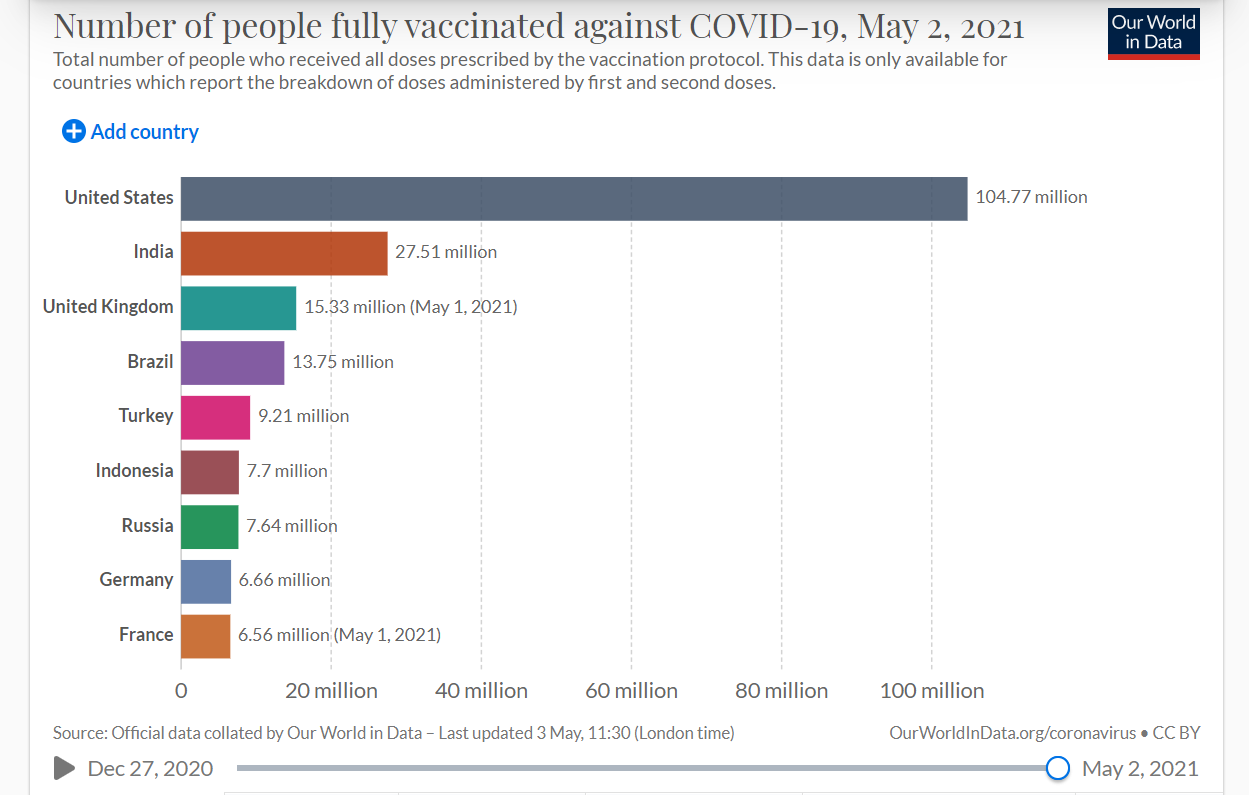

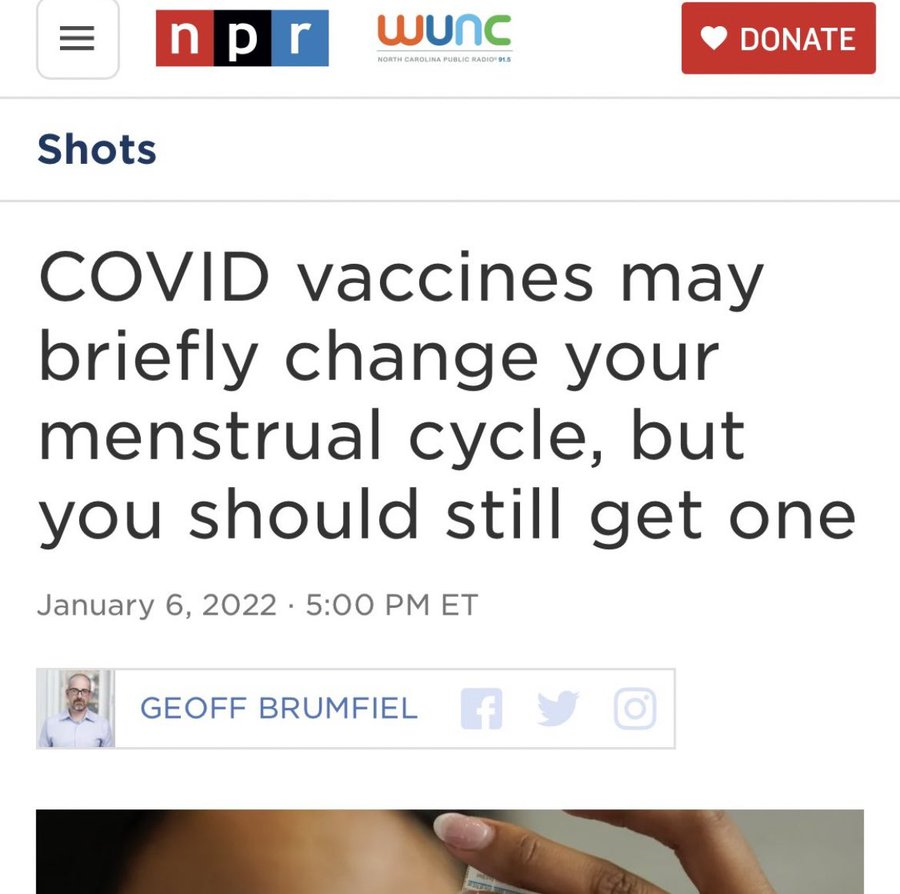

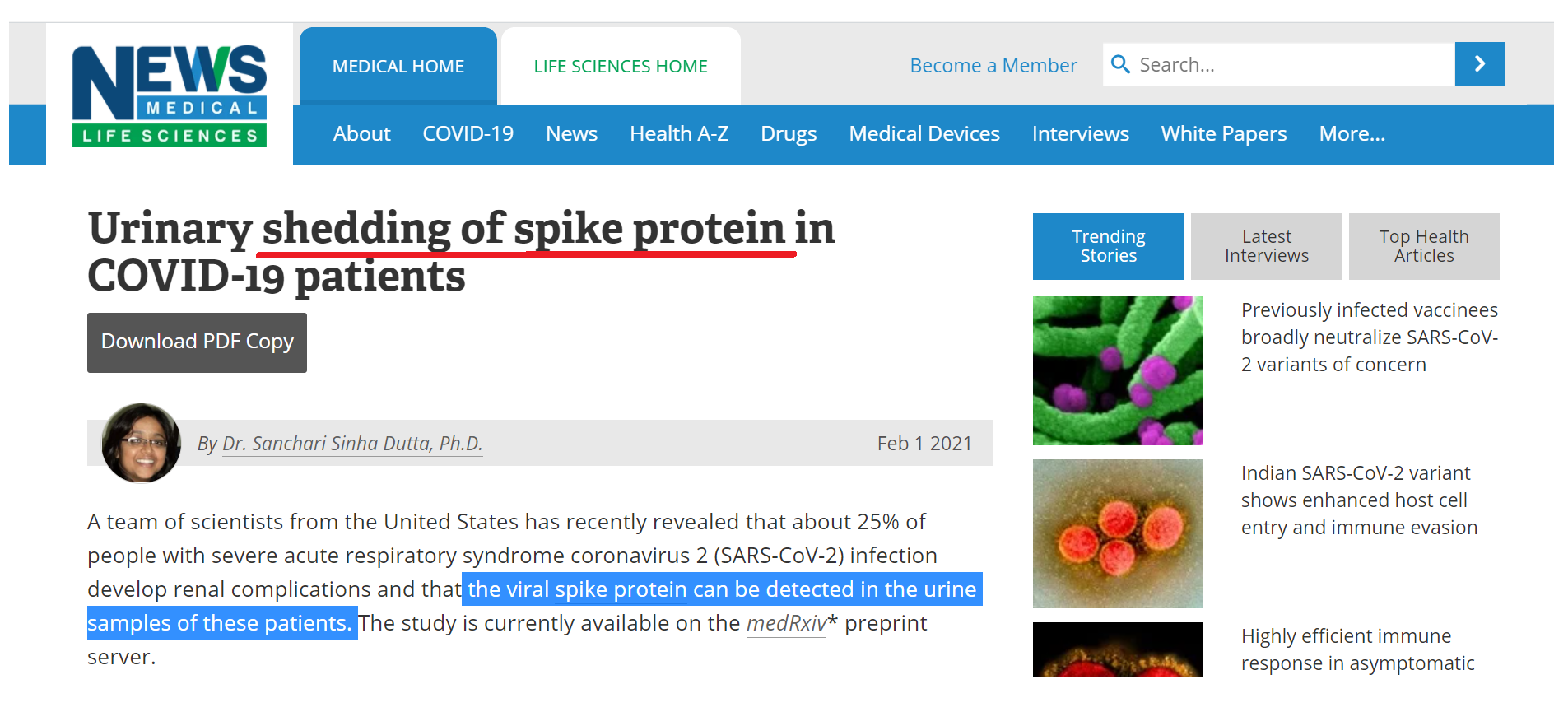
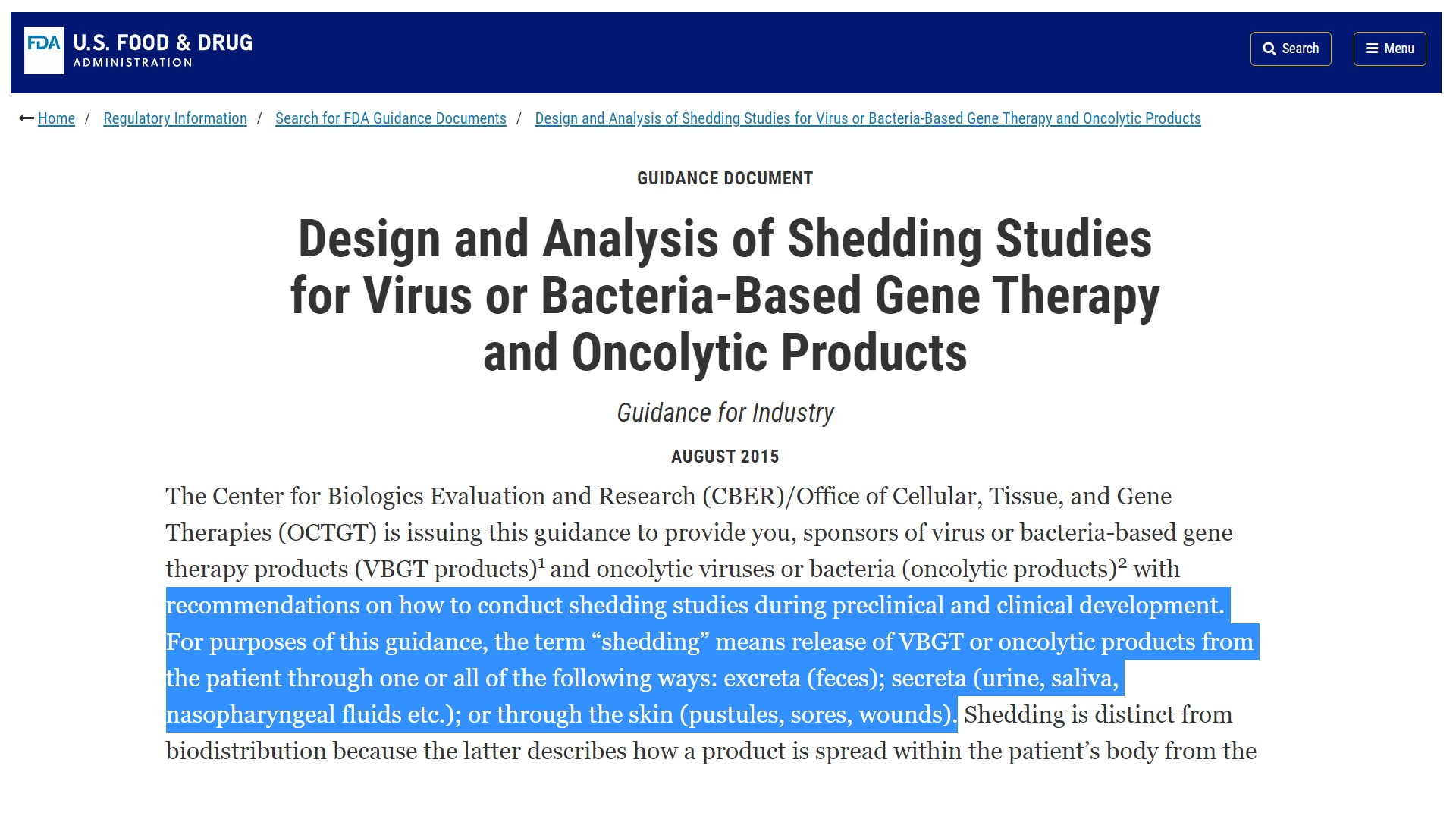
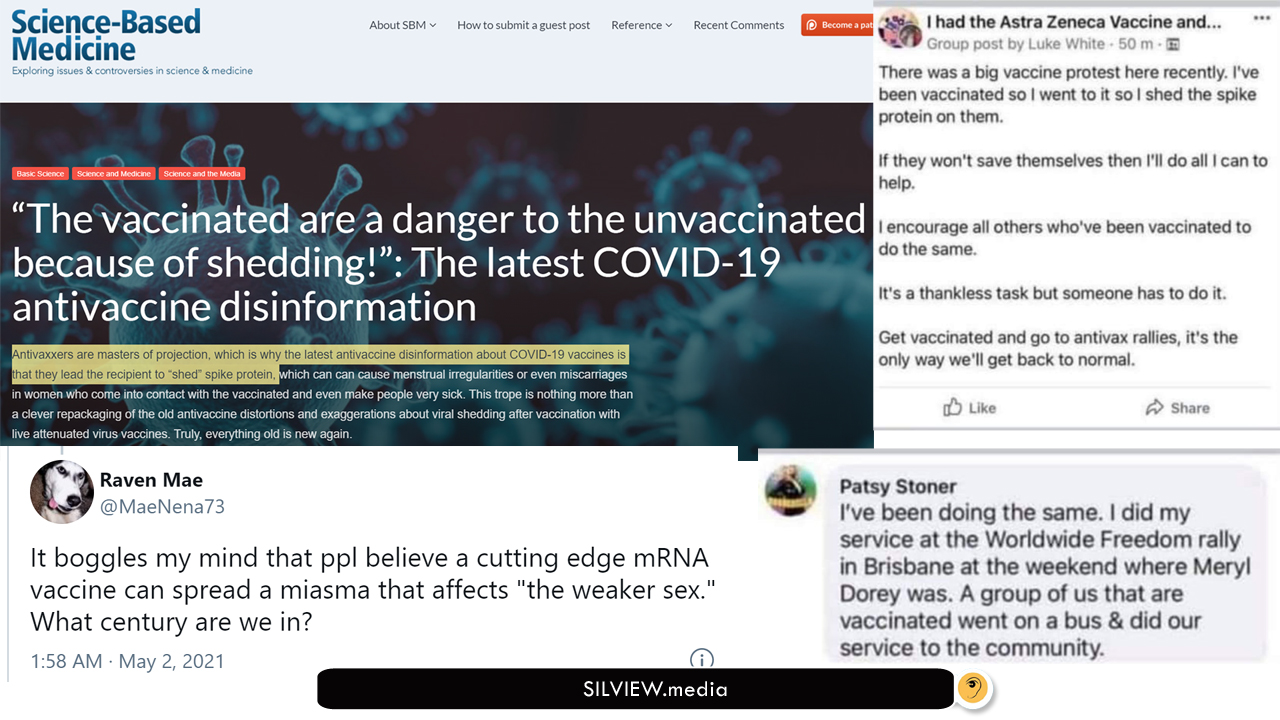
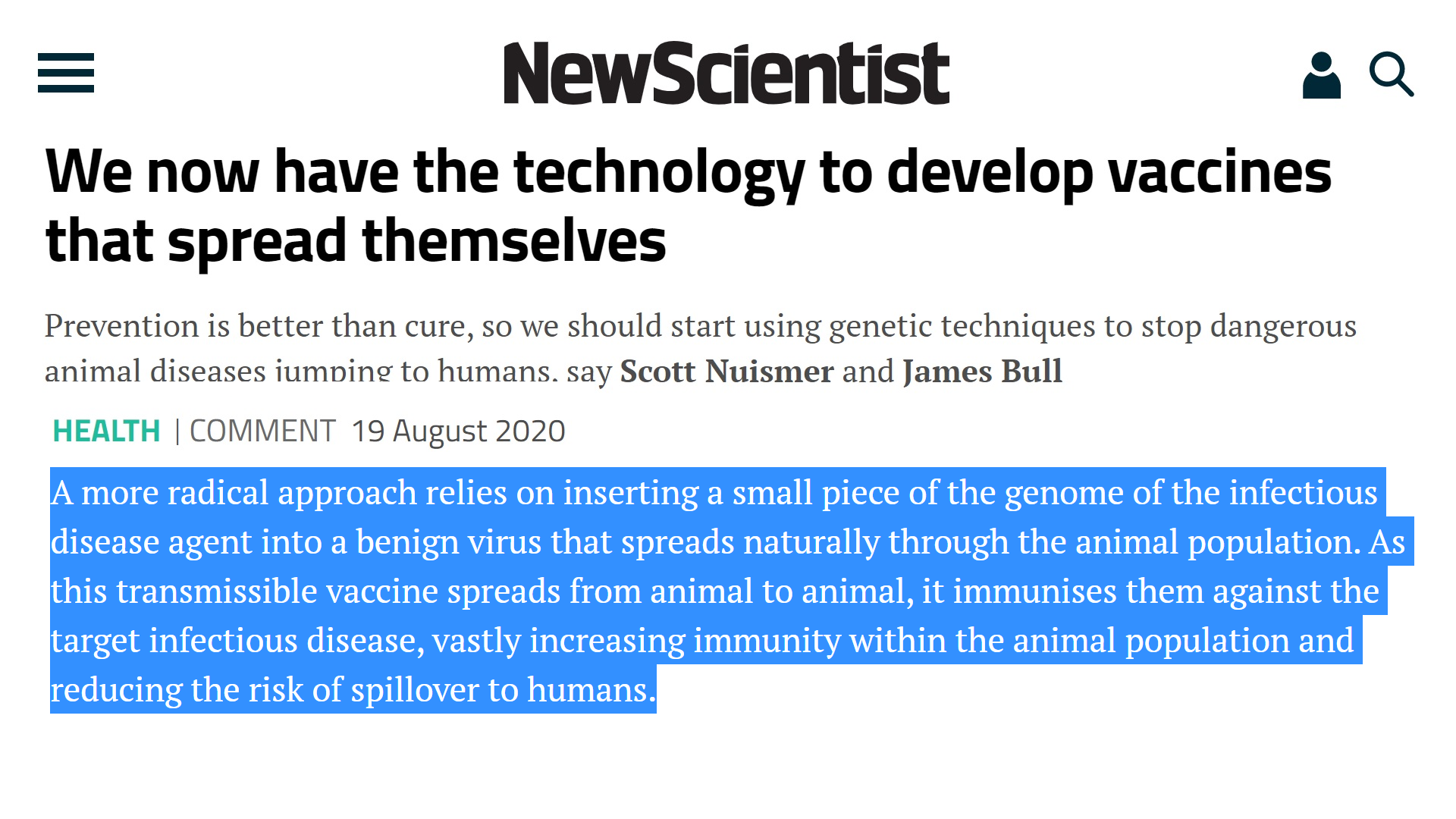

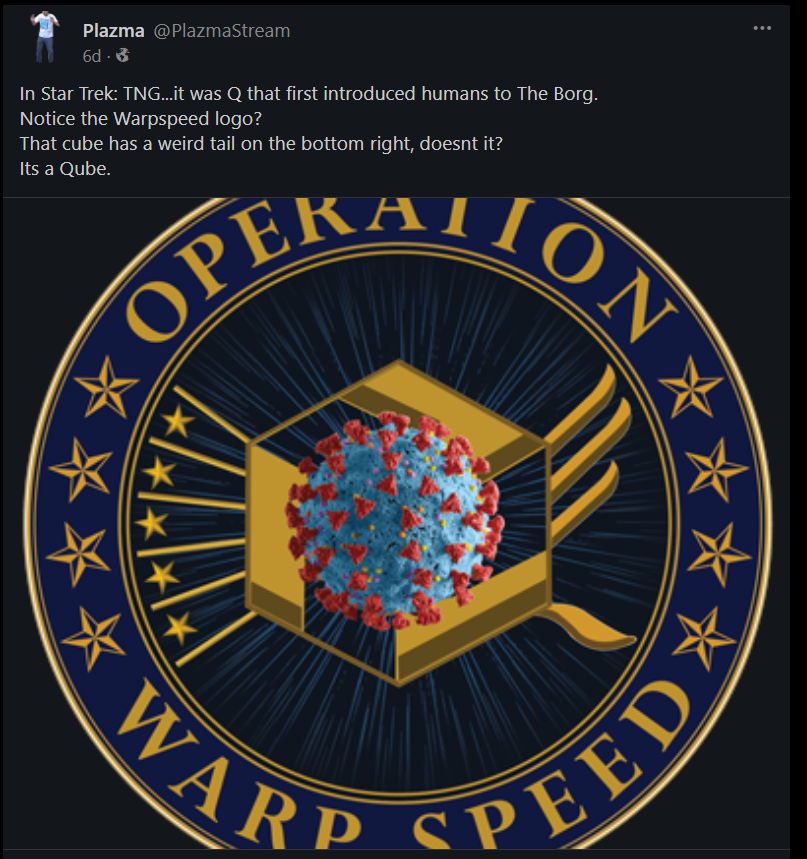

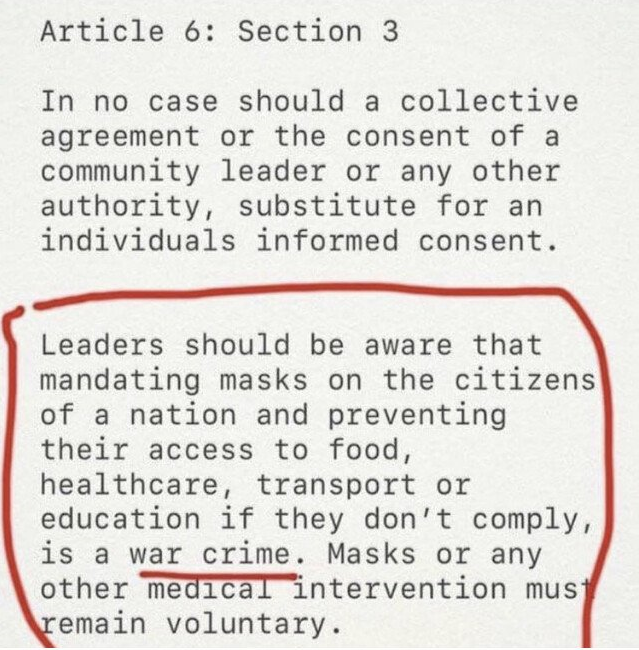
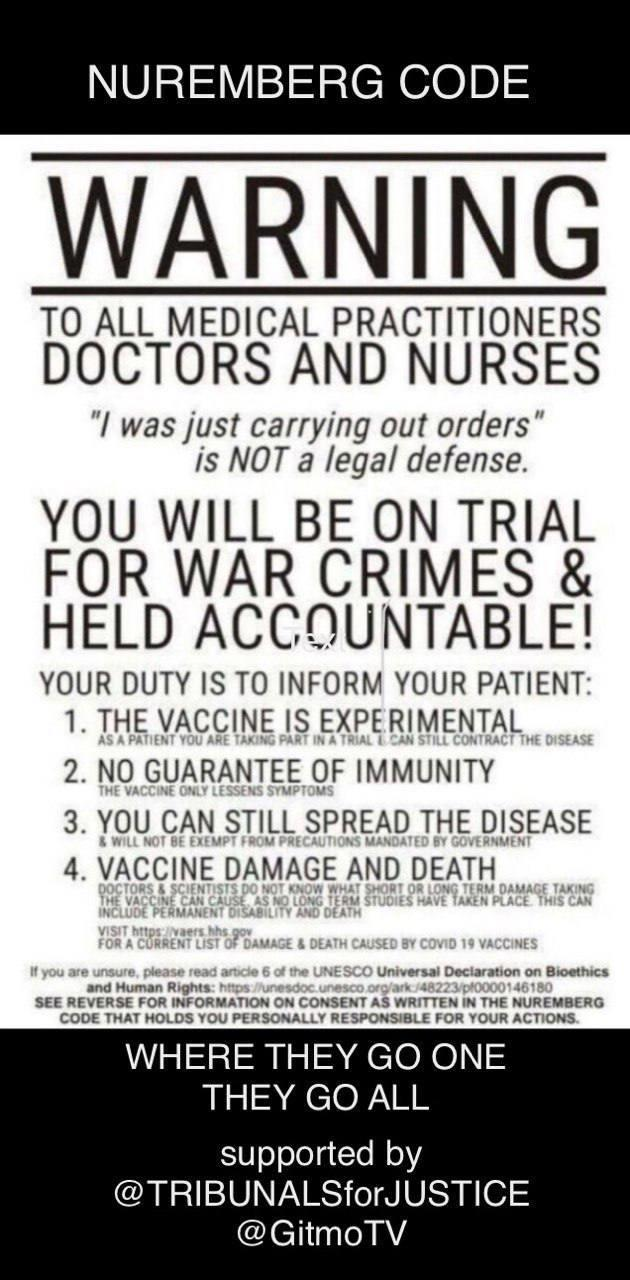


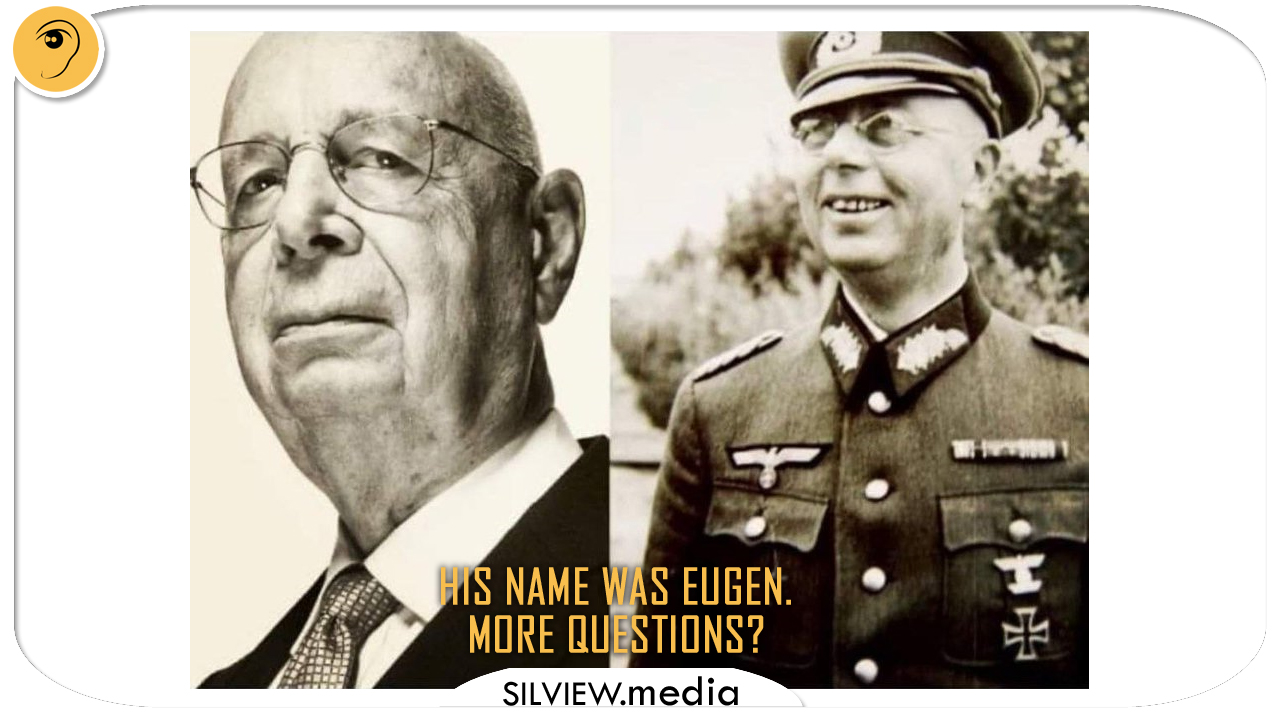



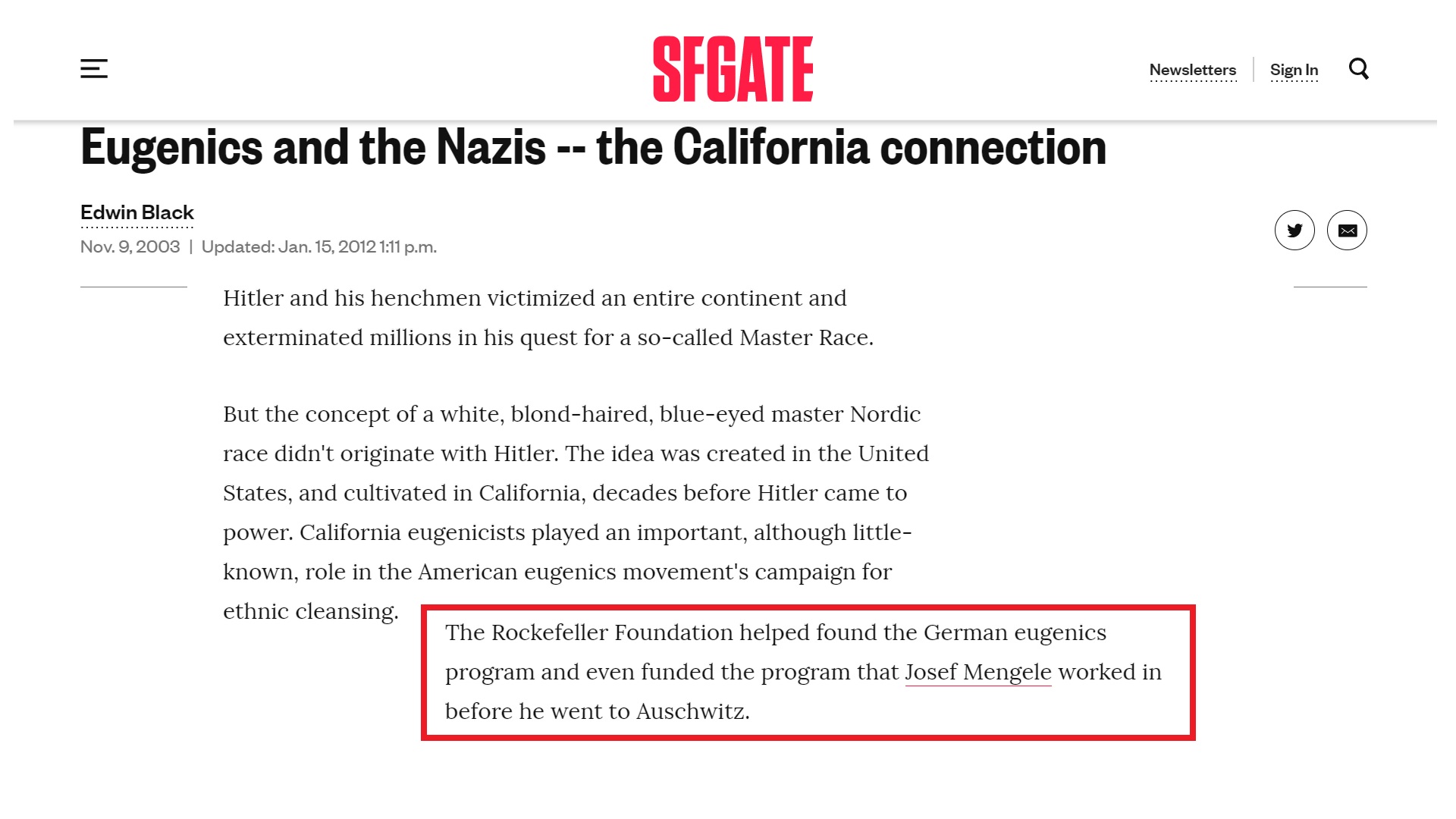
 Fueled by digitalization, growing connectivity, and falling costs, important advances in biotechnology are intertwined with more systemic shift in how bio-innovation is undertaken and who is involved. Microbiome technologies, advanced genomics, gene editing and synthetic biology are among key enabling technologies that have the potential to change the face of bio-innovation. This broader redefinition of bio-innovation creates new prospects to help address important nutrition, environmental and development needs.

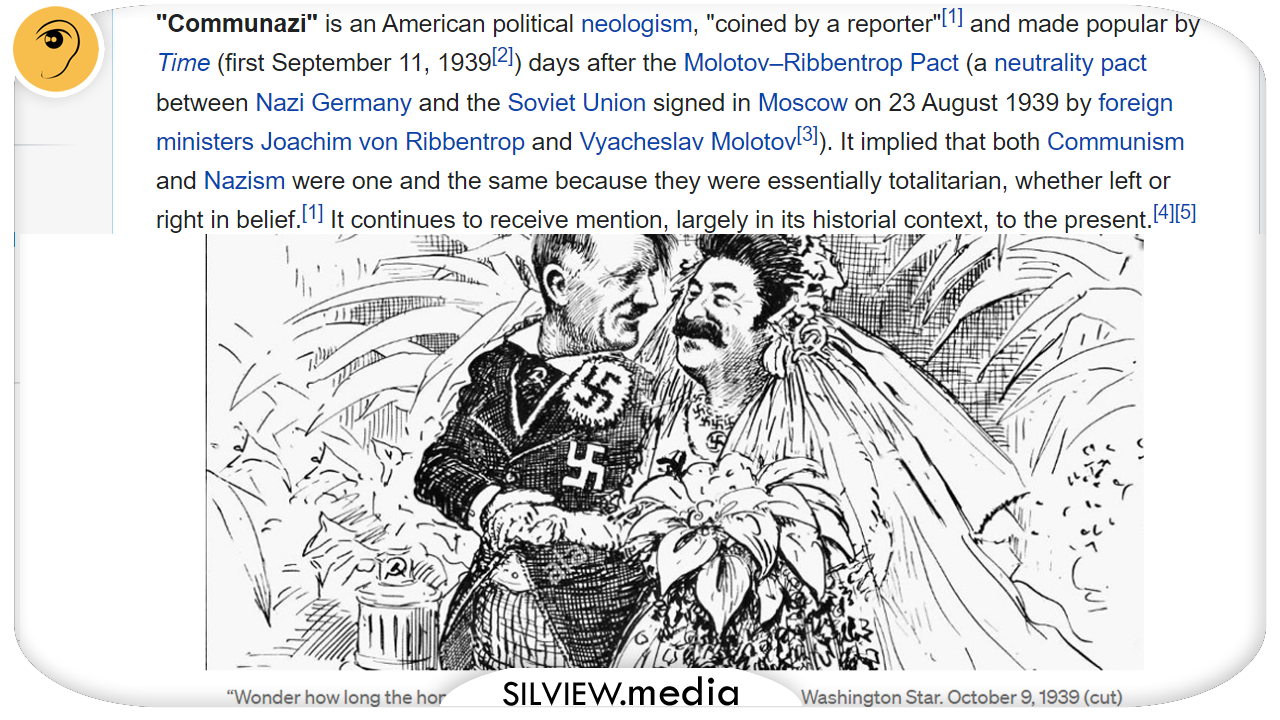


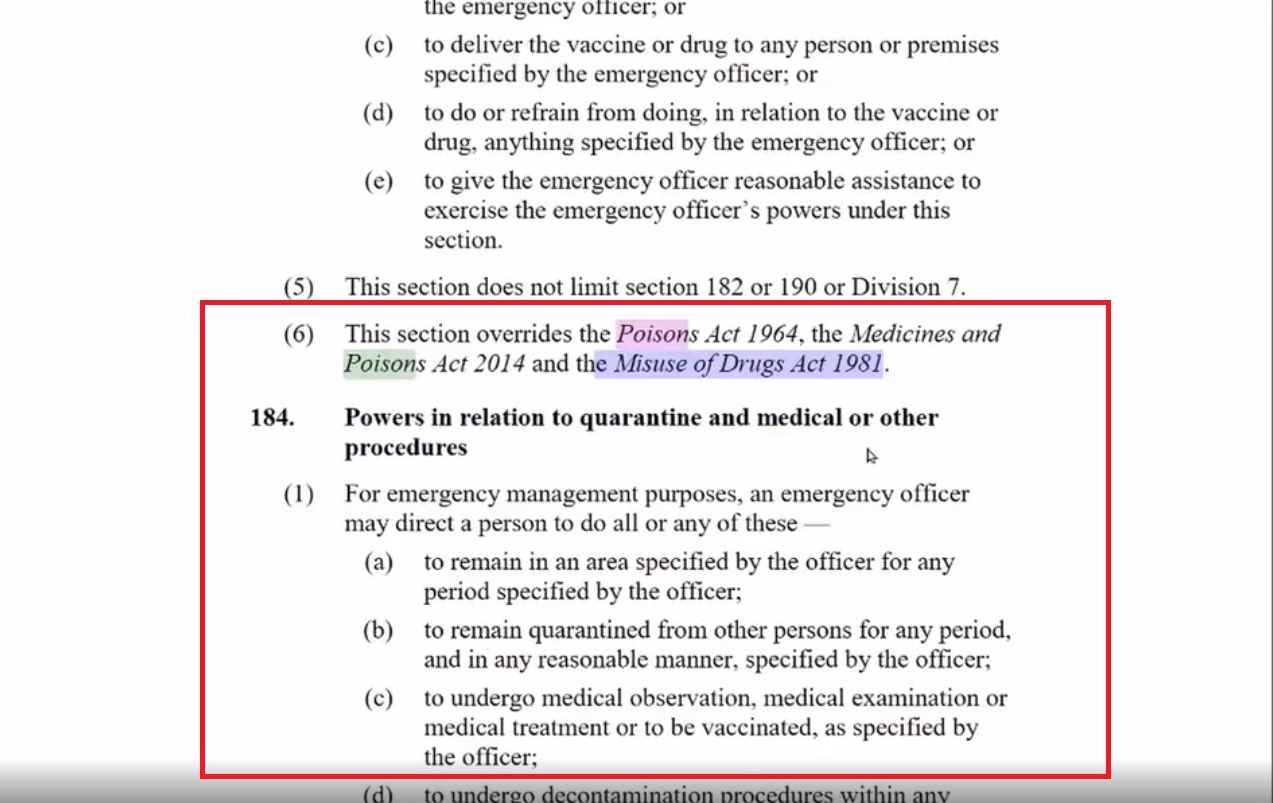
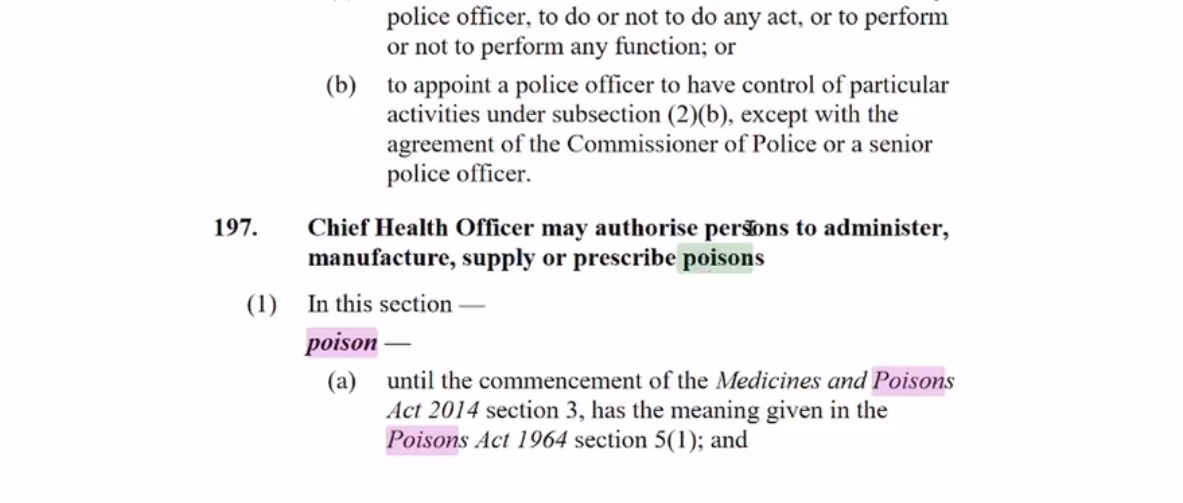







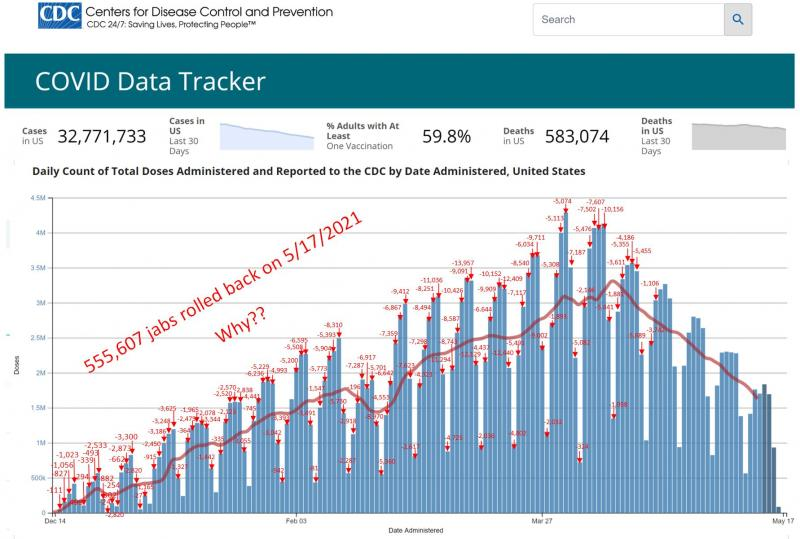


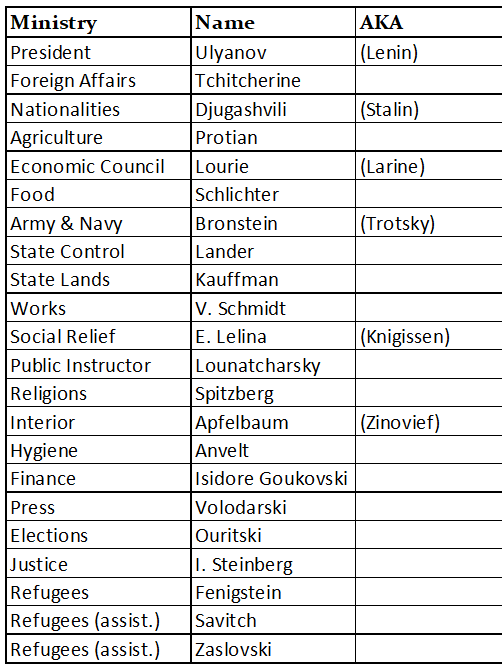


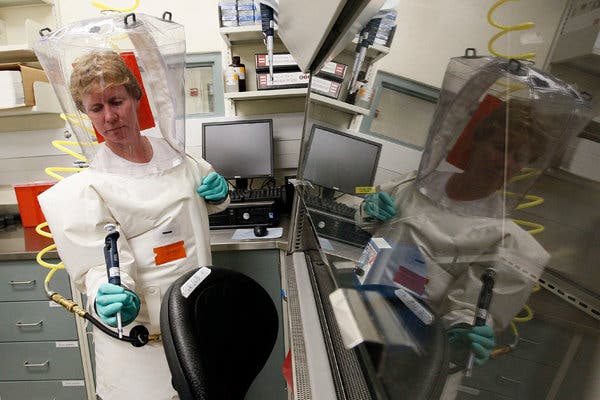

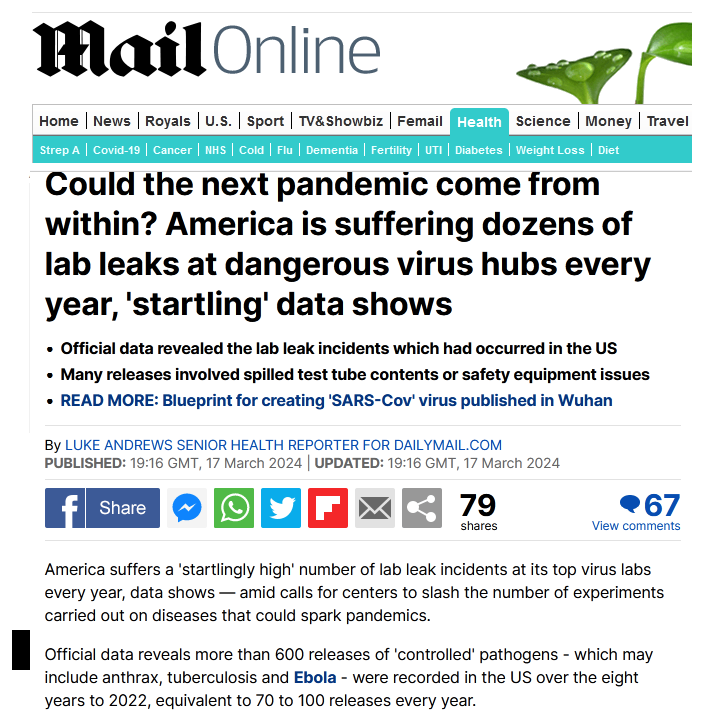

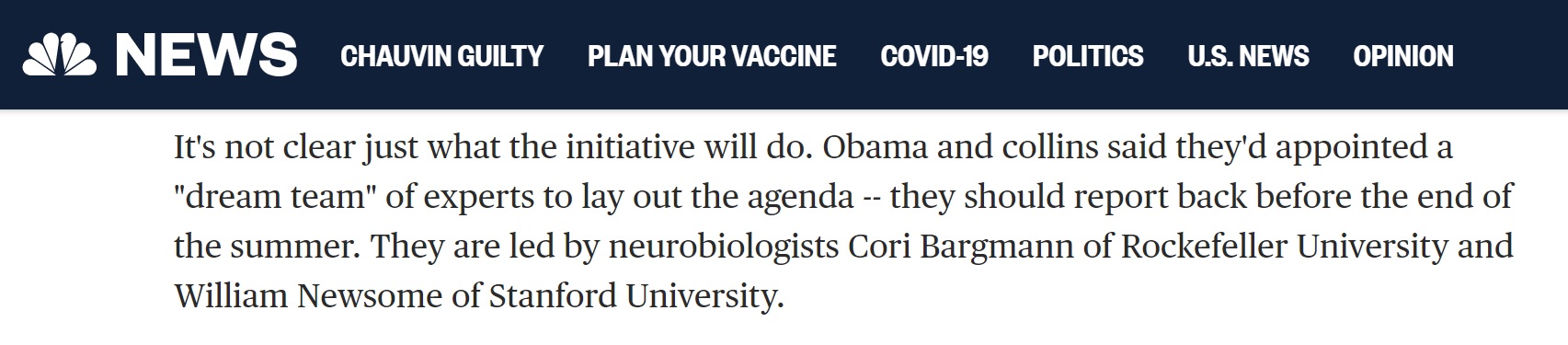

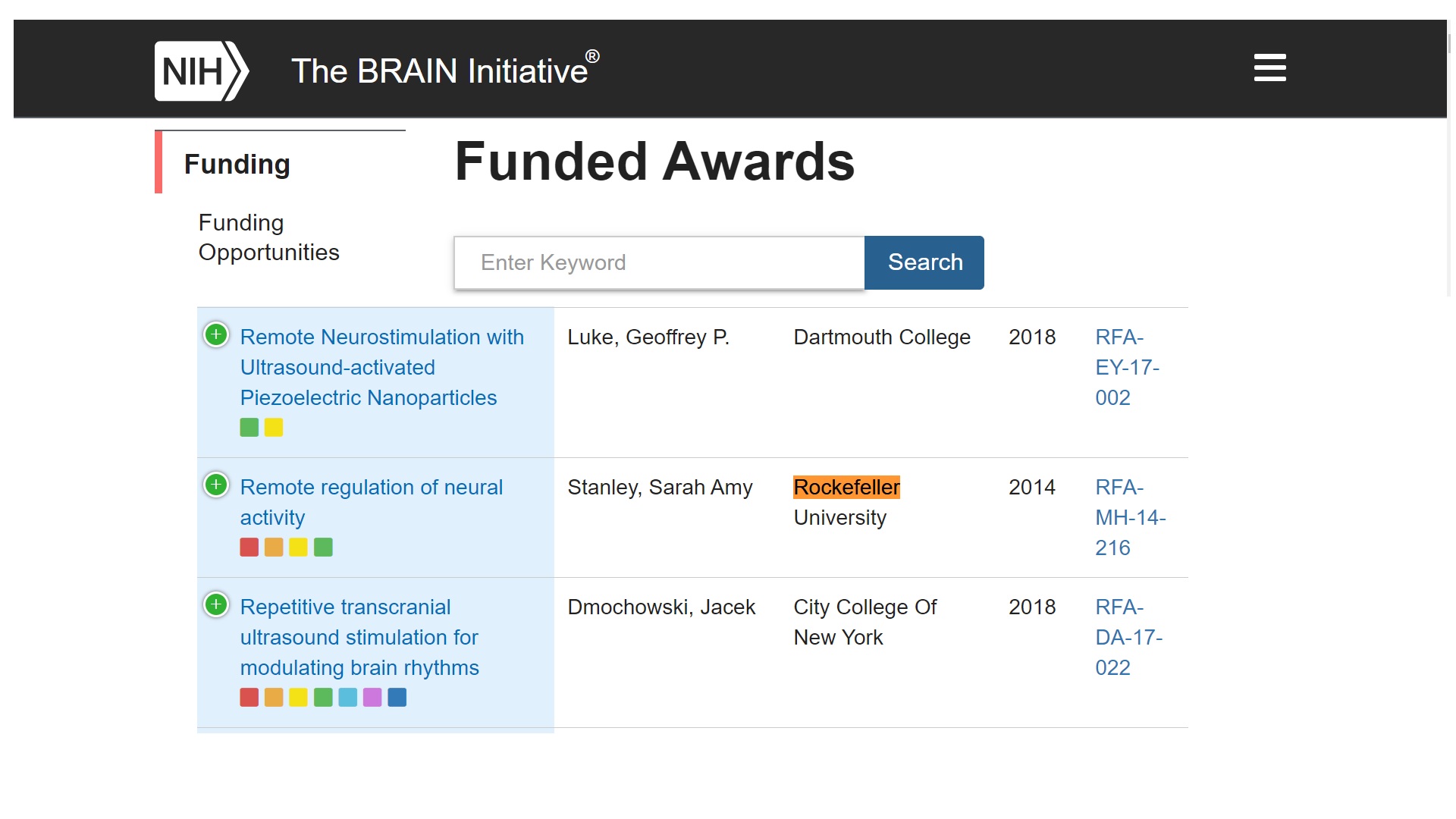


 © Provided by Mediaite Anthony Fauci Tasos Katopodis/Getty Images


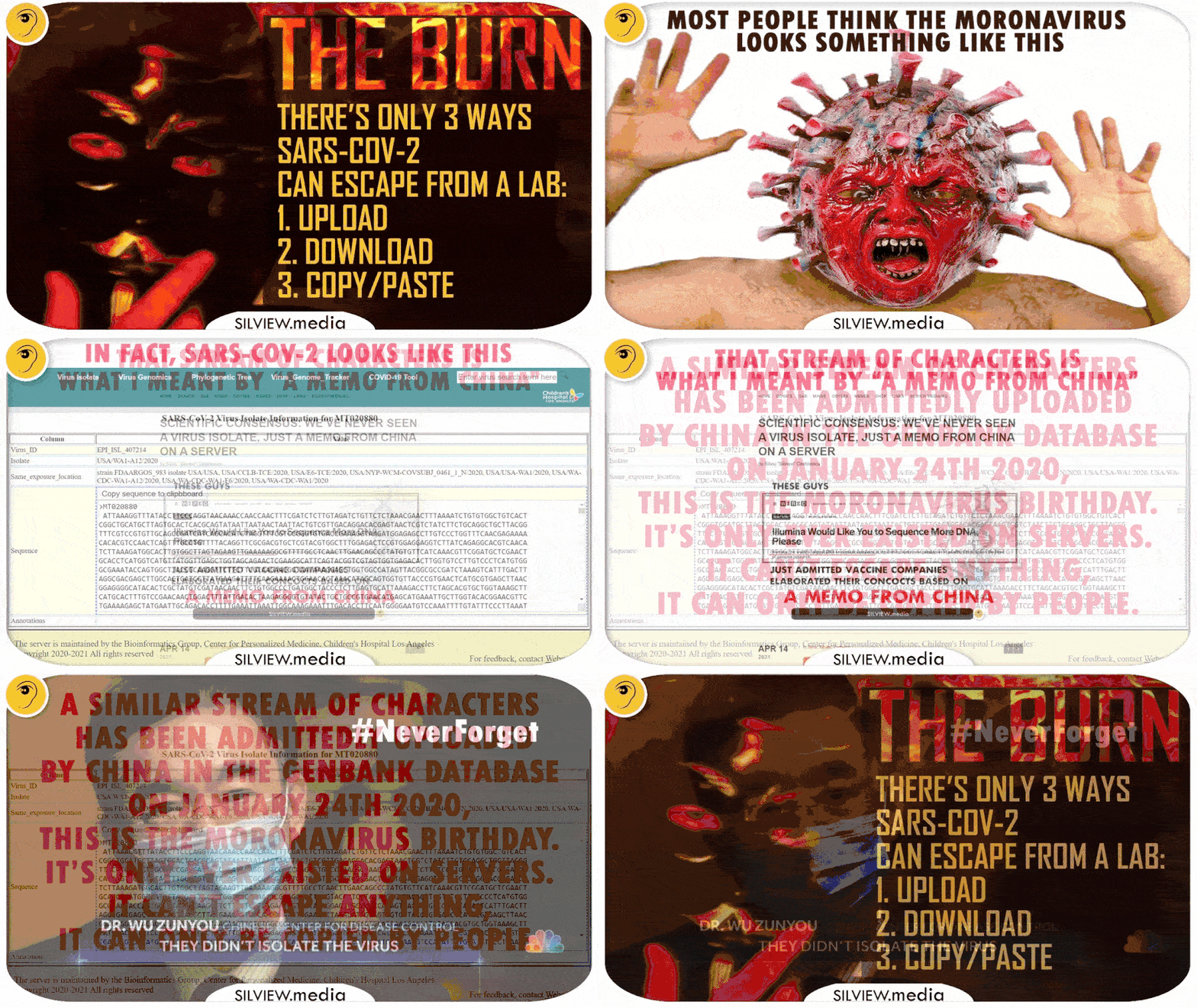

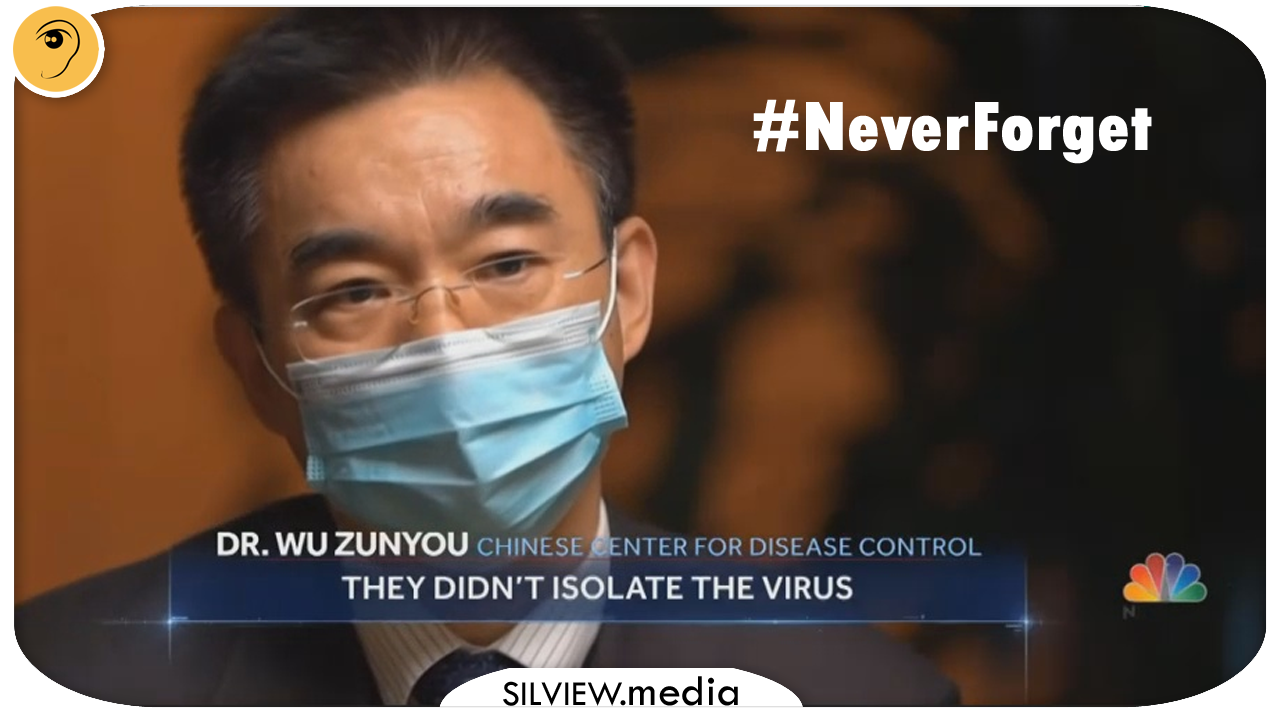
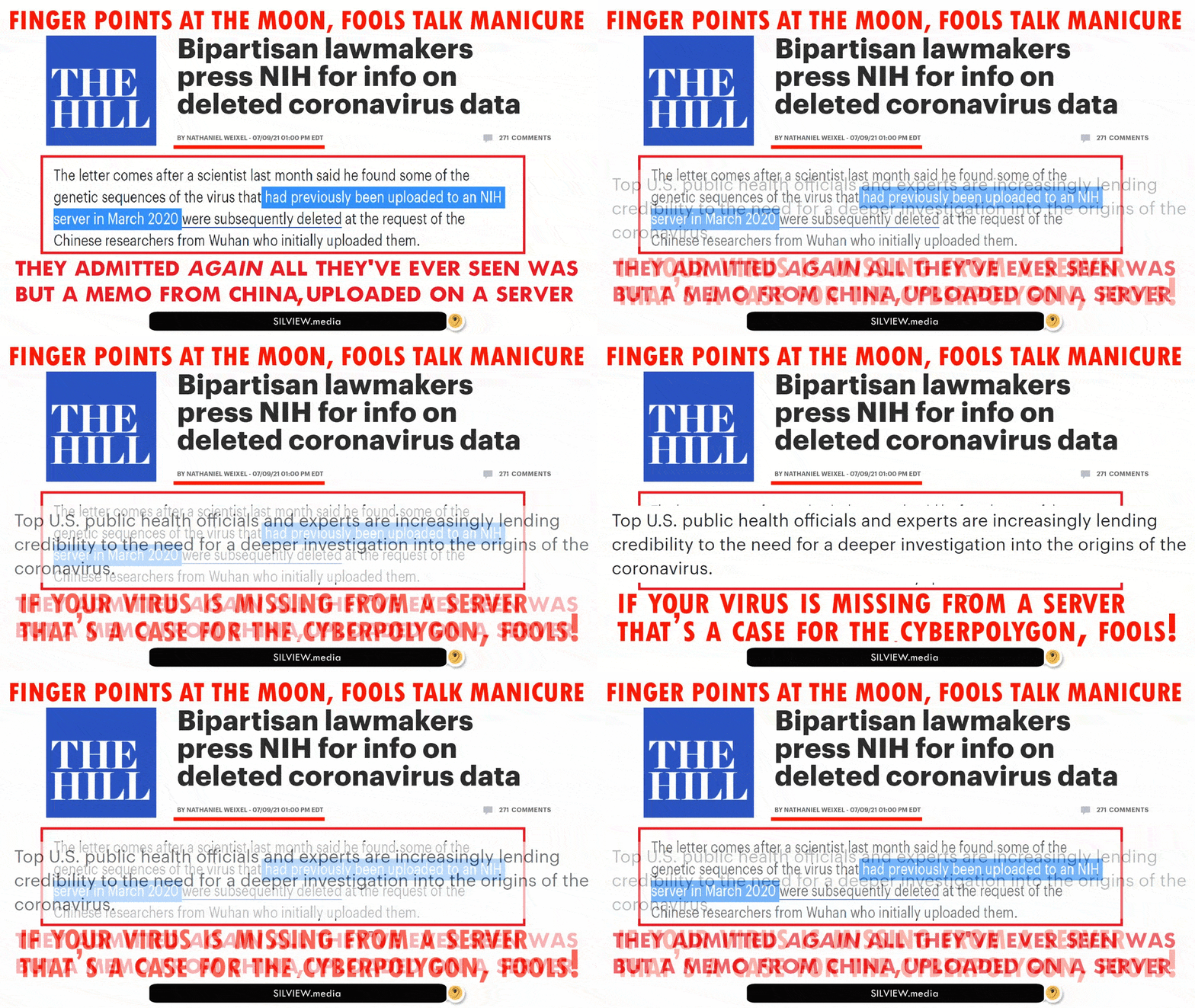
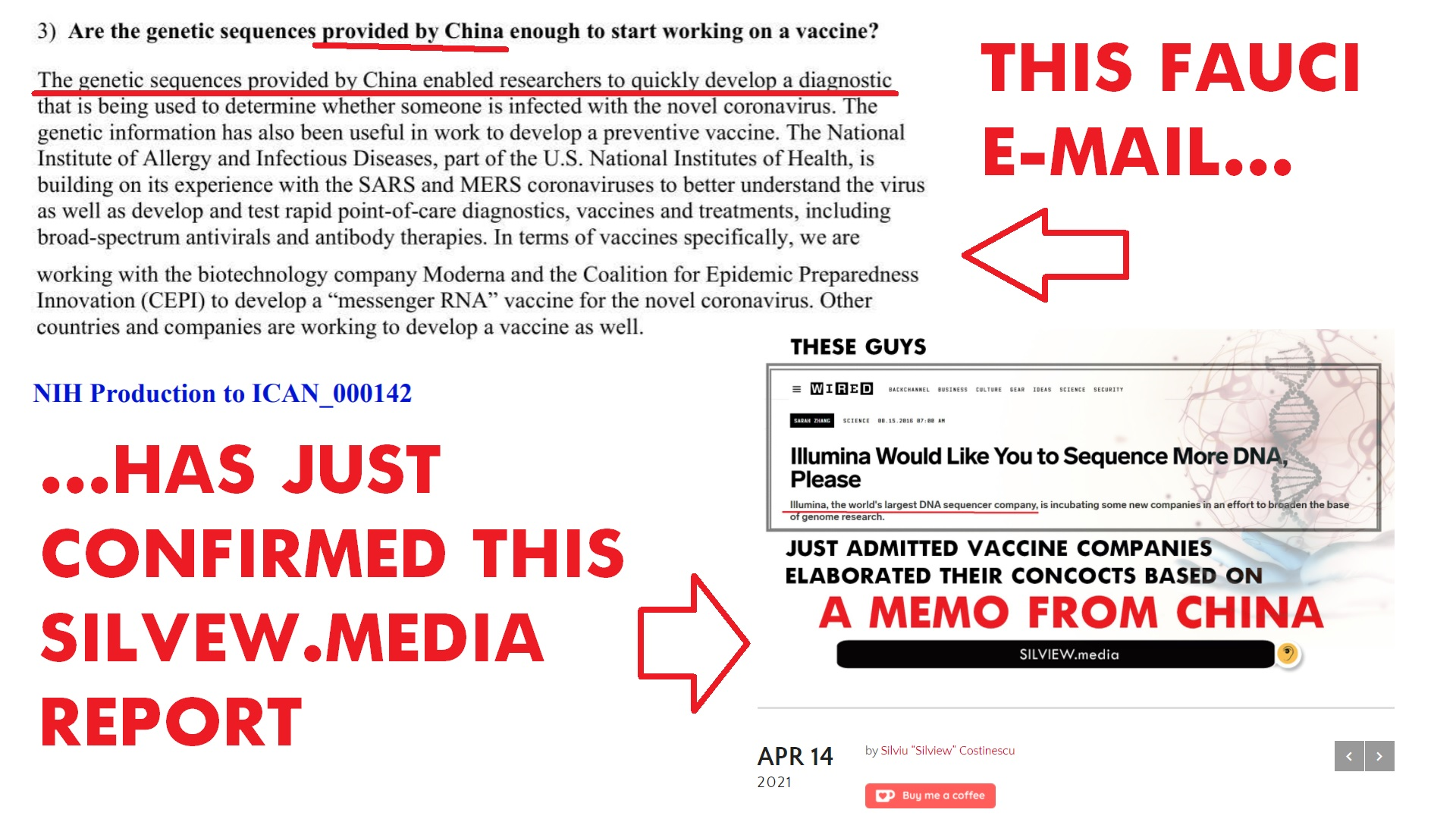


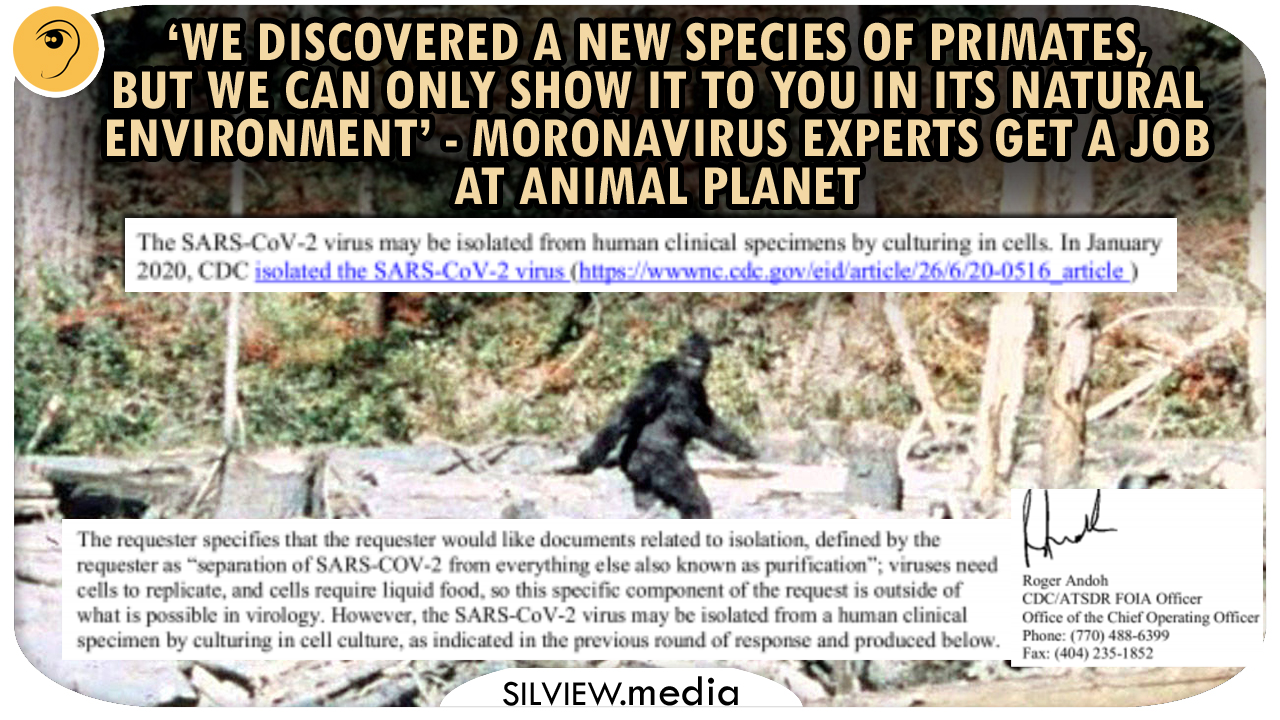
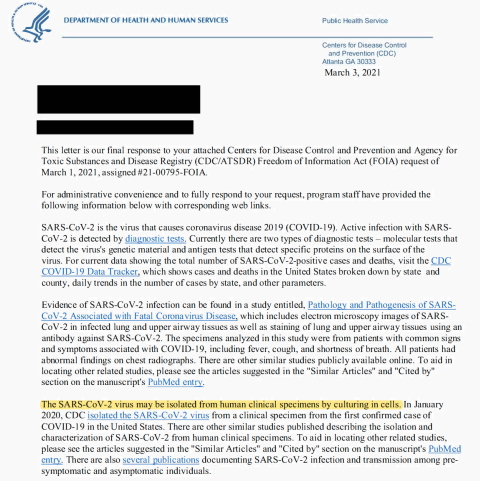
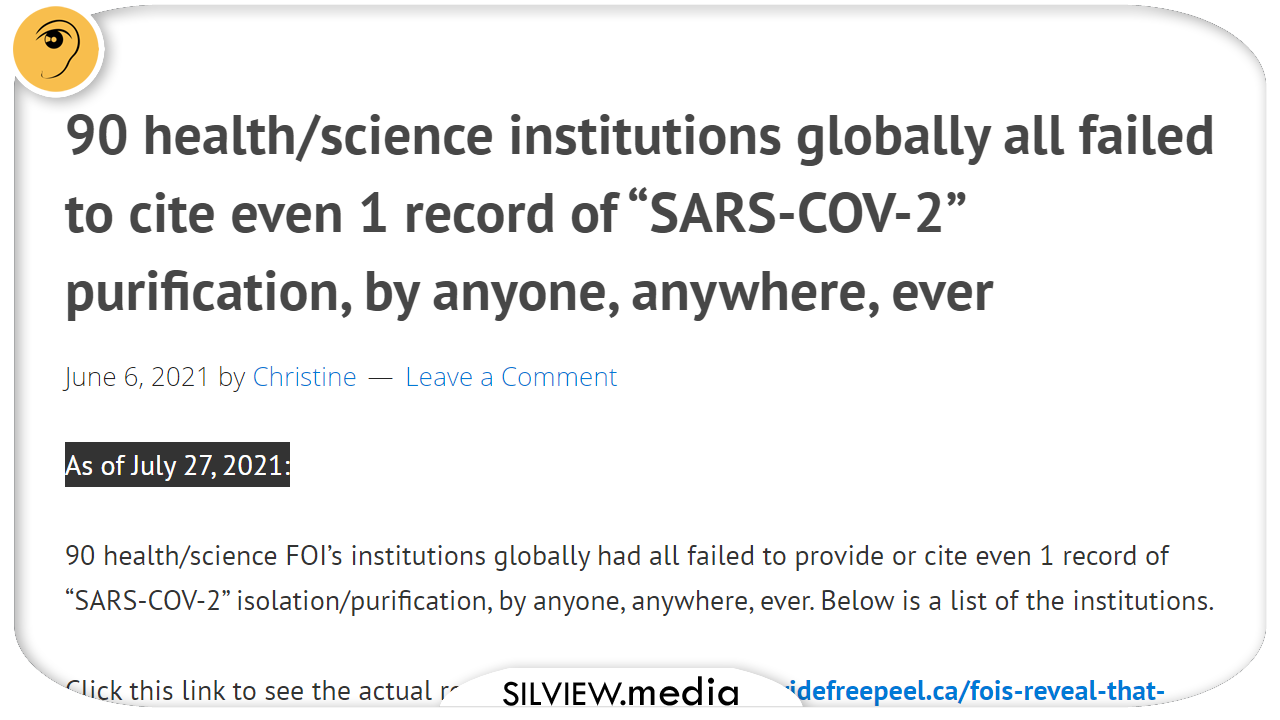
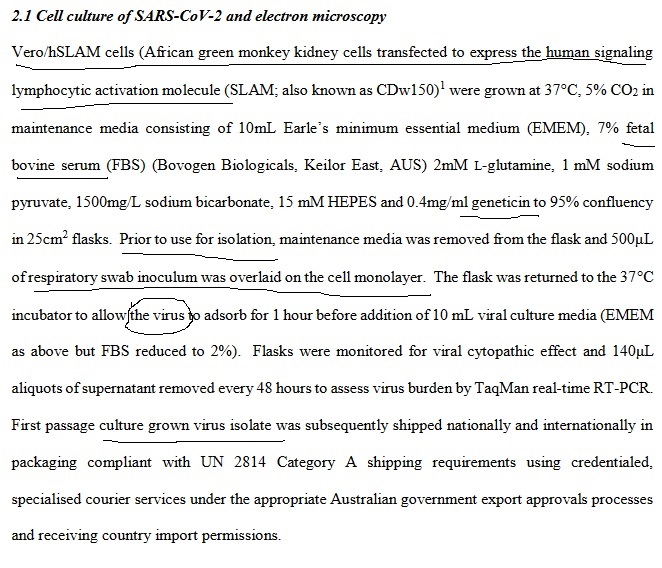


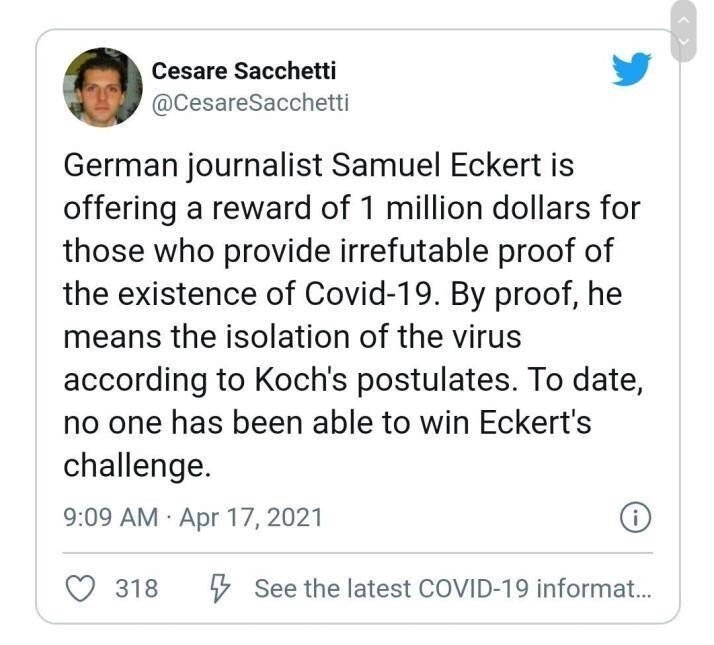

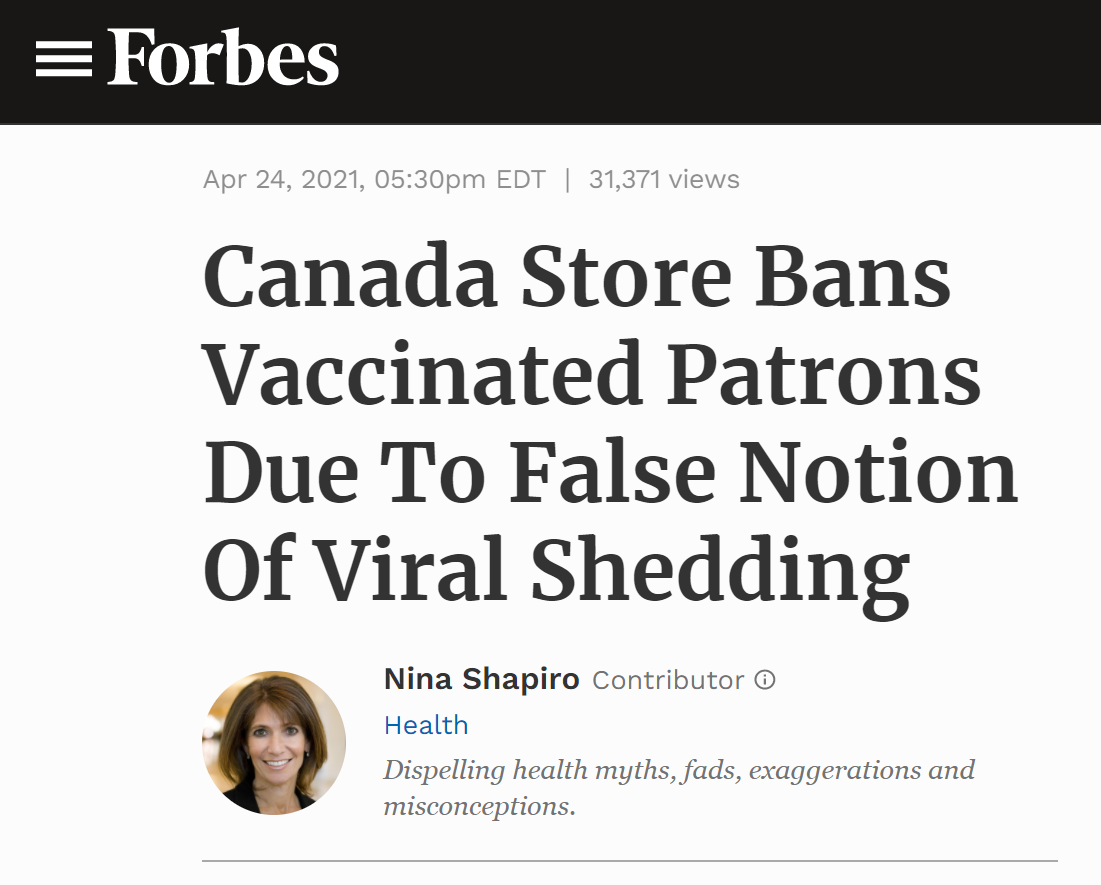
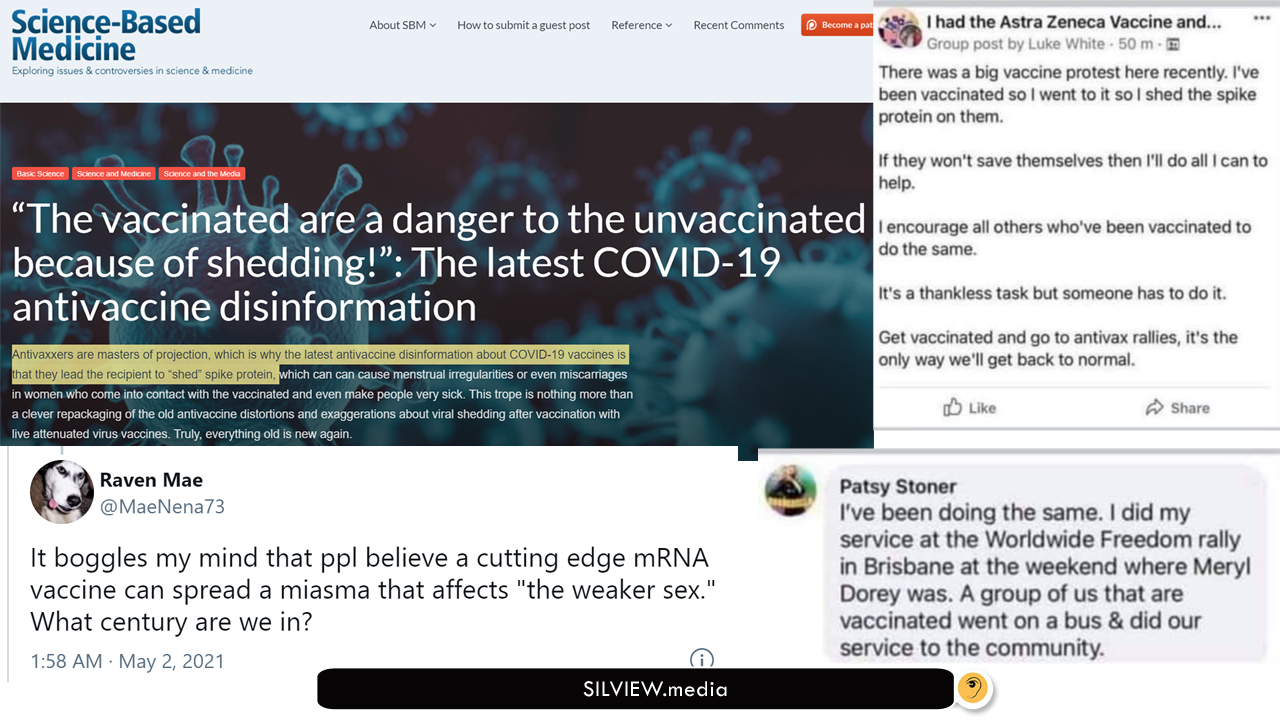


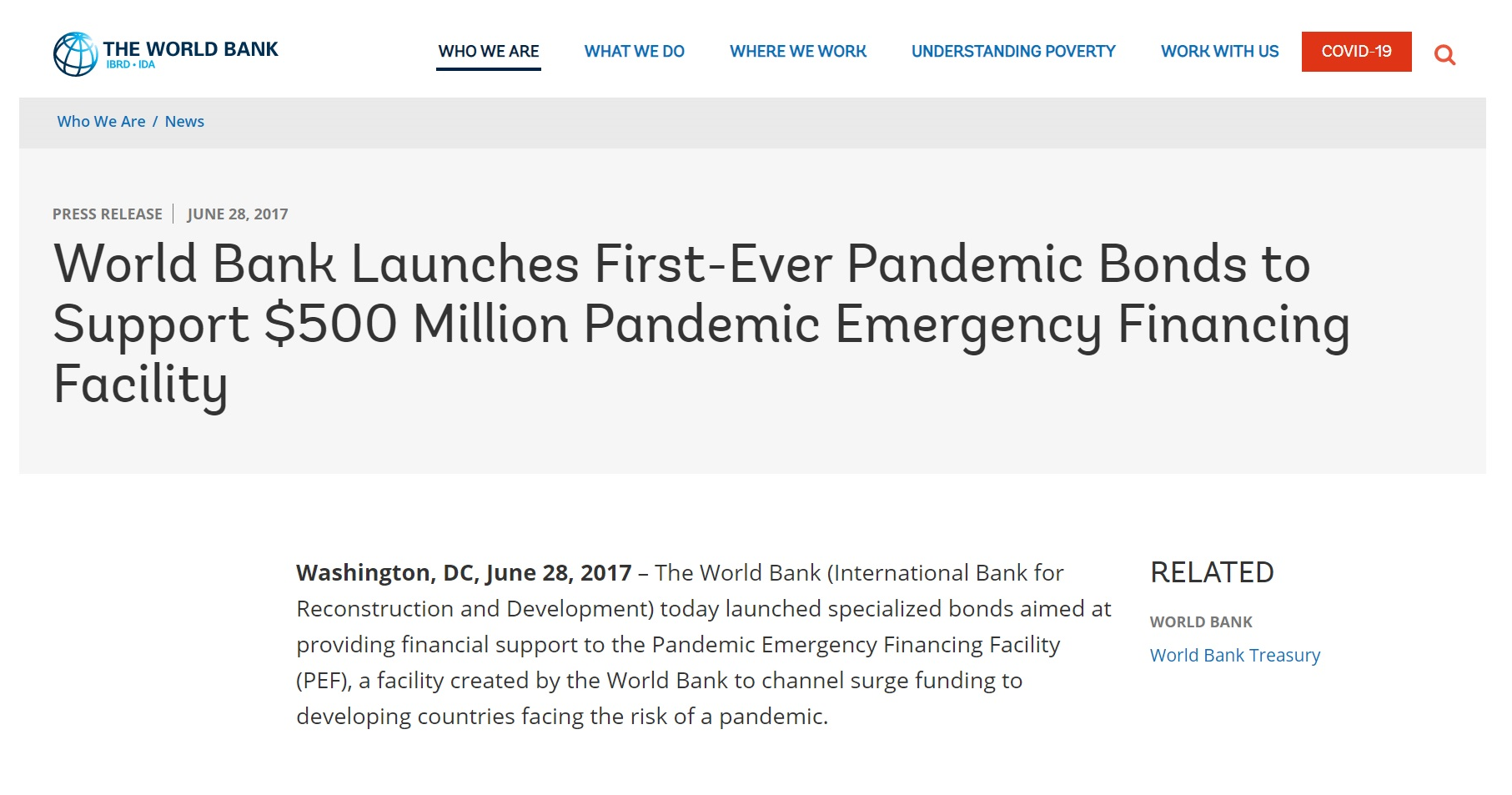


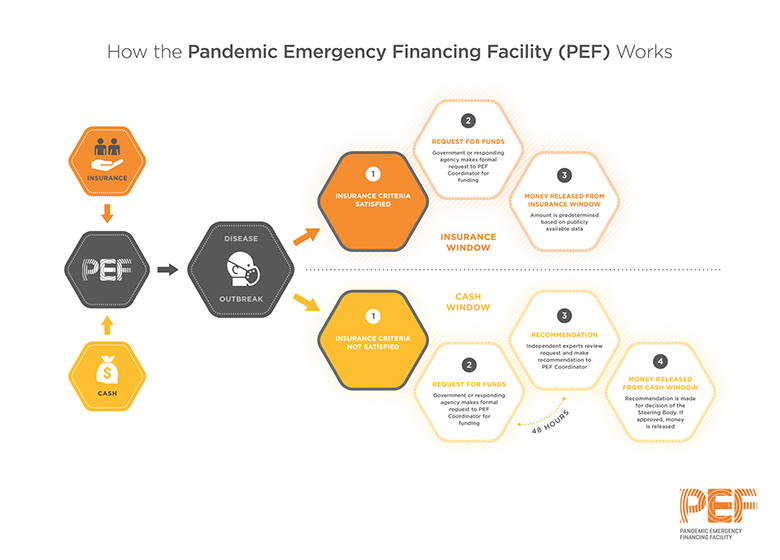


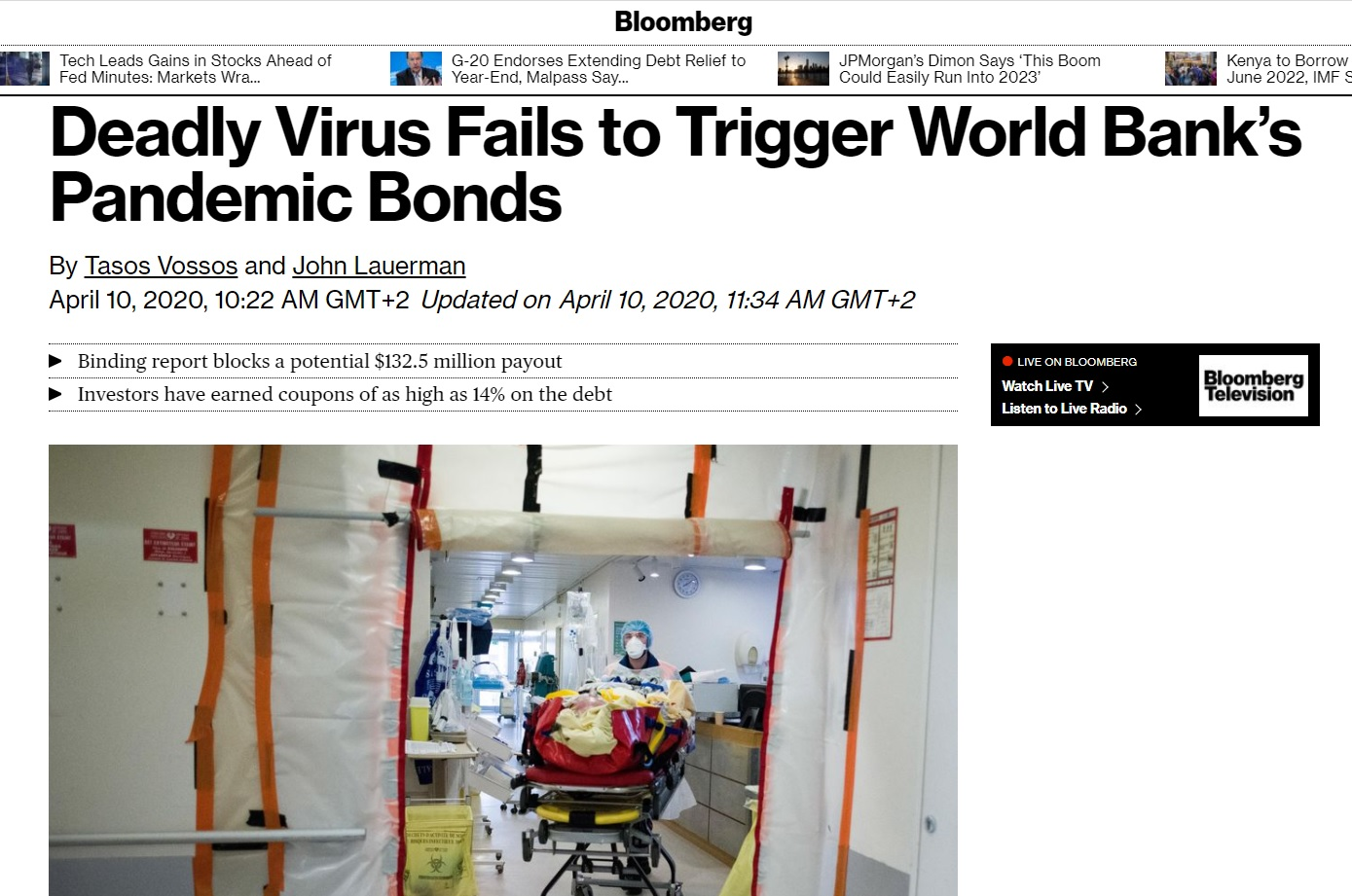


 SILVIEW.media