Just more cement at the foundation of my Military BioTech Complex concept, asserting that the military, Big Tech and Pharma didn’t need to collude in the Plandemic, as many claimed, because they’ve never been separated.
Back in the 1960s, Pfizer (then Chas. Pfizer & Co.) were contracted to conduct research into “Chemical Incapacitating Agents” for the Army as far back as the 1960’s, an overlooked FOIA release reveals.
Due to other FOIA requests, Pfizer was forced to release a “Confidential Report” titled “5.3.6 CUMULATIVE ANALYSIS OF POST-AUTHORIZATION ADVERSE EVENT REPORTS OF PF-07302048 (BNT162B2) RECEIVED THROUGH 28-FEB-2021. T. What is of particular concern is the government redaction coding applied to the documents by the National Archives. Throughout the Pfizer document we find redactions coded “(B) (4)”. The National Archives redaction coding page defines redaction code (B) (4) as: 3.3 (b) (4) Reveal information that would impair the application of state-of-the-art technology within a U.S. weapon system
So is the Covid jab just another military experiment?
RFK Jr. says “YES!”
! Articles can always be subject of later editing as a way of perfecting them
To be continued? Our work and existence, as media and people, is funded solely by our most generous supporters. But we’re not really covering our costs so far, and we’re in dire needs to upgrade our equipment, especially for video production. Help SILVIEW.media survive and grow, please donate here, anything helps. Thank you!
The scandals at the Olympics are not gaffes, they are operations. PsyOps.
If sports will suffer an audience hemorrhage in the direction of McDonald’s, it is not because Macron is a moron, but because Macron’s bosses are cunning enough to escape the perception of the herds that fill the sport arenas.
Sport has always been a tool for social engineering and now the internal combustion society is flipped to “smart”, good thing if the wheels on this truck are still round.
In a maximum of a generation, the masses’ concept of sports will be closer to jogging or cycling around the 15 minute cities than to a great derby, world championship or the Olympics. And it will be more of a small venue event, with perfectly controlled crowds end environments, where you can’t free a flatulence without losing credits on the green application.
Here are the three big and broad reasons why the contemporary sports scene no longer corresponds to the new normality, like tourism or autonomous thinking:
It’s too healthy
He’s too social
It cannot accommodate the impractical absurdities of gender ideology
NFL has just announced that it will introduce facial recognition and other Chinoid surveillance technologies in all its stadiums starting next season. Do you think they don’t know that this is commercial suicide? They were aware of it during the Plandemic too, yet they promoted the jab and the whole genocidal program. Because money is for the poor these days, the real stakes are higher.
I think people need to revisit the London Olympics ceremonies to join the dots. It should help us understand these plans and methods have been long in use, we just need to be bitchslapped by reality to pay attention. Here’s the funeral for the last of our freedoms.
To be continued? Our work and existence, as media and people, is funded solely by our most generous supporters. But we’re not really covering our costs so far, and we’re in dire needs to upgrade our equipment, especially for video production. Help SILVIEW.media survive and grow, please donate here, anything helps. Thank you!
! Articles can always be subject of later editing as a way of perfecting them
We must remain skeptical at all times, but we have to be extra-skeptical when the narrative confirms or comforts us.
I’m not betting a finger on this yet, I might be wrong here, I don’t have the best equipment for the job, so you tell me if you can spot any blood from an allegedly gushing “perforated” ear before he ducks.
Tons more issues with this operation, but I have nothing else to say that hasn’t been said yet.
Remain vigilant and let’s make it so that plebs won’t have to give up more rights and liberties because of this!
To be continued? Our work and existence, as media and people, is funded solely by our most generous supporters. But we’re not really covering our costs so far, and we’re in dire needs to upgrade our equipment, especially for video production. Help SILVIEW.media survive and grow, please donate here, anything helps. Thank you!
! Articles can always be subject of later editing as a way of perfecting them
The Hunter Biden-founded Metabiota company returns under the spotlight as Russia is accusing US of relocating its Ukrainian biolabs in Africa. We cover that and much more.
US Expanding Bioweapons Military Activities From Ukraine To Africa – Russia
The Russia Nuclear, Chemical and Biological Protection Forces has disclosed that the United States is increasing its biological military presence in Africa.
Head of the Russia’s Nuclear protection Force, Lieutenant General Igor Kirillov, who stated this on Tuesday, claimed that this expansion comes as a response to Russia’s termination of similar biological programmes in Ukrainian territories, which were previously under Russian control.
Kirillov’s statement suggests a potential escalation of biological military activities in Africa, with geopolitical tensions between Russia and the US potentially playing a role.
“Because Russia has managed to halt the implementation of biological warfare programs in Ukraine’s liberated territories, the Pentagon is forced to transfer incomplete research under Ukrainian projects to other regions,” Kirillov alleged.
He highlighted Africa as a new zone of interest for the US Defence Department and related agencies. The general mentioned the presence of Pentagon contractors in several African countries, including the Democratic Republic of the Congo, Sierra Leone, Cameroon, Uganda, and South Africa.
“Washington uses outside actors to hide the objectives of research. These are contracting and intermediary organizations (Metabiota, Quicksilver, EkoHealth Alliance, more than 20 companies) and businesses of the so-called Big Pharma,” Kirillov claimed.
Russia has documents confirming the rapid expansion of the US biological warfare presence in Africa continent, he added.
Kirillov cited several examples of alleged US activities, stating that “in October 2023, staff of the US Army Medical Research Institute of Infectious Diseases conducted a large-scale survey of hantavirus samples from bats in Kenya’s natural hotspots.”
A year ago, US military biologists studied the effects of anti-malarial drugs on local populations.
“In January 2024, US officials from the Defense Department, the State Department, and the US Department of Health and Human Services met with the heads of the Centers for Disease Control and Prevention in Africa to discuss the continent’s prospects for developing laboratory capabilities,” the general said.
At the end of last year, Kirillov said Russia had obtained documents proving that the US had conducted research on bioweapon components and highly dangerous pathogens in Ukraine.
Kirillov previously alleged that the US plan to manufacture another Plandemic for the 2024 election like they did in 2020. Bird Flu comes to mind.
As per usual, the Russian DoD struggles to catch up with our 2020-2022 archives. Many do.
We’re informing Russia that Metabiota has been very present in Africa since its inception, which has to do with the Ebola blunder. IN-Q-TEL should know, since they are Metabiota partners and a CIA front.
The company’s international footprint includes operations in nearly 20 countries and offices in San Francisco, Canada, Sierra Leone, Cameroon and the Democratic Republic of the Congo.
But we are here to break the ice with information that is completely missing from the public debate and very relevant in the current Hunger Games context. Check out this short 2016 press release:
Metabiota, a provider of comprehensive risk analytics that help protect global health launched its Food Risk Management Platform, along with a new food risk team made up of industry veterans, seasoned public health experts, and data scientists.
August 04, 2016
Metabiota, a provider of comprehensive risk analytics that help protect global health launched its Food Risk Management Platform, along with a new food risk team made up of industry veterans, seasoned public health experts, and data scientists. Launched at the International Association for Food Protection’s Annual Meeting in St. Louis, Mo., Metabiota also unveiled a partnership with Ancera, which combines Metabiota’s analytics and Ancera’s near real-time diagnostics to optimize performance and safety for the global food supply chain.
Metabiota’s Food Risk Insights build a safer, smarter food supply chain by providing food producers, suppliers and retailers the ability to identify, analyze and proactively mitigate risks, optimize performance and ensure a company’s quality and safety programs have the greatest impact across all components of the supply chain, the company said.
“Our deep expertise in advanced analytics is highly applicable for the food industry, as we deliver greater insight into the supply chain, while decreasing risk and delivering improvements in performance across all components of a company’s operations,” said Robert Mann, president & COO of Metabiota. “We are investing in this breakthrough technology and have assembled an impressive team that will help improve food safety and protect global health.”
“Metabiota is a leader in the application of advanced analytics to food production,” said Arjun Ganesan, co-founder and CEO of Ancera. “The food industry is ready to innovate – and this partnership signals our joint commitment to helping these companies increase efficiencies and decrease pathogen risk for the global community.”
Strangely, that is never mentioned in their profiles and presentations. And they have not 1, but 2 on the WEF website, e.g.
Their website show much wider interests than being a stats-crunching machine that detects pandemic threats. They go from intermittent fasting to metabolism, testosterone and fertility. That would be “curious” even if they weren’t “Biden’s biolabs guys”.
The very first question should be “Why”?
After applying Occam’s Razor, our answer is: blatantly, for the same reason Bayer bought Monsanto – food and drugs boost each other’s sales and are main population control tools.
To be continued? Our work and existence, as media and people, is funded solely by our most generous supporters. But we’re not really covering our costs so far, and we’re in dire needs to upgrade our equipment, especially for video production. Help SILVIEW.media survive and grow, please donate here, anything helps. Thank you!
! Articles can always be subject of later editing as a way of perfecting them
Sometimes my memes are 3D. And you can own them. Or send them to someone. You can even eat some of them. CLICK HERE
The following press release has been deleted from the Cargill website, we wonder why… Luckily, we still have archive.org running.
Food Chain Reaction crisis simulation ends with global carbon tax
Climate, hunger, civil unrest and spiking food prices came together at the Food Chain Reaction game in Washington DC this week. Cooperation mostly won the day.
November 12, 2015
On Monday and Tuesday, 65 international policymakers, academics, business and thought leaders gathered at the World Wildlife Fund’s headquarters in Washington DC to game out how the world would respond to a future food crisis.
The game took the players from the year 2020 to 2030. As it was projected, the decade brought two major food crises, with prices approaching 400 percent of the long term average; a raft of climate-related extreme weather events; governments toppling in Pakistan and Ukraine; and famine and refugee crises in Bangladesh, Myanmar, Chad and Sudan.
Climate, hunger, civil unrest and spiking food prices came together at the Food Chain Reaction game in Washington DC this week. Cooperation mostly won the day.Along with WWF, the Center for American Progress and the Center for Naval Analyses, Cargill was one of Food Chain Reaction’s organizers. The company was represented in the game by Corporate Vice President Joe Stone.
“I can’t tell you the number of discussions where people came up to me from other parts of the world, saying ‘we appreciate Cargill’s role in sustainability,’ or ‘Cargill is so important in solutions for feeding the world.’ Sometimes, when you’re inside Cargill, you don’t appreciate that enough, but when you hear from other people how much they’re depending on us to help figure this out, it just increases our responsibility,” said Stone.
Unintended consequences
Over two days, the players – divided into teams for Africa, Brazil, China, the EU, India, the U.S., international business and investors, and multilateral institutions – crafted their policy responses as delegations engaged in intensive negotiations.
Cooperation mostly won the day over the short term individual advantage. Teams pledged to build international information networks and early warning systems on hunger and crops together, invest jointly in smart agricultural technology and build up global food stocks as a buffer against climate shocks.
In the face of a steep price spike with looming global food shortages in 2022, the EU at one point suspended its environmental rules for agriculture and introduced a tax on meat. Both measures were quickly reversed in 2025, as harvests went back to normal and tensions eased in the hypothetical universe.
The most eye-catching result, however, was a deal between the U.S., the EU, India and China, standing in for the top 20 greenhouse gas emitters, to institute a global carbon tax and cap CO2 emissions in 2030.
“We’ve learned that a carbon tax is a possibility in years ahead,” acknowledged Stone. “But before we can consider moving ahead with a measure like that, we must study it and understand it much better. We have to avoid sudden market distortions and unforeseen consequences.”
Stone said he was impressed with the complexity of the game and the second and third order consequences of some of the decisions that were taken. “Take the meat tax Europe wanted to impose, and think through that. What meat are you going to tax – does that mean poultry and beef or aquaculture as well? Where do you levy the tax, where does the money go, what are the unintended consequences?”
‘Not just putting out fires’
The game was built over the course of months, with maximal realism in mind. The scenario was extrapolated from events that have actually occurred in the real world, such as the food crisis of 2008-2009 or the recent string of hottest years and months on record.
Cargill economist Tim Bodin, who helped design the game and sat on the judges’ panel that evaluated the team’s moves, said he was surprised by the degree of cooperation. “Most people started out with a short-term perspective, but transitioned to long-term measure pretty quickly – they started working to strengthen resiliency instead of just putting out fires.”
The realism of the exercise exceeded expectations, said former U.S. Senate majority leader Tom Daschle, who acted as a mentor to the players. “It’s much closer to the real world than you’d think. The people who play here are very committed and serious.”
Before game play began, players watched this dramatization of a fictional news cast from the year 2020 about the state of the world’s food system.SOURCE
Although the scenario was not produced as a forecast, it was designed to provide a plausible framework to test the resilience of the national security system from the perspective of the US government, private industry, and civil society. CNA Corporation is a government contractor established in 1942 to provide scientific research for the US Navy and Marine Corps. Its CEO, Dr. Katherine A. W. McGrady, is a scientific analyst to the US military’s Chief of Naval Operations and the Vice Chief of Naval Operations.
To be continued? Our work and existence, as media and people, is funded solely by our most generous supporters. But we’re not really covering our costs so far, and we’re in dire needs to upgrade our equipment, especially for video production. Help SILVIEW.media survive and grow, please donate here, anything helps. Thank you!
! Articles can always be subject of later editing as a way of perfecting them
Margherita Sarfatti was known in Italy as Benito Mussolini’s mistress, but she was much more than that. She was his ideological companion, planned the ‘March on Rome’ with him, wrote articles in his name, edited the Fascist Party organ and wrote his first official biography.
ROME – Everyone in Italy wanted to forget the “Duce’s other woman”: the Fascists, because she was Jewish; their opponents, because she was Fascist; and the family, because she became an embarrassing historical burden. As a result, Margherita Sarfatti’s story slipped out of the public awareness, and along with it her central role in Italian fascism and the Duce’s life.
Today, more than 60 years after the Fascist dictator was executed, Sarfatti’s descendants prefer to view her as an intellectual and a patron of the arts, who worked to distanced Italy from the Nazi danger and was forced to flee to Argentina when Benito Mussolini implemented the race laws. They did not hear from her about the 20 years in which she shared Mussolini’s doctrine and bed. Or about the 1,272 letters he wrote her in those years, and which disappeared. No, they are not in her private archive at her home at 18 Via Dei Villini in Rome. At least, that is what her granddaughter, Ippolita Gaetani, who is in charge of the archive, told Haaretz in an exclusive interview. An American cousin, who is also named Margherita Sarfatti, is convinced the letters are in the hands of the Rome cousin.
Many visitors have recently called at the luxurious building in Rome – journalists, researchers, writers (“Italian Night,” by Nicole Fabre, a novel in which Sarfatti is a leading character, was recently published in France). It is a lavish patrician building in ocher, which is a three-minute walk from Villa Torlonia, the Duce’s official residence – three minutes from the villa’s back entrance, it should be noted. “The villa is being renovated,” says a smiling young woman who is working in the courtyard, “but you can visit. Go around to the other side, it’s worth it.”
At the home on the Via Dei Villini in Rome, a gilded bell, a vast black gate, a double wooden door, an elevator in an ornate metal cage, a broad marble staircase. The door is opened by Ippolita Gaetani, a spare, blue-eyed woman of 66, who has a determined, no-nonsense manner. The apartment is spacious, sun-washed, and furnished with classical restraint. The documents and photographs of Grandmother Margherita are housed in one room, in the center of which is the “Holy of Holies”: Sarfatti’s desk. On the wall is a famous portrait of Sarfatti with her daughter Fiammetta, painted by Achille Funi. Next to it are shelves laden with her notebooks and diaries, and a chest with 12 huge drawers.
Before the interview gets under way, the hostess receives a phone call. “I am being interviewed for an Israeli paper,” she apologizes, and adds, “No, no, the ‘good’ paper.” Ippolita Gaetani and her two sisters, Sancia and Margherita, are identified with the Italian left and are quite active on behalf of the Palestinian cause.
Ippolita was 21 when her grandmother died, in 1961, at the age of 81, but never asked her about her past, about her affair with Mussolini or her role in the Fascist movement. And Sarfatti, she says, never volunteered information on the subject. She talked about art, recited Dante, Shakespeare, Edgar Allan Poe and did crosswords in Figaro Litteraire. “After the war there was a deep collective repression, people tried to forget, did not boast about it. There was a kind of self-censorship. People are only now starting to talk about that period, and also about my grandmother,” Gaetani says.
When did you learn about your grandmother’s part in Mussolini’s life and in the Fascist movement in Italy?
“Very late, at the age of 17, 18, and from friends. It was not talked about at home. There was repression in Italy. Everything was imputed to the Germans, all the evils, the race laws, the persecutions. In my home, too, everything was imputed to the Germans. When I grew up and started to read, I understood that f ascism and Nazism are interchangeable. My mother did not think so – she continued to say that fascism was all right until it cozied up to Hitler.
“In my opinion, if the blacks and not the Jews had been persecuted then, many Jews would still be fascists … In fact, it is the same today. Many Jews in Italy are fascists, because fascism is far closer to today’s Israel; they are persecuting the Arabs. If you go to the Rome Ghetto today, you will see that part of the Rome Jewish community is truly fascist, fascist in its mentality, in the head. And the situation in the Middle East complicates matters. They accuse everyone who speaks out against Israel of being anti-Semitic. And in Italian politics they are far closer to the right than to the left.”
Encounter with history
Her mother, Fiammetta, converted to Christianity in 1930 and remained in Italy with her family even after Margherita and her son, Amedeo, went into exile to Argentina following the implementation of the race laws. But Sarfatti feared for the well-being of her daughter and her grandchildren, and after Rome was conquered by the Nazis she made long-distance use of the few connections she still retained from her days of glory in order to ensure that no harm would befall them. Thus Fiammetta found asylum in a hospital, disguised as a nurse; her husband, Livio, who was not Jewish, went into the underground; and their children were sent to Catholic convents. Margherita’s older sister, Nella Errera, did not fare so well. She and her husband, Paolo, who officially denied their Jewishness, were arrested in 1944 by the S.S. and sent to the camp at Fossoli and from there to Auschwitz. They died on the way to the extermination camp.
Did your grandmother talk about the past or feel responsibility for her sister’s death?
“Not with me, not with us, that was taboo at home. She may have had qualms of conscience, but either you commit suicide or you decide to live. People lived with worse things on their conscience. She was actually involved with art – it is not that she harmed or informed on anyone. On the contrary, some historians say that as long as she was by his side, Mussolini did fewer horrible things. She herself did not do anything bad to anyone. That her man was scum – of that there is no doubt.”
The dramatic story of Margherita Sarfatti’s life begins with a tranquil, happy childhood in the ghetto of Venice, where she was born on April 8, 1880, the youngest child of an affluent religious Jewish family, the Grassinis (the father of the Italian writer Natalia Ginzburg was her cousin). The lovely girl with red hair and green eyes and insatiable curiosity was raised in a protected setting and surrounded by love, especially on the part of her grandmother, Dolcetta Levi Nahmias, a “woman of valor,” in the Jewish term, from whom she learned to live in the present and not get caught up in the past.
“Oh, God,” she would mumble every night in a prayer she made up, “make me learn how to be happy and learn how to be grateful for all the good things you have given me.” To be happy, at any price: that was the motto that propelled her throughout her life. At the age of 18, despite her parents’ objections, she married Cesare Sarfatti, a Jewish lawyer and socialist, who was 14 years her senior. The Sarfattis had three children: Roberto, Amedeo and Fiammetta.
However, she found life in Venice too confining, and her husband was also eager for a change. The couple moved to the nerve center of Italy – Milan. There Margherita began to carve herself a place in the intellectual elite and to become active in fields which until then had been male prerogatives: journalism and art. To that end, she opened her salon every Wednesday to the city’s Who’s Who and gained the reputation of an impeccable hostess: beautiful, witty and vivacious. Her home became the center of the artistic avant-garde, the melting pot of Futurism, and later of the Novecento Italiano movement. The leading artists, writers and politicians were regulars in her home.
“A kind of acute sense of smell impelled me toward gifted people,” she wrote in her memoirs, which are really a collection of episodes about her meetings with preeminent world figures, including the inventor Guglielmo Marconi, Pope Pius X, president Franklin Delano Roosevelt, Albert Einstein and many others. Israel Zangwill, whom she calls the “Jewish Dickens,” and Ze’ev Jabotinsky, the Zionist Revisionist leader, were also among her acquaintances.
“She was an educated woman, very attentive to the cultural fashions, a manipulative woman, ambitious and uninhibited, with a singular talent for self-promotion (a talent she showed also after her son died in World War I, appropriating his death as another means of self- promotion),” says the historian Dr. Simona Urso, from the University of Padua, who has written a biography of Sarfatti.
The dramatic pivot of her life – the encounter with history – occurred in 1912, when a young, uncouth and unknown journalist named Benito Mussolini was appointed editor of the socialist journal Avanti, for which Sarfatti wrote art criticism. At 29, he was three years younger than Sarfatti, an ardent socialist from the provinces, a charismatic womanizer with a gift for holding his listeners in thrall with his talk. Sarfatti spotted a “glint of fanaticism” in his eyes and was immediately drawn to the power he projected.
Benito Mussolini was the son of communist Alessandro Mussolini. Benito himself became one of the chief agitators and propagandists for the international communists
Mussolini’s Jewish Lover Who Crafted Italian Fascism
Margherita Sarfatti wasn’t just the dictator’s most erudite paramour; she was his secret adviser and ideologue. The English version of her memoirs is finally out.
On November 14, 1938, shortly after the Italian Racial Laws were passed, Margherita Sarfatti slipped out of her home near Lake Como, got into her car and asked her chauffeur to drive her to the nearby Swiss border.
Among the few belongings the Jewish socialite and art critic had stuck in her two suitcases were 1,272 letters she had received from Benito Mussolini over their 20-year romantic and ideological relationship — a sort of insurance policy. Sarfatti, 58 at the time, would return to Italy only in 1947 after living in exile in France, Argentina and Uruguay.
In addition to art essays she wrote for local newspapers during her exile, Sarfatti published in 1945, shortly after Mussolini’s death, a series of articles in the Argentine paper Crítica in which she revealed details about her relationship with Il Duce. Scholars believe she waited until he no longer had the chance to harm the family members she had left behind in Rome.
Today, 70 years later, these articles have been published in the English-language book “My Fault: Mussolini As I Knew Him.” Dubbed by Enigma as “the unpublished memoir of Mussolini’s longtime lover,” the book’s 18 chapters come edited and annotated by historian Brian R. Sullivan, whose commentary is informed by three decades of research in Italy, France, Switzerland, Britain and the United States.
Just as the story of the long, intimate relationship between Sarfatti and Mussolini lay forgotten in archives for years until Philip V. Cannistraro and Sullivan published their 1993 work “Il Duce’s Other Woman,” Sarfatti’s memoirs remained abandoned in the shadows of history for decades.
Indeed, Sarfatti wasn’t just one of Mussolini’s hundreds of lovers. The aristocratic, intellectual and ambitious wife of wealthy Zionist lawyer Cesare Sarfatti, and mother of their three children, did not only share her bed with Il Duce. She also helped him forge and implement the fascist idea; she contributed advice — and Sullivan says, money — to help organize the 1922 March on Rome in which Mussolini seized power.
During those 20 years she was his eminence grise and unofficial ambassador, glorifying him in her 1925 biography that was translated into 18 languages.
Il Duce’s many frailties
It was Clara Petacci who has gone down in history as Mussolini’s most famous lover. In April 1945, Italian partisans shot her and Il Duce and hung their bodies upside down in Milan’s Piazzale Loreto. But after their intense 20-year personal and political relationship, Sarfatti was apparently the one who knew him best — maybe even better than his lawful wife, Rachele Guidi.
“Mussolini and Sarfatti had shown each other their souls,” Sullivan writes in the book’s long introduction. “She had listened to his secrets she knew most everything about Mussolini’s hidden weaknesses, his human frailties, his crude behavior, his superstitions, his ignorant misunderstandings about so many scientific and medical matters, and about his syphilis.”
But according to Sullivan, as much as Mussolini feared that Sarfatti would expose details on their sex life, he feared even more that she would reveal other shortcomings — and destroy the demigod image he had worked so hard to create.
Although Sarfatti’s 1955 Italian-language autobiography “Acqua Passata” (“Water Under the Bridge”) does not mention her relationship with Il Duce, her memoirs make up for it. She recounts a raft of personal and political anecdotes, provides quotes from Mussolini and talks about his sex addiction and cocaine use. But she never slides into bedroom gossip.
From her descriptions Mussolini comes across as a brilliant, charismatic statesman — but also an egocentric one ridden by inferiority complexes, fears and superstitions. He was also an unbridled womanizer, not to mention a manipulator who didn’t hesitate in his youth to threaten suicide in a letter to his mother “if she failed to send him some money for food.”
Sarfatti, meanwhile, comes across as a haughty, self-confident woman who often boasts of her good judgment, intuition and wisdom in both political and personal affairs.
Despite the book’s title “My Fault,” chosen by Sarfatti decades ago for the memoirs, she expresses no regret over her relationship with Mussolini, who was responsible for the deaths of her sister and brother-in-law on their way to Auschwitz, the destruction of Italian democracy and the establishment of a dictatorship. On the contrary, Sarfatti evades responsibility, putting all the blame on Mussolini.
Pesky Pact of Steel
Sarfatti maintains that fascism began as a positive idea that was distorted over the years. She claims that even Mussolini underwent a complete change. “After less than a decade in power, Mussolini seemed to me to have become someone else,” she writes. “He began to deny even the right to interior freedom and to subject the very souls of his people to the power of the state.”
As Sarfatti puts it, Mussolini’s alliance with Nazi Germany, which she opposed, was the main cause of his downfall. “But the Duce did not form the Rome–Berlin Axis or the Pact of Steel with the Führer by accident. Mussolini harbored within him a number of defects that attracted him to the Germans of his time. Thus he succumbed to the illness of power, to the madness of the Caesars.”
About one matter, though, she does accept the blame. “I cannot hide behind my work as an art critic. I must accept my responsibilities. I believed in Fascism and fought for it in the beginnings,” she writes.
“Worse, I wrote a book read by many that interpreted the goals of Fascism in a favorable light and proclaimed to the entire world that Mussolini was a hero of historic proportions. That was my fault …. It is my duty to declare that Mussolini fell because of his complete moral bankruptcy.”
Lamenting the failure of her “final, desperate attempt to guide Mussolini,” she adds: “Meanwhile, we discovered that behind the mask of Fascism lay an abyss of corruption, nepotism, favoritism and arbitrary lawlessness.”
Like most Italians, Sarfatti saw Mussolini as the embodiment of the “good tyrant,” adding that she had hoped he would turn out wiser, more level-headed and more just than the leaders produced by the ballot box.
Sullivan lambastes Sarfatti’s attempt to put all the blame on Il Duce. He writes that since it was Sarfatti, more than Mussolini, who crafted the ideological and philosophical basis of fascism between 1913 and 1919, she can’t evade responsibility for what others did based on her views. He adds that the original manuscript contains inaccuracies and spelling mistakes.
In his copious comments and remarks — often more comprehensive than the original text — Sullivan contends that after Sarfatti fled Italy, she agreed with Mussolini not to reveal details about their relationship. In exchange, no harm would befall her family still in Rome, among them her daughter Fiametta, her son-in-law and their three children.
But history lost out, Sullivan concludes, in that the book was not published in the late 1940s. Sarfatti possessed priceless photographs, letters and documents in Mussolini’s own hand.
“At least some of that historically precious material might have become available to scholars over sixty years ago,” Sullivan writes. “Instead, it passed into the possession of Sarfatti’s heirs after her death. They have refused permission to anyone to study those valuable records. Indeed, they have consistently denied their very existence. One can only hope they will have a change of mind.”
WHO WAS MARGHERITA SARFATTI, BENITO MUSSOLINI’S MISTRESS?
Behind every man is a powerful woman — or so the old cliche goes. In Benito Mussolini’s case, there were many women behind him. According to “Claretta: Mussolini’s Last Lover” (via The Italian Insider), the dictator maintained numerous mistresses and casual partners in addition to his wife of 30 years, Rachele. His final and perhaps most famous mistress, Clara Petacci, was even executed alongside him (via History).
But before Clara, Mussolini preferred his women on the older, more sophisticated, and mature side — and there was one in particular that stood out. Although not as famous as Petacci, Mussolini’s most important mistress bar none was the wealthy Venetian socialite and erudite Margherita Sarfatti. Now, she has drawn interest from historians because she was his closest confidant and, in many ways, a founder of fascism — but also because she was Jewish. Although mostly lost to wider audiences, the brilliant and cultivated Sarfatti can be rightfully called the woman who picked up a modest newspaper editor and molded him into “il Duce,” Italy’s dictator that would eventually drag the country into history’s bloodiest conflict. Here is her fascinating story.
FROM WEALTHY BEGINNINGS
Margherita Sarfatti was born in the lap of opulence. According to the Encyclopedia of Jewish Women, Benito Mussolini’s future mistress was born in 1880 in Venice, the scion of the wealthy Venetian Jewish Grassini family. Her family owned a palace on the edge of the old Venetian Ghetto and had a distinguished family history within the recently-unified Italian state.
Sarfatti’s early life was filled with well-connected relatives. Her father, Amedeo Grassini, was an attorney for the City of Venice and counted among his friends Giuseppe Sarto, the man who would later become Pope Pius X — one of the leading Catholic opponents of socialism. Her grandfather Marco was a Knight of the Crown of Italy. Her mother’s side ironically included a handful of relatives who would go on to be anti-fascist activists in opposition to Sarfatti’s own activities.
Sarfatti was educated mostly by private tutors, including Venetian Biennale founder Antonio Fradeletto, who was also a staunch anti-socialist like Pius X and Sarfatti’s father (via “Everyday Life in Fascist Venice”). But despite this ambient or perhaps in reaction to it (a streak that would mark her life), Sarfatti became enamored with the works of Karl Marx and left-wing ideologies such as feminism. Her final act of rebellion against her parents came in 1898 when against her father’s wishes, she joined the Socialist Party and married lawyer and Zionist Cesare Sarfatti (her father was an Orthodox Jew opposed to Zionism), per The Forward. She pulled him into her political circles, and his connections launched her career after the couple’s move to Milan.
EXPANDING HER POLITICAL CIRCLES
Her marriage to Cesare Sarfatti (above) introduced her to the cosmopolitan world of early 20th century Milan, Italy’s intellectual and financial center and hotbed of radical ideas. Soon, she entered his social circles in a foreshadowing of her future political career. First among these was Gabriele D’Annunzio, one of her husband’s close friends. According to Britannica, D’Annunzio was a writer and playwright who would go on to make his fame as an Italian irredentist in his attempt to seize the city of Fiume (today Rijeka in Croatia).
She also became acquainted with Russian Jewish feminist Anna Kuliscioff, who was living in Milan. According to the Jewish Women’s Archive, Kuliscioff focused mostly on the conditions of working-class women, and Sarfatti was soon drawn to her for her focus on women’s issues. Around this time, Sarfatti began her journalistic career. According to the Italian publication La Voce, in 1909, she got a job writing for the Italian socialist magazine Avanti. With this platform, she ran and wrote supporting pieces for Kuliscioff’s feminist movement and even bankrolled her through her husband. Thus, Sarfatti’s political future was solidified in her early years. But she never would have obtained the influence she achieved after World War I without her crucial interest in art and art history. Her role as an art critic went hand-in-hand with her political activism and helped birth the ideology of fascism.
MARGHERITA SARFATTI, ART CRITIC
Margherita Sarfatti, as noted in the Italian arts magazine Cambi, was an avid collector of modern art. But she was also one of its biggest promoters. According to the Jewish Women’s Archive, in 1909, she and her husband began hosting informal gatherings of artists at their Lake Como villa. Among them was Filippo Marinetti, the founder of Italian Futurism, which the Guggenheim Museum says was an avant-garde artistic movement that “exalted the new and the disruptive,” focusing primarily on the industrial and technological innovations of the late 19th and early 20th centuries. Sarfatti promoted Marinetti and other artists in her circles through Avanti.
According to Britannica, Futurism was very much compatible with the socialism of the early 20th century. The movement, much like socialist ideologues, sought to push back or even wipe away traditional values in favor of a modern, technical society. As seen in a portrait of a ballerina by futurist Mario Sironi (via Cambi), it broke with historical Italian depictions of people, which were historically rooted in the Classical and Renaissance traditions. This was Sarfatti’s original artistic background. But a series of events saw her expelled from the socialist party. She subsequently abandoned the avant-garde in favor of a more traditionally-inspired modern movement called “il novecento.” But it was not purely of her own doing — she had influence from the man that would become il Duce.
MEETING IL DUCE
In 1912, Margherita Sarfatti’s publication Avanti received a new boss (via Jewish Women’s Archive). He was a young member of the Italian Socialist Party (PSI) named Benito Mussolini. He became Avanti’s manager and Sarfatti’s superior. Sarfatti was drawn to the new editor, whom she described (per Haaretz) as a handsome womanizer and implacable socialist with a “glint of fanaticism” in his eyes. But at the time, it was simply a workplace affair that Sarfatti”s husband Cesare tolerated.
Sarfatti’s association with Mussolini, however, changed the course of her life. According to historian Brian Sullivan (via the American Interest), Mussolini and Sarfatti had diverged from standard Marxism into a mixed (but not yet fully defined) ideology that combined socialism with Italian nationalism. Thus, when World War I broke out, Mussolini was an ardent supporter of Italian intervention in the war, while his bosses in the PSI wanted to stay out of it. So Mussolini left Avanti, founded his own paper called “Il Popolo d’Italia,” and was promptly expelled from the PSI. He signed on and went to fight in the trenches of World War I (above).
By 1914, Sarfatti’s positions had evolved to favor military interventionism, perhaps under the influence of her friend and confidant Gabriele D’Annunzio. Thus, she followed Mussolini and became Il Popolo’s primary patron and caretaker while Mussolini was fighting on the front lines. Eventually, this mixed ideology of socialism and nationalism, pending a firmer ideological platform and some additions, became fascism.
FAMILY TRAGEDY
Margherita Sarfatti’s family life was not the happiest. As noted in the Jewish Women’s Archive, her politics and marriage created rifts with her parents. Her sister Lina responded to widowhood by committing suicide in 1907. In 1918, tragedy struck again when Sarfatti lost her eldest son Roberto in World War I — a conflict in which she had favored Italian involvement.
Roberto Sarfatti enlisted in the Italian Army at age 17 and was sent to fight with the elite Alpini mountain troops in Northeastern Italy, where his grave stands today. He was killed in action while fighting against Austro-Hungarian troops. Roberto’s devastated mother memorialized him in a book of poetry called “The Living and the Shade.” Less expected was the glowing obituary he drew from his mother’s lover Benito Mussolini in Il Popolo.
Mussolini idealized the younger Sarfatti as an Italian hero. The future Italian dictator recalled the first encounters with Roberto, noting that despite being a young, quiet boy, he still burned with the desire to go fight for his country — even as an underage teenager. Per Mussolini, the sacrifices of youth like Roberto were all the more admirable because these young men had placed service to their country above living their lives — something a man who died at 30 could not say. Roberto and his fellow soldiers were heroes, and Italy would be best off singing their praises — a glowing tribute by any standard. The author of the salute to the fallen Jewish soldier eventually joined Adolf Hitler in adopting anti-Jewish policies.
FROM MISTRESS TO GLOBAL RENOWN
Margherita Sarfatti was many things — art critic, journalist, political activist. But it was her position as Benito Mussolini’s mistress and her subsequent related projects that catapulted her to international fame, thanks in no small part to her intimate knowledge of the future dictator’s life. But Mussolini may have never become a dictator without her influence.
Mussolini took power in 1922 following the famous October March on Rome. But according to eyewitness Marco Augusto Frigerio (via la Provincia di Como), Mussolini was unsure that the march would be successful, fearing it might turn into a bloodbath. So before the march began, Mussolini stopped at a villa on Lake Como called “Soldo” — the vacation home of none other than Sarfatti herself — and confessed his misgivings to her and his compatriots. Sarfatti allegedly told him, “You will march or die. But I know you will march.”
Mussolini did and was triumphant. Sarfatti became the right hand of one of Europe’s leaders. Thus, in 1925, she published a biography of Benito Mussolini, which became a bestseller thanks to its intimate portrayal of the dictator. The book generally lionizes Mussolini, making it more of a sympathetic account of how the dictator rose to power rather than pure biography. Sarfatti had practical reasons for doing so: In tying her political destiny to Mussolini, Sarfatti had become the mother of fascism, an ideology she helped create and defend until it backfired on her.
FASCISM’S MOTHER
Margherita Sarfatti was a signatory of the Manifesto of Fascist Intellectuals, which framed the movement as the continuation of the Italian nation’s spirit and history. Now, Sarfatti realized that the ideology needed an anchor in Italian culture to make this statement more than rhetoric, so she settled upon Italy’s rich artistic heritage, which she argued had been sidelined in favor of more established French avant-garde artists even inside Italy itself.
According to “Margherita Sarfatti and Italian Cultural Nationalism,” Sarfatti sought to give fascism prestige by framing its art in continuity with Roma and the Renaissance — the two most notable periods of Italian high culture. Fascism would herald the “second Italian Renaissance” that would restore Italian artistic supremacy at France’s expense. Sarfatti’s answer to France’s avant-garde style, which she decried for its lack of human representation and deviation from classical forms, was il Novecento. The very name hearkened back to the Quattrocento school of the Renaissance, whose most famous member was Piero della Francesca. Novecento style sought to harmonize modern art forms with the Italian tradition of human representation best captured in classical and Renaissance art. But fascism did not create the Novecento style. In fact, some of its artists were wary of Benito Mussolini.
Under Sarfatti’s advice, Mussolini instead promoted art through state patronage, prizes, and conferences, seeking a middle ground between state needs and individual creativity without sabotaging the production of art. Alongside her projects for preserving and rejuvenating local Italian culture, Sarfatti hoped to reclaim the glory of Rome with Mussolini as her caesar.
THE CULT OF IL DUCE
Per the book “Right-Wing Women,” Margherita Sarfatti was not only known as fascism’s image maker but also as Mussolini’s personal propagandist. Sarfatti created a sort of cult around Mussolini in her biography of the dictator, focusing primarily on Italian women and, by extension, men as well. In Mussolini’s biography, Sarfatti wrote, addressing the dictator directly, that the work was a “woman’s book” that placed Mussolini in a quasi-religious context as the light and savior of Italy.
Sarfatti first set up the Italian dictator as the natural leader of his people. She first tied him in with Rome, calling him an “archetype of the Italian … Roman from top to toe.” Mussolini was from the Emilia-Romagna region; its capital, Bologna, was known as a center of Renaissance art. Sarfatti wasted no time in creating an implicit association between the achievements of the past and Mussolini in the present, implying that Emilio-Romagnan Mussolini was destined to continue the cultural achievements of his countrymen.
Finally, Sarfatti had a large collection of anecdotes to choose from to build Mussolini’s virile and savvy political image. For instance, she stressed his toughness by recounting a story of how a young Benito slashed a bully’s face with a stone for stealing his wheelbarrow. Later, she described his review of his Blackshirts in Rome from horseback amidst the ruins of ancient Rome, no doubt drawing parallels between the dictator and the Roman generals of old. However, according to The Forward, she omitted the more intimate aspects of their relationship, in particular sexual matters and drug use. Those surfaced in a later memoir.
FALL FROM GRACE
In the 1920s, Margherita Sarfatti seemed to have a lock on Benito Mussolini. According to the Jewish Women’s Archive, she was a well-known writer for the fascist magazine Gerarchia, was Mussolini’s inseparable companion, and had devised the visual aspects of Italian fascist culture herself. But her influence began to wane by the late 1920s and early 1930s.
Per The American Interest, Sarfatti began facing attacks from within Italy’s National Fascist Party, which accused her of using her influence to benefit foreigners and advance her own hold over Mussolini to the detriment of everyone else. According to Prof. Piero Foa, whose family knew Sarfatti, Jews in Italy increasingly came under attack in the press from elements sympathetic to Nazi Germany — despite Mussolini’s public denunciation of these elements. Sarfatti was among those attacked, but she stood by the dictator, even trying to downplay her Jewish ancestry.
In a letter written to Jesuit priest Pietro Tacchi Venturi (via “Pouring Jewish Water Into Fascist Wine”), she mentioned that at some point, she had received Catholic baptism and had her daughter Fiammetta baptized in 1927 at the age of 17. This was perhaps done to stave off anti-Semitic attacks against her, although she remained — at least per a 1956 letter — a Catholic later on. Regardless, Mussolini began to lose interest in her sexually, taking the younger, prettier Clara Petacci (above) as mistress in 1932. Now, despite that, Sarfatti continued to defend Mussolini, even visiting America in 1934 (via Selva) to promote Italy and Italian women in the United States. But her days were numbered.
THE RACIAL LAWS
In 1935, Germany passed the Nuremberg Laws, which, among other things, forbade marriages between Jews and non-Jews. Now, per Prof. Piero Foa, Mussolini originally opposed them and their progenitor, Adolf Hitler. He had discounted German racial supremacy, noting that while Roman Italy was producing literary luminaries such as Virgil, the Germanic tribes were barely literate. Together with Margherita Sarfatti, he published a series of tracts in the 1920s calling on Jewish Italians (as opposed to Italian Jews) to remain in Italy instead of moving to British Palestine, suggesting that Mussolini considered Jews as Italians, contra Nazism. He backed up his words by opposing Germany’s 1936 attempt to annex Austria.
So why the shift? As noted in the Review of Politics, Italian and German geopolitical interests converged, leading to the 1936 Rome-Berlin Axis. Italy, however, was the junior (subservient) partner. Per “Italian Fascism and the Racial Laws of 1938,” Italy soon had to align fascism with Nazism, so Italians became part of the Aryan race. Jews were banned from a host of positions and forbidden from marrying non-Jews, as had been common before, going from being part of the Italian nation to being a separate nation-within-a-nation. Per The Guardian, Italians were also banned from marrying Africans, a common occurrence in the colonies, where Italian soldiers often took Eritrean wives. For Sarfatti, Mussolini’s about face must have come as a shock for her, especially since she had dedicated the 1930s to defending him against charges of anti-Semitism (via Jewish Women’s Archive).
EXILE
Margherita Sarfatti’s reaction to the racial laws was to leave Italy. According to a 1939 communique published in Time, that year found her living in an upscale Paris hotel. Now, she seemed to be in denial about what the future held, which was not unexpected considering that she had been Mussolini’s “closest feminine confidant” even up to 1935 after he had set her aside. Speaking to the International News Service, she said, “I have not been exiled … Please make it clear.” Her language suggests that she still loved Mussolini and hoped that he would reverse the racial laws and stop “[paling] around with Jew–tormenting Adolf Hitler,” whom she, like Mussolini before 1935, hated (via Time).
According to the art journal Selva, Sarfatti decided not to return to Italy once the war broke out. Instead, she settled in South America, where she became an art critic and had a particularly strong impact in Brazil. Brazilian artists, in particular, many of whom were either educated in Italy, of Italian descent, or both, promoted her work and the Novecento movement she had helped create back in Italy.
Sarfatti remained in South America until 1947, promoting the Novecento style, but soon saw her work undone under the postwar order. Because the Novecento was associated with fascism, it was sidelined as a reactionary style that should be forgotten. When New York’s Museum of Modern Art did a 20th-century exposition of Italian art, it omitted almost all mentions of the Novecento, and Sarfatti’s life work fell by the wayside.
A DIVIDED LEGACY
Margherita Sarfatti eventually returned to Italy, where she died in 1961. But per The Forward, while writing in the Argentine newspaper Critica, she penned a tell-all series about her relationship with Benito Mussolini, which she published after his death in keeping with her agreement not to divulge his intimate details in exchange for her children’s safety. Sarfatti’s new portrait of Mussolini depicted a sex-addicted, syphilitic cocaine abuser whose lust for power and alliance with Adolf Hitler doomed him, but it omitted intimate sexual details. She blamed herself, noting that “[she had] believed in fascism and fought for it in the beginning.”
Unexpectedly, Sarfatti’s legacy is taboo; she never discussed it even with her own family. As her granddaughter Ippolita Gaetani discussed with Haaretz, many Italian Jews supported fascism, which the Jewish Sarfatti helped create. Yet, the fascists that she had encouraged to seize power in 1922 eventually cooperated with the Germans that deported her sister Nella to her death in Auschwitz. Ultimately, Ippolita notes that her grandmother relished the deadly combination of fame and powerful men — and she surrounded herself with them. When she met the young and ambitious Benito Mussolini, it seemed like destiny. But as Ippolita noted, Sarfatti was conflicted by the end. She never discussed the details of her personal life with Mussolini nor whether she felt any guilt for her sister’s death. All the mother of fascism had to say for herself was that il Duce was at his best when he was with her.
To be continued? Our work and existence, as media and people, is funded solely by our most generous supporters. But we’re not really covering our costs so far, and we’re in dire needs to upgrade our equipment, especially for video production. Help SILVIEW.media survive and grow, please donate here, anything helps. Thank you!
! Articles can always be subject of later editing as a way of perfecting them
I think 4chan memers started this, around 2015, but it was Facebook where it really took off and broke into the mainstream culture, who hasn’t seen it coming and still doesn’t realize what happened to it. At first it wasn’t even a visual thing necessarily, just a soft slur chads and dudes would use, like a sarcastic PC “faggot”. It was cool in memes, but much cooler in comments, hence weak visual identity but widest spread, it was a comment box phenom. And this is how it leaked into Facebook and other socials where it kept morphing and still does. I know because I’ve been there, done that.
By 2019 it became obvious the left non-sarcastically hi-jacked the slur, which is losing its original meaning, so I took some opportunities to refresh the collective memory, with very little impact though, no one’s feelings cared about my facts.
Just recently, I’ve came across some old pics archives used for Facebook posts, so I can give you a glimpse of the lost history
2019:
2020:
2021:
2024:
That’s all, folks!
To be continued? Our work and existence, as media and people, is funded solely by our most generous supporters. But we’re not really covering our costs so far, and we’re in dire needs to upgrade our equipment, especially for video production. Help SILVIEW.media survive and grow, please donate here, anything helps. Thank you!
! Articles can always be subject of later editing as a way of perfecting them
To investigate anything, you first turn on the most basic function of the human intellect, the one that Jews hate the most on Goyim: pattern recognition, the one that helps you notice things out of the norm.
The people who were critical of Israel before didn’t break the pattern after October 7.
People who have licked Israeli boots all their lives and now they’re foaming their mouths against it, that’s who’s breaking the norm.
Who are they and what patterns can we notice in that camp?
Observably, it’s mostly the same army of presstitutes and NPCs that pushes all globalist liberal agendas, particularly the Soros or WEF agendas. Their funding goes through globalist Jew hands too, almost always.
Media has already revealed some hard evidence that ties Soros NGOs to anti-Israel protesters, but you can recognize the same people with your own naked eyes.
Symmetrically, what can we notice about the opposite camp?
So this actually looks more like Tim Pool’s civil war, escalated to the most deranged levels and transplanted in Israel.
The poles haven’t been opposed on moral grounds before, they’ve rarely been on adversarial over Palestinian lives before.
They are polar opposites not on the moral axis, but on the ideological one. Which is another smokescreen for mercantile and control games, as shown below.
It’s time to remember there have been murmurations about a Jewish schism for many years now.
This has started once Bibi has consolidated his position strong enough to raise the flag of Israeli nationalism, claiming Israel for Israelis.
He claimed it from whom?
Israel’s clocks have been set from the City of London and New York / Washington DC for the longest time, by people who spend less time in Israel than a 8 year old Palestinian prisoner to IDF.
It’s international(ist) Jewry vs local Israeli Jewry who wants to be the sole decider of its own fate.
There’s an ever-growing understanding within the Jewish world that we are approaching a point of no return in the gap between Israel and Diaspora Jewry. Recently, the fallout in this battle can be seen in American Jews’ erosion of identity and solidarity with Israel and Israeli Jews’ rising nationalism and resistance to pluralism.
For the simpletons who have difficulties abstracting and need to put a face on everything: it’s Soros, his Rothschild handlers (also Israel founders) and their satellites vs. the new Israeli oligarchy.
Leaders of the Jewish community in Hungary appealed to Prime Minister Viktor Orbán in 2017 to end the poster campaign against Soros. Orbán rejected the appeal and suggested that Hungarian Jews should do much more to oppose Muslim immigration to Europe. Israel’s ambassador to Hungary initially denounced the anti-Soros posters, stating that the campaign “sows hatred and fear”, but then Israel’s Foreign Ministry issued its own statement critical of Soros. According to the Israeli media, the change in position was ordered personally by Netanyahu. The Israeli Ministry of Foreign Affairs complained that the philanthropist “continuously undermines Israel’s democratically elected governments by funding organizations that defame the Jewish state and seek to deny it the right to defend itself ”. Aspen Institute, 7.6.2019
Rothschild henchman who has them on speed dial can’t stop hating on Bibi, proving once again Gaza is the arena of an internal war in the Jewniverse.
Hamas, a Jewish accessory, only plays the proxy role here, like Ukrainians, Gaza is Ukraine 2.0.
The attacks on Israel are a decoy for simpletons, the target are Netanyahu and the new Israeli elite, such as Benny Steinmetz, the richest and closest to Bibi local billionaire.
I can almost promise you when Bibi goes, things will fold back to the same status quo as before him. Liberals will go back to shining hegemonic boots instantly, and with even more devotion.
Which reminds me about another illusion programmed into the collective mental globally by Jewish propaganda:
Contrary to the popular belief, the right wing does not exist, has never existed. Nazis were not opposite to communists on free market and democracy grounds or anything like this. These went on limited trial only later, but rhey empowered “whitey” too much. They were all leftoid marxists. What separated them was the stance on GLOBALISM. It’s never been left wing vs right wing. It’s always been INTERNATIONALIST COMMIES vs NATIONALIST COMMIES.
People’s Overton Window is narrower than their buttocks.
So no surprise Marxism has already won since that’s all we have been experiencing since Karl Marx and we think that’s the full spectrum of politics.
“The birds born in a cage think flying is a disease”
To be continued? Our work and existence, as media and people, is funded solely by our most generous supporters. But we’re not really covering our costs so far, and we’re in dire needs to upgrade our equipment, especially for video production. Help SILVIEW.media survive and grow, please donate here, anything helps. Thank you!
! Articles can always be subject of later editing as a way of perfecting them
IF YOU’RE READING THIS, YOU’RE PROBABLY TARGETED BY A GOVERNMENT OR TWO. SO I MADE SOMETHING FOR YOU. SEE DETAILS / ORDER
Pfizer has been accused by the UK’s pharmaceutical watchdog of “bringing discredit” on the industry after senior executives used social media to promote an “unlicensed” Covid vaccine.
The company has been found to have breached the regulatory code five times, which also includes making misleading claims, failing to maintain high standards and promoting unlicensed medicines.
A ruling by the pharmaceutical watchdog, the Prescription Medicines Code of Practice Authority (PMCPA), relates to a complaint about a message posted on X, formerly known as Twitter, in November 2020 by senior Pfizer employees.
The complaint raised concern about Pfizer’s “misuse of social media to misleadingly and illegally promote their Covid vaccine”, according to the ruling.
They claimed that such “misbehaviour” on social media was “even more widespread” than they had thought and “extended right to the top of their UK operation”.
‘Unlicensed medicine proactively disseminated’
The complaint centered on a social media post on X by Dr Berkeley Phillips, the medical director of Pfizer UK. He shared a post from an employee of Pfizer in the US which said: “Our vaccine candidate is 95 per cent effective in preventing Covid-19, and 94 per cent effective in people over 65 years old. We will file all of our data with health authorities within days. Thank you to every volunteer in our trial, and to all who are tirelessly fighting this pandemic.”
Four other Pfizer employees, including one “senior” colleague, published the same message
The PMCPA ruling noted that this message contained “limited” information about the vaccine’s efficacy, no safety information and no reference to adverse events.
It went on to say that the social media post resulted in an “unlicensed medicine being proactively disseminated on Twitter to health professions and members of the public in the UK”.
A Pfizer UK spokesman said that the company “fully recognises and accepts the issues highlighted by this PMCPA ruling”, adding that it is “deeply sorry”.
They said: “Pfizer UK has a comprehensive policy on personal use of social media in relation to Pfizer’s business which prohibits colleagues from interacting with any social media related to Pfizer’s medicines and vaccines – backed by staff briefings and training.
“The personal use of social media by UK pharmaceutical industry employees in relation to company business is a challenging area for pharmaceutical companies, in which we continue to take all of the appropriate steps that are reasonably expected of a pharmaceutical company.”
As part of their response to the ruling, Pfizer said it had launched a review into its employees’ use of social media platforms to ensure compliance with their own rules as well as the regulatory code.
‘Accidental and unintentional’
It is the sixth time Pfizer has been reprimanded by the regulator over its promotion of the Covid-19 vaccine.
Following a complaint from the campaign group UsForThem, the PMCPA found that Pfizer had misled the public, made unsubstantiated claims and failed to present information in a balanced way.
Three of the other Pfizer cases related to LinkedIn posts, one related one was about claims made in a press release and one was about posts on X.
For the most recent series of breaches, Pfizer was charged administrative costs of £34,800.
Ben Kingsley, the head of legal affairs at UsForThem, said: “It’s astonishing how many times Pfizer’s senior executives have been found guilty of serious regulatory offences – in this case including the most serious offence of all under the UK Code of Practice. “Yet the consequences for Pfizer and the individuals concerned continue to be derisory. This hopeless system of regulation for a multi-billion dollar life and death industry has become a sham, in dire need of reform.”
Dr Phillips, the UK country medical director for Pfizer, said the social media post was “accidental and unintentional” adding: “That said, we immediately accepted the case ruling and do everything we can to ensure that our employees adhere to our strict social media policy and the industry Code of Practice when using their personal social media.”
David Watson of the Association of the British Pharmaceutical Industry (ABPI) said that the code of practice, which is overseen by the PMCPA, sets “high standards for companies that reflect and go beyond UK law”.
He added that cases that are found to have brought discredit on the industry are advertised in the medical, pharmaceutical, and nursing press.
To be continued? Our work and existence, as media and people, is funded solely by our most generous supporters. But we’re not really covering our costs so far, and we’re in dire needs to upgrade our equipment, especially for video production. Help SILVIEW.media survive and grow, please donate here, anything helps. Thank you!
! Articles can always be subject of later editing as a way of perfecting them
This was originally published by Glenn Greenwald on The Intercept, in 2014, then soon deleted from their website. But not from Internet. Tim Truth dug it out and I’m bring you the full set of receipts.
One of the many pressing stories that remains to be told from the Snowden archive is how western intelligence agencies are attempting to manipulate and control online discourse with extreme tactics of deception and reputation-destruction. It’s time to tell a chunk of that story, complete with the relevant documents.
Over the last several weeks, I worked with NBC News to publish a series of articles about “dirty trick” tactics used by GCHQ’s previously secret unit, JTRIG (Joint Threat Research Intelligence Group). These were based on fourclassifiedGCHQdocuments presented to the NSA and the other three partners in the English-speaking “Five Eyes” alliance. Today, we at the Intercept are publishing another new JTRIG document, in full, entitled “The Art of Deception: Training for Online Covert Operations.”
By publishing these stories one by one, our NBC reporting highlighted some of the key, discrete revelations: the monitoring of YouTube and Blogger, the targeting of Anonymous with the very same DDoS attacks they accuse “hacktivists” of using, the use of “honey traps” (luring people into compromising situations using sex) and destructive viruses. But, here, I want to focus and elaborate on the overarching point revealed by all of these documents: namely, that these agencies are attempting to control, infiltrate, manipulate, and warp online discourse, and in doing so, are compromising the integrity of the internet itself.
Among the core self-identified purposes of JTRIG are two tactics: (1) to inject all sorts of false material onto the internet in order to destroy the reputation of its targets; and (2) to use social sciences and other techniques to manipulate online discourse and activism to generate outcomes it considers desirable. To see how extremist these programs are, just consider the tactics they boast of using to achieve those ends: “false flag operations” (posting material to the internet and falsely attributing it to someone else), fake victim blog posts (pretending to be a victim of the individual whose reputation they want to destroy), and posting “negative information” on various forums. Here is one illustrative list of tactics from the latest GCHQ document we’re publishing today:
Other tactics aimed at individuals are listed here, under the revealing title “discredit a target”:
Then there are the tactics used to destroy companies the agency targets:
GCHQ describes the purpose of JTRIG in starkly clear terms: “using online techniques to make something happen in the real or cyber world,” including “information ops (influence or disruption).”
Critically, the “targets” for this deceit and reputation-destruction extend far beyond the customary roster of normal spycraft: hostile nations and their leaders, military agencies, and intelligence services. In fact, the discussion of many of these techniques occurs in the context of using them in lieu of “traditional law enforcement” against people suspected (but not charged or convicted) of ordinary crimes or, more broadly still, “hacktivism”, meaning those who use online protest activity for political ends.
The title page of one of these documents reflects the agency’s own awareness that it is “pushing the boundaries” by using “cyber offensive” techniques against people who have nothing to do with terrorism or national security threats, and indeed, centrally involves law enforcement agents who investigate ordinary crimes:
No matter your views on Anonymous, “hacktivists” or garden-variety criminals, it is not difficult to see how dangerous it is to have secret government agencies being able to target any individuals they want – who have never been charged with, let alone convicted of, any crimes – with these sorts of online, deception-based tactics of reputation destruction and disruption. There is a strong argument to make, as Jay Leiderman demonstrated in the Guardian in the context of the Paypal 14 hacktivist persecution, that the “denial of service” tactics used by hacktivists result in (at most) trivial damage (far less than the cyber-warfare tactics favored by the US and UK) and are far more akin to the type of political protest protected by the First Amendment.
The broader point is that, far beyond hacktivists, these surveillance agencies have vested themselves with the power to deliberately ruin people’s reputations and disrupt their online political activity even though they’ve been charged with no crimes, and even though their actions have no conceivable connection to terrorism or even national security threats. As Anonymous expert Gabriella Coleman of McGill University told me, “targeting Anonymous and hacktivists amounts to targeting citizens for expressing their political beliefs, resulting in the stifling of legitimate dissent.” Pointing to this study she published, Professor Coleman vehemently contested the assertion that “there is anything terrorist/violent in their actions.”
Government plans to monitor and influence internet communications, and covertly infiltrate online communities in order to sow dissension and disseminate false information, have long been the source of speculation. Harvard Law Professor Cass Sunstein, a close Obama adviser and the White House’s former head of the Office of Information and Regulatory Affairs, wrote a controversial paper in 2008 proposing that the US government employ teams of covert agents and pseudo-”independent” advocates to “cognitively infiltrate” online groups and websites, as well as other activist groups.
Sunstein also proposed sending covert agents into “chat rooms, online social networks, or even real-space groups” which spread what he views as false and damaging “conspiracy theories” about the government. Ironically, the very same Sunstein was recently named by Obama to serve as a member of the NSA review panel created by the White House, one that – while disputing key NSA claims – proceeded to propose many cosmetic reforms to the agency’s powers (most of which were ignored by the President who appointed them).
But these GCHQ documents are the first to prove that a major western government is using some of the most controversial techniques to disseminate deception online and harm the reputations of targets. Under the tactics they use, the state is deliberately spreading lies on the internet about whichever individuals it targets, including the use of what GCHQ itself calls “false flag operations” and emails to people’s families and friends. Who would possibly trust a government to exercise these powers at all, let alone do so in secret, with virtually no oversight, and outside of any cognizable legal framework?
Then there is the use of psychology and other social sciences to not only understand, but shape and control, how online activism and discourse unfolds. Today’s newly published document touts the work of GCHQ’s “Human Science Operations Cell,” devoted to “online human intelligence” and “strategic influence and disruption”:
Under the title “Online Covert Action”, the document details a variety of means to engage in “influence and info ops” as well as “disruption and computer net attack,” while dissecting how human beings can be manipulated using “leaders,” “trust,” “obedience” and “compliance”:
The documents lay out theories of how humans interact with one another, particularly online, and then attempt to identify ways to influence the outcomes – or “game” it:
We submitted numerous questions to GCHQ, including: (1) Does GCHQ in fact engage in “false flag operations” where material is posted to the Internet and falsely attributed to someone else?; (2) Does GCHQ engage in efforts to influence or manipulate political discourse online?; and (3) Does GCHQ’s mandate include targeting common criminals (such as boiler room operators), or only foreign threats?
As usual, they ignored those questions and opted instead to send their vague and nonresponsive boilerplate: “It is a longstanding policy that we do not comment on intelligence matters. Furthermore, all of GCHQ’s work is carried out in accordance with a strict legal and policy framework which ensures that our activities are authorised, necessary and proportionate, and that there is rigorous oversight, including from the Secretary of State, the Interception and Intelligence Services Commissioners and the Parliamentary Intelligence and Security Committee. All our operational processes rigorously support this position.”
These agencies’ refusal to “comment on intelligence matters” – meaning: talk at all about anything and everything they do – is precisely why whistleblowing is so urgent, the journalism that supports it so clearly in the public interest, and the increasingly unhinged attacks by these agencies so easy to understand. Claims that government agencies are infiltrating online communities and engaging in “false flag operations” to discredit targets are often dismissed as conspiracy theories, but these documents leave no doubt they are doing precisely that.
Whatever else is true, no government should be able to engage in these tactics: what justification is there for having government agencies target people – who have been charged with no crime – for reputation-destruction, infiltrate online political communities, and develop techniques for manipulating online discourse? But to allow those actions with no public knowledge or accountability is particularly unjustifiable.
To be continued? Our work and existence, as media and people, is funded solely by our most generous supporters. But we’re not really covering our costs so far, and we’re in dire needs to upgrade our equipment, especially for video production. Help SILVIEW.media survive and grow, please donate here, anything helps. Thank you!
! Articles can always be subject of later editing as a way of perfecting them
There’s really not much to comment, this just needs everyone’s urgent attention and a huge backlash!
Enter (not!) UK’s top retailer:
This guy makes a pretty good summary here, but I recommend going into all details yourselves, because there are plenty more clues about what they plan for us.
All I need to add before you get into the document: No less than the plebs they despise, even more acutely, I’d say, these guys don’t seem to differentiate very well between their wishes and the actual reality occurring outside their brains. Many of the things presented as facts or real data points are no more real than their 2169 predictions. I think experts call that “schizophrenia” and, by my observations, it’s the most widespread and long lasting pandemic on the planet. Also, note how they admit to creating a feedback loop by controlling both food and drugs. This is what Monsanto, Bill Gates and Bayer have long created.
Governments around the world are cracking down on food production in ways that will make it HARDER to grow and purchase food. Amish farmers are even going to jail for refusing to fall in line. But US Rep. Thomas Massie (R-KY) has a solution: a simple amendment to the Constitution that will add the “right to grow food and purchase food from the sources that you want.” Rep. Massie joins Glenn to explain what the amendment would do and how he has worded it to ensure that the government won’t abuse it to create a larger welfare state. This has nothing to do with food stamps, he argues. It’s about restricting the government’s ability to tell YOU what you should grow and buy.
To be continued? Our work and existence, as media and people, is funded solely by our most generous supporters. But we’re not really covering our costs so far, and we’re in dire needs to upgrade our equipment, especially for video production. Help SILVIEW.media survive and grow, please donate here, anything helps. Thank you!
! Articles can always be subject of later editing as a way of perfecting them
Q: What’s the difference between “non-elites” and “useless eaters”? A: Three years.
As unfathomable as it may seem to educated people (which is a different thing from “schooled people”), I still encounter many NPCs retaining antiquated knee-jerk rejection reactions to the concept of a definite and established ruling elite class hoovering over the plebs in a superior societal level. Most of these NPCs are unfixable, but for the remaining few…
The word “elite” appears eight times in seven pages.
In an effort to hear more views departing from elite consensus, the Commission will support and welcome a new set of fellows who will articulate and represent views from rural and other areas to help ensure this diversity becomes engrained in our deliberations.
The Trilateral Commission, 2019
And there’s a “gap” between their highnesses and “the rest of the citizens”…
Domestic Dialogues. Strengthening our democracies requires building more “connective tissue” between traditional elites and other members of our own societies. Trilateral Commission domestic dialogues will bring together “coastal elites” and individuals from rural and other areas. The two-day dialogues, taking place in different locations in the heart of the North American continent, will each be organized around a concrete issue—such as urban renewal, manufacturing, or various aspects of the energy industry. This structure will allow participants to learn and to interact while giving them an opportunity to informally discuss what is straining our democracies, without the perception of one side lecturing to the other. The dialogues may focus on the younger generation of Commission members (the under-35 David Rockefeller Fellows) or be a hybrid of full members and fellows.
The Trilateral Commission, 2019
Bonus:
If you ever wondered why democracy is under inside attack from the democratically elected governments, the answer is old and simple, as this next document proves:
Democracies are becoming ungovernable with time as they foster an accumulation and consolidation of power for the general population at the expense of government.
Of course democracy is just another logically absurd utopia, but if we were to adopt that framework, these two sentences above are the root cause of everything, forcing the governments to push us down regularly, to re-establish dominance and control.
The corollary is that governments do only one thing: they self-consolidate at the expense of the people they are hired to serve. As Chomsky has long demonstrated, the government and their people have always been at odds, not symbiots. Same way government is at odds with democracy itself.
To be continued? Our work and existence, as media and people, is funded solely by our most generous supporters. But we’re not really covering our costs so far, and we’re in dire needs to upgrade our equipment, especially for video production. Help SILVIEW.media survive and grow, please donate here, anything helps. Thank you!
! Articles can always be subject of later editing as a way of perfecting them
The world of technology is changing rapidly, and with it comes the development of new communication protocols like the Internet of Behavior (IoB). IoB offers a revolutionary way to monitor, control and model human behavior. As tech leaders in this ever-evolving industry, we must stay ahead of upcoming trends so that we can take advantage of its many benefits.
The Internet of Behavior
IoB is a system that uses sensors and other technologies to monitor, analyze and predict human behavior. It combines artificial intelligence (AI), machine learning (ML), big data analytics, cloud computing, Internet of Things (IoT) devices, mobile applications, wearable devices, augmented reality (AR), virtual reality (VR), robotics automation systems and more into one comprehensive platform for collecting behavioral data from individuals or groups. The collected data can then be used for various purposes such as predictive analytics or automated decision-making processes.
The primary benefit of using IoB technology is improved efficiency and productivity gains from automation enabled by predictive analytics. Leveraging AI algorithms for analyzing behavioral patterns in real time can help organizations make better decisions faster while reducing costs associated with manual labor or inefficient processes.
The Internet of Behavior is a rapidly growing technology that has the potential to revolutionize how we interact with and understand our world. In this article, I will explore how IoB works and what technologies are used to implement it.
How IoB Works
IoB is a revolutionary technology that enables the monitoring, control and modeling of human behavior. It combines the power of the technologies mentioned above to provide an unprecedented level of insight into how people interact with their environment. IoB has been used in various industries such as healthcare, retail, finance, education, transportation and more.
Protocols And Ecosystems Involved In IoB
IoB works by connecting devices to each other through networks or protocols like Bluetooth Low Energy (BLE). This connection allows for real-time data exchange between different systems, which can then be analyzed using AI algorithms. Additionally, these connections are often secured using encryption techniques like Transport Layer Security (TLS) to ensure privacy protection. Furthermore, this ecosystem also includes software platforms such as Amazon Web Services or Microsoft Azure which enable organizations to store large amounts of data securely in the cloud while providing scalability options when needed.
Technologies Used To Implement IoB
In order for IoB systems to work effectively, they must utilize several technologies, including sensors that detect changes in environmental conditions, communication protocols such as Wi-Fi or BLE, edge computing capabilities that allow for local processing, ML algorithms that analyze collected data, databases for storing information and APIs that facilitate integration with other applications or services. All these components come together to create an intelligent system capable of understanding user behavior patterns over time so it can make predictions about future actions based on past behaviors.
Challenges Of Developing And Implementing IoB
It is important to understand the protocols and ecosystems involved in IoB, as well as the technologies used to implement it, so you can unlock the potential of this powerful technology for improved efficiency, security and accuracy. Let’s explore further how these advantages can be leveraged with IoB for human behavior monitoring, control and modeling.
Advantages Of Using IoB For Human Behavior Monitoring, Control And Modeling
Automation and predictive analytics enabled by IoB can significantly improve efficiency and productivity gains. For example, IoB systems can be used to automate mundane tasks such as data entry or scheduling appointments, freeing up time for more complex activities that require higher-level thinking skills. Additionally, predictive analytics enabled by IoB can help identify patterns in customer behaviors that may not be immediately apparent to the naked eye.
Enhanced security and privacy protection are other advantages of using IoB for human behavior monitoring, control and modeling. Advanced data encryption techniques are used in these systems, which ensure that sensitive information remains secure at all times while still allowing access only when necessary.
The advantages of using IoB in this way have been demonstrated in terms of improved efficiency and security as well as increased accuracy. As the technology continues to evolve, we will see more sophisticated AI-based solutions emerging and greater emphasis on interoperability standards.
Upcoming Trends In The Development And Use Of IoB Technology
The development and use of IoB technology are rapidly evolving, with new trends emerging in the industry. AI-based solutions are becoming increasingly popular for automated behavioral analysis enabled by this technology. These solutions can help to identify patterns in user behavior that would otherwise be difficult to detect manually. This could include identifying potential security threats or uncovering customer preferences and insights from large datasets. Wearable devices are also gaining traction as an alternative to traditional sensors for collecting behavioral data. They offer a more convenient way of gathering information about user activities without having to install additional hardware or software components on the device itself.
Interoperability standards are also being developed with increasing focus, allowing different platforms utilizing IoB technology to integrate seamlessly across different systems and networks. This will enable users to access data collected from multiple sources within one platform, providing a comprehensive view of their behaviors over time while maintaining privacy and security protocols throughout the process.
Conclusion
In conclusion, the Internet of Behavior is a new communication protocol and ecosystem that promises to revolutionize the way we monitor, control and model human behavior. By leveraging the latest advances in technology such as artificial intelligence and machine learning algorithms, IoB can provide us with unprecedented insights into how people interact with each other and their environment. As this technology continues to evolve, it will become increasingly important for tech leaders to stay abreast of its development so they can leverage its potential benefits for their organizations. – End of Forbes article
Standard PR piece, ChatGPT redacted, I guess… But damn worrying escalation from the previous piece on the Internet of Bodies and Internet of Things, or about optogenetics! And we’re not talking about potential for abuse here because this is an abuse technology, abuse is what it does. With no one’s consent.
I didn’t even bother to check with google, but on any other search engine you get a lot of hits for “internet of behavior”, the secret is hidden in the open, as usual. but I leave you with a few of my own findings and resources, and from here there’s no way around knowing your enemy to escape and defeat your enemy.
The most obvious and effective examples of capitalizing on the Internet of Behaviours are Facebook and Google, which display adverts to surfers at frequent intervals depending on the detailed analysis and understanding they have created from consumer behavioral data obtained on a regular basis.
The global internet of behaviors (IoB) market size was valued at USD 402.6 billion in 2022 and is expected to surpass around USD 3592.6 billion by 2032, poised to grow at a compound annual growth rate (CAGR) of 24.97% from 2023 to 2032.
The Internet of Behaviours (IoB) seeks to debate how data may be best understood and is used to build and launch new products from the perspective of human psychology. The IoB may be utilized in a variety of ways by both public and commercial enterprises. This innovation will become an enticing big branding and distribution platform for businesses and organizations all around the world. Every firm gets an in awareness of its clientele, which the IoB platform enables. For instance, IoB links all mobile phones in the program, allowing them to observe their faults and receive visual tips on how to improve their swinging and stroke. The linking of devices generates a large number of new pieces of data and spans beyond the Internet of Things (IoT). Businesses acquire information from customers by ‘sharing’ data amongst linked devices, which are then monitored in real time by a single computer.
While refers to the interconnection of networked physical things that acquire and exchange data over the internet. IoB interprets this data in conjunction with particular human actions ranging from purchasing habits to demographic preferences. Location tracking, big data, and face recognition devices basically map client behavior. Here’s an easy example: Uber. Its Internet of Things app monitors both drivers with passengers. Once the consumer has been left off, Uber polls to assess the ride, allowing the driver’s conduct to be monitored and the quality of customer to be interpreted properly. By 2025, 40% of the world population would be subject to at least 1 IoB program (government or corporate) and digitally tracked in order to affect human behavior. IoB may be a great instrument for leveraging sales and marketing to develop effective strategies that make a difference in the products and services given to customers. But that’s not all; it’s also beneficial to other industries. IoB, for example, is useful in the medical arena, assisting healthcare personnel in assessing individuals’ illnesses, responsiveness to medicines, and other lifestyle information.
Growth factors
Over the last decade or so, there has been an astonishing increase in chronic and weakens the immune system illnesses (NCDs). Every year, over 41 million individuals die as a result of NCDs, resulting in exorbitant healthcare cost. IoB-enabled devices have enabled significant advancements in artificial pancreas technology. According to 2015 research, IoB devices resulted in a 50% reduction in 30-day hospital readmissions. IoB aids in the reduction of automobile insurance premiums. Users can install an app on their phones that collects crucial information such as distance traveled, automobile speed, and time of day the user is driving, and so on. As a result, determine the right premium that the user is entitled to pay. According to the study, prudent drivers would pay minimal rates. Aviva was the first insurance provider to create a smartphone app for tracking driving behavior in 2013.
Several digital advertising firms are already utilizing analytics technologies to gain insights into regular customer habits. Marketers may utilize the Internet of Things to monitor client purchasing behaviors across platforms, gain access to previously unavailable data, reconfigure the value chain, and even bring honest point-of-sale notifications and customized marketing. IoB is regarded as one of the top technology trends for 2021. The COVID-19 epidemic is mostly to blame for IoB becoming a trend since it has revolutionized how consumers engage with brands, forcing businesses to reconsider how they communicate with customers. From the angle of human psychology, the IoB concept attempts to accurately analyze data and use that understanding to build and market new things. The IoB attempts to understand data obtained from users’ online actions from the perspective of behavioral psychology. It seeks to address questions about how to analyze data and how to apply that information to develop and market new products, all from the standpoint of human psychology. This new approach occasionally has an impact on Quality Infrastructure since many organizations might increase their connectivity.
Using IoB technology has assisted numerous firms in reaching out to more clients through internet advertising. Companies may easily identify and target certain individuals or groups to offer their services and goods using the Internet of Behavior. Google and Facebook, for example, both utilize behavioral data to provide relevant adverts to its customers. Companies may use IoB to not only communicate with their target audience, but also track their habits in order to enhance services. Furthermore, new technologies such as Alexa, OK Google, and Siri are designed to study and analyze data and human behavior in order to perform more effectively.
Report Scope of the Internet of Behaviors (IoB) Market
Advertising Campaigns, Digital Marketing, Content Delivery, Brand Promotion, and Others are the market segments. Over the projected period, the Digital Marketing sector is likely to occupy a major proportion of the worldwide Internet of Behaviors (IoB) market. Because the internet of behavior (IoB) requires an internet connection, digital marketing services will benefit greatly from IoB technology. Data is the key commodity of digital marketing, which promotes products and services to consumers all over the world. If companies have access to behavioral analysis and interpretation technology, they will be better positioned to engage customers following the purchase process.
In 2022, the digital marketing category is expected to have the highest share. Because an internet connection is required for the internet of behavior (IoB), digital marketing services will benefit the most from IoB technology. Digital marketing is a field that markets products and services to individuals all over the world using data as its primary commodity. They will be in a better position to contact customers at the conclusion of the purchasing process if they have access to tools for behavioral analysis and interpretation. Globally, there is expected to be a major increase in digital marketing. Digital marketing will be used to promote brands, generate leads, and increase sales. The Internet of Business is a big boon to the sales profession. At the same time, for decades, corporations relied on data to make judgments. Why has the IoB trend become so important in today’s commercial, government, and non-profit sectors? First and foremost, IoB focuses on gathering, analyzing, and comprehending user behavior in order to enhance service quality and the value chain. This technology collaborates closely with behavioral science and can provide greater data insights. It also aids in the development of stronger client connections because IoB allows for two-way contact with them. Instead of doing surveys to learn from them, businesses may better understand their consumers’ demands and deliver significant improvements.
Industry Insights
BFSI, Telecom and IT, Media and Entertainment, Tourism & Travel, Retail and e-Commerce, Healthcare, Manufacturing, and Others are the major segments. The BFSI category is expected to occupy a considerable part of the worldwide Internet of Behaviors (IoB) market by 2032. IoB is extensively utilized in the BFSI business for statement generation and automatic notification applications. Brands may maintain an omnichannel presence by swiftly determining a customer’s preferred channels and providing tailored messaging solely through those channels. Consumer connection is being prioritized by financial institutions and retail banks through location-based advertising. These reasons are expected to drive IoB adoption in the BFSI industry.
The most obvious and effective examples of capitalizing on the Internet of Behaviours are Facebook and Google, which display adverts to surfers at frequent intervals depending on the detailed analysis and understanding they have created from consumer behavioral data obtained on a regular basis. However, collecting and analyzing data from IoT is difficult, and many businesses do not have simple access to this data. With the number of IoT devices predicted to triple by 2025, IoT, which has so far had momentum in the B2B industry, is expected to experience rapid acceptance in the consumer segment.
Regional Insights
The adoption of the internet of behaviors in North America is expected to rise at a rapid pace. Furthermore, North America has made significant progress in the use of IoT, particularly in the industrial and automotive industries. Because of the demand for IoT, cloud platforms are seeing widespread acceptance, boosting the growth of the internet of behaviors market throughout the forecast period.
South Asia and the Pacific are expected to emerge as the most opportunistic markets for the internet of behaviors due to the presence of a large consumer population, creating opportunities for organizations engaged in behavioral analytics to better understand consumer behavior and strategize their sales/marketing campaigns accordingly. Furthermore, rising government smart city efforts and cloud investment in the area are expected to fuel market expansion in the near future. Furthermore, the introduction of high-speed networking technologies, increased interest in the area by international firms, and rising demand from developing countries such as India, Indonesia, and Australia are expected to boost market expansion.
Key market developments
Aware, Inc., a major global provider of biometrics software products, solutions, and services, will exhibit its digital identification expertise in many sessions at the Identity Week London 2021 conference, which will be held from September 22 to 23 in London, England. Identity Week London is an ideal venue for Aware to showcase its extensive biometric expertise and solutions for password-less authentication and identity ownership, with a focus on digital identity and complex authentication technologies.
Maxar Technologies’ AFIXTM suite of biometric products was bought by Aware, Inc., a prominent global provider of biometrics software products, solutions, and services, in November 2020. The Aware ABIS product line has expanded with the inclusion of AFIX, which provide turn key also face and fingerprint biometrics matching, in addition forensic analysis softwares for small and medium-sized law enforcement and government organizations.
Internet of behaviour is an extension of IoT. Let us try to know more about it. It’s not about the “things” at all when companies use the Internet of Things to persuade us to change our habits. We’ve crossed over into the Internet of Behavior as the IoT connects individuals with their activities.
Consider the IoB as a mash-up of three disciplines:
Technology
Analytical data
Psychology is the study of human behaviour.
Emotions, choices, augmentations, and companionship are the four areas of behavioural science that we examine when we utilize technology.
Companies that know us through the data provided by IoT, can now influence our behaviour using the data provided by IoB. Consider using a smartphone health app to check your nutrition, sleep habits, heart rate, or blood sugar levels. The app can warn you about potentially dangerous circumstances and propose behaviour changes that would lead to a more positive or desirable outcome.
For the time being, corporations are mostly using IoT and IoB to watch and attempt to influence our behaviour to reach Allstate behavior their intended goal—typically, to purchase.
Working of IoB
How Data Is Collected?
Consumer data may be gathered from a range of sites and technologies, including a company’s website, social media profiles, sensors, telematics, beacons, health monitors (such as Fitbit), and a variety of other devices.
Each of these sites gathers various types of information. For example, a website may keep track of how many times a person visits a certain page or how long they remain on it. Furthermore, telematics may track how hard a vehicle’s driver brakes or the vehicle’s typical speed.
Data is collected and analyzed by businesses for a variety of purposes. These reasons include assisting businesses in making educated business decisions, customizing marketing techniques, developing products and services, and driving user experience design, among others.
Companies establish standards to aid in the analysis of this data. When a user performs a specific action(s), the firm then begins to convince the user to modify their behaviour. For instance, if a user visits a company’s page selling men’s slim jeans three times, the digital shop may show them a pop-up ad offering them 25% off a pair of jeans.
Using Data from a Variety of Sources
Combining data from many sources and evaluating it to make a decision is another component of the Internet of Behaviors. Companies may develop in-depth user profiles for each user by combining data from a variety of sources. These profiles may then be looked at to see what the best course of action is for the person.
For example, on the brand’s Instagram page, a customer called Ted comments on a photo of a new sneaker. Ted visits the brand’s website a few days later and looks at the identical sneaker. After a week, Ted is watching an ad for the sneaker on YouTube. In the meanwhile, the brand is keeping track of all of Ted’s digital content touchpoints.
Because Ted has expressed an interest in the brand’s shoe, the brand may synthesize this information and devise a strategy for converting Ted into a customer. Remarketing display advertising or emailing Ted a discount coupon are examples of actions the brand might do.
Use of IoB in Various Sectors
IoB in Business
Online advertising is increasingly being used by a variety of businesses to reach out to their clients. They may discover and target certain persons or groups that could benefit from their products or services with the help of IoB.
Both Google and Facebook utilize behavioural data to provide ads to users on their sites. This enables companies to interact with their target consumers and measure their behaviour in response to advertisements via “click rates.”
Similarly, Youtube uses behavioural analytics to enhance the viewer’s experience by only recommending or highlighting videos and subjects that they are interested in.
IoB During the Covid-19 Pandemic
The epidemic has increased our awareness of the precautions we must take during this period. Employers might use sensors or RFID tags to see if there are any inconsistencies in following safety standards. Restaurants and food delivery applications, for example, utilize the protocol information to guide their decisions.
Swiggy and Zomato, for example, both exhibited and promoted restaurant safety procedures. They also recorded and broadcast the temperature of the delivery person to reassure consumers that they were safe.
IoB for the Insurance Industry
In the insurance industry, IoB may be quite beneficial. Driver tracking tools are already used by insurance companies like Allstate and StateFarm to track and secure a driver’s conduct. With the help of IoB, they may evaluate the behaviour and perhaps determine if a certain occurrence was an accident or a misjudged assumption on the part of the insured.
This can help prevent incidents of drunk driving, driving under the influence of drugs, and even underage or retired persons from getting behind the wheel and causing an accident.
End-Note
The Internet of Behaviors offers businesses cutting-edge methods for marketing products and services as well as influencing user and employee behaviour. This technology is highly useful to organizations since it allows them to optimize their customer relationships depending on the data acquired.
Behavioral data technology is still developing. However, as new IoT devices proliferate, the argument over what constitutes critical data and ethical use is only beginning.
To be continued? Our work and existence, as media and people, is funded solely by our most generous supporters. But we’re not really covering our costs so far, and we’re in dire needs to upgrade our equipment, especially for video production. Help SILVIEW.media survive and grow, please donate here, anything helps. Thank you!
! Articles can always be subject of later editing as a way of perfecting them
! Articles can always be subject of later editing as a way of perfecting them
Israeli visit disclosed by Avigdor Lieberman, who says Mossad chief and Israeli military commander were sent on the mission by Netanyahu
Mossad Chief Yossi Cohen visited Doha on February 5 in order to ensure Qatar continues its financial aid policy to the Hamas-controlled Gaza Strip.
The visit came to light in an interview former Defense Minister Avigdor Lieberman gave Israel’s Channel 12 News on Saturday, saying Prime Minister Benjamin Netanyahu had sent Cohen and the Israeli military’s chief of Southern Command Herzl Halevi to “beg the Qataris to keep funneling money into Hamas.”
“Both the Egyptians and the Qataris are angry with Hamas, and they were going to cut all ties with them. All of a sudden Netanyahu shows up as a Hamas advocate, pressuring Egypt and the Qataris to continue” with the financial support, said Lieberman, adding that Netanyahu’s policy is tantamount to “surrender to terrorism.”
According to Walla news website, Cohen and Halevi stayed in Doha for less than 24 hours, meeting with the Qatari envoy to the Gaza Strip Mohammed al-Emadi and Qatari national security advisor Mohammed Bin Ahmed al-Misnad.
On Friday, Doha announced that it would increase Gaza Strip aid as part of the efforts to alleviate conditions and increase stability in the enclave. Qatar has transferred the Gaza Strip over $1 billion since 2012 with Israel’s approval, according to data presented by an international source to Israeli ministers in 2019.
As part of the improved aid package, some 120,000 impoverished families will receive $100 dollars each by the end of February.
Moreover, poor-stricken families will receive financial support to pay for the rehabilitation of their homes totaling a million dollars, and an additional million dollars in aid to 500 young Palestinians from those families who are about to get married. Another million dollars will be given to Gazan students whose families are unable to pay their tuition.
Al-Emadi added that $24 million will be allocated to building a new hospital in the Rafah area in southern Gaza.
In November 2019, Qatar began a six-month, $150 million program to fund civil servant wages and shipments of fuel for power generation in Gaza, offering a measure of reprieve to the blockaded enclave under the control of militant group Hamas. Qatar then gave $70 million dollars to 70 needy families.
More Israelis Speak Out – Hamas Attack Inside Job
A secret Mossad Qatar trip, Hamas outreach to Egypt and Iran’s threat
In Israel, the Mossad-Qatar-Hamas story was revealed by Yisrael Beytenu leader Avigdor Liberman over the weekend and was reported locally.
Hamas official Ismail Haniyeh (R) and the Emir of Qatar Sheikh Hamad bin Khalifa al-Thani arrive at a cornerstone laying ceremony in the southern Gaza Strip(photo credit: REUTERS)
Saudi news channel Al Arabiya is very interested in what a previously unknown “Mossad trip to Qatar” means for the region. “Egypt and Qatar are angry with Hamas, and they intended to cut ties with it,” the network reported, while noting the significance of recent Israeli discussions with Doha about continuing to fund Gaza. Hamas also thinks this is noteworthy, bragging over the weekend that it met with Qatar’s envoy Mohammed al-Emadi, and that $15 million was distributed in Gaza.In Israel, the Mossad-Qatar-Hamas story was revealed by Yisrael Beytenu leader Avigdor Liberman over the weekend, and was reported locally. The story goes that Mossad chief Yossi Cohen and IDF Southern Command Maj.-Gen. Herzi Halevi met with top Qatari officials.Halevi was in the news last month, when he commented on the killing of IRGC general Qasem Soleimani, saying that “we must look at the assassination as part of a fight between Iran and the US over Iraq’s character.” Halevi is known for his achievements in a three-year term running Military Intelligence. He has spoken about using deterrence in a way that does not escalate the situation, and of the importance of information supremacy over Israel’s enemies, according to an article at the Begin-Sadat Center for Strategic Studies in 2018. This is a key to Israel’s “campaign between the wars,” in which Israel must prepare for a future struggle with Iran and its allies.
Israel now has a dedicated headquarters for the “third circle” threat of Iran, in light of the IDF’s new Momentum Plan to enhance the IDF’s capabilities. It is worth grasping this larger picture to understand some of what Hamas is up to in Gaza. While Hamas and Palestinian Islamic Jihad both are supported by Iran, PIJ is an Iranian proxy whereas Hamas is more an ally. Hamas, however, has been isolated over the years, and has failed to achieve results in confrontation with Israel. Some 2,600 rockets fired over the last two years achieved little, and its “Great March of Return,” launched in 2018, also failed. In March 2018, former Palestinian prime minister Rami Hamdallah survived an assassination attempt in Gaza. Today Hamas is bragging about opposing the US “Deal of the Century.”It is important to consider that calculus to see the larger picture of Qatar’s role in Gaza. Qatar has supported Gaza for more than a decade, and the Emir of Qatar even visited Gaza in 2012. In January 2019, the third $15m. payment via Israel to Gaza was made by Qatar, as part of a 2018 deal. Mohammed al-Emadi has been Doha’s point man throughout. He has visited Israel more than two dozen times, according to a Reuters interview in 2018. He also cited talks between Israel and Hamas in that year. Qatar has said its aid to Gaza helps prevent a conflict. Emadi, however, has sometimes ruffled feathers in Gaza due to his outspokenness.
All of the ruffled feathers were forgotten when Hamas leader in Gaza, Yahya Sinwar, met Emadi at the end of last week to discuss a gas pipeline and financial aid. Twelve million was given to 120,000 families, $2m. for 500 Palestinians to get married, $1m. for tuition and another million for housing for the poor, according to a statement from Hamas.Hamas has done well internationally in the past few months. A delegation led by senior Hamas political leader Ismail Haniyeh went to Turkey, Malaysia, Qatar, and several other countries in December and January. Now Hamas says that its political bureau chief, Saleh al-Arouri, was in Egypt over the weekend of February 21 to discuss major issues. At the same time that Arouri was in Egypt, another Hamas delegation in Lebanon claimed to have met the head of Lebanese military intelligence for southern Lebanon. Hamas put out a press release naming their meetings with Lebanon’s Brig.-Gen. Fawzi Hamada, where they discussed the “Deal of the Century” and other issues.
It is also known that senior Hamas leader Ismail Haniyeh may remain outside Gaza for some time. He was in Iran for the funeral of Soleimani in January. Arouri, the deputy leader of Hamas, had only returned to Gaza in 2018 after eight years abroad. Now he is shuttling back and forth for the organization, having previously been based in Qatar, Lebanon and Turkey. He left Turkey in 2015.If we add all this up, what do we get? Hamas has struggled in Gaza since 2006, and has been isolated and broken down by numerous wars in 2009, 2012 and 2014. After tens of thousands of rockets built and fired, tunnels constructed and sea commandos trained, Hamas has little to show for it all, and wants a long-term deal.In Ramallah, the Palestinian Authority and its leaders in Fatah have been skeptical of what is going on in Qatar. Al Arabiya notes that the financial support, only $15m. in installments from Qatar every few months, seeks to divide the Palestinians further. Emadi is said to be working for a long-term deal or “calm,” and Hamas pays lip service to Palestinian unity, especially in the wake of the “Deal of the Century” announced in January, but it wants to use this “unity” to grow back its roots in the West Bank. Ramallah doesn’t want that.Saudi media says that other Qatari figures met with the Mossad head, including Mohammed bin Ahmed al-Misnad, who Al Arabiya calls the head of Qatari intelligence, and an adviser to the Emir. His official title is adviser for National Security. “The Mossad chief’s visit to Doha is the second in six months,” according to Al Arabiya’s sources. The report also notes that Qatar wanted to end funding for Gaza on March 30.
The overall picture is that Israel has elections coming up, Qatar is still in the middle of a dispute with other Gulf states, Iran wants to try to pressure Israel and there is opposition to Trump’s deal from Turkey and the PA. These reports come after Hamas’s globe-trotting in December and January, and prior to US Secretary of State Mike Pompeo’s trip to Saudi Arabia on February 20. In addition, the reports emerged after a spate of rumors in early February about Prime Minister Benjamin Netanyahu meeting Arab leaders in Cairo, which Saudi Arabia denied.
Overall, the meeting of key Israeli officials in Doha could be part of the growing relations between Israel and regional states. Turkey’s Anadolu news calls this the “Arab-Israeli normalization picking up pace in 2020.” It could just be a pragmatic way to keep funds flowing to Gaza, it could be linked to Iran’s pressure and Israel’s stated focus on Iran’s threats during the campaign between the wars and it is clearly linked to Hamas wanting more international attention. Israel has cautioned Hamas to stop attacks, after rocket fire and tensions in early February, warning of a “surprise.” It appears all around, regardless of the larger puzzle of Iran and the region, that it is in everyone’s interests to have some calm.
To be continued? Our work and existence, as media and people, is funded solely by our most generous supporters. But we’re not really covering our costs so far, and we’re in dire needs to upgrade our equipment, especially for video production. Help SILVIEW.media survive and grow, please donate here, anything helps. Thank you!
! Articles can always be subject of later editing as a way of perfecting them
IF YOU’RE READING THIS, YOU’RE PROBABLY TARGETED BY A GOVERNMENT OR TWO. SO I MADE SOMETHING FOR YOU. SEE DETAILS / ORDER
If the America and the world feel ran like Epstein’s Island, were the general population is the infantile victim class, well that’s because the feeling is accurate.
How Tony Blinken’s Stepfather Changed the World—and Him
Samuel Pisar was a Holocaust survivor who pushed rival nations to engage in commerce, and he left an imprint on the likely next secretary of State.
Samuel Pisar, photographed inside his home in Paris, France on May 2, 2010. Pisar is a renowned international lawyer, an author and a Knight of the French Legion of Honor. He was ten when his native Poland was invaded by Stalin and then Hitler. He survived the Nazi death camps of Majdanek, Auschwitz and Dachau, escaping at the age of 16. At the request of Leonard Bernstein, Pisar wrote the lyrics to Bernstein’s Symphony No. 3, the Kaddish. | Tomas van Houtryve / VII
One day in October 1986, an American lawyer who had the ear of presidents and corporate moguls was approached at a hotel by a group of Soviet Jews seeking help for members of their community.
The lawyer, a famed Holocaust survivor named Samuel Pisar, spoke Russian, among other languages. He was visiting Moscow with a delegation from the American Jewish Congress. Suddenly, however, he found himself asking a Soviet judge, and later a magistrate, to free five Soviet Jewish men who had been arrested on accusations of disturbing the peace during recent celebrations of the Jewish holiday of Simchat Torah. Pisar’s lawyerly efforts worked. The men were soon released to cheers from friends and family, although each was fined 50 rubles.
It was an unusual sight: An American advocating on behalf of Soviets in the Soviet legal system. But, in a sense, Pisar was the perfect man for the job. For years, he’d pushed for greater Western engagement with the Soviet Union and other adversarial nations, saying that through increased connections, chiefly trade, East and West could reduce the risk of a catastrophic military clash and improve the lives of people living under oppressive regimes. He encapsulated his ideas in a 1970 book titled Coexistence & Commerceas well as other writings, and his work informed U.S. presidents such as John F. Kennedy and Richard Nixon.
Pisar’s life story is remarkable on many levels. He was one of the youngest survivors of Adolf Hitler’s death camps, whisked to freedom by U.S. troops; he went from European black marketeer to receiving doctorates in law from Harvard and the Sorbonne; he advised French and American presidents and was granted U.S. citizenship through a special act of Congress; he served as a lawyer for Hollywood stars, corporate bigwigs, UNESCO and the International Olympic Committee; he was nominated for the Nobel Peace Prize; he wrote new text for Leonard Bernstein’s Symphony No. 3 (“Kaddish”) that shared his story through a conversation with God; and to his final days he worked to preserve the memory of the Holocaust.
Samuel Pisar at the Auschwitz Memorial in front of a map showing different locations from which people were deported to Auschwitz. | Sipa via AP Images
Pisar, who died in 2015, also left a lasting imprint on the man tapped to be America’s next secretary of State: his stepson, Antony Blinken. A suave, self-assured diplomat, Blinken has often spoken of how Pisar’s Holocaust survival story instilled in him the importance of maintaining America’s status as a beacon of freedom on a planet where too many remain in shackles.
Less discussed, though just as relevant now as Blinken prepares to tangle with adversaries like China, Iran, North Korea and Russia, are Pisar’s views on ways to improve relations between rival powers—views that have to some degree influenced his stepson. The main gist of Pisar’s idea—that ramping up connections, especially economic ones, will reduce tensions between adversaries—helped lay the intellectual groundwork for the Nixon policy of detente, and it has drawn plenty of acolytes as well as critics over the years. In the 1980s, elements of Pisar’s theory got a boost as Soviet leader Mikhail Gorbachev’s efforts to open up the Soviet system—exposing its citizens to ideas and goods from the West—helped lead to the fall of the communist bloc.
Today, his argument may seem like an obvious one, but as Pisar began laying it out in the 1950s, a decade dominated by the Korean War, confrontation with the Soviets and Sen. Joseph McCarthy’s hunt for communists inside the U.S. government, it was nothing short of groundbreaking.
While Pisar cast his theories primarily in the context of Western relations with the Soviet Union, he believed they also were relevant in other cases, including Western relations with China. But, perhaps more than any other example, China is now testing the hopes of people who, like Pisar, believe that commerce can help lead to peace. Despite years of increased trade, cultural and other ties between the United States, Europe and Beijing, tensions have spiked as the ruling Chinese Communist Party has become more authoritarian and oppressive. The U.S.-China relationship has further soured under President Donald Trump, who pursued a tariff-driven trade war with Beijing while alienating U.S. allies.
Now, Democrats all the way up to President-elect Joe Biden are signaling doubts about whether China will ever be anything but a foe to be confronted. Should Blinken be confirmed by the Senate, his handling of China could define his tenure at Foggy Bottom. It also could help further shape his stepfather’s geopolitical legacy, one that made Pisar especially proud because of his ardent desire to spare others the horrors he experienced as a child.
Secretary Blinken’s stepfather was a close confidant and lawyer for Ghislaine Maxwell’s father, Robert Maxwell. Pisar is reportedly one of the last people to have spoken to Maxwell before his death, according to the New York Times.
Among those arguing against any signs of despair are Mr. Maxwell’s son Ian and his lawyer and confidant, Samuel Pisar. They are among the last people, aside from the crew members, to talk to Mr. Maxwell. Both men spoke to him by phone aboard his yacht, around 11 P.M., about an hour after he returned from a solitary dinner in a restaurant in the port city of Santa Cruz.
Mr. Pisar said Mr. Maxwell seemed his normal, confident self and discussed plans and appointments. Ian Maxwell told reporters that his father had planned to travel to London the following day and that their conversation ended with Ian saying, “See you tomorrow, then,” and his father replying, “You bet.”
Obituary: Samuel Pisar, lawyer and holocaust survivor
Born: 18 March, 1929, in Bialystok, Poland. Died: 27 July, 2015 in Manhattan, New York City, aged 86
SAMUEL Pisar, who was ten when he entered the Holocaust and 16 when he was liberated by an American tank battalion, moved his Edinburgh Festival audience to tears at the Usher Hall a year ago when he narrated the Jewish mourning prayer, the Kaddish, to a symphony by his fellow Jew Leonard Bernstein. At Bernstein’s request, Pisar had written lyrics to the symphony as a Holocaust Oratorio, which reflected Pisar’s years as a boy in the Nazi extermination camps of Auschwitz, Dachau, Majdanek and Sachsenhausen. His father had been murdered by the Gestapo and his mother and little sister were gassed in the camps.
At the Usher Hall last August, when he was 85, he was accompanied by the Royal Scottish National Orchestra, conducted by the American John Axelrod, and by the Edinburgh Festival Chorus and the National Youth Choir of Scotland’s red-clad National Girls Choir led by Christopher Bell. The ensemble, and particularly Pisar, received a 15-minute standing ovation. Pilar said his recitals made him feel he was “saying Kaddish for all the six million”.
Bernstein had written the symphony and his own lyrics in memory of President John F Kennedy after his 1963 assassination.
But shortly before the great conductor died in 1990, he asked his dear friend Pisar to write new and stronger lyrics to reflect not only the tragedy of the Holocaust but the hope which drove the survivors.
Bernstein did not live to hear the new text, first performed to the backing of the Chicago Symphony Orchestra in 2003 and given added poignancy by America’s mourning of the 9/11 victims two years earlier.
Polish-born Pisar was a globally known lawyer based in New York and Paris, a foreign economic policy advisor to president John F Kennedy, the longtime lawyer and confidant of posthumously disgraced publisher Robert Maxwell, a lifelong supporter of human rights and a friend and advisor to French presidents François Mitterrand and Valéry Giscard d’Estaing.
He remained close to US presidents, including Barack Obama, for the rest of his life and represented movie stars including Elizabeth Taylor and corporate executives such as Steve Jobs. He also served as chief counsel to the International Olympic Committee and helped Sydney, Australia, a nation he had come to love, get the 2000 Olympic Games. He was an honorary ambassador for Unesco.
Pisar was one of the last people to speak to Maxwell, by phone, probably an hour before the chairman of Mirror Group Newspapers fell off his luxury yacht the Lady Ghislaine on 5 November, 1991.
“He had dined onshore in Santa Cruz (Tenerife), seemed his normal, confident self and discussed plans and appointments,” Pisar said. “He had planned to travel to London the following day and told his son Ian on the phone that he would see him tomorrow.”
Pisar attended the subsequent inquest in Madrid, which found that the publisher’s death was most likely caused by a heart attack and accidental drowning although conspiracy theorists maintain to this day he may have been murdered, something his family had at first contemplated but later rejected.
Pisar expressed shock when he learned, after the publishing magnate’s death, of his embezzlement of pension funds from his own Mirror Group.
Samuel Pisar was born on 18 March, 1929 in Bialystok, Poland, and was ten when the city was invaded by the Nazis in September 1939.
Young Sam, as he was always known, his little sister Frieda and his mother Helaina Suchowolski Pisar were taken immediately to concentration camps.
In his autobiography Of Blood and Hope, first published in 1979 and affirming the triumph of the human spirit, Pisar described how he got through the Holocaust through quick-wittedness, trickery and pitilessness – even to his fellow Jewish inmates.
When he was picked to die in the gas chambers, he grabbed an abandoned cleaning bucket and scrubbed the floor past the guards and back to his camp hut.
After the war, he maintained these “bad habits”, as he called them, to become a black marketeer and self-described “hooligan” in the American-occupied zone of Germany.
He sold American Lucky Strike cigarettes and coffee, stolen from the occupying troops, to German citizens, eventually earning enough to ride around on a BMW motorbike.
An aunt in Paris helped get him to Australia “to mend his reckless ways” and he later confessed: “If I had stayed in Europe, I might have become a terrorist or gangster.”
“Pisar was one of the last people to speak to Maxwell, by phone, probably an hour before the chairman of Mirror Group Newspapers fell off his luxury yacht the Lady Ghislaine on 5 November, 1991.”
He got a Bachelor of Laws degree from the University of Melbourne in 1953 before moving to the US for a Doctorate of Law from Harvard (where he first met former student JFK).
“There was a strange cohabitation within me of these two disparate human beings,” he once said. “The little feral child – sunken eyes, shaved head, skeletal – and suddenly the scholar who is pretending to compete as if he had a normal childhood and education.”
He later went to Paris for a further doctorate from the Sorbonne and his life thereafter became a pendulum between the US and France. In 1961, he was granted American citizenship through an Act of Congress and in 1974 was short-listed for the Nobel Peace Prize.
The man whose concentration camp number remained tattooed on his arm throughout his life was also named Grand Officer of the French Legion of Honour by then President Nicolas Sarkozy in 2012, an honorary officer of the Order of Australia (AO) by the Queen and a commander of Poland’s Order of Merit.
Samuel Pisar died of pneumonia after a stroke. He is survived by his second wife Judith, their daughter Leah, who worked in the White House for Bill Clinton, and daughters Helaina and Alexandra from his first marriage to Norma Pisar.
His stepson Tony Blinken is deputy US Secretary of State and former deputy national security adviser to President Obama.
Donald Blinken served as the chairman of the State University of New York system from 1978 to 1990 and was U.S. Ambassador to Hungary from 1994 to 1997, during the Clinton administration.
So our new Secretary of State Anthony Blinken’s stepfather, Samuel Pisar, was “longtime lawyer and confidant of…Robert Maxwell,” Ghislaine Maxwell’s Dad…
OK, so that’s just a coincidence. Moving on, Anthony Blinken “attended the prestigious Dalton School in New York City”…wait, what? https://t.co/DnE6AvHmJg
Dalton School…Dalton School…rings a bell
Donald Barr "hired Epstein to teach at Dalton when Epstein was merely a 20-year-old college dropout from both Cooper Union and New York University. Epstein only lasted at Dalton 2 years before he was hired by the investment bank Bear Stearns"
— Rudy Havenstein, Senior Markets Commentator. (@RudyHavenstein) September 17, 2020
I’m not going to even mention that Blinken’s stepdad Sam Pisar’s name was in Epstein’s “black book.”
Lots of names in that book. I mean, for example, Cuomo, Trump, Clinton, Prince Andrew, Bill Cosby, Woody Allen – all in that book, and their reputations are spotless.
Samuel Pisar was the Maxwell family’s “long-trusted attorney.”
Based in Paris, Pisar “had become one of [Robert] Maxwell’s few confidants and probably his closest business adviser. He had helped pave Maxwell’s entry into Israel’s business community.”
“Could it be that no one wanted a thorough investigation?”
I do find the claim that Maxwell’s “long-trusted” attorney Pisar, “one of [Robert] Maxwell’s few confidants and probably his closest business adviser,” didn’t know Robert was working for Mossad a bit of a stretch.
Our Secretary of State Antony Blinken went to the Dalton School, and his stepdad Samuel Pisar was tight with both Robert Maxwell, Ghislaine’s dad and spy, & apparently Jeff Epstein (that French article above).
The “Rappaport” mentioned here would be Bruce Rappaport (#GIK).
Pisar is Blinken’s stepdad, of course, not Blinken, but still…so many odd coincidences.
**BREAKING** More dirty money from Ukraine wrapped up in the Biden administration…
Secretary of State Blinken and his cabinet secretary wife allegedly attempted to influence US officials on behalf of Burisma.
To be continued? Our work and existence, as media and people, is funded solely by our most generous supporters. But we’re not really covering our costs so far, and we’re in dire needs to upgrade our equipment, especially for video production. Help SILVIEW.media survive and grow, please donate here, anything helps. Thank you!
! Articles can always be subject of later editing as a way of perfecting them
IF YOU’RE READING THIS, YOU’RE PROBABLY TARGETED BY A GOVERNMENT OR TWO. SO I MADE SOMETHING FOR YOU. SEE DETAILS / ORDER
If it walks like graphene and quacks like graphene, you don’t even need to name the graphene
Neural electrodes are used for acquiring neuron signals in brain-machine interfaces, and they are crucial for next-generation neuron engineering and related medical applications. Thus, developing flexible, stable and high-resolution neural electrodes will play an important role in stimulation, acquisition, recording and analysis of signals. Compared with traditional metallic electrodes, electrodes based on graphene and other two-dimensional materials have attracted wide attention in electrophysiological recording and stimulation due to their excellent physical properties such as unique flexibility, low resistance, and high optical transparency. In this review, we have reviewed the recent progress of electrodes based on graphene, graphene/polymer compounds and graphene-related materials for neuron signal recording, stimulation, and related optical signal coupling technology, which provides an outlook on the role of electrodes in the nanotechnology-neuron interface as well as medical diagnosis.
Elon Musk, the maverick tech entrepreneur who, after creating luxury electric cars with Tesla Motors and reusable rockets with SpaceX, plans to colonize Mars and then bootstrap an interplanetary civilization, is working to develop operational, high-speed Brain-Computer Interfaces (BCI) based on a family of futuristic technologies that he calls “neural lace.” Future neural lace tech could permit sending information back and forth between the brain and a computer – or the cloud – at ultra-high bandwidth.
“Your phone and your computer are extensions of you, but the interface is through finger movements or speech, which are very slow,” said Musk, as reported by Vanity Fair. “For a meaningful partial-brain interface, I think we’re roughly four or five years away.”
That might be a little over-optimistic. But last week scientists funded by the European Commission reported BCI advances based on graphene transistor arrays for high resolution brain imaging, which can be seen as precursors and enablers of full-blown neural lace tech. Other scientists are beginning to cross the bridge between life and computers in the other direction as well, with genetically engineered programmable cells that could one day act as tiny computers and robots within the body.
….
We might have to wait a little while for promising research advances in neural lace and programmable cells to become medical reality for therapy and enhancement. But other forms of enhancement could become practical reality sooner and, for example, allow older women to become pregnant by having their ovaries rejuvenated.
The future is marching toward us, perhaps even running. If you find that stressful, you could talk to your doctor about medical marijuana, whose anti-stress properties have been confirmed by a recent study.
New experimental treatment seems to rejuvenate ovaries and allow older women to get pregnant. Researchers at the Genesis Athens Clinic in Greece have found ways to allow menopausal women, thought to be infertile, to become pregnant using their own eggs, New Scientist reports. The scientists have used a technique that seems to rejuvenate ovaries, but how that happens isn’t clear at the moment. The researchers are now planning clinical trials in Greece and the US. If these research findings are confirmed and shown to work in practice, a treatment could be developed to enable older women to get pregnant.
…
Elon Musk’s new company Neuralink wants to develop visionary brain implants. Elon Musk, the superstar futurist and entrepreneur who founded and runs Tesla Motors and SpaceX, wants to merge human brains and computers next, WSJ reports. Tesla Motors Club has a non-paywalled copy of the WSJ article. Musk co-founded Neuralink Corp. to pursue “neural lace” technology – brain implants that may one day upload and download thoughts. A first iteration of neural lace technology could consist of thin and flexible tissue-like electronic chips rolled up in a needle, injected in the brain, and then unrolling and blending with the brain’s neural circuitry. The WSJ spoke with Neuralink co-founder Max Hodak and Boston University Prof. Timothy Gardner, who joined the company. Bryan Johnson, the wealthy founder of online payments company Braintree, launched a well-funded startup called Kernel to pursue similar developments.
Flexible graphene probes record brain activity in high resolution. Researchers associated with the Graphene Flagship project of the European Commission have developed flexible devices, based on graphene field-effect transistors, for recording brain activity in high resolution. The research work, published in 2D Materials, shows that arrays of 16 graphene-based transistors, each with an active area less than the cross section of a human hair, arranged on a flexible substrate and placed on the surface of the brain, permit recording of neural activity by detecting electric fields generated when neurons fire. The researchers suggest that this technology could lay the foundation for a future generation of in-vivo implants for therapeutic brain stimulation technologies and interfaces for sensory and motor devices. Of course, hidden between the lines of the aseptic bureaucratese favored by the European Commission, there’s the prospect of visionary technologies like Musk’s neural lace.
Synthetic biologists advance toward programmable mammalian cells. Scientists led by Wilson Wong, a synthetic biologist at Boston University, have found ways to genetically engineer the DNA of mammalian cells to carry out complex computations, in effect turning the cells into biocomputers. By cutting, pasting and reassembling DNA strands, the researchers built 113 different circuits, each designed to carry out a different logical operation, with a 96.5 percent success rate, The study, published in Nature Biotechnology, has been covered by Wired. The researchers hope programmable cells will have a big impact on medicine, for example by improving the immune system with artificial genetic circuits that detect and wipe out tumors, or synthetically generating biological tissues on demand.
Paper: Mapping brain activity with flexible graphene micro-transistors
Benno M Blaschke1, Núria Tort-Colet2, Anton Guimerà-Brunet3,4, Julia Weinert2, Lionel Rousseau5, Axel Heimann6, Simon Drieschner1, Oliver Kempski6, Rosa Villa3,4, Maria V Sanchez-Vives2,7
Establishing a reliable communication interface between the brain and electronic devices is of paramount importance for exploiting the full potential of neural prostheses. Current microelectrode technologies for recording electrical activity, however, evidence important shortcomings, e.g. challenging high density integration. Solution-gated field-effect transistors (SGFETs), on the other hand, could overcome these shortcomings if a suitable transistor material were available. Graphene is particularly attractive due to its biocompatibility, chemical stability, flexibility, low intrinsic electronic noise and high charge carrier mobilities. Here, we report on the use of an array of flexible graphene SGFETs for recording spontaneous slow waves, as well as visually evoked and also pre-epileptic activity in vivo in rats. The flexible array of graphene SGFETs allows mapping brain electrical activity with excellent signal-to-noise ratio (SNR), suggesting that this technology could lay the foundation for a future generation of in vivo recording implants.
In March 2014, CureVac won a €2 million prize awarded by the European Commission to stimulate new vaccine technologies.[17] Later, in July 2014, CureVac signed an exclusive license agreement with Sanofi Pasteur to develop and commercialize an mRNA-based prophylactic vaccine.[18] By September 2014, the company licensed the global rights for its Phase I candidate – CV9202 – to Boehringer Ingelheim. Boehringer was to conduct trials using the mRNA vaccine in combination with afatinib in advanced and/or metastatic epidermal growth factor receptor (EGFR) mutated non-small cell lung cancer (NSCLC) as well as inoperable stage III NSCLC.[19]
In March 2015, a CureVac investor, the Bill & Melinda Gates Foundation, agreed to provide separate funding for several projects to develop prophylactic vaccines based on CureVac’s proprietary mRNA platform.[20] By September 2015, CureVac entered into a collaboration with the International AIDS Vaccine Initiative (IAVI) to accelerate the development of AIDS vaccines, utilizing immunogens developed by IAVI and partners, delivered via CureVac’s mRNA technology.[21] That same month, CureVac announced it would open a United States hub in Boston, Massachusetts.[22]
In accordance with its deal with Lilly, the company began construction on a production facility in 2016.[23]
In February 2019, the Coalition for Epidemic Preparedness Innovations (CEPI) awarded CureVac a $34 million grant from to develop its proprietary “RNA printer” prototype.[24] The technology is expected to allow the company to rapidly produce mRNA vaccine candidates at scale, from multiple locations globally, to bypass the logistical hurdles that often delay the production of vaccines in response to infectious disease emergencies, and also enable the production of personalized medicines.[24] The initial uses would be for their candidate vaccines for Lassa fever, yellow fever, and rabies.[24]
In July 2020, Tesla, Inc CEO Elon Musk announced via Tweet that Tesla and CureVac had reached an agreement to produce portable “RNA microfactories” based on this technology to manufacture CureVac’s COVID-19 vaccine candidate.[24] CureVac had stated that the bioprinters would be able to produce “more than a hundred thousand doses” within approximately two weeks.[24] At approximately the same time, Tesla and CureVac filed a joint patent on the technology.[25] In August, Musk reviewed the project with Curevac while in Germany.[25]
To be continued? Our work and existence, as media and people, is funded solely by our most generous supporters. But we’re not really covering our costs so far, and we’re in dire needs to upgrade our equipment, especially for video production. Help SILVIEW.media survive and grow, please donate here, anything helps. Thank you!
! Articles can always be subject of later editing as a way of perfecting them
Dream hacking and dream engineering are here. Sweet dreams, biped cattle! Unless you’re dreaming of beer because Coors Light paid some psycho-nerds a truckload of money.
Coors Light’s Big Game Commercial Dream Experiment (2021)
Credits for this report go almost entirely to Truthstream Media, who have been in my Top5 Favorite Video Content Creators for longer than I can remember now, and their latest piece is no disappointment. I just followed the breadcrumbs they left and went a bit further.
Xbox Looks Deep Into Gamers’ Lucid Dreams Right After They Play
215 McCann work explores ‘Targeted Dream Incubation’
We love it when advertising goes a step further than it needs to, bringing us to a place where we can imagine possibilities we hadn’t considered this morning.
Xbox’s “Made From Dreams,” part of the “Power Your Dreams” campaign, is one such effort. Created to promote the Xbox Series X, it’s the fruit of a partnership with 215 McCann and dream scientists engaged in so-called Targeted Dream Incubation methods—a technique for guiding dreams toward specific themes. A lot of the research can be found in a special edition of the Consciousness and Cognition journal, which focused on dream engineering in its fall issue.
The work basically involves Xbox triggering lucid dreams, then invading them, Inception-style. Lucid dreaming is when you become aware you’re dreaming, and can control the dream. There are a lot of interesting benefits to being able to lucid dream—like safely exploring, and even finding catharsis for, traumas, fears, fantasies and different life possibilities.
And it’s a muscle you can develop! Here’s a primer on how it works and what techniques can be used to strengthen this ability.
In “Made From Dreams,” 215 McCann and Xbox worked with gamers who used the Series X console for the first time before sliding into sleep. Once the gamers were in a semi-lucid state known as hypnagogia—a liminal space between asleep and awake—researchers used a dream recording technology called Hypnodyne to explore dreams as they hatched them.
The series kicks off with “Lucid Odyssey,” featuring streamer MoonLiteWolf and directed by Taika Waititi.
Actual audio recorded from the dream study features in the work, which is otherwise visually embellished by Waititi’s fine hand. For anyone with an ounce of exposure to dream logic, what MoonLiteWolf encounters and sees is appropriately alien yet relatable. We’re especially fond of the weird profundities that dreamfolk always tend to spout.
“Was I supposed to fly this whole time?” she wonders.
“You’re supposed to go wherever you go,” a glowing bunny tells her.
And of course, because she just played Halo a minute ago, Master Chief appears as a deejay with a cat head, spinning an EDM version of the Halo Monk Chant. Nice, Xbox!
Football player Odell Beckham Jr. gets the treatment next. He also gets a custom controller and some Air Force 1’s, customized to match his dreamscape and experiences. Lucky.
Last comes Steve Saylor, or BlindGamerSteve, who walks us through his dreams after playing Destiny 2: Beyond Light. In this case, 3-D spatial sound brings his basic descriptive recording to life: “Close your eyes,” Xbox tells us in its YouTube description, “and let the soundscapes of Steve’s dreams take you to Europa—and beyond.”
Each video approaches the same study in a different creative way, which is a cool touch; otherwise, listening to people’s dreams—in a scientific setting, to boot—can be a drag. Work like this also inspires a desire to explore our own liminal possibilities. It also helps if you can get a custom controller and some shoes out of the deal.
The video below loosely describes the science and procedures used, and summarizes the campaign nicely.
All this is designed to remind you that “the next generation of Xbox consoles is what dreams are made of—literally.” We’ll ignore that trite little PR pretext and focus instead on the overall coolness of this work: It provided creative collaborators with a unique experience, and was clearly fun for the agency and team to work on. Some effort was made to make this interesting for viewers. Lastly, exposing more people to lucid dreaming, especially in a time when so much already feels like a chaotic waking dream, is more of a social plus than a minus.
If you’re looking for a more coherent justification for its existence, we like OBJ’s observation: “Gaming to me is like being in a dream world. It takes you to a whole ‘nother place.” Having lost whole days and nights to No Man’s Sky, we know this to be true.
A few other creative efforts support these core videos. Artist Quentin Deronzier created a series of digital artworks inspired by Stallion83‘s dreams, themselves heavily influenced by Assassin’s Creed Valhalla. And digital creator Johanna Joskowska created AR social filters that enabled fans to load different game-themed experiences from Emericagirl24‘s dreams, which playfully explore aspects of Cyberpunk 2077.
Molson Coors recently announced a new kind of advertising campaign. Timed for the days before Super Bowl Sunday, it was designed to infiltrate our dreams [1]. They planned to use “targeted dream incubation” (TDI) [2] to alter the dreams of the nearly 100 million Super Bowl viewers the night before the game—specifically, to have them dream about Coors beer in a clean, refreshing, mountain environment—and presumably then drink their beer while watching the Super Bowl. Participants in what Coors called ‘the world’s largest dream study’ would get half off on a 12 pack of Coors; if they sent the link to a friend who also incubated their dreams, the 12 pack was free. With this campaign, Coors is proudly pioneering a new form of intrusive marketing. “Targeted Dream Incubation (TDI) is a never-before-seen form of advertising,” says Marcelo Pascoa, Vice President of Marketing at Molson Coors [3].
With brain imaging techniques beginning to capture the core contents of people’s dreams [4] and sleep studies establishing real-time communication between researchers and sleeping dreamers [5], the kind of dream incubation until recently assumed to be the pure science fiction of movies like Inception is now becoming reality. Coors is not the only company expressing interest in using these novel dream incubation technologies: Xbox’s Made From Dreams uses TDI to give professional gamers dreams of their favorite video games, while Playstation advertises a new Tetris game based on a sleep study demonstrating that gameplay incubates Tetris dreams [5]. In 2018, Burger King created a “nightmare” burger for Halloween, claiming that a sleep laboratory study had ‘clinically proven’ it would induce nightmares [6]. And multiple marketing studies are openly testing new ways to alter and motivate purchasing behavior through dream and sleep hacking [7, 8]. The commercial, for-profit use of dream incubation is rapidly becoming a reality.
Traditions of dream incubation—techniques employed during wakefulness to help a person dream about a specific topic—go back thousands of years and span indigenous practices across the globe. Over the last few years, brain scientists have begun to develop scientific tools that facilitate this incubation of specific dream content [2], making dream incubation more targeted and measurable, and allowing scientific experimentation on the nature and function of dreaming. They use sensors to determine when an individual’s sleeping brain is receptive to external stimuli and, at these times, introduce smells, sounds, flashing lights or even speech to influence the content of our dreams [9].
This video was made by McMaster Demystifying Medicine students Navroop Gosal, Jiayi Mo, Xiuyuan Song and Sara Warsi – McMaster University 2020
Dreams have ties to people’s well-being [10, 11], and dream content can predict how well someone will adapt to waking challenges and concerns, including those related to trauma and depression [12, 13]. Altering dream content can augment our creativity, boost our mood, and help us learn [14, 15]. We believe that targeted intervention in sleep and dreams could help alleviate several psychiatric conditions including depression and PTSD [12]. We know that targeted delivery of odors during sleep can help combat addiction; participants exposed during their sleep to the smells of cigarettes along with those of rotten eggs smoked 30% fewer cigarettes over the following week [16]. Researchers have not yet tested whether TDI can instead worsen addiction, but the Coors study, which paired images of beer cans not with odious smells but with images of clean mountain streams, may shine a disturbing light on this question. Regardless, such interventions clearly influence the choices our sleeping and dreaming brain make in how to interpret the events from our day, and how to use memories of these events in planning our future, biasing the brain’s decisions toward whatever information was presented during sleep [17, 18].
These questions and developments should be considered in the broader context of sleep and memory research. The last twenty years have been a watershed for sleep research during which we have come to understand the importance of sleep for our memories and emotional health. It is while we sleep that our brain decides which memories to keep and which to forget, and how to organize those it keeps [19, 20]. It also can choose to keep the gist or the emotional core of a memory while letting other details be forgotten [20, 21]. Through this nocturnal process, the brain shapes the memories that together create our autobiographical past, our sense of who we are now, and our understanding of how best to live our lives in the future.
More recent studies have shown that dreaming represents another aspect of this nightly memory evolution. Our dreams are not attempts to suppress undesirable wishes, nor are they simply the result of random brain activity during sleep. Dreaming represents an evolved mechanism for exploring the relevance and importance of older memories to newer ones, seeking to position the events of our day among the innumerable memories and concepts we have accumulated across a lifetime [18], helping to make us just a bit wiser in the process.
For now, TDI-based advertising requires our active participation, for example choosing to play an 8-hour Coors soundtrack while we sleep. But it is easy to envision a world in which smart speakers—40 million Americans currently have them in their bedrooms [22]— become instruments of passive, unconscious overnight advertising, with or without our permission. These tailored soundtracks would become background scenery for our sleep, as the unending billboards that litter American highways have become for our waking life.
Our dreams cannot become just another playground for corporate advertisers. Regardless of Coors’ intent, their actions set the stage for a corporate assault of our very sense of who we are. And it is not difficult to imagine Coors’ ad campaign negatively impacting abstinent alcoholics. Indeed, research has shown that abstinent drug users who report dreaming about their drug-use show higher levels of craving [23]. In the cigarette cessation study mentioned above, not only was the intervention effective in sleep (yet ineffective when the smells were presented during wake), but participants reported no memory of being exposed to these smells in the morning. The potential for misuse of these technologies is as ominous as it is obvious.
TDI-advertising is not some fun gimmick, but a slippery slope with real consequences. Planting dreams in people’s minds for the purpose of selling products, not to mention addictive substances, raises important ethical questions. The moral line dividing companies selling relaxing rain soundtracks to help people sleep from those embedding targeted dreams to influence consumer behavior is admittedly unclear at the moment. While the Federal Trade Commission has indicated that subliminal ads during wake violate its statute requiring truth in advertising, there is no similar indication regarding exposure to advertisements during sleep.
As sleep and dream researchers, we are deeply concerned about marketing plans aimed at generating profits at the cost of interfering with our natural nocturnal memory processing. Brain science helped design several addictive technologies, from cell phones to social media, that now shape much of our waking lives; we do not want to see the same happen to our sleep. We believe that proactive action and new protective policies are urgently needed to keep advertisers from manipulating one of the last refuges of our already beleaguered conscious and unconscious minds: Our dreams.
Robert Stickgold – Harvard Medical School, Boston MA, coauthor of When Brains Dream
Antonio Zadra – Université de Montréal, Canada, coauthor of When Brains Dream
Adam Haar – M.I.T., Cambridge MA, co-developer of TDI tools
Signatories
Judith Amores – Harvard Medical School, Boston MA
Thomas Andrillon – Monash University, Australia
Kristoffer Appel – Institute of Sleep and Dream Technologies, Germany
Ryan Bottary – Boston College, Boston MA
Kelly Bulkeley – The Sleep and Dream Database, Portland OR
Tony Cunningham – Harvard Medical School, Boston MA
Per Davidson – Lund University, Sweden
Teresa DeCicco – Trent Univ, Canada
Eden Evins – Harvard Medical School, Boston MA
Rockelle Guthrie – David Geffen School of Medicine, University of California, Los Angeles
David Kahn – Harvard Medical School, Boston MA
Alexandra Kitson – Simon Fraser University, Canada
Karen Konkoly – Northwestern University, Evanston IL
Célia Lacaux – Paris Brain Institute (ICM) – Paris, France
Anthony Levasseur – Université de Montréal, Canada
Pattie Maes – M.I.T., Cambridge MA
Louis-Philippe Marquis – Université de Montréal, Canada
Patrick McNamara – Boston University, Boston MA
Sara Mednick – University of California, Irvine
Natália Bezerra Mota – Federal University of Pernambuco and Federal University of Rio de Janeiro
Delphine Oudiette – Paris Brain Institute (ICM) – Paris, France
Edward Pace-Schott – Harvard Medical School, Boston MA
Ken Paller – Northwestern University, Evanston IL
Jessica Payne – University of Notre Dame, South Bend IN
Claudia Picard-Deland – Université de Montréal, Canada
Leila Salvesen – IMT School for Advanced Studies Lucca / Donders Institute
Sophie Schwartz – University of Geneva, Switzerland
Paul Seli – Duke Univ., Durham NC
Carlyle Smith – Trent University, Canada
Matthew Spellberg — Harvard University, Cambridge, MA
Katja Valli – University of Turku, Finland
Tomás Vega – M.I.T, Cambridge MA
Erin Wamsley – Furman University, SC
Marco Zanasi – Torvergata Univ, Italy
Morteza Zangeneh Soroush – Tehran University of Medical Sciences
4. Horikawa, T., Tamaki, M., Miyawaki, Y., & Kamitani, Y. (2013). Neural decoding of visual imagery during sleep. Science, 340(6132), 639-642. doi:10.1126/science.1234330
5. Konkoly, K., Appel, K., Chabani, E., Mironov, A. Y., Mangiaruga, A., Gott, J., . . . Witkowski, S. (2021). Real-time dialogue between experimenters and dreamers during REM sleep. Current Biology, in press. Retrieved from https://papers.ssrn.com/sol3/papers.cfm?abstract_id=3606772
9. Solomonova, E., & Carr, C. (2019). Incorporation of external stimuli into dream content. In K. Valli & R. Hoss (Eds.), Dreams: Biology, Psychology and Culture (pp. 213-218). Westport, CT: Greenwood Publishing Group.
10. Pesant, N., & Zadra, A. (2006). Dream content and psychological well-being: a longitudinal study of the continuity hypothesis. J Clin Psychol, 62(1), 111-121. doi:10.1002/jclp.20212
11. Sandman, N., Valli, K., Kronholm, E., Vartiainen, E., Laatikainen, T., & Paunio, T. (2017). Nightmares as predictors of suicide: an extension study including war veterans. Sci Rep, 7, 44756. doi:10.1038/srep44756
12. Cartwright, R. (1991). Dreams that work: The relation of dream incorporation to adaptation to stressful events. Dreaming, 1, 3-9.
13. Mellman, T. A., David, D., Bustamante, V., Torres, J., & Fins, A. I. (2001). Dreams in the Acute Aftermath of Trauma and Their Relationship to PTSD. Journal of Traumatic Stress, 14, 241-247. doi: https://doi.org/10.1023/A:1007812321136
14. Barrett, D. (2001). The committee of sleep : How artists, scientists, and athletes use dreams for creative problem-solving–and how you can, too. New York: Crown Publishers.
15. Erlacher, D., & Schredl, M. (2010). Practicing a motor task in a lucid dream enhances subsequent performance: A pilot study. The Sport Psychologist, 24(2), 157-167.
16. Arzi, A., Holtzman, Y., Samnon, P., Eshel, N., Harel, E., & Sobel, N. (2014). Olfactory aversive conditioning during sleep reduces cigarette-smoking behavior. J Neurosci, 34(46), 15382-15393. doi:10.1523/JNEUROSCI.2291-14.2014
17. Hu, X., Antony, J. W., Creery, J. D., Vargas, I. M., Bodenhausen, G. V., & Paller, K. A. (2015). Cognitive neuroscience. Unlearning implicit social biases during sleep. Science, 348(6238), 1013-1015. doi:10.1126/science.aaa3841
18. Zadra, A., & Stickgold, R. (2021). When Brains Dream. New York: W.W. Norton.
20. Payne, J. D., Stickgold, R., Swanberg, K., & Kensinger, E. A. (2008). Sleep preferentially enhances memory for emotional components of scenes. Psychological Science, 19(8), 781-788. doi:10.1111/j.1467-9280.2008.02157.x
23. Tanguay, H., Zadra, A., Good, D., & Leri, F. (2015). Relationship between drug dreams, affect, and craving during treatment for substance dependence. J Addict Med, 9(2), 123-129. doi:10.1097/ADM.0000000000000105
According to a MIT Media Lab study on dream engineering, “nearly any sensory stimuli has potential for modulating experience in sleep.”
And we’ve learned that where MIT is involved, the military and DARPA are very likely to be be involved. So, unsurprisingly, this just came out in Popular Mechanics magazine:
A Department of Defense-led research project wants to modulate REM sleep to help ease stress.
The study also aims to enhance REM sleep in order to consolidate traumatic memories.
Controlling REM sleep could offer multiple health benefits, but also opens the door to additional theories.
The Department of Defense wants to see if anyone out there can control rapid eye movement (REM) sleep. The department has put out a call for submissions to do just that, all with the goal of easing stress and traumatic memories. But there could be more to the equation.
The Defense Advanced Research Projects Agency (DARPA) and Defense Sciences Office issued what it calls a Disruption Opportunity, “inviting submissions of innovative basic or applied research concepts in the technical domain of neuromodulation as a means of enhancing rapid eye movement (REM) sleep mechanisms associated with stress adaption and traumatic memory consolidation.”
The feasibility study and proof of concept would be worth $1 million for the team with the winning submission.
The goal is to learn how to modulate—or control—REM sleep to help ease stress and post-traumatic stress. But there’s speculation that we can expect a bit more from this Opportunity than understanding REM sleep. In a Sociablepost, the outlet posits that “the idea of modulating and even artificially implanting dreams is not far off.”
As Sociablenotes, the Department of Defense Disruption Opportunity doesn’t mention anything about dream incubation. But the continued investigation of everything from targeted dream incubation to targeted memory reactivation isn’t necessarily that far off from the “memory consolidation” the DARPA brief calls for.
However, at the moment, this is all speculation. And while it may be exciting to think about a real-life incarnation of the movie Inception, the stated goal of the DARPA effort—using REM sleep to help understand how to control sleep in order to reduce sleep disturbances and prevent PTSD—is nothing to sneeze at in and of itself.
A 2015 study in the Biology of Mood & Anxiety Disorders highlights how post-traumatic stress disorders often come accompanied by disturbed sleep, including fragmented rapid eye movement. The study notes that sleep disturbance resulting from acute trauma may contribute to PTSD, and that continued sleep disturbances can exacerbate PTSD.
“We suggest that optimizing sleep quality following trauma, and even strategically timing sleep to strengthen extinction memories therapeutically instantiated during exposure therapy,” the authors write, “may allow sleep itself to be recruited in the treatment of PTSD and other trauma and stress-related disorders.”
Using targeted sleep improvements to better the health of patients, including veterans suffering from post-traumatic stress disorder, could offer up a new tool to helping improve the post-military life of United States military personnel.
Now, DARPA is looking to develop a novel cognitive science tool that enlists machine learning and “physiological sensors” to detect what someone believes to be true.
If this technology ever makes it way into the general population through the Internet of Bodies (IoB) ecosystem of inter-connected devices that can be worn, swallowed, or implanted — then Harari’s dystopian scenario could prove truly prophetic.
The proverbial “they” would know your reaction to what the authorities were saying, know if you believed them or not, and could take action against you.
“If we allow the emergence of such total surveillance regimes, don’t think that the rich and powerful in places like Davos will be safe” — Yuval Harari, WEF, 2020
“By bringing together recent advances in cognitive science, neuroscience, physiological sensors, data science and machine learning,” DARPA says, “the NEAT program will develop processes that can measure what a person believes to be true.”
This will be possible by:
Presenting carefully crafted stimuli that are designed to evoke specific preconscious mental processes.
Detecting the resulting preconscious processes using current physiological sensors combined with state-of-the-art signal processing and neural analytics.
Using advances in machine learning and data science to aggregate the preconscious responses collected across a set of stimuli into a final measurement that quantifies what a person believes to be true for a specific topic.
“We are no longer mysterious souls; we are now hackable animals” — Yuval Harari, WEF, 2020
According to Harari, “To hack human beings you need a lot of biological knowledge, a lot of computing power, and especially a lot of data.
“If you have enough data about me and enough computing power and biological knowledge, you can hack my body, my brain, my life. You can reach a point where you know me better than I know myself.”
The historian even came up with a “danger formula” for hacking human beings, which he believes “might be the defining equation of life in the 21st Century.”
That equation is B x C x D = AHH — which means Biological knowledge multiplied by Computing power multiplied by Data equals the Ability to Hack Humans.
“The power to hack human beings can of course be used for good purposes like provided much better healthcare,” said Harari, adding, “but if this power falls into the hands of a 21st Century Stalin, the result will be the worst totalitarian regime in human history, and we already have a number of applicants for the job of 21st Century Stalin.”
In his “How to Survive the 21st Century” speech at Davos in 2020, Harari warned:
“After four billion years of organic life shaped by natural selection we are about to enter a new era of inorganic life shaped by intelligent design — our intelligent design is going to be the new driving force of the evolution of life.”
“Governments, corporations, and armies are likely to use technology to enhance human skills that they need like intelligence and discipline while neglecting other human skills like compassion, artistic sensitivity, and spirituality,” he added.
“The result,” according to Harari, “might be a race of humans who are very intelligent and very disciplined, but lack compassion, lack artistic sensitivity, and lack spiritual depth.”
What Harari doesn’t realize is that the race he’s talking about is here, he and his psychopathic buddies in Davos and wherever, doing this type of works, are that race of soulless Borgs, even though still organic for the most part.
The goal is to turn humans into non-thinking automatons [Human 2.0], which can be tracked traced via IOB, scored by behavioural, social and environmental analytics, to be bought and sold as human capital investments. pic.twitter.com/zKzWGzmF9n
To be continued? Our work and existence, as media and people, is funded solely by our most generous supporters. But we’re not really covering our costs so far, and we’re in dire needs to upgrade our equipment, especially for video production. Help SILVIEW.media survive and grow, please donate here, anything helps. Thank you!
! Articles can always be subject of later editing as a way of perfecting them
Since 2021, I’ve kept hearing people saying many of their vaxxed friends and relatives are not the same since the Covid shots, in terms of personality. Then I heard vaxxed people saying they don’t feel (themselves) the same since the shots. Then I heard comedians saying performing for vaxxed crowds is not the same. And, after a while, I just had to start looking for clues.
Soothing the symptoms of anxiety with graphene oxide
Researchers from Graphene Flagship partners SISSA in Italy, ICN2 in Spain and the University of Manchester in the UK, in collaboration with the Ribeirão Preto Medical School of the University of São Paulo, have discovered that graphene oxide inhibits anxiety-related behaviours in a model study. They found that injecting graphene oxide into a specific region of the brain silences the neurons responsible for anxious behaviour.
The scientists used a common animal model: just like in the classic cartoon Tom and Jerry, a mouse lives in a hole in the wall of a small room, where it feels protected and safe. Normally, the mouse explores the room freely and without worry. But when the mouse smells a cat, it runs back into its hole, where it knows it is safe. This is a very strong defensive behaviour and the basis for the fight or flight response, which is intrinsic to most animals.
After one week in this environment, the mouse remembers this behaviour, even after the cat’s scent has gone. This is a model for post-traumatic stress disorder (PTSD), a protective anxiety behaviour that arises in response to negative memories. Millions of people around the world suffer from disorders related to PTSD or anxiety.
Laura Ballerini, lead author of the paper and Professor of Physiology at Graphene Flagship partner SISSA, Italy, explains that graphene oxide disables communication between the synapses that cause this type of fear.
“Two days after injecting graphene oxide into a specific region of the mouse’s brain, it behaved like other mice that had never experienced the smell of a cat in their home environment. In other words, graphene oxide inhibited the mouse’s anxiety-related behaviour,” Ballerini explains. She says that two days is roughly the time for memories to form and be consolidated in the mouse’s brain, which corresponds to the time for the symptoms of anxiety to subside.
“Graphene oxide interacts with the part of the brain responsible for the formation of fear-related memories, which cause anxiety. It doesn’t work like a drug, by inhibiting the function of the receptors – instead, it temporarily halts the entire mechanism long enough to disrupt the brain’s fear-related pathology, without damaging them,” continues Ballerini.
Graphene oxide interrupts anxiety-related neuron signals without affecting the neurons, or the surrounding cells. In simple terms, it only ‘turns down’ the communications between specific neurons. In a disease where these communications are over-expressed, like PTSD and anxiety, targeting the synapses with graphene oxide is enough to halt the development of this pathological behaviour. This is a type of precision medicine.
Graphene oxide is naturally eliminated after a few days, as the surrounding tissue digests the material. Ballerini says that, after two days, they did not observe any inflammation, and no traces of graphene oxide remained at all. Next, Ballerini and colleagues will seek to combine the synapse-targeting behaviour of graphene oxide with its ability to attach to carrier molecules for drug delivery.
Serge Picaud, Deputy Leader of the Graphene Flagship’s Biomedical Technologies Work Package, comments: “This work provides another great demonstration of the therapeutic potential of graphene, used either alone or included in a medical device.”
Andrea C. Ferrari, Science and Technology Officer of the Graphene Flagship and Chair of its Management Panel, adds: “The healthcare, environmental and biological applications of graphene and related materials have been investigated by the Graphene Flagship since its inception. This work opens up a new avenue of research and showcases a path for a very important therapeutic use of graphene oxide – one of the most common forms of functionalised graphene.”
The Graphene Flagship is a Future and Emerging Technology Flagship by the European Commission.
With a budget of €1 billion, the Graphene Flagship represents a new form of joint, coordinated research on an unprecedented scale, forming Europe’s biggest ever research initiative.
The Graphene Flagship is tasked with bringing together academic and industrial researchers to take graphene from the realm of academic laboratories into European society in the space of 10 years, thus generating economic growth, new jobs and new opportunities.
The core consortium consists of approximately 170 academic and industrial research groups in 22 countries. In addition, the project has a growing number of associated members that are incorporated in the scientific and technological work packages.
Graphene oxide (GO) and graphene-based nanomaterials have been widely applied in recent years, but their potential health risk and neurotoxic potentials remain poorly understood. In this study, neurotoxic potential of GO and its underlying molecular and cellular mechanism were investigated using the nematode, Caenorhabditis elegans. Deposition of GO in the head region and increased reactive oxygen species (ROS) was observed in C. elegans after exposure to GO. The neurotoxic potential of GO was then investigated, focusing on neurotransmitters contents and neuronal activity using AFD sensory neurons. The contents of all neurotransmitters, such as, tyrosine, tryptophan, dopamine, tyramine, and GABA, decreased significantly by GO exposure. Decreased fluorescence of Pgcy-8:GFP, a marker of AFD sensory neuron, by GO exposure suggested GO could cause neuronal damage on AFD neuron. GO exposure led decreased expression of ttx-1 and ceh-14, genes required for the function of AFD neurons also confirmed possible detrimental effect of GO to AFD neuron. To understand physiological meaning of AFD neuronal damage by GO exposure, locomotive behavior was then investigated in wild-type as well as in loss-of-function mutants of ttx-1 and ceh-14. GO exposure significantly altered locomotor behavior markers, such as, speed, acceleration, stop time, etc., in wild-type C. elegans, which were mostly rescued in AFD neuron mutants. The present study suggested the GO possesses neurotoxic potential, especially on neurotransmitters and AFD neuron in C. elegans. These findings provide useful information to understand the neurotoxic potential of GO and other graphene-based nanomaterials, which will guide their safe application.
To be continued? Our work and existence, as media and people, is funded solely by our most generous supporters. But we’re not really covering our costs so far, and we’re in dire needs to upgrade our equipment, especially for video production. Help SILVIEW.media survive and grow, please donate here, anything helps. Thank you!
! Articles can always be subject of later editing as a way of perfecting them
Sometimes my memes are 3D. And you can own them. Or send them to someone. You can even eat some of them. CLICK HERE
Absolute horror movie plot. Some of you may have heard the story before, but this is the first time you have it fact-checked from official sources.
Two of my trustworthy sources pointed at this over the course of just one week and when I got to it, not only did it ring very plausible, but it also made my head spin. Except every report I’ve seen ended by declining the ability to fact-check most of the main claims, leaving us to guess. So I had to do it. And guess what…
Here’s the story
Robert Sepehr is an anthropologist and author
AND Here’s THE FACT-CHECK
I’ll take each of the main claims one by one
#1 Jekyll Island was a retreat for the highest financial elites of the world and the birthplace of the Federal Reserve
Spanish explorers were shocked at the size of the Timucua, well built and standing four to six inches or more above them. Perhaps adding to their perceived height was that Timucuan men would wear their hair in a bun on top of their heads.
Sacrifices, and blood sacrifice in particular, marked these funerary rituals and linked the Timucuans to the sacred/polluted and the sacred/pure. Timucuans also practiced other forms of blood sacrifice, including human sacrifice, in contexts outside of death rituals. Yet all sacrificial acts served the same purpose: they formed a connection to the sacred. Blood sacrifice was enacted in a variety of situations: in veneration of the sun; to assist in summoning a deity; and in thanksgiving for victory in warfare. In specific cases, the Timucua employed human sacrifice rather than blood or self-sacrifice. Children were the sacrificial victims in these cases, and their death marked an occasion of the veneration of the cacique, the sun’s representative on earth. In all cases of sacrifice (blood, self, and human), the blood of children and the blood of enemies were especially powerful and desirable
There’s been a frequent and long lasting confusion between the Guamale and Timucua tribes in that corner of the world; but we know better now, it’s official it was the Timucua, just as our source indicated.
The house has been recently renovated and is one of 34 historic buildings in the National Landmark historic district of Jekyll Island. A highlights video tour of the cottage is provided. The cottage is open to the public with scheduled tours. http://www.jekyllisland.com
Ben S. Bernanke, chairman of the U.S. Federal Reserve, speaks at the Federal Reserve Bank of Atlanta’s Financial Innovation and Crises conference in Jekyll Island, Georgia, U.S., on Monday, May 11, 2009. Treasuries fell for the first time in three days after Bernanke said stress tests conducted on the 19 largest U.S. banks yielded “encouraging” results, damping demand for the safety of debt. (Photo by Stephen Morton/Bloomberg via Getty Images)
To be continued? Our work and existence, as media and people, is funded solely by our most generous supporters. But we’re not really covering our costs so far, and we’re in dire needs to upgrade our equipment, especially for video production. Help SILVIEW.media survive and grow, please donate here, anything helps. Thank you!
! Articles can always be subject of later editing as a way of perfecting them
Sometimes my memes are 3D. And you can own them. Or send them to someone. You can even eat some of them. CLICK HERE
Some rare bits in here that everyone needs to see.
Also click here to find out about his Rothschild connection via his former girlfriend Jemima Khan:
2025 update
To be continued? Our work and existence, as media and people, is funded solely by our most generous supporters. But we’re not really covering our costs so far, and we’re in dire needs to upgrade our equipment, especially for video production. Help SILVIEW.media survive and grow, please donate here, anything helps. Thank you!
! Articles can always be subject of later editing as a way of perfecting them
IF YOU’RE READING THIS, YOU’RE PROBABLY TARGETED BY A GOVERNMENT OR TWO. SO I MADE SOMETHING FOR YOU. SEE DETAILS / ORDER


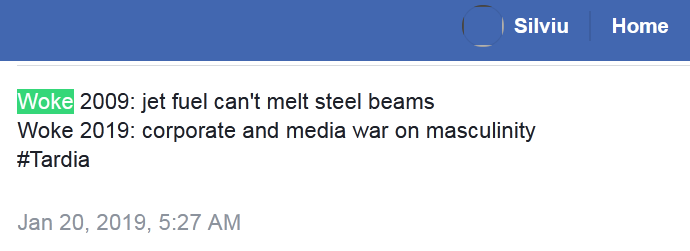
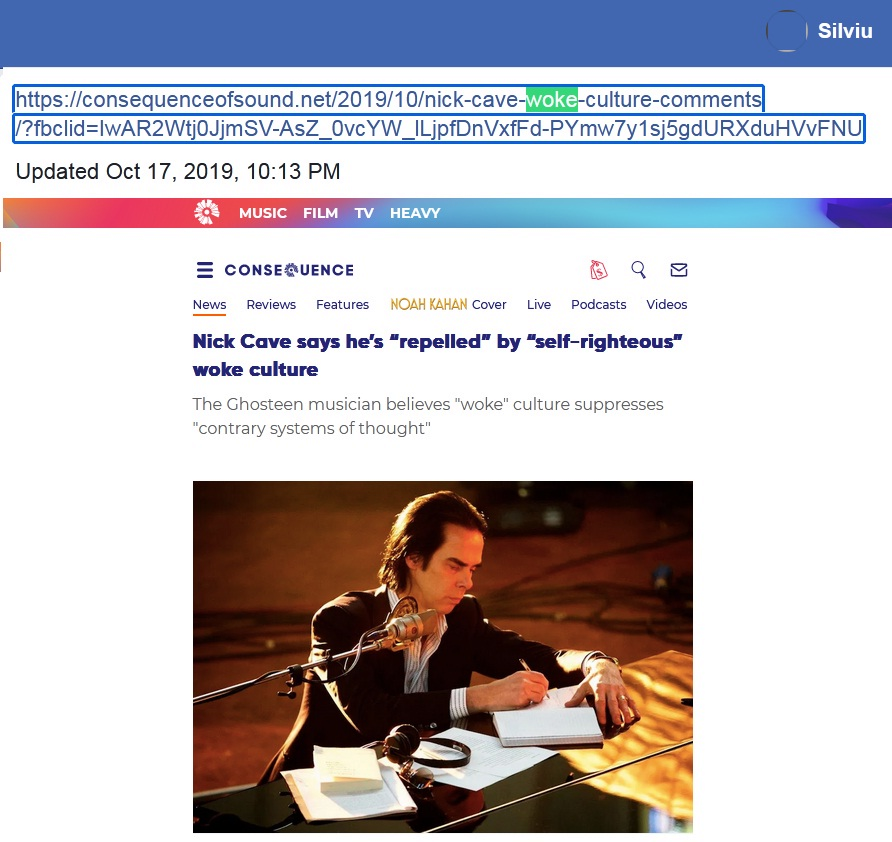
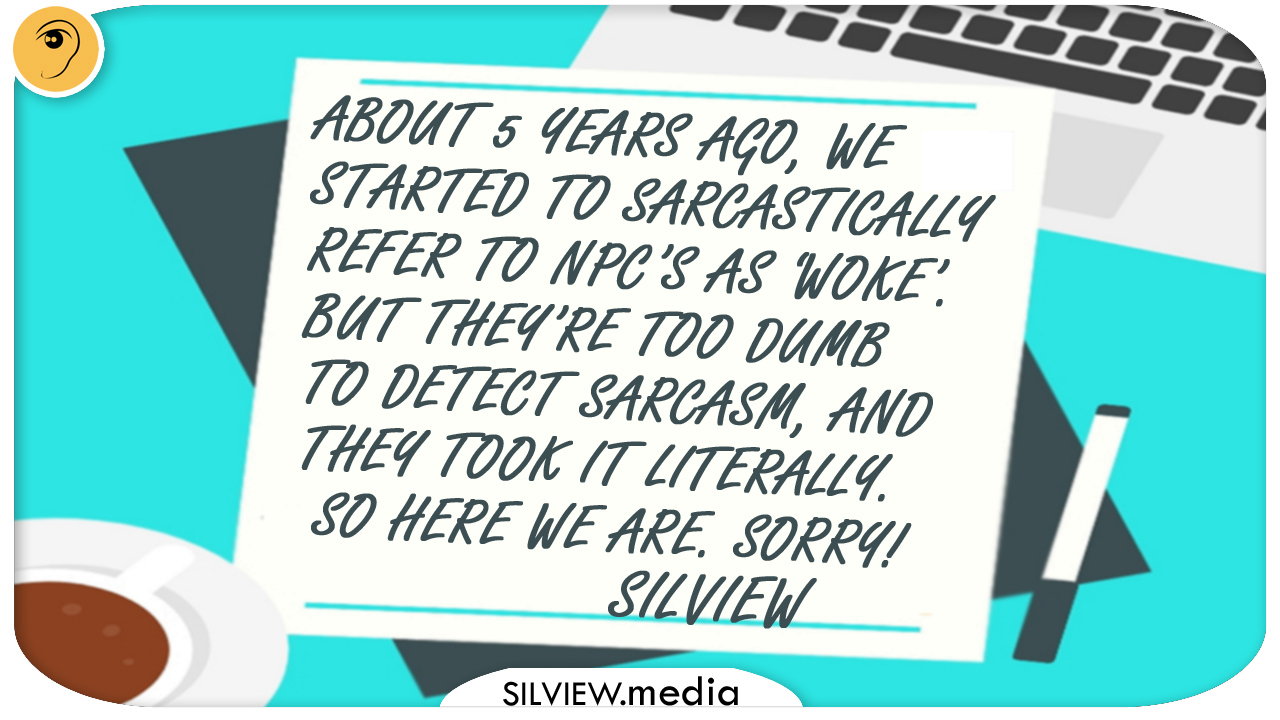
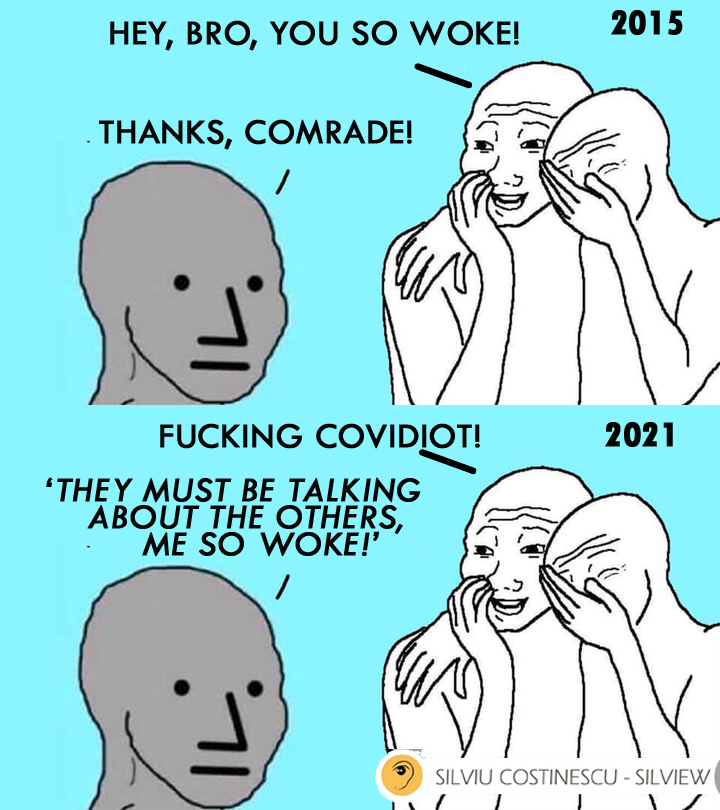
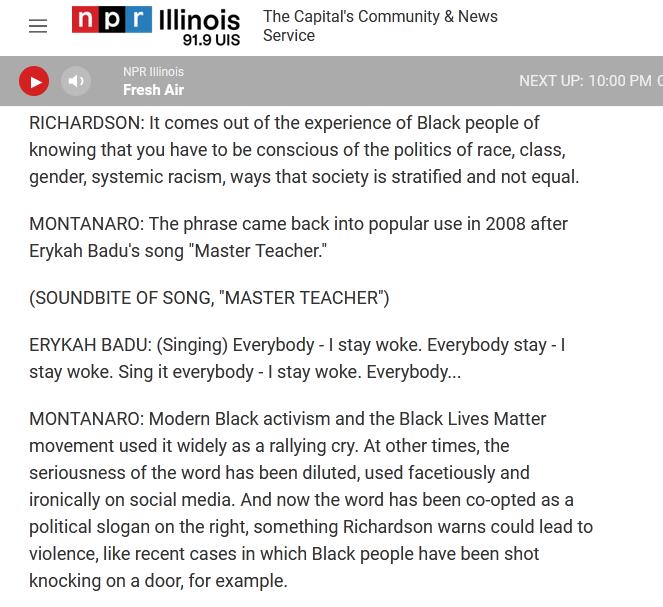


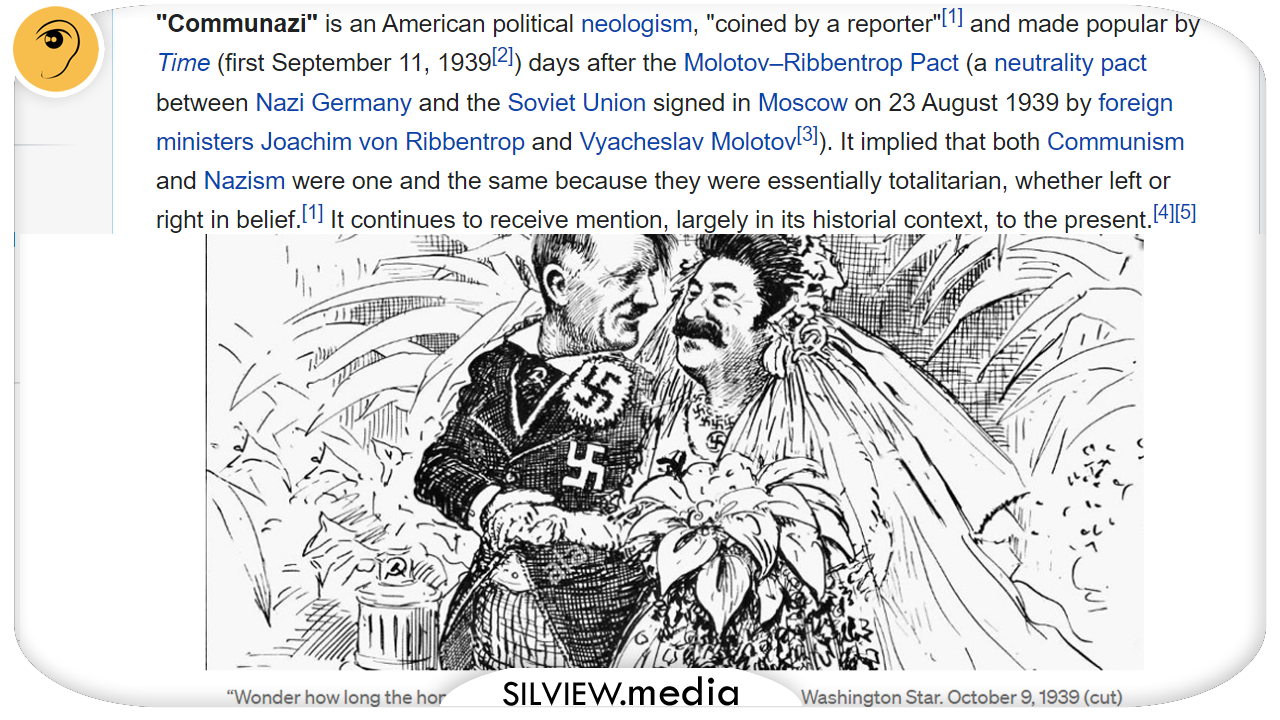





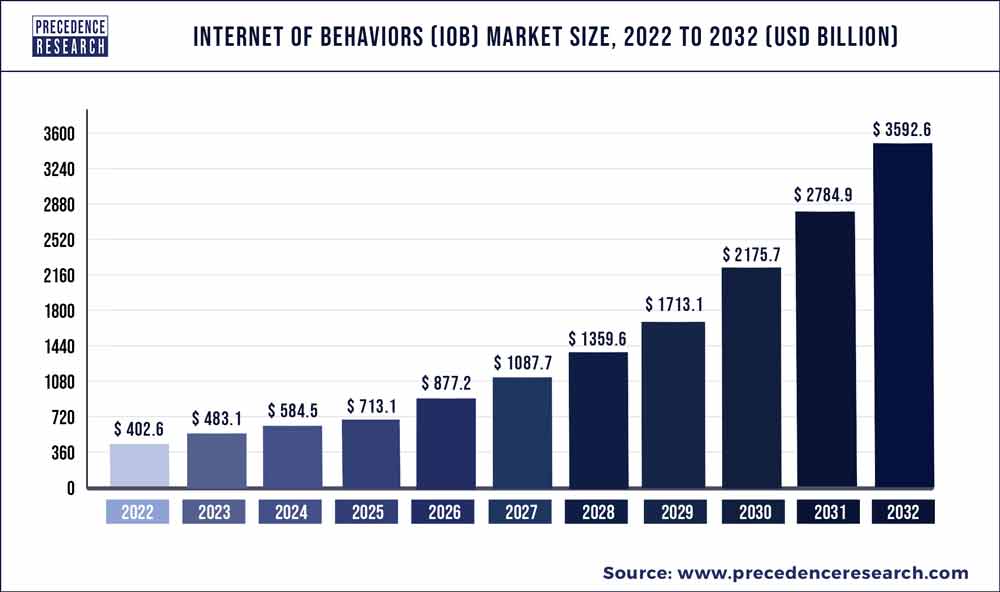






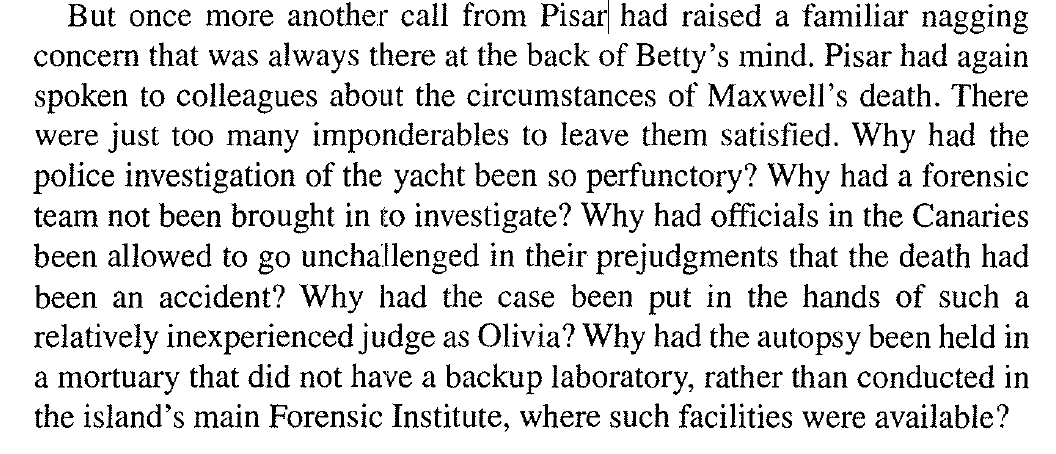
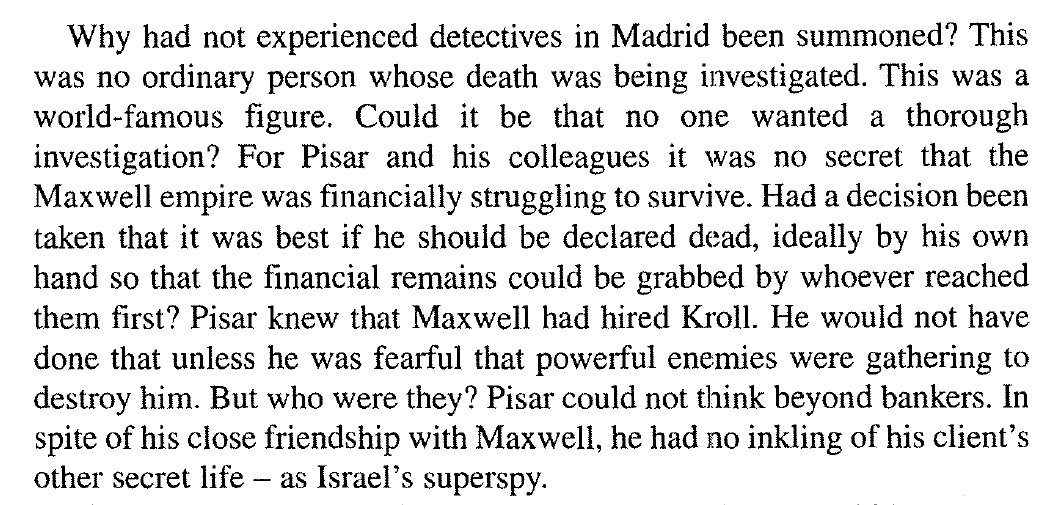









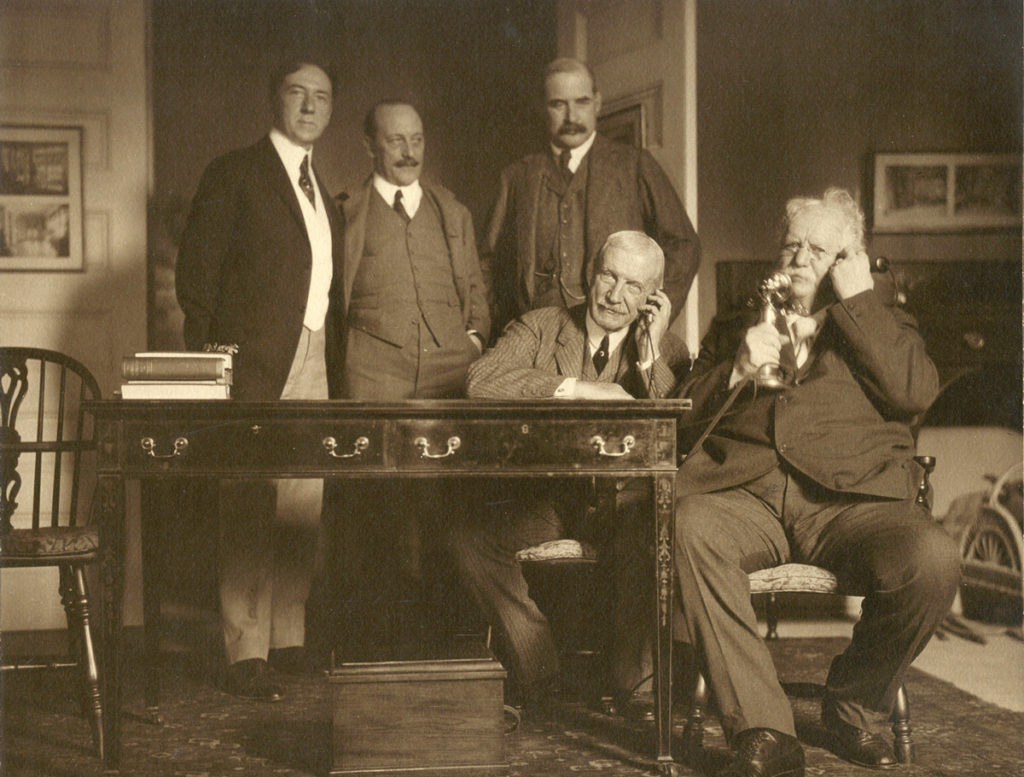

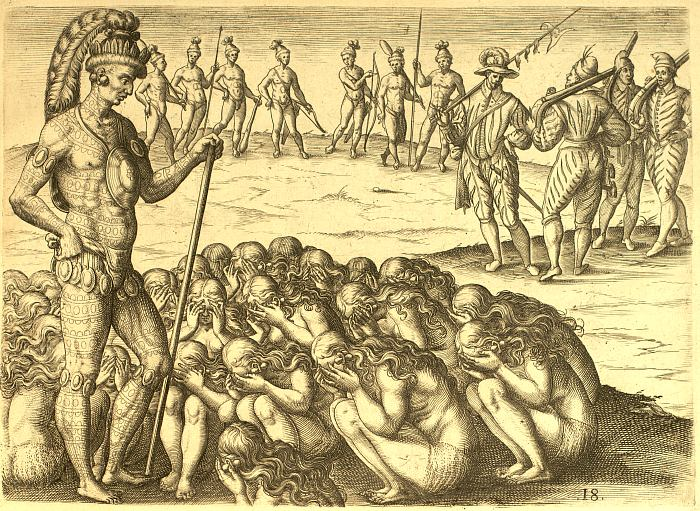
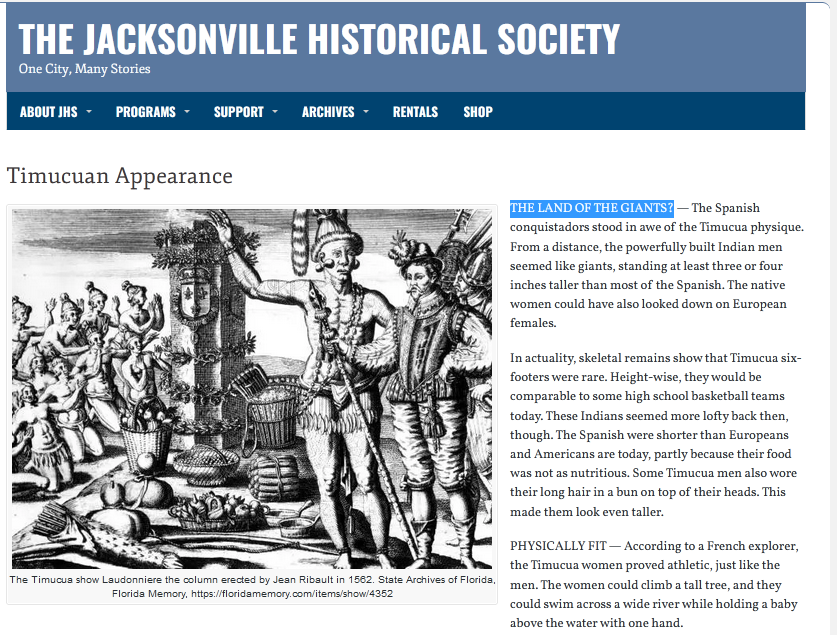

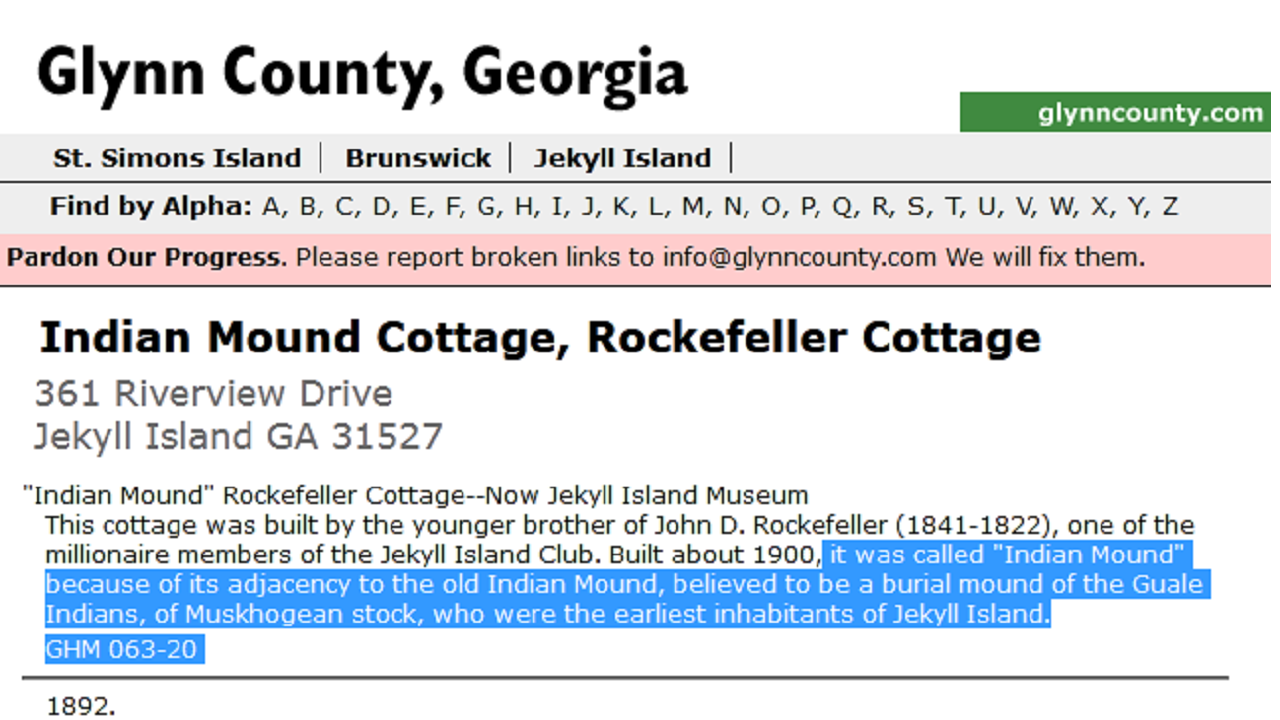


 SILVIEW.media