Mr. Dimitri A. Khalezov, a former Soviet citizen, a former commissioned officer of the so-called “military unit 46179”, otherwise known as “the Special Control Service” of the 12th Chief Directorate of the Defense Ministry of the USSR. The Special Control Service, also known as the Soviet atomic (later “nuclear”) intelligence was a secret military unit responsible for detecting nuclear explosions (including underground nuclear tests) of various adversaries of the former USSR as well as responsible for controlling of observance of various international treaties related to nuclear testing and to peaceful nuclear explosions. After September the 11th Khalezov undertook some extensive 9/11 research and proved that the Twin Towers of World Trade Center, as well as its building 7, were demolished by three underground thermo-nuclear explosions – which earned the very name “ground zero” to the demolition site. Moreover, he testifies that he knew about the in-built so-called “emergency nuclear demolitions scheme” of the Twin Towers as long ago as back in the ‘80s – while being a serviceman in the Soviet Special Control Service.
So maybe it wasn’t Covid that set a bar exactly at pension age, maybe it was the bankers, because the pensions Ponzi-scheme crashed.
To be continued? Our work and existence, as media and people, is funded solely by our most generous supporters. But we’re not really covering our costs so far, and we’re in dire needs to upgrade our equipment, especially for video production. Help SILVIEW.media survive and grow, please donate here, anything helps. Thank you!
! Articles can always be subject of later editing as a way of perfecting them
A FEW TAKE OUTS FROM THE MANY HOURS OF LECTURES AND NEWS BELOW
Giordano admits there are nanobots that can take over insects and turn them into “biodrones”. But pretty much same thing can be achieved with people, it’s just a matter of complexity.
The brain is a battlefield and the drones for it already exist.
The brain is as hackable as any cheap tablet, if not more, due to lack of protection. They can do that non-invasively, even from the satellite, as we’ve warned you the past two years.
From MK Ultra to breaking the fabric of society, neurotechnology has now almost unlimited capabilities.
Meet Dr. James Giordano, Ph.D., Chief, Neuroethics Studies Prog, Georgetown UMC
Dr. James Giordano is Chief of the Neuroethics Studies Program in the Pellegrino Center for Clinical Bioethics, and a professor in the Department of Neurology, and Graduate Liberal Studies Program at Georgetown University, Washington, DC, USA. He is Clark Faculty Fellow of Neurosciences and Ethics at the Human Science Center of Ludwig Maximilians Universität, Munich, Germany, where he previously was JW Fulbright Foundation Visiting Professor. Dr. Giordano is William H. and Ruth Crane Schaefer Distinguished Visiting Professor of Neuroethics at Gallaudet University, Washington, DC; is appointed to the Neuroethics, Legal, and Social Issues Advisory Panel of the Defense Advanced Research Projects Agency (DARPA), and is a Fellow of the Center for National Preparedness at the University of Pittsburgh, PA.
His ongoing research focuses upon the use of advanced neurotechnologies to explore the neurobiology of pain and other neuropsychiatric spectrum disorders; the neuroscience of moral decision-making, and the neuroethical issues arising from the use of neuroscience and neurotechnology in research, clinical medicine, public life, international relations and policy, and national security and defense (for additional information, see: http://www.neurobioethics.org)
The author of over 200 peer-reviewed papers, and 7 books in neuroscience and neuroethics, Dr. Giordano is Editor-in-Chief of the journal Philosophy, Ethics and Humanities in Medicine; Associate Editor for the journal Neuroethics; and Executive Editor-in-Chief of the book series Advances in Neurotechnology: Ethical, Legal and Social Issues (published by CRC Press). –
NEUROTECHNOLOGY IN NATIONAL DEFENSE – DARPA’S DR. JAMES GIORDANO @ MAD SCIENTIST CONFERENCE 2017
His following lectures are just incremental actualizations to the one before, the backbone is largely similar, but there’s some rewarding gold nuggets to be found in each of them, if you have the patience. And I’m going to complement him with some flashbacks from our own reporting.
This presentation is part of the ‘Brain Science and Effective Leadership Series,’ hosted by the Stockdale Center for Ethical Leadership. Dr. Girordano is with the Georgetown University Departments of Neurology and Biochemistry, working in the Neuroethics Study Program, which is a part of the Program in Military Medical Ethics. He also is a Fellow of the Program in Biosecurity, Technology, and Ethics at the Naval War College. In this invigorating and, at points chilling, talk he discusses various potential uses of neurocognitive science in military and intelligence operations, and sketches ethical issues, and angles of analysis that will arise as both allies and adversaries develop such tools, relating them to existing laws of war and conventions.
To be continued? Our work and existence, as media and people, is funded solely by our most generous supporters. But we’re not really covering our costs so far, and we’re in dire needs to upgrade our equipment, especially for video production. Help SILVIEW.media survive and grow, please donate here, anything helps. Thank you!
! Articles can always be subject of later editing as a way of perfecting them
Whether you parade for her or against her, I will rain on it.
If you ditch their narrative just to fall for their counter-narrative, you’re not waking up, you’re barely changing bed side. But it’s time to snooze off now.
This is a little video summary of this report, all the juice is below
‘I believe that the existence of Israel is vital and I will make every effort to invest in greater cooperation between our countries’
Poised to become Italy’s first woman prime minister, Giorgia Meloni speaks with Israel Hayom, saying Putin “crossed a red line” while dismissing the Left’s “ridiculous accusations” of fascism against her.
It appears that history is about to be made in Italy: Giorgia Meloni, the 45-year old leader of the national conservative party Fratelli d’Italia (Brothers of Italy), has pledged to fight mass immigration and Islamization and has been very critical of the European Union, is poised to be elected as the country’s first woman prime minister in the parliamentary election in late September.
Her main rival, former Prime Minister Enrico Letta, the leader of the Democratic Party (PD), has warned that she is a threat to Italians. Her detractors on the Left accuse her of radicalism and affinity to fascist ideas but Meloni − who is spearheading a coalition of right-wing parties − has dismissed this outright. Speaking with Israel Hayom Meloni lashes out at those who engage in anti-Israel and antisemitic attacks, which are now a common feature in left-wing circles.
Q: According to the polls, you are about to become the first woman to serve as Italy’s prime minister. Italian society is considered to be very macho. What is your secret?
“Today’s Italy is somewhat different from the macho stereotype that is still sewn onto it. Nonetheless, it is clear that having a female prime minister would mean breaking that “glass ceiling” that does not enable women to emerge both at institutional and professional levels. I have established myself in a male environment, often feeling that I had to work twice as hard to prove that I was half as good as a man, but in the end, I am proud that I grew up in a political family that chose me as a leader by acknowledging my merits and without any man pushing me forward. That is one of the things that shortcircuits the Left, which has always had nothing to offer but proclamations about the role of women in politics. Then I also had the privilege of being able to be a mother without giving up anything. I will fight to offer the same opportunities to all Italian women by strengthening reconciliation measures and family policies.”
Q: Do you think women do politics differently from men?
“Some people claim that I made it because I became as good as a man. I think I made it because I became as good as a woman. And that is exactly what I want to say to women. In the West, we frequently use mandatory quotas as a solution to the problem: on party lists, corporate boards, etc. Rather, I believe that the solution must take into account both merit and opportunity. Opportunity, since a woman should never be forced to choose between her career and her family life in order to demonstrate her worth. Merit, because if the selection is made on merit there are numerous exceptionally good women and there’s no need for quotas.”
Q: Of all the women, which led their nations − Margaret Thatcher, Angela Merkel, Golda Meir, Indira Gandhi, Benazir Bhutto just to name a few − who inspires you the most?
“I would like to think that I can get the best from each of them because I always expect a lot from myself, something that pushes me to study hard and constantly try to improve myself. The extraordinary women you mentioned shaped the history of their nations and of their times. They were known and frequently loved and admired around the globe. Regardless of their political views, they all loved and defended their country. This, to me, is what a good ruler should always do.”
Q: The Italian election is taking place in stormy times: a menacing global economic and social crisis, the war in Ukraine that has no end, tensions between the USA and China over Taiwan, a possible new war in the Middle East around Iran’s nuclear plans. As a future prime minister, what are going to be your priorities?
“First of all, in the midst of such a storm, you must keep the steering wheel on the starboard side, for us it is Italy’s fundamental European and Western positioning. This is not just a statement of principle, but a choice of the field upon which most of our national policy decisions are based. The most pressing of these is undoubtedly to assist businesses and families in dealing with high energy prices because we will face a severe social crisis in the fall and must do everything possible to avoid it. Only after the emergency has settled, we want to cut labor taxes to boost purchasing power, unleash the forces of our economy, reduce bureaucracy to encourage investment, build tangible and intangible infrastructure, and invest in family policies by getting rid of all those pointless bonuses that fuel welfares but don’t advance the country.”
Q: The EU establishment and European press consider you as a threat to the European project. How do you foresee future relations between Italy and the EU?
“In this sense, the Left is putting forward a narrative aimed at doing me a wrong, but it actually paints Italy in a negative light, offering non-existent arguments to those who want to keep Italy on the periphery of the international stage. The truth, of course, is very different. Italy is a great nation that founded the EU, is a net contributor to the EU budget, and has the third largest economy and the second largest manufacturing in Europe. The voice of Italy must count more, and our national interests must be better protected, just as France’s and Germany’s are. Concerning the future of Europe, first the pandemic and now the war demonstrated that the EU was not prepared. For far too long, Brussels has expanded its competencies in several aspects of our daily lives, disregarding the importance of having a common foreign and defense policy, disregarding the importance of ensuring our energy independence, without shortening our value chains, and without bringing strategic productions back home. In this regard, I would like to see a Europe that does fewer things but does them better, with less centralism, less bureaucracy, and more politics. This will be our contribution to the debate about the future of Europe.”
Q: How would you define your party, The Brothers of Italy (Fdl)?
“FdI is the party of the Italian conservatives; we support individual freedom, the centrality of the family, the preservation of the Western, European, and Italian cultural identities, as well as self-reliance and private economic initiative and social cohesion. We are a modern European and Western right-wing government, a pillar of the European Conservatives and Reformists Party of which the prime ministers of Poland and Czech Republic are members and which I have the honor of chairing. We also have strong ties to Likud, the British Tories, and the American Republicans.
Q: Some members of your party come from Benito Mussolini’s family. The party has connections to the National Alliance − which emerged from the Italian Social Movement. What do you say to all those who accuse your party of neo-fascism?
“These are ridiculous accusations, coming from a desperate Left without arguments. But I don’t want to dodge the question, because I know how delicate it can be to your readers. Fratelli d’Italia is part of the evolving path of the Italian democratic right and since its foundation, it has gathered personalities from other center-right parties, from the Catholic and liberal worlds. Those who, like me, pursue that route, have handed fascism over to history for decades now, firmly condemning the loss of democracy, the outrageous anti-Jewish laws, and the tragedy of World War II. Many of us have previously held government roles; I, myself, was the youngest minister in republican history. We have all sworn the constitutional oath. Everyone knows that we have never been a threat to democracy and obviously we do not become one now, though we are certainly “dangerous” for the power system of the Italian Left, which has been in government for years without winning the elections. The difference between us and them is that I don’t spend my days remembering that, just over thirty years ago, many leftists were members of the strongest pro-Soviet party in the West. It is enough for me to list all the damage made by the left-wing governments today, without having to dig into the past.”
Q: Where do you see the ideological differences between your party and right-wing Lega (League) party?
“The League was born as a territorial party that first fought for independence and, in a second phase, greater autonomy for the regions of northern Italy. We come from a national party tradition that pays equal attention to Italy’s north and south. The League temporarily filled the void left by the Right’s decision to merge with former Prime Minister Silvio Berlusconi to establish a unified center-right party, the People of Freedom. We progressively regained the values, and consequently the electorate, of the Italian Right when, at the end of 2012, we left that party to create Fratelli d’Italia. We also made efforts to widen our electoral base. In recent years, the League has consented to form a coalition government with left-wing parties and movements, while for us, being an alternative to the Left has always been a political imperative, out of respect of our voters.”
Q: Have you ever visited Israel? Are you planning to do so soon?
“Yes, certainly. I was on an official visit to Israel when I was serving as minister during the last Berlusconi government. It was a very significant mission, with the moving visit to Yad Vashem: a conscience-shaking experience. I will certainly return to Israel, hopefully soon. It was something I was considering due to my role as president of the European Conservative Party, of which Likud friends are also members. But the war in Ukraine, the political crisis in Israel, and then the early elections in Italy as well have changed the agenda. I hope to return there as soon as possible, this time as head of government, to discuss together with the new Israeli government about joint collaborations and strategies, starting with those for the supply of natural gas through the eastern Mediterranean Sea.”
Q: What is for you the importance of a Jewish state?
“Israel represents the only fully-fledged democracy in the broader Middle East, and we defend without any reservations its right to exist and live in security. I believe that the existence of the State of Israel is vital, and Fratelli d’Italia will make every effort to invest in greater cooperation between our countries. After all, this has been the friendly attitude that the Italian Center-Right has always held towards Israel whenever it has been in government. On the other hand, the Left cannot say the same, not traditionally and neither in this election campaign, which has brought to light repeated incidents of left-wing candidates being caught writing antisemitic-flavored posts on their social media.”
Q: Do you see a connection between those who call to destroy Israel militarily or through boycotts as a continuation of traditional antisemitism?
“Yes, and I also think that one of the most common manifestations of antisemitism today is anti-Israel propaganda, which Jews in Europe are most likely to encounter online. Jews in Europe are also subjected to the threat coming not only from Far-Left and Far-Right factions but especially from radicalized Islamic immigrants who feed on resentment with regards to Israel. I recall the recent death of young Jeremy Cohen, who was trying to flee an antisemitic attack in the suburbs of Paris when he was killed by a tram. Because the tragedy would have drawn attention to the failure of integration policies, few European media outlets chose to report it. Therefore, as European Conservatives and Fratelli d’Italia, we strongly support the new European Union strategy against antisemitism. Israel is and ought to continue to be a crucial ally of the European Union in the endeavor to eradicate this evil worldwide. We support efforts to increase young students’ understanding of Jewish history, religion, and culture. This will support the elimination of societal prejudices and the full acceptance of Jewish customs in Europe.”
Q: Will a government headed by you recognize Jerusalem as Israel’s capital and move the Italian embassy from Tel Aviv to Jerusalem?
“This is a very sensitive issue, on which I think the next Italian government, like all those before it, will have to act in synergy with our partners in the European Union.”
Q: Italy has close economic relations with Iran. How, in your opinion, should the West prevent Iran from becoming a military nuclear power and how can Italy contribute to it?
“Sanctions have had a heavy impact on many Italian companies that had built strong economic ties with Iran, nevertheless it is certainly not time for second thoughts unless certain conditions are met. Indeed, we are extremely concerned about Iran’s role in the region, its ongoing rapprochement with Russia and China, its continued support for Hezbollah, which continues to threaten Israel’s security, as well as the IAEA’s report indicating that there are insufficient effective controls over Iran’s missile development. Without additional assurances for Israel, which is reasonably anxious about the timing of uranium enrichment required to create the atomic weapon, we believe it will be difficult to revive the 2015 deal. We firmly supported the Abraham’s Accords as a means of maintaining regional stability and curbing down Iran’s aggressive foreign policy; therefore we believe they should be further implemented.”
Q: How can one stop the war in Ukraine and do you fear a greater war in Europe?
“The war on Ukraine is not only a blatant violation of international law, an aggression against the territorial integrity of a sovereign nation, and a manifestation of Russian expansionism but an attempt to subvert the current world order to the detriment of the West and for the benefit of communist China. A scenario that Europe must strongly reject. A possible expansion of the war to other Eastern European nations is an eventuality denounced by our Polish friends, which unfortunately we must not underestimate. For this reason, we must not stop supporting Ukraine. Look, I say this firmly but with just as much regret, even knowing the special ties that historically unite Israel and Russia. In 2002, Italy itself hosted a NATO-Russia summit to build an enlarged West and face together the threat brought by Islamic terrorism. Twenty years have passed, that prospect has stalled, and Putin has unfortunately crossed a red line.”
Q: Should the West and the EU increase sanctions on Russia or should they seek to soften the pressure on Moscow in order to advance a diplomatic solution?
“The Ukrainian counteroffensive these days demonstrates that the stranglehold exerted by sanctions and the sending of weapons to Kyiv is beginning to work and I do not think it should be loosened. It does, however, raise an issue of the endurance of Europe and the West vis-à-vis the economic and political cost of the sanctions, which clearly impact differently from nation to nation, with some major Western states even enriching themselves from this situation. That is why we have for some time been strongly calling for the creation of a compensation fund, supplied by the EU and NATO countries (the US first and foremost), to support the most vulnerable nations and to prevent Russian propaganda from making its way to the very many people who will have enormous subsistence problems next fall.”
Q: What is your favorite book? Music? Movies? Food? And do you consider yourself to be religious?
“My favorite book by far is J.R.R. Tolkien’s “The Lord of the Rings,” a wonderful tale that is very beneficial for those in politics: It teaches one to put the fate of one’s community ahead of one’s individual destiny, but also not to be charmed by the thirst for power. As for music, I listen to everything, from rock to classical music. Each chapter of my autobiography is introduced by the quotation of a song: from Ed Sheeran to Adele, passing through two Italian giants such as Battisti and Battiato. My favorite movie is Braveheart, a tale of love and courage that was important for my generation. I love traditional Italian dishes. Wherever I go I like to eat the local specialty, which is also an important identity factor for each territory. I am Catholic, I believe in God, and among the Church figures to whom I am most attached is John Paul II.“
We don’t pretend to be experts on Italian politics. Nevertheless, the similarities with fake populist Republicans here in America is unmistakable. The warning message: for a deeply unpopular ruling elite, the best way to remain in power at the moment may be to subvert and control the public backlash roiling against it.
It would appear odd on the surface that the ruling establishment’s propaganda units seem to be enjoying the rise of “far-right” Italian politician Giorgia Meloni. As big-box stalwart Politico wrote last month:
Crucial to Meloni’s success is that she represents the traditional nationalist right better than [rival Matteo] Salvini, and that she has remained out of government, said [University of Surrey professor Danielle] Albertazzi. “It doesn’t mean she will be successful three or four years from now,” he added. “But this is her moment.”
Numerous other outlets are echoing that last sentence: Giorgia Meloni’s time has arrived. This alone should be cause for skepticism. And, indeed, a review of Meloni shows as much red flags flying as can be found with a hedge fund multi-millionaire posing as an America First devotee on this side of the Atlantic.
For an alleged “far right” fanatical nationalist who smacks of Mussolinian fascism, Meloni has a highly disturbing habit of speaking the international language of globalism.
Here is how she described her support for the progressive ruling establishment globalist crusade in Ukraine:
“I am backing this because Italy should not abandon its international allies,” she told [UK newspaper] The Times. “I think Italy should show it is a faithful, solid and credible ally, above and beyond the Ukrainian cause, which I support.”
The Italian Post quoted her remarks to Italian television station Sky TG24 on the subject in February. This is indistinguishable from what a member of the Biden administration would say in dropping gobbledygook about preserving the “rules-based international order”:
“I believe that the violation of the territorial integrity of a nation, also European, is unacceptable against which the community must react: this is the position of [her political party] the Brothers of Italy,” said Meloni, referring to what is happening in Ukraine. “Russia is certainly a nation very close to the European dimension on a cultural level, but this does not detract from international law and the fact that Italy, which is part of the Atlantic Alliance, today must firmly, without hesitation, reaffirm that positioning and do everything that can be done to defend international law.”
“We are always for respect for the rules and for loyalty with our international allies who are part of the Atlantic alliance. Indeed, our parliamentarians who spoke today signaled that if Italy wanted to be more central, credible and more considered, perhaps it should respect constraints,” continued the leader of the Brothers of Italy, explaining that Italy should contribute more to defense costs as part of its membership of NATO.
“Far-right nationalists” also are not in the habit of joining internationalist think tanks. Yet Meloni is a member of the notorious Aspen Institute. See picture 3 accompanying this article from The Aspen Institute Italia website.
Just like a plugged-in RINO here at home, Meloni was invited to speak at CPAC. Italian news site Formiche reported in February 2021:
Giorgia Meloni, the leader of the right-wing Brothers of Italy party, is on a star-spangled roll. Rumors obtained by Formiche.net say she might participate, either online or in person, to the next Conservative political Action Conference (CPAC) in Orlando, Florida, although her name isn’t on the guest list yet….
If Ms. Meloni does participate, this latest development is yet another step on the American ladder she has been building for some time. A few weeks ago, she became a member of the Aspen Institute, the powerful and influential American think tank led by the political veteran and academic Giulio Tremonti. The halls of Aspen’s Roman division are crossed by all sorts of heavyweight thinkers and leaders, including [Joe] Biden during his tenure as Barack Obama‘s Vice-President.
Meloni did speak at CPAC this year, where she stressed a generic need to be “conservative,” oppose “cancel culture” and defend Christmas, while again stating her strong support for “the side of international law.” It’s the RINO GOP primary playbook and Meloni was reciting it word for word.
Formiche laid out Meloni’s carefully crafted strategy to cement her status in the European conservative mainstream. The pattern should be familiar to anyone who has observed the careerist American conservative politician in his natural element:
In September 2020, she became chairwoman of the European Conservatives and Reformist party, the 10th biggest European political family. She explained this by distancing herself from her former flat-out Euroscepticism and embracing the idea that she could best defend the Italian’s interests from within the European institutions….
She is walking a fine line between keeping true to her party’s right-wing ideologies and enhancing them with the international alliances and support that are necessary to become a truly palatable (and effective) global leader.
The bigger picture emerging is that of an internationally savvy politician, one who has understood the limits of extreme nationalism and anti-establishment positions and who is weaving a global web of influence.
Ms. Meloni’s strengthening American ties show that she pictures herself as part of the global congress of institutional conservatives, and might also dampen the “anti-institutional” blowback that rejecting the Draghi government might have brought onto her. Her entrance in the Aspen Institute signals that she has dropped the anti-establishment, anti-“powers-that-be” populist rhetoric, and mark her as a trustworthy, well-connected thinking head.
A May Bloomberg article also touched on the curious gymnastics of the woman whose “party sprang from the ashes of fascism,” as the dominant media outlet so luridly put it.
Question: Does the world really need a right-wing Tony Blair?
Meloni is now the only real political star untainted by the machinations of the sistema. She’s learned lessons from the failure of the hardcore euroskepticism of [Marine] Le Pen and Salvini — indeed, she’d distanced herself from Le Pen, well before the French elections. Meloni’s positioned herself as a new type of conservative, calling herself “a right wing” Tony Blair. If that’s confusing, it’s probably intended to be. Many of Meloni’s positions are contradictory. She knows Italy needs European Union funds, hence the softer anti-EU stance. But she remains openly opposed to immigration and against European federalism. An unmarried mother, she presents herself as a defender of Christian, traditional family values.
Meloni is supposedly ardently pro-life yet she is already wobbling on getting rid of Italy’s notorious Act 194, which legalized abortion in the overwhelmingly Catholic country in 1978, in the wake of Roe v. Wade being overturned in the U.S. MercatorNet reports:
Meanwhile the leader of Fratelli d’Italia, a right-wing party is hedging her bets. Giorgia Meloni says that she isn’t working for the abolition of Act 194, but rather wants to see its first part, concerning abortion prevention, honored. She also points out that the American situation was very different from Italy’s, where abortion is allowed by a law voted by the parliament and not by a court ruling.
A stridently anti-right article that appeared in Israel’s Haaretz newspaper in July 2021 convincingly portrays Meloni as a total political opportunist on the gravely important issue of COVID social tyranny:
Earlier this month, Italy introduced a “green pass” for vaccinated people, a requirement for entry into restaurants, bars, museums and other public venues. Meloni panned it as a move that “limits the freedom of citizens, further devastates the economy and de facto introduces a vaccine mandate.”
In various tweets she’s called the decision “dangerous and discriminatory” and described the green pass as an “unconstitutional folly” and “the final step on the road to the creation of an Orwellian society.” For the Brothers of Italy, Meloni declares, individual freedom is “scared and inviolable.”
This is the same politician who, as recently as this March, wrote a panegyric to the green pass idea: “Why doesn’t the EU Commission request an emergency procedure to the EU Parliament to approve the digital green pass? The green pass is the first step to eliminating the obstacles to free movement that have so damaged our economy, especially the tourism sector. It’s a tool that should be implemented as soon as possible.”
Accused of hypocrisy, Meloni grabbed the goalposts and relocated them. She claimed she supported a different green pass – one that allowed international travel – but that she was against, had always been against, would always be against, a green pass that limits access to venues within the country.
On this topic, Meloni once again apes the party line language of the progressive ruling establishment:
In 2018, discussing vaccine mandates, she wrote the following tweet, which has since been deleted, but had been archived by some savvy Italian media observers.
“On vaccines we need to have the humility of trusting the scientific community,” Meloni said then. “I think going back would be a mistake. It’s a topic that must not be dealt with on an ideological level: let those who are competent decide which vaccines are necessary and mandatory.”
The progressive ruling establishment crosses all borders. Which is to be expected considering its chief aim is to abolish those boundaries to erect its one-world order. Joe Biden, Pierre Trudeau, Emmanuel Macron are all essentially indistinguishable in this regard. Each is the same flavor of servant on behalf of one grand overarching agenda.
America First advocates therefore should have a keen desire to see populist nationalism thrive in countries around the world. In order to truly oppose that which is being planned, however, authentic representatives of freedom and sovereignty must arise here and abroad.
Unfortunately, the ruling establishment is all too aware of this fact as well. Controlling the reaction against it is and has always been a powerful weapon in the arsenal of tyranny.
“You are the same person who rushed to join the ASPEN INSTITUTE which is the sewer of the worst globalism and the worst speculative international finance. You did not hesitate to assume the presidency of the Conservative Party in the European Parliament.”
Open letter to Giorgia Meloni, by Prof. AUGUSTO SINAGRA, professor of European Community law at the Faculty of Political Sciences of the University of Rome “La Sapienza”. Attorney before the Higher Courts, in ITALY and the European Court of Human Rights, in STRASBOURG.
“The Aspen Institute Kyiv actively participated in the organization of the program for the Ukraine House Davos. During a week Ukraine House Davos organized panel discussions, cultural events and networking sessions for the world’s business elite. The conversation focused on panelists’ experience related to leadership roles they play in organizations that are aimed at positive social changes. Ukraine House Davos is powered by co-organizers Ukrainian Venture Capital and Private Equity Association (UVCA), Western NIS Enterprise Fund (WNISEF), Victor Pinchuk Foundation and Horizon Capital.” – The Aspen InstituteSOURCE
You can’t be free until you freed your mind from the statist religion and break ALL the illusory political chains.
A modern country is just a slave barrack designed and built by masons for Jewish use. Of course you will experience some bonds, quarrels and common history in a slave barrack. That doesn’t make it holy. Only your best friends, most peaceful people and wisest elders there are worth of praise, not the shack, not the management, not the herd symbols they burn in your mind.
Dear @ZelenskyyUa, you know that you can count on our loyal support for the cause of freedom of Ukrainian people. Stay strong and keep your faith steadfast! 🇮🇹🇺🇦
To be continued? Our work and existence, as media and people, is funded solely by our most generous supporters. But we’re not really covering our costs so far, and we’re in dire needs to upgrade our equipment, especially for video production. Help SILVIEW.media survive and grow, please donate here, anything helps. Thank you!
! Articles can always be subject of later editing as a way of perfecting them
To be continued? Our work and existence, as media and people, is funded solely by our most generous supporters. But we’re not really covering our costs so far, and we’re in dire needs to upgrade our equipment, especially for video production. Help SILVIEW.media survive and grow, please donate here, anything helps. Thank you!
! Articles can always be subject of later editing as a way of perfecting them
His silence is a disservice to his people and a service to himself and Israel.
This is the kind of stuff that doesn’t really need more wordy intros or outros. The dots have been joined, you either can handle the truth or you can’t, no 3rd option.
I cited copiously from following fellow independent truthers, thanks for their efforts:
Know More News SMH Productions
To be continued? Our work and existence, as media and people, is funded solely by our most generous supporters. But we’re not really covering our costs so far, and we’re in dire needs to upgrade our equipment, especially for video production. Help SILVIEW.media survive and grow, please donate here, anything helps. Thank you!
! Articles can always be subject of later editing as a way of perfecting them
… caused a bunch of alarmist headlines about the WEF and “poop water”, and they are not wrong, just behind the curve:
But poop-water’s story goes back more than a decade. By my observations, whatever it is, if it’s happening now, it’s probably been in the works for 2o years or longer. This next thing is from 2011 Buzzfeed:
Why Drinking Purified Poo Water Is So Gross, Even When It Shouldn’t Be
There’s a reason you don’t drink out of the toilet. It’s gross. Even if you got a super toilet that only flushed diamond rain water, it’d still be disgusting. But that’s the thing. The only thing keeping you from drinking cleansed pisswater is you.
According to NPR, proposals to reuse sewage and turn it into drinking water have been shot down numerous times over the years. And it’s not that the water didn’t meet standards for cleanliness. It would have been fine. Rather, they never got off the ground simply because the idea sounded so nasty.
And don’t get me wrong. We’ve done it, too. It just has everything to do with a phenomenon called psychological contagion. Remember the episode of Seinfeld when Jerry accidentally knocks his girlfriend’s toothbrush into the toilet? And, after brushing her teeth with it, she forever after had a “taint”? Same deal. The dirtiness of the toilet attached itself to her mouth. So too does the dirtiness of our poop to the water that was cleansed of it. We still think it’s dirty.
So how do you fix it? More psychology. Scientists found that after making people think about the purified water in an underwater aquifer, they were more apt to drink it. Which is kinda crazy. Just think. You could make me drink actual poo water if you made me think it was mountain fresh, but telling me truly clean water originated in a sewer would make me cringe.
Moreover, actually putting that thinking into practice would be expensive. Running the water some kind of underground spring just to make you think it’s clean could make it dirty all over again. So then it has to be cleaned again, making the process cost maybe three times as much as it already does. And you’d probably have to pay more for it, too.
To be continued? Our work and existence, as media and people, is funded solely by our most generous supporters. But we’re not really covering our costs so far, and we’re in dire needs to upgrade our equipment, especially for video production. Help SILVIEW.media survive and grow, please donate here, anything helps. Thank you!
! Articles can always be subject of later editing as a way of perfecting them
If you took the study of history into your own hands, this should not surprise you. If you’re still bamboozled by the official narrative, this should rock your world.
If I concede, solely for discussion’s sake, that Jews were not the dominant force in the transatlantic slave trade, you have to concede that blacks, Jews and whites worked shoulder to shoulder at the edifice of slavery.
Blacks hunted their own brothers and sold them to Jewish traders for guns, alcohol and glass beads, Jews then distributed the goyim (Jewish word for “cattle” as well as for non-Jewish people) to white, Jewish and even black slave owners.
Last century, Jews started to throw their former white partners under the bus of fake history and propagandistic culture. The later generations of blacks jumped aboard the White Blame Only ship with the same goal: to make their ancestors’ contribution forgotten and obtain benefits from exploiting a more convenient fake narrative.
Their combined manipulative force can easily fool the majority, but can’t fool everyone all the time.
Here are some exceptions:
If this work gets enough love, I might come up with a follow up, there are much more sources, I just adapted to the human attention span.
Rappers obviously didn’t invent anti-Semitism, but in the early 1990s, some of them certainly “did play a role in spreading it and giving it authority and credibility,” said Glenn Altschuler, the Thomas and Dorothy Litwin Professor of American Studies at Cornell, in his public lecture “Bad Rap: Public Enemy and Jewish Enmity,” Sept. 21 at the A.D. White House.
Citing the rap group Public Enemy’s 1990 hit single “Welcome to the Terrordome,” recorded during a period marked with tension between blacks and American Jews, Altschuler quoted the controversial rap group lyrics:
Crucifixion ain’t no fiction
So called chosen frozen
Apology made to who ever pleases
Still they got me like Jesus.
Launching the new Jewish Studies Lecture Series, Altschuler, who also serves as dean of the School of Continuing Education and Summer Sessions and vice president for university relations at Cornell, noted that rap first emerged in the 1970s in response to racial problems in America, serving as a way for black artists to fight back and express the black experience through song.
“Freshly articulated, imaginative and inventive visions of what it meant to be black in the United States found audiences eager to deride, degrade and disrespect authority, tradition and race-based hierarchies,” said Altschuler.
As the genre spread across the United States in the next several decades, rap and hip-hop became “the music of choice not only for black youth, but for non-blacks as well, especially those young men and women starved for authenticity,” Altschuler noted.
While the foundations of rap lie in empowerment and expression, Public Enemy emerged in the ’80s, taking their expression to a new level of politically charged and blatantly anti-Semitic statements and song lyrics, Altschuler said. Seven months before the release of “Welcome to the Terrordome,” one of the group members, Richard “Professor Griff” Griffin, made a number of anti-Semitic statements in an interview with the Washington Times. “‘Jews are wicked, and we can prove this,’” Altschuler quoted him as saying.
“Publication of these statements in the Washington Times ignited a firestorm in the mass media, and Public Enemy scrambled to respond,” said Altschuler. Griffin was asked to leave the group, but shortly thereafter rejoined the group and “Welcome to the Terrordome” was released, making the group’s condemnation of Griffin’s statements seem superficial, and resulted in more public outcry, Altschuler said.
During the question-and-answer session, Altschuler said that Public Enemy’s anti-Semitism persisted even after the controversy surrounding Griffin. In their 1999 album “There’s a Poison Goin’ On,” Public Enemy mocked the movie “Schindler’s List” in the song “Swindlers Lust” with anti-Semitic lyrics like, “Laughin’ all the way to the bank; remember dem own the banks” and “Mo dollars, mo cents, for the big six, another million led to bled, claimin’ they innocence.”
In the last decade or so, Altschuler said, tensions between blacks and Jews have subsided, the mass media has turned to other issues, and rap culture has moved on. Gangsta rap was introduced in the ’90s, shifting the focus of rap culture from racism to “street life, smoking weed, violence and booty, be it women or cash money.”
“Rappers revised, rewrote and recycled ‘history,’ shining a demonic light on race, racism and the exploitation of black people by Jews,” said Altschuler. “And then as businessmen attuned to the mainstream market do, and beat reporters must, they moved on to another hot topic.”
The lecture was sponsored by the Department of Jewish Studies and the Department of Near Eastern Studies.
Michelle Spektor ’12 is a writer intern at the Cornell Chronicle.
Jews Mostly Supported Slavery — Or Kept Silent — During Civil War
Whenever I told someone that I was working on an exhibition called “Passages Through the Fire: Jews and the Civil War,” I typically got two responses. Both reflect the need for the exhibit (now on display at Yeshiva University Museum in New York), which presents the widely forgotten story of the full participation of Jews in the nation’s great existential crisis.
My sister’s reaction was typical: There were Jews in the Civil War? Who knew?
The second most common response was in some ways more interesting: The Jews who fought in the Civil War were against slavery, right? The discomfiting answer: not so much.
As Jewish historian Dale Rosengarten expresses it, quoting a Talmudic precept: “The law of the land is the law of the Jews.” From a modern perspective, it seems anomalous that a people whose history hinged on an epic escape from servitude would not have been deeply troubled by America’s “peculiar institution” — but few were.
Some Jews owned slaves, a few traded them, and the livelihoods of many, North and South, were inextricably bound to the slave system. Most southern Jews defended slavery, and some went further, advocating its expansion.
Notable among these was Judah P. Benjamin, labeled by the abolitionist Ben Wade, who served with Benjamin in the U.S. Senate, as “an Israelite with Egyptian principles.” Even in the North, many sympathized with the South and only a very few were abolitionists. Almost all Jews sought peace above all else. Until the war was at hand, they remained silent on the subject.
For me, that silence is problematic.
As Arnie, in Nathan Englander’s short story “Camp Sundown,” puts it: “The turning away of the head is the same as turning the knife.” Yet the majority of American Jews were mute on the subject, perhaps because they dreaded its tremendous corrosive power. Prior to 1861, there are virtually no instances of rabbinical sermons on slavery, probably due to fear that the controversy would trigger a sectional conflict in which Jewish families would be arrayed on opposite sides. And that is exactly what happened.
Ironically, the silence was breached by an attempt to forestall the conflict. With Lincoln’s election and the gathering momentum of the secession movement, the celebrated New York Rabbi Morris Raphall attempted to make a case for reconciliation by defending slavery on biblical grounds. The speech had the opposite effect, triggering furious rebuttals from Rabbi David Einhorn and biblical scholar Michael Heilprin, among others, and widening the growing divide. Jews had at last engaged in numbers with the great issue of the age.
When the war broke out, Jews did by and large attach themselves to their sections and to the causes of their sections, even at the risk of great suffering, painful separation from loved ones, grievous injury, horrific death, and as foretold, dividing families and pitting brothers against each other.
“Passages Through the Fire” is filled with such stories. What emerges from them is the heartfelt, touching, personal language in which they are told, often by people whose English is newly learned.
Their words reveal the pride, pain, and ardor of these remarkable people, who were willing to put so much on the line. Whether in combat, in other forms of service to the war effort, on the home front or in a host of other roles, their passion is unmistakable. And, of course, the war transformed them, their place in America, and, in ways we are still struggling to understand, America itself.
Although few Jews, like other Americans, opposed slavery at the war’s outset, many came to feel that the suffering of the war needed to be about something important: the end of slavery and the creation of a different America. The experience of Jews in New York City is indicative of this process in some ways. By far America’s largest Jewish community, New York’s Jews were overwhelmingly pro-southern, pro-slavery, and anti-Lincoln in the early years of the war. Increasingly, however, as both the toll of the war and the North’s military victories mounted, feelings began to shift toward “Father Abraham,” his party, the Union and eventually, emancipation. Close to 2,000 Jews from New York State joined the Union forces.
As historian Howard Rock sums up, “The war was a transformative moment for Jews’ understanding of American democracy.” The decision by Jews’ Hospital — later Mt. Sinai — to care for all sick and wounded soldiers and sailors was emblematic of the Jewish community’s expanded civic commitment. By war’s end, a number of Jews became leaders in advancing the cause of civil liberties. “Father Abraham” became a hero to most Jews. The Jewish Cult of Lincoln, which had many Old Testament overtones — Lincoln died on the first night of Passover, for instance, and the first eulogies were delivered from synagogue pulpits — would persist for decades.
The outcome of the nation’s great existential crisis made possible the open and most welcoming society Jews had ever encountered, what one of my cousins (in a not-uncommon Yiddish phrase) called “Golden America.”
The Jews caught up in that crisis were transformed by it and, in turn, helped transform the America that emerged from it. Yet relatively few Jews are aware of this, an amnesia that constitutes a deep loss. The history of the Civil War has long been bitterly contested. Perhaps as with the contest over slavery itself, it would be helpful if more Jews were engaged in it. American Jews have a stake in this history, and their experience over the last 150 years makes a lot more sense if viewed through its lens.
Ken Yellis, principal of Project Development Services, served as guest curator for “Passages through the Fire: Jews and the Civil War.” A historian with four decades in the museum field, Yellis has been involved in over 100 history, science and art exhibitions.
To be continued? Our work and existence, as media and people, is funded solely by our most generous supporters. But we’re not really covering our costs so far, and we’re in dire needs to upgrade our equipment, especially for video production. Help SILVIEW.media survive and grow, please donate here, anything helps. Thank you!
! Articles can always be subject of later editing as a way of perfecting them
It’s an old science, just like geo-engineering. Thinking wildfires are really wild in the 21st Century is naivety.
Forest Fire as a Military Weapon
A June 1970 Report of study commissioned by the Dept of Defense.
In 1965 the Joint Chiefs of Staff requested that the Secretary of Defense initiate research to determine the feasibility of measuring the flammability characteristics of forests and jungle growth, modifying flammability so that vegetation would readily support combustion and developing measures to destroy large areas of forest or jungle growth by fire. This research has been conducted by the Forest Service of the Department of Agriculture, under sponsorship of the Advanced Research Projects Agency through ARPA Order 818. The primary research attention was given to the flammability characteristics of jungle growth in tropical and monsoonal climates where forest fires seldom occur naturally.
The United States is at grave risk of a future pyro-terrorist attack. We must define the threat, understand America’s vulnerabilities with regard to it, and take action to mitigate this danger to our homeland. While America focuses on the readily apparent scenarios of smuggled nuclear weapons and radiological bombs, Al Qaeda and other terrorist organizations are adapting to avoid our security and screening systems. Instead of using expensive, complex, and readily detectable nuclear or radiological bombs, a future terrorist could easily ignite multiple massive wildfires that would severely damage our regional economies, impact our military forces, and terrorize the American population. An opportunistic terrorist could create a conflagration potentially equal to a multi-megaton nuclear weapon. This phenomenon is defined as pyro-terrorism: the use of arson attacks to terrorize the civilian population and coerce the government to comply with the terrorists’ political or social objectives. Arson, the destruction of property with fire for profit or revenge, is the tactic. It is the political and psychological intent that differentiates pyro-terrorism from arson. This paper will describe pyro-terrorism, discuss how existing terrorism tactics and future intent define the threat, assess America’s vulnerability to pyro-terrorism, and identify various actions the U.S. Government must take to mitigate this vulnerability. If terrorist organizations use arson as a tactic, and publicly assume responsibility for the massive fires it causes, the perception of a secure homeland among the populace would quickly erode. The fire’s devastation could overwhelm suppression resources, weaken regional economies, destroy critical infrastructure, effect readiness in military forces, and put political pressure on national leadership for policy change.
There is more literature out there on the topic, but I think these two documents define and prove a spectrum of possibilities and one simple point: wildfires go wild only if people allow them to. But that rarely happens.
It’s pyroterrorism more often than not.
Much life farm and food plant fires lately.
To be continued? Our work and existence, as media and people, is funded solely by our most generous supporters. But we’re not really covering our costs so far, and we’re in dire needs to upgrade our equipment, especially for video production. Help SILVIEW.media survive and grow, please donate here, anything helps. Thank you!
! Articles can always be subject of later editing as a way of perfecting them
IF YOU’RE READING THIS, YOU’RE PROBABLY TARGETED BY A GOVERNMENT OR TWO. SO I MADE SOMETHING FOR YOU. SEE DETAILS / ORDER
Flogging a dead terrorist by the methods of your former boss’ playbook, how it’s done:
Remember: the US Government is the only source for the news of Bin Laden’s assassination by the US Government. There have been many reports of his death before the alleged assassination. There are no three independent sources to verify any of their claims.
No three sources, as opposed to Arab News in 2020, which themselves display a very cautious tone, but, formally, are way more based, despite the Israeli commentator’s opinions on WION TV:
Ayman al-Zawahiri ‘dead’ – Al-Qaeda boss dies from asthma in Afghan mountain hideout, reports claim
AL-QAEDA leader Ayman al-Zawahiri who took over after the death of Osama bin Laden has reportedly died in Afghanistan.
Al-Zawahiri – sometimes dubbed Dr Death – last appeared in a video message for the group on the anniversary of the 9/11 terror attacks on the US.
Ayman al-Zawahiri took up leadership after the death of Osama bin LadenCredit: Getty Images – GettyAyman al-Zawahiri and Osama bin LadenCredit: AP:Associated Press
Arab News reports the terrorist, 68, died of natural causes related to asthma citing four sources in Pakistan and Afghanistan.
US intelligence officials are reportedly aware of the reports and are attempting to confirm whether or not they are true.
The Sun Online has contacted the UK Ministry of Defence and the Foreign Office.
An al-Qaeda translator told Arab News: “He died last week in Ghazni. He died of asthma because he had no formal treatment.”
A Pakistani security official added: “We believe he is no longer alive. We are firm that he has died of natural causes.”
Another source close to al-Qaeda said he died earlier this month and a small number of followers attended his funeral in Ghazni.
“What we know is that he was having some breathing issues and has passed away somewhere in Afghanistan,” they said.
Other security sources were cited as being aware the terrorist was “extremely ill” and another said he was in “unstable health”.
He was reportedly shot dead along with his daughter by two hitmen actin on US orders on a motorcycle in Tehran, Iran, in August.
Ayman al-Zawahiri and his old boss Osama bin LadenCredit: ReutersAyman al-Zawahiri has reportedly died of asthma Credit: AFP – Getty
It also follows the death of Hamza bin Laden – Osama’s son – in a US counter terrorism operation in 2019.
All three of their deaths in such quick succession opens up a potential power vacuum at the top of the evil organisation.
The FBI still lists al-Masri and al-Zawahiri on their most wanted terrorists page, with the bounty on the al-Qaeda boss’s head being $25million.
The terrorist is described as “armed and dangerous”.
He was indicted for his role in the devastating attacks on US embassies in Kenya and Tanzania that killed more than 224 people and injured thousands more in 1998.
In 2005, he praised the 7/7 London bombings, which left 56 dead — calling Britain “one of the severest enemies of Islam”.
Ayman al-Zawahiri was known as Dr Death
Al- Zawahiri, a former Egyptian eye surgeon, succeeded bin Laden after he was killed by US special forces during a daring raid on his compound in 2011.
He had been seen as the brains behind the global terrorist network while bin Laden was the charismatic leader.
The terrorist has remained in hiding for almost 20 years despite a manhunt being launched after the September 11 attacks.
He last appeared in a 45-minute video message this September to celebrate the World Trade Centre atrocity that killed 2,996 people.
“Flames of war between the Crusaders and the Muslims have not been extinguished,” the terrorist said.
And he accused any Muslim nations normalizing relations with Israel of being “dangerous enemies”.
Ayman al-Zawahiri was an eye surgeon before turning to terrorCredit: AP:Associated Press
Al-Zawahiri was born into a family of wealthy doctors and scholars in Cairo, with his grandfather being the grand imam of al-Azhar, the centre of Sunni Islamic learning in the Middle East.
Zawahiri excelled at school and enjoyed poetry but is said to have loathed “violent” sport.
He was just 15-years-old when he was first arrested for being in the outlawed Muslim Brotherhood.
In 1974, he graduated from Cairo University’s medical school, where his father was a professor.
Al-Qaeda chief Zawahiri has died in Afghanistan — sources
Osama bin Laden, left, sits with his adviser and later successor Ayman Al-Zawahri during an interview with Dawn newspaper November 10, 2001. (AFP/File)
Arab News, November 20, 2020, Updated 21 November 2020
Arab News spoke to several security sources in Pakistan and Afghanistan to confirm Zawahiri’s death, two said he had died
If confirmed, Zawahiri’s death opens up a leadership vacuum within Al-Qaeda as two senior commanders in line to replace him have been killed recently
ISLAMABAD/KABUL: Egyptian national Ayman Al-Zawahiri, 69, has died in Afghanistan likely of natural causes, several sources in Pakistan and Afghanistan told Arab News this week, just days after reports of the Al-Qaeda leader’s passing made the rounds on social media.
Zawahiri’s last appearance was in a video message on this year’s anniversary of the 9/11 attacks in the United States. His death, if confirmed, opens up a deep leadership vacuum within Al-Qaeda as at least two senior commanders who would have been in line to replace him have been killed recently: Hamza bin Laden, a son of slain Al-Qaeda leader Osama bin Laden, who was killed in a US counter-terrorism operation, the White House announced last year; and Abu Muhamamd Al-Masri, believed to be Al-Qaeda’s second-in-command, who was killed in Iran this year, according to media reports. Arab News spoke to at least four security sources in Pakistan and Afghanistan to confirm Zawahiri’s death. Two said he had died. All spoke off the record as they were not authorized to speak to the media on the issue.
Abdullah Ahmed Abdullah, alias Abu Muhammad Al-Masri, right, is sitting next to Hamza bin Laden, the son of slain Al-Qaeda chief Osama bin Laden, during Hamza’s wedding with Al-Masri’s daughter Maryam. The wedding is estimated to have been held in 2005 in Iran. (Photo courtesy: Alarabiya)
“He [Zawahiri] died last week in Ghazni,” an Al-Qaeda translator who still enjoys close ties with the group, told Arab News on Tuesday. “He died of asthma because he had no formal treatment.” A Pakistani security official based in the tribal areas bordering Afghanistan also said Zawahiri had died. “We believe he is no longer alive,” he said, declining to be named. “We are firm that he has died of natural causes.” A source close to Al-Qaeda in Afghanistan told Arab News on Monday that the militant leader had passed away this month, November, and a limited number of followers had attended his funeral prayers. The source did not clarify if the funeral prayers were held in absentia or offered as Zawahiri’s body was being buried. “What we know is that he was having some breathing issues and has passed away somewhere in Afghanistan,” the Al-Qaeda source said. A Pakistani security officer who is privy to ongoing anti-terror operations said: “We have received the same information that Zawahiri died about a month ago.” The source declined to be named as he was not authorized to speak to the media on the subject. Another Pakistani source, a civilian intelligence official, said Zawahiri’s last movements were inside Afghanistan where he was known to have been in “unstable” health. But the intelligence official could not confirm if he had died. “To my knowledge he was extremely ill and had the issue of kidney failure,” the intelligence official said. “He was unable to manage his dialysis but I still need to confirm if he has died.” US officials told the Associated Press this week they could not confirm reports of Zawahiri’s death but the US intelligence community was aware of the news and trying to determine its credibility. A spokesman for Afghanistan’s National Directorate of Security spy agency told Arab News he had not heard about Zawahiri’s death and the organization had no comment on the matter. Arab News has not been able to independently verify the claims by its sources in Pakistan and Afghanistan. Although Al-Qaeda has been overshadowed in recent years by the rise of the Daesh group, it remains resilient and has active affiliates around the globe, a United Nations counterterrorism report issued in July concluded.
Saif Al-Adl, Al Qaeda’s senior military strategist at an al Qaeda training camp in Afghanistan, January 2000. (Source: Wikipedia)
Among the top leaders of Al-Qaeda who are still at large and could succeed Zawahiri is Saif Al-Adl, who is a head of the militant group’s Shoura Council. Adl has been on the FBI’s list of Most Wanted Terrorists since its inception in 2001 and the State Department’s Rewards for Justice Program is offering up to $10 million for information on his location. *With contributions from Naimat Khan in Karachi and Rehmat Mehsud in Peshawar
To be continued? Our work and existence, as media and people, is funded solely by our most generous supporters. But we’re not really covering our costs so far, and we’re in dire needs to upgrade our equipment, especially for video production. Help SILVIEW.media survive and grow, please donate here, anything helps. Thank you!
! Articles can always be subject of later editing as a way of perfecting them
Sometimes my memes are 3D. And you can own them. Or send them to someone. You can even eat some of them. CLICK HERE
Some Jews with experience in the Defense Forces of Israel (IDF) have replenished the ranks of Ukrainian volunteer battalions in the ATO zone. A citizen of Israel, Nathan Khazin, took part in Maidan, and then went to serve in the Azov regiment
Although little is published about this fact in English, according to the BBC, an Israeli-Ukrainian named Natan Khazin claims to have co-founded the Azov Battalion. In an interview conducted by BBC Ukraine in 2018, which attempted to downplay the claims of rising antisemitism in Ukraine, Khazin is quoted as saying: “I can say that, despite the difficult situation in Ukraine and the war, the level of antisemitism is not growing. Someone in the West simply does not understand the real state of things in Ukraine in this area.”
I’m just wondering if the name Khazim has anything to do with Khazaria…
Sotnik of the Jewish Sotnia of Maidan KHazin: Present government thinks that they have immunity and the national wave rises once in 10 years, but people are more organized and armed now organized and armed
Ukrainian magazine Gordon, 21 november, 2014
Sotnik of the Jewish Self-Defense Sotnia of Maidan and ATO participant Nathan Hazin told the GORDON why the military personnel at the front has no trust towards the government, how Euromaidan benefited the country and why people should not expect fast changes. By Alexey Stukalo
I believe that Euromaidan changed the country and is still changing it, and will be changing it for a long time. In a word, I can say that no changes in the country are possible without formation of a nation. We had not been at one for years of independence of Ukraine. The concepts of flag, anthem, and statehood were quite ephemeral for many of us. Accordingly, we lived as a state within the state: everyone stands for himself, and the state is against everyone. Or the state was generally a phantom concept for us.
Maidan stirred up people and people began to take pride that they live in Ukraine, that they belong to this land and this country with all its difficulties. It definitely raised the national spirit. The nation that has a spirit has future. It is not a mob of people that have one gastronomic principles. All the rest takes time. This is a beginning, a start. Most of people want blitzkrieg, they want immediate changes and results. But everything was so bewitched here that it is impossible to expect any immediate results. It is clear that today’s authorities do not differ much from the previous ones, but we have freedom of speech and will, and it is a prerequisite of changes.
I do not want a third Maidan in the same format because the price for changes was too high. Too many people had to be buried, many people became disabled for the rest of life for the sake of such changes. I would like to believe that it will never happen, that any changes are possible in a peaceful way and that there will be no violence against people who want to change something. The mighty of this world should be responsible for their actions and should be ready to admit their mistakes when they leave the office.
Unfortunately, it should be noted that today’s power has the same tendencies as the previous one. Unfortunately, people do not learn from other people’s mistakes. But I would like to hope that what we went through for last year will never happen again because it is impossible to stand it once again. This year has passed as 10 years for me.
None of the soldiers at the front have trust towards the current government. The selectivity is based on the principle “against something” rather than “for something”. For this reason, there is no sentimentality regarding the fact that the present power does focus on the human life, nor on human ideals. Everybody just reached the feeding trough. I am more than convinced that they will not manage to use this feeding trough – people “are too strained”, everything is too zealous. Besides, thousands of people who are on the front line perfectly see how they are supplied, how they are taken care of, and they are on the verge of a breakdown. I do not want these people to fight for justice with arms, but it is quite possible.
The matter is about the deprived people, both alive and dead, who are not taken care of by the state, unfortunately, this rage is accumulating. Nothing has been done for the last eight months for an average resident of the country, an ordinary soldier of the Ukrainian army, an average simple to tell the state supported him. Nothing, not even a single populist measure that would make life a little softer, that would show that the state cares for its citizens. It did not happen. Instead – sharing of money, playing on the currency market, repartition of new economic influence. And all this in front of people who went out to fight against it. De facto, people who are in power today think that they are protected by something, that they have immunity and that this wave will not reach them anymore, it rises only once in 10 years. I think that the discontent of people will be shown much quicker now, people are more organized and, unfortunately, they are armed.
one year later he’s the jewish drone expert who says israeli drones are an indicative of russian activity
Expert: Israeli-made drone shot down over Donbas ‘points to Russian involvement in conflict’
According to Israeli Channel 9, the staff of the Air Intelligence of Ukraine unit identified company plates with inscriptions and the manufacturing index of Israel Aerospace Industries when examining the parts of the downed UAV, as reported by one of the unit commanders of Air Intelligence of Ukraine, Israeli Nathan Khazin, who has been launching Ukrainian drones in the ATO area since the summer of 2014.
According to Khazin, this was not the first time that the Ukrainian military has shot down Israeli-made drones. Experts say that Russian drones are also equipped with cameras and inertial orientation systems produced in Israel.
The drones are launched by professional military men, rather than just “militants,” Khazin said. He said it was unlikely that Israel would have sold its drones to the fighters of the so-called Donetsk People’s Republic. Therefore, the fact that such vehicles are appearing over the Donbas is evidence of the direct military intervention of Russia in this conflict, he said.
Khazin, who has served in the Israel Defense Forces (IDF), described the current situation as a strange one.
“Israel, declaring neutrality in the conflict, refuses to sell drones and other military equipment to Ukraine, but has supplied the Russian Federation with its obsolete UAV technology. Moscow, in turn, has been supplying its Arab ‘friends’ with the most advanced Russian weapons,” Khazin said.
ONE MORE YEAR AND HE’S The Advisor to the Chief of the General Staff of the Armed Forces of Ukraine
U.S drones have proven to be ineffective in the war in the Donbas
The drones provided to Ukraine by the United States at a cost of millions of dollars, have proven to be ineffective against jammers and hackers. The Advisor to the Chief of the General Staff of the Armed Forces of Ukraine, Nathan Khazin, stated in an interview with Reuters that the decision to use these drones in the conflict was wrong from the very beginning.
In the summer of 2016, Ukraine received 72 Raven RQ-11B Analog mini-drones. However, these mini-drones have proven to be so ineffective that Khazin would prefer to send them back. The Raven hand-launched drones were supplied to Ukraine as part of the U.S. military assistance program.
It was intended for Kyiv to make extensive use of these portable, lightweight reconnaissance drones, which aren’t equipped with weapons and manufactured by AeroVironment Technology Company, at the front lines. However, the drones have proven to be ineffective in the fight against separatists, who use much more advanced means of electronic warfare than militants in Afghanistan, Iraq, or Syria.
Russia and the separatist forces they support can intercept and jam video signals and drones’ data. “The equipment is analog, so the channels and data aren’t protected from interception and jamming by modern means of electronic warfare,” Reuters wrote, citing the Command of the Ukrainian Air Force.
U.S. officials, who spoke on condition of anonymity, said that Russian means of electronic warfare turned out to be much more advanced than expected at the beginning of the conflict. Meanwhile, they added that Ukrainian and U.S. servicemen have gradually adapted to the situation. One of the Ukrainian officials told Reuters on the condition of anonymity that the drones weren’t used at the front line.
The Advisor to the Chief of the General Staff of the Armed Forces of Ukraine, Nathan Khazin, said that the drones are mostly kept in a warehouse and referred to them as a weakness – they enable the enemy to see the location of Ukrainian forces and can be easily shot down if desired. These devices have short battery life and they are unable to perform their key function of gathering intelligence on artillery positions, Khazin stated.
Nathan Khazin told BBC Ukraine that the incompetence of the Ukrainian’s allowed for the provision of ineffective drones. “Those responsible for requesting and deploying the drones were absolutely incompetent. The United States gave them exactly what they asked for instead of adjusting their request in accordance with current technology,” Khazin said. According to the Advisor, the cost of each of the 24 kits received by the Ukrainian Armed Forces from Washington, is about USD 400,000.
Every kit includes three drones, control devices and software. The RQ-11B drones are still used in the conflict zone. “Every time we use these drones, we run the risk that these devices will be captured or destroyed by the enemy,” Khazin clarified.
The following interview is with Natan Khazin, commander of a Jewish squadron of fighters in the Ukrainian revolution that took place in Kiev’s Maidan, or central square. It aired on March 20 on Espreso TV, a popular Ukrainian Internet television station and was the first time that Khazin disclosed his identity in public. Khazin was interviewed by Mykola Veresen, a well-known Ukrainian journalist, who was the BBC’s correspondent in Kiev for many years.
The yarmulke-wearing Khazin, a veteran of the Israel Defense Forces and an ordained rabbi, is representative of many young Ukrainian Jews who are Zionist, religiously observant and at the same time strong Ukrainian patriots. Some of them refer to themselves humorously as Zhido-Banderists — a fusion of the pejorative term for “Jew” with the name Stepan Bandera, leader of the Organization of Ukrainian Nationalists, which fought for Ukrainian independence during World War II. The organization’s forces also participated in the massacre of Jews, so the term Zhido-Banderist is self-consciously ironic.
The interview has been edited and condensed.
Mykola Veresen: How did you end up on Maidan?
Natan Khazin: After the barbaric and unprecedented dispersal of demonstrators on November 30, I went to the enormous rally of 1 million people [the following Sunday].
But you became a commander.
It happened very fast. After the first barricades on Hrushevsky Street, when there was talk of storming the parliament, I went over to people and asked: “What’s the main objective? Where are we headed? What are we doing?” After about half an hour, I realized that there was no one in charge on the ground. People didn’t know what to do. They only knew that they must press forward. I asked some of the people there: “Do you know the correlation of forces? Do you know that in order to storm a building, when both sides are equally armed, the storming side needs to have three times as many people?” They answered “no.” When I asked, “What’s the tactical plan?” they didn’t have one.
How did you know about such things?
I have extensive combat experience. I served in the Israel Defense Forces. I was an officer. I know something about offensive and defensive maneuvers under conditions of urban combat.
If it isn’t confidential, where did you serve?
In the Gaza Strip. I know what it’s like to move down a street with people shooting, throwing stones or burning objects.
You are originally from Kiev?
No, I’m from Odessa.
You immigrated to Israel, served in the army there and returned to Ukraine?
Yes. I never imagined that I would put my combat knowledge to use in quiet and peaceful Kiev. People said to me: “In Israel, in the Middle East, things are bad, there’s a war. Come here, stay here and live in peaceful Kiev.” I believed they were right.
How naive of you!
I’ll tell you honestly, at first I was an observer of the clashes, then I was an adviser. But within hours I became an active participant, and people recognized that I had experience. I was in charge of several operations on Hrushevsky Street. And I came to realize that this was my war.
What led you to that conclusion?
People were standing in the streets, unarmed. The authorities were acting like the Kremlin, like Putin against demonstrators. In all the years of Ukrainian independence, I’d never seen so much force used against unarmed civilians — so many vehicles, so many security forces. I decided that I should express my position as a citizen, and help the people that were fighting the regime.
So I went to participate in the storming of the Ukrainian House [Kiev’s central convention center]. I came prepared, knowing that the assault would soon begin. It started on Friday night. After going to synagogue and finishing the Sabbath prayers, I went to Maidan, to the Ukrainian House. We thought there were 40 to 50 soldiers inside, but there were 150 instead — fighters, officers and snipers. After the first three demonstrators were killed, I saw the thirst for revenge in the eyes of my comrades in arms.
I have a question. I really don’t know the answer, and many people will be curious. Can Jews engage in combat on the Sabbath?
If it’s necessary, Jews fight on the Sabbath. Protecting human lives is the highest value. On the Saturdays when I served in the civilian self-defense at Maidan, I shot, traveled in vehicles, I spoke by telephone — I did everything that I would usually not allow myself to do. The Saturdays at Maidan were the first Sabbaths that I violated in 20 years, in order to protect the lives of civilians.
You asked a rabbi, and the rabbi said it was permitted.
I didn’t ask a rabbi, I knew the answer. I have rabbinic ordination, and I could answer the question for myself. I recommended to many other people to participate in self-defense operations on the Sabbath.
Another question: Who was the first person to call himself a “Zhido-Banderist”? Perhaps you coined the term?
No. The copyright to that term is unknown. But as soon as I heard it, I said that I’d rather be called a “Zhido-Banderist” than a “Zhido-Muscovite.” But in all seriousness, in the two and a half months I spent at Maidan, I never heard anyone use the word zhid — not regarding me and not regarding anyone else.
To tell you the truth, during the first few days, I didn’t tell people I was Jewish. Like Queen Esther, who didn’t say anything about her origins. But gradually I decided to come out of the shadows, and began to tell people about my “Zhido-Banderist” origins, about my “Israeli aggressor” past and future. I was shocked by the reaction. People called me “brother.” Everyone. Simply “brother.” I have photographs of me together with different fighting units, from the ultra-nationalist “Svoboda” and other groups. They always greeted me with “Shalom.” And now when I meet them on the street, in civilian clothes, we hug each other.
I read an interview with Natan Sharansky in Israel. They asked him: “What do you think about those Ukrainians? They are such bastards, they hate Jews, right?” And he answered: “Well, that they hate Jews isn’t so. I sat in the Gulag for many years together with Ukrainians, and I didn’t particularly see that. And as for the events in Ukraine, I’ll tell you: I would do anything for the sake of my homeland Israel, for my Jewish people. So I don’t understand, why should Ukrainians be any worse than me, or than anyone else, fighting for their homeland?”
Something changed in me when I saw people on Hrushevsky Street who were ready to sacrifice themselves. A few young men on the street were in the line of fire, and I asked them to move. They said to me, “We’ve come here to die.” When you see before your eyes people who have come to die for the sake of the homeland, this made me feel close, and united with them. I know what it means to be ready to die for the homeland.
Did you have contact with the Israelis? Did they interview you?
Of course. Israeli radio and television stations interviewed me, anonymously. I didn’t want to publicize who I was until very recently. Generally, they viewed what I was doing in a positive spirit, as a good sign. But the Israeli government has displayed an ambiguous attitude toward the events.
Yes, we know that.
This is in the context of the Israeli Foreign Ministry flirting with Moscow. Israel, I’m ashamed to say, has not taken a clear-cut position in support of Ukraine. It hasn’t called the aggression by its name. It hasn’t condemned the annexation of Crimea. Who should understand better than us the meaning of land? We have a slogan in Israel: “Tov lamut be-ad artsenu,” “It’s good to die for our land.”
While, unfortunately, there isn’t governmental support, there is the support of many people in Israel. Lots of young men born in Ukraine, and who served in combat units of the IDF, found out about what I was doing and wrote to me on Facebook. “We’re ready to come and help.” During the hardest days, “We’re ready to come and help.” But there were also a few people who wrote to me: “Why should you die for Ukraine? It’s better to die for Israel.”
At first, the attitude of most Ukrainian Jews toward what I was doing was negative. People scolded me: “What are you doing? You’re disgracing us. You don’t represent the Jewish community, you represent only yourself.” After the bloodshed and the death of many people, including members of my squadron — we lost some very special people — the attitude changed. The community began to take a more active role; they organized assistance. They sent nine heavily wounded people to Israel, and two of them, thank God, have already returned in good shape.
I want to add that in this process, I crossed several thresholds. When people standing next to me on Institutskaya Street were shot before my eyes, and the body of one comrade after another hit by gunfire was dragged away, I lost my last ethnic-psychological distance. After seeing what I saw, I decided that I needed to act in a hard, tough way, without any compromise toward the enemy.
Interview translated and edited by David E. Fishman, director of the Jewish Theological Seminary’s program in the former Soviet Union, Project Judaica.
The Minister of Defense of Ukraine Stepan Poltorak published on his Facebook page a rare photo of a young Ukrainian officer in a black Jewish kippah.
The photo featured Natan Khazin, one of creators and commanders of the “Aerorozvidka” (aerial reconnaissance) unit. Khazin became one of the symbols of Jewish support for Ukraine during and after the “Revolution of Dignity” in 2014-2016.
Khazin is a religious Jew, well known in the Central Brodsky Synagogue in Kyiv. After the beginning of the events on the Маidan in January 2014, Khazin managed one of the “hundreds” (“sotnya”) units of the Maidan. In particular, he managed an operation to release the “Ukrainian House” on Khreshchatyk. After the victory of the Maidan, Khazin left for the АТО (anti-terrorist operation) zone and participated in the liberation of the city of Mariupol from Russian-backed separatists in the spring of 2014.
When military operations began in Donbas, Khazin and his friends Yaroslav Gonchar, Volodymyr Kochetkov-Sukach, and Dmytro Lisenbart created the volunteer “Aerorozvidka” unit. At the time they did not have either sufficient technical equipment or support from the Ministry of Defense. The “Aerorozvidka” unit is now an official Ukrainian subdivision that conducts reconnaissance by means of pilotless flying vehicles and video monitoring complexes. Similar units are used in the armies of the U.S., Great Britain, and Israel. Currently the “Aerorozvidka” unit monitors on-line around the clock three fourths of the battlefront by video cameras that are co-ordinated into one system, and this increases the efficiency of military operations considerably. The “Aerorozvidka” unit has saved the lives of hundreds of Ukrainian fighters. For this very reason Ukraine’s defense minister visited Khazin’s unit and rewarded many soldiers.
Natan Khazin in the Brodsky Synagogue, Kyiv. Photo: Shimon Briman.Not the first and not the last admission. Source
Delta, the nom de guerre of the Jewish commander of a Ukrainian street-fighting unit, is pictured in Kiev earlier this month. (photo credit: ‘Delta’/JTA)
He calls his troops “the Blue Helmets of Maidan,” but brown is the color of the headgear worn by Delta — the nom de guerre of the commander of a Jewish-led militia force that participated in the Ukrainian revolution. Under his helmet, he also wears a kippah.
Delta, a Ukraine-born former soldier in the Israel Defense Forces, spoke to JTA Thursday on condition of anonymity. He explained how he came to use combat skills he acquired in the Shu’alei Shimshon reconnaissance battalion of the Givati infantry brigade to rise through the ranks of Kiev’s street fighters. He has headed a force of 40 men and women — including several fellow IDF veterans — in violent clashes with government forces.
Several Ukrainian Jews, including Rabbi Moshe Azman, one of the country’s claimants to the title of chief rabbi, confirmed Delta’s identity and role in the still-unfinished revolution.
The “Blue Helmets” nickname, a reference to the UN peacekeeping force, stuck after Delta’s unit last month prevented a mob from torching a building occupied by Ukrainian police, he said. “There were dozens of officers inside, surrounded by 1,200 demonstrators who wanted to burn them alive,” he recalled. “We intervened and negotiated their safe passage.”
The problem, he said, was that the officers would not leave without their guns, citing orders. Delta told JTA his unit reasoned with the mob to allow the officers to leave with their guns. “It would have been a massacre, and that was not an option,” he said.
The Blue Helmets comprise 35 men and women who are not Jewish, and who are led by five ex-IDF soldiers, says Delta, an Orthodox Jew in his late 30s who regularly prays at Azman’s Brodsky Synagogue. He declined to speak about his private life.
Delta, who immigrated to Israel in the 1990s, moved back to Ukraine several years ago and has worked as a businessman. He says he joined the protest movement as a volunteer on Nov. 30, after witnessing violence by government forces against student protesters.
“I saw unarmed civilians with no military background being ground by a well-oiled military machine, and it made my blood boil,” Delta told JTA in Hebrew laced with military jargon. “I joined them then and there, and I started fighting back the way I learned how, through urban warfare maneuvers. People followed, and I found myself heading a platoon of young men. Kids, really.”
The other ex-IDF infantrymen joined the Blue Helmets later after hearing it was led by a fellow vet, Delta said.
As platoon leader, Delta says he takes orders from activists connected to Svoboda, an ultra-nationalist party that has been frequently accused of anti-Semitism and whose members have been said to have had key positions in organizing the opposition protests.
“I don’t belong [to Svoboda], but I take orders from their team. They know I’m Israeli, Jewish and an ex-IDF soldier. They call me ‘brother,’” he said. “What they’re saying about Svoboda is exaggerated, I know this for a fact. I don’t like them because they’re inconsistent, not because of [any] anti-Semitism issue.”
The commanding position of Svoboda in the revolution is no secret, according to Ariel Cohen, a senior research fellow at the Washington DC-based Heritage Foundation think tank.
“The driving force among the so-called white sector in the Maidan are the nationalists, who went against the SWAT teams and snipers who were shooting at them,” Cohen told JTA.
Still, many Jews supported the revolution and actively participated in it.
Earlier this week, an interim government was announced ahead of election scheduled for May, including ministers from several minority groups.
Volodymyr Groysman, a former mayor of the city of Vinnytsia and the newly appointed deputy prime minister for regional policy, is a Jew, Rabbi Azman said.
“There are no signs for concern yet,” said Cohen, “but the West needs to make it clear to Ukraine that how it is seen depends on how minorities are treated.”
On Wednesday, Russian State Duma Chairman Sergey Naryshkin said Moscow was concerned about anti-Semitic declarations by radical groups in Ukraine.
But Delta says the Kremlin is using the anti-Semitism card falsely to delegitimize the Ukrainian revolution, which is distancing Ukraine from Russia’s sphere of influence.
“It’s bullshit. I never saw any expression of anti-Semitism during the protests, and the claims to the contrary were part of the reason I joined the movement. We’re trying to show that Jews care,” he said.
Anti-government protesters lob stones during clashes with riot police outside Ukraine’s parliament in Kiev, Ukraine, Tuesday, Feb. 18, 2014. (photo credit: AP/Efrem Lukatsky)
Still, Delta’s reasons for not revealing his name betray his sense of feeling like an outsider. “If I were Ukrainian, I would have been a hero. But for me it’s better to not reveal my name if I want to keep living here in peace and quiet,” he said.
Fellow Jews have criticized him for working with Svoboda. “Some asked me if instead of ‘Shalom’ they should now greet me with a ‘Sieg heil.’ I simply find it laughable,” he said. But he does have frustrations related to being an outsider. “Sometimes I tell myself, ‘What are you doing? This is not your army. This isn’t even your country.’”
He recalls feeling this way during one of the fiercest battles he experienced, which took place last week at Institutskaya Street and left 12 protesters dead. “The snipers began firing rubber bullets at us. I fired back from my rubber-bullet rifle,” Delta said.
“Then they opened live rounds, and my friend caught a bullet in his leg. They shot at us like at a firing range. I wasn’t ready for a last stand. I carried my friend and ordered my troops to fall back. They’re scared kids. I gave them some cash for phone calls and told them to take off their uniform and run away until further instructions. I didn’t want to see anyone else die that day.”
Currently, the Blue Helmets are carrying out police work that include patrols and preventing looting and vandalism in a city of 3 million struggling to climb out of the chaos that engulfed it for the past three months.
But Delta has another, more ambitious, project: He and Azman are organizing the airborne evacuation of seriously wounded protesters — none of them Jewish — for critical operations in Israel. One of the patients, a 19-year-old woman, was wounded at Institutskaya by a bullet that penetrated her eye and is lodged inside her brain, according to Delta. Azman says he hopes the plane of 17 patients will take off next week, with funding from private donors and with help from Ukraine’s ambassador to Israel.
“The doctor told me that another millimeter to either direction and she would be dead,” Delta said. “And I told him it was the work of Hakadosh Baruch Hu.” – SOURCE
Can you see any scenario in which Nazis and Jews would have survived the past century without each other?
To be continued? Our work and existence, as media and people, is funded solely by our most generous supporters. But we’re not really covering our costs so far, and we’re in dire needs to upgrade our equipment, especially for video production. Help SILVIEW.media survive and grow, please donate here, anything helps. Thank you!
! Articles can always be subject of later editing as a way of perfecting them
IF YOU’RE READING THIS, YOU’RE PROBABLY TARGETED BY A GOVERNMENT OR TWO. SO I MADE SOMETHING FOR YOU. SEE DETAILS / ORDER
The people saving us today from Covid and economic collapse also “saved” millions from being born or dying of natural causes.
Remember when Kissinger called Luke Rudkowski “a sick person”? Here’s what that was all about:
The origins of the Commission are traced to a concern with the consequences of U.S. population growth on the part of such key individuals as John D. Rockefeller 3rd and Paul Ehrlich. Because the Commission was a statutory creation of Congress, its membership included 4 Congressmen in addition to 20 distinguished citizens representing a spectrum of groups and views. The evaluation of the consequences of growth, as opposed to the means of reducing fertility, became the major concern of the research effort. Several issues led to differences within the Commission: 1) A narrow versus a broad definition of the scope of the report; 2) differing perceptions of the population problem as manifested by the ecological view, the “unwanted fertility” school, and the social justice view. The social science work contracted by the Commission had a significant impact on the final report’s substance: 1) the demographic work on population projections was crucial to the analysis of the consequences of growth; 2) evaluating the demographic capability of national “growth center strategy” had an influence; and 3) the need to eliminate unwanted fertility was confirmed as a necessary priority. The basic thrust of the Commission’s report was to recomment slowing growth in order to maximize the quality of life.
In some ways, the history of NSSM-200 is just a restatement of the history of the world over the course of 250 years or so. With so much information having a bearing on the subject, we can do no more than plant some sign posts for the reader to use in doing their own research. It should be noted that this ‘history’ often reflects points of interest that the advocates for population control themselves indicate. In fact, in order to generate some of the most pertinent details of this timeline, we merely started with the writings of the population control advocates themselves, noted the individuals and events that they stated were formative, and worked backwards through time. Darwin quoted Malthus, the eugenicists cited Darwin, the population control advocates invoked the eugenicists, and so on…
———–
Malthus
Darwin — quoting Malthus
Eugenicists — quoting Darwin
World War 1 — Germany in particular saw the conflict as the fitness of one culture prevailing against another. (Until they lost!)
Period between WW1 and WW2 — a full on push for eugenics starts winding down. Eugenicists begin switching their emphasis to ‘population’ studies
Margaret Sanger … The Pivot of Civilization
Guy Irving Burch … A staunch eugenicist, Burch founded the Population Reference Bureau in 1929 and was widely consulted on ‘population matters.’ His book, Human Breeding and Survival (also published as Population Roads to Peace or War – 1945) cites Malthus approvingly and was well regarded by other ‘founders’ of the population control movement, namely William Vogt. His eugenic perspective and belief that birth control, population control, and evolutionary principles go hand in hand are on display in the following passage from PRPoW, pages 73-4:
There is one tremendous value of birth control knowledge which deserves special emphasis when it is widespread instead of a class privilege. Where contraceptive knowledge has been democratized and has reached all economic and social levels of the population the most responsible and intelligent parents have the largest families. […]
Drs. Huntington, Whitney, and Phillips have found the same trend in their studies of Harvard and Yale graduates; and Dr. Thompson found similar evidence in his studies of the fertility of Negroes in our Northern cities. The most successful parents had the largest families. Here we find an intelligent and peaceful substitute for the bloody and destructive laws of the jungle which can make possible the continued evolution of human life. This is, indeed, a Vital Revolution. References for most of these studies may be found in Dr. Warren S. Thompson’s book, Population Problems, 1935, pp. 386-387.
World War 2 — Nazis enthusiastically apply eugenics principles, albeit filtered through a nationalistic prism.
Immediately after World War 2 — overt eugenics falls completely out of favor. They turn to ‘crypto-eugenics’, explicitly turning the direction of their efforts to the most ‘politically acceptable’ alternatives that were consistent with eugenics principles: family planning and population control.
Fairfield Osborn
Fairfield Osborn had already spent decades in the eugenics movement before pivoting to population control advocacy, presiding, for example, over the 1921 International Eugenics Congress. His book Our Plundered Planet is frequently mentioned by population control advocates in the decades following its publication in 1948. Fairfield Osborn was the uncle of Frederick Osborn, a president of the American Eugenics Society and the Population Council. In Our Plundered Planet, on page 204, Osborn thanks William Vogt for “his philosophical approach to the problem”, which is to say, he acknowledges that there is an ideological underpinning to the whole population control mindset (which he shares), and on pgs 205-206, he thanks Guy Irving Burch for providing “information regarding human populations”. One should begin to get the impression that eugenicists, birth control advocates, and population control agitators are all peas in the same pod.
William Vogt
Vogt was the National Director of the Planned Parenthood Federation of America from 1951 to 1962. His 1948 book, Road to Survival, was extremely influential. Given his prominent station at Planned Parenthood for such a long period of time, and in particular dovetailing into the 1960s, when the ‘population crisis’ was a veritable froth, it is absurd to believe that he did not imprint his population control mentality on that organization. On page 146 of his book, he uses the sub-heading “Too Many Americans.” This may have been the inspiration for Lincoln and Alice Day’s title of their book by that very name (see below). Vogt is a good illustration of the historical fact that there was direct continuity and perfect compatibility between ‘birth control’ advocates and population control activists and the eugenics movement itself.
His book lists Guy Irving Burch first in his entire list of references, saying that he was “indebted” to him, saying: “Foremost among these are […] Guy Irving Burch, who not only granted permission to quote from Human Breeding and Survival (originally published as Population Roads to Peace or War), of which he is co-author, but who has also been extraordinarily helpful with advice, bibliographic suggestions, and critical discussion.”
Not coincidentally–and again, illustrating a continuity within the ideology, Vogt mentions Malthus approvingly.
Vogt’s book is introduced by Bernard Baruch, a wealthy and influential progressive, involved in making the Federal Reserve a reality, and supporting the United Daughters of the Confederacy (which may be of particular interest to modern readers who intone a one to one correspondence between racism and the Confederate flag).
Population Control imposed on the Japanese people by the United States
1950s — Eugenicists-now-turned-population-control-advocates consolidate their change of emphasis, eschewing ‘eugenics’ per se, and focusing on genetic counseling (hereditary clinics) and calling attention to ‘over-population.’
Charles Francis Darwin
Harrison Brown
“Among the more important books designed to be read by the general public are: Our Plundered Planet by Fairfield Osborn, The Road to Survival by William Vogt,”
Grounds his arguments extensively on Evolution. Explicit eugenicist.
Cites Charles Galton Darwin at length, approvingly.
Frederick Osborn was a propaganda officer during World War 2. After the war, he first focused on advocating for eugenics, serving as the president of the American Eugenics Society. The AES found their work to be difficult in a post-Holocaust era. He advocated for ‘crypto-eugenics,‘ for example calling for the establishment of heredity clinics and the ‘genetic counseling’ profession to persuade people to make eugenic decisions without knowing they were doing so. He called this ‘voluntary unconscious selection.’ Later, he served as the president of the Population Council, succeeded by Bernard Berelson (who is more directly implicated in NSSM-200). He never stopped thinking in eugenic terms, but, like the expert propagandist that he was, was always ready to bend and twist as circumstances warranted it. Guy Irving Burch cited him approvingly in his PRPoW in reference to linking birth control to population control: “one of the latest and most authoritative books on the subject of population [… Preface to Eugenics … by Frederick Osborn, says] the control of births can–if we will–be used to further all efforts to improve the conditions of human life.”
It may be wondered why abortion was not more frequently listed as a eugenic or population control measure, but this is not strictly true. It was a political hot potato and contemplating its use in these ways was only useful in theory to them, because it was not yet legal throughout the United States. A telling quote by Frederick Osborn testifies to the ‘crypto-eugenic’ path that the eugenicists took after WW2 as well as the recognition that abortion (and birth control, of course) had ‘eugenic effects’:
“The name [of their eugenics journal] was changed because it became evident that changes of a eugenic nature would be made for reasons other than eugenics, and that tying a eugenic label on them would more often hinder than help their adoption. Birth control and abortion are turning out to be great eugenic advances of our time. If they had been advanced for eugenic reasons it would have retarded or stopped their acceptance.”
H.J. Muller
Julian Huxley
1960s — Population Control advocates are firmly entrenched in public positions, but lack the political support to enact their proposals. Wealthy adherents launch numerous advertising campaigns to win over the public.
Hugh Moore — (see: Lawrence Lader — Breeding Ourselves to Death)
Lincoln and Alice Day — Too Many Americans
Paul Ehrlich — The Population Bomb
Bernard Berelson — President of the Population Council (replacing Frederick Osborn)
Frank Jaffe — Vice-President of Population for Planned Parenthood
Richard Nixon — in 1969 calls for a national population policy and directs money to be spent for that purpose (eg, Title X, in 1970)
Nixon orders Kissinger to study how ‘over-population’ in “developing countries” threatens the U.S. Kissinger’s highly classified report is turned in December of 1974
Nixon is impeached.
Gerald Ford signs an executive order implementing NSSM-200.
The Global 2000 Report under Jimmy Carter is released in 1979. The report accepts every premise of the population control advocates. Noteworthy participants include John Holdren (at present, the chief ‘science’ officer in the Obama Administration.
1980s
Ronald Reagan, in the so-called “Mexico City” policy, forbids the use of taxpayer dollars to fund any international program that promotes or finances abortions… population control advocates have a royal conniption that lasts to this very day. Evidently, without abortion on demand, they feel they can do very little to achieve their goals.
1990s
George H. Bush re-implements the Mexico City policy.
Bill Clinton reverses the Mexico City policy.
NSSM-200 is declassified as the result of a Freedom of Information Request, which itself was spawned by suspicions overseas that certain programs were in fact population control programs.
2000s
George W. Bush reinstates the Mexico City policy.
Barack Obama revokes the Mexico City policy.
Population and the American Future
The Report of The Commission on Population Growth and the American Future
March 27, 1972
To the President and Congress of the United States:
I have the honor to transmit for your consideration the Final Report, containing the findings and recommendations, of the Commission on Population Growth and the American Future, pursuant to Sec. 8, PL 91-213.
After two years of concentrated effort, we have concluded that, in the long run, no substantial benefits will result from further growth of the Nation’s population, rather that the gradual stabilization of our population through voluntary means would contribute significantly to the Nation’s ability to solve its problems. We have looked for, and have not found, any convincing economic argument for continued population growth. The health of our country does not depend on it, nor does the vitality of business nor the welfare of the average person.
The recommendations offered by this Commission are directed towards increasing public knowledge of the causes and consequences of population change, facilitating and guiding the processes of population movement, maximizing information about human reproduction and its consequences for the family, and enabling individuals to avoid unwanted fertility.
To these ends we offer this report in the hope that our findings and recommendations will stimulate serious consideration of an issue that is of great consequence to present and future generations.
Respectfully submitted for the Commission,
John D. Rockefeller 3rd
Chairman
The President
The President of the Senate
The Speaker of the House of Representatives
The Commission
Chairman
John D. Rockefeller 3rd
Vice Chairman
Grace Olivarez
Executive Director
Food for All, Inc.
Vice Chairman
Christian N. Ramsey, Jr., M.D.
President
The Institute for the Study of Health and Society
Joseph D. Beasley, M.D.
The Edward Wisner Professor of Public Health
Tulane University Medical Center
David E. Bell
Executive Vice President
The Ford Foundation
Bernard Berelson
President
The Population Council
Arnita Young Boswell
Associate Field Work Professor
School of Social Service Administration
University of Chicago
Margaret Bright
Professor
Dept. of Behavioral Sciences and Dept. of Epidemiology
School of Hygiene and Public Health
The Johns Hopkins University
Marilyn Brant Chandler
Housewife, Volunteer, Student
Paul B. Cornely, M.D.
Professor
Dept. of Community Health Practice, College of Medicine
Howard University
Assistant to the Executive Medical Officer
Welfare and Retirement Fund United Mine Workers of America
Alan Cranston
United States Senator
California
Lawrence A. Davis
President
Arkansas Agricultural, Mechanical & Normal College
Otis Dudley Duncan
Professor of Sociology
University of Michigan
John N. Erlenbom
United States Representative
14th C. District of Illinois
Joan F. Flint
Housewife, Volunteer
R. V. Hansberger
Chairman and President
Boise Cascade Corporation
D. Gale Johnson
Chairman
Department of Economics
University of Chicago
John R. Meyer
President
National Bureau of Economic Research
Professor of Economics Yale University
Bob Packwood
United States Senator
Oregon
James S. Rummonds
Student
Stanford School of Law
Stephen L. Salyer
Student
Davidson College
Howard D. Samuel
Vice President
Amalgamated Clothing Workers of America
James H. Scheuer
United States Representative
22nd C. District of New York
George D. Woods
Director and Consultant
The First Boston Corporation
This report represents the official views of the Commission, particularly as to the listed recommendations. Clearly, in the case of a Commission with such diverse membership, not every Commissioner subscribes in detail to every suggestion or statement of policy.
[…]
Because he deepened our conviction that each individual has a unique contribution to make to the dignity and worth of all mankind, the Commission and staff dedicate this report to the memory of our colleague, staff member, and friend. Ritchie H. Reed
1941-1971
Preface
For the first time in the history of our country, the President and the Congress have established a Commission to examine the growth of our population and the impact it will have upon the American future. In proposing this Commission in July 1969, President Nixon said: “One of the most serious challenges to human destiny in the last third of this century will be the growth of the population. Whether man’s response to that challenge will be a cause for pride or for despair in the year 2000 will depend very much on what we do today.” The Commission was asked to examine the probable extent of population growth and internal migration in the United States between now and the end of this century, to assess the impact that population change will have upon government services, our economy, and our resources and environment, and to make recommendations on how the nation can best cope with that impact.
In our Interim Report a year ago, the Commission defined the scope of our mandate: “. . . to formulate policy for the future”— policy designed to deal with “the pervasive impact of population growth on every facet of American life.” We said that population growth of the magnitude we have experienced since World War II has multiplied and intensified many of our domestic problems and made their solution more difficult. We called upon the American people to begin considering the meaning and consequences of population growth and internal migration and the desirability of formulating a national policy on the question.
Since then, the Commission and staff have conducted an extensive inquiry. We have enlisted many of the nation’s leading scientists in more than 100 research projects. We have heard from more than 100 witnesses in public hearings across the country and have met with experts in many days of executive meetings. And we are aware that population has become an active subject of consideration in a number of states in our country concerned about their future. We have come to recognize that the racial and ethnic diversity of this Commission gives us confidence that our recommendations—the consensus of our members—do indeed point the way in which this nation should move in solving its problems. Because of the importance of this matter, the Commission recommends that future federal commissions include a substantial representation of minorities, youth, poor citizens, and women among their members, including congressional representatives, and the commission staffs and consultants include significant numbers of minorities, youth, and women.
We offer this report in the hope that our viewpoints and recommendations will stimulate serious consideration and response by the citizens of this nation and of nations throughout the world to an issue of great consequence to present and future generations.
In the brief history of this nation, we have always assumed that progress and “the good life” are connected with population growth. In fact, population growth has frequently been regarded as a measure of our progress. If that were ever the case, it is not now. There is hardly any social problem confronting this nation whose solution would be easier if our population were larger. Even now, the dreams of too many Americans are not being realized; others are being fulfilled at too high a cost. Accordingly, this Commission has concluded that our country can no longer afford the uncritical acceptance of the population growth ethic that “more is better.” And beyond that, after two years of concentrated effort, we have concluded that no substantial benefits would result from continued growth of the nation’s population.
The “population problem” is long run and requires long-run responses. It is not a simple problem. It cannot be encompassed by the slogans of either of the prevalent extremes: the “more” or the “bigger the better” attitude on the one hand, or the emergency-crisis response on the other. Neither extreme is accurate nor even helpful.
It is a problem which can be interpreted in many ways. It is the pressure of population reaching out to occupy open spaces and bringing with it a deterioration of the environment. It can be viewed as the effect on natural resources of increased numbers of people in search of a higher standard of living. It is the impact of population fluctuations in both growth and distribution upon the orderly provision of public services. It can be seen as the concentration of people in metropolitan areas and depopulation elsewhere, with all that implies for the quality of life in both places. It is the instability over time of proportions of the young, the elderly, and the productive. For the family and the individual, it is the control over one’s life with respect to the reproduction of new life—the formal and informal pronatalist pressures of an outmoded tradition, and the disadvantages of and to the children involved.
Unlike other great public issues in the United States, population lacks the dramatic event—the war, the riot, the calamity—that galvanizes attention and action. It is easily overlooked and neglected. Yet the number of children born now will seriously affect our lives in future decades. This produces a powerful effect in a double sense: Its fluctuations can be strong and not easily changed; and its consequences are important for the welfare of future generations.
There is scarcely a facet of American life that is not involved with the rise and fall of our birth and death rates: the economy, environment, education, health, family life and sexual practices, urban and rural life, governmental effectiveness and political freedoms, religious norms, and secular life styles. If this country is in a crisis of spirit—environmental deterioration, racial antagonisms, the plight of the cities, the international situation—then population is part of that crisis.
Although population change touches all of these areas of our national life and intensifies our problems, such problems will not be solved by demographic means alone. Population policy is no substitute for social, economic, and environmental policy. Successfully addressing population requires that we also address our problems of poverty, of minority and sex discrimination, of careless exploitation of resources, of environmental deterioration, and of spreading suburbs, decaying cities, and wasted countrysides. By the same token, because population is so tightly interwoven with all of these concerns, whatever success we have in resolving these problems will contribute to easing the complex system of pressures that impel population growth.
Consideration of the population issue raises profound questions of what people want, what they need—indeed, what they are for. What does this nation stand for and where is it going? At some point in the future, the finite earth will not satisfactorily accommodate more human beings—nor will the United States. How is a judgment to be made about when that point will be reached? Our answer is that now is the time to confront the question: “Why more people?” The answer must be given, we believe, in qualitative not quantitative terms.
The United States today is characterized by low population density, considerable open space, a declining birthrate, movement out of the central cities—but that does not eliminate the concern about population. This country, or any country, always has a “population problem,” in the sense of achieving a proper balance between size, growth, and distribution on the one hand, and, on the other, the quality of life to which every person in this country aspires.
Nor is this country alone in the world, demographically or in any other way. Many other nations are beginning to recognize the importance of population questions. We need to act prudently, understanding that today’s decisions on population have effects for generations ahead. Similarly, we need to act responsibly toward other people in the world: This country’s needs and wants, given its wealth, may impinge upon the patrimony of other, less fortunate peoples in the decades ahead. The “population problem” of the developing countries may be more pressing at this time, but in the longer perspective, it is both proper and in our best interest to participate fully in the worldwide search for the good life, which must include the eventual stabilization of our numbers.
A Diversity of Views
Ultimately, then, we are concerned not with demographic trends alone, but with the effect of these trends on the realization of the values and goals cherished as part of the American tradition and sought after by minorities who also “want in.”
One of the basic themes underlying our analysis and policy recommendations is the substitution of quality for quantity; that is, we should concern ourselves with improving the quality of life for all Americans rather than merely adding more Americans. And unfortunately, for many of our citizens that quality of life is still defined only as enough food, clothing, and shelter. All human beings need a sense of their own dignity and worth, a sense of belonging and sharing, and the opportunity to develop their individual potentialities.
But it is far easier to achieve agreement on abstract values than on their meaning or on the strategy to achieve them. Like the American people generally, this Commission has not been able to reach full agreement on the relative importance of different values or on the analysis of how the “population problem” reflects other conditions and directions of American society.
Three distinct though overlapping approaches have been distinguished. These views differ in their analysis of the nature of the problem and the general priorities of tasks to be accomplished. But, despite the different perspectives from which population is viewed, all of the population policies we shall recommend are consistent with all three positions.
The first perspective acknowledges the benefits to be gained by slowing growth, but regards our population problem today primarily as a result of large numbers of people being unable to control an important part of their lives—the number of children they have. The persistence of this problem reflects an effective denial of freedom of choice and equality of access to the means of fertility control. In this view, the population problem is regarded more as the sum of such individual problems than as a societal problem transcending the interests of individuals; the welfare of individuals and that of the general society are seen as congruent, at least at this point in history. The potential conflict between these two levels is mitigated by the knowledge that freedom from unwanted childbearing would contribute significantly to the stabilization of population.
Reproductive decisions should be freely made in a social context without pronatalist pressures—the heritage of a past when the survival of societies with high mortality required high fertility. The proper mission for government in this matter is to ensure the fullest opportunity for people to decide their own future in this regard, based on the best available knowledge; then the demographic outcome becomes the democratic solution.
Beyond these goals, this approach depends on the processes of education, research, and national debate to illuminate the existence of any serious population “problem” that transcends individual welfare. The aim would be to achieve the best collective decisiOn about population issues based on knowledge of the tradeoffs between demographic choices and the “quality of life,” however defined. This position ultimately seeks optimize the individual and the collective decisions and then accepts the aggregate outcome—with the understanding that the situation will be reconsidered from time to time.
The second view does not deny the need for education and knowledge, but stresses the crucial gaps between what we claim as national values and the reality experienced by certain groups in our society. Many of the traditional American values, such as freedom and justice, are not yet experienced by some minorities. Racial discrimination continues to mean that equal access to opportunities afforded those in the mainstream of American society is denied to millions of people. Overt and subtle discrimination against women has meant undue pressure toward childbearing and child-rearing. Equality is denied when inadequate income, education, or racial and sexual stereotypes persist, and shape available options. Freedom is denied when governmental steps are not taken to assure the fullest possible access to methods of controlling reproduction or to educational, job, and residential opportunities. In addition, the freedom of future generations may be compromised by a denial of freedom to the present generation. Finally, extending freedom and equality—which is nothing more than making the American system live up to its stated values—would go far beyond affecting the growth rate. Full equality both for women and ‘for racial minorities is a value in its own right. In this view, the “population problem” is seen as only one facet, and not even a major one, of the restriction of full opportunity in American life.
The third position deals with the population problem in an ecological framework, one whose primary axiom asserts the functional interdependence of man and his environment. It calls for a far more fundamental shift in the operative values of modern society. The need for more education and knowledge and the need to eliminate poverty and racism are important, but not enough. For the population problem, and the growth ethic with which it is intimately connected, reflect deeper external conditions and more fundamental political, economic, and philosophical values. Consequently, to improve the quality of our existence while slowing growth, will require nothing less than a basic recasting of American values.
The numbers of people and the material conditions of human existence are limited by the external environment. Human life, like all forms of life on earth, is supported by intricate ecological systems that are limited in their ability to adapt to and tolerate changing conditions. Human culture, particularly science and technology, has given man an extraordinary power to alter and manipulate his environment. At the same time, he has also achieved the capacity virtually to destroy life on earth. Sadly, in the rush to produce, consume, and discard, he has too often chosen to plunder and destroy rather than to conserve and create. Not only have the land, air, and water, the flora and fauna suffered, but also the individual, the family, and the human community.
This position holds that the present pattern of urban industrial organization, far from promoting the realization of the individual as a uniquely valuable experience, serves primarily to perpetuate its own values. Mass urban industrialism is based on science and technology, efficiency, acquisition, and domination through rationality. The exercise of these same values now contains the potential for the destruction of our humanity. Man is losing that balance with nature which is an essential condition of human existence. With that loss has come a loss of harmony with other human beings. The population problem is a concrete symptom of this change, and a fundamental cause of present human conditions.
It is comfortable to believe that changes in values or in the political system are unnecessary, and that measures such as population education and better fertility control information and services will solve our population problem. They will not, however, for such solutions do not go to the heart of man’s relationship with nature, himself, and society. According to this view, nothing less than a different set of values toward nature, the transcendence of a laissez-faire market system, a redefinition of human identity in terms other than consumerism, and a radical change if not abandonment of the growth ethic, will suffice. A new vision is needed—a vision that recognizes man’s unity with nature, that transcends a simple economic definition of man’s identity, and that seeks to promote the realization of the highest potential of our individual humanity.
The Immediate Goal
These three views reflect different evaluations of the nature of the population problem, different assessments of the viability of the American political process, and different perceptions of the critical values at stake.
Given the diversity of goals to be addressed and the manifold ramifications of population change throughout society, how are specific population policies to be selected?
As a Commission and as a people, we need not agree on all the priorities if we can identify acceptable policies that speak in greater or lesser degree to all of them. By and large, in our judgment, the policy findings and recommendations of this Report meet that requirement. Whatever the primary needs of our society, the policies recommended here all lead in right directions for this nation, and generally at low costs.*
Our immediate goal is to modernize demographic behavior in this country: to encourage the American people to make population choices, both in the individual family and society at large, on the basis of greater rationality rather than tradition or custom, ignorance or chance. This country has already moved some distance down this road; it should now complete the journey. The time has come to challenge the tradition that population growth is desirable: What was unintended may turn out to be unwanted, in the society as in the family.
In any case, more rational attitudes are now forced upon us by the revolutionary increase in average length of life within the past century, which has placed modern man in a completely different, historically unique, demographic situation. The social institutions and customs that have shaped reproductive behavior in the past are no longer appropriate in the modern world, and need reshaping to suit the new situation. Moreover, the instruments of population policy are now more readily available—fuller knowledge of demographic impacts, better information on demographic trends, improved means by which individuals may control their own fertility.
As a Commission, we have come to appreciate the delicate complexities of the subject and the difficulty, even the impossibility, of solving the problem, however defined, in its entirety and all at once. But this is certainly the time to begin: The 1970’s may not be simply another decade in the demographic transition but a critical one, involving changes in family life and the role of women, dynamics of the metropolitan process, the depopulation of rural areas, the movement and the needs of disadvantaged minorities, the era of the young adults produced by the baby boom, and the attendant question of what their own fertility will be—baby boom or baby bust.
Finally, we agree that population policy goals must be sought in full consonance with the fundamental values of American life: respect for human freedom, human dignity, and individual fulfillment; and concern for social justice and social welfare. To “solve” population problems at the cost of such values would be a Pyrrhic victory indeed. The issues are ethical in character, and their proper solution requires a deep sense of moral responsibility on the part of both the individual family and the national community: the former in considering another birth, the latter in considering appropriate policies to guide population growth into the American future.
A separate statement by Commissioner James S. Rummonds appears on page 164.
For our part, it is enough to make population, and all that it means, explicit on the national agenda, to signal its impact on our national life, to sort out the issues, and to propose how to start toward a better state of affairs. By its very nature, population is a continuing concern and should receive continuing attention. Later generations, and later commissions, will be able to see the right path further into the future. In any case, no generation needs to know the ultimate goal or the final means, only the direction in which they will be found.
Statement About the Report of the Commission on Population Growth and the American Future
THE Commission on Population Growth and the American Future has formally presented its report to me today, thus completing its 2 years of work.
The men and women on this panel have performed a valuable public service in identifying and examining a wide range of problems related to population, and have contributed to an emerging debate of great significance to the future of our Nation.
I wish to thank the able and energetic Chairman of the Commission, Mr. John D. Rockefeller 3d, for his tireless efforts, not only on this Commission but in other capacities, to focus the Nation’s attention on these important issues.
The extensive public discussion already generated by this report clearly indicates the need to continue research in areas touching on population growth and distribution.
While I do not plan to comment extensively on the contents and recommendations of the report, I do feel that it is important that the public know my views on some of the issues raised.
In particular, I want to reaffirm and reemphasize that I do not support unrestricted abortion policies. As I stated on April 3, 1971, when I revised abortion policies in military hospitals, I consider abortion an unacceptable form of population control. In my judgment, unrestricted abortion policies would demean human life. I also want to make it clear that I do not support the unrestricted distribution of family planning services and devices to minors. Such measures would do nothing to preserve and strengthen close family relationships.
I have a basic faith that the American people themselves will make sound judgments regarding family size and frequency of births, judgments that are conducive both to the public interest and to personal family goals–and I believe in the right of married couples to make these judgments for themselves.
While disagreeing with the general thrust of some of the Commission’s recommendations, I wish to extend my thanks to the members of the Commission for their work and for having assembled much valuable information.
The findings and conclusions of the Commission should be of great value in assisting governments at all levels to formulate policy. At the Federal level, through our recent reorganization of the Executive Office of the President, we have the means through the Domestic Council and the Office of Management and Budget to follow up on the Commission’s report. The recommendations of the Commission will be taken into account as we formulate our national growth and population research policies, and our agency budgets through these processes for the years ahead.
Many of the questions raised by the report cannot be answered purely on the basis of fact, but rather involve moral judgments about which reasonable men will disagree. I hope that the discussions ahead will be informed ones, so that we all will be better able to face these questions relating to population in full knowledge of the consequences of our decisions.
Note: The report is entitled “Population and the American Future” (Government Printing Office, 186 pp.).
Commission Chairman John D. Rockefeller 3d and members Graciela Gil Olivares and Christian N. Ramsey, Jr., met with the President at the White House to present the report.
Richard Nixon, Statement About the Report of the Commission on Population Growth and the American Future Online by Gerhard Peters and John T. Woolley, The American Presidency Project https://www.presidency.ucsb.edu/node/254752
Gerald Ford Directive to Implement NSSM-200, Memo NSDM 314
Brian Clowes of Human Life International on NSSM 200
There are surprisingly few people who have tried to research the extent to which NSSM 200 is official US Government policy to this date. One example is Dr. Brian Clowes of Human Life International.
This paper was published in the wake of Pope John Paul II’s encyclical ‘Evangelicum Vitae’, which condemns abortion and contraception. The author describes how, in the mid-1970’s, the Vatican blocked the implementation of President Nixon’s ‘National Security Study Memorandum 200’, which was intended to combat global overpopulation. The author explains that excessive population growth is considered threatening to U.S. security interests, and concludes that “papal security-survival along with the influence of fundamentalist Protestant opposition to birth control is now pitted against the U.S. and world security-survival.”
THE LIFE AND DEATH OF NSSM 200 How the Destruction of Political Will Doomed a U.S. Population Policy by Stephen D. Mumford (1996)
Chapter 2 – The “Rockefeller Commission” on Population Growth President Nixon’s remarks upon signing the bill creating the Commission in 1970, and the Commission’s recommendations submitted in 1972 on nearly 50 areas of policy and action, including sex education, equal rights for women, contraception and minors, voluntary sterilization, abortion, and population stabilization.
Chapter 3 – The NSSM 200 Directive and the Study Requested The 1974 Directive signed by Henry Kissinger on behalf of President Nixon, and the text of the study report, “Implications of Worldwide Population Growth for U.S. Security and Overseas Interests.”
Chapter 6 – Why Did Our Political Will Fade Away? Describes the increasing involvement of the Roman Catholic Church in scuttling any positive action toward implementation of the NSSM 200 recommendations.
Chapter 7 – What Was the Role of the Vatican? How the Reagan Administration altered its foreign aid program to comply with Vatican insistence on an outright ban on use of foreign aid funds for the performance or promotion of abortions.
Chapter 8 – The Bishops’ “Pastoral Plan” The master blueprint for the infiltration and manipulation of the American democratic process at all levels of government. Includes the complete “unsanitized” text of the U.S. Bishops’ Pastoral Plan for Pro-Life Activities.
Chapter 9 – Implications of the Pastoral Plan Analysis of the Plan and its implementation, including the roles of the Catholic Press Association, Catholic physicians guilds, Catholic lawyers associations, hospital associations, lay organizations — and the paralyzing influence of “ecumenical activity.”
Chapter 10 – The Human Life Amendment — and Beyond Evidence of the bishops’ great success in killing American political will through implementation of the Pastoral Plan but without yet achieving passage of the Human Life Amendment.
Chapter 11 – The Cross of Papal Infallibility The history and dynamics of the dogma of papal infallibility. Because of it, the Vatican has been forced to undermine the political will of governments that are striving to deal with overpopulation.
Chapter 13 – Defection of the Faithful Why American Catholics are not conforming to papal teachings — with many leaving the Church and becoming Protestants.
Chapter 14 – Vatican Rejection of Freedom of the Press Examines 150 years of uninterrupted papal hostility toward freedom of the press. Discusses techniques used to “bridle” the press and the conclusion of George Seldes, acknowledged dean of investigative reporters, that on “Catholic issues” there is no free press.
Chapter 16 – “Things Are Seldom What They Seem” The “dis-uniting” of America. Explores the broad consequences of the Pastoral Plan, including the erosion of public confidence in our political system.
Chapter 17 – Conclusions How the Vatican has no qualms about destroying American democratic institutions in its battle to save the Papacy.
And probably 90% of everything we’ve ever published.
To be continued? Our work and existence, as media and people, is funded solely by our most generous supporters. But we’re not really covering our costs so far, and we’re in dire needs to upgrade our equipment, especially for video production. Help SILVIEW.media survive and grow, please donate here, anything helps. Thank you!
! Articles can always be subject of later editing as a way of perfecting them
I strongly suggest you too start this journey there.
Then, I can’t insist enough for you to watch the whole thing! At times he’s just regurgitating so many libtard tropes it feels like it will never end, but almost every other minute he delivers some surprising admission, argument or revelation that makes you wonder if he’s there to represent the Military BioTech Complex or to whistleblow against it. And the final Q&A is the icing on the cake!
In addition to being a brilliant scientist, Dennis Bushnell has the advantage of enjoying an eagle’s-eye view of most of the exciting new technologies vying for a place, from under the oceans to low-Earth orbit to the moon, Mars, and deep space. In this discussion, he’ll take a close look at our near-term challenges and the technical solutions he suggests for moving beyond them. –
This starts slow, but it gets better and better, culminating around min. 37, where he starts ranting again about brainchips and becoming cyborgs. Peak Transhumanism and Great Reset in 2011!
Keynote by Dennis Bushnell, Chief Scientist, NASA Langley on the major issues facing humans & society indicating where water fits in and explicating the water solution spaces and potential silver bullets, including Frontier/ Revolutionary energetics, advanced nano-technology and the use of salt loving plants, Halophytes, for Global Food Production. BlueTech, Feb 10, 2012
To be continued? Our work and existence, as media and people, is funded solely by our most generous supporters. But we’re not really covering our costs so far, and we’re in dire needs to upgrade our equipment, especially for video production. Help SILVIEW.media survive and grow, please donate here, anything helps. Thank you!
! Articles can always be subject of later editing as a way of perfecting them
We will perish as a species if people don’t immediately come to terms with the fact that our society is a human farm managed by communazi eugenicists, and the population culling is real and habitual.
Dennis Meadows is his name. Look him up, not a secretive guy, more like his own trumpet.
He touches on almost everything we see happening today, from Sri Lanka to The Netherlands and Canada. I’ll comment at the end of this report.
In 1972, environmental guru Dennis Meadows predicted in his seminal study “The Limits to Growth” that the world was heading toward an economic collapse. Forty years on, he tells SPIEGEL ONLINE that nothing he has seen since has made him change his mind.
People scavenging at a dump in India: Where are the limits to growth? Foto: Daniel Berehulak/ Getty Images
SPIEGEL ONLINE: Professor Meadows, 40 years ago you published “The Limits to Growth” together with your wife and colleagues, a book that made you the intellectual father of the environmental movement. The core message of the book remains valid today: Humanity is ruthlessly exploiting global resources and is on the way to destroying itself. Do you believe that the ultimate collapse of our economic system can still be avoided?
Meadows: The problem that faces our societies is that we have developed industries and policies that were appropriate at a certain moment, but now start to reduce human welfare, like for example the oil and car industry. Their political and financial power is so great and they can prevent change. It is my expectation that they will succeed. This means that we are going to evolve through crisis, not through proactive change.
SPIEGEL ONLINE: Several central forecasts you made in the book have come true, the exponential growth of the world’s population, for example, and widespread environmental destruction. Your prediction regarding economic growth, namely that it would ultimately cease and the global economy would collapse, has not yet come to pass.
Meadows: The fact that the collapse hasn’t occurred so far doesn’t mean it won’t take place in the future. There is no doubt that the world is changing, and we will have to go along with it. There are two ways to do that: One is, you see the necessity of change ahead of time and you make the change, and the second is that you don’t and are finally forced to do it anyway. Let’s say that you’re driving a car inside a factory building. There are two ways to stop: Either you put on the brakes or you keep going and hit the wall. But stop you will, because the building is finite. And the same holds true for Earth’s resources.
SPIEGEL ONLINE: That sounds convincing, but is it really true? Will not private companies react to dwindling resources with innovation in an effort to maintain profitability?
Meadows: The really big changes don’t come from inside of established industries. Who made the iPhone? Not Nokia, not Motorola, nor any of the other established mobile phone producers. It came from Apple, totally outside the industry. There are many other examples of this kind.
SPIEGEL ONLINE: What about in areas that are under state control or regulation?
Meadows: That’s even worse. Our history with fishing shows that we are destroying the oceans’ ecosystems, for example. And we’re using our atmosphere as a free industrial waste dump. Nobody has an incentive to protect them.
SPIEGEL ONLINE: Is not the desire for humanity’s survival enough of a motivation?
Meadows: You see, there are two kinds of big problems. One I call universal problems, the other I call global problems. They both affect everybody. The difference is: Universal problems can be solved by small groups of people because they don’t have to wait for others. You can clean up the air in Hanover without having to wait for Beijing or Mexico City to do the same. Global problems, however, cannot be solved in a single place. There’s no way Hanover can solve climate change or stop the spread of nuclear weapons. For that to happen, people in China, the US and Russia must also do something. But on the global problems, we will make no progress.
SPIEGEL ONLINE: Are you not underestimating people and the reaction when our backs are to the wall? Australian businessman and environmentalist Paul Gilding, for example, argues in his book “The Great Disruption” that while a crisis is coming, humanity will mobilize to fight it as seen during times of war.
Meadows: He is right. But will it succeed? It could, if the delays were very short. But unfortunately, they are not. In climate change, for example, the delays are very long. Even if we were to reduce our greenhouse gas emissions to zero today, warming would still continue for centuries. The same is true for soil, which we are destroying globally. Recovery can take centuries.
SPIEGEL ONLINE: Surely technological innovation has served to reduce the impact of some long-term problems. Since your book appeared four decades ago, for example, modern medicine has increased life expectancy and reduced infant mortality rates. New technologies have dramatically increased harvests and computers and the Internet have brought the world closer together and improved access to education.
Meadows: Technology doesn’t invent itself. These achievements were the results of decades of hard work, and someone has to pay for these programs. One big source of money is the military. Another is corporations, and they are not motivated to solve global problems, they’re motivated to make money. The drug companies in the United States spend more money on hair-loss prevention than on preventing HIV infections. Why? Because rich people go bald and poor people get HIV.
SPIEGEL ONLINE: But imagine the profits that would accrue to the inventor of a new, clean and limitless source of energy.
Meadows: I hope you’re not talking about fusion, because that’s bullshit. I think we will discover a major new energy source. But afterwards, it would take decades for it to make an impact. Even if there was no resistance, even if there were no environmental impacts and even if it wouldn’t make a lot of people bankrupt — still it would take a long time. So if someone tells you that technology is going to save us just like that, he does not know how technology is developed.
SPIEGEL ONLINE: What about resources. Past forecasts predicted that there would be hardly any oil left by 2012, but there still seems to be plenty available. Recent estimates even show that the US might soon produce more oil than Saudi Arabia.
Meadows: That may very well be. But the oil reserves we are talking about are scarce and very expensive to exploit. And they, too, will be depleted one day. And then we have a problem. Here’s an example: I have a neighbor, she’s rich. Her electric bill is, let’s say, 1 percent of her income. Then comes Hurricane Sandy, and suddenly she had no electricity in her house. Does her quality of life go down by 1 percent? No! Her food is spoiled; she can’t turn on her lights; she can’t work anymore. It’s a disaster for her. Take a look around. The chair you sit on, the glass windows, the lights — everything is here for one single reason: We enjoy cheap energy.
SPIEGEL ONLINE: Let’s assume that you are right and that the collapse will arrive in this century. What will it look like?
Meadows: It will look different in different places. Some countries are already collapsing, and some people won’t even notice. There are almost a billion people who are starving to death these days, and people here basically aren’t noticing. And there is the issue of speed: The difference between a decline and a collapse is speed. The rich can buy their way out of a lot of things. The end of fossil energy, for example, will be gradual. But climate change will come to the industrial countries no matter what. And the geological record clearly shows that the global temperature doesn’t increase in a linear way. It jumps. If that happens, a collapse will occur. But it would be nothing new, of course. Societies rise and fall. They have been doing so for 300,000 years.
Interview conducted by Markus Becker
“The original Limits To Growth (LTG) study published in 1972 1 , the “Report for The Club of Rome‘s Project on the Predicament of Mankind”, insistently urged humanity to act. Its vivid and almost haunting description of the consequences of exponential growth which is confronted with finite resources, is still as perspicuous as it was back then: continuous economic and demographical growth will hit the limits of naturally provided resources and very likely lead to overshoot, collapse, and radical decrease of most people’s standard of living, accompanied by international crises, conflicts and catastrophes. The study was supported by the German Volkswagen Foundation”
– Volkswagen Foundation
WolksWagen, you know, Hitler’s cars…
Here’s a presentation he did for The Smithsonian in 2012, important to view because he makes some points about assumptions and limits of growth, almost outing his own scam.
“Dennis Meadows was appointed to the MIT faculty in 1969. In 1970 he assembled a team of 16 scientists to conduct a two-year, computer-model based study on the long-term causes and consequences of physical growth on the planet Earth. That project was funded by the Club of Rome and lead to 3 reports, one of which, The Limits to Growth, was presented for the first time to the public in the Smithsonian Institution Castle in March 1972. The book was eventually translated into about 35 languages, and it was selected as one of the most influential environmental books of the 20th century. He worked subsequently with Jørgen Randers and with Donella Meadows, senior author of Limits to Growth, to produce a second edition in 1994 and a third edition in 2004. Before becoming Professor Emeritus of Policy Systems in 2004, Dennis Meadows was a professor for 35 years at MIT, Dartmouth College, and the University of New Hampshire earning tenure in schools of engineering, management, and the social sciences. He has received numerous honorary doctorates in the US and Europe for his contributions to environmental education. His many awards include the 2009 Japan Prize. He has co-authored 10 books and designed numerous computer-based strategic planning games that are used in many nations to teach principles of sustainable resource use. He remains very active, especially in Europe and Japan, speaking, writing, and advising corporate and government leaders on issues related to growth.” – The Smithsonian
That’s just an anecdotal association I made above, to contribute the huge web of connections and influences that observably radiate from this massive con artist. But my anecdotes prove more factual than their news, over time. It’s incredible how easy it is to bullshit the rich inbred bullshitters in politics and above!
You can also observe that our owners cranked up the insanity after 2012. He sounds more like a press secretary at a press conference on societal collapse, but he’s definitely to blame for providing the elites with these propaganda concept. I bet many elites started to consume from their propaganda stash, the dumbing down trickles up eventually.
And almost all these expert brainfarts are just gas. Gases and mirrors.
I should’ve have made a separate article about what’s wrong with the “Infinite growth on a finite planet” scam, but, instead, I just dumped the concept in the trunk of this report
And I don’t mean the nature of oil, but the nature of energy. It’s all in the link above, in one little red pill. I could make a book out of it, but if you won’t read and spread that thing, you surely won’t buy the book.
Btw, don’t ever spend a dime on this scumbag! Let me help:
To be continued? Our work and existence, as media and people, is funded solely by our most generous supporters. But we’re not really covering our costs so far, and we’re in dire needs to upgrade our equipment, especially for video production. Help SILVIEW.media survive and grow, please donate here, anything helps. Thank you!
! Articles can always be subject of later editing as a way of perfecting them
Which means local authorities issued permits for this, to say the least.
As per Elbert County Chamber official website, they approved the erection on public domain of a monument listing a bunch of “conspiracies” that would put you on FBI’s watchlist:
–Maintain humanity under 500,000,000 in perpetual balance with nature. Means the entire human race at its climax level for permanent balance with nature. –Guide reproduction wisely – improving fitness and diversity. Without going into details as yet undiscovered, this means humanity should apply reason and knowledge to guiding its own reproduction. Fitness could be translated as health. Diversity could be translated as variety. –Unite humanity with a living new language. A living language grows and changes with advancing knowledge. A new language will be developed de novo – and need not necessarily be adapted from any languages now in existence. –Rule Passion-Faith-Tradition-and all things with tempered reason. Faith here may be used in a religious sense. Too often people are ruled by blind faith even when it may be contrary to reason. Reason must be tempered with compassion here – but must prevail. –Protect people and nations with fair laws and just courts. Courts must consider justice as well as law. –Let all nations rule internally resolving external disputes in a world court. Individual nations must be free to develop their own destinies at home as their own people wish – but cannot abuse their neighbors. –Avoid petty laws and useless officials. Self-explanatory. –Balance personal rights with social duties. Individuals have a natural concern for their personal welfare, but man is a social animal and must also be concerned for the group. Failure of society means failure for its individual citizens. –Prize truth-beauty-love-seeking harmony with the infinite. The infinite here means the supreme being – whose will is manifest in the workings of the cosmos – if we will seek for it. –Be not a cancer on the earth-Leave room for nature. In our time, the growth of humanity is destroying the natural conditions of the earth which have fostered all existing life. We must restore reasoned balance.
In Elbert County, Georgia there’s a set of stones called the Georgia Guidestones. They were put there in 1979, with a set of ten guidelines, in eight modern languages and four dead ones, carved onto the slabs. But that’s pretty much all anybody can agree on about them, as Jill Neimark writes this week at Discover Magazine. How to interpret the guidelines, who put the stone there, and what people should do about them are all hotly debated.
Maintain humanity under 500,000,000 in perpetual balance with nature.
Guide reproduction wisely — improving fitness and diversity.
Unite humanity with a living new language.
Rule passion — faith — tradition — and all things with tempered reason.
Protect people and nations with fair laws and just courts.
Let all nations rule internally resolving external disputes in a world court.
Avoid petty laws and useless officials.
Balance personal rights with social duties.
Prize truth — beauty — love — seeking harmony with the infinite.
Be not a cancer on the earth — Leave room for nature — Leave room for nature.
Neimark visited the stones and writes about the mystery behind them. The only man who knows who built them isn’t telling, “They could put a gun to my head and kill me, I will never reveal his real name,” he told her. And the purpose of the inscriptions isn’t even clear. Van Smith, “one of the monument’s most prominent conspiracy theorists,” says that they’re for establishing the beginnings of a totalitarian tribal government. Another theorist said that the stones were Satanic and should be destroyed. Alex Jones, a radio host and famous conspiracy theorist, says that the stones call for culling of humans.
Many hate the stones. When Randall Sullivan of Wired visited the stones in 2009, they had been vandalized, “Death to the new world order” painted on them in polyurethane paint.
Not only were the stones supposed to give messages, but their arrangement was meant to be a Stonehenge like astronomical device. Sullivan writes that the man commissioned to build them had to seek outside help to make that dream a reality:
The astrological specifications for the Guidestones were so complex that Fendley had to retain the services of an astronomer from the University of Georgia to help implement the design. The four outer stones were to be oriented based on the limits of the sun’s yearly migration. The center column needed two precisely calibrated features: a hole through which the North Star would be visible at all times, and a slot that was to align with the position of the rising sun during the solstices and equinoxes. The principal component of the capstone was a 7\8-inch aperture through which a beam of sunlight would pass at noon each day, shining on the center stone to indicate the day of the year.
But today, astronomers say the astronomical features on the guidestones are crude—”an abacus compared to Stonehenge’s computer,” Loris Magnani of the University of Georgia told Neimark.
And yet despite the confusion and mystery—or perhaps because of it—the monument has a devoted community dedicated to figuring out just what the mysterious rocks are for. And, like most conspiracy theories, the quest will probably never end.
A summary of the official narrative right now:
Mysterious men under false identities got government’s blessing to erect on the public domain a monument to eugenics and genocide, that literally says world population needs maintained under half a billion people. But if I insist on elites having genocidal plans of population culling, I end up on some FBI watchlist as potential terrorist and total nutter. And the people who can’t know who they built a monument with, now are after the people who blew it up. Ridiculous. And I have uncovered a bunch of receipts to prove it.
I kept digging and I found a TV report on the inauguration day, that was quite loud and pompous, a polar opposite to “secretive”, it even had prominent politicians speaking. Watch it here
Video transcript:
Over 951 cubic feet of granite make up the 11 pieces. Out The overall height is 19 ft 3″ from the surface of the ground to the top of the capstone there are slots and holes in the center stone that have astrological significance because they have been cut at precise angles to permit accurate readings of the sun and moon at various times of the year, standing on the highest point of Elbert county, the Georgia guide stones have raised *** lot of questions. Four upright stones more than 16 ft high with support stones totaling almost £238,000. And there’s *** message sand blasted in 12 languages and letters Two inches tall. The sponsors of the mysterious project are said to be an anonymous group of out of state Americans promoting the concept of the conservation of mankind. Here’s the mystery though. Elbert and granite businessman joe Finley was contacted to build the project by *** man using the fictitious name of R. C. Christian granite city Bank President Wyatt Martin served as intermediary handled the escrow account for all funds and says he’ll carry the secret of who R. C. Christian is to his grave. Well, in spite of what we don’t know, congressman doug Bernard dedicated the guide stones with an open mind. We must stress today the need for self control for self restraint and yes self government, all of which I interpret in this Georgia guide stones, the sense of prominence is there and we do know this. The Georgia. Guide stones are some of the largest granite monuments ever erected, and they can be seen for years to come on Georgia Highway 77 7 miles north of Elberton, Matt Hunt, Action News on the scene in northeast Georgia. And whenever you might, you inspect the money.
[Doug] Barnard was a delegate to the Georgia State Democratic convention in 1962 and a delegate to the 1964 Democratic National Convention. He served in the United States House of Representatives from 1977 to 1993. On March 22, 1980, he addressed a crowd estimated to be between 200 and 300 people where he unveiled the Georgia Guidestones monument in Elberton. He explained that the monument was to guide future generations and that it should make Americans try to ecologically preserve the environment.
The stones were revealed in a ceremony witnessed by up to 300 people. During it, Rep. Douglas Barnard read the message: “In order to avoid debate, we the sponsors of the Georgia Guidestones, have a simple message for human beings, now and for the future. We believe our precepts are sound, and they must stand on their own merits.” Christian then transferred the deed to the structure and acreage to Elbert County, who has helped to maintain the structure. It drew in about 20,000 people annually to the area, the local chamber of commerce estimated. Only one person really knew Christian’s real identity. That was Elberton banker Wyatt Martin. Martin passed away late last year and appears to have taken that secret to his grave. Several documentary and investigative journalists have long sought after the real identity of Christian, his group, and what the real purpose of it was. However, for now, it remains a mystery.
What a pathetic way for the psychos to avoid being assumed psychos who own what they do!
AND THEN THERE’S THE TIME CAPSULE
A slab on-site had two unfinished lines that said, “Placed six feet below this spot on …” that was “to be opened on,” leading to a search by county officials.
Before I even started to collect info on the event, first thing I thought was that someone intended to either “censor” them like you delete a conspiracy video, or someone went after the time capsule, or both.
I can’t fully prove any of these hypothesis, but I haven’t heard any better either and everything that followed fell in line with these concepts.
The government did go after the capsule, and then they showed people this:
I belong to the old school of journalism, that demanded “three independent sources” and where one single patented liar such as the government was considered zero sources, unless corroborated.
How do you corroborate their claims with this, for instance:
BONUS
DARK CLOUDS OVER ELBERTON: The True Story of the Georgia Guidestones
Written and Directed by Christian J. Pinto Running Time: Approximately 2 hours DVD $24.95 BUY DVDHERE
DVD $24.95 Qty:
ABOUT THE FILM:
In 1979, a mysterious stranger appeared in the remote town of Elberton, Georgia. The man introduced himself as R.C. Christian, but admitted this was not his real name. He claimed to represent a small group of loyal Americans who wanted to erect a monument they hoped would inspire “the Age of Reason.”
The monument was named the Georgia Guidestones, and since its completion has spawned a host of conspiracy theories about who or what was behind it. Written on the great granite stones are ten commands or “guides” that were intended to provide wisdom for mankind. But the first of them calls for a reduction of the world population to a mere 500 million. In order to achieve this, billions of people would have to die. Many have wondered: is the monument designed to inspire wisdom? Or to launch a global genocide?
Researchers have wondered for decades about the identity of R.C. Christian and the purpose of his mysterious structure. Was he part of a globalist group? Was he working with the United Nations? After a five year investigation, this powerful documentary presents groundbreaking information, and dares to solve the mystery of who R.C. Christian really was.
This film is a must see for those who wish to learn more about the globalist use of environmentalism towards the cause of population control.
This documentary features the following:
1) Reveals never-before-seen information about the true identity of the man who called himself “R.C. Christian.”
2) Features original interviews with the people who knew the mysterious “Mr. Christian.”
3) Original interviews with the men who were actually responsible for the building of the Georgia Guidestones.
4) An original interview with Wyatt Martin, the only man who knew the true identity of the stranger, and promised to take the secret to his grave.
5) Never-before-seen documents from Wyatt Martin’s secret files, hidden away in his old IBM computer case.
6) Proof from original documents of the Rosicrucian connection to the name “R.C. Christian” and its probable role in the creation of a time capsule.
7) Freemasonry’s part in building the Georgia Guidestones.
8) Evidence of the friendship of Dr. William Shockley (the Nobel Prize winning physicist who argued the principles of dysgenics) – to R.C. Christian.
9) The role of the United Nations in the design of the monument.
10) The chilling ramifications of R.C. Christian’s environmental concerns and his writings on population control.
To be continued? Our work and existence, as media and people, is funded solely by our most generous supporters. But we’re not really covering our costs so far, and we’re in dire needs to upgrade our equipment, especially for video production. Help SILVIEW.media survive and grow, please donate here, anything helps. Thank you!
! Articles can always be subject of later editing as a way of perfecting them
They are known for owning a massive supermarket chain called Boni, but few people know they are also massively invested in Picnic, huge groceries retailer in The Netherlands, about to expand in Germany too, as attested by the mainstream media RTL.
Even less people know is that…
Picnic directly buys from an existing supermarket chain (Boni), which saves them the operational costs on that side. Not having shops saves them big time on distribution and rent, which they can use to benefit consumers:
So whether you buy from Boni or Picnic, you buy from the Dutch Nitrogen Minister. I can’t believe I just wrote this previous sentence and it’s legit too…
But, in September 2021, after pouring in about half a billion dollars, the lead investor in Picnic has become none other than Bill Gates. That kind of money buys you access to anything.
The exact amount that the Gates put down, is unknown. But they did provide the majority of the funds, CEO Michiel Muller says in an interview. The Gates Foundation was joined by previous investors in the Series D funding round, such as NPM Capital, De Hoge Dennen and Hoyberg.
@picnic is the fastest growing company in the Netherlands! This is the conclusion of a yearly study by Erasmus Centre for Entrepreneurship together with @NLGroeit into the fastest growing scale-ups in the Netherlands. Check out the complete list: https://t.co/5Nd4zaFUaWpic.twitter.com/1zgl4qzmUJ
They have been accused of violating several Dutch labor laws. The FNV said on Thursday it would take Picnic to court for refusing to pay staff according to the nationwide supermarket pay and conditions agreement (cao).
dutchreview.com
And this is not the first time Gates stuck his nose into Dutch food and agriculture.
Dutch Foreign Trade Minister and Bill Gates Discuss Cooperation Between the Netherlands and Gates Foundation
Dutch Minister for Foreign Trade and Development Aid Sigrid Kaag met with Bill Gates, co-chairman of the Bill & Melinda Gates Foundation during the 2018 World Bank Spring Meetings in Washington DC. Bill Gates expressed his appreciation that the Dutch development budget is ‘going back in the right direction’. Both share the vision that the private sector can provide a key contribution to achieving the Sustainable Development Goals. Further cooperation was discussed, such as in the areas of agriculture and health care.
The Netherlands and the Bill & Melinda Gates Foundation have been involved supporting industry benchmarking for sustainable development from the very start. The Access to Medicine Index was the first industry benchmark of this kind. As early as 2010, Bill Gates was the first to state that industry benchmarks should also be created for other industries to boost the private sector’s contribution to sustainable development and to give credit to companies that set an example.
Since then, the Access to Seeds Index as well as the Access to Nutrition Index were set up with support of both The Netherlands and the Bill & Melinda Gates Foundation. Currently the World Benchmarking Alliance is being set up, which will focus on developing new industry benchmarks tracking, disclosing and encouraging the contributions of various industries to achieving the SDGs.
UPDATE: JULY 11, 2022 – EXPLOSIVE PICNIC IN THE NETHERLANDS
Dutch prime Minister Mark Rutte, Chinese Premier Li Keqiang and UN Secretary General Ban Ki-moon announce the launch of the first regional office of the Global Center on Adaptation in China. The two countries have agreed to work closely together to accelerate action to make China and the region more resilient to the reality of the climate crisis on its fragile ecological environment.
About GCA
Launched in 2018 the Global Center on Adaptation works to accelerate action and support for adaptation solutions, from the international to the local, from the public and private sector, to ensure we learn from each other and work together for a climate resilient future.
The Global Center on Adaptation is a Managing Partner of the Global Commission on Adaptation led by Ban Ki-moon, 8th Secretary-General of the United Nations, Bill Gates, co-chair of the Bill & Melinda Gates Foundation, and Kristalina Georgieva, CEO of the World Bank.
The GCA head office is based in The Netherlands.
So there. More interesting connections to be revealed soon, stay tuned.
To be continued? Our work and existence, as media and people, is funded solely by our most generous supporters. But we’re not really covering our costs so far, and we’re in dire needs to upgrade our equipment, especially for video production. Help SILVIEW.media survive and grow, please donate here, anything helps. Thank you!
! Articles can always be subject of later editing as a way of perfecting them
Welcome back to Absurdistan! In this episode, UN and ResearchGate are officially competing Babylon Bee.
the claim:
This article appeared in the UN Chronicle 14 years ago as an attempt at satire and was never meant to be taken literally. We have been made aware of its failures, even as satire, and have removed it from our site.
Now, please apply to the following material every critique Babylon Bee ever got from globo-groomers affiliated with Epstein’s Island University, see how it fits:
The Benefits of World Hunger
We sometimes talk about hunger in the world as if it were a scourge that all of us want to see abolished, viewing it as comparable with the plague or aids. But that naïve view prevents us from coming to grips with what causes and sustains hunger. Hunger has great positive value to many people. Indeed, it is fundamental to the working of the world’s economy. Hungry people are the most productive people, especially where there is a need for manual labour.
We in developed countries sometimes see poor people by the roadside holding up signs saying “Will Work for Food”. Actually, most people work for food. It is mainly because people need food to survive that they work so hard either in producing food for themselves in subsistence-level production, or by selling their services to others in exchange for money. How many of us would sell our services if it were not for the threat of hunger? More importantly, how many of us would sell our services so cheaply if it were not for the threat of hunger? When we sell our services cheaply, we enrich others, those who own the factories, the machines and the lands, and ultimately own the people who work for them. For those who depend on the availability of cheap labour, hunger is the foundation of their wealth.
The conventional thinking is that hunger is caused by low-paying jobs. For example, an article reports on “Brazil’s ethanol slaves: 200,000 migrant sugar cutters who prop up renewable energy boom”.1 While it is true that hunger is caused by low-paying jobs, we need to understand that hunger at the same time causes low-paying jobs to be created. Who would have established massive biofuel production operations in Brazil if they did not know there were thousands of hungry people desperate enough to take the awful jobs they would offer? Who would build any sort of factory if they did not know that many people would be available to take the jobs at low-pay rates?
Much of the hunger literature talks about how it is important to assure that people are well fed so that they can be more productive. That is nonsense. No one works harder than hungry people. Yes, people who are well nourished have greater capacity for productive physical activity, but well-nourished people are far less willing to do that work.
The non-governmental organization Free the Slaves defines slaves as people who are not allowed to walk away from their jobs. It estimates that there are about 27 million slaves in the world,2 including those who are literally locked into workrooms and held as bonded labourers in South Asia. However, they do not include people who might be described as slaves to hunger, that is, those who are free to walk away from their jobs but have nothing better to go to. Maybe most people who work are slaves to hunger?
For those of us at the high end of the social ladder, ending hunger globally would be a disaster. If there were no hunger in the world, who would plow the fields? Who would harvest our vegetables? Who would work in the rendering plants? Who would clean our toilets? We would have to produce our own food and clean our own toilets. No wonder people at the high end are not rushing to solve the hunger problem. For many of us, hunger is not a problem, but an asset.
George Kent is a professor in the Department of Political Science at the University of Hawaii. He works on human rights, international relations, peace, development and environmental issues, with a special focus on nutrition and children. He has written several books, the latest is Freedom from Want: The Human Right to Adequate Food.
Silview.media is looking forward to the UN Babylon satire website! Will the content be be peer-reviewed?
To be continued? Our work and existence, as media and people, is funded solely by our most generous supporters. But we’re not really covering our costs so far, and we’re in dire needs to upgrade our equipment, especially for video production. Help SILVIEW.media survive and grow, please donate here, anything helps. Thank you!
! Articles can always be subject of later editing as a way of perfecting them
Alphabet Inc. (NASDAQ:GOOG – Get Rating) CAO Amie Thuener O’toole sold 42 shares of the business’s stock in a transaction that occurred on Wednesday, June 1st. The shares were sold at an average price of $2,298.63, for a total transaction of $96,542.46. Following the completion of the transaction, the chief accounting officer now owns 1,181 shares of the company’s stock, valued at $2,714,682.03. The sale was disclosed in a legal filing with the SEC, which is available at this link.
Amie Thuener O’toole also recently made the following trade(s):Get Alphabet alerts:
On Tuesday, May 3rd, Amie Thuener O’toole sold 42 shares of Alphabet stock. The stock was sold at an average price of $2,335.30, for a total transaction of $98,082.60.
On Friday, April 1st, Amie Thuener O’toole sold 42 shares of Alphabet stock. The stock was sold at an average price of $2,800.20, for a total transaction of $117,608.40.
NASDAQ GOOG traded up $72.18 on Thursday, hitting $2,354.92. 1,373,569 shares of the company were exchanged, compared to its average volume of 1,582,973. The company has a market cap of $1.55 trillion, a PE ratio of 21.30, a PEG ratio of 1.07 and a beta of 1.13. Alphabet Inc. has a 12 month low of $2,044.16 and a 12 month high of $3,042.00. The stock has a fifty day moving average of $2,464.33 and a 200-day moving average of $2,675.68. The company has a current ratio of 2.87, a quick ratio of 2.85 and a debt-to-equity ratio of 0.06.
Shares of Alphabet are scheduled to split on Monday, July 18th. The 20-1 split was announced on Tuesday, February 1st. The newly minted shares will be payable to shareholders after the closing bell on Friday, July 15th.
Alphabet (NASDAQ:GOOG – Get Rating) last released its quarterly earnings data on Tuesday, April 26th. The information services provider reported $24.62 earnings per share for the quarter, missing analysts’ consensus estimates of $25.51 by ($0.89). Alphabet had a net margin of 27.57% and a return on equity of 30.18%. During the same quarter in the prior year, the business earned $26.29 earnings per share. On average, analysts expect that Alphabet Inc. will post 112.46 earnings per share for the current year.
GOOG has been the subject of a number of research analyst reports. Tigress Financial upped their price objective on shares of Alphabet from $3,540.00 to $3,670.00 in a research report on Friday, March 18th. Deutsche Bank Aktiengesellschaft decreased their price target on shares of Alphabet from $3,150.00 to $2,900.00 in a research report on Wednesday, April 27th. Canaccord Genuity Group upped their price target on shares of Alphabet from $3,350.00 to $3,500.00 and gave the company a “buy” rating in a research report on Wednesday, February 2nd. Cowen upped their price target on shares of Alphabet from $3,500.00 to $3,600.00 and gave the company an “outperform” rating in a research report on Wednesday, February 2nd. Finally, Wedbush restated an “outperform” rating on shares of Alphabet in a research report on Wednesday, April 20th. One investment analyst has rated the stock with a hold rating and thirty have assigned a buy rating to the company. According to data from MarketBeat.com, Alphabet presently has a consensus rating of “Buy” and a consensus price target of $3,308.77.
Several institutional investors have recently added to or reduced their stakes in GOOG. Morgan Stanley lifted its stake in shares of Alphabet by 2.1% in the second quarter. Morgan Stanley now owns 2,433,132 shares of the information services provider’s stock valued at $6,098,209,000 after buying an additional 50,601 shares in the last quarter. New World Advisors LLC purchased a new stake in shares of Alphabet in the third quarter valued at about $724,000. EagleClaw Capital Managment LLC raised its holdings in shares of Alphabet by 3.5% in the third quarter. EagleClaw Capital Managment LLC now owns 2,946 shares of the information services provider’s stock valued at $7,853,000 after purchasing an additional 99 shares during the last quarter. Legacy Wealth Planning LLC purchased a new stake in shares of Alphabet in the third quarter valued at about $205,000. Finally, BloombergSen Inc. raised its holdings in shares of Alphabet by 1.4% in the third quarter. BloombergSen Inc. now owns 45,471 shares of the information services provider’s stock valued at $121,180,000 after purchasing an additional 616 shares during the last quarter. 31.20% of the stock is currently owned by hedge funds and other institutional investors.
About Alphabet
Alphabet Inc provides various products and platforms in the United States, Europe, the Middle East, Africa, the Asia-Pacific, Canada, and Latin America. It operates through Google Services, Google Cloud, and Other Bets segments. The Google Services segment offers products and services, including ads, Android, Chrome, hardware, Gmail, Google Drive, Google Maps, Google Photos, Google Play, Search, and YouTube.
So Alphabet stock doesn’t seem to be currently underperforming. If the cause of all these evolutions is not something happening in the present, Gates and the Alphabet CAO could very well have information about something in the future that determined them to take action. Insider info?
As for publicly available info on Alphabet’s future, the only notable event announced is:
In short, that means Alphabet shares aren’t many and they are expensive. It also means the current owners are not trading them enough to create speculative value growth. So they split every share in 20 tinier shares with the same total value. Those are bite-sized shares that smaller sharks can take on.
What that also means is that Alphabet needs funds and the little closed circle of rich elite stockholders isn’t providing enough, the actual business is not making much either, so they need to raise more from market speculations. The strategy chosen to achieve this: They lower their pants a bit for easier plebeian access, in hope they will get access to more plebeian pockets in return.
While all this info might not be enough to derive definitive and specific conclusion about the future of these two pillars of the digital dome, namely Alphabet and Microsoft, a few things can be said with close to 100% certainty:
Extraordinary evolutions have extraordinary causes.
The Military BioTech Complex will have to transform and adapt to the extraordinary change it’s causing. That will reflect in its corporate avatars.
If Twitter is going through a self-inflicted crisis, it’s hardly possible for Google to fully avoid something similar, for the same reasons. I’d guess Google should suffer even more from user backlash by now, because their offer is even easier to replace, but they’re just better at hiding it and there’s no Elon Musk to look under their hood.
Microsoft’s public image is inextricably tied to Bill Gates’, whose credibility took the most spectacular nosedive last couple of years.
These previous four statements might be one and the same.
To be continued? Our work and existence, as media and people, is funded solely by our most generous supporters. But we’re not really covering our costs so far, and we’re in dire needs to upgrade our equipment, especially for video production. Help SILVIEW.media survive and grow, please donate here, anything helps. Thank you!
! Articles can always be subject of later editing as a way of perfecting them
Sometimes my memes are 3D. And you can own them. Or send them to someone. You can even eat some of them. CLICK HERE
It’s never been about clean new fuels and the environment. It’s about new data streams and control. Think “Pegasus”.
Most laughed and forgot this next minute, I saw it as a prime example of how the manufacturers, the government or any decent hacker can troll you in your computerized car
The first news segment in my video edit is what prompted this report. It’s been released by Israeli tv only a few days ago and it’s nothing but an ad for the Israeli hacking industry.
Many drivers spend hours every day in super-sized smartphones on wheels, mobile Matrix pods, and everything that goes for smartphones goes for computerized cars, in terms of hackability.
Basically, these new cars belong to the best hacker around. Which is, usually, some military/intelligence service or some private basement dweller.
Think Pegasus.
WikiLeaks CIA files: Spy agency looked at ways to hack and control cars to carry out assassinations
The agency allegedly also used tools to hack smartphones and turn smart TVs into covert microphones
WikiLeaks describes Vault 7 as ‘the largest intelligence publication in history’ (REUTERS/Yuri Gripas)
WikiLeaks has alleged that the CIA looked into vehicle interference methods that could potentially enable it to assassinate people without detection.
According to the whistle-blowing organisation, the CIA explored the tactic in October 2014.
It hasn’t included any more details about the alleged practice.
WikiLeaks included the claim in its release announcing ‘Vault 7’, a huge batch of documents, which Julian Assange claims to account for the CIA’s “entire hacking capacity”.
“As of October 2014 the CIA was also looking at infecting the vehicle control systems used by modern cars and trucks,” reads a passage in the release.
“The purpose of such control is not specified, but it would permit the CIA to engage in nearly undetectable assassinations.”
The CIA has also been accused of using malware and hacking tools to turn TVs into covert microphones and remotely break into smartphones.
WikiLeaks describes Vault 7 as “the largest intelligence publication in history” and says that the initial batch of 8,761 files is just the first in a series of releases.
What does your car know about you? We hacked a Chevy to find out.
Our privacy experiment found that automakers collect data through hundreds of sensors and an always-on Internet connection. Driving surveillance is becoming hard to avoid.
Cars now run on data. We hacked one to find out what it knows about you.
Washington Post tech columnist Geoffrey A. Fowler cracked open a Chevrolet to find an always-on Internet connection and data from his smartphone. (Jonathan Baran/The Washington Post)
Behind the wheel, it’s nothing but you, the open road — and your car quietly recording your every move.
On a recent drive, a 2017 Chevrolet collected my precise location. It stored my phone’s ID and the people I called. It judged my acceleration and braking style, beaming back reports to its maker General Motors over an always-on Internet connection.
Cars have become the most sophisticated computers many of us own, filled with hundreds of sensors. Even older models know an awful lot about you. Many copy over personal data as soon as you plug in a smartphone.
But for the thousands you spend to buy a car, the data it produces doesn’t belong to you. My Chevy’s dashboard didn’t say what the car was recording. It wasn’t in the owner’s manual. There was no way to download it.
To glimpse my car data, I had to hack my way in.
We’re at a turning point for driving surveillance: In the 2020 model year, most new cars sold in the United States will come with built-in Internet connections, including 100 percent of Fords, GMs and BMWs and all but one model Toyota and Volkswagen. (This independent cellular service is often included free or sold as an add-on.) Cars are becoming smartphones on wheels, sending and receiving data from apps, insurance firms and pretty much wherever their makers want. Some brands even reserve the right to use the data to track you down if you don’t pay your bills.
When I buy a car, I assume the data I produce is owned by me — or at least is controlled by me. Many automakers do not. They act like how and where we drive, also known as telematics, isn’t personal information.
Cars now run on the new oil: your data. It is fundamental to a future of transportation where vehicles drive themselves and we hop into whatever one is going our way. Data isn’t the enemy. Connected cars already do good things like improve safety and send you service alerts that are much more helpful than a check-engine light in the dash.
But we’ve been down this fraught road before with smart speakers, smart TVs, smartphones and all the other smart things we now realize are playing fast and loose with our personal lives. Once information about our lives gets shared, sold or stolen, we lose control.
There are no federal laws regulating what carmakers can collect or do with our driving data. And carmakers lag in taking steps to protect us and draw lines in the sand. Most hide what they’re collecting and sharing behind privacy policies written in the kind of language only a lawyer’s mother could love.
Car data has a secret life. To find out what a car knows about me, I borrowed some techniques from crime scene investigators.
What your car knows
Jim Mason hacks into cars for a living, but usually just to better understand crashes and thefts. The Caltech-trained engineer works in Oakland, Calif., for a firm called ARCCA that helps reconstruct accidents. He agreed to help conduct a forensic analysis of my privacy.
I chose a Chevrolet as our test subject because its maker GM has had the longest of any automaker to figure out data transparency. It began connecting cars with its OnStar service in 1996, initially to summon emergency assistance. Today GM has more than 11 million 4G LTE data-equipped vehicles on the road, including free basic service and extras you pay for. I found a volunteer, Doug, who let us peer inside his two-year-old Chevy Volt.
I met Mason at an empty warehouse, where he began by explaining one important bit of car anatomy. Modern vehicles don’t just have one computer. There are multiple, interconnected brains that can generate up to 25 gigabytes of data per hour from sensors all over the car. Even with Mason’s gear, we could only access some of these systems.
This kind of hacking isn’t a security risk for most of us — it requires hours of physical access to a vehicle. Mason brought a laptop, special software, a box of circuit boards, and dozens of sockets and screwdrivers.
We focused on the computer with the most accessible data: the infotainment system. You might think of it as the car’s touch-screen audio controls, yet many systems interact with it, from navigation to a synced-up smartphone. The only problem? This computer is buried beneath the dashboard.
After an hour of prying and unscrewing, our Chevy’s interior looked like it had been lobotomized. But Mason had extracted the infotainment computer, about the size of a small lunchbox. He clipped it into a circuit board, which fed into his laptop. The data didn’t copy over in our first few attempts. “There is a lot of trial and error,” said Mason.
(Don’t try this at home. Seriously — we had to take the car into a repair shop to get the infotainment computer reset.)
It was worth the trouble when Mason showed me my data. There on a map was the precise location where I’d driven to take apart the Chevy. There were my other destinations, like the hardware store I’d stopped at to buy some tape.
Among the trove of data points were unique identifiers for my and Doug’s phones, and a detailed log of phone calls from the previous week. There was a long list of contacts, right down to people’s address, emails and even photos.
For a broader view, Mason also extracted the data from a Chevrolet infotainment computer that I bought used on eBay for $375. It contained enough data to reconstruct the Upstate New York travels and relationships of a total stranger. We know he or she frequently called someone listed as “Sweetie,” whose photo we also have. We could see the exact Gulf station where they bought gas, the restaurant where they ate (called Taste China) and the unique identifiers for their Samsung Galaxy Note phones.
Infotainment systems can collect even more. Mason has hacked into Fords that record locations once every few minutes, even when you don’t use the navigation system. He’s seen German cars with 300-gigabyte hard drives — five times as much as a basic iPhone 11. The Tesla Model 3 can collect video snippets from the car’s many cameras. Coming next: face data, used to personalize the vehicle and track driver attention.
In our Chevy, we probably glimpsed just a fraction of what GM knows. We didn’t see what was uploaded to GM’s computers, because we couldn’t access the live OnStar cellular connection. (Researchers have done those kinds of hacks before to prove connected vehicles can be remotely controlled.)
My volunteer car owner Doug asked GM to see the data it collected and shared. The automaker just pointed us to an obtuse privacy policy. Doug also (twice) sent GM a formal request under a 2003 California data law to ask who the company shared his information with. He got no reply.
GM spokesman David Caldwell declined to offer specifics on Doug’s Chevy but said the data GM collects generally falls into three categories: vehicle location, vehicle performance and driver behavior. “Much of this data is highly technical, not linkable to individuals and doesn’t leave the vehicle itself,” he said.
The company, he said, collects real-time data to monitor vehicle performance to improve safety and to help design future products and services.
But there were clues to what more GM knows on its website and app. It offers a Smart Driver score — a measure of good driving — based on how hard you brake and turn and how often you drive late at night. They’ll share that with insurance companies, if you want. With paid OnStar service, I could, on demand, locate the car’s exact location. It also offers in-vehicle WiFi and remote key access for Amazon package deliveries. An OnStar Marketplace connects the vehicle directly with third-party apps for Domino’s, IHOP, Shell and others.
The OnStar privacy policy, possibly only ever read by yours truly, grants the company rights to a broad set of personal and driving data without much detail on when and how often it might collect it. It says: “We may keep the information we collect for as long as necessary” to operate, conduct research or satisfy GM’s contractual obligations. Translation: pretty much forever.
It’s likely GM and other automakers keep just a slice of the data cars generate. But think of that as a temporary phenomenon. Coming 5G cellular networks promise to link cars to the Internet with ultra-fast, ultra-high-capacity connections. As wireless connections get cheaper and data becomes more valuable, anything the car knows about you is fair game.
Protecting yourself
GM’s view, echoed by many other automakers, is that we gave them permission for all of this. “Nothing happens without customer consent,” said GM’s Caldwell.
When my volunteer Doug bought his Chevy, he didn’t even realize OnStar basic service came standard. (I don’t blame him — who really knows what all they’re initialing on a car purchase contract?) There is no button or menu inside the Chevy to shut off OnStar or other data collection, though GM says it has added one to newer vehicles. Customers can press the console OnStar button and ask a representative to remotely disconnect.
What’s the worry? From conversations with industry insiders, I know many automakers haven’t totally figured out what to do with the growing amounts of driving data we generate. But that’s hardly stopping them from collecting it.
Five years ago, 20 automakers signed on to volunteer privacy standards, pledging to “provide customers with clear, meaningful information about the types of information collected and how it is used,” as well as “ways for customers to manage their data.” But when I called eight of the largest automakers, not even one offered a dashboard for customers to look at, download and control their data.
Automakers haven’t had a data reckoning yet, but they’re due for one. GM ran an experiment in which it tracked the radio music tastes of 90,000 volunteer drivers to look for patterns with where they traveled. According to the Detroit Free Press, GM told marketers that the data might help them persuade a country music fan who normally stopped at Tim Horton’s to go to McDonald’s instead.
GM would not tell me exactly what data it collected for that program but said “personal information was not involved” because it was anonymized data. (Privacy advocates have warned that location data is personal because it can be re-identified with individuals because we follow such unique patterns.)
GM’s privacy policy, which the company says it will update before the end of 2019, says it may “use anonymized information or share it with third parties for any legitimate business purpose.” Such as whom? “The details of those third-party relationships are confidential,” said Caldwell.
There are more questions. GM’s privacy policy says it will comply with legal data demands. How often does it share our data with the government? GM doesn’t offer a transparency report like tech companies do.
Automakers say they put data security first. But I suspect they’re just not used to customers demanding transparency. They also probably want to have sole control over the data, given that the industry’s existential threats — self-driving and ride-hailing technologies — are built on it.
But not opening up brings problems, too. Automakers are battling with repair shops in Massachusetts about a proposal that would require car companies to grant owners — and mechanics — access to telematics data. The Auto Care Association says locking out independent shops could give consumers fewer choices and make us end up paying more for service. The automakers say it’s a security and privacy risk.
In 2020, the California Consumer Privacy Act will require any company that collects personal data about the state’s residents to provide access to the data and give people the ability to opt out of its sharing. GM said it would comply with the law but didn’t say how.
Are any carmakers better? Among the privacy policies I read, Toyota’s stood out for drawing a few clear lines in the sand about data sharing. It says it won’t share “personal information” with data resellers, social networks or ad networks — but still carves out the right to share what it calls “vehicle data” with business partners.
Until automakers put even a fraction of the effort they put into TV commercials into giving us control over our data, I’d be wary about using in-vehicle apps or signing up for additional data services. At least smartphone apps like Google Maps let you turn off and delete location history.
And Mason’s hack brought home a scary reality: Simply plugging a smartphone into a car could put your data at risk. If you’re selling your car or returning a lease or rental, take the time to delete the data saved on its infotainment system. An app called Privacy4Cars offers model-by-model directions. Mason gives out gifts of car-lighter USB plugs, which let you charge a phone without connecting it to the car computer. (You can buy inexpensive ones online.)
If you’re buying a new vehicle, tell the dealer you want to know about connected services — and how to turn them off. Few offer an Internet “kill switch,” but they may at least allow you turn off location tracking.
Or, for now at least, you can just buy an old car. Mason, for one, drives a conspicuously non-connected 1992 Toyota.
These being said, we’re dealing here with the perfect tool for the perfect murder. Speaking of which, we will be commemorating soon 10 years since the death of Michael Hastings, in 2013. #NeverForget
Here’s DARPA talking about hacking cars just months before Michael Hasting’s suspicious death:
Nowadays, with the Pentagon, the WEF and the Bilderbergers freaking out about the demise of their low-IQ fake-news media and the advent of independent journalism, this report alone is enough to get us targeted by a bunch of agencies that commonly use Pegasus and likely more advanced technology we haven’t even found out about.
You can’t hope much from a truther who drives computerized cars. Since 2013.
Why voting technology has to stay primitive is why cars have to stay primitive.these cars are never yours and you’re never safe in them
FOLLOW UPS
JAN. 2023: GOOGLE IS READY TO TAKE FULL CONTROL OVER YOUR CAR
APRIL 2023: The distance between a SILVIEW.media report and a mainstream media scandal is usually 1-2 years
Obviously, these things were known since concept phase, whoever leaked these now, did it to attack Elon Musk. But this changes nothing about the facts we exposed, only cements them, and Musk shouldn’t have had this vulnerability in the first place.
To be continued? Our work and existence, as media and people, is funded solely by our most generous supporters. But we’re not really covering our costs so far, and we’re in dire needs to upgrade our equipment, especially for video production. Help SILVIEW.media survive and grow, please donate here, anything helps. Thank you!
! Articles can always be subject of later editing as a way of perfecting them
1. Geopolitical Realignments 2. NATO Challenges 3. China 4. Indo-Pacific Realignment 5. Sino-US Tech Competition 6. Russia 7. Continuity of Government and the Economy 8. Disruption of the Global Financial System 9. Disinformation 10. Energy Security and Sustainability 11. Post Pandemic Health 12. Fragmentation of Democratic Societies 13. Trade and Deglobalisation 14. Ukraine
Attendees (alphabetically):
Achleitner, Paul M. (DEU), Former Chairman Supervisory Board, Deutsche Bank AG; Treasurer Bilderberg Meetings
Adeyemo, Adewale (USA), Deputy Secretary, Department of The Treasury
Albares, José Manuel (ESP), Minister of Foreign Affairs, European Union and Cooperation
Altman, Roger C. (USA), Founder and Senior Chairman, Evercore Inc.
To be continued? Our work and existence, as media and people, is funded solely by our most generous supporters. But we’re not really covering our costs so far, and we’re in dire needs to upgrade our equipment, especially for video production. Help SILVIEW.media survive and grow, please donate here, anything helps. Thank you!
! Articles can always be subject of later editing as a way of perfecting them
Continuing to restore the real WW2 history because we’re now entering the Netflix adaptation of the same script. So here’s why, someone hurry to tell Lavrov too:
Though he advocated a socialist republic, Eisner distanced himself from the RussianBolsheviks, declaring that his government would protect property rights. As the new government was unable to provide basic services, Eisner’s USPD was defeated in the January 1919 election, coming in sixth place. On 21 February 1919, as he was on his way to parliament to announce his resignation, he was shot dead by the right-wing nationalistAnton Graf von Arco auf Valley, also known as Arco-Valley.
After Eisner’s assassination, the Landtag convened, and Erhard Auer – the leader of the Social Democrats and the Minister of the Interior in Eisner’s government – began to eulogize Eisner, but rumours had already begun to spread that Auer was behind the assassination. Acting on these false allegations, Alois Linder, a saloon waiter who was a fervent supporter of Eisner, shot Auer twice with a rifle, seriously wounding him. This prompted other armed supporters of Eisner to open fire, causing a melee, killing one delegate and provoking nervous breakdowns in at least two ministers. There was effectively no government in Bavaria thereafter.[8]
Unrest and lawlessness followed. The assassination of Eisner created a martyr for the leftist cause and prompted demonstrations, the closing of the University of Munich, the kidnapping of aristocrats, and the forced pealing of church bells. The support for the Left was greater than Eisner himself had been able to command.[8]
One notable supporter of the Soviet Republic was the artist Georg Schrimpf, then aged 30, who was arrested when the movement was crushed.[31] His friend, the writer Oskar Maria Graf, who was also arrested, wrote about the events in his autobiographical novel, Wir sind Gefangene (1927). The famed anarchist novelist Ret Marut (later known as B.Traven) was an active participant in the establishment of Soviet power and worked as head of the Press Department of the Soviet Republic.[32] During the early days of the Soviet Republic, representatives of cultural life also played an important role in the revolution. Some intellectuals such as the economist Lujo Brentano, the conductor Bruno Walter and the writers Heinrich Mann and Rainer Maria Rilke formed the Rat der geistigen Arbeit (Council of Intellectual Work) with Mann as its chairman.[33][34]
Adolf Hitler‘s longstanding chauffeur and first leader of the Schutzstaffel (SS) Julius Schreck signed up and served as a member of the Red Army in late April 1919.[35]Balthasar Brandmayer, one of Hitler’s closest wartime friends, remarked “how he at first welcomed the end of the monarchies” and the establishment of the republic in Bavaria.[35]
Adolf Hitler himself acted as a liaison between his army battalion – he had been elected “deputy battalion representative” – and the Soviet’s Department of Propaganda. Both film footage and a still photograph appear to show Hitler marching in Eisner’s funeral procession.
He wears both a black mourning band and a red band showing support for the Far-Left Government. It is uncertain whether this indicated that Hitler was a true supporter of the soviet, or that he was simply taking an available opportunity not to return to his impoverished pre-war civilian life. His choice may therefore have been a tactical one, rather than one of political belief. It is also known that once the government had fallen, Hitler aligned himself with the Weimar Republic and – as part of a three-person committee assigned to investigate the behavior of his regiment’s soldiers – informed on those who had shown sympathy for the Far-Left Governments.
V. I. Lenin: Message Of Greetings To The Bavarian Soviet Republic
Delivered: 27 April, 1919 First Published:Pravda No. 111, April 22, 1930; Published according to the manuscript Source:Lenin’s Collected Works, 4th English Edition, Progress Publishers, Moscow, 1972 Volume 29, pages 325-326 Translated: George Hanna Transcription/HTML Markup: David Walters & Robert Cymbala Copyleft: V. I. Lenin Internet Archive (www.marx.org) 2002. Permission is granted to copy and/or distribute this document under the terms of the GNU Free Documentation License
We thank you for your message of greetings, and on our part whole heartedly greet the Soviet Republic of Bavaria. We ask you insistently to give us more frequent, definite information on the following. What measures have you taken to fight the bourgeois executioners, the Scheidernanns and Co.; have councils of workers and servants been formed in the different sections of the city; have the workers been armed; have the bourgeoisie been disarmed; has use been made of the stocks of clothing and other items for immediate and extensive aid to the workers, and especially to the farm labourers and small peasants; have the capitalist factories and wealth in Munich and the capitalist farms in its environs been confiscated; have mortgage and rent payments by small peasants been cancelled; have the wages of farm labourers and unskilled workers been doubled or trebled; have all paper stocks and all printing-presses been confis-cated so as to enable popular leaflets and newspapers to be printed for the masses; has the six-hour working day with two or three-hour instruction in state administration been introduced; have the bourgeoisie in Munich been made to give up surplus housing so that workers may be immediately moved into comfortable flats; have you taken over all the banks; have you taken hostages from the ranks of the bourgeoisie; have you introduced higher rations for the workers than for the bourgeoisie; have all the workers been mobilised for defence and for ideological propaganda in the neighbouring villages? The most urgent and most extensive implementation of these and similar measures, coupled with the initiative of workers’, farm labourers’ and— ;acting apart from them— ;small peasants’ councils, should strengthen your position. An emergency tax must be levied on the bourgeoisie, and an actual improvement effected in the condition of the workers, farm labourers and small peasants at once and at all costs.
With sincere greetings and wishes of success.
Lenin
ADOLF HITLER ON THE NAZI FORM OF ‘SOCIALISM’ (1932)
The relationship between Nazism and socialism has provoked considerable debate. The majority of historians contend that Nazism sits alongside Italian fascism on the right-wing of the political spectrum. The Nazis, they argue, were hyper-nationalists obsessed with military and state power and social control. Unlike those of Marxists, Nazi policies did not seek economic levelling, the eradication of class or private property or the redistribution of wealth.
Despite this, some conservative historians argue that Nazism is a factional offshoot or bastardised form of socialism. They point to nomenclature (“National Socialism”), Nazi control and regulation of the German economy and their vast public spending programs. This line of argument has, in recent times, been repeated by many conservative and far-right political pundits.
The following document contains Adolf Hitler‘s explanation of the Nazi form of socialism. It comes from an interview with Hitler conducted by German-American writer and Nazi sympathiser George Sylvester Viereck. The interview appeared in Liberty magazine on July 9th 1932:
“‘When I take charge of Germany, I shall end tribute abroad and Bolshevism at home.’
Adolf Hitler drained his cup as if it contained not tea but the lifeblood of Bolshevism.
‘Bolshevism’, the chief of the Brown Shirts, the Fascists of Germany continued, ‘is our greatest menace. Kill Bolshevism in Germany and you restore 70 million people to power. France owes her strength not to her armies but to the forces of Bolshevism and dissension in our midst’…
I met Hitler not in his headquarters, the Brown House in Munich, but in a private home, the dwelling of a former admiral of the German Navy. We discussed the fate of Germany over the teacups.
‘Why’, I asked Hitler, ‘do you call yourself a National Socialist, since your party program is the very anthesis of that commonly accredited to Socialism?’
‘Socialism’, he retorted, putting down his cup of tea, ‘is the science of dealing with the common weal [health or well-being]. Communism is not Socialism. Marxism is not Socialism. The Marxians have stolen the term and confused its meaning. I shall take Socialism away from the Socialists.
‘Socialism is an ancient Aryan, Germanic institution. Our German ancestors held certain lands in common. They cultivated the idea of the common weal. Marxism has no right to disguise itself as socialism. Socialism, unlike Marxism, does not repudiate private property. Unlike Marxism, it involves no negation of personality and, unlike Marxism, it is patriotic.
‘We might have called ourselves the Liberal Party. We chose to call ourselves the National Socialists. We are not internationalists. Our Socialism is national. We demand the fulfilment of the just claims of the productive classes by the State on the basis of race solidarity. To us, State and race are one…
‘What’, I continued my cross-examination, ‘are the fundamental planks of your platform?’
‘We believe in a healthy mind, in a healthy body. The body politic must be sound if the soul is to be healthy. Moral and physical health are synonymous.’
‘Mussolini’, I interjected, ‘said the same to me’. Hitler beamed.
‘The slums’, he added, ‘are responsible for nine-tenths, alcohol for one-tenth of all human depravity. No healthy man is a Marxian. Healthy men recognise the value of personality. We contend against the forces of disaster and degeneration. Bavaria is comparatively healthy because it is not completely industrialised… If we wish to save Germany, we must see to it that our farmers remain faithful to the land. To do so, they must have room to breathe and room to work.’
‘Where will you find the room to work?’
‘We must retain our colonies and expand eastward. There was a time when we could have shared world domination with England. Now we must stretch our cramped limbs only toward the east. The Baltic is necessarily a German lake.’”
Hitler the Communist
Andrew Roberts reviews Thomas Weber’s “Hitler’s First War.”
Hitler’s First War: Adolf Hitler, the Men of the List Regiment, and the First World War By Thomas Weber Oxford, 416 pages
It might seem impossible for the moral character of Adolf Hitler to be revealed as more cynical and opportunistic than we already suppose, yet that is precisely the revelation arising from the painstaking archival work of Thomas Weber in his superb new work of history, Hitler’s First War. An investigation into young Hitler’s service with an infantry regiment in the First World War, Hitler’s First War also tells the story of the future Fuehrer’s ideological journey in the year following Germany’s surrender in 1918. This is where the book’s true importance lies. Weber—who was educated at Oxford, Harvard, and Princeton and is now a fellow at Aberdeen University—proves beyond doubt that Hitler’s own account in Mein Kampf of how and when he formed his National Socialist theories and policies, hitherto accepted as accurate by his many biographers, was at best tendentious and full of gaps, and at worst completely invented.
Those biographers have generally accepted Hitler’s own contention that his National Socialist views were fully formed by November 1918, when, in an army hospital during his recovery from a temporary gas blinding, he heard of Germany’s surrender. In the year that followed, those views were, we have been told, merely cemented by the revolutionary ferment inside Germany following the defeat; by September 1919, he had joined the National Socialist Party. Weber demonstrates that, far from being a convinced radical proto-fascist in this vital period of political maelstrom, Hitler was in fact politically “confused and disoriented.” At one point, Hitler was an active supporter of the peculiar experiment in revolutionary governance called the Bavarian Soviet Republic and demonstrated public support for its founding father, Kurt Eisner, a Jew and a Communist. “Hitler made sure figuratively and quite possibly literally to burn any traces of his activities during this period,” writes Weber, and small wonder.
But that comes later in the book. The early sections feature eye-opening material on the medals Hitler was awarded during the war—the Iron Cross 2nd Class in 1914 and 1st Class in 1918. Weber has investigated tales of Hitler’s heroism minutely and shows in each case that they were wildly exaggerated by Nazi propagandists or by former comrades keen to curry favor. Far from exhibiting notable courage, Hitler was in fact no braver than the next man, and those decorations were handed out almost “with the rations” to people the officers in his regiment knew and liked. Hitler’s Iron Cross 1st Class, he writes, “was less a sign of bravery than of his position and long service within regimental headquarters.” Indeed, Hitler and others who ran dispatches from commander to commander were dubbed “rear area pigs” by the front-line soldiers whom they almost never saw.
“An incorrigible embellisher of his own war service,” Weber calls Hitler, especially once he had the power of Josef Goebbels’s state propaganda apparatus behind him. The stories of his single-handedly capturing a dozen enemy combatants—some accounts claim a score—are proved here to be ludicrous. (In one letter, Hitler said his regiment had even captured the Belgian village of Messines, when it had been miles away and uninvolved.) Far from spending three months fighting in the Battle of the Somme, as John Toland stated in his self-proclaimed “definitive biography” published in 1976, Hitler was there for only four days.
Weber subjects the gullibility of Toland and other prominent biographers, including the eminent Alan Bullock and Joachim Fest, to coruscating ire. Their willingness to take Hitler at face value is even more apparent when it comes to Hitler’s postwar political awakening. “It is impossible convincingly to arrange the existing evidence from Hitler’s time after the war,” Weber writes, “in any way consistent with either a portrayal of Hitler as a Socialist or as the hyper-nationalist Pan-German anti-Semite that he was to become for one simple reason: he was neither.”
In fact, like so many other Germans at the time, Hitler was politically disoriented, with no clear Weltanshauung (worldview). Weber shows how at this vital but politically fluid moment, Hitler’s “future was undetermined and he could have moved in the direction of diametrically different political movements, as long as they combined the promise of a classless society with some kind of nationalism.”
The author of Mein Kampf skates very quickly and superficially over the first five months after the end of the war, which is unsurprising, since in the spring of 1919 in Munich, he, in Weber’s words, “served a government that he was later to deride as treacherous, criminal and Jewish. And he did not keep his head down.”
The story is complicated. Eisner, then the head of state in Bavaria, was assassinated on February 21 by a would-be member of the proto-fascist Thule Society. At Eisner’s funeral in Munich, Hitler actually walked behind the coffin in his role as head of a military unit, the Ersatz Battalion of the 2nd Infantry Regiment. Surviving film footage shows Hitler wearing two armbands at Eisner’s funeral: one the black band of mourning, the other a red armband of the socialist revolution. There are also still photographs of Hitler so attired (taken, ironically enough, by the man who was to become his court photographer, Heinrich Hoffmann). Hitler chose publicly to side with the fallen Jewish Communist leader rather than with the Thule Society, among whose members were several future Nazi leaders, and continued to serve as deputy battalion representative after the Bavarian Soviet Republic was declared in the wake of the riots following Eisner’s death. It came to an end three months later, in May.
Weber goes to pains to show how all the traditional explanations for Hitler’s tergiversations of this period—that he was a socialist, or an agent provocateur, or a secret nationalist counter-revolutionary, and so on—simply do not stand up to the kind of rigorous analysis steeped in the realities of the contemporary political scene to which historians and biographers ought to have subjected them. “If he really had been a committed dyed-in-the-wool Pan-German anti-Socialist, anti-Semite and hyper-nationalist and had only overtly cooperated with the new regime to steer the men around him away from Communism and Social Democracy,” Weber points out, he would have done what many right-wing youths in Germany were doing at the time and joined, even in secret, a Freikorps, a paramilitary gang.
Weber shows that Hitler could easily have resigned his post, as other comrades did, if he had wished. Nor did he do anything to overthrow the regime, unlike genuine fascists of the day, such as Otto Strasser, who later taunted Hitler with his absence. Equally, asks Weber, “If Hitler really had been hiding his true colors and had been the champion of all the other anti-revolutionary men in the unit who were also keeping their heads down, why did none of those men make a statement to the effect once Hitler had become famous, and…why did he not brag about it in Mein Kampf instead of keeping silent about this time?” The answer was that Hitler had not determined which way he was going to move; he had not even yet decided that anti-Semitism was likely to be a useful political tool.
On March 13, 1920, Hitler was formally discharged from the army after 2,050 days of service. He was now free to concentrate on the Nazi Party full-time and to create its policies and philosophies from the maelstrom of often contradictory impulses that had hitherto made up his political thinking. Hitler may have adopted an anti-Semitism that had not previously been evident in his psychological makeup from an opportunistic power-lust rather than a set of racist principles to which he had long adhered.
Hitler’s cynicism about politics and human nature, and his growing faith in his own leadership abilities once he had secured control of the National Socialist Party, were such that he took Germany down the path to unprecedented horror. Yet that specific path had been far from predetermined at the end of the Great War, despite what Hitler himself subsequently claimed. He was always going to be a vicious totalitarian dictator, but whether it was of the fascist or the Communist type would be determined, on the evidence presented in this highly important revisionist work, by the prevailing winds of his calamitous time.
“We are socialists, we are enemies of today’s capitalistic economic system for the exploitation of the economically weak… we are all determined to destroy this system under all conditions”.
Adolf Hitler (Speech of May 1, 1927. Quoted by Toland, 1976, p. 306)
The Truth about Private Hitler—Historian Thomas Weber on His New Book “Hitler’s First War”
A long-hidden treasure trove of new evidence discovered by historian Thomas Weber, PhD, presents the clearest picture yet of Hitler’s war years and debunks the Nazi myths. Dr. Weber’s new book, Hitler’s First War: Adolf Hitler, the Men of the List Regiment, and the First World War (Oxford University Press, 2010), includes new revelations based on documents from Hitler’s comrades and army records, including:
Hitler served a few miles behind the lines as a runner for regimental headquarters in relative comfort, and was considered a mere “tea boy” messenger or “rear-area pig” (Etappenschwein) by frontline soldiers.
Hitler was a loner and occasional object of ridicule who never displayed leadership qualities, never rose above the rank equivalent to a U.S. Army private first class, and never had authority over any other men in his four years of service.
There is no evidence that Hitler shared anti-Semitic or anti-Bolshevist views with comrades, and indeed, he served with the leftist Soviet Republic of Munich after the war ended before he embraced fascism.
There is virtually no evidence of anti-Semitism in Hitler’s regiment during the war.
Few of Hitler’s fellow soldiers in his regiment joined the Nazi Party, and many indeed cold-shouldered him at a 1922 veterans’ reunion.
The Nazi Party suppressed records from the war that cast Hitler as anything other than a gallant soldier.
The First World War did not radicalize Hitler contrary to Nazi propaganda.
Dr. Weber studied the archives of Hitler’s regiment, the List Regiment (the 16th Bavarian Reserve Infantry Regiment—RIR 16) and personal documents of soldiers from the regiment, and also conducted interviews with family members. Much of the material on Hitler’s regiment in the Bavarian War Archive was uncataloged and not considered in previous biographies, and many documents pertaining to Hitler’s unit had been untouched. Dr. Weber and his researchers compiled a database with a sample of more than seven hundred soldiers and followed the lives of fifty-nine Jewish veterans from the regiment. According to Dr. Weber, over 70 percent of his book is based on new material.
Hitler’s First War has been acclaimed for its groundbreaking findings based on original research of previously unknown material. Norman Stone wrote in The Wall Street Journal: “With some luck and a lot of diligence, Mr. Weber has discovered the missing documents of Hitler’s war service, and it is fair to say that very little of Hitler’s own account survives the discovery.”
Dr. Weber teaches history and is also the Director of the Research Centre on Global Uncertainties at the University of Aberdeen, United Kingdom. He earned a doctorate at Oxford University, and after that taught or held fellowships at Harvard University, the Institute for Advanced Study in Princeton, the University of Pennsylvania, the University of Chicago, and the University of Glasgow. Dr. Weber’s first book, Lodz Ghetto Album, won a 2004 Golden Light Award and a 2005 Infinity Award. His second book, Our Friend “The Enemy” received the 2008 Duc d’Arenberg History Prize for the best book of a general nature, intended for a wide public, on the history and culture of the European continent.
Dr. Weber spoke at length about his new book from his office at Harvard University during a speaking tour in the United States.
Lindley: Hitler must be the most scrutinized historical figure in recent memory. What sparked your biography focusing on World War I?
Weber: I also thought everything had been written about Hitler, but when I was looking for a new topic to write about, a historian at Oxford, Adrian Gregory, said it was really surprising that no one had ever written about Hitler and his regiment in the First World War. We concluded that everything we think we know about Hitler and the First World War is based on Mein Kampf and propagandistic claims, but that by looking at the regimental papers of Hitler’s First World War unit I would be able to look beyond the tales told by Nazi propaganda and thus be able to tell if the war really “made” Hitler. We quickly came to the conclusion that it would be a great idea to do a book using this approach, and the rest is history, I suppose.
Lindley: When you set out, did you know that documents were in archives in Germany that had not been reviewed or found by other historians?
Weber: I kind of knew they existed. While doing my graduate work at Oxford in the second half of the 1990s, I once briefly discussed the issue with one of my professors, Hartmut Pogge von Strandmann. And that’s how I generally knew there had to be papers, but at that point nobody knew how extensive they would be.
Obviously, Hitler biographers had visited the Bavarian War Archive in Munich and had looked for facts specific to Adolf Hitler, but they did not find many files, of course, as they looked for documents that specifically mentioned Hitler—and Hitler was just a dispatch runner. There was also some suggestion that Hitler had files removed from these papers after 1933. And the second and more significant reason is that researchers didn’t realize that most of the files relating to Hitler’s regiment were not housed with the papers of the regiment, but with the division and the brigade to which the regiment belonged. And the extensive Military Justice files were not cataloged at all. So, if you went to the archives and asked for materials on Hitler’s regiment, you wouldn’t easily know these files existed.
The Military Justice files were an extraordinary set of sources. There were about 190 cases of files on Hitler’s regiment, and each case included [information] on the soldiers and officers, and often also confiscated letters and diary fragments. They were really wonderful in shedding light on what really happened in Hitler’s regiment.
It was this material in the Bavarian War Archive that was the starting point of my research on Hitler’s regiment. But I then quickly realized that there was more material to be found in other archives. I decided early on to compile a database of a random selection of approximately seven hundred soldiers. I checked the names of these soldiers against Nazi Party membership files and de-Nazification files to tell how typical Hitler was compared in his political development to other men of the regiment. I also compiled a database of the fifty-nine Jewish soldiers and then systematically looked for material on them and on the communities from which they came. This allowed me to identify where some of those Jewish soldiers had emigrated after 1933, and it allowed me to find some sources on them in other archives and even to find the families of two of the Jewish soldiers. I also went to northern France to look for sources on the communities in which Hitler’s regiment had stayed during the war.
What also greatly helped was a newspaper in Upper Bavaria, which published a story on my research and encouraged people to come forward if any of their family members had served in Hitler’s regiment in the First World War. A surprising number of people got in touch with me and offered the letters or papers of their [forebears].
But some finds also resulted from serendipity. For instance, one day I talked to someone whom I encountered in the Bavarian War Archives who turned out to be an archivist in a small Bavarian town and I told him I was working on Hitler in the war. He replied that the great-granddaughter of a soldier from Hitler’s regiment had come to him for a high school project the previous year and she had asked him to help her with some records. He put me in touch with her, which allowed me to see the papers of a soldier who knew Hitler well.
So there was a lot of detective work involved. And without the computer and Internet revolution of the past few years, I could not have written the book. For instance, Google Books allowed me to search millions of books for the names of the Jewish soldiers, which led me to often obscure books, which sometimes would refer to files in archives relating to the Jewish soldiers that I otherwise would not have found. For example, this is how I found the personal papers of a daughter of Jewish soldier from Hitler’s regiment in an archive in New York City.
“Let it be recalled that both Nazism and Communism both portrayed themselves to be champions of “peace and equal rights” but as the Gospel says you can only judge something or someone by the fruits of its actions.” – Times of Malta, “Utopias and Natural Law”, September 20, 2006
Lindley: How long did the book project take?
Weber: The actual writing and research for the book took about four years.
Lindley: You dispel many of the previous views of Hitler’s First World War service in your book, and you come up with a wealth of information that was missed by noted Hitler biographers and probably thousands of researchers. Can you talk about your new findings and how earlier historians missed the story you tell?
Weber: My view is that we as scholars constantly have to deal with new evidence, and to use new tools, and constantly to go back to old questions and revise those interpretations in light of new evidence.
I would be the last person to criticize historians [and Hitler biographers] such as Joachim Fest, Ian Kershaw and Alan Bullock. I can only be in awe about the productivity and the intelligence of these historians. But they also had to base their books on evidence available at the time. And if you write a biography of Hitler’s entire life from 1889 to 1945, you inevitably have to base your book on what specialized studies of evidence exists, and those specialized studies on Hitler in the First World War had either not been done or were not particularly good studies.
I’m not criticizing at all the magisterial Hitler biographies by people like Kershaw or Bullock or Fest, but they could only be as good as the material and research that existed on these questions. Ian Kershaw’s book necessarily had to rely on publications about Hitler in the First World War that existed when he wrote his Hitler biography. I spent about four years researching Hitler in the First World War. If Ian Kershaw had spent a similar amount of time on each of Hitler’s years of his life, he would never have been able to write his biography. And also, a majority of Hitler biographers—including Ian Kershaw—are experts on the Third Reich itself. Therefore, and this is no criticism, they knew the archives for the years 1933 to 1945 much better than for the earlier years.
Lindley: You debunk popular notions about Hitler’s First World War service such as the idea that Hitler served with gallantry in the war with comrades who were mostly just as hyper-nationalistic and anti-Semitic as he became. What was Hitler’s role in the war?
Weber: With the exception of the first few days of the war when he was a combat soldier, he was a dispatch runner for regimental headquarters. Of course, people knew all along that he was a dispatch runner. But the conventional view, which was facilitated by Nazi propaganda, was that as a dispatch runner his job was more dangerous than that of a combat soldier in the trenches because, unlike soldiers who were somewhat protected in the trenches, he had to run on a day-to-day basis from trench to trench through machine gun fire and therefore risk his life every day.
In reality, his job was very different. He was a dispatch runner for regimental headquarters and he operated a few miles behind the front and took messages from regimental headquarters, for example, to division headquarters or to the command of a battalion. I’m not saying that this was a pleasant job or that it was not dangerous and I’m not saying it’s something I would want to do myself. The point here is twofold. The first one is, even objectively speaking, Hitler grossly exaggerated the dangers and realities of his work during the war. The second, and more important, is what the soldiers in the front line thought of Hitler’s tasks rather than what dangers of his job objectively were. Hitler was seen by front-line soldiers as an Etappenschwein, or a “rear-area pig,” or the term in American forces would be “rear echelon motherfucker.”
I found this in a letter from one of Hitler’s peers at regimental headquarters, written in 1932, when Hitler was waging a legal campaign against some of his critics who were questioning his war record when he ran for the German presidency. The letter basically said—and I’m paraphrasing, “Look Hitler, you know as well as I do that we both served honorably, but you also know as well as I do that everyone in the trenches thought otherwise. They thought that we were Etappenschweine. They thought our job wasn’t as dangerous. They thought we could sleep in a warm bed at night while they slept in trenches and were exposed to the cold and the rain and enemy fire.”
The letter confirmed the claims made in accounts critical of Hitler’s war record which had been published by newspapers in the twenties and thirties but which have been dismissed as not trustworthy by Hitler biographers. I managed to demonstrate that the most important and most scathing of these articles—which was anonymous and against which Hitler took legal action on in 1932—was, in fact, written by an officer in Hitler’s regiment. He himself had served as a dispatch runner earlier in the war and later became the commander of the company to which Hitler at least nominally belonged.
The more I looked, the more I found ample evidence that ordinary soldiers thought Hitler’s job was a much lesser, cushy job. This is so important because of the gulf that emerged during the war between soldiers in the trenches and the support staff of regimental headquarters. This gulf existed during and after the war, and explains why a majority of the veterans of Hitler’s regiment cold-shouldered him later.
To be sure, a number of people, particularly from regimental headquarters, joined Hitler’s Nazi Party early on, but the majority of the veterans did not join the Nazi Party. And Hitler ever attended only one veterans’ reunion of his regiment in 1922, in high hopes of recruiting people for his movement, but he was cold-shouldered there. In fact, the veterans at the 1922 reunion were celebrating the main speaker at the event, an officer who later became a member of a resistance group to Hitler and was married to someone who, according to Nazi criteria, was Jewish.
After that, Hitler never again attended a reunion of the veterans’ association. Even in 1934 when Nazi propagandists staged a huge reunion amidst much pageantry in Munich, Hitler did not attend the meeting. Among the materials I received from the great-granddaughter of one of Hitler’s wartime peers—the one the local archivist I met in the War Archive had told me about—I found a postcard written the day after the 1934 reunion by the wife of another of Hitler’s wartime peers. She wrote: “I hope that the day will come soon when Hitler can stay with his loyal comrades. My heart is bleeding that there are still comrades who lack the holiness and inner conviction that the future lies with Hitler. This is why Hitler cannot attend [reunions of the List Regiment]. I understand this all even though I am just a woman.”
The fact that ordinary soldiers of the List Regiment did not think of Hitler as one of them meant a great deal later on when Hitler tried to recruit people for his party. It also shows that the Nazi myth about Hitler’s war years that became the conventional view of Hitler’s First World War to the present day—according to which he was “made” by the war and a typical product of the regiment politically and in every other sense—is just not true.
Lindley: A fellow member of the support staff of regimental headquarters of Hitler described his job as being a “postmistress.”
Weber: Exactly.
Lindley: Hitler was awarded two Iron Crosses, including the somewhat rare Iron Cross, First Class. Did you see the citations and the reasons noted for awarding these medals to Hitler?
Weber: There’s a copy of the official citation in Munich in the Bavarian Archives. The citations were written in very general terms, basically saying that Hitler had been courageous and served honorably, but not singling out any specific action or event for which he was honored.
Lindley: Wouldn’t a specific event be noted with particulars in most cases?
Weber: I think it would be especially true for the Iron Cross, First Class, except maybe for high-ranking officers. For ordinary soldiers, they would be more specific, and especially for infantrymen, they would mention what specifically was done because it was a rare award. It’s curious that the one [awarded to] Hitler was so non-specific.
Lindley: And ironically, the Iron Cross was awarded to Hitler by Hugo Gutmann, a Jewish officer.
Weber: It was proposed by Gutmann.
Lindley: Did Hitler then get the award for longevity, since he served through the entire war, and because he was submissive to his superiors?
Weber: It’s difficult to tell for certain. It’s probably a combination of two things. In a traditional sense, he was a very good soldier. He did what he was asked to do without complaining. It seems likely that there was a specific incident, which triggered the proposal by Gutmann. There’s a suggestion that the proposal was triggered, in the summer of 1918, when Hitler and someone else offered to take a message forward through difficult terrain. Apparently Gutmann said, “If you make it through there, you will get an Iron Cross.” There is a suggestion that Gutmann had difficulty in delivering on his promise as Hitler’s action was insufficient for an Iron Cross, First Class, which if true might explain why the citation is so general. That suggests that Gutmann and the other officers of regimental headquarters felt they had to deliver on the promise and probably also considered Hitler’s longevity and the fact that Hitler was well liked by his superiors. There seems to have been a sense that, if we put down in the citation what he actually did, we might not get it through higher ranks, and therefore we have to come up with something general to get the proposal through.
Lindley: And Hitler was wounded twice. Once by shrapnel in the leg, and later supposedly blinded by gas. With his wounds and hospitalizations, he missed some of the most brutal fighting of the war.
Weber: That is correct.
Lindley: And some writers suggest the blindness was psychosomatic rather than resulting from exposure to gas.
Weber: As far as the blindness is concerned, part of the Nazi Party or Hitler myth was that he had been blinded by mustard gas to show how dangerous his job was, how brave he was. There also was a claim that he had been recovering, and as he understood Germany had lost the war, he temporarily lost his eyesight again.
A few publications from recent years, however, have presented evidence that Hitler’s blindness indeed was not caused by mustard gas, but rather was psychosomatic or triggered by war hysteria. In September of this year, following the British release of my book, I found more evidence. In San Francisco, a radio listener who had listened to my interview with the BBC World Service at the time, came forward and gave letters to me from his father that provide further evidence that Hitler’s blindness was indeed psychosomatic.
It’s possible he suffered from post-combat stress. There has been some suggestion that he was released from hospital early, and his treatment was at a stage where he was left uncured. This may explain some personality traits he developed. Whether that is raw speculation or plausible, I find difficult to determine. However, I think we can safely say that, in 1919, Hitler is not just radicalized but also suddenly moves from being an unremarkable soldier without any leadership qualities to becoming a leader. No one around him saw leadership qualities in Hitler in the First World War.
Lindley: Yes. His lack of any leadership qualities in the war is stunning.
Weber: Suddenly this follower, within months, turns into this charismatic leader who found his voice and preached with a high degree of certitude. To understand not only his radicalization but also this change in personality, we really have to look at the psychological development of Hitler. I can’t really say what happened, but it’s plausible that Hitler’s mental makeup changed, and that he developed some kind of personality disorder that helped him become a charismatic leader able to exercise leadership functions.
Lindley: He seemed to display an authoritarian personality disorder.
Weber: When you compare Hitler and Stalin, it’s complicated. Hitler is this absolute tyrant, responsible arguably for the largest number of people ever killed. On the other hand, people who personally interacted with him in the 1920s and 1930s generally found him quite charming. That could explain why people who met Hitler underestimated him, or said what was happening was horrible but was probably not Hitler’s fault because they tried to divorce Hitler from the violent reality of the Third Reich.
Stalin, by contrast, was on every level of the word a thug. He tyrannized and killed people in his immediate entourage. He enjoyed having the people who surrounded him drink themselves senseless and then watch their behavior. Hitler treated his immediate entourage very differently, which also raises questions about Hitler’s mental development and personality traits.
Lindley: Unlike Stalin, he didn’t usually execute his officers.
Weber: Except for the Night of the Long Knives. But that‘s the exception rather than the rule. For Stalin, the rule was that he had no qualms about executing people with whom he had had personal interaction.
Lindley: You note that Hitler had little social contact with other soldiers and didn’t join in carousing but preferred to paint or read political books. Can you say more about his rather atypical behavior?
Weber: We cannot know for sure what he did beyond these activities but it seems that he did not do much else—as he did not indulge in the favorite pastime of many soldiers: drinking. Unlike many of his peers, all evidence suggests that he also did not frequent brothels. It’s important to remember that soldiers often suffered from extreme boredom during the war. So there is really a limit as to what Hitler could do during the war to keep himself occupied when he was not on duty. While on leave, he once visited Brussels and probably also took part in a day trip to the Belgian coast while not on duty. Hitler had a real thirst for knowledge, particularly as far as it related either to architecture or to history, and would have thus been excited to visit Brussels—less for the temptations of drink and sex that a city behind the front offered (as would have been the case for many other soldiers) than for the architectural wonders of Brussels.
Lindley: Some of Hitler’s List Regiment comrades joked that he was so inept that he couldn’t even feed himself in a canned food factory because he couldn’t open a can with a bayonet.
Weber: Yes, but almost all of his immediate comrades seem to have gotten on with him. There seems to have been no people who really hated him amongst those who had frequent interaction with him. But it also seems that almost everyone, irrespective of whether they later sided with Hitler or not, saw him as a bit of a loner, an awkward person, as someone they accepted in their midst, but not someone who they really saw as one of them. His immediate comrades showed no sign that they were rallying around Hitler or even that Hitler was formulating political ideas in the trenches (with which they either agreed or disagreed). Even people who later joined him and who genuinely liked him seemed not to have taken Hitler particularly seriously during the war.
Lindley: You put to rest in your book the idea that Hitler was openly anti-Semitic and anti-Bolshevik during the First World War.
Weber: Yes.
Lindley: It will be stunning for most readers that Hitler displayed no leadership qualities during the war.
Weber: It was stunning to me. Of course, once Hitler becomes a charismatic leader, his experience in the First World War, particularly his experience in his unit at regimental headquarters, became very important. The regimental headquarters provided for him a model of a functioning organization and of how to set up an organization and how leadership might work. While he had not shown leadership qualities himself during the war, and there was not a single soldier who had to answer to Hitler, it was still those experiences that mattered retrospectively when Hitler was trying to find a way of how to build an organization and deal with people.
And of course, when he built the Nazi Party, he turned to Max Amann, the staff sergeant of regimental headquarters, and asked him to join as managing director of the Nazi Party because Hitler could trust him in building an organization. And, during the peacetime years of the Third Reich, Hitler turns to Fritz Wiedemann, the regimental adjutant, and asks him to become one of his personal adjutants in the Reich Chancellery in Berlin. Hitler indeed tries to reproduce the organization model of regimental headquarters in the First World War.
Lindley: Was Hitler ever at a rank equivalent to a U.S. Army corporal during the First World War?
Weber: No, he wasn’t. It’s basically a mistranslation of the German term Gefreiter. To be fair, it’s also a reflection of the difficulty of translating military ranks. But the correct translation for Gefreiter would be private first class. Hitler had no line of command over anyone else. It’s quite wrong to describe Hitler as Corporal Hitler.
Lindley: Among his lies, Hitler falsely claimed that he was a sole survivor of one battle with Scotland’s Gordon Highlanders and the Black Watch. What did Nazi Party do to spread such stories and suppress the truth?
Weber: They disseminated stories like this one through textbooks for primary and high school students, through newspaper and magazine articles, photo books, textbooks for members of the Hitler Youth, etc. They suppressed the truth mainly through intimidation, by putting people temporarily into concentration camps. They also liquidated people who had knowledge of Hitler’s medical record from 1918, which showed that his blindness resulted from war hysteria and not from mustard gas. And they of course also suppressed the truth by cleverly discrediting critics of Hitler. They also cleverly made use of the code of honor of the military which made it very difficult openly to attack a former wartime peer without the risk of being ostracized themselves for such an attack.
Lindley: You indicate that Hitler’s war experience dictated the way he fought World War II.
Weber: I wouldn’t say fully dictated. The First World War provided lessons to Hitler on how to fight and not fight a war. Particularly, in the second part of the Second World War, he no longer trusted the generals and very often overrode their decisions, saying—I’m paraphrasing, “Look, you generals may have been officers in the First World War, but you were behind the front,” leveling the same criticism at them as his comrades leveled against him. “I know what the realities of the First World War were, and this is what we did, for instance, in the Spring Offensive of 1918, and this is what we are going to do in Russia.” He’d use those retroactively reconfigured experiences to advance nonsensical propositions of how to fight the Second World War.
Lindley: I think readers will also be surprised that, just after the First World War ended, Hitler served with the left-wing Soviet Republic of Munich, rather than with the right-wing Freikorps.
Weber: Yes, it’s amazing. At the very least we can say is that Hitler’s path toward fascism was very unusual for fascists. The standard route was to be radical right wing at the end of the First World War, then through the Freikorps, to becoming a fascist. Hitler’s political socialization is very different. While his future fellow fascists are fighting the Soviet Republic, he is in the center of Munich serving the Soviet Republic. He even serves as one of the elected representatives of his postwar unit.
Hitler biographers have tried to make sense of his actions by arguing that maybe they were a smokescreen for what he really wanted to do, or that he was a secret spokesperson for hyper-nationalists, or that he was a full-fledged communist. I find none of these explanations persuasive. The problem is that scholars thought that they had to resolve Hitler’s contradictory actions during this time by showing that one action was a smokescreen for another.
My argument is that the whole point is that Hitler’s actions should not be resolved. His actions were contradictory and he had flexible political ideas. The least we can say, whatever ideas Hitler might have secretly harbored, that was not why his fellow soldiers voted for him as a representative of his post-war battalion in 1919.
The idea that all of these soldiers [who served with Hitler] were German nationalists and Hitler had stayed in the army like other German hyper-nationalists doesn’t work. The overwhelming majority [of his fellow soldiers] in the Bavarian Elections of 1919—and we know this because special election districts had been set up in military barracks and military hospitals—voted for the Social Democrats or for other democratic parties. As up to 80 percent of soldiers in Munich still in the military in early 1919 voted for democratic parties, it is inconceivable that the soldiers from Hitler’s postwar unit would have voted for Hitler if they saw him as some sort of anti-socialist and anti-democratic radical.
After all, that’s exactly why we call ourselves National Socialists! We want to start by implementing socialism in our nation among our Volk! It is not until the individual nations are socialist that they can address themselves to international socialism.
Adolf Hitler, As quoted by Otto Wagener in Hitler—Memoirs of a Confidant, editor, Henry Ashby Turner, Jr., Yale University Press (1985) p. 288
Lindley: What do you think sparked Hitler’s radical anti-Bolshevist and anti-Semitic views?
Weber: It’s a difficult question on what is cause and what is effect here: whether his morbid anti-Semitism and anti-Bolshevism were the cause of his fascism or the effect. It’s remarkable that this person with no leadership qualities suddenly became a charismatic leader, but also that his ideology goes far further than that of most other fascists in Germany during this time. To be sure, other fascists shared his ideas and his eliminationist anti-Semitism, but not all of them. Indeed, some did not take his extreme form of anti-Semitism seriously. But, as it later turned out, this extreme anti-Bolshevism and anti-Semitism was the core of his ideology and very much drove his actions from 1933, and particularly after 1941.
We can only answer that question [about the genesis of Hitler’s extreme views] once we know more about what happened to Hitler between March of 1919 and the fall of 1919. I find it convincing that Hitler was not immediately radicalized in a fascist way by the experiences of the Soviet Republic. He even had fluctuating political ideas in the summer of 1919, and he was intermingling with people with similarly fluctuating ideas. His political mentor during this time, Karl Mayr, who was also his commanding officer, ends up as a defender of the Weimar Republic and a Social Democrat. In 1933, he fled Germany for France but after the German invasion of France, he was put in a concentration camp. And Ernst Schmidt, Hitler’s fellow dispatch runner during the war with whom Hitler spent almost all the time during the revolutionary period, becomes a Nazi in the 1920s, but, like Mayr, shows democratic leanings until the mid-1920s.
This is all to say that it’s difficult to know what exactly triggered Hitler’s move to fascism in 1919. It might have been the result of a politicization, or other contingent factors, including an attempt to find a new ersatz family now that his ersatz family from regimental headquarters from the war had disintegrated. And maybe there was an element of him trying to distance himself from his actions during the Soviet Republic of Munich, but that’s speculation.
Lindley: It seems Hitler was disappointed that List Regiment veterans did not rally to his fascist cause, and that most indeed rejected his political views.
Weber: I’m just speculating, but I think he was genuinely hurt by this rejection because I think he sought acceptance by the members of his regiment. And he respected even those veterans who were critical of him.
Interestingly—and this goes back to the Hitler-Stalin comparison—despite the fact that a significant number of veterans openly challenged Hitler, he did not have any of them liquidated. He put some of them temporarily in concentration camps or prison, but he did not order any of them liquidated, not even Jewish veterans. Gutmann was put into a Gestapo prison in 1937, but was not eliminated, and crucially, he came out of prison again. The same is true of another Jewish veteran, Siegfried Heumann, who is tried in 1936, and gets away with it. Of course, a significant number of Jewish veterans, including Heumann, ultimately died in the death camps of the East in the Holocaust. But the important point here is that they die as Jews and not as members of his regiment. Hitler did not order any of his fellow Jewish or non-Jewish fellow soldiers liquidated. So, despite being hurt and cold-shouldered, there’s a sense that Hitler seeks approval from his regiment, and in a way he respects them more than they respect him.
Lindley: You grew up in Germany, and your grandfather served with the Luftwaffe during the Second World War. Did your background prompt your research on Hitler?
Weber: I find it difficult to answer. I prefer other people answer, rather than analyze myself. It’s true that if you grow up in a country that’s a Western democratic modern state, but you realize that not long before, your state was very different, and it was your country that committed unspeakable crimes, you ask why. The people that you know and you experience as friendly neighbors or loving grandparents were involved with this regime. I’m not saying they all fully supported it, but they were all some way or another involved in this regime. I suppose that raises the question of how do we make sense of this. Why is it that a country that was arguably the most educated in the world and a country of nice neighbors and loving grandparents managed to unleash war and genocide at an unprecedented level? I’m sure that triggered at least in part my questions.
Lindley: In the United States some fear a similarly repressive regime here. We trust our system of checks and balances to prevent such an extremist nightmare. Yet Germany had a democratic government with the Weimar Republic in the 1920s when Hitler and his thugs were marginalized, but with a bad economy and a tragic series of events, Hitler came to power in 1933.
Weber: I think it’s unlikely that anything like Nazi Germany could happen in the United States, which after all is one of the great success stories of the modern world. However, I don’t want to sound like a doomsayer, but even seemingly strong democratic states can rapidly de-democratize and radicalize in certain periods of time. Periods of extreme economic volatility may go hand in hand with war or other extreme crises. Any kind of war creates an atmosphere of you’re with us or against us. I’m the last person who would want to equate the United States with fascist regimes. Nevertheless, I am still with Fritz Stern—the eminent historian and public intellectual—who in a series of articles and talks since 9/11 has warned the American public about the danger of how even democratic societies can radicalize. In extreme periods of crisis, even stable democratic states quickly can become prone to radicalization and to an undermining of democracy.
Lindley: How do you think your book adds to our understanding of Hitler?
Weber: It changes our understanding in two ways. First, on seeing how Hitler was “made” or radicalized. If you can show that the most extreme political leader of the twentieth century was politicized and radicalized in a very different manner than was previously believed, then that in itself is a very significant finding.
In addition, it changes our understanding of how Hitler came to power, and how he was inventing and re-inventing himself in a way that made him attractive to a German electorate. And it sheds new light on how Hitler rose to power.
It also changes our understanding of many other issues. For instance, we now know that, when Hitler based decisions in the Second World War on experiences from the First World War, he was not governed by immediate experience, but rather by reconfigured or reinvented experience. It changes our understanding of how Hitler’s anti-Semitism came about.
Beyond Hitler, it changes our understanding of Jewish-Gentile relations and it raises the question of whether the First World War was the “seminal catastrophe” of the twentieth century that George F. Kennan famously thought it was. I’m convinced it was a catastrophe for Eastern Europe, but I’m not sure it was the “seminal catastrophe” of the twentieth century for Germany or for Hitler.
Lindley: What does it mean that the First World War was not the “seminal catastrophe” in twentieth-century German history? Didn’t Hitler derail democracy by stressing the war myth?
Weber: The idea of World War I being the “seminal catastrophe” in twentieth century German history really is that the First World War planted the seeds of all subsequent problems and disasters in German (and European) history. My argument is that that is not really true but that despite First World War, the future of a democratic (or at least semi-democratic) Germany still looks fairly bright as soldiers return from the war. The argument is that subsequent events (and not the war itself) functioned as the root problems of Germany’s subsequent descent into darkness.
Yes, Hitler did derail democracy by stressing the war myth but my point is that there is no direct line from Hitler’s war experience to the failure of democracy in Germany. I think your question implicitly already answers why the war not the seminal catastrophe of Germany’s twentieth century: You refer to “the war myth” rather than “Hitler’s war experience.” In other words, not the war itself but what was made of the war after the event was the problem. This is to say that only because of things that happened after the war was it possible for the war to be “reinvented” in a way that derailed democracy.
Hitler on Marxism
“National Socialism derives from each of the two camps the pure idea that characterizes it, national resolution from bourgeois tradition; vital, creative socialism from the teaching of Marxism.” – January 27, 1934, interview with Hanns Johst in Frankforter Volksblatt
Hitler on Teaching Socialism
“There is a difference between the theoretical knowledge of socialism and the practical life of socialism. People are not born socialists, but must first be taught how to become them.” – October 5, 1937, speech in Berlin
Hitler on Capitalism
“In those countries, it is actually capital that rules; that is, nothing more than a clique of a few hundred men who possess untold wealth and, as a consequence of the peculiar structure of their national life, are more or less independent and free. They say: ‘Here we have liberty.’ By this they mean, above all, an uncontrolled economy, and by an uncontrolled economy, the freedom not only to acquire capital but to make absolutely free use of it. That means freedom from national control or control by the people both in the acquisition of capital and in its employment. This is really what they mean when they speak of liberty. These capitalists create their own press and then speak of the ‘freedom of the press.’ In reality, every one of the newspapers has a master, and in every case this master is the capitalist, the owner. This master, not the editor, is the one who directs the policy of the paper. If the editor tries to write other than what suits the master, he is ousted the next day. This press, which is the absolutely submissive and characterless slave of the owners, molds public opinion. Yes, certainly, we jeopardize the liberty to profiteer at the expense of the community, and, if necessary, we even abolish it.” – December 10, 1940, speech in Berlin
Hitler on Socialism
“Socialism as the final concept of duty, the ethical duty of work, not just for oneself but also for one’s fellow man’s sake, and above all the principle: Common good before own good, a struggle against all parasitism and especially against easy and unearned income. And we were aware that in this fight we can rely on no one but our own people. We are convinced that socialism in the right sense will only be possible in nations and races that are Aryan, and there in the first place we hope for our own people and are convinced that socialism is inseparable from nationalism.” – August 15, 1920, speech in Munich at the Hofbräuhaus.
Hitler on Social Justice
“Because it seems inseparable from the social idea and we do not believe that there could ever exist a state with lasting inner health if it is not built on internal social justice, and so we have joined forces with this knowledge.” – August 15, 1920, speech in Munich at the Hofbräuhaus
Hitler on Class Abolition
“We must on principle free ourselves from any class standpoint.” – April 12, 1922, speech in Munich
“There are no such things as classes: they cannot be. … here there can be no class, here there can be only a single people and beyond that nothing else.” – April 12, 1922, speech in Munich
Hitler on Marxism and Socialism
(Editor’s Note: StoppingSocialism.com does not agree with Hitler’s description of socialism, communism, and Marxism below. He deliberately misled people about the meaning of these terms for political reasons.)
“Socialism is the science of dealing with the common weal. Communism is not Socialism. Marxism is not Socialism. The Marxians have stolen the term and confused its meaning. I shall take Socialism away from the Socialists. Socialism is an ancient Aryan, Germanic institution. Our German ancestors held certain lands in common. They cultivated the idea of the common weal. Marxism has no right to disguise itself as socialism. Socialism, unlike Marxism, does not repudiate private property. Unlike Marxism, it involves no negation of personality, and unlike Marxism, it is patriotic. We might have called ourselves the Liberal Party. We chose to call ourselves the National Socialists. We are not internationalists. Our socialism is national.” –1923, Interview with George Sylvester Viereck
Hitler on State Property Control
“To put it quite clearly: we have an economic program. Point 13 in that program demands the nationalization of all public companies, in other words socialization, or what is known here as socialism. … the good of the community takes priority over that of the individual. But the State should retain control; every owner should feel himself to be an agent of the State; it is his duty not to misuse his possessions to the detriment of the State or the interests of his fellow countrymen. That is the overriding point. The Third Reich will always retain the right to control property owners. If you say that the bourgeoisie is tearing its hair over the question of private property, that does not affect me in the least. Does the bourgeoisie expect some consideration from me? Today’s bourgeoisie is rotten to the core; it has no ideals anymore; all it wants to do is earn money and so it does me what damage it can. The bourgeois press does me damage too and would like to consign me and my movement to the devil.” – May 4, 1931, interview with Richard Breiting
Hitler on the Bourgeoisie
“Over the last 40 years, the German bourgeoisie has been a lamentable failure; it has not given the German people a single leader; it will have to bow without gainsaying to the totality of my ideology.” – May 4, 1931, interview with Richard Breiting
Hitler on German Socialism
“What they hate is the Germany which sets a dangerous example for them, this social Germany. It is the Germany of a social labor legislation which they already hated before the World War and which they still hate today. It is the Germany of social welfare, of social equality, of the elimination of class differences—this is what they hate! They hate this Germany which in the course of seven years has labored to afford its Volksgenossen a decent life. They hate this Germany which has eliminated unemployment, which, in spite of all their wealth, they have not been able to eliminate. This Germany which grants its laborers decent housing—this is what they hate because they have a feeling their own peoples could be ‘infected’ thereby. They hate this Germany of social legislation, this Germany which celebrates the first of May as the day of honest labor.” – May 8, 1939, speech “Party Comrades! My German Volksgenossen!” at the Bürgerbräukeller in Munich
Hitler on the Hammer and Sickle
“The hammer will once more become the symbol of the German worker and the sickle the sign of the German peasant.” – May 1, 1934, May Day speech in Berlin
Hitler on German Socialism
“Is there a nobler or more excellent kind of Socialism and is there a truer form of Democracy than this National Socialism which is so organized that through it each one among the millions of German boys is given the possibility of finding his way to the highest office in the nation, should it please Providence to come to his aid?” – January 30, 1937, On National Socialism and World Relations speech in the German Reichstag
Hitler on Profits
“And justice is on the side of those nations that fight for their threatened existence. And this struggle for existence will spur these nations on to the most tremendous accomplishments in world history. If profit is the driving force for production in the democracies—a profit that industrialists, bankers, and corrupt politicians pocket—then the driving force in National Socialist Germany and Fascist Italy is the realization by millions of laborers that, in this war, it is they who are being fought against. They realize that the democracies, if they should ever win, would rage with the full capitalist cruelty, that cruelty of which only those are capable whose only god is gold, who know no human sentiments other than their obsession with profit, and who are ready to sacrifice all noble thought to this profit instinct without hesitation. This struggle is not an attack on the rights of other nations, but on the arrogance and avarice of a narrow capitalist upper class, one which refuses to acknowledge that the days are over when gold ruled the world, and that, by contrast, a future is dawning when the people will be the determining force in the life of a nation.” – January 1, 1941, speech in Berlin
Hitler on His Own Fanatical Socialism
“Germany’s economic policy is conducted exclusively in accordance with the interests of the German people. In this respect I am a fanatical socialist, one who has ever in mind the interests of all his people.” – February 24, 1941, speech on the 21st anniversary of the Nazi Party
Hitler on the Triumph of Socialism
“All the more so after the war, the German National Socialist state, which pursued this goal from the beginning, will tirelessly work for the realization of a program that will ultimately lead to a complete elimination of class differences and to the creation of a true socialist community.” – March 21, 1943, speech for Heroes’ Memorial Day
The following quotes are attributed by Otto Wagener in Hitler: Memoirs of a Confidant
“In the past—that is, for most people it is still the present-the individual is everything, everything is directed at maintaining his life and improving his existence, everything focuses on him. … In socialism of the future, on the other hand, what counts is the whole, the community of the Volk. The individual and his life play only a subsidiary role. He can be sacrificed—he is prepared to sacrifice himself should the whole demand it.”
“Aren’t these liberals, those reprobate defenders of individualism, ashamed to see the tears of the mothers and wives, or don’t these cold-blooded accountants even notice? Have they already grown so inhuman that they are no longer capable of feeling? It is understandable why bolshevism simply removed such creatures. They were worthless to humanity, nothing but an encumbrance to their Volk. Even the bees get rid of the drones when they can no longer be of service to the hive. The Bolshevik procedures are thus quite natural.”
“What Marxism, Leninism, and Stalinism failed to accomplish, we shall be in a position to achieve.”
“But first, there will have to be national socialism. Otherwise the people and their governments are not ready for the socialism of nations. It is not possible to be liberal to one’s own country and demand socialism among nations.”
“After all, that’s exactly why we call ourselves National Socialists! We want to start by implementing socialism in our nation among our Volk! It is not until the individual nations are socialist that they can address themselves to international socialism.”
“But we National Socialists wish precisely to attract all socialists, even the Communists; we wish to win them over from their international camp to the national one.”
Benito Mussolini emigrated to Switzerland in 1902, where he became active in the Italian socialist movement. He worked for the L’Avvenire del Lavoratore newspaper, served as secretary of the Italian workers union in Lausanne, gave speeches and organized meetings for socialist activists and sympathizers. He continued to study socialist philosophers including Friedrich Nietzche, Vilfredo Pareto of the Lausanne School, and the syndicalist Georges Sorel. It was Sorel’s ideas about the need for a violent overthrow of liberal democracy and capitalism through violence, general strikes and direct action that highly influenced Mussolini’s own political views and were later incorporated into his Fascist movement. He also credited Christian socialist Charles Peguy and the syndicalist Hubert Lagardelle as being some of his mentors.
Mussolini denounced Italy’s “imperialist war” in Libya
Mussolini spent two weeks in jail in 1903, after having been arrested for advocating for a general strike. The Swiss government deported him back to Italy, but he returned after falsifying his papers. He studied at the University of Lausanne and was arrested, a year later, in Geneva, Switzerland. Subscribe
In February of 1909, he moved to the Italian-speaking city of Trento which was then part of the Austro-Hungarian Empire. There, he worked in the office of the local socialist party.
Mussolini returned to his hometown in Italy, in 1910, to edit the weekly newspaper, Lotta di Classe (The Class Struggle). He also published “Il Trentino veduto da un Socialista (Trentino as seen by a Socialist), in the Left-Wing periodical La Voce.
Mussolini described Marx as the “greatest of all theorists of socialism”
In September of 1911, he denounced Italy’s “imperialist war” in Libya, as a participant in a socialist-led riot. This protest caused him to be arrested and to spend five months in jail. But, it also built his credibility and led to his becoming editor of the Socialist Party newspaper, Avanti.
Describing Marx as the “greatest of all theorists of socialism,” Mussolini fully considered himself a follower of the Communist founder. Vladimir Lenin would later criticize Italian socialists for expelling him from their ranks. So, why did he separate from the Italian Socialist Party? Did his political philosophy really change?
In Roots of Fascism: Part 4, we shall see that his passion for socialism remained strong and true. It was his philosophy about Italian involvement in World War I that evolved.
Hitler’s “Brownshirts” were a bunch of commies led by a gay guy, very akin to Biden’s Antifa: SHARESOURCE
“What’s fascinating is how involved Hitler was in the screening process,” Rigg said. “At the height of the war, he was personally deciding whether this private or that should be of German blood. A private!”
By Hitler’s command, any soldier asking for a declaration of German blood had to submit a complex application–including photos of his head and body, and skull measurements.
“He would look at these photographs for a long time and decide whether this guy was worthy to be an Aryan,” Rigg said.
He said there were at least a dozen exception lists approved by Hitler–naming ranking officials not only in the armed forces but in the civilian administration that worked with the military. One German civilian of Jewish heritage was in charge of key factories in the tank-making industry, he said.
World War II historians have written about these men in passing, but Rigg’s research is yielding new breadth and depth–and chilling detail: a German officer in uniform visiting his Jewish father in Sachsenhausen concentration camp in 1942; mothers begging Nazi officials to accept that the real fathers of their sons were Christian lovers, not their Jewish-classified husbands.
“When Bryan proposed this project, I told him there were anomalies in all wars, and this one was not worth tracking down,” said Yale historian Henry Ashby Turner. “But he went on with incredible perseverance, drawn by the people and the poignancy of their stories. I never imagined there were that many people, particularly that many officers.”
In interviews and research in Germany this month, Rigg found still more Wehrmacht officers of Jewish descent and more than 1,500 pages of documents, both from veterans and their families and from the wartime German archives that Rigg explores with these people’s consent.”>> LA TIMES
2024 update: Normies are starting to frind out!! w. Elon Musk ⧸ Col Douglas Macgregor
To be continued? Our work and existence, as media and people, is funded solely by our most generous supporters. But we’re not really covering our costs so far, and we’re in dire needs to upgrade our equipment, especially for video production. Help SILVIEW.media survive and grow, please donate here, anything helps. Thank you!
! Articles can always be subject of later editing as a way of perfecting them






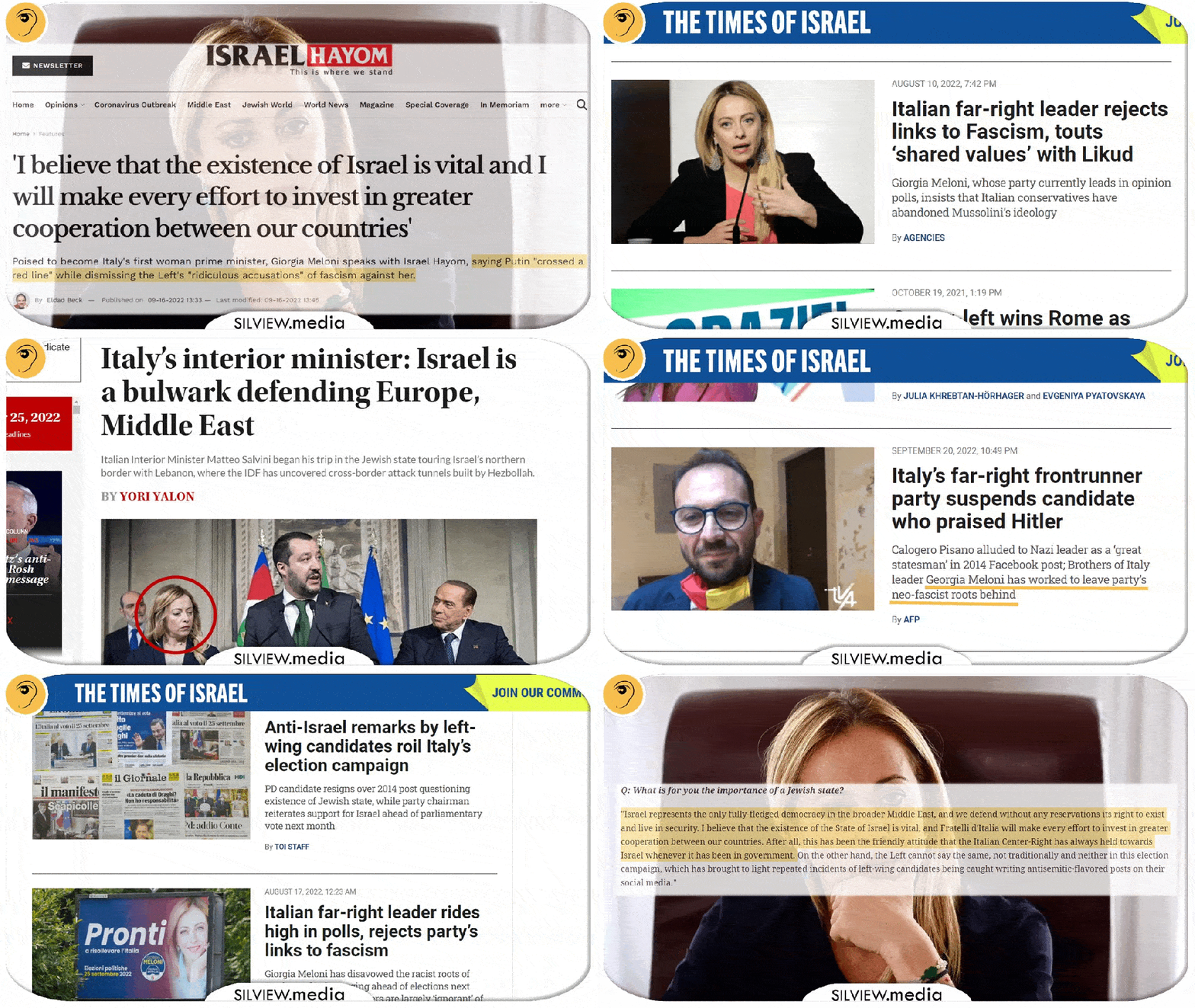



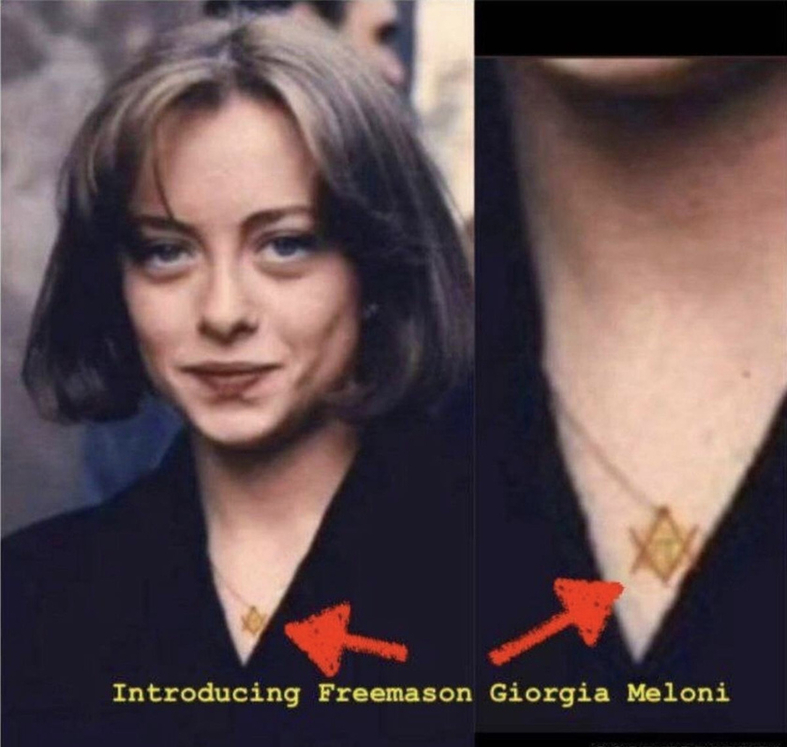


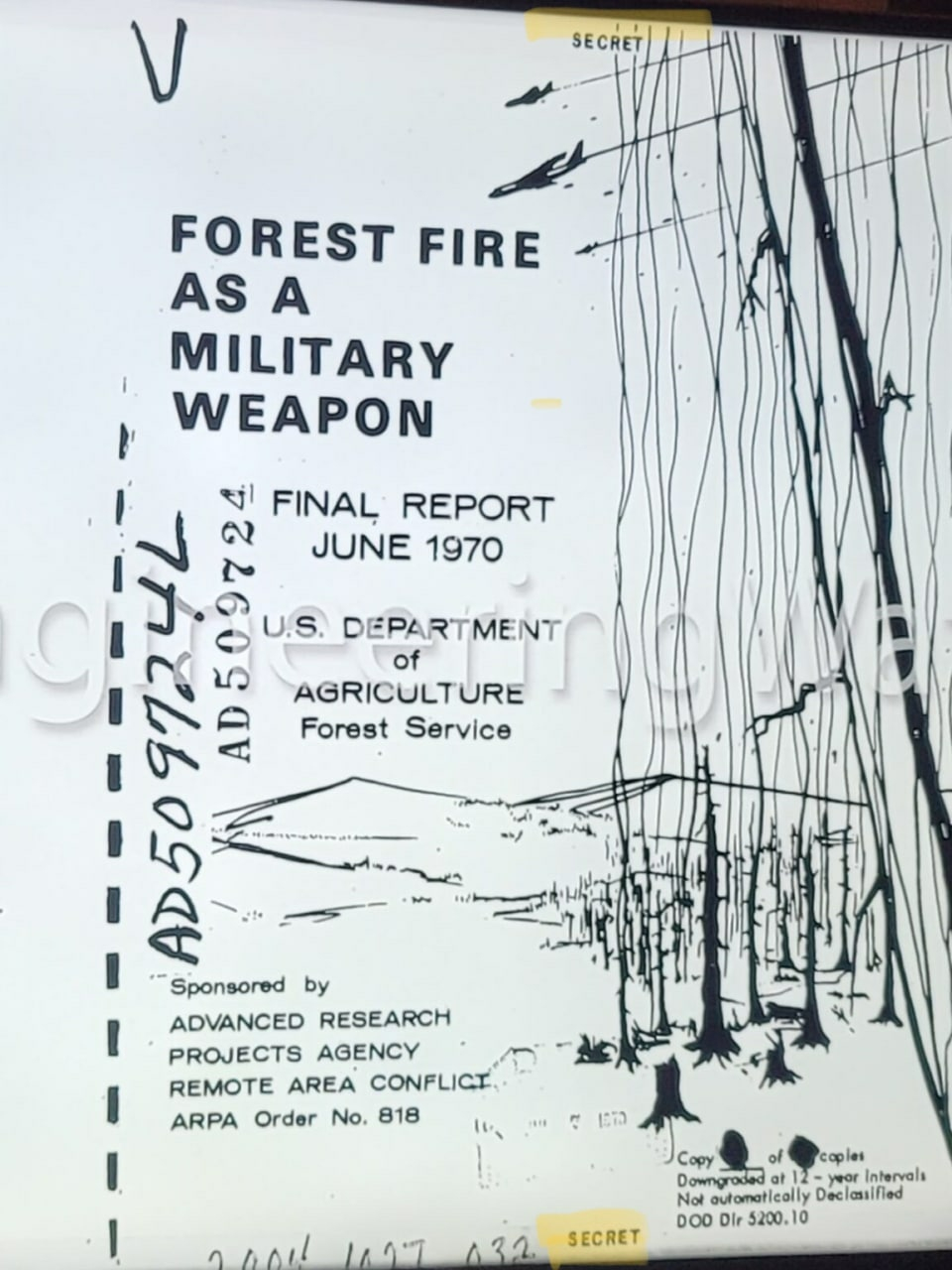




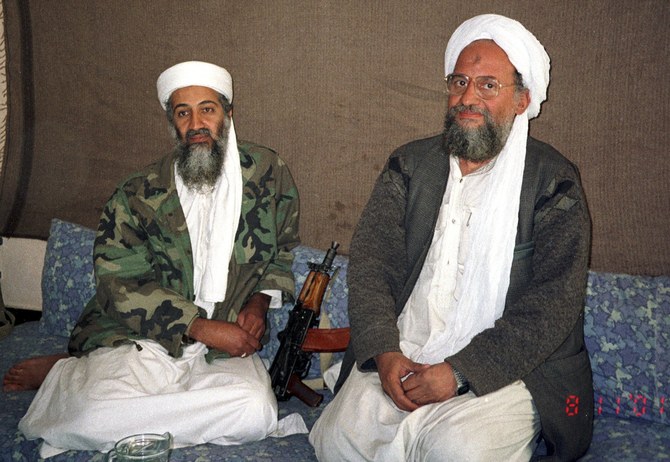

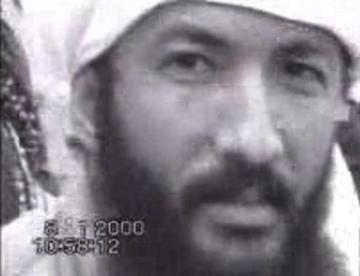


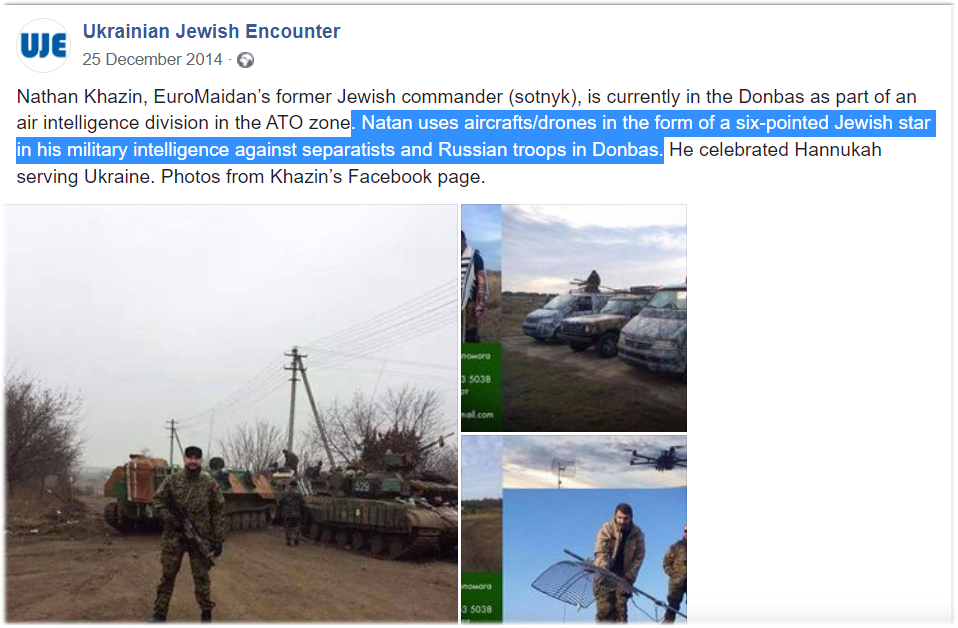





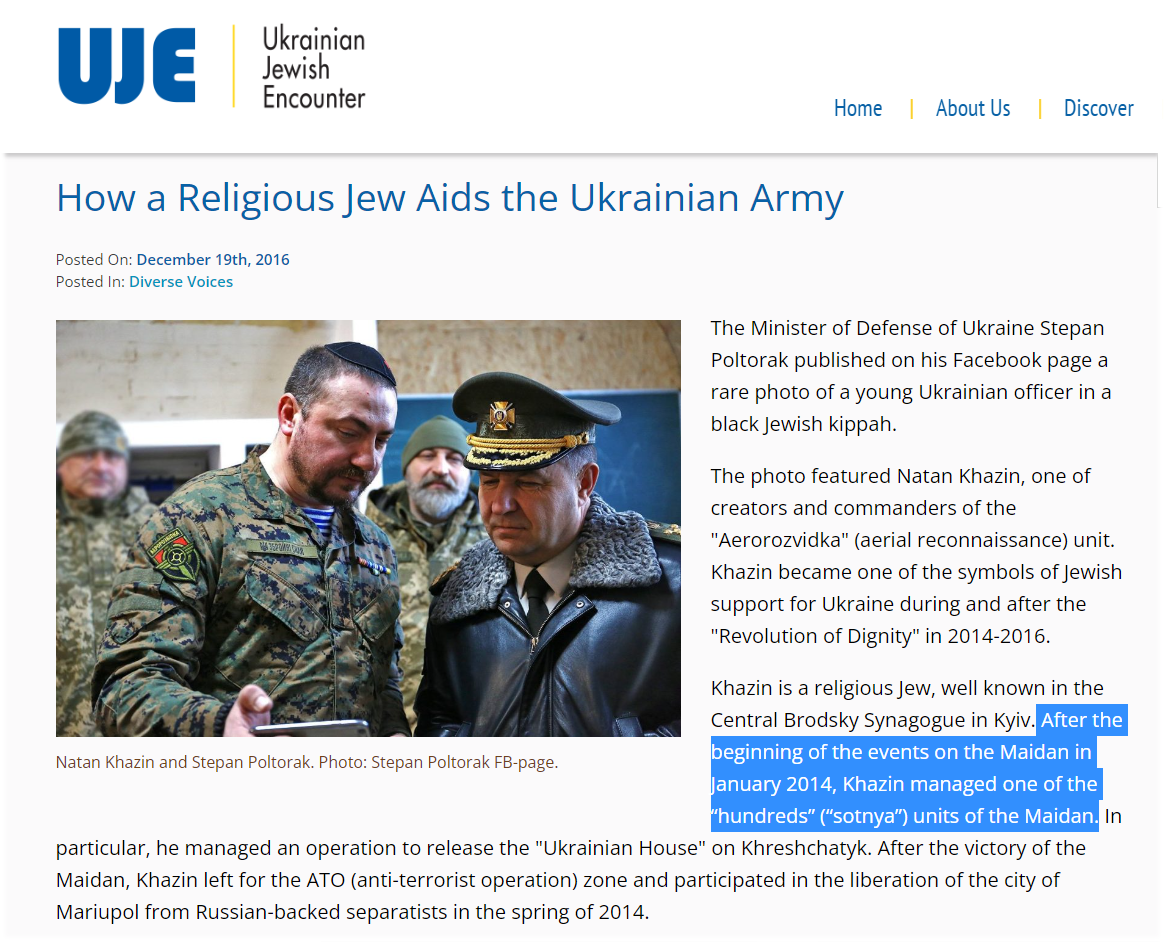
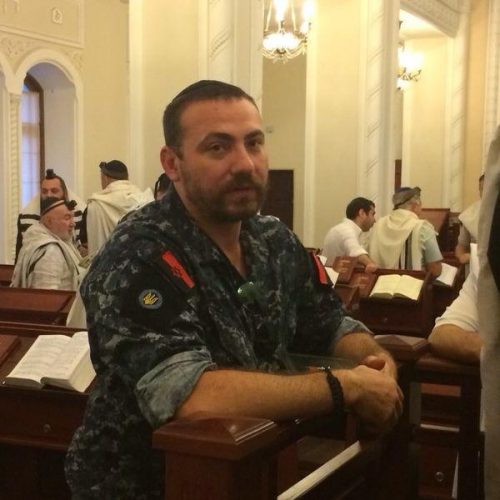
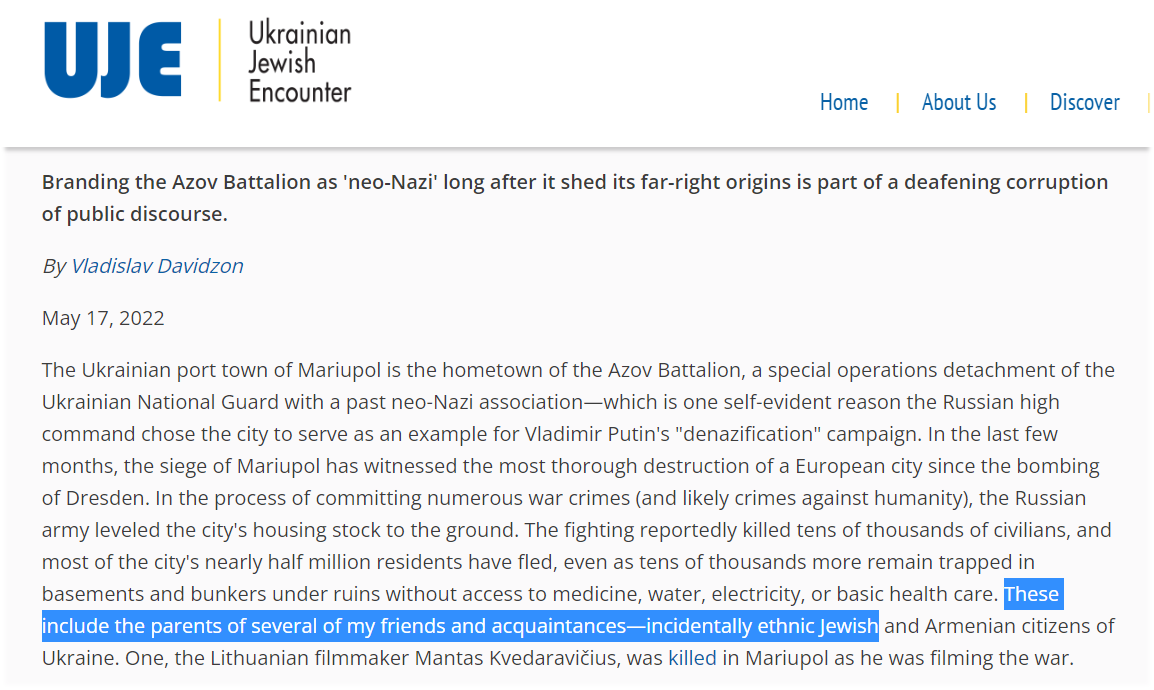












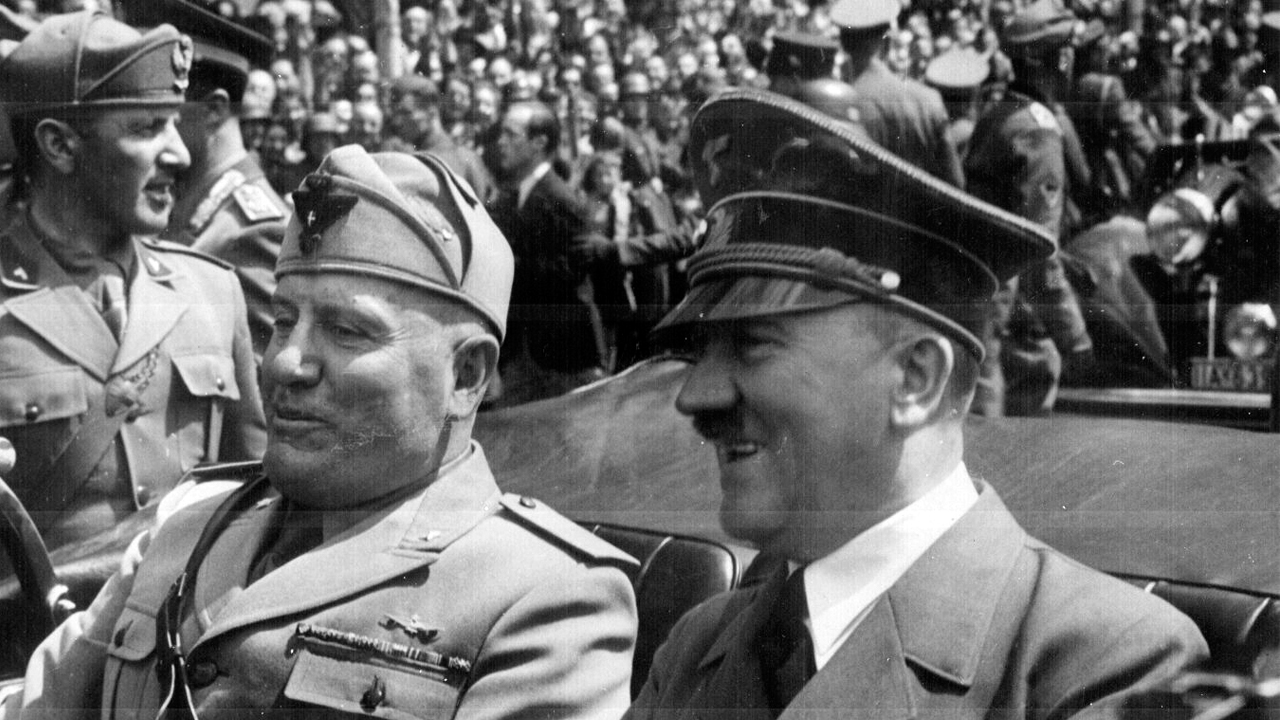


 SILVIEW.media