How can you call yourself “intelligent” when you can’t understand simplest concepts like “consent” and you’re completely disconnected from human nature and feelings? What better proof that the system is broken than the broken souls it produces industrially?
Fake news from Breitbart, Tucker didn’t tie him to human engineering, Tucker observed he’s so tied he barely speaks about anything else. More evidence below
You may have seen this show, yet Carlson gave you but a peak. I give you more than you can carry. Warning: The only people who will not lose sleep over this are those who paid attention to this scandal when it started, almost a decade ago, highest echelon elites and the pseudo-people who clap at Jimmy Kimmel’s IQ-19 brainfarts.
This video has been recorded in 2013, but the guys was already making waves since 2012, see below.
Note from TED’s YouTube channel, under this video: Comments are disabled on this video. We made this difficult decision for the TED Archive because we believe that a well-moderated conversation allows for better commentary from more people and more viewpoints. Studies show that aggressive and hateful comments silence other commenters and drive them away; unfortunately, YouTube’s comment moderation tools are simply not up to the task of allowing us to monitor comments on so many videos at once. (We’d love to see this change, YouTube.) So for now, if you’d like to comment on this talk, please use Facebook, Twitter or G+ to discuss with your networks”
Dude’s credentials are almost as spectacular as his talk. Meaning this is what it takes to prosper in the scientific environment lately.
2007
He’s always been this freaky and obsessed with shortening people, he must be the polar opposite of tall.
The Ashley Treatment: Best Interests, Convenience, and Parental Decision-Making
by S. Matthew Liao , Julian Savulescu , and Mark Sheehan
“As a general point, it is entirely conceivable that in some natural, social, or psychological circumstances, having a normal body may be a disadvantage. In H.G. Wells’ short story “The Country of the Blind,” Nunez, a mountaineer in the Andes, falls and comes upon the Country of the Blind. Nunez has normal vision, but in this society of blind people, he is disadvantaged, and he eventually consents to have his eyes removed. Similarly, in a world of loud noise, being able to hear could be a disadvantage. In the case of apotemnophilia—a body dysmorphic disorder in which the patient feels incomplete possessing all four limbs—doctors justify amputation by reasoning that the patient’s psychology demands it. In Ashley’s case, having a normal-sized body could be a disadvantage.”
But within just a few hours of the interview going live a torrent of outrage and abuse was being directed towards him online. As I tweeted at the time, the interview was indeed “unsettling”. Liao explained how his paper – entitled, “Human Engineering and Climate Change” – explored the so-far-ignored subject of how “biomedical modifications of humans” could be used to “mitigate and/or adapt to climate change“. The modifications discussed included: giving people drugs to make them have an adverse reaction to eating meat; making humans smaller via gene imprinting and “preimplantation genetic diagnosis”; lowering birth-rates through “cognitive enhancement”; genetically engineering eyesight to work better in the dark to help reduce the need for lighting; and the “pharmacological enhancement of altruism and empathy” to engender a better “correlation” with environmental problems.
Both the interview and the paper itself include a prominent disclaimer. As the paper says:
To be clear, we shall not argue that human engineering ought to be adopted; such a claim would require far more exposition and argument than we have space for here. Our central aim here is to show that human engineering deserves consideration alongside other solutions in the debate about how to solve the problem of climate change. Also, as we envisage it, human engineering would be a voluntary activity – possibly supported by incentives such as tax breaks or sponsored health care – rather than a coerced, mandatory activity.
However, that wasn’t enough to prevent an extremely hostile reception to such ideas. Climate sceptics were the first to vent their anger. Somewhat inevitability, terms such as “eugenics”, “Nazis” and “eco fascists” were quickly being bandied around. One sceptic blogger said that the “sick” Liao and his co-authors should be “kept in Guantanamo”. Another said the paper “presages the death of science, and indeed the death of reason, in the West”.
But prominent environmentalists were also keen to denounce the paper. Bill McKibben tweeted that the paper contained the “worst climate change solutions of all time”. Mark Lynas tweeted that he thought it was an “early April Fool”. It was hard to disagree.
So, were the philosophers who co-wrote the paper surprised by the reaction? Or had all their critics misunderstood what they were trying to achieve? I contacted each of the authors in turn, and a co-editor of the journal, and asked them.
Liao was the first to respond:
First, I think that our paper/position is being grossly misrepresented by some people online. As we specifically say in our paper, a) we are not necessarily endorsing any of the solutions we have canvassed; and b) if these solutions were available, it should be up to individuals to adopt them voluntarily. Ross Anderson, the writer of the Atlantic interview, also makes this clear. Secondly, the term “eugenics” often gets brought up whenever people mention human enhancements. This is unfortunate because my co-authors and I are positively against any form of coercion of the sort the Nazis had done in the past (segregation, sterilization, and genocide). The way the term ‘eugenics’ is used by some of the people who are against our proposal, it seems that voluntary use of contraception would be a form of eugenics. Finally, many people who are against our proposal explicitly deny that climate change is really a problem. Given this, it is not surprising that they would find our solution to what they perceive as a “non-problem” incredible. Indeed, some of these people have also said that encouraging people to drive less is an overreaction to climate change. Our paper is intended for those who believe that i) climate change is a real problem; and ii) who, owing to i), are willing to take seriously geoengineering. All bets are off if someone doesn’t accept i).
I then sent the following questions to Liao’s co-authors, Dr Anders Sandberg and Dr Rebecca Roache, both based at Oxford University’s Future of Humanity Institute. (Roache was at the institute when the paper was first being drafted 18 months ago, but has since left to be a “full-time mum”.)
Has your paper been misrepresented online? If so, how and why?
Sandberg: Most reactions are not based on what we actually wrote. People who comment on anything online have usually not read it, and then people comment on them, and so on. You are lucky if people remember the original topic, let alone any argument. People seem to assume we are some kind of totalitarian climate doomsters who advocate biotechnological control over people. What we are actually saying is that changing our biology might be part of solving environmental problems, and that some changes might not just be permissible but work well with a liberal ethics. Climate change and many other problems have upstream and downstream solutions. For example, 1) human consumption leads to 2) a demand for production and energy, which leads to 3) industry, which leads to 4) greenhouse gas emissions, which lead to 5) planetary heating, which leads to 6) bad consequences. One solution might be to try to consume less (fix 2). We can also make less emissive industry (fix the 3-4 link), remove greenhouse gases from the atmosphere (reduce 4), geoengineering that cools the planet (reduce 5) or adapt to a changed world (handle 6). Typically people complain about the downstream solutions like geoengineering that they are risky or don’t actually solve the cause of the problem, and say we should go for upstream solutions (where a small shift affects the rest of the chain). So, what would be the most upstream solution? Change human desires or consumption. While this can be done partially by persuasion and culture, there are many strong evolved drivers in human nature that act against it. But we can also affect the drivers. For example, making people smarter is likely to make them better at solving environmental problems, caring about the environment, adopting a more long-term stance, cooperate better and have fewer children. It is of course desirable for a long list of other reasons too, and many people would freely choose to use enhancements to achieve this even if they cared little about the world. If there was a modification that removed the desire for meat, it would likely have not just green effects but also benefit health and animal welfare – again many might decide to go for it, with no external compulsion.
Roache: Yes. We argue that it might be worth considering making available some seemingly bizarre solutions to climate change, for people to use or not as they wish. We have been represented as arguing – among other things – that people should be forced to adopt these bizarre measures for the good of the environment. I imagine that this is partly because people assume that nobody would dream up such bizarre solutions to climate change unless they believed that they should be implemented. Philosophers, however, spend a lot of time discussing views that they do not necessarily endorse – it’s part of the learning process.
What do you say to those who are claiming you and your fellow authors are “eco Nazis”, “eugenicists” etc, for publishing this paper?
Sandberg: Well, none of us are deep greens or totalitarian. We are fairly typical liberal academics thinking about the world. In fact, in my normal work with global catastrophic risks at the Future of Humanity Institute, climate change is at the lower end of concern. Certainly a problem, but unlikely to wipe out humanity. That probably disqualifies me from being an eco Nazi. Certainly one can imagine nasty governments imposing various green policies on the population, forcing them to act in ways that benefit the environment. But our paper doesn’t give them any particular ethical support: if you are willing to infringe on people’s reproductory liberty, why not just prevent them from consuming as much as they want? Green totalitarianism might be possible, but it is hardly moral – because it is totalitarian and doesn’t respect individual rights. Of course, to many people even a hint that our biology might be subject to political considerations is horrific. Yet they do not seem to worry much about the political decisions that are constantly being made about our reproduction (laws against reproductive cloning are political decisons about the desired form of human reproduction), nutrition or health. We are living in an era of biopolitics. It is better to make the issues explicit and discuss them than assume they will go away if we ignore them. I think parents should be allowed to select genes for their children (“liberal eugenics” in the term of Nicholas Agar) – the reason eugenics in the past has been such a bad thing was because it was 1) coercive, 2) imposed centrally by the state, and 3) often based on bad science. If one can avoid these problems I do think it could be useful: in that sense I am an eugenicist. However, I suspect other technologies are going to change our species faster than genetics.
Roache: I say that they haven’t read the paper! We explicitly state that we do not endorse coercion, and that we envisage human engineering to be a voluntary activity. The solutions we discuss may seem bizarre and unrealistic, but that does not entail they are not worth exploring.
Did you predict this level/type of response?
Sandberg: A bit. When I wrote the paper I felt I was to some extent trolling – I admit I was delighted when some of my normally rather bio-radical colleagues protested against the idea after a presentation we gave here in Oxford. I was a bit more surprised that the blogosphere and popular press took notice of the paper. The problem with arousing emotions is that most people then become very stimulus-response driven. They don’t think very deeply about the issue, they react instead. We hoped the paper would be exciting enough to stimulate discussion but not to preclude thinking. You could claim this paper is a reductio ad absurdum of the idea that we should aim for upstream solutions to environmental problems rather than downstream solutions. I’m not convinced about that: there might indeed be win-win enhancements that are both good for us individually, for society and for the environment, and they should be supported. What the paper does is to take environmental goals and collide them with some common bioethical intuitions (the sacredness of the natural, that human biology must not be touched, etc.) – that hopefully produces an uncomfortable itch that will stimulate some real thinking about what we want to give prioritiy. Could there be ethical reasons not to do things that would help the environment? Could there be environmental needs so pressing we would be forced to budge our biological policies?
Roache: It was always a possibility. Our normally unflappable bioethicist colleagues were shocked by the idea of human engineering, so the wider public was bound to find it ghastly. The fact that we presented it as a response to the widely-discussed problem of climate change is also relevant here: it’s not unusual for philosophers to write about wacky and horrifying ideas, but non-philosophers are rarely interested in them because they often have no obvious bearing on real life. For example, I was working on this paper at around the same time as I was working on a paper about whether it is conceptually possible for more than one person to inhabit a single body; but the publication of the latter passed without comment from the Daily Mail.
Ultimately, what were you trying to achieve with the paper? Are people interpreting it too literally, namely, believing you personally would advocate for these ideas?
Sandberg: People are unused to ethical analysis. In philosophy we take ideas and test them to destruction. This means that we often bring up concepts or lines of thought we do not personally believe in and then argue them as strongly as possible to see where they go and what we can learn. This is very different from everyday life where most people who state an idea or belief also believe in it – and it makes people misunderstand this kind of thinking. To make matters worse most people debating it will not read the paper and see how we discuss the ethical problems or why even we think it is a preposterous idea… they will just think some eggheads blithely promote eugenics. The core idea is that we should not imagine that our biological nature is exempt from being part of a potential solution to environmental problems. In our opinion methods of changing people, habits, technology or the environment are all possible approaches, and what matters is whether they work, have good effects, are acceptable and practical, not what kind of method they are. My personal view is that human engineering on its own is unlikely to fix climate change. The methods we mention are all too weak, indirect and slow. But thinking about out-of-the-box approaches is useful: too much of the climate debate has been forced into doctrinaire camps where any consideration of alternatives is heresy. Big complex problems are unlikely to have simple and neat solutions: we need to investigate (and perhaps use) a lot of approaches. I do think that in the long run humanity has to become posthuman if it wants to be truly sustainable. I have a little essay about it here: http://www.aleph.se/andart/archives/2009/03/a_really_green_and_sustainable_humanity.html But this is not feasible for the next few decades, at the very least.
Roache: We wanted to encourage people to think about a group of solutions to climate change that have so far been ignored, despite the fact that in many cases it would be scientifically possible to implement them. Human engineering may seem bizarre and unrealistic, but this does not mean it could not turn out to be feasible and promising: telephones, “test tube babies”, and personal computers are all important aspects of modern life that were once regarded as bizarre and unrealistic. Of course, human engineering may ultimately be unworkable; but this should be because it is impossible to implement, or because its costs outweigh its benefits. It should not be rejected merely because, at first glance, it seems unappealing. And discussing it is itself valuable: it is by exploring and assessing potential responses to a problem that we make progress towards solving it.
I also asked Benjamin Hale, assistant professor of philosophy and environmental studies at the University of Colorado at Boulder, and co-editor of Ethics, Policy & Environment, why the paper is being published and whether the journal anticipated this sort of response. He said:
We accept submissions from scholars across the academic community. The article went through the same double blind peer reviewed process that all of our articles go through. We haven’t received any questions on it yet. You’re our first. By publishing this article, we are not endorsing it at all. We have circulated the paper widely and are publishing between seven to nine critical responses from ethicists across the field. The things I’ve seen written on it so far appear to miss the point. The article was clearly not a positive policy proposal. Instead, it was a series of Swiftian philosophical thought experiments more designed to contextualize actively discussed schemes like geoengineering, written by a professor who is not otherwise engaged with the climate community. In the same issue, we will be publishing several other articles critical of geoengineering.
In total, the responses indicate that both the authors and journal stand squarely behind the controversial paper and believe its critics have woefully misinterpreted its contents and the reasons for publishing it. One thing is sure: they have certainly been successful in courting attention (not to be sniffed at in the world of academic publishing, or any form of publishing, for that matter).
But if their aim was to generate a pensive, wide-ranging philosophical debate on the subject of human engineering and climate change I’m not convinced they have been successful. Well, not yet at least, if the online reaction is anything to go by. There remains a danger, too, that the paper will be used in the future as a stick to attack any suggestion of environmental action: “Let them do this, and this will be next on their agenda.” However, I agree with the authors that we should not fear debating such ideas – even if the end result is that we still roundly reject them.
2015
2017
He returns to TED with optogenetics and other DARPA-funded nightmares. Remember optogenetics, because you’ll hear a lot about it in the near future, at least from us.
Tucker Carlson: Is Google Funding “Human Engineering” Scientific Research?
Fox News On Date June 23, 2021
TUCKER CARLSON: How many other dangerous, potentially world-altering experiments are going on right now, in this and other counties, funded by the secretive daisy-chain of government health agencies, and powerful NGOs? Experiments you’ve never heard of but that could change your life forever? If they can engineer bat viruses to make them more infectious, and oops, they escaped from a lab, what else are they doing? You’re not supposed to ask of course. You’ve been commanded to “trust the science,” and get back to watching Netflix. Only a Neanderthal asks questions. That’s been the arrangement in science for quite a while now. You pay for it, we do it, it’s all good. But why should that continue? Now that we know liars and moral pygmies — people like Tony Fauci, and the soulless bots at Google HQ — and running global science, maybe it’s worth being slightly more inquisitive about what’s happening in labs around the world. Why not? It could affect us.
For example, take a look at this tape. It’s from an annual conference called the “World Science Festival.” A few years ago, the conference featured a professor of bioethics and philosophy at New York University named Mathew Liao.
Liao is among the most influential bioethicists in the world — a fact that will amaze you. Liao explained that climate change can be solved with something called “human engineering.”
MATTHEW LIAO: My view is that what we need is a really robust ethical framework and within this ethical robust framework I think there’s a way going forward where we can do this ethically. But there’s actually a lot of opportunities for this to solve big world problems, one thing is climate change. Climate change is a really big problem we don’t really know how to solve it but it turns out we can use human engineering to help us address climate change.
Here’s a tip: anyone who uses the phrase “robust ethical framework” wouldn’t know ethics if they got in the shower with them. And you know that for a fact because he uses the phrase “human engineering.”
Human engineering? The name alone should make you pause. People aren’t bridge improvements. You can’t just add rebar, pour a few yards of concrete, and improve the human condition, much less the human soul. People are living beings. They’re alive. They can’t be engineered. Liao the eminent bioethicist seems unaware of this. He outlined some of his proposals in a recent paper in the Journal of “Ethics, Policy & Environment.” In that paper, Liao suggests a solution to the problem, the pressing problem, of people eating hamburgers. People like hamburgers, it turns out. How can we get people to stop eating hamburgers? Not by convincing them that hamburgers are bad. That was the old way. That’s how democracy worked. You would tell people something, if they believed they did it, if they didn’t believe you, they didn’t. But it turns out that’s too time-consuming. The new model is we just use pharmaceuticals. Your kids are getting uppity? Dope them out, and they’ll obey. Liao proposes a nationwide system like that, a pill that would make people nauseous at the sight of red meat. Given that climate change is an “existential threat,” that’s limiting our time on earth to 20 years, or 12 years, or 6 months, or pick your exaggeration, it’s hard to imagine a pill like that would soon become mandatory. Sound like a dystopian fantasy? It’s not. Liao is deadly serious. He said so at the “World Science Festival.”
MATTHEW LIAO: So here’s a thought, we have this intolerance for example I have milk intolerance, some people on intolerant to fish so possibly we can use human engineering to make it the case where we are intolerant to certain types of meat, certain types of bovine proteins, so that’s something we can do through human engineering, possibly address really big world problems through human engineering.
TUCKER CARLSON: “Human engineering.” Why do we laugh at Alex Jones again? Sincere question.
Again, says the bioethicist, “human engineering” is the answer. But wait a second, you ask. Human engineering? That’s kind of creepy. Didn’t we decide this kind of thing in Europe 80 years ago, and at the time, didn’t we agree we’re not going to do that ever again? True. But bioethicists have short memories apparently. And in any case, climate change is a pressing emergency. We don’t have time to consider the consequences of our response to this existential crisis.
So here’s an idea, said Liao at the World Science Festival: let’s fiddle with the human genome to see if we can make human children smaller than they are now. A race of dwarfs. They’d eat less, and be cheaper to transport. And that would reduce greenhouse gasses.
MATTHEW LIAO: So it turns out the larger you are, think of the lifetime of greenhouse gas emissions that are required, the energy that’s required to transport larger people rather than smaller people right. But if we are smaller just by 15cm, I did the math that about mass reduction of 25%, which is huge. And 100 years ago we’re all on average smaller, exactly about 15 cm smaller. So think of the lifetime greenhouse gas emissions if we had smaller children. So that’s something we can do.
Imagine if we had smaller children. Little tiny children. Think of how little they would emit in greenhouse gasses. Think about how easy it would be to pick them up, juggle them around, control them. All we need to do is experiment on human children. And we can solve climate change. That was at a public conference five years ago. Nobody said anything. That’s where we are. Surprised? You shouldn’t be. In fact, it’s less ghoulish than some of the things happening in labs right now.
This is what science looks like when it’s been completely decoupled from wisdom, decency and Christianity. It’s a science fiction novel come to life, except it’s real. In fact, Google might be funding it right now.
Same day Carlson picked on him and he responded with this tweet, guess what else he spent two hours on? Discussing anti-natalism on YouTube with the Romanell Center for Clinical Ethics, who has three subscribers. Numerically. As the name suggests, anti-natalism is hardcore eugenics that would make Hitler frown.
To be continued? Our work and existence, as media and people, is funded solely by our most generous supporters. But we’re not really covering our costs so far, and we’re in dire needs to upgrade our equipment, especially for video production. Help SILVIEW.media survive and grow, please donate here, anything helps. Thank you!
! Articles can always be subject of later editing as a way of perfecting them
An editorial that stands by itself and speaks volumes for many of the incredible facts I’ve revealed in my own editorials. I don’t endorse all this, I just chew the meat on the bones. Published in a journal called Expert Opinion on Drug Delivery
Manipulative magnetic nanomedicine: the future of COVID-19 pandemic/endemic therapy
By Ajeet Kaushik, Pages 531-534 | Received 06 Nov 2020, Accepted 03 Dec 2020, Published online: 14 Dec 2020
1. Introduction: COVID-19 pandemic or endemic as health emergency
Since the Spanish flu outbreak (1918), many pandemics and/or endemics related to a viral infection such as H1N1, H5N1, human immunodeficiency virus (HIV), Ebola, Zika, and coronavirus have surprised mankind time-to-time due to their sudden appearance, severe adverse health effect, loss of lives, socio-economic burden, and a damaged economy. Such deadly infectious viruses originated from natural reservoirs and then infect humans via spillover mechanism. During infection progression, viruses affect the human biological system and become a part of the host genome and then make structural changes in its structure to survive or infect longer. These infections can cause permanent disorders, may be death, if a patient is immunocompromised and could not fight against virus life-cycle associated pathways and viral infection progression.
One such pandemic and/or endemic is the recent COVID-19 infection associated with new server acute respiratory syndrome coronavirus (SARS-CoV-2), investigated by Chinese clinicians in Dec 2019. Chinese health agencies noticed a rapid increment in seasonal flu cases, and this emerged as a very serious health issue due to the ineffectiveness of prescribed therapies [1,2]. Systematic investigations conducted on this infectious disease by experts confirmed and claimed that SARS-CoV-2 virus infection is dramatically affecting the respiratory system of every age patient via affecting their lung function. Although SARS-CoV-2 virus protein exhibited 70% to 80% genomic profile like SARS-CoV-1 (2002 outbreak) and middle east respiratory syndrome (2012 outbreak), but its viral infection mechanism, pathogenesis, mortality per cent, and other risks are different, unknown, and serious than SARS and MERS [2]. Considering the severity of COVID-19 infection and variation in SARS-CoV-2 virus strains, this outbreak was first declared as an international health emergency; then, a pandemic due to global spread [2], and now experts are projecting this as an endemic due to post-infection effects and possibilities of reoccurrence like HIV [3]. This infection is emerging very challenging due to 1) human-to-human transmission via aerosolization, 2) ability to affect lung rapidly because of easy binding between Spike (S1) protein of SARS-COV-2 virus and host cell membrane receptors like angiotensin-converting enzyme 2 (ACE-2) and TMPRSS-2 protein, this makes virus replication easy [4].
A successful COVID-19 infection management is not the only issue to deal with the respiratory system as it affects lung function. But the SARS-CoV-2 virus infection also severely affects other important body organs including the heart, liver, eye, gut, and brain as well. This is the reason that recovery of a COVID-19 infected patient is slow and sometimes the patient exhibits permanent disorder in biological function due to weak organs and organ function [2]. Such scenarios have been investigated in asymptomatic patients as well. Keeping complete COVID-19 outbreak into consideration, health agencies were focused on 1) preparation and execution of safety guidelines, 2) exploring virus structure, genomic profiles, variability, and generate bioinformatics to understand pathogenesis, 3) developing rapid diagnostic kits, 4) optimizing available therapies, alone or in combination, 5) exploring methodologies to prevent SARS-CoV-2 transmission, 6) exploring novel therapeutics, 7) exploring aspects of therapeutic delivery at disease location, and 8) exploring combinational aspects of nanobiotechnology to support rapid testing, trapping of SARS-CoV-2, and delivery of therapeutics for not only to eradicate SARS-CoV-2 but provide long-term immunity for COVID-19 infected patient [4–6].
Based on the outcomes of big data analytics based on artificial intelligence (AI), it is suggested that recognition and eradication of the SARS-CoV-2 virus may be a time-taking procedure. Thus, all the focus is toward rapid infection diagnostics and viral infection management using state-of-the-art technologies, for example, 1) promoting physical distance and using of a mask to avoid virus transmission, 2) developing AI and internet-of-medical-things (IoMT) based strategies for rapid testing, tracking of patients, big data analytics, bioinformatics generation, developing a novel sensor for early-stage SARS-CoV-2 detection [2,5,7], and novel therapeutics and successful delivery using nanobiotechnology approach [8], the main focus of this editorial.
2. Manipulative magnetic nanomedicine: the future of COVID-19 therapy
Nanobiotechnology is emerging very promising to investigate novel methodologies for managing COVID-19 pandemic/endemic successfully [2,5]. In this direction, experts have explored the opto-electro-magnetic nanosystem to detect the SARS-CoV-2 virus using a biosensing approach. Such optical, electrical, or magnetic biosensors function based on geno-sensing and immune-sensing has detected the SARS-CoV-2 virus selectively at a very low level [7,8]. These efficient-miniaturized biosensors can be operated using a smartphone and promoted for clinical application for early-stage diagnostics of COVID-19 infection. The successful integration of these SARS-CoV-2 virus sensors with AI and IoMT enables virus detection at point-of-location and sharing of bioinformatics with the medical center at the same time for timely therapeutics decision. This approach is also useful for tracking tasks and managing COVID-19 infection according to patient infection profiling. To avoid human-to-human SARS-CoV-2 virus transmission, experts have developed stimuli-responsive nanotechnology enable which can not only trap aerosol of virus size but can eradicate viruses on applying external stimulation for example nanoenable photo-sensitive virus degradation. Various types of clothes containing nanoparticles have demonstrated SARS-CoV-2 virus trapping and eradication successfully [2,9]. However, significant attention is required to increase the production and distribution of these masks for public use.
Besides, the contribution of biotech-pharma companies is also of high significance in terms of investigating novel therapeutic agents of higher efficacy with least/acceptable adverse effects. Though the SARS-CoV-2 virus is new and has exhibited strain variation which is making treatment optimization challenging. But biotechnology experts are analyzing every aspect of bioinformatics to design and develop an effective therapy based on novel anti-viral agents, CRISPR-Cas, antibodies, and vaccines5. Another approach to manage COVID-19 infection is to introduce or boost immunity through nutrition, for example, nutraceuticals have acted as inhibitors to prevent binding between SARS-CoV-2 virus and ACE-2 enzyme [2,8].
Investigating a therapeutic agent against the SARS-CoV-2 virus infection seems possible now but the delivery of these agents is still a remaining challenge because this virus may have numerous reservoirs over the time. It is also demonstrated that COVID-19 infection patients may temporarily or permanently have immunocompromised biological systems. Such-related adverse effects include risk of cardiac arrest, vision issues, weak respiratory system, neurological disorders (one of the serious issues because SARS-CoV-2 virus crosses the blood-brain barrier), etc. Therefore, a single therapeutic agent designed against the SARS-CoV-2 virus may not be enough to treat COVID-19 infected patients completely [1,8].
Thus, a manipulative therapy, a combination of optimized therapeutic agents, consisting of an anti-SARS-CoV-2 virus agent and immune-supportive agents will require to be optimized based on the patient infection profiling. Experts have thought about it and raised/dealing the following concerns 1) drug-to-drug interaction, 2) delivery of drug/drugs at the targeted site, 3) control over the release of drug/drugs from a therapeutic formulation, and 4) immune-supporting long-acting therapies. These tasks are challenging but needed to be managed; therefore, exploring aspects of nanomedicine could be a promising approach to develop novel therapies to manage COVID-19 infection and support the immune system along with SARS-CoV-2 virus affected organs [8].
Nanomedicine (10 to 200 nm) is a therapeutic cargo designed using an appropriate drug nanocarrier and a therapeutic agent [9–15]. Nowadays magnetic nanomedicine has performed to manage viral infection at various reservoirs even in the brain because nanomedicine is capable to cross any barriers in the body via adopting the following approaches 1) functionalization of nanomedicine with barriers specific receptors, 2) applying external stimulation like ultrasound, and 3) noninvasive guided approach like magnetically guided drug delivery system [10–12].
Besides drug delivery, magnetic nanomedicine could be formulated to deliver multiple drugs at a targeted site to achieve desired therapeutic performance due to 1) control over the release by applying external stimulation like an ac-magnetic field, 2) formulating a magnetic cargo to load multiple drugs without drug-to-drug interaction, for example, layer-by-layer (LBL) approach, and 3) the sequence of drug release can be tuned and planned according to a stage/requirement of disease condition [13–15]. The performance of such nanomedicine mainly depends on the selection of a multi-functional stimuli-response drug nanocarrier such as magneto-electric nanoparticles (MENPs) [12], opto-magnetic, opto-electromagnetic, magneto-LBL, magneto-liposome, and magneto-plasmonics nanosystem. These advanced nanomedicines not only deliver the drug/drug but also help in the recognition of drug distribution and disease progression.
Combining above mentioned salient features, manipulative magnetic nanomedicine (MMN) as one of the potential future therapy wherein control over delivery and performance if required. Such MMN has the capabilities to recognize and eradicate the SARS-CoV-2 virus to manage COVID-19 infection and symptoms. Besides, due to the flexibility of using the therapeutic agent of choice, these manipulative nanomedicines can be designed and developed as long-acting therapy for COVID-19 infection where anti-virus and immune-supportive agents can stay longer in the body without causing any side-effects. Such personalized MMN (Figure 1) is an urgently required therapy and its development should be the focus of future research with the following aims
Figure 1. Systematic illustration of manipulative nanomedicine projected as future COVID-19 pandemic/endemic therapyDisplay full size
Exploring stimuli-responsive magnetic nanosystems for on-demand-controlled delivery and release.
Image-guided therapy to recognize the delivery site and confirm drug release.
A magnetically guided approach to delivering drugs across the barriers like the gut, BBB, etc.
Magneto-LBL/liposomal approach to delivering multiple drugs to avoid drug-to-drug interaction and control over the drug release sequence. For example, an anti-virus drug should be released first then an immune-protective agent.
The MMN can be customized according to patient disease profile and medical history, for example, selection of anti-SARS-CoV-2 virus agent (antibody, ARV, CRISPR-Cas, etc.,) based on patient genomic profiling.
The MMN can also be customized as long-acting therapeutics that allows drug-releasing for a longer time (2–3 months), as must require therapy to manage post-COVID-19 infection effects.
The MMN can be explored as personalized precision therapy.
3. Expert opinion
Based on the experiences of developing MMN to eradicate neuroHIV/AIDS, under a project of getting into the brain, using MENPs as a drug nanocarrier, magnetically guided drug delivery, and ac-magnetic field stimulation dependent controlled drug release, my team and me believes that MMN can be a future therapy against COVID-19 infection pandemic/or endemic. As it is also known that the SARS-CoV-2 virus infection is a combination of several diseases and symptoms. During the infection treatment, even after the hospital discharge, the patient may have several diseases at the same time for a longer time. Such-complicated medical conditions are not easy to deal with using conventional antiviral drugs. Thus, experts feel the demand for a new therapy that can handle multiple tasks at the same time. Keeping advancements and potentials into consideration, manipulative nanomedicine can be one of the potential COVID-19 infection therapies.
Some of the advancements in this field has been reported, for example, micro-needle-based vaccine delivery to manage COVID-19 infection. Early outcomes are exciting, but a lot must be done in terms of animal model-based trials, and followed up with FDA approval, needed prior to suggest clinical implication. To promote MNM against COVID-19 successfully, a public-private involvement-based significant research needed to be conducted in this field to create a path from a lab (in-vitro) to in-vivo (appropriate animal model) to risk assessments to clinical trials to risk assessment to human trial to risk assessment to FDA approval for public utilization. In the process of developing an anti-COVID-19 infection therapy, careful and critical safety-related risk assessments will be a crucial factor to decide progression step-by-step. This introducing AI will be a good choice to gather bioinformatics, perform big data analysis, avoid unnecessary hit-&-trial approaches, establish a relation with a biological and pathological parameter, and projection of a potential approach. Besides AI, it is also suggested to design several projects focused on every aspect of pre/post-SARS-CoV-2 virus infection, and based on assessments and analytics a potential drug nanocarrier and therapeutics agents should be selected. Developing such an approach is a multidisciplinary research approach and experts of various expertise are needed to work on the same platform to investigate MMN to combat against SARS-CoV-2 virus infection. Projecting the above mention as a necessity, this editorial is a call to experts to join hands for investigating and promoting MMN as a potential future COVID-19 pandemic/endemic therapy. I believe that the MMN approach will be in more demand as new therapeutic agents, such BNT162b2, and mRNA1273 [16], vaccine as will be investigated over the time.
References
From author’s references, I want to highlight this study which shows that magnetism is also used to cross the Brain Blood Barrier -Silview
Magnetically guided non-invasive CRISPR-Cas9/gRNA delivery across blood-brain barrier to eradicate latent HIV-1 infection
CRISPR-Cas9/gRNA exhibits therapeutic efficacy against latent human immunodeficiency virus (HIV) genome but the delivery of this therapeutic cargo to the brain remains as a challenge. In this research, for the first time, we demonstrated magnetically guided non-invasive delivery of a nano-formulation (NF), composed of Cas9/gRNA bound with magneto-electric nanoparticles (MENPs), across the blood-brain barrier (BBB) to inhibit latent HIV-1 infection in microglial (hμglia)/HIV (HC69) cells. An optimized ac-magnetic field of 60 Oe was applied on NF to release Cas9/gRNA from MENPs surface and to facilitate NF cell uptake resulting in intracellular release and inhibition of HIV. The outcomes suggested that developed NF reduced HIV-LTR expression significantly in comparison to unbound Cas9/gRNA in HIV latent hμglia/HIV (HC69) cells. These findings were also validated qualitatively using fluorescence microscopy to assess NF efficacy against latent HIV in the microglia cells. We believe that CNS delivery of NF (CRISPR/Cas9-gRNA-MENPs) across the BBB certainly will have clinical utility as future personalized nanomedicine to manage neuroHIV/AIDS.
Yamamoto V, Bolanos JF, Fiallos J, et al. COVID-19: review of a 21st century pandemic from etiology to neuro-psychiatric implications. J Alzheimers Dis. 2020;77(2):459–504. . [Crossref], [PubMed], [Web of Science ®], [Google Scholar]•• Article explains COVID-19 outbreak, SARS-CoV-2 virus, and state-of-art approach for diagnostics, treatment, and post-infection management.
Kaushik AK, Dhau JS, Gohel H, et al. Electrochemical SARS-CoV-2 sensing at point-of-care and artificial intelligence for intelligent COVID-19 management. ACS Appl Bio Mater. 2020;3:7306–7325 [Crossref], [Google Scholar]•• Article explores role of AI, electrochemical sensing, and IoMT for intelligent COVID-19 management. Besides role of nanotechnology to recognizing, trapping, and eradication of SARS-CoV-2 virus
Shaman J, Galanti M. Will SARS-CoV-2 become endemic? Science. 2020;370(6516):527–529 [Crossref], [PubMed], [Web of Science ®], [Google Scholar]•• Article explores the possibilities whether COVID-19 can be claimed as endemic or not
Chauhan G, Madou MJ, Kalra S, et al. Nanotechnology for COVID-19: therapeutics and vaccine research. ACS Nano. 2020;14(7):7760–7782 [Crossref], [PubMed], [Web of Science ®], [Google Scholar]•• Article summarizes role of nanotechnology to investigate novel therapies for COVID-19 outbreak
Mujawar M, Gohel H, Bhardwaj SK, et al. Nano-enabled biosensing systems for intelligent healthcare: towards COVID-19 management. Mater Today Chem. 2020;17:100306 [Crossref], [Google Scholar]•• Article explored role of smart biosensor to early-stage COVID-19 infection diagnotics
Weiss C, Carriere M, Fusco L, et al. Toward nanotechnology-enabled approaches against the COVID-19 pandemic. ACS Nano. 2020;14(6):6383–6406 [Crossref], [PubMed], [Web of Science ®], [Google Scholar]•• Article explores nanotechnology for manage COVID-19 infection outbreak
Ahmadivand A, Gerislioglu B, Ramezani Z, et al. Femtomolar-level detection of SARS-CoV-2 spike proteins using toroidal plasmonic metasensors. 2020. arXiv preprint arXiv:2006.08536. [Google Scholar]•• magneto-plasmonic based immunosensor to detect SARS-CoV-2 virus protein at fM level.
Paliwal P, Sargolzaei S, Bhardwaj SK, et al. Grand challenges in bio-nanotechnology to manage COVID-19 pandemic. Front Nanotechnol. 2020;2:3 [Crossref], [Google Scholar]•• Article explores the role of nano-bio-technology to handle the challenges associated to COVID-19 outbreak and
Jayant RD, Sosa D, Kaushik A, et al. Current status of non-viral gene therapy for CNS disorders. Expert Opin Drug Deliv. 2016;13(10):1433–1445 [Taylor & Francis Online], [Web of Science ®], [Google Scholar]•• Article explore the role of drug-nano-carrier to deliver gene for therapeutics
Nair M, Jayant RD, Kaushik A, et al. Getting into the brain: potential of nanotechnology in the management of NeuroAIDS. Adv Drug Deliv Rev. 2016;103:202–217 [Crossref], [PubMed], [Web of Science ®], [Google Scholar]•• Article explores aspects on nano-medicine to handle neuroHIV
Kaushik A, Jayant RD, Sagar V, et al. The potential of magneto-electric nanocarriers for drug delivery. Expert Opin Drug Deliv. 2014;11(10):1635–1646 [Taylor & Francis Online], [Web of Science ®], [Google Scholar]•• Article explores MENPs based manipulative nanomedicine
Kaushik A, Jayant RD, Bhardwaj V, et al. Personalized nanomedicine for CNS diseases. Drug Discov Today. 2018;23(5):1007–1015 [Crossref], [PubMed], [Web of Science ®], [Google Scholar]•• Article explores manipulative magnetic nanomedicine to handle CNS diseases
Kaushik A, Yndart A, Atluri V, et al. Magnetically guided non-invasive CRISPR-Cas9/gRNA delivery across blood-brain barrier to eradicate latent HIV-1 infection. Sci Rep. 2019;9(1):3928 [Crossref], [PubMed], [Google Scholar]•• Article explores MENPs-based nanomedicine to deliver CRISPR-Cas across the BBB
Tomitaka A, Kaushik A, Kevadiya BD, et al. Surface-engineered multimodal magnetic nanoparticles to manage CNS diseases. Drug Discov Today. 2019;24(3):873–882 [Crossref], [PubMed], [Web of Science ®], [Google Scholar]•• Article explore manipulative magnetic nano-medicine for multi-model therapeutic approaches
Jayant RD, Tiwari S, Atluri V, et al. Multifunctional nanotherapeutics for the treatment of neuroAIDS in drug abusers. Sci Rep. 2018;8(1):12991 [Crossref], [PubMed], [Google Scholar]•• Article explores magneto-LBL approach for nanomedicine
Nanomedicine and the COVID-19 vaccines. Nat Nanotechnol. 2020. [Web of Science ®], [Google Scholar]•• Article explores need of nanomedicine approach for mRNA vaccine
To be continued? Our work and existence, as media and people, is funded solely by our most generous supporters. But we’re not really covering our costs so far, and we’re in dire needs to upgrade our equipment, especially for video production. Help SILVIEW.media survive and grow, please donate here, anything helps. Thank you!
! Articles can always be subject of later editing as a way of perfecting them
Seriously?! Do people still have any self-preservations instincts left if a tsunami wave is already casting shadow on their beach and they’re debating the future of sand castle architecture on social media? Are we still functional human beings or just furless panda bears?
UPDATE JAN 9, 2022
I found this fantastic story of an utility pilot who had a stroke inflight shortly after his Pfizer shot and doesn’t even remember landing the plane, but he did survive to tell his story on Stew Peters Show and confirm everything this expose meant to warn about half a year earlier!
A Singapore Airlines flight from Copenhagen to Singapore Changi was forced to divert to Moscow after a crew member had a “hypertensive crisis” or a stroke.
The Airbus A350-900, with registration 9V-SMO, departed Copenhagen at 13:37 local time as flight SQ351 on Saturday and was scheduled to arrive at Changi Airport at 06:20 local time the following day.
However, after the cabin crew was taken ill, the pilots requested a landing at Moscow’s Domodedovo Airport. The pilots requested for the emergency landing at around 18:00 local time and landed in Moscow after three hours and 23 minutes of flight time.
After leaving the crew member in Russia, the aircraft departed from Moscow at 20:01 later the same day and arrived at Changi Airport at 10:46 local time on Sunday.
The crew member was met by a medical team and was later taken straight to a nearby hospital, where doctors assessed him.
According to an airline spokesperson, he was discharged after his condition stabilised, and the airline has made all necessary arrangements to fly him back to Singapore. AIRLIVE.net –
What if your pilot starts answering with a 404 error too?
This piece started out as an investigation in the airlines personnel crisis and vaccine, but ended up a step or two further. Because I have this good habit of zooming out and contextualizing. And what I’ve seen when I did that is obviously bigger than the devil in details.
So I’m not going to rehash too much of what’s been already well covered by a wide range of independent and even mainstream media. My unique contribution to this has already been published a few days ago and it’s a good preamble to this discussion.
It all falls in line coherently. And then there’s a perpendicular line in the sand no one wants to cross.
My reasoning is simple and obvious, but previously untold:
About 80% of British commercial airline pilots got jabbed and they fall like flies hit with Raid, whistle-blowers claim.
Meanwhile, in America:
Internal documents obtained by Dr. Jane Ruby illustrate catastrophe waiting to happen! Airline pilots are dropping dead at alarming rates after being forced to take the jab, or face losing their careers. This is a MAJOR concern for hundreds of thousands of daily air travelers, and it’s only getting worse! – Stew Peters
Maybe it’s only 60% or 40% of them, you’d be insane to take a 1% chance.
When it doesn’t land well, everyone else is applauding louder.
Is that limited to UK? “C’mon, maaaan!”. I mean if you really looked for it, you’re flooded with reports coming from all over the place that this industry is precisely screwed. Let’s not waste our time, I could list 20 solid links like nothing. We miss time more than base here.
Last updated March 2021. Not quite recently. Source
As Thyme mentioned, it’s not just airline pilots, terrestrial transportation is affected too. And there’s a consistent number of car-crashes reported right after vaccination. It even started to show on VAERS too, commentators say, I didn’t verify this detail.
Magnetovaxxers, as I like to call vaxxers with a special magnetism, are no myth either, I alone, have crushed that topic already and there’s thousands others. Explain it as you please, it happens, besides a host of other strange phenomena that are potentially dangerous to others in some situations. What if one of these meat stickers touch sensitive lab equipment and life-support equipment, or…?
THEY TELL YOU TO SHUT DOWN YOUR PHONE IN THE PLANE, BUT YOU CAN’T SHUT DOWN THE MAGNETOVAXXER WHO CAN STICK PHONES TO HIS ARM.
We have to zoom in for the inner workings and zoom out for the general conclusions:
How can it be only about cars and transportations?! They’d love that, they’ve been trying to kill tourism and uncontrolled population movements for decades, it’s in the books. But whatever logic applies to pilots applies to everyone who has lives depending on him!
So, the past couple of weeks have cemented not one, but two evidences:
The Covid mRNA treatments sold as vaccines can incapacitate or even kill anyone, anytime, especially people genetically or professionally susceptible of blood clotting, heart inflammations or similar circulatory problems. Ergo:
VACCINATED PEOPLE ARE NOT DEPENDABLE ANYMORE.
Which inescapably draws another evidence that is bafflingly not shouted out loud yet:
The danger extends to the people whose lives / health / destiny depend on these genetically-modified dupes.
VACCINATED PEOPLE CANNOT BE ALLOWED ANYMORE IN LIFE/HEALTH THREATENING POSITIONS AND OCCUPATIONS.
Oh, sorry, Kev, are you already on the beach and this isn’t the reading you’re looking for there?
What if your life-guard rushed to work and collapses when a current pulls your kid?
If you’re so life-hesitant, you definitely can bear 0,xx% death-risk from a virus that China sent only by e-mail and, so far, no one has isolated, not even Chinese.
But sane people can’t afford the risk mRNA-inoculated covidiots pose in many of the positions they occupy.
BE SAFE FROM COVID SOMEWHERE ELSE, YOUR FAKE PROTECTION ENDANGERS EVERYONE!
To be continued? Our work and existence, as media and people, is funded solely by our most generous supporters. But we’re not really covering our costs so far, and we’re in dire needs to upgrade our equipment, especially for video production. Help SILVIEW.media survive and grow, please donate here, anything helps. Thank you!
On my birthdays, I used to treat the world with free music / art, back in the previous regime. But that regime has changed, so I changed.
At least my cookies are real, I sell them by the dozen
This year, I created a new merch collection which I make available at no charge from my side, only the manufacturers/distributors need paid. Just like I did with facemasks, I waived my profit share from the price.
I am both a prisoner and a refugee, somewhere in Morocco, separated from my family, my aspirations and everything I love by the new global(ist) regime. I’ve never obeyed, bowed, or put a Covid mask on my face.
All the abominations in history have been made possible by obedience.
So, on my 45th b-day, maybe my last, my main message is simple.
Browse and enjoy a wide range of DEFY products in OUR SHOP.
UPDATE: THE CROWN JEWEL ARRIVED!
THE MAGNETS! AS IN “MAGNET CHALLENGE” 😉
Many many thanks for all the support, it gave me just enough motivation to wake up every morning and do this and make it to here!
To be continued? Our work and existence, as media and people, is funded solely by our most generous supporters. But we’re not really covering our costs so far, and we’re in dire needs to upgrade our equipment, especially for video production. Help SILVIEW.media survive and grow, please donate here, anything helps. Thank you!
! Articles can always be subject of later editing as a way of perfecting them
Sometimes my memes are 3D. And you can own them. Or send them to someone. You can even eat some of them. CLICK HERE
A confidentiality agreement shows potential coronavirus vaccine candidates were transferred from Moderna to the University of North Carolina in 2019, nineteen days prior to the emergence of the alleged Covid-19 causing virus in Wuhan, China.
The confidentially agreement which can be viewed herestates that providers ‘Moderna’ alongside the ‘National Institute of Allergy and Infectious Diseases’ (NIAID) agreed to tranfer ‘mRNA coronavirus vaccine candidates’ developed and jointly-owned by NIAID and Moderna to recipients ‘The Universisty of North Carolina at Chapel Hill’ on the 12th December 2019.
Found on page 105 of the agreement
The material transfer agreement was signed the December 12th 2019 by Ralph Baric, PhD, at the University of North Carolina at Chapel Hill, and then signed by Jacqueline Quay, Director of Licensing and Innovation Support at the University of North Carolina on December 16th 2019.
Recipient signatories found on page 107
The agreement was also signed by two representatives of the NIAID, one of whom was Amy F. Petrik PhD, a technology transfer specialist who signed the agreement on December 12th 2019 at 8:05 am. The other signatory was Barney Graham MD PhD, an investigator for the NIAID, however this signature was not dated.
NIAID signatories found on page 107
The final signatories on the agreement were Sunny Himansu, Moderna’s Investigator, and Shaun Ryan, Moderna’s Deputy General Councel. Both signautres were made on December 17th 2019.
Moderna signatories found on page 108
All of these signatures were made prior to any knowledge of the alleged emergence of the novel coronavirus. It wasn’t until December 31st 2019 that the World Health Organisation (WHO) became aware of an alleged cluster of viral pneumonia cases in Wuhan, China. But even at this point they had not determined that an alleged new coronavirus was to blame, instead stating the pneumonia was of “unknown cause”.
It was not until January 9th 2020 that the WHO reported Chinese authorities had determined the outbreak was due to a novel coronavirus which later became known as SARS-CoV-2 with the alleged resultant disease dubbed COVID-19. So why was an mRNA coronavirus vaccine candidate developed by Moderna being transferred to the University of North Carolina on December 12th 2019?
The same Moderna that have had an mRNA coronavirus vaccine authorised for emergency use only in both the United Kingdom and United States to allegedly combat Covid-19.
What did Moderna know that we didn’t? In 2019 there was not any singular coronavirus posing a threat to humanity which would warrant a vaccine, and evidence suggests there hasn’t been a singular coronavirus posing a threat to humanity throughout 2020 and 2021 either.
Perhaps Moderna and the National Institute of Allergy and Infectious Diseases would like to explain themselves in a court of law? – THE DAILY EXPOSE
To be continued? Our work and existence, as media and people, is funded solely by our most generous supporters. But we’re not really covering our costs so far, and we’re in dire needs to upgrade our equipment, especially for video production. Help SILVIEW.media survive and grow, please donate here, anything helps. Thank you!
Sometimes my memes are 3D. And you can own them. Or send them to someone. You can even eat some of them. CLICK HERE
When I first heard of blood clots in vaccinated people, I instantly recalled of a similar problem occurring while the mRNA platform was in study for a cancer therapy, by Moderna, I think, prior to Covid. I couldn’t find that piece of information again, but during the research I discovered something even more revealing.
Blood clots in subjects of Covid gene therapies are very likely caused by defective coatings in magnetic particles used for magnetofection, which leads to cell-clogging.
Silviu “Silview” Costinescu
It has been more than plausibly theorized that the explanation for the magnetism in vaxxers is magnetofection, a method of transfection using magnetic fields.
Magnetofection is a very effective way of transfecting plasmid DNA into a variety of primary cells including primary neurons which are known to be notoriously difficult to transfect and very sensitive to toxicity.
For coincidence theorists, let me just add that the inventor of transfection is one of mRNA jabs inventors, Dr. Robert Malone, who has warned FDA on the dangers of these technologies, according to himself.
Scientifically trained at UC Davis, UC San Diego, and at the Salk Institute Molecular Biology and Virology laboratories, Dr. Robert Malone is an internationally recognized scientist (virology, immunology, molecular biology) and is known as one of the original inventors of mRNA vaccination and DNA Vaccination. His discoveries in mRNA non viral delivery systems are considered the key to the current COVID-19 vaccine strategies. Dr. Malone holds numerous fundamental domestic and foreign patents in the fields of gene delivery, delivery formulations, and vaccines. Dr. Malone has close to 100 peer-reviewed publications and published abstracts and has over 11,477 citations of his peer reviewed publications, as verified by Google Scholar. His google scholar ranking is “outstanding” for impact factors. He has been an invited speaker at over 50 conferences, has chaired numerous conferences and he has sat on or served as chairperson on numerous NIAID and DoD study sections.
Magnetofection basically involves attaching DNA onto a magnetic nanoparticle coated with a cationic polymer like polyethylenimine (PEI) [254,255]. The magnetic nanoparticles are generally made up of a biodegradable substance like iron oxide, and its coating onto the polymeric particle is done by salt-induced colloidal aggregation. These prepared nanoparticles are then localized in the target organ by the application of an external magnetic field, which allows the delivery of attached DNA to the target organ, as shown in Figure 3.5. This method also increases the uptake of DNA into target cells as the contact time between the target organ and magnetic nanoparticles increases. In addition, the magnetic field pulls the magnetic nanoparticles into the target cells, which also helps to increase the uptake of DNA [256,257]. In addition, the standard transfection using viral or nonviral vectors is also increased by the magnetofection.
This is a more powerful method of controlled and targeted delivery for gene therapies, in layman terms.
The problem with it is that it’s been proven to be very dangerous for lab animals and it’s not authorized for human use.
From Dr. Jane Ruby m as well as from Pfizer and Moderna we find out how these particles are packaged into the injectable concocts:
“Stew Peters interviews Dr Jane Ruby who confirms the magnetic effects that Covid vaxxed people have experienced. She says it is a deliberately made substance added to the vaccines. This shows criminal intent. It was added because it is an aggressive delivery system to get it into EVERY cell of your body. The process is called ‘Magnetofection’ and is available in scientific literature such as Pubmed. It concentrates the mRNA into people’s cells and forces your body to make these synthetic mRNA instructions even in places where they shouldn’t be located within the body.
It is a ‘forced delivery system’ and is called by the acronym of SPIONS – Supramagnetic Iron Oxide Nanoparticles. These particles use a lipid nanoparticle envelope to gain entry into the cells. It is done this way to protect mRNA because mRNA is easily degraded and this is also why the Pfizer vaccines are refrigerated at -70 degrees Fahrenheit as another form of protection.
There is a German company on the internet called ‘Chemicell’ which sells different chemicals which can make these magnetic fields around your molecules. You can buy 200 microgram vials of their product called, ‘Polymag’. These are developed and sold for research purposes only and are not to be used for human diagnostic or as a component of any drug intended for humans.
However at least Pfizer and Moderna are using this substance in their vaccines. Therefore it is vital that anyone thinking of taking a shot, obtain a full ingredient list to have full informed consent and to postpone getting the Covid Jab, as each day brings further information into the public domain. Dr Ruby is asked if this was deliberate by the manufacturers and answers that this substance doesn’t occur naturally. It had to be added into the vaccine.
Many have spoken about the Polyethelene Glycol or PEG which enables the vaccines to get through water based cell membranes as this is lipophilic – attracted to fats – but there are other places in the body where ‘God and Nature’ hadn’t intended these substances to be, but by using this delivery system of supra nanoparticles, you are creating a super delivery system which forces these substances into areas where they are not meant to be.”
. 2019 Nov;13(9):1197-1209. doi: 10.1080/17435390.2019.1650969. Epub 2019 Aug 22.
Superparamagnetic iron oxide nanoparticles (SPIONs) modulate hERG ion channel activity
Superparamagnetic iron oxide nanoparticles (SPIONs) are widely used in various biomedical applications, such as diagnostic agents in magnetic resonance imaging (MRI), for drug delivery vehicles and in hyperthermia treatment of tumors.
Although the potential benefits of SPIONs are considerable, there is a distinct need to identify any potential cellular damage associated with their use.
Since human ether à go-go-related gene (hERG) channel, a protein involved in the repolarization phase of cardiac action potential, is considered one of the main targets in the drug discovery process, we decided to evaluate the effects of SPIONs on hERG channel activity and to determine whether the oxidation state, the dimensions and the coating of nanoparticles (NPs) can influence the interaction with hERG channel.
Using patch clamp recordings, we found that SPIONs inhibit hERG current and this effect depends on the coating of NPs. In particular, SPIONs with covalent coating aminopropylphosphonic acid (APPA) have a milder effect on hERG activity. We observed that the time-course of hERG channel modulation by SPIONs is biphasic, with a transient increase (∼20% of the amplitude) occurring within the first 1-3 min of perfusion of NPs, followed by a slower inhibition. Moreover, in the presence of SPIONs, deactivation kinetics accelerated and the activation and inactivation I-V curves were right-shifted, similarly to the effect described for the binding of other divalent metal ions (e.g. Cd2+ and Zn2+).
Finally, our data show that a bigger size and the complete oxidation of SPIONs can significantly decrease hERG channel inhibition.
Taken together, these results support the view that Fe2+ ions released from magnetite NPs may represent a cardiac risk factor, since they alter hERG gating and these alterations could compromise the cardiac action potential.
MIT SAYS IT’S NOT JUST SPIONS, BUT ALSO LIONS:
HDT Bio, the biotechnology company in Seattle, has an alternative solution. Working with Deborah Fuller, a microbiologist at the University of Washington, it’s pioneering a different kind of protective bubble for the mRNAs. If it works, it would mean that an mRNA vaccine for covid-19 could be stable in a regular fridge for at least a month, or at room temperature for up to three weeks.
Their method: instead of encasing the mRNA in a lipid nanoparticle, they’ve engineered molecules called lipid inorganic nanoparticles, or LIONs. The inorganic portion of the LION is a positively charged metal particle—so far they’ve been using iron oxide. The positively charged metal would bind to the negatively charged mRNA, which wraps around the LION. The resulting particle is solid, which creates more stability and reduces the reliance on refrigeration.
A real-world study by the CDC backs up the clinical trial data from both mRNA vaccines—although the rise of the UK variant in the US is a cloud on the horizon.
“The cold chain has always been an issue for [the] distribution of vaccines, and it’s only magnified in a pandemic.”
Deborah Fuller
HDT Bio initially developed LIONs to treat liver cancer and tumors in the head and neck, but when the pandemic hit, they pivoted to trying the particles with mRNA vaccines. Early preclinical trials in nonhuman primates showed that the LION, combined with an mRNA vaccine for covid-19, worked as they’d hoped.
Carter of HDT Bio says that in an ideal situation, LIONs could be sent to clinics worldwide in advance, to be stored at room temperature or in a regular refrigerator, before being mixed into vaccine vials at clinics. Alternatively, the two could be premixed at a manufacturing facility. Either way, this method would make doses stable for at least a month in a regular refrigerator.
Fuller says that some scientists have criticized the need for two vials—one for the LION and another for mRNA before they’re mixed together. “But I think the advantages of having an effective product more amenable to worldwide distribution outweighs those negatives,” she says.
HDT Bio is applying for permission to start human clinical trials in the US and is looking to start clinical trials in India this spring. In the US, it faces some unique challenges in FDA regulation, since the LION particles would be considered a drug separate from the vaccine. Regulators in Brazil, China, South Africa, and India—where HDT Bio is hoping to launch its product—don’t consider the LION a drug because it isn’t the active component, says Carter, meaning that there would be one less layer of regulation than in the US.
For now, it’s still very much an early-stage technology, says Michael Mitchell, a bioengineer at the University of Pennsylvania who works on drug delivery systems. He stresses that more research should reveal whether the iron oxide causes any side effects. – MIT Technology Review
Now here’s the bombshell:
This is no secret to experts, but it’s been revealed to me in the video presentation below, made in 2017 by reputed Prof Diana Borca, from Rensselaer Polytechnic Institute, who uses magnetic nanoparticles to treat diseases. In order to get the magnetic nanoparticles into the right places, scientists like Diana have to figure out what kind of coating the nanoparticles need. Coatings help the nanoparticles get to the cells they want to treat without hurting the healthy cells. And if the coating of the magnetic particles breaks, the result is “CLOGGING”, as Borca explains below. Which can translate as clotting, if in blood. Who knows what they lead to when in other organs, strokes maybe?
So I think the only thing we’re missing from the puzzle is official hard evidence that they used magnetofection or magnetogentic methods.
But if it walks like a duck and quacks like a duck, only the government needs government papers to confirm it’s a duck
What each and every one of you can do until we find that evidence?
On screens we’re sound. Please help with the statistical and empirical tests!
Please help finding out if there’s a strong data and empirical correlation between blood clots and magnetism. Anyone you know that has been jabbed and experienced blood clots, heart or circulatory problems needs to take the magnet challenge right now! A strong enough correlation indicates causation. If you make such a test, please reach us on our socials and communicate the result, whether positive or negative! Also VAERS is exploding with reports of magnetism, please help analyzing the data to see if it pairs with clotting. Thank you!
Also food for thought: isn’t this also related to the problems these GMO dupes experience during air-travel? I’ll investigate this in a soon coming report.
This chapter highlighted magnetofection, magnetic patterning of cells, and construction of 3D tissue-like structures. Among them, Mag-TE for constructing 3D structures has been extensively studied, and various kinds of other tissues such as retinal pigment epithelial cell sheets,102 MSC sheets,44 and cardiomyocyte sheets,46 have been already generated. Tubular structures consisting of heterotypic layers of endothelial cells, smooth muscle cells, and fibroblasts have also been created.43 In this approach, magnetically labeled cells formed a cell sheet onto which a cylindrical magnet was rolled, which was removed after a tubular structure was formed. If these processes can be scaled up, there is great potential for these techniques in the treatment of a variety of diseases and defects.
In the translational research, toxicology of functional magnetite nanoparticles is an important issue. The main requisite for a cell-labeling technique is to preserve the normal cell behavior. As for biocompatibility of MCLs, no toxic effects against proliferation of several cell types were observed within the range of magnetite concentrations tested (e.g., human keratinocytes,63 < 50 pg-magnetite/cell; HUVECs,41 HAECs,42 human dermal fibroblasts,41 human smooth muscle cells,43 mouse fibroblast cells,43 canine urothelial cells,43 human MSCs,44 and rat MSCs45 < 100 pg/cell). Moreover, MCLs did not compromise MSC differentiation44,45 or electrical connections of cardiomyocytes.46 In addition, an in vivo toxicity of magnetite nanoparticles has been extensively studied. As an MRI contrast agent, ResovistR was first applied clinically for detecting liver cancer, since ResovistR is taken up rapidly by the reticuloendothelial system such as Kupffer cells of the liver compared with the uptake by cancer cells of the liver. In a preliminary study,103 the authors investigated the toxicity of systemically administered MCLs (90 mg, i.p.) in mice; none of the 10 mice injected with MCLs died during the study. Transient accumulation of magnetite was observed in the liver and spleen of the mice, but the magnetite nanoparticles had been cleared from circulation by hepatic Kupffer cells in the spleen by the 10th day after administration.103
In conclusion, magnetic nanoparticles have been developed into “functional” magnetite nanoparticles which are highly promising tools for a wide spectrum of applications in tissue engineering. The proven lack of toxicity of the functional magnetite nanoparticles is expected to provide exciting tools in the near future for clinical tissue engineering and regenerative medicine.View chapter
One of the pioneers using magnetofection for in vitro applications was Lin et al.91 There are various cationic magnetic nanoparticles types that have the capacity to bind nucleotidic material on their surface. With this method, the magnetic nanoparticles are concentrated in the target cells by the influence of an external magnetic field (EMF). Normally, the internalization is accomplished by endocytosis or pinocytosis, so the membrane architecture stays intact. This is an advantage over other physical transfection methods. Other advantages are the low vector dose needed to reach saturation yield and the short incubation time needed to achieve high transfection efficiency. Moreover, with the application of an EMF, cells transfected with magnetic nanoparticles can be used to target the region of interest in vivo.
2.2.1.1 Iron Oxide Nanoparticles
The magnetic nanoparticles most used in magnetofection include the iron oxide nanoparticles (IONPs). IONPs are biodegradable and not cytotoxic and can be easily functionalized with PEI, PEG, or PLL. Poly-l-lysine-modified iron oxide nanoparticles (IONP–PLL) are good candidates as DNA and microRNA (miRNA) vectors because they bind and protect nucleic acids and showed high transfection efficiency in vitro. In addition, they are highly biocompatible in vivo.
Chen et al.92 used human vascular endothelial growth factor siRNA bound to superparamagnetic iron oxide nanoparticles (SPIONs) and it was capable of hepatocellular carcinoma growth inhibition in nude mice. Moreover, Li et al.93 demonstrated that the intravenous injection of IONP–PLL carrying NM23-H1 (a tumor suppressor gene) plasmid DNA significantly extended the survival time of an experimental pulmonary metastasis mouse model.
Another advantage of this kind of nanoparticles is that they can be used as MRI agents. Chen et al.94 bound siRNA to PEG-PEI SPIONs together to a gastric cancer-associated CD44v6 single-chain variable fragment. This bound permitted both cancer cell’s transfection and their visualization by MRI.
But those complexes might be used for cell therapies as well. Schade et al.95 used iron oxide magnetic nanoparticles (MNPs) to bind miRNA and transfect human mesenchymal stem cells. As the binding between the MNPs and PEI took place via biotin-streptavidin conjugation, these particles cannot pass the nuclear barrier, so they are good candidates to deliver miRNA, as it exerts its function in the cytosol. They functionalized the surface nanoparticles with PEI and were able to obtain a better transfection than PEI 72 h after transfection. Moreover, they demonstrated that magnetic polyplexes provided a better long-term effect, also when included inside of the stem cells.View chapter
Another attempt to apply magnetic IONPs is the so-called magnetofection (MF) approach. Key factors enabling this method are IONPs that are coupled to vector DNA and guided by the influence of an external magnetic field. By this means, DNA can be transfected into cells of interest. One possibility to enable enhanced binding capabilities of the negatively charged DNA to magnetic IONP beads is the coating IONPs with a positively charged material such as polyethylenimine. The efficiency of the vectors has hence shown to increase up to several thousand times (Scherer et al., 2002). The above depicted engagement of IONPs in MF has shown to be universally applicable to viral and nonviral vectors. This is mostly because it is very rapid and simple. Furthermore, it is a very attractive approach since it yields saturation level transfection at low-dose in vitro (Krotz et al., 2003). Fernandes and Chari (2016) have demonstrated an approach delivering DNA minicircles (mcDNA) to neural stem cells (NSCs) by means of MF. DNA minicircles are small DNA vectors encoding essential gene expression components but devoid of a bacterial backbone, thereby reducing construct size versus conventional plasmids. This could be shown to be very beneficial for the use of genetically engineered NSC transplant populations in regenerative neurology. The aim was to improve the release of biomolecules in ex vivo gene therapy. It could be demonstrated that MF of DNA minicircles is very safe and provided for sustained gene expression for up to 4 weeks. It is described to have high potential as clinically translatable genetic modification strategy for cell therapy (Fernandes and Chari, 2016). The last in vitro application for magnetic nanoparticles to be presented in this chapter will be tissue repair.View chapter
Two methods rely on the application of a magnetic field for gene transfer. Magnetofection uses magnetic nanoparticles coated with DNA in presence of a magnetic field. The nucleic acid-nanoparticle complexes are driven toward and into the target cells by magnetic force application. Gene transfer is enhanced by magnetofection as DNA-loaded particles are guided and maintained in close contact with the target cells. Cellular uptake through endocytosis is thus increased as well. The process has been mainly applied to cultured cells and has been proven more efficient than other chemical methods in some cases.8 The second method is magnetoporation in which membrane permeability is increased, triggered by the applied magnetic field.9View chapter
For gene therapy applications, magnetic particles are generally used for increasing the transfection efficiencies of cultured cells, a technique known as magnetofection [91–104] in which magnetic particles and nucleic acids are mixed together and then added to the cell culture media. The nucleic acid-bound magnetic particles then move from the media to the cell surface upon the application of an external magnetic force, as shown in Figure 9.1. The principle advantage of this approach is the rapid sedimentation of the gene-therapeutic agent onto the target area, thereby reducing the time and dose of vector to achieve highly efficient transfection, with lower cell cytotoxicity.
In in vivo magentofection, the magnetic field is focused over the target site. This method has the potential not only to enhance transfection efficiency but also to target the therapeutic gene to a specific organ or site, as shown in Figure 9.2.
Generally, magnetic particles carrying therapeutic genes are injected intravenously. As the particles flow through the bloodstream, they are captured at the target site using very strong, high-gradient external magnets. Once they are captured, the magnetic particles carrying the therapeutic gene are taken up by the tissue, followed by release of the gene via enzymatic cleavage of cross-linked molecules or degradation of the polymer matrix. If DNA is embedded inside or within the coating material, the magnetic field must be applied to heat the particles and release the gene from the magnetic carrier [105].View chapter
In an attempt to address the transient damage caused by the invasive methods mentioned above (i.e., hydrodynamic injection and electroporation), magnetofection techniques have been introduced. This technique uses the physical method of a magnetic field to direct the deliver of genetic material to the desired target site. The concept involves attaching DNA to a magnetic nanoparticle usually consisting of a biodegradable substance such as iron oxide and coated with cationic polymer such as PEI (Mulens, Morales, & Barber, 2013). These magnetic nanoparticles are then targeted to the tissue through a magnetic field generated by an external magnet. The magnetic nanoparticles are pulled into the target cells increasing the uptake of DNA. This technique is noninvasive and can precisely target the genetic material to the desired site while increasing gene expression. The drawback to magnetofection is the need to formulate magnetic nanoparticles complexed with naked DNA, as well as the need for strong external magnets.View chapter
Stimulus-guided delivery is a non-invasive and convenient approach for clinical applications. Several methods in this category, including electroporation, ultrasound and magnetofection, have been used to deliver siRNAs to specific tissue sites. Owing to constraints associated with application of external stimuli under in vivo conditions, most such studies have been done in vitro. However, in vivo applications of stimulus-guided delivery of anticancer siRNAs are increasingly being reported.
Electroporation has been studied as a means for facilitating in vivo delivery of anticancer siRNAs. Notably, an electroporation method employing a new type of ‘plate and fork’ type electrode has been applied in vivo in mice (Takei et al., 2008). In this application, a chemically modified form of VEGF-specific siRNA in phosphate-buffered saline was intratumorally administered at three doses of 0.08, 0.17 and 0.33 mg/kg, or intravenously administered at a single dose of 6.6 mg/kg. Then, an electronic pulse was applied to a pair of plate and fork electrodes pre-inserted into PC-3-xenografted tumour tissues. Application of electroporation inhibited tumour growth to a similar degree after 0.17 mg/kg intratumoral and 6.6 mg/kg intravenous doses, in each case producing a 40-fold greater inhibitory effect than a local dose. Notably, the duration of the antitumour effect was maintained for 20 days after a single injection via the local or systemic route.
Magnetically guided in vivo siRNA delivery has been investigated using magnetic crystal-lipid nanostructures (Namiki et al., 2009). In this study, a magnetitenanocrystal was coated with oleic acid and a cationic lipid shell, and complexed to EGFR-specific siRNA. Following intravenous administration to mice, siRNA complexed to the magnetic core-encapsulated cationic lipid shell showed a rank order of tissue distribution of spleen followed by liver and lung. For in vivo magnetofection, titanium nitride-coated magnets were internally implanted under the skin peripheral to tumour lesions or were externally placed onto the skin. Mice were intravenously given a total of eight 0.3 mg/kg doses of siRNA complexed to cationic nanoshells administered every other day. Both internal and external applications of a magnetic field reduced tumour (MKN-74 or NUGC-4) volume by 50% compared with the control group 28 days after the initiation of treatment.
Ultrasound-guided siRNA delivery has also been used to increase the in vivo delivery of siRNAs. Ultrasound can produce cavitation, thereby resulting in transient disruptions in cell membranes within tissues (Vandenbroucke et al., 2008). Few studies have addressed the in vivo antitumour effects of ultrasound-guided anticancer siRNAs. To date, most such studies have evaluated the feasibility of the method using siRNAs specific for reporter genes, such as enhanced green fluorescent protein (Negishi et al., 2008). In this latter study, PEG-modified cationic lipid nanobubbles entrapping the ultrasound imaging gas perfluoropropane were complexed with enhanced green fluorescent protein-specific siRNA and intramuscularly administered at a dose of 0.15 mg/kg to mice transfected 1 day prior with enhanced green fluorescent protein-encoding plasmid DNA. Three days after siRNA injection and ultrasound application, fluorescent protein levels at the injection sites were reduced.
Although the feasibility of in vivo applications of stimulus-guided delivery of anticancer siRNA has been demonstrated and positive results have been reported, the ultimate success of these delivery methods may depend on the development of devices capable of providing a sufficient stimulus to tumour tissues deep within the body. Moreover, for in vivosystemic administration, delivery systems that carry both external stimulus-responsive agents and siRNA must meet more general requirements, such as in vivo stability, low toxicity and enhanced tumour tissue accumulation. With the concurrent progress in medical device bioengineering and siRNA delivery technologies, it can be expected that stimulus-guided strategies will be used in more diverse in vivo applications to facilitate anticancer siRNA delivery.View chapter
Various physical methods of gene delivery have been developed, and each one has its own merits and demerits. EP is particularly important for introducing DNA to superficial areas, but to deliver DNA to particular organs, surgery is required. To overcome this problem and to enhance the introduction of gene vectors into cells [254], the new means of physical gene delivery is magnetofection, which delivers DNA to the target organ, using the magnetic field. Magnetofection basically involves attaching DNA onto a magnetic nanoparticle coated with a cationic polymer like polyethylenimine (PEI) [254,255]. The magnetic nanoparticles are generally made up of a biodegradable substance like iron oxide, and its coating onto the polymeric particle is done by salt-induced colloidal aggregation. These prepared nanoparticles are then localized in the target organ by the application of an external magnetic field, which allows the delivery of attached DNA to the target organ, as shown in Figure 3.5. This method also increases the uptake of DNA into target cells as the contact time between the target organ and magnetic nanoparticles increases. In addition, the magnetic field pulls the magnetic nanoparticles into the target cells, which also helps to increase the uptake of DNA [256,257]. In addition, the standard transfection using viral or nonviral vectors is also increased by the magnetofection.
The magnetofection has some drawbacks: a particle size below 50 nm renders it not suitable for magnetic targeting and too large a particle size (more than 5 μm) retards the entry of magnetic nanoparticles inside the blood capillaries. The blood flow rate also affects the transfection efficacy of this method; for example, the flow rate of around 20 cm/s in the human aorta makes the transfection tricky. The external magnetic flux density and gradient decreases at a distance from the magnetic pole, which also affects the transfection efficacy.
Primary endothelial cells are effectively transfected by magnetofection [254,258]. In addition, magnetofection is effective for in vitro and in vivo delivery of DNA to target cells like those in the GI tract and blood vessels [254], and for antisense ODNs delivery [259]. Other applications include advances in ex vivo tissue engineering, development of tumor vaccines, localized therapy for cancer, and cardiovascular therapy [260]. Significant enhancement in reporter gene expression in a short time has been observed in the ex vivo porcine airway model; this may be attributed to an increase in contact time with mucociliary cells, thereby reducing their clearance from the target site [261]. A study carried out using magnetic albumin microspheres with entrapped doxorubicin in the rat model for tumors resulted in a high level of tumor remission in animals compared to animals treated with free doxorubicin, placebo microspheres, or nonlocalized doxorubicin microspheres, which resulted in considerable enlargement in tumor size associated with metastases and subsequent death [262,263]. The magnetic nanoparticles with doxorubicin are also under clinical trial [264]. Magnetofection has been widely used for viral and nonviral vectors and also for the delivery of DNA, nucleic acids, and siRNA [260,265,266].
In conclusion, magnetofection is an efficient system for gene delivery and has the potential to bring in vitro and in vivo transgene transfection in the target organ. The limitations of this delivery system are overcome by the application of proper formulations and novel magnetic field skills.View chapter
Nonviral vectors group a heterogeneous variety of elements that can be classified as naked DNA or RNA, liposome-DNA complexes (lipoplexes), and polymer-DNA complexes (polyplexes). Since the beginning of the gene therapy field, nonviral vectors have received significant attention due to their reduced pathogenicity, lower immunotoxicity, and low cost and ease of production over viral approaches. To date, a myriad of delivery systems grouped as physical methods and chemical carriers have been reported. Physical methods such as direct injection, ballistic DNA, electroporation, sonoporation, photoporation, magnetofection, hydroporation, and mechanical massage, employ physical force to cross the cell membrane barrier. Chemical carriers such as (1) inorganic particles (calcium phosphate, silica, gold, but also magnetic nanoparticles, fullerenes, carbon nanotubes, quantum dots, and supramolecular systems); (2) lipid-based (cationic lipids, lipid-nano emulsions, solid lipid nanoparticles); (3) peptide-based; and (4) polymer-based (i.e., polyethylenimine, chitosan, dendrimers, and polymethacrylate) form small size complexes with nucleic acids to help them cross the cell membrane efficiently (see ref [29] for extensive review). However, despite the large number of different nonviral vectors still, there is poor transduction efficiency of the target cells as well as low and transient transgene expression. Due to it, nonviral vectors account for less than 25% of the clinical assays, mainly for cancer and cardiovascular diseases, being naked/plasmid DNA (452 clinical assays) and lipofection (119 clinical assays) the systems more frequently used, while all the rest of the nonviral vector account only for 3% of the assays.View chapter
To be continued? Our work and existence, as media and people, is funded solely by our most generous supporters. But we’re not really covering our costs so far, and we’re in dire needs to upgrade our equipment, especially for video production. Help SILVIEW.media survive and grow, please donate here, anything helps. Thank you!
! Articles can always be subject of later editing as a way of perfecting them
If you thought Rockefeller’s Lockstep Scenario was ahead of the curve, wait and see what New York Times can do in terms of anticipative powers! Here’s a really good collection for coincidence-theorists!
BONUS:
To be continued? Our work and existence, as media and people, is funded solely by our most generous supporters. But we’re not really covering our costs so far, and we’re in dire needs to upgrade our equipment, especially for video production. Help SILVIEW.media survive and grow, please donate here, anything helps. Thank you!
! Articles can always be subject of later editing as a way of perfecting them
I bet that’s less than how many died because of lockdown-related issues. And I bet YouTube will delete this news. Unless I frame it intelligently, as I’ve learned to deal with censorship since the age of 5 in communist Romania. Which is exactly where the whole world is heading now. (Later edit: they ended up deleting me several accounts with several channels. And the world really looks like 1980’s Romania)
UPDATE: FOUND THE VIDEO RECORDING !
UPDATE: I HAVE THE WHOLE PRESS CONFERENCE, WATCH IT HERE
Press conference in Canberra on 17 June 2021 about updated ATAGI COVID-19 advice
The Australian Government has today received updated advice from the expert vaccine body, the Australian Technical Advisory Group on Immunisation (ATAGI) about the AstraZeneca COVID-19 vaccine.
The Hon Greg Hunt MP Minister for Health and Aged Care Date published: 17 June 2021 Media type: Transcript Audience: General public
[Emphasis added on key parts by Silview.media]
GREG HUNT:
And good afternoon, everybody. I’m joined by Lieutenant General JJ Frewen, the head of Operation Covid Shield, Chief Medical Officer Paul Kelly, and obviously, Professor Brendan Murphy, the Secretary of the Department and the head of the Scientific and Technical Advisory Committee.
We’ve received updated medical advice from the Australian Technical Advisory Group on Immunisation and wish to address that this afternoon.
One of the things that we have done throughout the course of the pandemic, from the earliest days when Brendan provided his advice, is follow that medical advice. It has been the difference in so many ways as to why this year, for example,whilst the world has agonisingly lost over 2 million souls to COVID, there have been no people who have caught COVID in Australia and passed away.
We’ll continue to follow that medical advice. And today, the advice we’ve received from ATAGI is, after reviewing the latest evidence, and Paul Kelly and Brendan will provide more detail on this, they have recommended an increase in the age range for those who should be using AstraZeneca, from 50 to 60 and above. And they have therefore recommended that Pfizer is the preferred vaccine for under 60s.
They have strongly recommended that second doses the completed for all of those who have had AstraZeneca who are under 60 years of age, and that I think includes JJ at the current moment. And I’ve had, along with Brendan, both our doses.
In particular, we recognise that this is a conservative position, but relative to Australia’s risk of having COVID. The United Kingdom, for example, has an age range of 40 and above for AstraZeneca, South Korea 30 and above for AstraZeneca, and Germany has no age limits on AstraZeneca for the general product for 18 and above.
Our response is really fourfold. Firstly, we accept the advice and accept that Pfizer is the preferred vaccine for under 60s, and AstraZeneca is recommended for over 60s. That continues to be strong, clear advice.
Secondly, we will move to open access to Pfizer immediately for 40 to 59-year-olds. And that this will open for approximately 2.1 million people who are in that 40- 50 to 59 group who have not yet received vaccinations. That move will be accompanied by work which Lieutenant General Frewen, or JJ, is overseeing to increase the points of presence or access.
So at the moment, Pfizer is available through some Commonwealth clinics and state clinics. And over the course of July, JJ will oversee the rollout to Pfizer of up to 1300 general practices around the country and as the rest of the year continues, that will be expanded.
Commonwealth vaccination clinics between now and the end of July will expand to 136. That will be providing Pfizer for the 40 to 49 groups. And so I think that that’s a very important thing. And states and territories will make their own decisions as to their capacity and availability to do that at a time that best suits their abilities.
The other thing is, I should note that in terms of supply, that in the first three months of the rollout from February to May, we received 3.4 million doses of Pfizer. This month, we’re expected to receive 1.7 million. And next month, that will grow to 2.8 million doses. And that’s what will allow us to expand the coverage.
And then over the balance of the year, and I’ve had this reaffirmed by the Country Head of Pfizer today, we’ll receive the remaining 32.5 million doses. So that means that we remain on track to receive all of our Pfizer during the course of this year. Approximately, 25.5 per cent of the total population that’s eligible for vaccination in Australia has now been vaccinated, and that includes 64 per cent of the over 70s and 46 per cent of people 50 and above.
I would note, what does this mean to the two central questions? Are we on track to offer every Australian a vaccine who is eligible during the course of 2021? The answer remains and advice we have is yes.
And then secondly, what we also note is that for those who are in the 50 to 59 group, it is a change, and we recognise that it does bring some challenges. They will now have access to Pfizer. They do need, and we ask for their patience whilst the general practices are rolled out, and whilst the Commonwealth vaccination clinics are rolled out. But we will have significant volumes of Pfizer coming in over the course of the coming weeks and months. But we do ask for people’s patience on that front.
I’d note that the total vaccines are now well over 6.2 million. The first 4 million, as we’ve said honestly, that took longer than expected, because of the first change to AstraZeneca and the international supplies. The last 2 million have been significantly faster than we expected. So all these things come together, but at this stage, 6.2 million vaccines have been delivered in Australia, and about 25.5 per cent of the eligible population has received the vaccines.
I’ll turn to Paul to outline the ATAGI decision, Brendan briefly, and then JJ will talk about the approach to the rollout going forwards.
PAUL KELLY:
Thank you, Minister. So within the last half an hour, the ATAGI advice has arrived with the Minister. They are an advisory group to the Federal Minister for Health and that advice has been given just before we arrived here.
As you know, the ATAGI group has been meeting every week, reviewing all of the information that comes through the TGA and other mechanisms about any adverse events related to vaccines. And their advice has been based on the assessment of that new information that was given to them yesterday from the TGA.
So that’s 12 new cases of this rare, but sometimes very serious clotting condition, the TTS syndrome as it’s called, in the last week. And seven of those have been between the age of 50 and 59. So that has changed the rate of that particular issue in that age group to the point where the rate is very similar to the under 50s.
And so that’s been the key new information that has gone to ATAGI and they’ve based that on the risk-benefit equation, now being the risk outweighing the benefit in that particular age group. In the statement that they’ve given and will be published shortly, they go through that in some detail about why they’ve made that decision. They’ve balanced the risk and benefit of the vaccine in the context of where we are right now in Australia in relation to the COVID-19 pandemic.
And also with an eye to what might happen over the coming months, and I think that’s a really important message. AstraZeneca remains a very effective vaccine. The benefit of AstraZeneca in the over 60s remains much higher than the risk of this particularly rare but sometimes serious syndrome. And so people over 60 should still be rolling up to their GP or wherever they are getting their AstraZeneca vaccine and get that first dose.
The second important component of the advice is that anyone who has had a first dose of AstraZeneca without a problem should feel very confident to have their second dose and they should keep that booking. Go and talk to your GP about it if you’re a concerned. But on the basis of information we have in Australia, we’ve not had a case of this particular syndrome in a second dose, but we have not had many second doses in Australia.
But in the UK, they’ve had almost 16 million second doses of AstraZeneca. And the rate of this particular rare but sometimes serious condition is much, much lower – around 1.5 per million, which is way lower than the first dose, that’s across all age groups.
So the first point is we’ve changed the information, the information has changed, the medical advice has changed. We’ve taken the medical advice. For those aged between 40 and 59 now, Pfizer vaccine will be made available. For people over 60, should not hesitate and get that dose of AstraZeneca. If you’ve had the first dose, make sure you get your second dose.
My father had AstraZeneca last week and I’ll advising him to go ahead and get that second dose as other relatives and friends of mine, I’ll be making that advice in that age group. For those who may have had AstraZeneca in the past month who are in that age group, 50 to 59, I can imagine that this news could cause concern. Remember, this remains a very rare but sometimes serious event.
We’re picking it up much more commonly than other countries, because we’re looking more fully. We’ve got good diagnostic algorithms and very good treatment modalities and understanding in the clinical community about a correct treatment, which is being given properly. And our results really reflect that, so that we have 55 per cent of those 60 cases now have left hospital already.
Some remain in hospital and some are in ICU. We’ve had, unfortunately and very tragically, those two deaths in that group. But for most people, they’ve been diagnosed early. There is a large proportion of those with a less severe form of this rare syndrome, and most of those have been discharged from hospital already.
I’ll think I’ll leave it there, Minister.
GREG HUNT:
Professor Murphy.
BRENDAN MURPHY:
Thanks, Minister. So as it was last time when we made a recommendation, we’re doing so this time on the basis of a highly precautionary approach given our good epidemiological situation in Australia.
And based on the best medical advice, there is now- it’s interesting that this incident to this condition in this age group is higher than we’ve seen in the UK data, which we used to base our original statement on, but we always stick with our Australian data.
We think we are picking up more cases of this condition than just about anyone in the world because our doctors are so good in picking up the large number of people who have actually very mild conditions, particularly those in the older age group.
So I’ve got two basic messages. To those 3.8 million Australians who’ve had a first dose of AstraZeneca, go and get your second dose, however old you are. As Paul said, we have had no cases of this condition in the people who’ve had second doses in Australia and even in the UK, which has got the biggest experience.
It’s a very, very, very rare incidence of probable cases that they’ve seen. So it’s a completely different picture for second doses, and there is- I would strongly encourage everyone to get that full protection. You need the two doses of your vaccines to be protected.
The other message is that for those over 60, and particularly those over 70 who have more than a one in 10 chance of dying from COVID if they get COVID – we are seeing little outbreaks of COVID in Australia as we always said we would – you need to be protected as soon as possible.
If you are over 60, and particularly the older you get, the more important it is, go and get vaccinated, first and second doses, at your GP with AstraZeneca. It is a highly, highly effective vaccine.
I’ve had two doses. I feel really protected now. So I just encourage those older Australians to turn up and get vaccinated. 64 per cent of the over 70s have now been vaccinated with first doses, and we want the rest of those who haven’t had a first dose yet to turn up and get vaccinated like I have done, like the Minister has done.
Thank you.
GREG HUNT:
Lieutenant-General.
JOHN FREWEN:
Thank you, Minister. Good afternoon everybody. The PM has asked me to come and take direct control of the rollout and all of the resources and assets involved in the rollout. This, of course, is building on the fabulous work that has already been done by many, including Brendan Murphy, Paul Kelly, Caroline Edwards, many colleagues in the Department of Health, and the whole vaccine taskforce.
But this is a new phase now. The Minister has mentioned this new phase will be known as Operation COVID Shield. And I am given the aim of ensuring as many Australians as possible get vaccinated as quickly as possible within the available resources, and that’s what I intend to do.
I am presently conducting a comprehensive review of the program to date, and I will be looking for any opportunity to optimise the current plans, to accelerate the rollout where we can, as additional supplies come online. We will of course be encouraging all Australians to get vaccinated as quickly as possible. And we will be continuing with the safe and efficient rollout of vaccines as we go.
Now, specifically to ATAGI’s advice today, the Minister has touched on one aspect of how we will be making immediate adjustments to the plan. We will be fast-tracking the onboarding of GPs to deliver COVID and we’ll have 1300 GPs able to do that by the end of July.
We already have 21 Commonwealth vaccination clinics that can administer Pfizer. There will be 70 of those by the first week- in the first week of July and we aim to have all 136 Pfizer capable by the end of July.
We’re also working with the states and territories and helping them to administer Pfizer through their various clinics as quickly as we can also. We also want to make sure that this new cohort of people know how they can get the vaccine and where they can get the vaccine, and again, in partnership with the states and territories, we will be making adjustments to the Eligibility Checker and to the booking systems to allow rapid facilitation of that and we aim to have that up and running in the next few days.
And when it comes to supply, this is an adjustment to the program. With the current available supplies of Pfizer, we can make these adjustments and I am confident that we will still meet the primary aim of giving every Australian who wants a vaccine access to a vaccine by the end of this year.
Thank you.
JOURNALIST:
Minister, you said that this was a highly – well, I think it might’ve been Brendan Murphy actually –highly cautious bit of advice from ATAGI. Isn’t it absolutely disastrous to the rollout? And- if you could answer that one.
But I put it to medics, how many other pharmaceuticals do you and other doctors have regularly prescribed that have a greater than 2 in 4 million chance of death?
GREG HUNT:
So in terms of the rollout, no, it’s a challenge. Every day, every day during COVID, the world has challenges.
Australia’s challenges, thankfully and mercifully, have been different to the rest of the world. Just that point that I made at the outset of over 2 million lives lost worldwide officially, and on the World Health Organization’s figures, potentially 5 million when you take into account those that haven’t been recorded, and zero lives lost to anybody who’s caught COVID in Australia this year.
So that’s the grand perspective on all of this. So in terms of the rollout, what it means is it lifts from the age of 50 to the age of 60, those who get the AstraZeneca; and it lifts from the age of 49 to 59 those that get Pfizer. So we’re adapting immediately and we’re able to do that.
JOURNALIST:
On the 2 in 4 million which I think is now, what we’ve seen 2 fatalities out of 4 million shots?
PAUL KELLY:
Yes, it’s very, very rare. And that risk and benefit equation, we’ve asked the experts to look at that. They’ve looked at that in the context of the epidemiology here in Australia, thinking ahead about what the epidemiology might be in terms of that benefit element. And that’s the decision they’ve made. Just in vaccines, I would say that is actually, that is a high rate. So that is important.
JOURNALIST:
Just on the epidemiology, are we taking into account as well the fact that you are now prescribing lockdowns for large parts of the community as part of the cure for this disease? Does that come into the consideration, in fact, that it’s not just against the case number of zero, it’s against the alternative medications that you are prescribing on large populations? Is it taken into account?
GREG HUNT:
Part of ATAGI’s role is to balance – and Brendan is probably better placed than me to answer this – but part of ATAGI’s role is to balance the risks and benefits, and the risks are all of those elements that a society faces in terms of COVID.
JOURNALIST:
And the time it’s taking us?
BRENDAN MURPHY:
Yeah, I don’t think the Commonwealth has prescribed too many lockdowns. Well, in outcomes. So we do have- we have seen a number of lockdowns, and I think that is part of the risk-benefit. If we didn’t have low community transmission, increasing access to mRNA vaccines, Pfizer and Moderna, in coming months and the situation we’re in now, the risk-benefit might have been different.
If we had widespread community transmission of some thousands of cases, the risk-benefit would probably be in favour of seeking with the current recommendation. But in that, I think it’s also important to remember that there are a number of people in that 50 to 59-year-old age group who have been very hesitant and were probably not going to turn up for AstraZeneca no matter how much we reassure them.
This now gives some of those 2.1 million people an opportunity to get vaccinated earlier. So, it’s just a balance of those risks, and I can tell you that that expert panel of medical experts and consumers and others had spent about 24 hours agonising over all these issues.
JOURNALIST:
What’s the situation with hesitancy at the moment, as far as you can tell? I’d love to hear from the General as well. Given your carriage of this, how serious is hesitancy within the community? And are you worried this will damage that mood there now?
GREG HUNT:
Let me just start on the latest figures. The latest figures are that we’ve seen at least 70 per cent of Australians intending to have a vaccine, and then there’s another group that we want to really work hard to convert.
We want to get every possible Australian to be vaccinated. But the latest figures of the tracking research that we’ve done have shown 70 per cent with a positive clear intention. That’s actually increased. And what we are seeing, of course, is that Australians had been coming out in very large numbers.
The most important thing for us to do is if we do have the medical advice, to follow it. That’s the difference between what’s occurred in Australia and so many other countries.
We’ve acted swiftly, we’ve always had contingencies. So today we put in place the contingency where we lift the age for AstraZeneca, but we lift the age for access to Pfizer, and there was a point when we were going to be doing that in any event. We’re doing it now, perhaps a few weeks earlier than we otherwise might have. Sorry, Brendan?
BRENDAN MURPHY:
No, I think I’d just say the same thing, hesitancy is still quite low in Australia. We know that over 70 per cent of people intending get vaccinated. Of course, there are impacts on hesitancy, this may have some impact, but the publication by the TGA and the transparent way of the new data could have an impact on hesitancy as well.
We believe that the community is more likely to do as we recommend if we are absolutely transparent and follow the medical advice at all times.
GREG HUNT:
Hang on. Rachel, Tom, Mark, here, and then David.
JOURNALIST:
Minister, can people get a Pfizer dose as their second dose instead of AstraZeneca if they’re really concerned about the side effects?
GREG HUNT:
Medical.
JOURNALIST:
And secondly, you’ve said that we’re doing really well in catching these cases with TTS, but there have been instances where it has been 52 days since the vaccine where someone has actually been diagnosed. Is there a risk that we’re not communicating those symptoms enough to people and then underpinning the risk?
PAUL KELLY:
I will go to the second one first. So there is a range of time between when the vaccine is given and the syndrome is diagnosed. That’s mostly about when it actually comes on. So there is a range of time between the dose and the start of the symptoms.
So I’ve written, I will be writing again today, to all medical practitioners reminding them about the importance of watching and what they need to do, where they need to go to get the most up-to-date advice.
JOURNALIST:
Shouldn’t they be saying this when they’re vaccinating though?
PAUL KELLY:
Yeah, there is. So my dad, again, because he wants me to mention him on a press conference, so I’ve finally done it, but he showed me what he would have received when he went to get his first AstraZeneca dose, and it very clearly states all of those things. What to watch out for, the fact that this could be serious, make sure you contact back to the place where you’ve got that dose.
So that’s all there, we’re looking to see whether we need to strengthen some of that advice, certainly we need to change some of the age ranges and so forth with our advice.
And the first question, sorry, was?
JOURNALIST:
The first question, you’re obviously recommending AstraZeneca for a second dose being they’ve already had it, but can they get Pfizer instead if they’re worried?
PAUL KELLY:
So we’ve got now millions, tens of millions of cases of people having the same dose of both vaccine- the same vaccine twice, AstraZeneca-AstraZeneca, Pfizer-Pfizer, Moderna-Moderna, whatever it is. That’s where all the information comes from. The clinical trials and the real world evidence of effectiveness and safety.
There are some trials looking at a mix and match approach, and some countries have gone down that path, but there is very little evidence that it is either effective or safe. And in fact some of the evidence we have so far is you actually get more of that immunogenic short lived symptoms in the first 24 hours if you do AstraZeneca-Pfizer.
JOURNALIST:
Minister, Victoria is among states saying that Pfizer supplies are already under pressure. Won’t this exacerbate that? What confidence do you have that the numbers you’ve given us will be reflected as the year goes on?
GREG HUNT:
Sure. I’ll speak firstly and then invite JJ.
So in terms of Victoria for example, we’ve been able to provide approximately 380,000 during the course of June. The total Victorian number will increase over July to about 560,000, that’s another 380,000 to the Government, and 180,000 to general practice.
More generally, Pfizer has been a remarkably reliable partner. They have never over promised, and they have always delivered on time. And obviously they’ve indicated that the numbers that we can expect over the course of the next six weeks, about 3.4 million, and of that, 2.8 million will be in July, which was higher than we had deviously indicated. General?
JOHN FREWEN:
So last time ATAGI made a recommendation like this, it took in almost half the population. This time the cohort effects about 2.1 million people. We had 2.3 million doses of Pfizer readily at hand. By the end of July, we will have an additional 3.4 million doses of Pfizer at hand.
So from a logistics perspective, this is a relatively minor adjustment for us. Of course, there will be a couple of weeks of adjustment of just getting that cohort organised, and perhaps switching over to Pfizer, but we can well accommodate this adjustment.
GREG HUNT:
Mark?
JOURNALIST:
Just trying to make sense of the advice today that has necessitated this very sudden decision. From what Professor Kelly said there were 12 cases advised from the TGA to ATAGI, seven were between the ages of 50-59, seeing as it’s AstraZeneca, the other five must have been aged 60 and over. So if that number was six, would you be banning this altogether? There’s only two difference, why is it such an extreme position now that it has to be advised against for one cohort, yet two less for people over 60 and you’re saying go ahead, happy days, and take it?
GREG HUNT:
Look, I will make one brief comment and then turn on the medical advice to Paul and to Brendan. One of the critical things is the principle of following that medical advice. And I respect the fact that there are many people with differing views, as there have been since day one.
There are many people who thought the decision to close the borders with China was a precipitant decision. There are other countries now that have far more forward leaning use of AstraZeneca. Over 40 in the UK, over 30 in South Korea, no age limits within the prescribed range in Germany whatsoever.
And so they have taken a cautious decision. But based on the Australian risk and benefit. And that risk and benefit changes with age, the risk of death by COVID goes up as you get older, the risk in terms of the impact of this condition, as well as the incidence, decreases as you get older.
Paul?
PAUL KELLY:
Yeah, so the Minister summarised, that’s the essential difference. So at the age of 50-59, that benefit is less than older people of being vaccinated. The numbers I mentioned was just this week’s numbers, so to put that in context of an overall rate of 100,000.
So under 50 it’s 3.1 per 100,000 doses getting this TTS syndrome, recognising that those younger people are getting the more severe forms of that, the older less. 50-59 has jumped up now to 2.7, so it’s very similar to that under 50.
It drops down again to 1.4 when you get to 60-69 and so on. So that’s the answer, it’s about the rates, it did change a lot in the last week.
JOURNALIST:
So if 2.7 is the threshold. If it breaches that for people over 60, you’ll ban this thing?
PAUL KELLY:
No. It’s always a risk-benefit equation, as we’ve said all along. And so the benefit of over-60s, and Brendan mentioned earlier about the rate of death, but also the rates of ICU and hospitalisations, severe COVID rapidly increases over the age of 60.
GREG HUNT:
I’ll take three more questions. Yes?
JOURNALIST:
Just a question on supply, I just need to clarify, are you considering bringing forward any of those supplies from Pfizer? You said that they’re on track to get.
GREG HUNT:
So I have spoken with the country head of Pfizer again today, and reaffirmed that in fact, as the General and myself have set out, we’ll have access to 2.8 million doses during the course of July, which was in excess of what we had previously indicated. So that’s positive.
While we were previously expecting 600,000 a week, it’s been increased to 2.8. And in addition, we’ve also requested that anything which can be brought forward, should be brought forward.
Now it is a difficult, challenging global situation. We have 40 million doses that are secured, which we believe are reliable and which will be delivered. As well as we have high faith in the timing and reliability of Moderna arriving during the course of this year, so that’s an extra 50 million all up that we can rely on, minus those that have already arrived.
JOURNALIST:
Just to confirm on that, so you got 2.1 million people from 50-59 who can’t get AstraZeneca, who’ll need something else. So surely you need 4 million additional doses of Pfizer for that cohort? Are you saying that you have any extra Pfizer coming?
GREG HUNT:
We already had whole of population coverage. So we already had 40 million Pfizer which had been booked in, plus 10 million Moderna. So that’s 50 million doses between those two. Plus, the AstraZeneca, knowing that at this point in time, over 6.2 million vaccinations have already been delivered in Australia.
JOURNALIST:
Given the fact that people are going to be more scared by this news and confused about what
to do, will you commit, as doctors have been asking for, for a new and entirely different approach to public education on getting vaccinated and what will that look like?
GREG HUNT:
Well, are moving to a next phase of the vaccination campaign. I think we will be moving to a focus on the groups now between 40 and 59, as well as continuing to encourage. Because as Brendan said, we’ve done very well with the over 70s, but we want more people because the job’s not done.
So, the ad campaign will continue to evolve. I might ask JJ to make some comments on this, because one of the things he’s been looking at is the public communications. But we’ve got $40 million that’s been, $41 million now, that’s been allocated, and that’s a continuous program that’s relevant to the relative stage of the vaccination program.
JJ?
JOURNALIST:
So- sorry, will that then still be run by, sort of, bureaucrats and doctors, or will we see other people now getting involved in the encouragement process?
JOHN FREWEN:
Yeah. So I’m being given responsibility for helping encourage Australians to get vaccinated as well. So we are coming through an information campaign period where we were informing those most at risk, about how they could get vaccinated.
We’ll be now moving into encouraging those next cohorts to get vaccinated, and we will look at all of the best ways to do that. We will also be, as I said, when we review the plan, looking at ways we can accelerate vaccinations as additional supplies come online.
And that will require us opening up as many possible pathways for vaccination as well. So the campaign will both be about encouraging people to get there, and then telling people how they can hopefully more readily get there.
JOURNALIST:
Minister, after the previous ATAGI advice, a lot of the over 50s, reportedly, were waiting until
they could get the Pfizer and telling their doctors that they wanted to wait until the Pfizer came on board. And at that point, you were encouraging them to go ahead and get the AstraZeneca vaccine.
What’s to stop people in the over 60 cohort now thinking, if they wait out, wait long enough, they too, will be able to get access to the Pfizer. And just secondly, can I just confirm this is the first time ATAGI has recommended lifting the level to the over 60s for the AZ?
GREG HUNT:
Correct. No, we received that advice, I think, at about 12:50 today, and obviously called this conference immediately, and have provided our response.
In terms of the messaging, the medical messaging has been right throughout, if you are in an eligible group, please do not wait. It couldn’t be a simpler, clearer message. And I’ll take the very last question Jono, and I apologise to others.
JOURNALIST:
Minister and medics, could I ask you how many deaths in Australia are under investigation by the TGA for people over the age of 60 relating to this vaccine?
If those turn out to be linked to the vaccine, will that advice change? And you talk about the campaign relative to what’s taking place at the moment, how do you address that hesitancy issue and try and actually get people to get vaccinated, if the advice keeps changing on them?
GREG HUNT:
Let me step back for a second. Around the world, everybody is dealing with a situation which is different than anything we’ve seen for 100 years. The Australian situation, because we’ve taken the medical advice, is vastly different.
As I say, over 2 million lives lost officially, yet none in Australia to anybody who’s caught COVID in 2021. That juxtaposition, I think, is extraordinary, but that’s because we’ve followed the medical advice.
And yes, sometimes it is difficult and challenging, but think of the alternative of not accepting the medical advice. That’s not an alternative on my watch, that’s not an alternative on the Prime Minister’s watch, which we’re willing to take.
And so we are apologetic that this is a difficult circumstance for every nation and a difficult circumstance for our nation. But the only thing to do, is to follow that medical advice. The alternative would not be responsible. So that’s why we’re doing what we’re doing. In terms of hesitancy and support, I think I might have Paul and then Brendan, and then we’ll finish on that.
PAUL KELLY:
So each week, right throughout, since April, we’ve had weekly safety reports, in fact, from earlier than that, from the TGA. So they do outline exactly, in answer to that question. So that’s available online now.
But just to summarise, in the week of the seven to 13 of June 2021, they received over 2000 adverse events following immunisation in relation to COVID vaccines. They investigate every single one of those. There was also 303 reports of death following vaccination.
But it needs to be really clear, that we’ve concentrated on that elderly age group, that things happen throughout life, and so that does not mean because something happens after a vaccination that it’s caused by the vaccination.
But every single one of those deaths is being looked at. So far, apart from the two that we know about in relation to those clotting issues, there has not been any deaths that have been directly associated with the vaccine. But they, keep an open mind, they look at new things all the time, but that’s the reality at the moment.
GREG HUNT:
What I’ll do is I’ll finish here, but I’ll just make this comment, that I want to thank Australians for coming forward – over 6.2 million vaccinations.
There are challenges. This is the biggest global peacetime challenge that I think any of us have known in our lives. And Australia continues, as we saw with the economic data, that the Treasury released before, along with the fact that we’ve had no loss of life to anybody who’s caught COVID in a world of 2 million cases, to achieve things that virtually no other country is doing.
But it isn’t easy and we do have to be resilient. Australians have been magnificent. And I want to thank them. Yes, it does mean that for those in the 50 to 59 group, they have to be more patient as they have been, but they have to be patient over the coming weeks.
But equally, as has been raised, many who had wanted access to Pfizer will now have access to Pfizer. So, there are always challenges but there’s a response. And as JJ has set, there’s a clear plan. We’ll get through this. We’ll get this done and we’ll continue to keep Australians safe.
Take care everybody.
Just one more comment from Silview.media:
The risk-benefit equation they apply is BS:
They say they might still recommend vaccines with a mortality risk higher than 2.7/million, despite banning others in the past because they also compute the benefit. The other drugs were for diseases with much higher risk, like cancer or diabetes. The benefit is already relative to the risk, so that would be redundant. NO ONE DIED OF COVID THERE! But you have vaccine deaths. When this is the risk, what’s the benefit again?
This whole con job is so poorly thought and executed it’s beyond shameful to fall for it
To be continued? Our work and existence, as media and people, is funded solely by our most generous supporters. But we’re not really covering our costs so far, and we’re in dire needs to upgrade our equipment, especially for video production. Help SILVIEW.media survive and grow, please donate here, anything helps. Thank you!
! Articles can always be subject of later editing as a way of perfecting them
Sometimes my memes are 3D. And you can own them. Or send them to someone. You can even eat some of them. CLICK HERE
For years, the Pentagon tried to convince the public that they work on your dream secretary. Can you believe that? Funny how much those plans looked just like today’s Google and Facebook. But it’s not just the looks, it’s also the money, the timeline and the personal connections. Funnier how the funding scheme was often similar to the one used for Wuhan, with proxy organizations used as middlemen.
IT’S A MEMORY aid! A robotic assistant! An epidemic detector! An all-seeing, ultra-intrusive spying program!
The Pentagon is about to embark on a stunningly ambitious research project designed to gather every conceivable bit of information about a person’s life, index all the information and make it searchable.
What national security experts and civil libertarians want to know is, why would the Defense Department want to do such a thing?
The embryonic LifeLog program would dump everything an individual does into a giant database: every e-mail sent or received, every picture taken, every Web page surfed, every phone call made, every TV show watched, every magazine read.
All of this — and more — would combine with information gleaned from a variety of sources: a GPS transmitter to keep tabs on where that person went, audio-visual sensors to capture what he or she sees or says, and biomedical monitors to keep track of the individual’s health.
This gigantic amalgamation of personal information could then be used to “trace the ‘threads’ of an individual’s life,” to see exactly how a relationship or events developed, according to a briefing from the Defense Advanced Projects Research Agency, LifeLog’s sponsor.
Someone with access to the database could “retrieve a specific thread of past transactions, or recall an experience from a few seconds ago or from many years earlier … by using a search-engine interface.”
On the surface, the project seems like the latest in a long line of DARPA’s “blue sky” research efforts, most of which never make it out of the lab. But DARPA is currently asking businesses and universities for research proposals to begin moving LifeLog forward. And some people, such as Steven Aftergood, a defense analyst with the Federation of American Scientists, are worried.News of the future, now.
With its controversial Total Information Awareness database project, DARPA already is planning to track all of an individual’s “transactional data” — like what we buy and who gets our e-mail.
While the parameters of the project have not yet been determined, Aftergood said he believes LifeLog could go far beyond TIA’s scope, adding physical information (like how we feel) and media data (like what we read) to this transactional data.
“LifeLog has the potential to become something like ‘TIA cubed,’” he said.
In the private sector, a number of LifeLog-like efforts already are underway to digitally archive one’s life — to create a “surrogate memory,” as minicomputer pioneer Gordon Bell calls it.
Bell, now with Microsoft, scans all his letters and memos, records his conversations, saves all the Web pages he’s visited and e-mails he’s received and puts them into an electronic storehouse dubbed MyLifeBits.
DARPA’s LifeLog would take this concept several steps further by tracking where people go and what they see.
That makes the project similar to the work of University of Toronto professor Steve Mann. Since his teen years in the 1970s, Mann, a self-styled “cyborg,” has worn a camera and an array of sensors to record his existence. He claims he’s convinced 20 to 30 of his current and former students to do the same. It’s all part of an experiment into “existential technology” and “the metaphysics of free will.”
DARPA isn’t quite so philosophical about LifeLog. But the agency does see some potential battlefield uses for the program.
“The technology could allow the military to develop computerized assistants for war fighters and commanders that can be more effective because they can easily access the user’s past experiences,” DARPA spokeswoman Jan Walker speculated in an e-mail.
It also could allow the military to develop more efficient computerized training systems, she said: Computers could remember how each student learns and interacts with the training system, then tailor the lessons accordingly.
John Pike, director of defense think tank GlobalSecurity.org, said he finds the explanations “hard to believe.”
“It looks like an outgrowth of Total Information Awareness and other DARPA homeland security surveillance programs,” he added in an e-mail.
Sure, LifeLog could be used to train robotic assistants. But it also could become a way to profile suspected terrorists, said Cory Doctorow, with the Electronic Frontier Foundation. In other words, Osama bin Laden’s agent takes a walk around the block at 10 each morning, buys a bagel and a newspaper at the corner store and then calls his mother. You do the same things — so maybe you’re an al Qaeda member, too!
“The more that an individual’s characteristic behavior patterns — ‘routines, relationships and habits’ — can be represented in digital form, the easier it would become to distinguish among different individuals, or to monitor one,” Aftergood, the Federation of American Scientists analyst, wrote in an e-mail.
In its LifeLog report, DARPA makes some nods to privacy protection, like when it suggests that “properly anonymized access to LifeLog data might support medical research and the early detection of an emerging epidemic.”
But before these grand plans get underway, LifeLog will start small. Right now, DARPA is asking industry and academics to submit proposals for 18-month research efforts, with a possible 24-month extension. (DARPA is not sure yet how much money it will sink into the program.)
The researchers will be the centerpiece of their own study.
Like a game show, winning this DARPA prize eventually will earn the lucky scientists a trip for three to Washington, D.C. Except on this excursion, every participating scientist’s e-mail to the travel agent, every padded bar bill and every mad lunge for a cab will be monitored, categorized and later dissected.
Bending a bit to privacy concerns, the Pentagon changes some of the experiments to be conducted for LifeLog, its effort to record every tidbit of information and encounter in daily life. No video recording of unsuspecting people, for example.
MONDAY IS THE deadline for researchers to submit bids to build the Pentagon’s so-called LifeLog project, an experiment to create an all-encompassing über-diary.
But while teams of academics and entrepreneurs are jostling for the 18- to 24-month grants to work on the program, the Defense Department has changed the parameters of the project to respond to a tide of privacy concerns.
Lifelog is the Defense Advanced Research Projects Agency’s effort to gather every conceivable element of a person’s life, dump it all into a database, and spin the information into narrative threads that trace relationships, events and experiences.
It’s an attempt, some say, to make a kind of surrogate, digitized memory.
“My father was a stroke victim, and he lost the ability to record short-term memories,” said Howard Shrobe, an MIT computer scientist who’s leading a team of professors and researchers in a LifeLog bid. “If you ever saw the movie Memento, he had that. So I’m interested in seeing how memory works after seeing a broken one. LifeLog is a chance to do that.”
Researchers who receive LifeLog grants will be required to test the system on themselves. Cameras will record everything they do during a trip to Washington, D.C., and global-positioning satellite locators will track where they go. Biomedical sensors will monitor their health. All the e-mail they send, all the magazines they read, all the credit card payments they make will be indexed and made searchable.
By capturing experiences, Darpa claims that LifeLog could help develop more realistic computerized training programs and robotic assistants for battlefield commanders.
Defense analysts and civil libertarians, on the other hand, worry that the program is another piece in an ongoing Pentagon effort to keep tabs on American citizens. LifeLog could become the ultimate profiling tool, they fear.
A firestorm of criticism ignited after LifeLog first became public in May. Some potential bidders for the LifeLog contract dropped out as a result.
“I’m interested in LifeLog, but I’m going to shy away from it,” said Les Vogel, a computer science researcher in Maui, Hawaii. “Who wants to get in the middle of something that gets that much bad press?”
New York Times columnist William Safire noted that while LifeLog researchers might be comfortable recording their lives, the people that the LifeLoggers are “looking at, listening to, sniffing or conspiring with to blow up the world” might not be so thrilled about turning over some of their private interchanges to the Pentagon.
In response, Darpa changed the LifeLog proposal request. Now: “LifeLog researchers shall not capture imagery or audio of any person without that person’s a priori express permission. In fact, it is desired that capture of imagery or audio of any person other than the user be avoided even if a priori permission is granted.”
Steven Aftergood, with the Federation of American Scientists, sees the alterations as evidence that Darpa proposals must receive a thorough public vetting.
“Darpa doesn’t spontaneously modify their programs in this way,” he said. “It requires public criticism. Give them credit, however, for acknowledging public concerns.”
While the Pentagon’s project to record and catalog a person’s life scares privacy advocates, researchers see it as a step in the process of getting computers to think like humans.
TO PENTAGON RESEARCHERS, capturing and categorizing every aspect of a person’s life is only the beginning.
LifeLog — the controversial Defense Department initiative to track everything about an individual — is just one step in a larger effort, according to a top Pentagon research director. Personalized digital assistants that can guess our desires should come first. And then, just maybe, we’ll see computers that can think for themselves.
Computer scientists have dreamed for decades of building machines with minds of their own. But these hopes have been overwhelmed again and again by the messy, dizzying complexities of the real world.
In recent months, the Defense Advanced Research Projects Agency has launched a series of seemingly disparate programs — all designed, the agency says, to help computers deal with the complexities of life, so they finally can begin to think.
“Our ultimate goal is to build a new generation of computer systems that are substantially more robust, secure, helpful, long-lasting and adaptive to their users and tasks. These systems will need to reason, learn and respond intelligently to things they’ve never encountered before,” said Ron Brachman, the recently installed chief of Darpa’s Information Processing Technology Office, or IPTO. A former senior executive at AT&T Labs, Brachman was elected president of the American Association for Artificial Intelligence last year.
LifeLog is the best-known of these projects. The controversial program intends to record everything about a person — what he sees, where he goes, how he feels — and dump it into a database. Once captured, the information is supposed to be spun into narrative threads that trace relationships, events and experiences.
For years, researchers have been able to get programs to make sense of limited, tightly proscribed situations. Navigating outside of the lab has been much more difficult. Until recently, even getting a robot to walk across the room on its own was a tricky task.
“LifeLog is about forcing computers into the real world,” said leading artificial intelligence researcher Doug Lenat, who’s bidding on the project.
What LifeLog is not, Brachman asserts, is a program to track terrorists. By capturing so much information about an individual, and by combing relationships and traits out of that data, LifeLog appears to some civil libertarians to be an almost limitless tool for profiling potential enemies of the state. Concerns over the Terrorism Information Awareness database effort have only heightened sensitivities.
“These technologies developed by the military have obvious, easy paths to Homeland Security deployments,” said Lee Tien, with the Electronic Frontier Foundation.
Brachman said it is “up to military leaders to decide how to use our technology in support of their mission,” but he repeatedly insisted that IPTO has “absolutely no interest or intention of using any of our technology for profiling.”
What Brachman does want to do is create a computerized assistant that can learn about the habits and wishes of its human boss. And the first step toward this goal is for machines to start seeing, and remembering, life like people do.
Human beings don’t dump their experiences into some formless database or tag them with a couple of keywords. They divide their lives into discreet installments — “college,” “my first date,” “last Thursday.” Researchers call this “episodic memory.”
LifeLog is about trying to install episodic memory into computers, Brachman said. It’s about getting machines to start “remembering experiences in the commonsensical way we do — a vacation in Bermuda, a taxi ride to the airport.”
IPTO recently handed out $29 million in research grants to create a Perceptive Assistant that Learns, or PAL, that can draw on these episodes and improve itself in the process. If people keep missing conferences during rush hour, PAL should learn to schedule meetings when traffic isn’t as thick. If PAL’s boss keeps sending angry notes to spammers, the software secretary eventually should just start flaming on its own.
In the 1980s, artificial intelligence researchers promised to create programs that could do just that. Darpa even promoted a thinking “pilot’s associate — a kind of R2D2,” said Alex Roland, author of The Race for Machine Intelligence: Darpa, DoD, and the Strategic Computing Initiative.
But the field “fell on its face,” according to University of Washington computer scientist Henry Kautz. Instead of trying to teach computers how to reason on their own, “we said, ‘Well, if we just keep adding more rules, we could cover every case imaginable.’”
It’s an impossible task, of course. Every circumstance is different, and there will never be enough to stipulations to cover them all.
A few computer programs, with enough training from their human masters, can make some assumptions about new situations on their own, however. Amazon.com’s system for recommending books and music is one of these.
But these efforts are limited, too. Everyone’s received downright kooky suggestions from that Amazon program.
Overcoming these limitations requires a combination of logical approaches. That’s a goal behind IPTO’s new call for research into computers that can handle real-world reasoning.
It’s one of several problems Brachman said are “absolutely imperative” to solve as quickly as possible.
Although computer systems are getting more complicated every day, this complexity “may be actually reversing the information revolution,” he noted in a recent presentation (PDF). “Systems have grown more rigid, more fragile and increasingly open to attack.”
What’s needed, he asserts, is a computer network that can teach itself new capabilities, without having to be reprogrammed every time. Computers should be able to adapt to how its users like to work, spot when they’re being attacked and develop responses to these assaults. Think of it like the body’s immune system — or like a battlefield general.
But to act more like a person, a computer has to soak up its own experiences, like a human being does. It has to create a catalog of its existence. A LifeLog, if you will.
THE PENTAGON CANCELED its so-called LifeLog project, an ambitious effort to build a database tracking a person’s entire existence.
Run by Darpa, the Defense Department’s research arm, LifeLog aimed to gather in a single place just about everything an individual says, sees or does: the phone calls made, the TV shows watched, the magazines read, the plane tickets bought, the e-mail sent and received. Out of this seemingly endless ocean of information, computer scientists would plot distinctive routes in the data, mapping relationships, memories, events and experiences.
LifeLog’s backers said the all-encompassing diary could have turned into a near-perfect digital memory, giving its users computerized assistants with an almost flawless recall of what they had done in the past. But civil libertarians immediately pounced on the project when it debuted last spring, arguing that LifeLog could become the ultimate tool for profiling potential enemies of the state.
Researchers close to the project say they’re not sure why it was dropped late last month. Darpa hasn’t provided an explanation for LifeLog’s quiet cancellation. “A change in priorities” is the only rationale agency spokeswoman Jan Walker gave to Wired News.
However, related Darpa efforts concerning software secretaries and mechanical brains are still moving ahead as planned.
LifeLog is the latest in a series of controversial programs that have been canceled by Darpa in recent months. The Terrorism Information Awareness, or TIA, data-mining initiative was eliminated by Congress — although many analysts believe its research continues on the classified side of the Pentagon’s ledger. The Policy Analysis Market (or FutureMap), which provided a stock market of sorts for people to bet on terror strikes, was almost immediately withdrawn after its details came to light in July.
“I’ve always thought (LifeLog) would be the third program (after TIA and FutureMap) that could raise eyebrows if they didn’t make it clear how privacy concerns would be met,” said Peter Harsha, director of government affairs for the Computing Research Association.
“Darpa’s pretty gun-shy now,” added Lee Tien, with the Electronic Frontier Foundation, which has been critical of many agency efforts. “After TIA, they discovered they weren’t ready to deal with the firestorm of criticism.”
That’s too bad, artificial-intelligence researchers say. LifeLog would have addressed one of the key issues in developing computers that can think: how to take the unstructured mess of life, and recall it as discreet episodes — a trip to Washington, a sushi dinner, construction of a house.
“Obviously we’re quite disappointed,” said Howard Shrobe, who led a team from the Massachusetts Institute of Technology Artificial Intelligence Laboratory which spent weeks preparing a bid for a LifeLog contract. “We were very interested in the research focus of the program … how to help a person capture and organize his or her experience. This is a theme with great importance to both AI and cognitive science.”
To Tien, the project’s cancellation means “it’s just not tenable for Darpa to say anymore, ‘We’re just doing the technology, we have no responsibility for how it’s used.’”
Private-sector research in this area is proceeding. At Microsoft, for example, minicomputer pioneer Gordon Bell’s program, MyLifeBits, continues to develop ways to sort and store memories.
David Karger, Shrobe’s colleague at MIT, thinks such efforts will still go on at Darpa, too.
“I am sure that such research will continue to be funded under some other title,” wrote Karger in an e-mail. “I can’t imagine Darpa ‘dropping out’ of such a key research area.”
MEANWHILE…
Google: seeded by the Pentagon
By dr. Nafeez Ahmed
In 1994 — the same year the Highlands Forum was founded under the stewardship of the Office of the Secretary of Defense, the ONA, and DARPA — two young PhD students at Stanford University, Sergey Brin and Larry Page, made their breakthrough on the first automated web crawling and page ranking application. That application remains the core component of what eventually became Google’s search service. Brin and Page had performed their work with funding from the Digital Library Initiative (DLI), a multi-agency programme of the National Science Foundation (NSF), NASA and DARPA.
Throughout the development of the search engine, Sergey Brin reported regularly and directly to two people who were not Stanford faculty at all: Dr. Bhavani Thuraisingham and Dr. Rick Steinheiser. Both were representatives of a sensitive US intelligence community research programme on information security and data-mining.
Thuraisingham is currently the Louis A. Beecherl distinguished professor and executive director of the Cyber Security Research Institute at the University of Texas, Dallas, and a sought-after expert on data-mining, data management and information security issues. But in the 1990s, she worked for the MITRE Corp., a leading US defense contractor, where she managed the Massive Digital Data Systems initiative, a project sponsored by the NSA, CIA, and the Director of Central Intelligence, to foster innovative research in information technology.
“We funded Stanford University through the computer scientist Jeffrey Ullman, who had several promising graduate students working on many exciting areas,” Prof. Thuraisingham told me. “One of them was Sergey Brin, the founder of Google. The intelligence community’s MDDS program essentially provided Brin seed-funding, which was supplemented by many other sources, including the private sector.”
This sort of funding is certainly not unusual, and Sergey Brin’s being able to receive it by being a graduate student at Stanford appears to have been incidental. The Pentagon was all over computer science research at this time. But it illustrates how deeply entrenched the culture of Silicon Valley is in the values of the US intelligence community.
In an extraordinary document hosted by the website of the University of Texas, Thuraisingham recounts that from 1993 to 1999, “the Intelligence Community [IC] started a program called Massive Digital Data Systems (MDDS) that I was managing for the Intelligence Community when I was at the MITRE Corporation.” The program funded 15 research efforts at various universities, including Stanford. Its goal was developing “data management technologies to manage several terabytes to petabytes of data,” including for “query processing, transaction management, metadata management, storage management, and data integration.”
At the time, Thuraisingham was chief scientist for data and information management at MITRE, where she led team research and development efforts for the NSA, CIA, US Air Force Research Laboratory, as well as the US Navy’s Space and Naval Warfare Systems Command (SPAWAR) and Communications and Electronic Command (CECOM). She went on to teach courses for US government officials and defense contractors on data-mining in counter-terrorism.
In her University of Texas article, she attaches the copy of an abstract of the US intelligence community’s MDDS program that had been presented to the “Annual Intelligence Community Symposium” in 1995. The abstract reveals that the primary sponsors of the MDDS programme were three agencies: the NSA, the CIA’s Office of Research & Development, and the intelligence community’s Community Management Staff (CMS) which operates under the Director of Central Intelligence. Administrators of the program, which provided funding of around 3–4 million dollars per year for 3–4 years, were identified as Hal Curran (NSA), Robert Kluttz (CMS), Dr. Claudia Pierce (NSA), Dr. Rick Steinheiser (ORD — standing for the CIA’s Office of Research and Devepment), and Dr. Thuraisingham herself.
Thuraisingham goes on in her article to reiterate that this joint CIA-NSA program partly funded Sergey Brin to develop the core of Google, through a grant to Stanford managed by Brin’s supervisor Prof. Jeffrey D. Ullman:
“In fact, the Google founder Mr. Sergey Brin was partly funded by this program while he was a PhD student at Stanford. He together with his advisor Prof. Jeffrey Ullman and my colleague at MITRE, Dr. Chris Clifton [Mitre’s chief scientist in IT], developed the Query Flocks System which produced solutions for mining large amounts of data stored in databases. I remember visiting Stanford with Dr. Rick Steinheiser from the Intelligence Community and Mr. Brin would rush in on roller blades, give his presentation and rush out. In fact the last time we met in September 1998, Mr. Brin demonstrated to us his search engine which became Google soon after.”
Brin and Page officially incorporated Google as a company in September 1998, the very month they last reported to Thuraisingham and Steinheiser. ‘Query Flocks’ was also part of Google’s patented ‘PageRank’ search system, which Brin developed at Stanford under the CIA-NSA-MDDS programme, as well as with funding from the NSF, IBM and Hitachi. That year, MITRE’s Dr. Chris Clifton, who worked under Thuraisingham to develop the ‘Query Flocks’ system, co-authored a paper with Brin’s superviser, Prof. Ullman, and the CIA’s Rick Steinheiser. Titled ‘Knowledge Discovery in Text,’ the paper was presented at an academic conference.
“The MDDS funding that supported Brin was significant as far as seed-funding goes, but it was probably outweighed by the other funding streams,” said Thuraisingham. “The duration of Brin’s funding was around two years or so. In that period, I and my colleagues from the MDDS would visit Stanford to see Brin and monitor his progress every three months or so. We didn’t supervise exactly, but we did want to check progress, point out potential problems and suggest ideas. In those briefings, Brin did present to us on the query flocks research, and also demonstrated to us versions of the Google search engine.”
Brin thus reported to Thuraisingham and Steinheiser regularly about his work developing Google.
==
UPDATE 2.05PM GMT [2nd Feb 2015]:
Since publication of this article, Prof. Thuraisingham has amended her article referenced above. The amended version includes a new modified statement, followed by a copy of the original version of her account of the MDDS. In this amended version, Thuraisingham rejects the idea that CIA funded Google, and says instead:
“In fact Prof. Jeffrey Ullman (at Stanford) and my colleague at MITRE Dr. Chris Clifton together with some others developed the Query Flocks System, as part of MDDS, which produced solutions for mining large amounts of data stored in databases. Also, Mr. Sergey Brin, the cofounder of Google, was part of Prof. Ullman’s research group at that time. I remember visiting Stanford with Dr. Rick Steinheiser from the Intelligence Community periodically and Mr. Brin would rush in on roller blades, give his presentation and rush out. During our last visit to Stanford in September 1998, Mr. Brin demonstrated to us his search engine which I believe became Google soon after…
There are also several inaccuracies in Dr. Ahmed’s article (dated January 22, 2015). For example, the MDDS program was not a ‘sensitive’ program as stated by Dr. Ahmed; it was an Unclassified program that funded universities in the US. Furthermore, Sergey Brin never reported to me or to Dr. Rick Steinheiser; he only gave presentations to us during our visits to the Department of Computer Science at Stanford during the 1990s. Also, MDDS never funded Google; it funded Stanford University.”
Here, there is no substantive factual difference in Thuraisingham’s accounts, other than to assert that her statement associating Sergey Brin with the development of ‘query flocks’ is mistaken. Notably, this acknowledgement is derived not from her own knowledge, but from this very article quoting a comment from a Google spokesperson.
However, the bizarre attempt to disassociate Google from the MDDS program misses the mark. Firstly, the MDDS never funded Google, because during the development of the core components of the Google search engine, there was no company incorporated with that name. The grant was instead provided to Stanford University through Prof. Ullman, through whom some MDDS funding was used to support Brin who was co-developing Google at the time. Secondly, Thuraisingham then adds that Brin never “reported” to her or the CIA’s Steinheiser, but admits he “gave presentations to us during our visits to the Department of Computer Science at Stanford during the 1990s.” It is unclear, though, what the distinction is here between reporting, and delivering a detailed presentation — either way, Thuraisingham confirms that she and the CIA had taken a keen interest in Brin’s development of Google. Thirdly, Thuraisingham describes the MDDS program as “unclassified,” but this does not contradict its “sensitive” nature. As someone who has worked for decades as an intelligence contractor and advisor, Thuraisingham is surely aware that there are many ways of categorizing intelligence, including ‘sensitive but unclassified.’ A number of former US intelligence officials I spoke to said that the almost total lack of public information on the CIA and NSA’s MDDS initiative suggests that although the progam was not classified, it is likely instead that its contents was considered sensitive, which would explain efforts to minimise transparency about the program and the way it fed back into developing tools for the US intelligence community. Fourthly, and finally, it is important to point out that the MDDS abstract which Thuraisingham includes in her University of Texas document states clearly not only that the Director of Central Intelligence’s CMS, CIA and NSA were the overseers of the MDDS initiative, but that the intended customers of the project were “DoD, IC, and other government organizations”: the Pentagon, the US intelligence community, and other relevant US government agencies.
In other words, the provision of MDDS funding to Brin through Ullman, under the oversight of Thuraisingham and Steinheiser, was fundamentally because they recognized the potential utility of Brin’s work developing Google to the Pentagon, intelligence community, and the federal government at large.
==
The MDDS programme is actually referenced in several papers co-authored by Brin and Page while at Stanford, specifically highlighting its role in financially sponsoring Brin in the development of Google. In their 1998 paper published in the Bulletin of the IEEE Computer Society Technical Committeee on Data Engineering, they describe the automation of methods to extract information from the web via “Dual Iterative Pattern Relation Extraction,” the development of “a global ranking of Web pages called PageRank,” and the use of PageRank “to develop a novel search engine called Google.” Through an opening footnote, Sergey Brin confirms he was “Partially supported by the Community Management Staff’s Massive Digital Data Systems Program, NSF grant IRI-96–31952” — confirming that Brin’s work developing Google was indeed partly-funded by the CIA-NSA-MDDS program.
This NSF grant identified alongside the MDDS, whose project report lists Brin among the students supported (without mentioning the MDDS), was different to the NSF grant to Larry Page that included funding from DARPA and NASA. The project report, authored by Brin’s supervisor Prof. Ullman, goes on to say under the section ‘Indications of Success’ that “there are some new stories of startups based on NSF-supported research.” Under ‘Project Impact,’ the report remarks: “Finally, the google project has also gone commercial as Google.com.”
Thuraisingham’s account, including her new amended version, therefore demonstrates that the CIA-NSA-MDDS program was not only partly funding Brin throughout his work with Larry Page developing Google, but that senior US intelligence representatives including a CIA official oversaw the evolution of Google in this pre-launch phase, all the way until the company was ready to be officially founded. Google, then, had been enabled with a “significant” amount of seed-funding and oversight from the Pentagon: namely, the CIA, NSA, and DARPA.
The DoD could not be reached for comment.
When I asked Prof. Ullman to confirm whether or not Brin was partly funded under the intelligence community’s MDDS program, and whether Ullman was aware that Brin was regularly briefing the CIA’s Rick Steinheiser on his progress in developing the Google search engine, Ullman’s responses were evasive: “May I know whom you represent and why you are interested in these issues? Who are your ‘sources’?” He also denied that Brin played a significant role in developing the ‘query flocks’ system, although it is clear from Brin’s papers that he did draw on that work in co-developing the PageRank system with Page.
When I asked Ullman whether he was denying the US intelligence community’s role in supporting Brin during the development of Google, he said: “I am not going to dignify this nonsense with a denial. If you won’t explain what your theory is, and what point you are trying to make, I am not going to help you in the slightest.”
The MDDS abstract published online at the University of Texas confirms that the rationale for the CIA-NSA project was to “provide seed money to develop data management technologies which are of high-risk and high-pay-off,” including techniques for “querying, browsing, and filtering; transaction processing; accesses methods and indexing; metadata management and data modelling; and integrating heterogeneous databases; as well as developing appropriate architectures.” The ultimate vision of the program was to “provide for the seamless access and fusion of massive amounts of data, information and knowledge in a heterogeneous, real-time environment” for use by the Pentagon, intelligence community and potentially across government.
These revelations corroborate the claims of Robert Steele, former senior CIA officer and a founding civilian deputy director of the Marine Corps Intelligence Activity, whom I interviewed for The Guardian last year on open source intelligence. Citing sources at the CIA, Steele had said in 2006 that Steinheiser, an old colleague of his, was the CIA’s main liaison at Google and had arranged early funding for the pioneering IT firm. At the time, Wired founder John Batelle managed to get this official denial from a Google spokesperson in response to Steele’s assertions:
“The statements related to Google are completely untrue.”
This time round, despite multiple requests and conversations, a Google spokesperson declined to comment.
UPDATE: As of 5.41PM GMT [22nd Jan 2015], Google’s director of corporate communication got in touch and asked me to include the following statement:
“Sergey Brin was not part of the Query Flocks Program at Stanford, nor were any of his projects funded by US Intelligence bodies.”
This is what I wrote back:
My response to that statement would be as follows: Brin himself in his own paper acknowledges funding from the Community Management Staff of the Massive Digital Data Systems (MDDS) initiative, which was supplied through the NSF. The MDDS was an intelligence community program set up by the CIA and NSA. I also have it on record, as noted in the piece, from Prof. Thuraisingham of University of Texas that she managed the MDDS program on behalf of the US intelligence community, and that her and the CIA’s Rick Steinheiser met Brin every three months or so for two years to be briefed on his progress developing Google and PageRank. Whether Brin worked on query flocks or not is neither here nor there.
In that context, you might want to consider the following questions:
1) Does Google deny that Brin’s work was part-funded by the MDDS via an NSF grant?
2) Does Google deny that Brin reported regularly to Thuraisingham and Steinheiser from around 1996 to 1998 until September that year when he presented the Google search engine to them?
LESS KNOWN FACT: AROUND THE SAME YEAR 2004, SERGEY BRIN JOINED WORLD ECONOMIC FORUM’S YOUTH ORGANIZATION, THE “YOUNG GLOBAL LEADERS”
Total Information Awareness
A call for papers for the MDDS was sent out via email list on November 3rd 1993 from senior US intelligence official David Charvonia, director of the research and development coordination office of the intelligence community’s CMS. The reaction from Tatu Ylonen (celebrated inventor of the widely used secure shell [SSH] data protection protocol) to his colleagues on the email list is telling: “Crypto relevance? Makes you think whether you should protect your data.” The email also confirms that defense contractor and Highlands Forum partner, SAIC, was managing the MDDS submission process, with abstracts to be sent to Jackie Booth of the CIA’s Office of Research and Development via a SAIC email address.
By 1997, Thuraisingham reveals, shortly before Google became incorporated and while she was still overseeing the development of its search engine software at Stanford, her thoughts turned to the national security applications of the MDDS program. In the acknowledgements to her book, Web Data Mining and Applications in Business Intelligence and Counter-Terrorism (2003), Thuraisingham writes that she and “Dr. Rick Steinheiser of the CIA, began discussions with Defense Advanced Research Projects Agency on applying data-mining for counter-terrorism,” an idea that resulted directly from the MDDS program which partly funded Google. “These discussions eventually developed into the current EELD (Evidence Extraction and Link Detection) program at DARPA.”
So the very same senior CIA official and CIA-NSA contractor involved in providing the seed-funding for Google were simultaneously contemplating the role of data-mining for counter-terrorism purposes, and were developing ideas for tools actually advanced by DARPA.
Today, as illustrated by her recent oped in the New York Times, Thuraisingham remains a staunch advocate of data-mining for counter-terrorism purposes, but also insists that these methods must be developed by government in cooperation with civil liberties lawyers and privacy advocates to ensure that robust procedures are in place to prevent potential abuse. She points out, damningly, that with the quantity of information being collected, there is a high risk of false positives.
In 1993, when the MDDS program was launched and managed by MITRE Corp. on behalf of the US intelligence community, University of Virginia computer scientist Dr. Anita K. Jones — a MITRE trustee — landed the job of DARPA director and head of research and engineering across the Pentagon. She had been on the board of MITRE since 1988. From 1987 to 1993, Jones simultaneously served on SAIC’s board of directors. As the new head of DARPA from 1993 to 1997, she also co-chaired the Pentagon’s Highlands Forum during the period of Google’s pre-launch development at Stanford under the MDSS.
Thus, when Thuraisingham and Steinheiser were talking to DARPA about the counter-terrorism applications of MDDS research, Jones was DARPA director and Highlands Forum co-chair. That year, Jones left DARPA to return to her post at the University of Virgina. The following year, she joined the board of the National Science Foundation, which of course had also just funded Brin and Page, and also returned to the board of SAIC. When she left DoD, Senator Chuck Robb paid Jones the following tribute : “She brought the technology and operational military communities together to design detailed plans to sustain US dominance on the battlefield into the next century.”
Dr. Anita Jones, head of DARPA from 1993–1997, and co-chair of the Pentagon Highlands Forum from 1995–1997, during which officials in charge of the CIA-NSA-MDSS program were funding Google, and in communication with DARPA about data-mining for counterterrorism
On the board of the National Science Foundation from 1992 to 1998 (including a stint as chairman from 1996) was Richard N. Zare. This was the period in which the NSF sponsored Sergey Brin and Larry Page in association with DARPA. In June 1994, Prof. Zare, a chemist at Stanford, participated with Prof. Jeffrey Ullman (who supervised Sergey Brin’s research), on a panel sponsored by Stanford and the National Research Council discussing the need for scientists to show how their work “ties to national needs.” The panel brought together scientists and policymakers, including “Washington insiders.”
DARPA’s EELD program, inspired by the work of Thuraisingham and Steinheiser under Jones’ watch, was rapidly adapted and integrated with a suite of tools to conduct comprehensive surveillance under the Bush administration.
According to DARPA official Ted Senator, who led the EELD program for the agency’s short-lived Information Awareness Office, EELD was among a range of “promising techniques” being prepared for integration “into the prototype TIA system.” TIA stood for Total Information Awareness, and was the main global electronic eavesdropping and data-mining program deployed by the Bush administration after 9/11. TIA had been set up by Iran-Contra conspirator Admiral John Poindexter, who was appointed in 2002 by Bush to lead DARPA’s new Information Awareness Office.
The Xerox Palo Alto Research Center (PARC) was another contractor among 26 companies (also including SAIC) that received million dollar contracts from DARPA (the specific quantities remained classified) under Poindexter, to push forward the TIA surveillance program in 2002 onwards. The research included “behaviour-based profiling,” “automated detection, identification and tracking” of terrorist activity, among other data-analyzing projects. At this time, PARC’s director and chief scientist was John Seely Brown. Both Brown and Poindexter were Pentagon Highlands Forum participants — Brown on a regular basis until recently.
TIA was purportedly shut down in 2003 due to public opposition after the program was exposed in the media, but the following year Poindexter participated in a Pentagon Highlands Group session in Singapore, alongside defense and security officials from around the world. Meanwhile, Ted Senator continued to manage the EELD program among other data-mining and analysis projects at DARPA until 2006, when he left to become a vice president at SAIC. He is now a SAIC/Leidos technical fellow.
Google, DARPA and the money trail
Long before the appearance of Sergey Brin and Larry Page, Stanford University’s computer science department had a close working relationship with US military intelligence. A letter dated November 5th 1984 from the office of renowned artificial intelligence (AI) expert, Prof Edward Feigenbaum, addressed to Rick Steinheiser, gives the latter directions to Stanford’s Heuristic Programming Project, addressing Steinheiser as a member of the “AI Steering Committee.” A list of attendees at a contractor conference around that time, sponsored by the Pentagon’s Office of Naval Research (ONR), includes Steinheiser as a delegate under the designation “OPNAV Op-115” — which refers to the Office of the Chief of Naval Operations’ program on operational readiness, which played a major role in advancing digital systems for the military.
From the 1970s, Prof. Feigenbaum and his colleagues had been running Stanford’s Heuristic Programming Project under contract with DARPA, continuing through to the 1990s. Feigenbaum alone had received around over $7 million in this period for his work from DARPA, along with other funding from the NSF, NASA, and ONR.
Brin’s supervisor at Stanford, Prof. Jeffrey Ullman, was in 1996 part of a joint funding project of DARPA’s Intelligent Integration of Information program. That year, Ullman co-chaired DARPA-sponsored meetings on data exchange between multiple systems.
In September 1998, the same month that Sergey Brin briefed US intelligence representatives Steinheiser and Thuraisingham, tech entrepreneurs Andreas Bechtolsheim and David Cheriton invested $100,000 each in Google. Both investors were connected to DARPA.
As a Stanford PhD student in electrical engineering in the 1980s, Bechtolsheim’s pioneering SUN workstation project had been funded by DARPA and the Stanford computer science department — this research was the foundation of Bechtolsheim’s establishment of Sun Microsystems, which he co-founded with William Joy.
As for Bechtolsheim’s co-investor in Google, David Cheriton, the latter is a long-time Stanford computer science professor who has an even more entrenched relationship with DARPA. His bio at the University of Alberta, which in November 2014 awarded him an honorary science doctorate, says that Cheriton’s “research has received the support of the US Defense Advanced Research Projects Agency (DARPA) for over 20 years.”
In the meantime, Bechtolsheim left Sun Microsystems in 1995, co-founding Granite Systems with his fellow Google investor Cheriton as a partner. They sold Granite to Cisco Systems in 1996, retaining significant ownership of Granite, and becoming senior Cisco executives.
An email obtained from the Enron Corpus (a database of 600,000 emails acquired by the Federal Energy Regulatory Commission and later released to the public) from Richard O’Neill, inviting Enron executives to participate in the Highlands Forum, shows that Cisco and Granite executives are intimately connected to the Pentagon. The email reveals that in May 2000, Bechtolsheim’s partner and Sun Microsystems co-founder, William Joy — who was then chief scientist and corporate executive officer there — had attended the Forum to discuss nanotechnology and molecular computing.
In 1999, Joy had also co-chaired the President’s Information Technology Advisory Committee, overseeing a report acknowledging that DARPA had:
“… revised its priorities in the 90’s so that all information technology funding was judged in terms of its benefit to the warfighter.”
Throughout the 1990s, then, DARPA’s funding to Stanford, including Google, was explicitly about developing technologies that could augment the Pentagon’s military intelligence operations in war theatres.
The Joy report recommended more federal government funding from the Pentagon, NASA, and other agencies to the IT sector. Greg Papadopoulos, another of Bechtolsheim’s colleagues as then Sun Microsystems chief technology officer, also attended a Pentagon Highlands’ Forum meeting in September 2000.
In November, the Pentagon Highlands Forum hosted Sue Bostrom, who was vice president for the internet at Cisco, sitting on the company’s board alongside Google co-investors Bechtolsheim and Cheriton. The Forum also hosted Lawrence Zuriff, then a managing partner of Granite, which Bechtolsheim and Cheriton had sold to Cisco. Zuriff had previously been an SAIC contractor from 1993 to 1994, working with the Pentagon on national security issues, specifically for Marshall’s Office of Net Assessment. In 1994, both the SAIC and the ONA were, of course, involved in co-establishing the Pentagon Highlands Forum. Among Zuriff’s output during his SAIC tenure was a paper titled ‘Understanding Information War’, delivered at a SAIC-sponsored US Army Roundtable on the Revolution in Military Affairs.
After Google’s incorporation, the company received $25 million in equity funding in 1999 led by Sequoia Capital and Kleiner Perkins Caufield & Byers. According to Homeland Security Today, “A number of Sequoia-bankrolled start-ups have contracted with the Department of Defense, especially after 9/11 when Sequoia’s Mark Kvamme met with Defense Secretary Donald Rumsfeld to discuss the application of emerging technologies to warfighting and intelligence collection.” Similarly, Kleiner Perkins had developed “a close relationship” with In-Q-Tel, the CIA venture capitalist firm that funds start-ups “to advance ‘priority’ technologies of value” to the intelligence community.
John Doerr, who led the Kleiner Perkins investment in Google obtaining a board position, was a major early investor in Becholshtein’s Sun Microsystems at its launch. He and his wife Anne are the main funders behind Rice University’s Center for Engineering Leadership (RCEL), which in 2009 received $16 million from DARPA for its platform-aware-compilation-environment (PACE) ubiquitous computing R&D program. Doerr also has a close relationship with the Obama administration, which he advised shortly after it took power to ramp up Pentagon funding to the tech industry. In 2013, at the Fortune Brainstorm TECH conference, Doerr applauded “how the DoD’s DARPA funded GPS, CAD, most of the major computer science departments, and of course, the Internet.”
From inception, in other words, Google was incubated, nurtured and financed by interests that were directly affiliated or closely aligned with the US military intelligence community: many of whom were embedded in the Pentagon Highlands Forum.
Google captures the Pentagon
In 2003, Google began customizing its search engine under special contract with the CIA for its Intelink Management Office, “overseeing top-secret, secret and sensitive but unclassified intranets for CIA and other IC agencies,” according to Homeland Security Today. That year, CIA funding was also being “quietly” funneled through the National Science Foundation to projects that might help create “new capabilities to combat terrorism through advanced technology.”
The following year, Google bought the firm Keyhole, which had originally been funded by In-Q-Tel. Using Keyhole, Google began developing the advanced satellite mapping software behind Google Earth. Former DARPA director and Highlands Forum co-chair Anita Jones had been on the board of In-Q-Tel at this time, and remains so today.
Then in November 2005, In-Q-Tel issued notices to sell $2.2 million of Google stocks. Google’s relationship with US intelligence was further brought to light when an IT contractor told a closed Washington DC conference of intelligence professionals on a not-for-attribution basis that at least one US intelligence agency was working to “leverage Google’s [user] data monitoring” capability as part of an effort to acquire data of “national security intelligence interest.”
A photo on Flickr dated March 2007 reveals that Google research director and AI expert Peter Norvig attended a Pentagon Highlands Forum meeting that year in Carmel, California. Norvig’s intimate connection to the Forum as of that year is also corroborated by his role in guest editing the 2007 Forum reading list.
The photo below shows Norvig in conversation with Lewis Shepherd, who at that time was senior technology officer at the Defense Intelligence Agency, responsible for investigating, approving, and architecting “all new hardware/software systems and acquisitions for the Global Defense Intelligence IT Enterprise,” including “big data technologies.” Shepherd now works at Microsoft. Norvig was a computer research scientist at Stanford University in 1991 before joining Bechtolsheim’s Sun Microsystems as senior scientist until 1994, and going on to head up NASA’s computer science division.
Lewis Shepherd (left), then a senior technology officer at the Pentagon’s Defense Intelligence Agency, talking to Peter Norvig (right), renowned expert in artificial intelligence expert and director of research at Google. This photo is from a Highlands Forum meeting in 2007.
Norvig shows up on O’Neill’s Google Plus profile as one of his close connections. Scoping the rest of O’Neill’s Google Plus connections illustrates that he is directly connected not just to a wide range of Google executives, but also to some of the biggest names in the US tech community.
Those connections include Michele Weslander Quaid, an ex-CIA contractor and former senior Pentagon intelligence official who is now Google’s chief technology officer where she is developing programs to “best fit government agencies’ needs”; Elizabeth Churchill, Google director of user experience; James Kuffner, a humanoid robotics expert who now heads up Google’s robotics division and who introduced the term ‘cloud robotics’; Mark Drapeau, director of innovation engagement for Microsoft’s public sector business; Lili Cheng, general manager of Microsoft’s Future Social Experiences (FUSE) Labs; Jon Udell, Microsoft ‘evangelist’; Cory Ondrejka, vice president of engineering at Facebook; to name just a few.
In 2010, Google signed a multi-billion dollar no-bid contract with the NSA’s sister agency, the National Geospatial-Intelligence Agency (NGA). The contract was to use Google Earth for visualization services for the NGA. Google had developed the software behind Google Earth by purchasing Keyhole from the CIA venture firm In-Q-Tel.
Then a year after, in 2011, another of O’Neill’s Google Plus connections, Michele Quaid — who had served in executive positions at the NGA, National Reconnaissance Office and the Office of the Director of National Intelligence — left her government role to become Google ‘innovation evangelist’ and the point-person for seeking government contracts. Quaid’s last role before her move to Google was as a senior representative of the Director of National Intelligence to the Intelligence, Surveillance, and Reconnaissance Task Force, and a senior advisor to the undersecretary of defense for intelligence’s director of Joint and Coalition Warfighter Support (J&CWS). Both roles involved information operations at their core. Before her Google move, in other words, Quaid worked closely with the Office of the Undersecretary of Defense for Intelligence, to which the Pentagon’s Highlands Forum is subordinate. Quaid has herself attended the Forum, though precisely when and how often I could not confirm.
In March 2012, then DARPA director Regina Dugan — who in that capacity was also co-chair of the Pentagon Highlands Forum — followed her colleague Quaid into Google to lead the company’s new Advanced Technology and Projects Group. During her Pentagon tenure, Dugan led on strategic cyber security and social media, among other initiatives. She was responsible for focusing “an increasing portion” of DARPA’s work “on the investigation of offensive capabilities to address military-specific needs,” securing $500 million of government funding for DARPA cyber research from 2012 to 2017.
Regina Dugan, former head of DARPA and Highlands Forum co-chair, now a senior Google executive — trying her best to look the part
By November 2014, Google’s chief AI and robotics expert James Kuffner was a delegate alongside O’Neill at the Highlands Island Forum 2014 in Singapore, to explore ‘Advancement in Robotics and Artificial Intelligence: Implications for Society, Security and Conflict.’ The event included 26 delegates from Austria, Israel, Japan, Singapore, Sweden, Britain and the US, from both industry and government. Kuffner’s association with the Pentagon, however, began much earlier. In 1997, Kuffner was a researcher during his Stanford PhD for a Pentagon-funded project on networked autonomous mobile robots, sponsored by DARPA and the US Navy.
Dr Nafeez Ahmed is an investigative journalist, bestselling author and international security scholar. A former Guardian writer, he writes the ‘System Shift’ column for VICE’s Motherboard, and is also a columnist for Middle East Eye. He is the winner of a 2015 Project Censored Award for Outstanding Investigative Journalism for his Guardian work.
Nafeez has also written for The Independent, Sydney Morning Herald, The Age, The Scotsman, Foreign Policy, The Atlantic, Quartz, Prospect, New Statesman, Le Monde diplomatique, New Internationalist, Counterpunch, Truthout, among others. He is the author of A User’s Guide to the Crisis of Civilization: And How to Save It (2010), and the scifi thriller novel ZERO POINT, among other books. His work on the root causes and covert operations linked to international terrorism officially contributed to the 9/11 Commission and the 7/7 Coroner’s Inquest.
A rich history of the government’s science funding
There was already a long history of collaboration between America’s best scientists and the intelligence community, from the creation of the atomic bomb and satellite technology to efforts to put a man on the moon.The internet itself was created because of an intelligence effort.
In fact, the internet itself was created because of an intelligence effort: In the 1970s, the agency responsible for developing emerging technologies for military, intelligence, and national security purposes—the Defense Advanced Research Projects Agency (DARPA)—linked four supercomputers to handle massive data transfers. It handed the operations off to the National Science Foundation (NSF) a decade or so later, which proliferated the network across thousands of universities and, eventually, the public, thus creating the architecture and scaffolding of the World Wide Web.
Silicon Valley was no different. By the mid 1990s, the intelligence community was seeding funding to the most promising supercomputing efforts across academia, guiding the creation of efforts to make massive amounts of information useful for both the private sector as well as the intelligence community.
They funded these computer scientists through an unclassified, highly compartmentalized program that was managed for the CIA and the NSA by large military and intelligence contractors. It was called the Massive Digital Data Systems (MDDS) project.
The Massive Digital Data Systems (MDDS) project
MDDS was introduced to several dozen leading computer scientists at Stanford, CalTech, MIT, Carnegie Mellon, Harvard, and others in a white paper that described what the CIA, NSA, DARPA, and other agencies hoped to achieve. The research would largely be funded and managed by unclassified science agencies like NSF, which would allow the architecture to be scaled up in the private sector if it managed to achieve what the intelligence community hoped for.
“Not only are activities becoming more complex, but changing demands require that the IC [Intelligence Community] process different types as well as larger volumes of data,” the intelligence community said in its 1993 MDDS white paper. “Consequently, the IC is taking a proactive role in stimulating research in the efficient management of massive databases and ensuring that IC requirements can be incorporated or adapted into commercial products. Because the challenges are not unique to any one agency, the Community Management Staff (CMS) has commissioned a Massive Digital Data Systems [MDDS] Working Group to address the needs and to identify and evaluate possible solutions.”
Over the next few years, the program’s stated aim was to provide more than a dozen grants of several million dollars each to advance this research concept. The grants were to be directed largely through the NSF so that the most promising, successful efforts could be captured as intellectual property and form the basis of companies attracting investments from Silicon Valley. This type of public-to-private innovation system helped launch powerful science and technology companies like Qualcomm, Symantec, Netscape, and others, and funded the pivotal research in areas like Doppler radar and fiber optics, which are central to large companies like AccuWeather, Verizon, and AT&T today. Today, the NSF provides nearly 90% of all federal funding for university-based computer-science research.
MIT is but a Pentagon lab
The CIA and NSA’s end goal
The research arms of the CIA and NSA hoped that the best computer-science minds in academia could identify what they called “birds of a feather:” Just as geese fly together in large V shapes, or flocks of sparrows make sudden movements together in harmony, they predicted that like-minded groups of humans would move together online. The intelligence community named their first unclassified briefing for scientists the “birds of a feather” briefing, and the “Birds of a Feather Session on the Intelligence Community Initiative in Massive Digital Data Systems” took place at the Fairmont Hotel in San Jose in the spring of 1995.The intelligence community named their first unclassified briefing for scientists the “birds of a feather” briefing.
Their research aim was to track digital fingerprints inside the rapidly expanding global information network, which was then known as the World Wide Web. Could an entire world of digital information be organized so that the requests humans made inside such a network be tracked and sorted? Could their queries be linked and ranked in order of importance? Could “birds of a feather” be identified inside this sea of information so that communities and groups could be tracked in an organized way?
By working with emerging commercial-data companies, their intent was to track like-minded groups of people across the internet and identify them from the digital fingerprints they left behind, much like forensic scientists use fingerprint smudges to identify criminals. Just as “birds of a feather flock together,” they predicted that potential terrorists would communicate with each other in this new global, connected world—and they could find them by identifying patterns in this massive amount of new information. Once these groups were identified, they could then follow their digital trails everywhere.
Sergey Brin and Larry Page, computer-science boy wonders
In 1995, one of the first and most promising MDDS grants went to a computer-science research team at Stanford University with a decade-long history of working with NSF and DARPA grants. The primary objective of this grant was “query optimization of very complex queries that are described using the ‘query flocks’ approach.” A second grant—the DARPA-NSF grant most closely associated with Google’s origin—was part of a coordinated effort to build a massive digital library using the internet as its backbone. Both grants funded research by two graduate students who were making rapid advances in web-page ranking, as well as tracking (and making sense of) user queries: future Google cofounders Sergey Brin and Larry Page.
The research by Brin and Page under these grants became the heart of Google: people using search functions to find precisely what they wanted inside a very large data set. The intelligence community, however, saw a slightly different benefit in their research: Could the network be organized so efficiently that individual users could be uniquely identified and tracked?
This process is perfectly suited for the purposes of counter-terrorism and homeland security efforts: Human beings and like-minded groups who might pose a threat to national security can be uniquely identified online before they do harm. This explains why the intelligence community found Brin’s and Page’s research efforts so appealing; prior to this time, the CIA largely used human intelligence efforts in the field to identify people and groups that might pose threats. The ability to track them virtually (in conjunction with efforts in the field) would change everything.
It was the beginning of what in just a few years’ time would become Google. The two intelligence-community managers charged with leading the program met regularly with Brin as his research progressed, and he was an author on several other research papers that resulted from this MDDS grant before he and Page left to form Google.
The grants allowed Brin and Page to do their work and contributed to their breakthroughs in web-page ranking and tracking user queries. Brin didn’t work for the intelligence community—or for anyone else. Google had not yet been incorporated. He was just a Stanford researcher taking advantage of the grant provided by the NSA and CIA through the unclassified MDDS program.
Left out of Google’s story
The MDDS research effort has never been part of Google’s origin story, even though the principal investigator for the MDDS grant specifically named Google as directly resulting from their research: “Its core technology, which allows it to find pages far more accurately than other search engines, was partially supported by this grant,” he wrote. In a published research paper that includes some of Brin’s pivotal work, the authors also reference the NSF grant that was created by the MDDS program.
Instead, every Google creation story only mentions just one federal grant: the NSF/DARPA “digital libraries” grant, which was designed to allow Stanford researchers to search the entire World Wide Web stored on the university’s servers at the time. “The development of the Google algorithms was carried on a variety of computers, mainly provided by the NSF-DARPA-NASA-funded Digital Library project at Stanford,” Stanford’s Infolab says of its origin, for example. NSF likewise only references the digital libraries grant, not the MDDS grant as well, in its own history of Google’s origin. In the famous research paper, “The Anatomy of a Large-Scale Hypertextual Web Search Engine,” which describes the creation of Google, Brin and Page thanked the NSF and DARPA for its digital library grant to Stanford. But the grant from the intelligence community’s MDDS program—specifically designed for the breakthrough that Google was built upon—has faded into obscurity.
Google has said in the past that it was not funded or created by the CIA. For instance, when stories circulated in 2006 that Google had received funding from the intelligence community for years to assist in counter-terrorism efforts, the company told Wired magazine founder John Battelle, “The statements related to Google are completely untrue.”
Did the CIA directly fund the work of Brin and Page, and therefore create Google? No. But were Brin and Page researching precisely what the NSA, the CIA, and the intelligence community hoped for, assisted by their grants? Absolutely.The CIA and NSA funded an unclassified, compartmentalized program designed from its inception to spur something that looks almost exactly like Google.
To understand this significance, you have to consider what the intelligence community was trying to achieve as it seeded grants to the best computer-science minds in academia: The CIA and NSA funded an unclassified, compartmentalized program designed from its inception to spur the development of something that looks almost exactly like Google. Brin’s breakthrough research on page ranking by tracking user queries and linking them to the many searches conducted—essentially identifying “birds of a feather”—was largely the aim of the intelligence community’s MDDS program. And Google succeeded beyond their wildest dreams.
The intelligence community’s enduring legacy within Silicon Valley
Digital privacy concerns over the intersection between the intelligence community and commercial technology giants have grown in recent years. But most people still don’t understand the degree to which the intelligence community relies on the world’s biggest science and tech companies for its counter-terrorism and national-security work.
Civil-liberty advocacy groups have aired their privacy concerns for years, especially as they now relate to the Patriot Act. “Hastily passed 45 days after 9/11 in the name of national security, the Patriot Act was the first of many changes to surveillance laws that made it easier for the government to spy on ordinary Americans by expanding the authority to monitor phone and email communications, collect bank and credit reporting records, and track the activity of innocent Americans on the Internet,” says the ACLU. “While most Americans think it was created to catch terrorists, the Patriot Act actually turns regular citizens into suspects.”
When asked, the biggest technology and communications companies—from Verizon and AT&T to Google, Facebook, and Microsoft—say that they never deliberately and proactively offer up their vast databases on their customers to federal security and law enforcement agencies: They say that they only respond to subpoenas or requests that are filed properly under the terms of the Patriot Act.
But even a cursory glance through recent public records shows that there is a treadmill of constant requests that could undermine the intent behind this privacy promise. According to the data-request records that the companies make available to the public, in the most recent reporting period between 2016 and 2017, local, state and federal government authorities seeking information related to national security, counter-terrorism or criminal concerns issued more than 260,000 subpoenas, court orders, warrants, and other legal requests to Verizon, more than 250,000 such requests to AT&T, and nearly 24,000 subpoenas, search warrants, or court orders to Google. Direct national security or counter-terrorism requests are a small fraction of this overall group of requests, but the Patriot Act legal process has now become so routinized that the companies each have a group of employees who simply take care of the stream of requests.
In this way, the collaboration between the intelligence community and big, commercial science and tech companies has been wildly successful. When national security agencies need to identify and track people and groups, they know where to turn – and do so frequently. That was the goal in the beginning. It has succeeded perhaps more than anyone could have imagined at the time.
Sebastian Thrun was entertaining the idea of self-driving cars for many years. Born and raised in Germany, he was fascinated with the power and performance of German cars. Things changed in 1986, when he was 18, when his best friend died in a car crash because the driver, another friend, was going too fast on his new Audi Quattro.
As a student at the University of Bonn, Thrun developed several autonomous robotic systems that earned him international recognition. At the time, Thrun was convinced that self-driving cars would soon make transportation safer, avoiding crashes like the one that took his friend’s life.
In 1998, he became an assistant professor and co-director of the Robot Learning Laboratory at Carnegie Mellon University. In July 2003, Thrun left Carnegie Mellon for Stanford University, soon after the first DARPA Grand Challenge was announced. Before accepting the new position, he asked Red Whittaker, the leader of the CMU robotics department, to join the team developing the vehicle for the DARPA race. Whittaker declined. After moving to California, Thrun joined the Stanford Racing Team.
On Oct. 8, 2005, the Stanford Racing Team won $2 million for being the first team to complete the 132-mile DARPA Grand Challenge course in California’s Mojave Desert. Their robot car, “Stanley,” finished in just under 6 hours and 54 minutes and averaged over 19 mph on the course.
Google’s Page wanted to develop self-driving cars
Two years after the third Grand Challenge, Google co-founder Larry Page called Thrun, wanting to turn the experience of the DARPA races into a product for the masses.
When Page first approached Thrun about building a self-driving car that people could use on the real roads, Thrun told him it couldn’t be done.
But Page had a vision, and he would not abandon his quest for an autonomous vehicle.
Thrun recalled that a short time later, Page came back to him and said, “OK, you say it can’t be done. You’re the expert. I trust you. So I can explain to Sergey [Brin] why it can’t be done, can you give me a technical reason why it can’t be done?”
Finally, Thrun accepted Page’s offer and, in 2009, started Project Chauffeur, which began as the Google self-driving car project.
The Google 101,000-Mile Challenge
To develop the technology for Google’s self-driving car, Thrun called Urmson and offered him the position of chief technical officer of the project.
To encourage the team to build a vehicle, and its systems, to drive on any public road, Page created two challenges, with big cash rewards for the entire team: a 1,000-mile challenge to show that Project Chauffeur’s car could drive in several situations, including highways and the streets of San Francisco, and another 100,000-mile challenge to show that driverless cars could be a reality in a few years.
By the middle of 2011, Project Chauffeur engineers completed the two challenges.
In 2016, the Google self-driving car project became Waymo, a “spinoff under Alphabet as a self-driving technology company with a mission to make it safe and easy for people and things to move around.”
Urmson led Google’s self-driving car project for nearly eight years. Under his leadership, Google vehicles accumulated 1.8 million miles of test driving.
In 2018, Waymo One, the first fully self-driving vehicle taxi service, began in Phoenix, Arizona.
From Waymo to Aurora
In 2016, after finishing development of the production-ready version of Waymo’s self-driving technology, Urmson left Google to start Aurora Innovation, a startup backed by Amazon, aiming to provide the full-stack solution for self-driving vehicles.
Urmson believes that in 20 years, we’ll see much of the transportation infrastructure move over to automation. – Arrow.com
TO BE CONTINUED
Here’s a peek into the next episode:
Facebook Hired a Former DARPA Head To Lead An Ambitious New Research Lab
If you need another sign that Facebook’s world-dominating ambitions are just getting started, here’s one: the Menlo Park, Calif. company has hired a former DARPA chief to lead its new research lab.
Facebook CEO Mark Zuckerberg announced April 14 that Regina Dugan will guide Building 8, a new research group developing hardware projects that advance the company’s efforts in virtual reality, augmented reality, artificial intelligence and global connectivity.
Dugan served as the head of the Pentagon’s Defense Advanced Research Projects Agency from 2009 and 2012. Most recently, she led Google’s Advanced Technology and Projects Lab, a highly experimental arm of the company responsible for developing new hardware and software products on a strict two-year timetable.
To be continued? Our work and existence, as media and people, is funded solely by our most generous supporters. But we’re not really covering our costs so far, and we’re in dire needs to upgrade our equipment, especially for video production. Help SILVIEW.media survive and grow, please donate here, anything helps. Thank you!
! Articles can always be subject of later editing as a way of perfecting them
How is this NOT on every screen like the first batch of Fauci e-mails?!?!
(Washington, DC) Judicial Watch announced on 4th of June 2021 that it obtained 280 pages of documents from the Department of Health and Human Services revealing that from 2014 to 2019, $826,277 was given to the Wuhan Institute of Virology for bat coronavirus research by the National Institute of Allergy and Infectious Diseases (NIAID), which is headed by Dr. Anthony Fauci.
The documents, some of which were redacted or withheld in their entirely, were obtained through a Freedom of Information Act (FOIA) lawsuit seeking records of communications, contracts and agreements with the Wuhan Institute of Virology in China (Judicial Watch, Inc. v. U.S. Department of Health and Human Services (No. 1:21-cv-00696)). The agency is only processing 300 pages records per month, which means it will take until the end of November for the records to be fully reviewed and released under FOIA.
The records include a chart of NIAID funding to the Wuhan Institute of Virology sent on April 21, 2020, by NIAID’s Chase Crawford to Principal Deputy Director Hugh Auchincloss and other NIAID officials. The agency funds directed to the Wuhan Institute of Virology between the years 2014-2019 total $826,277. All of the projects listed in the chart are titled “Understanding the Risk of Bat Coronavirus Emergence.”
In an April 15, 2020 email marked “high” importance, Principal Deputy Director of NIH Lawrence Tabak emailed Fauci, NIH Director Francis Collins, and other NIH officials with the subject line: “HEADS UP: Wuhan lab research:”
Tabak: WH has strongly embraced concerns raised by Congressman Gaetz who is publicly criticizing HHS/NIH for funding the Wuhan laboratory’s bat research. Here’s this quote from another article: “I’m disgusted to learn that for years the US government has been funding dangerous and cruel animal experiments at the Wuhan Institute, which may have contributed to the global spread of coronavirus, and research at other labs in China that have virtually no oversight from US authorities.” [Emphasis in original]
This is a large multi-country study with Wuhan being one site. The principal investigator, Peter Daszak, is based in NY at EcoHealth Alliance, Inc. [Emphasis in original]
Tabak provides details of the grant to Peter Daszak, president of EcoHealth Alliance, for a project titled “Understanding the Risk of Bat Coronavirus Emergence.” Tabak continues, saying, “The 3.7M dollar figure is over 6 years to all sites which include (several in) China, Thailand, Cambodia, Laos, Vietnam, Malaysia, Indonesia and Myanmar. We estimate that approximately $826,300 has been spent at this site since the inception of the grant. Yearly costs appear to be about 80K/year. The grant is in year 6 of a total of 10 year.”
A January 9, 2020, email exchange labeled “high” importance between NIAID Senior Scientific Advisor Dr. David Morens and Daszak details the relationship between the Fauci agency and the Wuhan Institute of Virology:
Morens: Hi guys, do any of you have any inside info on this new coronavirus that isn’t yet in the public domain? Or any thoughts?
Daszak: Yes – lots of information and I spoke with Erik Stemmy and Alan Embry yesterday before the news was released. Erik is my program officer on our coronavirus grant specifically focused on China….
Morens: Thanks, the excitement never ends, right?
Daszak: NIAID has been funding coronavirus work in China for the past 5 years … (1R01Al110964: “Understanding the Risk of Bat Coronavirus Emergence” ). That’s now been renewed … Collaborators include Wuhan Institute of Virology (currently working on the nCoV), and Ralph Baric [of University of North Carolina].
***
Also-FYI, prior to the R01, we worked under an R01 with Eun-Chung Park as program officer on viral discovery in bats, where originally identified SARS-CoV as having a likely origin in bats (published in Science)….
Morens: Great info, thanks. Tony doesn’t maintain awareness of these things and doesn’t know unless program officers tell him, which they rarely do, since they are across town and may not see him more than once a year, or less…. Interested in your feeling about where this is going. The experts are buzzing around us are all over the map, between doomsday and not that big a deal, with everything in between.
On January 23, 2020, a senior NIH official Melinda Hoskins forwarded a Daily Mail article to colleagues discussing NIH/NIAID funding of the bat virus research, and noting that Fauci would be briefing senators the following morning. Hoskins says, “Would you please confirm the exact nature of our support to the Wuhan Institute of Virology/Biosafety Lab.”
Another official, Barbara Mulach, responds that, “We’ve identified one grant with a sub-grant to Wuhan Institute of Virology (thanks for the lead) and one primary grant to Wuhan University. We are trying to get clarification whether or not the two organizations are related so we know if the second application is relevant to the request or not.”
She provides data showing a “Sub-award to Wuhan Institute of Virology,” with Daszak as principal investigator for a project titled, “Understanding the Risk of Bat Coronavirus Emergence,” and she provides information on another award, grant number R01AI119064-06, with principal investigator Ke Lan, going to Wuhan University and titled, “Versatile functions of LANA in KSHV pathogenesis.”
In an April 13, 2020, email from NIH official Emily Erbelding to NIH colleagues, Erbelding notes that the “entire amount of the new Daszak grant (year 6 funded in FY19) is about 3.64 M. The total amount that will go to Wuhan Institute of Virology under this grant will be about $750K ($76,301 had already been sent to Wuhan in year 1 according to the NOA).” Additionally, the email notes that bat sampling work done during years 2011-2015, in addition to receiving funding from Daszak’s grant, “could also have been supported by USAID Predict program (which was also funding the Wuhan lab).”
Auchinloss forwards Erberlding’s note to Fauci, saying, “This is higher but not extraordinarily higher than I originally indicated which was for some earlier work.” Fauci replies, “Thanks.”
In an April 15, 2020, email exchange, Tabak asks his colleagues if Daszak’s team had “published anything seminal related to the current pandemic.” Erbelding responds, “Peter’s only publication on SARS CoV2 since the epidemic began is thought piece in NEJM [New England Journal of Medicine]” to which she provides a hyperlink. She adds, “Note that all of the prior work on zoonotic reservoirs of CoV’s was also supported by USAID funding through a program called PREDICT, which has since ended.”
On October 1, 2017, after receiving Daszak’s email related to his then-unpublished paper describing detailed research into a novel bat-born virus tied to Swine Acute Diarrheal Syndrome, Fauci forwards Daszak’s email and paper on to NIH official Greg Folkers, saying, “Confidential, but fyi for you.” Daszak says, “You should know that this work was supported by a NIAID ROl that [NIH’s] Erik Stemmy is the Program Officer for, and that I’m PI [principal investigator] on, with Zhengli Shi [the director of the Center for Emerging Infectious Diseases of the Wuhan Institute of Virology] as co-PI.”
A person whose name is redacted on April 19, 2018, CCs an email to “International Cables (HHS/OS)” with the subject line “China Virus Institute Welcomes More U.S. Cooperation on Global Health Security,” includes a U.S. cable:
China’s Wuhan Institute of Virology, a global leader in virus research, is a key partner for the United States in protecting global health security. Its role as operator of the just-launched Biosafety Level 4 (or ‘P4’) lab- the first such lab in China – opens up even more opportunities for expert exchange, especially in light of the lab’s shortage of trained staff.
***
In the last year, the lab also hosted visits from the National Institutes of Health, National Science Foundation, and experts from the University of Texas Medical Branch in Galveston. The institute reports to the Chinese Academy of Sciences in Beijing.
P4 Lab is Open and Transparent, Officials Emphasize
***
Officials described the lab as a “regional node” in the global biosafety system and said it would play an emergency response role in an epidemic or pandemic. The lab’s English brochure highlighted a national security role, saying that it is “an effective measure to improve China’s availability in safeguarding national bio-safety if [a] possible biological warfare or terrorist attack happens.”
Institute officials said there would be “limited availability” for international and domestic scientists who had gone through the necessary approval process to do research at the lab. They stressed that the lab aimed to be a “worldwide, open platform” for virology. They said they welcomed U.S. Centers for Disease Control (CDC) experts, noting that the Chinese Academy of Sciences was not strong on human disease expertise, having only focused on it in the last 15 years, after the SARS outbreak. A Wuhan-based French consulate official who works on science and technology cooperation with China also emphasized that the lab, which was initiated in 2004 as a France-China joint project, was meant to be “open and transparent” to the global scientific community. “The intent was to set up a lab to international standards, and open to international research,” he said. French experts have provided guidance and biosafety training to the lab, which will continue, the French official said. Institute officials said that France provided the lab’s design and much of its technology, but that it is entirely China-funded and has been completely China-run since a “handover” ceremony in 2016.
In addition to French assistance, experts from the NIH-supported P4 lab at the University of Texas Medical Branch in Galveston have trained Wuhan lab technicians in lab management and maintenance, institute officials said.… One Wuhan Institute of Virology researcher trained for two years at the Galveston lab, and the institute also sent one scientist to U.S. CDC headquarters in Atlanta for six months’ work on influenza.
NIH-Supported Research Revises SARS Origin Story
NIH was a major funder, along with the National Science Foundation of China (NSFC), of SARS research by the Wuhan Institute of Virology’s [redacted.]
***
Ready to Help with the Global Virome Project
Institute officials expressed strong interest in the Global Virorne Project (GVP), and said Chinese funding for the project would likely come from Chinese Academy of Sciences funding already earmarked for One Belt, One Road-related initiatives…. GVP aims to launch this year as an international collaborative effort to identify within ten years virtually all of the planet’s viruses that have pandemic or epidemic potential and the ability to jump to humans. “We hope China will be one of the leading countries to initiate the Global Virome Project,” one Wuhan Institute of Virology official said. China attended a GVP unveiling meeting in January in Thailand and is waiting for more details of the initiative. The officials said that the Chinese government funds projects similar to GVP to investigate the background of viruses and bacteria. This essentially constituted China’s own Virome Project …
U.S.-China Workshop Explores Research Partnerships
***
Some workshop participants also expressed skepticism about the Global Virome Project’s (GVP) approach, saying that gaining a predictive understanding of viruses with pandemic potential would require going beyond the GVPs strategy of sample collection, to take an “ecological” approach that considers the virome beyond vertebrate systems to identify mechanisms driving pathogen evolution. A follow-on workshop will be held in June at the University of Berkeley. NSF and NSFC hope to jointly announce a funding call for collaborative projects later this year.
On April 14, 2020, NIH official Marshall Bloom forwarded a Washington Post article by Josh Rogin titled “State Department Cables Warned of Safety Issues at Wuhan Lab Studying Bat Coronaviruses,” and asked a colleague to “Please send to the HCTF [High Containment Task Force]. Thanks!”
After receiving an article via an email on November 1, 2013, from NIH official Greg Folkers with a cartoon depicting a bat depositing coronavirus particles attacking human ACE2 receptor cells, his colleague, Fauci’s Special Assistant Patricia Conrad writes, “I think we need more slides like this…its too cute!”
A January 19, 2018, State Department cable from the US Embassy in Beijing about the Wuhan Institute of Virology with the subject “China Opens First Bio Safety Level 4 Laboratory” includes a section titled “Unclear Guidelines on Virus Access and a Lack of Trained Talent Impede Research,” which notes in its introduction that “its current productivity is limited by a shortage of highly trained technicians and investigators required to safely operate a BSL-4 laboratory and a lack of clarity in related Chinese government policies and guidelines.”
The memo continues: “To date, WIV [Wuhan Institute of Virology] has obtained permission for research on three viruses: Ebola virus, Nipah virus, and Xinjiang hemorrhagic fever virus (a strain of Crimean Congo hemorrhagic fever found in China’s Xinjiang Province.)”
“These new documents show that funding for the Wuhan Institute was greater than the public has been told,” said Judicial Watch President Tom Fitton. “That it has taken a year and a federal lawsuit to get this first disclosure on COVID and Wuhan is evidence of cover-up by Fauci’s agency.”
To be continued? Our work and existence, as media and people, is funded solely by our most generous supporters. But we’re not really covering our costs so far, and we’re in dire needs to upgrade our equipment, especially for video production. Help SILVIEW.media survive and grow, please donate here, anything helps. Thank you!
! Articles can always be subject of later editing as a way of perfecting them
Sometimes my memes are 3D. And you can own them. Or send them to someone. You can even eat some of them. CLICK HERE
Not everything is a theory or a matter of opinion. You don’t have to trust us or historians, you can verify it yourself, I’m just showing you some shortcuts.
We’ll use Geni.com
The connection is not apparent because it’s made through another family, the Cohens from The Netherlands.
One of Shlomo’s grand-daughters married in the Marx family, becoming Karl’s mother, while one niece married into the Rothschild family and became the wife of Nathan Mayer Rothschild. Basically, the Marx and the Rothschilds became cousin families
I hope this little demonstration helps ending the claims that these historical facts actually belong in the realm of theory, of any sort.
To be continued? Our work and existence, as media and people, is funded solely by our most generous supporters. But we’re not really covering our costs so far, and we’re in dire needs to upgrade our equipment, especially for video production. Help SILVIEW.media survive and grow, please donate here, anything helps. Thank you!
! Articles can always be subject of later editing as a way of perfecting them
The propaganda machine has already “flooded the zone” (quote from Event 201) with statements from Christian Eriksen’s Italian club that he has never had Covid, nor Covid vaccinations. But we found very strong reasons to doubt that and, anyway, VACCINES SHED.
During the European Football Championship match on 12 June 2021 between the Danish and Finnish national teams, Danish player Christian Eriksen collapsed on the pitch shortly before half-time, was „resuscitated“ and taken to hospital. Anyone who suspects here that Eriksen had been „vaccinated“ against Corona shortly beforehand is confirmed by the team doctor of Eriksen’s club Inter Milan, who declared in the calciomercato.com portal belonging to the Italian trade journal La Gazetta Dello Sport as late as 18 May 2021: „Now everyone has been vaccinated“.
In the interview with Milan team doctor Volpi by the La Gazetta Dello sports portal, already referred to, the headline reads:
„Inter, doctor Volpi: ‚Few injuries and 5000 cuts, that’s how the Scudetto was born‘. The hardest days in March, now all vaccinated‘.“
La Gazetta dello Sport is one of the most prestigious sport publications not only in Italy, but worldwide.
Secondly, Inter Milan has been going through some rough times because of Covid earlier this year, that’s what Volpi meant by ” The hardest days in March“, so it’s unlikely, that they didn’t jab everyone they could get their hands on, especially one that had no natural immunity from the disease and no reasons for medical exemptions.
Serie A: Inter Milan’s Bastoni tests positive for COVID-19
The defender tested positive for COVID-19 while training with Italy’s U-21 team.
“Inter Milan has confirmed that defender Alessandro Bastoni has tested positive for COVID-19 while training with Italy’s U-21 team.
“The Nerazzurri defender is totally asymptomatic and will self-isolate as required by hygiene protocols,” said Inter in a statement.
“Inter Milan’s Serie A match at home to Sassuolo on Saturday is to be postponed and their players will be pulled out of international duty after two more positive COVID-19 cases at the club, Inter said in a statement on Thursday.
Stefan de Vrij and Matias Vecino tested positive for the novel coronavirus on Thursday, joining captain Samir Handanovic and Danilo D’Ambrosio in quarantine at home.” – The Standard
“Vidal was initially hospitalized with severe tonsilitis, but tested positive for coronavirus on Monday, the team statement said. The former Barcelona, Bayern Munich and Juventus star, who was vaccinated against the virus on Friday, will now miss the Qatar 2022 World Cup qualifier with Argentina and another qualifier against Bolivia next week in Santiago.”
It is unclear if the vaccination occurred the Friday before or the Friday after hospitalization, it’s mentioned in the background paragraph, so it should be the Friday before.
Thirdly, and most importantly, from my perspective, is that it doesn’t matter when did Inter Milan officials lie. Most of the discussion above is, in fact, quite meaningless. Because, either way, VACCINES SHED. And no better place to get your fair share of unwanted spike protein than the specific bubble these athletes have been living in lately.
To be continued? Our work and existence, as media and people, is funded solely by our most generous supporters. But we’re not really covering our costs so far, and we’re in dire needs to upgrade our equipment, especially for video production. Help SILVIEW.media survive and grow, please donate here, anything helps. Thank you!
! Articles can always be subject of later editing as a way of perfecting them
Sometimes my memes are 3D. And you can own them. Or send them to someone. You can even eat some of them. CLICK HERE
If you’re a regular follower of ours or Dr. Lee Merrit’s, some of the info in the video below is not latest minute news. I wanted to save this presentation on the website though, for two main reasons: it brings a few new angles, such as the racial one, and it’s really well structured and rounded, managing to paint a complex picture in under 15 minutes. There may be a lot left to say, but this makes the case and it can stand alone. Reference material, at least until science proves otherwise, which seems highly unlikely to me, so far.
“Merritt has an impressive resume as an orthopedic surgeon and military doctor. However, she is also the former president of the conservative medical advocacy group the Association of American Physicians and Surgeons (AAPS), which opposes vaccines, the Affordable Care Act and all government healthcare, including Medicare…
Dr. Merritt has certainly accomplished a great deal as a surgeon, including being the first woman to receive the Louis A. Goldstein Spine Surgery Fellowship at the Rochester Strong Memorial Hospital in New York.” – The Millenial Source
This profile has been written by her detractors.
To be continued? Our work and existence, as media and people, is funded solely by our most generous supporters. But we’re not really covering our costs so far, and we’re in dire needs to upgrade our equipment, especially for video production. Help SILVIEW.media survive and grow, please donate here, anything helps. Thank you!
! Articles can always be subject of later editing as a way of perfecting them
People love graphs, but lists can be just as telling. Some speak volumes. As the cliché goes in televisions, we’re debuting a new segment called Very Interesting Lists (#VIL). And who better to start with than the unofficial but true president of USA, king of media audiences and “father of the vaccine” (his own words), Donald Trump?!
Here’s the guest list for Trump’s dinner party in Davos 2018
CNBC, THU, JAN 25 20182:18 PM EST
President Trump is hosting a dinner for European business leaders in Davos, Switzerland.
At the start of the event, guests went around the table, describing what their companies do and complimenting the president.
Notably absent from the guest list were Treasury Secretary Steven Mnuchin and Commerce Secretary Wilbur Ross.
President Donald Trump hosted a dinner for European business leaders on Thursday, his first night at the World Economic Forum in Davos, Switzerland.
At the start of the event, each of the guests described what his or her company does, and most of them complimented Trump on the passage of the GOP tax cut bill.
Notably absent from the list were Treasury Secretary Steven Mnuhcin and Commerce Secretary Wilbur Ross, both of whom traveled to Davos this week as part of the U.S. delegation.
Shouts to my friend Plazma for digging this one out! Tremendous videos he’s putting out, very very good videos, folks!
To be continued? Our work and existence, as media and people, is funded solely by our most generous supporters. But we’re not really covering our costs so far, and we’re in dire needs to upgrade our equipment, especially for video production. Help SILVIEW.media survive and grow, please donate here, anything helps. Thank you!
! Articles can always be subject of later editing as a way of perfecting them
Years after publication, a note has been recently added to this article to say it’s entirely satirical. While satirical elements are obvious and the story is packaged in irony, that’s just a decoy and it doesn’t imply it’s all made up, as they wish now to make it look like, knowing they let out too much and Goyim found out. Yeah, they use funny names and all, we can see behind that and there’s an abundance of totally serious and objective reports and public statements to support this scenario, I gathered below just a few examples
Leaked report: Israel acknowledges Jews in fact Khazars; Secret plan for reverse migration to Ukraine
(Our Russian and Ukrainian correspondents Hirsh Ostropoler and I. Z. Grosser-Spass also contributed to this story, delayed due to the crisis over the Crimean referendum.)
Fast-breaking Developments
Followers of Middle Eastern affairs know two things: always expect the unexpected, and never write off Prime Minister Binyamin Netanyahu, who has more political lives than the proverbial cat.
Only yesterday came news that Syrian rebels plan to give Israel the Golan Heights in exchange for creation of a no-fly zone against the Assad regime. In an even bolder move, it is now revealed, Israel will withdraw its settlers from communities beyond the settlement blocs—and relocate them at least temporarily to Ukraine. Ukraine made this arrangement on the basis of historic ties and in exchange for desperately needed military assistance against Russia. This surprising turn of events had an even more surprising origin: genetics, a field in which Israeli scholars have long excelled.
A Warlike Turkic People—and a Mystery
It is well known that, sometime in the eighth to ninth centuries, the Khazars, a warlike Turkic people, converted to Judaism and ruled over a vast domain in what became southern Russia and Ukraine. What happened to them after the Russians destroyed that empire around the eleventh century has been a mystery. Many have speculated that the Khazars became the ancestors of Ashkenazi Jews.The Khazar Empire, from M. J-H. Schnitzler’s map of The Empire of Charlemagne and that of the Arabs, (Strasbourg, 1857)
Arabs have long cited the Khazar hypothesis in attempts to deny a Jewish historical claim to the land of Israel. During the UN debate over Palestine Partition, Chaim Weizmann responded, sarcastically: “lt is very strange. All my life I have been a Jew, felt like a Jew, and I now learn that I am a Khazar.” In a more folksy vein, Prime Minister Golda Meir famously said: “Khazar, Schmazar. There is no Khazar people. I knew no Khazars In Kiev. Or Milwaukee. Show me these Khazars of whom you speak.”a warlike people: Khazar battle axe, c. 7th-9th centuries
Contrarian Hungarian ex-communist and scientist Arthur Koestler brought the Khazar hypothesis to a wider audience with The Thirteenth Tribe (1976), in the hope that disproving a common Jewish “racial” identity would end antisemitism. Clearly, that hope has not been fulfilled. Most recently, left-wing Israeli historian Shlomo Sand’s The Invention of the Jewish People took Koestler’s thesis in a direction he had not intended, arguing that because Jews were a religious community descended from converts they do not constitute a nation or need a state of their own. Scientists, however, dismissed the Khazar hypothesis because the genetic evidence did not add up. Until now. In 2012, Israeli researcher Eran Elhaik published a study claiming to prove that Khazar ancestry is the single largest element in the Ashkenazi gene pool. Sand declared himself vindicated, and progressive organs such as Haaretz and The Forward trumpeted the results.
Israel seems finally to have thrown in the towel. A blue-ribbon team of scholars from leading research institutions and museums has just issued a secret report to the government, acknowledging that European Jews are in fact Khazars. (Whether this would result in yet another proposal to revise the words to “Hatikvah” remains to be seen.) At first sight, this would seem to be the worst possible news, given the Prime Minister’s relentless insistence on the need for Palestinian recognition of Israel as a “Jewish state” and the stagnation of the peace talks. But others have underestimated him at their peril. An aide quipped, when life hands you an etrog, you build a sukkah.
Speaking off the record, he explained, “We first thought that admitting we are really Khazars was one way to get around Abbas’s insistence that no Jew can remain in a Palestinian state. Maybe we were grasping at straws. But when he refused to accept that, it forced us to think about more creative solutions. The Ukrainian invitation for the Jews to return was a godsend. Relocating all the settlers within Israel in a short time would be difficult for reasons of logistics and economics. We certainly don’t want another fashlan like the expulsion of the settlers in the Gaza Hitnatkut [disengagement].
“We’re not talking about all the Ashkenazi Jews going back to Ukraine. Obviously that is not practical.
Speaking on deep background, a well-placed source in intelligence circles said: “We’re not talking about all the Ashkenazi Jews going back to Ukraine. Obviously that is not practical. The press as usual exaggerates and sensationalizes; this is why we need military censorship.”
Khazaria 2.0?
All Jews who wish to return would be welcomed back without condition as citizens, the more so if they take part in the promised infusion of massive Israeli military assistance, including troops, equipment, and construction of new bases. If the initial transfer works, other West Bank settlers would be encouraged to relocate to Ukraine, as well. After Ukraine, bolstered by this support, reestablishes control over all its territory, the current Autonomous Republic of Crimea would once again become an autonomous Jewish domain. The small-scale successor to the medieval empire of Khazaria (as the peninsula, too, was once known) would be called, in Yiddish, Chazerai.the Khazar Empire, map of Europe in the Age of Charles the Great, from Karl von Spruner, _Historisch-geographischer Hand-Atlas_ (Gotha, 1854)
the Khazars did not have to live within ‘Auschwitz borders.’”
“As you know,” the spokesman continued, “the Prime Minister has said time and again: we are a proud and ancient people whose history here goes back 4,000 years. The same is true of the Khazars: just back in Europe and not quite as long. But look at the map: the Khazars did not have to live within ‘Auschwitz borders.’”no “Auschwitz borders”: the great extent of the Khazar Empire (pink, at right) is readily apparent in this map of Europe circa 800, by Monin (Paris, 1841). Compare with Charlemagne’s empire (pink, at left)
“As the Prime Minister has said, no one will tell Jews where they may or may not live on the historic territory of their existence as a sovereign people. He is willing to make painful sacrifices for peace, even if that means giving up part of our biblical homeland in Judea and Samaria. But then you have to expect us to exercise our historical rights somewhere else. We decided this will be on the shores of the Black Sea, where we were an autochthonous people for more than 2000 years. Even the great non-Zionist historian Simon Dubnow said we had the right to colonize Crimea. It’s in all the history books. You can look it up.”
Old-New Land?
Black Sea, showing Khazar presence in Crimea and coastal regions: Rigobert Bonne, Imperii Romani Distracta. Pars Orientalis, (Paris, 1780). Note Ukraine and Kiev at upper left. At right: Caspian Sea, also labeled, as was the custom, as the Khazar Sea
“We’d like to think of it as sort of a homeland-away-from-home,” added the anonymous intelligence source. “Or the original one,” he said with a wink. “After all, Herzl wrote about the Old-New Land, didn’t he? And the transition shouldn’t be too difficult for the settlers because, you know, they’ll still get to feel as if they are pioneers: experience danger, construct new housing, carry weapons. The women can continue to wear scarves on their heads, and the food won’t be very different from what they already eat.”
A veteran Middle East journalist said: “It’s problematic, but in a perverse way, brilliant. In one fell swoop, Bibi has managed to confound friend and foe alike. He’s put the ball back in the Palestinians’ court and relieved the pressure from the Americans without actually making any real concessions. Meanwhile, by lining up with the Syrian rebels and Ukraine, as well as Georgia and Azerbaijan, he compensates for the loss of the Turkish alliance and puts pressure on both Assad and Iran. And the new Cypriot-Israeli gas deal props up Ukraine and weakens the economic leverage of both the Russians and the Gulf oil states. Just brilliant.”
Reactions from around the world
Given the confluence of the weekend and the Purim and Saint Patrick’s Day holidays, reporters scrambled to get responses. Reactions from around the world trickled in.
• Members of the YESHA Council of settlers, some of them evidently the worse for wear after too much festival slivovitz, were caught completely off-guard. Always wary of Netanyahu, whom they regard as a slick opportunist rather than reliable ideological ally, they refused to comment until they had further assessed the situation.
Most of the hastily offered reactions fell into the predictable categories.
• Right-wing antisemitic groups pounced on the story as vindication of their conspiracy theories, claiming that this was the culmination of the Jews’ centuries-old plan to avenge the defeat of Khazaria by the Russians in the Middle Ages, a reprise of Israel’s support for Georgia in 2008. “Jews have memories as long as their noses,” one declared.
a continuum of conquest and cruelty?
• From Ramallah, a Fatah spokesman said the offer was a start but did not go nearly far enough toward satisfying Palestinian demands. Holding up an image of a Khazar warrior from an archaeological artifact, he explained:
There is a continuum of conquest and cruelty. It’s very simple, genetics does not lie. We see the results today: the Zionist regime and brutal Occupation Forces are descended from warlike barbarians. Palestinians are descended from peaceful pastoralists, in fact, from the ancient Israelites that you have falsely claimed as your ancestors. By the way, it is not true, however, that your ancestors ever had a temple in Jerusalem.Then: Khazarian barbarian. Warrior with prisoner, image from archaeological object. [source: Wikimedia Commons]Now: Israeli border policeman with Palestinian protester [source: Amnesty International]
• The famously reliable unofficial intelligence website DAFTKAfile admitted:
Boy, are our faces red. We were caught flat-footed and thought that the return to Spain and Portugal was the real story. Obviously, that was an impeccably planned and clever feint to distract attention from the coming revolution in Ukraine. Nicely played, Mossad.
• Prolific blogger Richard Sliverstein, whose knowledge of Jewish culture and uncanny ability to ferret out military secrets regularly provoke astonishment even among his critics, commented:
Frankly, I’m surprised that my Mossad sources did not get this story to me first. But I’ve been up against a deadline for an essay on the kabbalistic significance of sesame seeds, the main ingredient in hummus, so I haven’t caught up on my email. But, do I feel vindicated? Well, yes, but it’s scant satisfaction. I’ve been saying for years that the Jews are descended from Mongol-Tatar Khazars, but it has barely made a dent in the propaganda armor of these Zionist hasbaroid dolts.
• An official of a leading human-rights NGO said:
Evacuating illegal settlements must be a part of any peace deal, but first forcing settlers to leave Palestine and then resettling them in Ukraine may be a violation of the Fourth Geneva Convention. We’ll see what the ICC has to say about this. And if they think they can be even more trigger-happy in Ukraine than the West Bank, they have another thing coming.
• Ultra-Ultra-Orthodox spokesman Menuchem Yontef (formerly of Inowraclaw) welcomed the news:
We reject the Zionist state, which is illegitimate until Mashiach comes. We don’t care where we live as long as we can study the Torah and obey its commandments in full. However, we refuse to serve in the military there as well as here. And—we also want subsidies. That is G-d’s will.
We applaud this consistency of principle. If only all Jews would think like Menuchem Yontef—in fact, I’d like to call them “Menuchem Yontef Jews”: “M. Y. Jews,” for short—then antisemitism would disappear and members of all three Abrahamic faiths would again live together peacefully here as they did before the advent of Zionism. The nation-state is a relic of the nineteenth century, which has caused untold suffering. The most urgent task for world peace is the immediate creation of a free and sovereign Palestine.
• Noted academic and theorist Judith Buntler mused:
It may seem like a paradox to establish alterity or ‘interruption’ at the heart of ethical relations. But to know that we have first to consider what such terms mean. One might argue that the distinctive trait of Khazarian identity is that it is interrupted by alterity, that the relation to the gentile defines not only its diasporic situation, but one of its most fundamental ethical relations. Although such a statement may well be true (meaning that it belongs to a set of statements that are true), it manages to reserve alterity as a predicate of a prior subject. The relation to alterity becomes one predicate of ‘being Khazarian.’ It is quite another thing to understand that very relationship as challenging the idea of ‘Khazarian’ as a static sort of being, one that is adequately described as a subject. . . . coexistence projects can only begin with the dismantling of political Zionism.
not the “two-state solution” they expected?
• Anti-Israel BDS (Boycott, Divestment, Sanctions) leader Ali Abubinomial put it more simply. Pounding his desk, he fumed, “So, Israel and Khazaria? This is what the Zionists mean by a ‘two-state solution’?! Do the math! Has no one read my book?”
• Students for Justice in Palestine (SJP) called an emergency meeting to establish ties with the Pecheneg Liberation Organization (PLO), saying, “Pechenegs should not pay the price for European antisemitism.” The new solidarity group, “Students for Pechenegs in Ukraine” (SPUK), proclaimed as its motto: “From the Black to the Caspian Sea, We’re Gonna Find Somebody to Free!”
• For his part, peace activist and former East Jerusalem administrator Myron Benvenuti responded with equanimity: “I’ve got nothing to worry about: I’m Sephardic and my family has lived here for centuries. Anyway, if I have to go somewhere else, it’s going to be Spain, not Ukraine: more sunshine, less gunfire.”
The consensus of the broad majority of “Middle Israel,” which feels that Netanyahu is not doing enough for peace but also questions the sincerity of the Palestinians, is skeptical and despairing. One woman said, in frustration: We all long for an agreement but just cannot see how to achieve it. For now, all we can see is this Chazerai.
ABOUT THE AUTHOR: Jim Wald is a professor at Hampshire College, where he teaches modern European cultural history, including the history of antisemitism and fascism, and the history of the book.
The origin of the Ashkenazi Jews, who come most recently from Europe, has largely been shrouded in mystery. But a new study suggests that at least their maternal lineage may derive largely from Europe.
Though the finding may seem intuitive, it contradicts the notion that European Jews mostly descend from people who left Israel and the Middle East around 2,000 years ago. Instead, a substantial proportion of the population originates from local Europeans who converted to Judaism, said study co-author Martin Richards, an archaeogeneticist at the University of Huddersfield in England.
Tangled legacy
Little is known about the history of Ashkenazi Jews before they were expelled from the Mediterranean and settled in what is now Poland around the 12th century. On average, all Ashkenazi Jews are genetically as closely related to each other as fourth or fifth cousins, said Dr. Harry Ostrer, a pathology, pediatrics and genetics professor at the Albert Einstein College of Medicine in New York and the author of “Legacy: A Genetic History of the Jewish People” (Oxford University Press, 2012).
But depending on whether the lineage gets traced through maternal or paternal DNA or through the rest of the genome, researchers got very different answers for whether Ashkenazi originally came from Europe or the Near East.
Past research found that 50 percent to 80 percent of DNA from the Ashkenazi Y chromosome, which is used to trace the male lineage, originated in the Near East, Richards said. That supported a story wherein Jews came from Israel and largely eschewed intermarriage when they settled in Europe. [The Holy Land: 7 Amazing Archaeological Finds]
But historical documents tell a slightly different tale. Based on accounts such as those of Jewish historian Flavius Josephus, by the time of the destruction of the Second Temple in A.D. 70, as many as 6 million Jews were living in the Roman Empire, but outside Israel, mainly in Italy and Southern Europe. In contrast, only about 500,000 lived in Judea, said Ostrer, who was not involved in the new study.
“The major Jewish communities were outside Judea,” Ostrer told LiveScience.
Maternal DNA
Richards and his colleagues analyzed mitochondrial DNA, which is contained in the cytoplasm of the egg and passed down only from the mother, from more than 3,500 people throughout the Near East, the Caucusus and Europe, including Ashkenazi Jews.
The team found that four founders were responsible for 40 percent of Ashkenazi mitochondrial DNA, and that all of these founders originated in Europe. The majority of the remaining people could be traced to other European lineages.
All told, more than 80 percent of the maternal lineages of Ashkenazi Jews could be traced to Europe, with only a few lineages originating in the Near East.
Virtually none came from the North Caucasus, located along the border between Europe and Asia between the Black and Caspian seas.
The finding should thoroughly debunk one of the most questionable, but still tenacious, hypotheses: that most Ashkenazi Jews can trace their roots to the mysterious Khazar Kingdom that flourished during the ninth century in the region between the Byzantine Empire and the Persian Empire, Richards and Ostrer said.
The genetics suggest many of the founding Ashkenazi women were actually converts from local European populations.
“The simplest explanation was that it was mainly women who converted and they married with men who’d come from the Near East,” Richards told LiveScience.
Another possibility is that Jews actively converted both men and women among local populations at this time, although researchers would need more detailed study of paternal lineages to test that hypothesis, Richards said.
Study Traces Ashkenazi Roots to European Women Who Probably Converted to Judaism
The genetic analysis traced the lineage of many Ashkenazi Jews to four maternal founders in Europe.
Most Ashkenazi Jews are descendants of European women who converted to Judaism, possibly around the time of the early Roman empire, concludes a new genetic study that casts doubt on many prevailing theories about the origins of Ashkenazim.
The study, published Tuesday in the journal Nature Communications, analyzed samples of mitochondrial DNA, which is passed down only from the mother, taken from more than 3,500 people throughout the Near East, the Caucasus and Europe, including Ashkenazi Jews. The researchers found that more than 80 percent of the maternal lineages of Ashkenazi Jews could be traced to indigenous Europeans, with four maternal founders responsible for 40 percent. Although Jewish men may have migrated into Europe from Israel around 2,000 years ago, they brought few or no wives with them, according to the researchers, who suggest that the men married and converted European women, first along the Mediterranean and later in western and central Europe… – Haaretz
Jews behind Russia-Ukraine war to form new Jewish state – Islamic scholar
According to MEMRI, Mraweh Nassar said that the West has forsaken the Jews because the Zionist project will fail in two years.
The Jews are the ones behind the Russian invasion of Ukraine, and their goal is to create a new Jewish state to replace the failing Zionist project of Israel, Palestinian Islamic scholar Mraweh Nassar has claimed, as reported by the Middle East Media Research Institute (MEMRI).
Nassar, whom MEMRI identified as the secretary-general of the Jerusalem Committee of the International Union of Muslims Scholars, made his claims on March 22 while speaking with Channel 9, an Arabic-language TV station in Turkey that the media watchdog says is affiliated with the Muslim Brotherhood.
According to Nassar, the traditional allies of the Jews – the US and the West – have realized that Israel will “come to an end” within just two years, which has caused them to forsake it.
Consequently, his theory goes, the Jewish state has found new allies in Russia and China with a new goal: creating a Jewish state in Ukraine.
This, in turn, will be supported by claims that Ukraine is the true home of the Jews, who will even declare that biblical Jerusalem, along with the First and Second Temples, were actually located within Ukraine all along, MEMRI quoted Nassar as saying.
Ukrainian President Volodymyr Zelensky speaks during a news conference for foreign media in Kyiv, Ukraine March 12, 2022. (credit: Ukrainian Presidential Press Service/Handout via REUTERS)
Russia’s invasion of Ukraine has been ongoing since February 24. According to Moscow’s official statements on the matter, the war, which they have dubbed a “special military operation,” was launched to protect Russian speakers and “denazify” Ukraine. However, most international observers point to a number of other reasons, such as a desire to prevent Ukraine from joining the West, specifically the European Union and NATO.
The invasion has caused widespread devastation and destruction throughout the country, and both Ukrainian civilians and Russian troops have suffered significant casualties.
But it seems that, according to Nassar, this is to be expected.
“The [Israelis] understand nothing but force,” he told Channel 9, according to MEMRI. “If the security of their state depends on aligning with Russia, or at least being neutral, they will do this even if it means sacrificing the [Ukrainian] Jews.”
This sacrifice of Ukrainian Jewry would include Ukraine’s President Volodymyr Zelensky, Prime Minister Denys Shmyhal and Defense Minister Oleksii Reznikov, all of whom are Jewish.
But would the Jews really sacrifice other Jews for this goal? According to MEMRI, Nasser clearly believes this to be the case, noting that the Jews have done this before, following the “false Holocaust.”
“Even in the false Holocaust, there is a book written by a Jew which asks ‘Who killed the Jews?’ They were offered to take the Jews for five dollars each,” Nassar said, according to MEMRI.
“They took one look, saw that most of them were old, and said: ‘We don’t want them.’ A Jew wrote this book and said: ‘We killed the Jews’ – that is what he means – ‘because we refused to accept 100,000 or 200,000 Jews who were in Germany in exchange for a handful of dollars.’ They only wanted young people; they did not want the old.”
Why would that have happened? Nassar asks as much and gives an explanation, albeit one that is debunked by nearly all understandings and records of the Holocaust, World War II and world history in general.
“Why did the Holocaust really happen? Leave aside everything that is being said. During World War II, some of the Jews joined the Americans and the West, and others joined Germany. They said: ‘If the Germans win, we are with Germany, and if the West wins, we are with the West,’” Nassar explained, according to MEMRI. “Hitler found out that there were [Jewish] spies, so he killed some of them. It was not hundreds of thousands like they say. These are all lies.”
WHY WOULD Israel turn to Russia and China?
If you ask most experts, they would say that Israel has done no such thing and that support for the Jewish state among its Western allies remains strong.
But if you ask Nassar, according to MEMRI, that is far from the case, and Israel has turned to the East because “America has forsaken them.”
“[The US] told them in short: Your [Zionist] project is a failure and you are bound to come to an end – if not this year, then the next,” the scholar explained, according to the research institute. “The Americans understand that they are supporting a failed project, so [the Israelis] are looking for an alternative, which can be Russia or [China].”
While the West may think Israel is doomed to fall within the next two years, according to Nassar, what does Israel, or at least the Israeli political echelon, think? As far as Nassar is concerned, according to MEMRI, they are very much aware.
Avigdor Liberman and Benjamin Netanyahu (credit: MARC ISRAEL SELLEM)
“Even the Jews themselves, including [Finance Minister Avigdor] Liberman and [opposition leader Benjamin] Netanyahu, are now convinced that Palestine cannot be the state for the Jews. So they started saying that Holy Jerusalem is in Ukraine and not in Palestine. Ukraine is now the candidate to become the future Jewish state,” MEMRI quoted Nassar as saying.
“Perhaps one of the reasons they instigated this war was to empty out Ukraine, so they [Israel] would not destroy their relations with Russia or [China] over a handful of Jews. As far as they were concerned, those [Ukrainian] Jews can go to Hell.”
But why Ukraine, of all places? Other places in the world have larger Jewish populations, even though Ukraine has one of the largest. Nassar has an explanation: There already is a Jewish state there.
“The whole world knows about the Jewish state in eastern Ukraine,” he stated, according to the media watchdog. “I remembered that there were 43,000 [Jews] there, but now they say 200,000.”
Where are these numbers coming from?
Ukraine’s Jewish community is estimated to be at most 200,000, according to the criteria of being eligible to immigrate to Israel via the Law of Return, as noted by data from Prof. Sergio Della Pergoala of the Hebrew University of Jerusalem in the 2018 World Jewish Population report.
In terms of those who identify themselves as Jews, however, Ukraine has only around 50,000 – the 12th largest such community in the Diaspora – while the Ukrainian government has said there were more than 106,000 Jews in the country.
Are the Jews concentrated in eastern Ukraine, as Nassar suggested?
The locality in Ukraine most identified with Jews is Uman, home to the grave of Rabbi Nachman of Breslov and a major Jewish pilgrimage site. But Uman itself doesn’t have the largest Jewish population.
JEWISH PILGRIMS pray at the tomb of Rabbi Nachman of Breslov in Uman during the celebration of Rosh Hashanah in September 2017. (credit: VALENTYN OGIRENKO/REUTERS)
Estimates point to most Ukrainian Jews living in four large cities, with about half of them in the capital Kyiv. The other major cities are Dnipro, Odesa and Kharkiv. But Dnipro, like Uman, is located in central Ukraine while Odesa is more to the south. Kharkiv, however, is located in eastern Ukraine and is the country’s second-largest city.
So is that what Nassar is referring to?
“It is an independent state, and they did not want to spread the word about it, so they would not be told to go there rather than come to Palestine,” Nassar said, according to MEMRI, ruling out Kharkiv, which is not an independent state, nor has it ever been.
Regardless, the invasion of Ukraine has been much slower than many expected, especially the Russians, with logistical issues and Ukrainian resistance keeping Russian troops from making significant progress. Some, specifically Nassar and people with similar views and opinions, might assume that this was also part of a nefarious Jewish plot.
If that is the case, however, where will the Jews go should Russia’s invasion fail and this supposed new Jewish state is no longer possible?
According to MEMRI, Nassar claims to have an answer.
“They are now saying that the Temple and biblical Jerusalem are located in Ukraine and not in Palestine. If this does not work, tomorrow they might say that they are in the Netherlands.”
The Missing Link of Jewish European Ancestry: Contrasting the Rhineland and the Khazarian Hypotheses
The question of Jewish ancestry has been the subject of controversy for over two centuries and has yet to be resolved. The “Rhineland hypothesis” depicts Eastern European Jews as a “population isolate” that emerged from a small group of German Jews who migrated eastward and expanded rapidly. Alternatively, the “Khazarian hypothesis” suggests that Eastern European Jews descended from the Khazars, an amalgam of Turkic clans that settled the Caucasus in the early centuries CE and converted to Judaism in the 8th century. Mesopotamian and Greco–Roman Jews continuously reinforced the Judaized empire until the 13th century. Following the collapse of their empire, the Judeo–Khazars fled to Eastern Europe. The rise of European Jewry is therefore explained by the contribution of the Judeo–Khazars. Thus far, however, the Khazars’ contribution has been estimated only empirically, as the absence of genome-wide data from Caucasus populations precluded testing the Khazarian hypothesis. Recent sequencing of modern Caucasus populations prompted us to revisit the Khazarian hypothesis and compare it with the Rhineland hypothesis. We applied a wide range of population genetic analyses to compare these two hypotheses. Our findings support the Khazarian hypothesis and portray the European Jewish genome as a mosaic of Near Eastern-Caucasus, European, and Semitic ancestries, thereby consolidating previous contradictory reports of Jewish ancestry. We further describe a major difference among Caucasus populations explained by the early presence of Judeans in the Southern and Central Caucasus. Our results have important implications for the demographic forces that shaped the genetic diversity in the Caucasus and for medical studies.
To be continued? Our work and existence, as media and people, is funded solely by our most generous supporters. But we’re not really covering our costs so far, and we’re in dire needs to upgrade our equipment, especially for video production. Help SILVIEW.media survive and grow, please donate here, anything helps. Thank you!
! Articles can always be subject of later editing as a way of perfecting them
To be continued? Our work and existence, as media and people, is funded solely by our most generous supporters. But we’re not really covering our costs so far, and we’re in dire needs to upgrade our equipment, especially for video production. Help SILVIEW.media survive and grow, please donate here, anything helps. Thank you!
! Articles can always be subject of later editing as a way of perfecting them
I’ve just unearthed a series of videos that show an unpublicized side of the World Economic Forum and its leader Klaus Schwab.
These videos are extra bonuses to a 2019 German Documentary titled “Das Forum” (The Forum), which seems part of Klaus Schwab’s idea of imprinting his personal image in history for the 50th WEF anniversary.
In 2018, Schwab decided to allow a carefully selected outsider in his kitchen, in a mutually complicit attempt at positive publicity and fame. There are precedents in history. What followed was quite a disaster, in my personal opinion, because Klaus doesn’t have the subtlety needed to do this and it all derailed in a blatant bad-taste cult of personality. All under the disguise of investigative journalism, of course.
I have previously published some of these extras, but now I have the full package and we’re going to weed out the propaganda looking for real truth gems.
From this first video we find out about the so called “Young Global Leaders”, which are pretty clearly World Economic Forum’s youth elite organization. I don’t have yet a quality translation of the part in German, but the English dialogue in the beginning is quite telling.
This second video reveals shocking former Young Global Learders names, and possible new candidates (as of 2018)
Class of 2011
Justin Trudeau has been among the first to let us know he’s aligned and awaiting instructions, even before he came out in the news claiming “The Great Reset” is a conspiracy. He’s been mentioning “Build Back Better” since February-March 2020, before Biden ever heard this oxymoron put together for the first time.
“Kyle Kemper is not a nobody. Not only is he Justin Trudeau’s half-brother, and the son of Margaret Trudeau, but he has a business portfolio: a founder and the Chief Executive Officer of Swiss Key, and previously an Executive Director and Strategic advisor at the Chamber of Digital Commerce Canada. He finished his BCOMM, marketing business, from Dalhousie University.” – En-volve
In the video above, Putin confirms Blair is one of his “good friends”. Recorded 10 years ago, when they were fresh YGL alumni.
In this third “resurrected” video, we watch them openly discussing regime change in countries unaligned with WEF’s “democratic liberalism” and the Fourth Industrial Revolution
VIDEO DELETED BY YOUTUBE, COULDN’T RECOVER IT YET, BUT I WILL…
No one’s younger than the king and his heirs, right?
Young Global Leaders
The Young Global Leaders, or Forum of Young Global Leaders, is an independent non-profit organization managed from Geneva, Switzerland, under the supervision of the Swiss government.
History
Launched by Klaus Schwab of the World Economic Forum in 2004, the Young Global Leaders are governed by a board of twelve world and industry leaders, ranging from Queen Rania of Jordan to Marissa Mayer of Yahoo! and Wikipedia co-founder Jimmy Wales. Schwab created the group with $1 million won from the Dan David Prize, and the inaugural 2005 class comprised 237 young leaders. Young Global Leaders participate in the Annual Meeting of the New Champions, established in 2007 and known informally as “Summer Davos“, alongside Global Growth Companies and other delegations to the World Economic Forum.
Papa Schwab welcomes his “Young Global Leaders” at their Inaugural Summit in 2005
In this shape and form, YGL exists since 2004, but it’s actually an older structure bearing different names over time, such as Global Leaders for Tomorrow. Thus, the archives intertwin and overlap, and named get lost. But the agenda stayed the same. I just dug out a very interesting little gem from the belly of the Internets, which brings us to:
“The World Economic Forum, which is an independent international organization that defines its goal as improving the state of the world, started the Global Leaders for Tomorrow Program began in 1993. The program’s aim is “to provide an informal, efficient framework for an ongoing exchange of opinions on strategic issues of concern to this younger generation of decision-makers,” the forum describes.
“The GLT Community represents the new generation of global leaders, nearly 500 individuals from business, politics, public interest groups, the media, the arts and the sciences, who have demonstrated responsible leadership vis-a-vis society, business developments, the environment and socially responsible initiatives,” the Geneva-based forum said.
The criteria for making the list include being under 37 years old, proving a commitment to public affairs, and demonstrating leadership in addressing issues beyond their immediate professional interest.
Once selected, GLTs are invited for three consecutive years to a special GLT program at the annual meeting of the World Economic Forum, and for five years to a yearly GLT Summit and to regional activities of the World Economic Forum.”
The current narrative, as per Wikipedia: “Representing over 70 different nations, Young Global Leaders are nominated by alumni to serve six-year terms and are subject to veto during the selection process. Candidates must be younger than 38 years old at the time of acceptance (meaning active YGLs are 44 and younger), and highly accomplished in their fields. Over the years, there have been hundreds of honorees, including several popular celebrities, alongside recognized high achievers and innovators in politics, business, academia, media, and the arts.”
Reception
BusinessWeek‘s Bruce Nussbaum describes the Young Global Leaders as “the most exclusive private social network in the world”, while the organization itself describes the selected leaders as representing “the voice for the future and the hopes of the next generation”.
Members and alumni
Notable members and alumni of Young Global Leaders include:
Young Global Leader David Rothschild, fresh off the YGL boat, preaching the WEF gospel on TVYOPP! SHE GOT HER OWN FEATURE
The World Economic Forum out of Davos just announced its new 2008 list of YGLs—Young Global Leaders. In a growing universe of private social networks, the YGL network has got to be one of—if not THE—most exclusive sn around. A few weeks ago, I predicted that Cameron Sinclair, who founded Architecture for Humanity would become a YGL—and he did.
YGLers can find out who fellow members of the social network are in any particular city around the world by clicking on the map site (can’t do it here, sorry). Works for regions too. Want to chat with a fellow YGLer if you’re visiting Silicon Valley, call up Marc Benioff, Shai Agassi, Sergey Brin (Google founder), Gavin Newson (San Fran mayor), Jerry Yang or John Battelle. If you’re in New York City, Business News TV star Maria Bartiromo is a YGLer.
Princeton University Andlinger Center for Energy and the Environment
Singapore Economic Development Board
University of Oxford Saïd Business School
University of Cape Town Graduate School of Business
Willis Towers Watson
Endowment Supporters (gifts from YGL members of 50,000+ CHF)
The YGL Endowment Fund was created by the community’s members to support the long-term ambitions of the Forum of Young Global Leaders. Its proceeds are intended to support the community programming and to ensure participation is accessible to all members.
Andrew Cohen
Ellana Lee
Georges Kern
Henrik Naujoks
Jill Otto
Katherine Garrett-Cox
M Arsjad Rasjid Mangkuningrat
Peter Lacy
Richard Stromback
Ron Cao
Sandro Salsano
Thor Björgolfsson
Veronica Colondam
Yana Peel
Zhang Yi-Chen
About us
Our growing membership of more than 1,400 members and alumni of 120 nationalities includes civic and business innovators, entrepreneurs, technology pioneers, educators, activists, artists, journalists, and more.
Aligned with the World Economic Forum’s mission, we seek to drive public-private co-operation in the global public interest. We are united by the belief that today’s pressing problems present an opportunity to build a better future across sectors and boundaries.
History
Klaus Schwab, Founder and Executive Chairman of the World Economic Forum, created the Forum of Young Global Leaders in 2004 to help the world meet increasingly complex and interdependent problems. His vision was to create a proactive multistakeholder community of the world’s next-generation leaders to inform and influence decision-making and mobilize transformation.
Through the Forum of Young Global Leaders, Klaus Schwab envisioned facilitating earnest dialogue and friendships across cultures to bridge divides, fostering fresh thinking and dynamic new ways of collaboration to shape a more positive, peaceful and prosperous society.
To be continued? Our work and existence, as media and people, is funded solely by our most generous supporters. But we’re not really covering our costs so far, and we’re in dire needs to upgrade our equipment, especially for video production. Help SILVIEW.media survive and grow, please donate here, anything helps. Thank you!
! Articles can always be subject of later editing as a way of perfecting them
So this is where they drew the line, they say, at this old Lockstep Scenario story, and the original video is still up… There were probably 2000 videos more scandalous than that on our channel. You know what, if they say so, it’s usually not so. I learned that the practical way.
This above is why they say they deleted our YouTube account, three separate channels, close to 2.5k videos, I think…
I can’t give you all the detailed account now, but a succession of strikes and events between two Silview.media YT channels actually points at something else being the sensitive point. The Lockstep video has been up for a while, the deletion came right after I finished uploading videos on Mao’s Jewish top advisors.
Coincidentally, those videos are also the reason why our back-up channel got its last strike.
Rockefeller’s Lockstep Scenario stopped being a secret or a bombshell after all the exposure last year, I had other videos on it, plenty of other people do. This below is still one of the biggest secrets hidden in plain sight (soon just hidden), with much less exposure than Lockstep, and we’ve never touched on it before:
So I can’t claim I can disprove YouTube’s claim, as un-based as ever anyway, but I can’t believe it either, knowing what I know. I much stronger believe the Jewish involvement in most communist regimes itches the Jewish ownership and management at the top of YouTube / Google / Alphabet really badly. But not as bad as our coming revelations on their involvement in the Transatlantic slave trade. Ooops!
As always, I recommend trusting no one, doing your own research and reaching your own conclusions.
I think both issues equally deserve maximum exposure, Stalinist censorship being the third dimension actually. If you want to help us, yourself, the next generations… there’s a few things you can do quite effortlessly, and you already know it, but for a quick reminder: 1. Share the knowledge 2. Help us spite YouTube by quickly regrouping on new channels, learn to be flexible and mobile with us, online and offline. It’s a great survival skill. This below is the first upload on our new channel, please subscribe and click the notification bell
3. Always vote with your clicks, your money, your words, every breathe you take, every move you make, at least until we extirpate the cancer and heal the wounds.
Thank you! More amazing knowledge coming up shortly!
To be continued? Our work and existence, as media and people, is funded solely by our most generous supporters. But we’re not really covering our costs so far, and we’re in dire needs to upgrade our equipment, especially for video production. Help SILVIEW.media survive and grow, please donate here, anything helps. Thank you!
We gave up on our profit shares from masks, if you want to help us, please use the donation button! We think frequent mask use, even short term use can be bad for you, but if you have no way around them, at least send a message of consciousness. Get it here!
The sugar in sugar-coated truths ends up killing you
50+ Ongoing Chemical Geo Engineering Programs Discussed at the UN Climate Change Conference 2014
The e-mail makes up pages 2008-2013 of the 2nd and less discussed batch of Fauci e-mails provided by Del Bigtree’s ICAN and obtained through a FOIA request as well. They discuss titaniumdioxide as antiviral coating for fabrics, but that bracket is undeniably historical. The sender signs as Richard J. Tubb, MD Brigadier General (retired) White House Physician Emeritus
BRIGADIER GENERAL (DR.) RICHARD J. TUBB
Retired September 01,2009
Brig. Gen. (Dr.) Richard J. Tubb is the Physician to the President, and Director, White House Medical Unit, the White House, Washington, D.C. He is responsible for providing direct support and advice to the President of the United States, and he oversees all healthcare services within the White House, Camp David, the Western White House, aboard executive aircraft, while deployed and at contingency locations. The general develops the international medical intelligence infrastructure, and deploys the medical elements necessary to support the global reach of the President, Vice President and their supporting staff as well as U.S. Secret Service, the White House Military Office, U.S. State Department and other Presidential support elements. He serves as senior medical adviser to the White House Deputy Chief of Staff for Operations. He advises the Director of the White House Military Office on, and directs all joint service, interagency and international operational assets in, medical contingency planning and execution supporting the continuity of the presidency and an enduring constitutional government. He also advises the White House Chief of Staff on implementation of the 25th Amendment of the Constitution.
General Tubb received his commission from the U.S. Air Force Academy in 1981. He earned his Doctorate of Medicine from the University of Wisconsin and completed Family Practice Residency training at David Grant Medical Center, Travis Air Force Base, Calif., in 1988. He has held an appointment as Clinical Assistant Professor of Family Medicine at the Uniformed Services University since 1991, and has held leadership positions in all aspects of Air Force medicine including clinical, academic and operational medicine, garrisoned and deployed. President Clinton appointed him as Director, White House Medical Unit and Physician to the White House effective Jan. 20, 2000. President Bush reaffirmed Dr. Tubb’s leadership and subsequently commissioned him as Physician to the President (Deputy Assistant to the President) in March 2002.
EDUCATION 1981 Distinguished graduate, Bachelor of Science degree, U.S. Air Force Academy, Colorado Springs, Colo. 1985 Doctor of Medicine degree, University of Wisconsin, Madison 1988 Aerospace Medicine Primary Course, USAF School of Aerospace Medicine, Brooks AFB, Texas 2000 Air War College, by correspondence
ASSIGNMENTS 1. June 1981 – May 1985, medical student, Health Professions Scholarship Program, University of Wisconsin, Madison 2. June 1985 – June 1988, family practice resident, Travis AFB, Calif. 3. July 1988 – July 1991, Chief, Acute Care Clinic, 10th Tactical Fighter Wing, Royal Air Force Alconbury, England 4. August 1991 – July 1994, faculty and Clinical Assistant Professor, Family Practice Residency Program, 375th Medical Group, Scott AFB, Ill. 5. August 1994 – June 1995, Flight Chief, Flight Medicine and Physical Exams, 375th Medical Group, Scott AFB, Ill. 6. June 1995 – June 1996, White House Physician, the White House, Washington, D.C. 7. June 1996 – January 2000, Director, Vice Presidential Medical Operations, and Deputy Director, White House Medical Unit, the White House, Washington, D.C. 8. January 2000 – March 2002, Director, White House Medical Unit, the White House, Washington, D.C. 9. March 2002 – present, Physician to the President (Deputy Assistant to the President), and Director, White House Medical Unit, the White House, Washington, D.C.
FLIGHT INFORMATION Rating: Chief flight surgeon Flight hours: More than 1,800 Aircraft flown: C-9, C-17, C-20, VC-25A, C-32, CT-43, C-130, C137, C-141, CH-3, CH-46, CH-53, VH-3 and VH-60
MAJOR AWARDS AND DECORATIONS Defense Meritorious Service Medal with oak leaf cluster Meritorious Service Medal Air Force Commendation Medal Air Force Achievement Medal with oak leaf cluster Joint Meritorious Unit Award with two oak leaf clusters Air Force Outstanding Unit Award with oak leaf cluster National Defense Service Medal with bronze star Global War on Terrorism Service Medal Humanitarian Service Medal with oak leaf cluster Air Force Overseas Ribbon – Long Tour Air Force Longevity Service Award with silver oak leaf cluster Small Arms Expert Marksmanship Ribbon Air Force Training Ribbon
OTHER ACHIEVEMENTS 1979 U.S. Air Force Academy exchange student to U.S. Naval Academy, Annapolis, Md. 1988 Diplomate, American Board of Family Practice U.S. Secret Service Director’s Award (unit) General Paul Meyer Award for Mentorship, Society of Air Force Physician Assistants
PROFESSIONAL MEMBERSHIPS AND ASSOCIATIONS American Academy of Family Physicians Uniformed Services Academy of Family Physicians Former member, Royal College of General Practitioners
EFFECTIVE DATES OF PROMOTION Second Lieutenant May 26, 1981 Captain May 3, 1985 Major May 3, 1991 Lieutenant Colonel May 30, 1996 Colonel Jan. 20, 2000 Brigadier General Nov. 1, 2005
Dispersing fine (sub-micron) light-scattering particles into the upper atmosphere could help to combat climate change, suggests a former UK government advisor and chemical engineer.
The technology concept developed in the UK and first revealed in this month’s tce magazine (“Up and away“; pdf), advocates dispersing benign titanium dioxide particles as used in paint, inks and sunscreens into the stratosphere to deflect the sun’s rays. In a tce webinar on 15 May, Peter Davidson, a Chartered Chemical Engineer, Fellow of IChemE and the Royal Academy of Engineering, and a former senior innovation advisor to a number of government departments, will call for this geoengineering concept to be researched as an insurance policy to cope with possible catastrophic effects of global warming if we don’t manage to reduce CO2 emissions fast enough.
“While it’s essential that we work to reduce carbon dioxide emissions now, it would be wise to have a well-researched emergency system in reserve as a Plan B,” says Davidson.
The idea may sound like science fiction; but the concept in fact mimics the earth-cooling effects of large volcanic eruptions which occur several times a century. When in 1991 Mount Pinatubo erupted in the Philippines, it caused temperatures to drop by around 0.5°C around the globe for two years, ending most talk of global warming during this period. The eruption threw 20 million tons of sulphur dioxide into the stratosphere, forming a fine mist of sulphuric acid particles that spread over the globe in a matter of months.
As the size of volcanic aerosol particles is similar to the wavelength of sunlight, they scattered a small proportion of the light (~1 %), and hence its heat back into space. The Earth cooled.
Adding sulphuric acid to the stratosphere degrades the ozone layer, and may cause regional changes in precipitation. We need a benign but similarly sized particle; Davidson suggests Titanium Dioxide (TiO2), mankind’s most commonly-used pigment. It is stable in air, non-toxic and seven-times more effective at scattering light than sulphuric acid. Titanium is abundant in the earth’s crust and five million tonnes a year of pigment is produced currently so supply appears feasible. If you are reading this on a printed page the ink and the paper probably both have a TiO2 pigment in them.
With a candidate particle identified, the next challenge is devising a system to effectively and economically lift and disperse millions of tons of particles some 20 km (~ 65,000 feet) up into the stratosphere, so they stay up for a couple of years and do not immediately get rained out.
Davidson says: “The impact of global warming is predicted to be most severe on the world’s poorest peoples, both because of their lack of resources and because of where they happen to be living. I would hope we could ensure that these peoples have a stake in decision-making and the opportunity to have their voice heard, alongside the richer countries, and appropriate NGO’s (for example environmentalists), as well as other bodies.
“Ideally an independent charitable trust funded by a variety of stakeholders from around the world would research not only the technology but suitable governance, legal and ethical frameworks,” adds Davidson.
The total capital cost of the balloon, tethers, ultra high pressure pumps, and the production and transport of the particles is estimated to be £500m plus £600m in annual operating costs in a paper to be published by the Royal Society. These costs are perhaps thirty times lower than the next best technologies considered, such as large numbers of very sophisticated jet aircraft, and do not have the same carbon footprint. “Space mirrors on the scale needed and 20km tall towers are likely to be for the 22nd century not this one.”
Very approximate estimates are that we’d need to disperse over a million tonnes of titanium dioxide per year to keep planetary temperatures constant if CO2 levels in the atmosphere double. If such an insurance policy was needed we would have to do this for 50 to 150 years. Ocean acidification would be a worry but this might be still worse if such temperature control did not keep methane emissions from melting arctic tundra or seas under control.
At current prices, supplying these particles would cost around £3bn per year or around 50p per person per year.
Davidson says: “Creating a suitable insurance policy for climate remediation is a vital task. It will not do to underestimate the challenges. Much research and work on governance is still needed, but a vision is now on offer for debate, and development where potential means of solving some of the most difficult technical challenges have been identified. It would be short-sighted to put-off research of such a safety-device – like trying to develop a life-jacket when you’re swept out to sea and struggling in the water.”
Harvard states that they want to develop new methods, the go-to substances to spray in the air are listed below. If we take a look at SPICE, a United Kingdom government funded geo-engineering research project that collaborates with the Universities of Oxford, Cambridge, Edinburgh and Bristol, this is what we get.
Evaluating Candidate Particles
Work Package 1: Finding the Perfect Particle
This section of the SPICE project is aiming to discover whether any particle other than sulphate is ideally suited for injection into the Stratosphere for the purpose of reducing global temperature while minimising unwanted side-effects. This phenomenon has been observed following major volcanic eruptions e.g. Mt Pinatubo in 1991.
If successful this might temporarily buy time to reduce carbon emissions and potentially prevent the worst effects of human-induced global warming.
Candidate Particles
If successful this might temporarily buy time to reduce carbon emissions and potentially prevent the worst effects of human-induced global warming. The particles SPICE is looking at is as follows:
Sulphate/Sulphuric Acid/Sulphur Dioxide
Titania (TiO2rutile)
Titania (TiO2anatase)
Silicon Carbide (SiC)
Diamond (C)
Dust(either Arizona test dust of NX-illite)
Calcium Carbonate
Alumina (alpha-Al2O3)
Silica (SiO2)
Zinc Oxide
Any particles action is goverened by the following characteristics:
Size
Surface properties
Chemical Composition
Refractive Index
An ideal particle would have:
Be higly reflective of sunlight
Not too absorptive at longer (terrestrial) wavelengths
Little or no influence on the reactive chemistry of the stratosphere
Other Key Factors:
Lifetime of the particle in the stratosphere
Effects on human health
Supply/manufacture costs
To better understand the optical and chemical characteristics of the candidate particles we are using the following techniques:
AFT CIMS (Aerosol Flow Tube Chemical Ionization Mass Spectrometer)
PFTR CIMS (Plug Flow Tubular Reactor Chemical Ionization Mass Spectrometer)
Work is being undertaken at the Molecular Spectroscopy Facility (MSF) & the Central Laser Facility (CLF) at the Rutherford Appleton Laboratory (RAL) as well as at Bristol, Oxford & Cambridge Universities
A pair of Harvard climate scientists are preparing small-scale atmospheric experiments that could offer insights into the feasibility and risks of deliberately altering the climate to ease global warming.
They would be among the earliest official geoengineering-related experiments conducted outside of a controlled laboratory or computer model, underscoring the growing sense of urgency among scientists to begin seriously studying the possibility as the threat of climate change mounts.
Sometime next year, Harvard professors David Keith and Frank Keutsch hope to launch a high-altitude balloon, tethered to a gondola equipped with propellers and sensors, from a site in Tucson, Arizona. After initial engineering tests, the balloon would spray a fine mist of materials such as sulfur dioxide, alumina, or calcium carbonate into the stratosphere. The sensors would then measure the reflectivity of the particles, the degree to which they disperse or coalesce, and the way they interact with other compounds in the atmosphere.
The researchers first proposed these balloon experiments in a 2014 paper. But at a geoengineering conference in Washington, D.C., on Friday, Keith said they have begun engineering design work with Arizona test balloon company World View Enterprises. They’ve also started discussions about the appropriate governance structure for such an experiment, and they plan to set up an independent body to review their proposals.
“We would like to have the first flights next year,” he said at the Forum on U.S. Solar Geoengineering Research, held at the Carnegie Endowment for International Peace.
In an earlier interview with MIT Technology Review, Keith stressed that the experiments would not be a binary test of geoengineering itself. But they should provide useful information about the proposed method that he has closely studied, known as solar radiation management.
The basic idea is that spraying certain types of particles into the stratosphere could help reflect more heat back into space. Scientists believe it could work because nature already does it. Large volcanic eruptions in the past have blasted tens of millions of tons of sulfur dioxide into the sky, which contributed to lower global temperatures in subsequent months.
What’s less clear is how precisely the technique could control worldwide temperatures, what materials would work best, and what the environmental side effects might be. Notably, previous volcanic eruptions have also decreased precipitation levels in parts of the world, and sulfur dioxide is known to deplete the protective ozone layer.
Keith has previously used computer modeling to explore the possibility of using other materials that may have a neutral impact on ozone, including diamond dust and alumina. Late last year, he, Keutsch, and others published a paper that found using calcite, a mineral made up of calcium carbonate, “may cool the planet while simultaneously repairing the ozone layer.”
The balloon tests could provide additional insight into how these chemicals actually interact with precursors to ozone in the real world and offer additional information that could help refine their understanding of solar geoengineering, he says: “You have to go measure things in the real world because nature surprises you.”
Keith stresses that it’s too early to say whether any geoengineering technologies should ever be deployed. But he has argued for years that research should move ahead to better understand their capabilities and dangers, because it’s possible they could significantly reduce the risks of climate change. He stressed that the experiments would have negligible environment impacts, as they will involve no more than a kilogram of materials.
Funding for the initial experiments would come from grants that Harvard provided Keith and Keutsch as new professors. Additional funds may come from Harvard’s Solar Geoengineering Research Program, a multidisciplinary effort launching this spring to study feasibility, risks, ethics, and governance issues surrounding geoengineering. As of press time, it had raised more than $7 million from Microsoft cofounder Bill Gates, the Hewlett Foundation, the Alfred P. Sloan Foundation, Harvard-internal funds, and other philanthropists.
Geoengineering critics argue that the climate system is too complex to meddle with, that the environmental risks are too high, or that even talking about technological “fixes” could ease pressure to cut greenhouse gas emissions.
Only two known experiments have been carried out in the open air to date that could be considered geoengineering-related: University of California, San Diego, researchers sprayed smoke and salt particles off the coast of California as part of the E-PEACE experiment in 2011, and scientists in Russia dispersed aerosols from a helicopter and car in 2009. The so called SPICE experiment in the United Kingdom was quickly scuttled in 2012, following public criticism and conflict of interest accusations after several of the scientists applied for a related patent.
In an earlier interview, Jane Long, a former associate director at Lawrence Livermore National Laboratory, stressed that researchers moving forward with geoengineering experiments need to go to great lengths to ensure proper public notification, opportunities for input, and appropriate oversight, particularly if they’re relying on private funds. But she said it’s time to begin seriously studying the technology’s potential given the growing dangers of climate change.
“We should have started a decade ago,” she said. “It’s critical to know as much as we can as soon as we can.”
CIA’S’John O. Brennan Speaks to CFR on Chemtrails
Department of Homeland Security to Simulate Biological Weapons Test in Oklahoma
In early 2018, The Department of Homeland Security is planning to conduct chemical and biological tests near the border between Kansas and Oklahoma.
Homeland Security officials plan to execute a “low-level outdoor release” of inert chemical and biological simulant materials during at two buildings within the Chilocco Indian Agricultural School (Chilocco campus) in Newkirk, Kay County, OK. The tests will take place January/February 2018 and then again during June/July 2018.
According to DHS, the biological weapons simulation is designed to see how protected people would be when staying inside if biological agents are used in a terror attack.
For the particle test, the government plans to release titanium dioxide, which it describes as a “white, odorless powder that is chemically insoluble in water, nonreactive, nonflammable and nonhazardous.”
Despite the government’s claims that the chemical is harmless, according to the International Agency for Research on Cancer, Titanium dioxide dust, when inhaled, can be carcinogenic to humans.
For the biological portion of the test, the government plans to release genetic barcoded spores of an insecticide sold under the trade name of Dipel. Dipel is not considered hazardous by the Environmental Protection Agency when handled appropriately, according to the assessment.
Republican U.S. Rep. Ron Estes of Kansas said Thursday he is “monitoring the situation closely.”
“I have numerous questions regarding this proposed test,” Estes said. “While it’s important for our federal agencies to test their abilities in response to threats, we need to be 100 percent certain this test is safe for the residents of south-central Kansas.”
The city of Arkansas City has also said it’s reviewing media reports of the testing.
“This is the first time the city has been made aware of any testing to occur at Chilocco,” the city posted on its Facebook page Thursday. “Inert means chemically inactive, which means by definition there should be no risk to the citizens. However, we are looking into the situation to gather more information for our citizens and their safety.”
What is Titanium Dioxide?
Many people are familiar with titanium dioxide as an active ingredient in sunscreen. Titanium dioxide works as a UV filtering ingredient in sunscreen – it helps protect a person’s skin by blocking absorption of the sun’s ultraviolet light that can cause sunburn and is also linked to skin cancer. Learn more about titanium dioxide and sunscreen.
Uses & Benefits
Pure titanium dioxide is a fine, white powder that provides a bright, white pigment. Titanium dioxide has been used for a century in a range of industrial and consumer products, including paints, coatings, adhesives, paper, plastics and rubber, printing inks, coated fabrics and textiles, as well as ceramics, floor coverings, roofing materials, cosmetics, toothpaste, soap, water treatment agents, pharmaceuticals, food colorants, automotive products, sunscreen and catalysts.
Titanium dioxide is produced in two main forms. The primary form, comprising over 98 percent of total production, is pigment grade titanium dioxide. The pigmentary form makes use of titanium dioxide’s excellent light-scattering properties in applications that require white opacity and brightness. The other form in which titanium dioxide is produced is as an ultrafine (nanomaterial) product. This form is selected when different properties, such as transparency and maximum ultraviolet light absorption, are required, such as in cosmetic sunscreens.
Pigment-grade Titanium Dioxide
Pigment-grade titanium dioxide is used in a range of applications that require high opacity and brightness. In fact, most surfaces and items that are white and pastel, and even dark shades of color, contain titanium dioxide. Pigment-grate titanium dioxide is used in a range of applications, including:
Paints and Coatings: Titanium dioxide provides opacity and durability, while helping to ensure the longevity of the paint and protection of the painted surface.
Plastics, Adhesives and Rubber: Titanium dioxide can help minimize the brittleness, fading and cracking that can occur in plastics and other materials as a result of light exposure.
Cosmetics: Pigment-grade titanium dioxide is use in some cosmetics to aid in hiding blemishes and brightening the skin. Titanium dioxide allows for the use of thinner coatings of make-up material for the same desired effect.
Paper: Titanium dioxide is used to coat paper, making it whiter, brighter and more opaque.
Food Contact Materials and Ingredients: The opacity to visible and ultraviolet light offered by titanium dioxide protects food, beverages, supplements and pharmaceuticals from premature degradation, enhancing the longevity of the product. Specific classes of high purity pigment-grade titanium dioxide are also used in drug tablets, capsule coatings and as a decorative aid in some foods.
Ultrafine-grade, or Nanoscale Titanium Dioxide
Ultrafine-grades of titanium dioxide are most commonly used in the following specialty applications:
Sunscreen: Nanoscale titanium dioxide becomes transparent to visible light while serving as an efficient UV light absorber. Because the particle size is so small, nano-titanium dioxide does not reflect visible light, but does absorb UV light, enabling a transparent barrier that protects the skin from the sun’s harmful rays. According to the Skin Cancer Foundation, using sunscreens containing titanium dioxide can help prevent the occurrence of skin cancer.
Catalysts: Nanoscale titanium dioxide is used as a support material for catalyst applications. Major uses include in the automotive industry to remove harmful exhaust gas emissions and in power stations to remove nitrous oxides.
Safety Information
The U.S. Food and Drug Administration (FDA) has assessed the safety of titanium dioxide pigment as a color additive in food, drug and cosmetic applications. FDA had issued guidance clarifying the safe use of titanium dioxide pigment as a food colorant, and has stated that titanium dioxide may be safely used in cosmetics, including cosmetics intended for use around the eye. FDA also regulates the safety and effectiveness of sunscreens and their ingredients, including nanoscale titanium dioxide.
Workers at titanium dioxide manufacturing plants and downstream value-chain manufacturing plants where titanium dioxide is used can be exposed to titanium dioxide dust. The U.S. Department of Labor’s Occupational Safety and Health Administration (OSHA) has established a Permissible Exposure Limit (PEL) for titanium dioxide total dust and requires employers to control workplace exposure below that PEL.
Consumer exposure to titanium dioxide dust is presumed to be extremely low, because titanium dioxide is typically fully incorporated into the end product in which it is used.
Titanium dioxide: E171 no longer considered safe when used as a food additive
Published:6 May 2021
EFSA has updated its safety assessment of the food additive titanium dioxide (E 171), following a request by the European Commission in March 2020.
The updated evaluation revises the outcome of EFSA’s previous assessment published in 2016, which highlighted the need for more research to fill data gaps.
Prof Maged Younes, Chair of EFSA’s expert Panel on Food Additives and Flavourings (FAF), said: “Taking into account all available scientific studies and data, the Panel concluded that titanium dioxide can no longer be considered safe as a food additive. A critical element in reaching this conclusion is that we could not exclude genotoxicity concerns after consumption of titanium dioxide particles. After oral ingestion, the absorption of titanium dioxide particles is low, however they can accumulate in the body”.
The assessment was conducted following a rigorous methodology and taking into consideration many thousands of studies that have become available since EFSA’s previous assessment in 2016, including new scientific evidence and data on nanoparticles.
Our scientific experts applied for the first time the 2018 EFSA Scientific Committee Guidance on Nanotechnology to the safety assessment of food additives. Titanium dioxide E 171 contains at most 50% of particles in the nano range (i.e. less than 100 nanometres) to which consumers may be exposed.
Genotoxicity Assessment
Genotoxicity refers to the ability of a chemical substance to damage DNA, the genetic material of cells. As genotoxicity may lead to carcinogenic effects, it is essential to assess the potential genotoxic effect of a substance to conclude on its safety.
Prof Matthew Wright, both a member of the FAF Panel and chair of EFSA’s working group on E 171, said: “Although the evidence for general toxic effects was not conclusive, on the basis of the new data and strengthened methods we could not rule out a concern for genotoxicity and consequently we could not establish a safe level for daily intake of the food additive.”
Risk managers at the European Commission and in EU Member States have been informed of EFSA’s conclusions and will consider appropriate action to take to ensure consumers’ protection.
Background
Titanium dioxide (E 171) is authorised as a food additive in the EU according to Annex II of Regulation (EC) No 1333/2008.
The safety of the food additive E 171 was re-evaluated by the EFSA ANS Panel in 2016 in the frame of Regulation (EU) No 257/2010, as part of the re-evaluation programme for food additives authorised in the EU before 20 January 2009.
In its 2016 opinion, the ANS Panel recommended new studies be carried out to fill the gaps on possible effects on the reproductive system, which could enable them to set an Acceptable Daily Intake (ADI). Uncertainty around the characterisation of the material used as the food additive (E 171) was also highlighted, in particular with respect to particle size and particle size distribution of titanium dioxide used as E 171.
In 2019, EFSA published a statement on the review of the risk related to the exposure to food additive titanium dioxide (E171) performed by the French Agency for Food, Environment and Occupational Health Safety (ANSES). In its statement, EFSA highlighted that the ANSES opinion reiterated the uncertainties and data gaps previously identified by EFSA and did not present findings that invalidated the Authority’s previous conclusions on the safety of titanium dioxide.
In the same year (2019), the Netherlands Food and Consumer Product Safety Authority (NVWA) also delivered an opinion on possible health effects of food additive titanium dioxide, which highlighted the importance of examining immunotoxicological effects in addition to potential reprotoxicological effects.
Ian Illuminato of Friends of the Earth says consumers deserve a say in nanotech regulation.JIM THOMAS/ETC GROUP
Nanotechnology was supposed to revolutionize the world, making us healthier and producing cleaner energy. But it’s starting to look more like a nightmare.
Nanomaterials—tiny particles as little as 1/100,000 the width of a human hair—have quietly been used since the 1990s in hundreds of everyday products, everything from food to baby bottles, pills, beer cans, computer keyboards, skin creams, shampoo, and clothes.
But after years of virtually unregulated use, scientists are now starting to say the most commonly used nanoproducts could be harming our health and the environment.
One of the most widespread nanoproducts is titanium dioxide. More than 5,000 tonnes of it are produced worldwide each year for use in food, toothpaste, cosmetics, paint, and paper (as a colouring agent), in medication and vitamin capsules (as a nonmedicinal filler), and in most sunscreens (for its anti-UV properties).
In food, titanium-dioxide nanoparticles are used as a whitener and brightener in confectionary products, cheeses, and sauces. Other nanoparticles are employed in flavourings and “nutritional” additives, and to reduce fat content in “health” foods.
In the journal Cancer Research in 2009, environmental-health professor Robert Schiestl coauthored the first comprehensive study of how titanium-dioxide nanoparticles affect the genes of live animals. Mice in his study suffered DNA and chromosomal damage after drinking water with the nanoparticles for five days.
“It should be removed from food and drugs, and there’s definitely no reason for it in cosmetic products,” said cancer specialist Schiestl, who is also a professor of pathology and radiation oncology at UCLA’s school of medicine.
“The study shows effects [from the nanoparticles] on all kinds of genetic endpoints,” Schiestl told the Georgia Straight in a phone interview from his office. “All those are precursor effects of cancer. It’s a wake-up call to do something.”
After Schiestl’s study came out, he said, he started getting calls from nervous people saying they had discovered titanium dioxide was listed as a nonmedicinal ingredient in their prescription medication. “They wanted to know how to get it out,” he said. “I said, ”˜I don’t know how to get it out.’ ”
Schiestl’s study is cited by groups like Greenpeace and Friends of the Earth in their calls for a moratorium on nanomaterials in food and consumer products.
“They were thought to be safe. Our study shows a lot of harm,” Schiestl said.
Nanoparticles can be harmful because they are so tiny they can pass deep into the skin, lungs, and blood. They are made by burning or crushing regular substances like titanium, silver, or iron until they turn into an ultrafine dust, which is used as a coating on, or ingredient in, various products.
Schiestl is now studying two other common nanoparticles, zinc oxide and cadmium oxide, and he has found they also cause DNA and chromosomal damage in mice.
Yet two years after Schiestl’s first study, titanium dioxide and other nanoparticles remain virtually unregulated in Canada and the U.S. Products containing nanoparticles still don’t have to be labelled, and manufacturers don’t have to prove they are safe for health or the environment.
In fact, only a small fraction of the hundreds of nanomaterials on the market have been studied to see if they are safe.
“The public has had little or no say on this. It’s mostly industry guiding government to make sure this material isn’t regulated,” said Ian Illuminato, a nanotech expert with Friends of the Earth, speaking from his home office in Victoria.
“Consumers aren’t given the right to avoid this. We think it’s dangerous and shouldn’t be in contact with the public and the environment,” he said.
Meanwhile, the number of products using nanomaterials worldwide has shot up sixfold in just a couple of years, from 212 in 2006 to more than 1,300 in 2011, according to a report in March by the Washington, D.C.–based Project on Emerging Nanotechnologies.
Those numbers are based on self-reporting by industry, and the real numbers are thought to be much higher. A Canadian government survey in 2009 found 1,600 nanoproducts available here, according to a report in December from the ETC Group, an Ottawa-based nonprofit that studies technology.
Nanotech is worth big money. More than $250 billion of nano-enabled products were produced globally in 2009, according to Lux Research, a Boston-based technology consultancy. That figure is expected to rise 10-fold, to $2.5 trillion, by 2015.
Lux Research estimated in 2006 that one-sixth of manufactured output would be based on nanotechnology by 2014.
Nanotech already appears to be affecting people’s health. In 2009, two Chinese factory workers died and another five were seriously injured in a plant that made paint containing nanoparticles.
The seven young female workers developed lung disease and rashes on their face and arms. Nanoparticles were found deep in the workers’ lungs.
“These cases arouse concern that long-term exposure to some nanoparticles without protective measures may be related to serious damage to human lungs,” wrote Chinese medical researchers in a 2009 study on the incident in the European Respiratory Journal.
When inhaled, some types of nanoparticles have been shown to act like asbestos, inflaming lung tissue and leading to cancer. In 2009, the World Health Organization’s International Agency for Cancer Research declared titanium dioxide to be “possibly carcinogenic to humans” after studies found that inhaling it in nanoparticle form caused rats to develop lung cancer and mice to suffer organ damage.
Nanoparticles can also hurt the skin. All those nanoparticles in skin creams and sunscreens may be behind a rise in eczema rates in the developed world, according to a 2009 study in the journal Experimental Biology and Medicine. The study found that titanium-dioxide nanoparticles caused mice to develop eczema. The nanoparticles “can play a significant role in the initiation and/or progression of skin diseases”, the study said.
Schiestl said nanoparticles could also be helping to fuel a rise in the rates of some cancers. He wouldn’t make a link with any specific kind of cancer, but data from the U.S. National Cancer Institute show that kidney and renal-pelvis cancer rates rose 24 percent between 2000 and 2007 in the U.S., while the rates for melanoma of the skin went up 29 percent and thyroid cancer rose 54 percent.
Schiestl said workers who deal with nanoparticles could be the most affected. That concern prompted the International Union of Food, Farm, and Hotel Workers to call in 2007 for a moratorium on commercial uses of nanotechnology in food and agriculture.
But despite all the health risks, we may already have run out of time to determine many of nanotech’s health impacts, Schiestl said.
“Nanomaterial is so ubiquitous that it would be very difficult to do an epidemiological study because there would be no control group of people who don’t use it.”
What happens when nanoparticles get out into the environment in wastewater or when products are thrown out?
Nanosilver is the most common nanomaterial on the market. Its extraordinary antimicrobial properties have earned it a place in a huge variety of products, including baby pacifiers, toothpaste, condoms, clothes, and cutting boards.
Virginia Walker, a biology professor at Queen’s University in Kingston, Ontario, decided to study nanosilver one day after a grad student said her mother had bought a new washing machine that doused clothes with silver nanoparticles to clean them better.
It sounded intriguing, Walker recalled thinking, but what would happen if nanosilver in the laundry water wound up in the environment? “What would it do to the bacterial communities out there?” she wondered.
On a whim, Walker decided to study the question. She figured the nanosilver would probably have no impact on beneficial microbes in the environment because any toxicity would be diluted.
“I did the experiment almost as a lark, not expecting to find anything,” she said by phone. “I hoped I would not find anything.”
In fact, Walker found that nanosilver was “highly toxic” to soil bacteria. It was especially toxic to one kind of nitrogen-fixing bacterium that is important to plant growth.
“If you had anything that was sensitive to nanoparticles, the last thing you would want is to have this microbe affected,” Walker said in a phone interview from her office.
The study prompted Walker to do more studies on nanoparticles. In one study now being reviewed for publication, one of her students found that mice exposed to nanoparticles developed skeletal abnormalities.
“People should have their eyes open. There are so many different nanoparticles, and the consequences of their use could be grave. We know almost nothing about these things,” Walker said.
Other scientists have raised concerns about nanosilver too. Some clothes makers now put it in socks and shirts, promising it will help control body odour. In a 2008 study in the Washington, D.C.–based journal Environmental Science and Technology, researchers took nanosilver-laced socks and washed them in water. They found the socks released up to half of their nanosilver into the water.
“If you start releasing ionic silver, it is detrimental to all aquatic biota. Once the silver ions get into the gills of fish, it’s a pretty efficient killer,” said study coauthor Troy Benn, a graduate student at Arizona State University, in a ScienceDaily.com story in 2008.
“I’ve spoken with a lot of people who don’t necessarily know what nanotechnology is, but they are out there buying products with nanoparticles in them.”
And what about the promise that nanotech could produce cleaner energy? The idea was that nanoparticles could make solar panels more efficient, be used as fuel additives to improve gas mileage, and make lighter cars and planes.
Most of the promised efficiency gains haven’t materialized, according to a 2010 report from Friends of the Earth. And it turns out that making nanomaterial is itself a huge energy guzzler.
A kilogram of carbon nanotubes—a nanoparticle used in cancer treatment and to strengthen sports equipment—requires an estimated 167 barrels of oil to produce, the Friends of the Earth report said.
Carbon nanotubes are “one of the most energy intensive materials known to humankind”, said a 2010 report to a symposium of the U.S.–based Institute of Electrical and Electronics Engineers.
That report said many nanoproducts may remain profitable despite their high energy cost only because of enormous government subsidies to the nanotech industry—$1.6 billion from the U.S. government last year.
But despite all this, regulation of nanotech remains glacially slow. The European Parliament voted nearly unanimously to recommend that nanoproducts be banned from food in 2009. But the European Commission rejected that recommendation last year, agreeing only that it may require labels on food containing nanomaterials. It will also require labels on cosmetics containing some nanoingredients starting in 2014.
Canada and the U.S. have yet to go even that far. At Health Canada, which regulates nanotechnology, a web page dealing with nanoproducts hasn’t been amended in four years and contains outdated information.
Health Canada spokesman Stéphane Shank did not return calls.
They used to say small is beautiful. But that was before small got scary.
Technology that aims to trap carbon before it enters the atmosphere is now steadily becoming available at a reasonable price. Experts reckon carbon capture and storage tools can slash CO2 emissions from power stations by up to 90%. Gates and two oil and gas companies, Occidental Petroleum (OXY) and Chevron (OXY), have invested in Canada’s Carbon Engineering.
Bill Gates Is Thinking About Dimming the Sun
The billionaire is backing a study of the controversial technology called solar geoengineering.
This week, the influential National Academies of Sciences, Engineering, and Medicine (NASEM) also released a new report urging the U.S. government to spend at least $100 million to study solar geoengineering, a controversial technology.
What is solar geoengineering, anyway, and why are scientists suddenly interested in—and concerned by—the concept?
Solar Geoengineering, Explained
Geoengineering is a blanket term for technologies that try to alter Earth’s physical qualities on the largest scale possible. One example is cloud seeding, where airplanes flush clouds with particulate matter in order to coalesce into rain. Carbon capture, where emissions are taken and sequestered beneath Earth’s surface, is another major form of geoengineering. This content is imported from {embed-name}. You may be able to find the same content in another format, or you may be able to find more information, at their web site.
Scientists have devised multiple ways to block sunlight from reaching Earth’s atmosphere or surface. These are gathered under the umbrella term “solar geoengineering.” The most common and studied method is to reflect sunlight away from Earth using aerosol particles in the atmosphere, but until now, this has been seen as more of a fringe idea. It’s the instigating event of the 2013 film Snowpiercer, for example, where blocking sunlight has turned Earth into a lifeless ice ball.
While the mechanism of an aerosol solar geoengineering study is simple—the physical structure of aerosol particles literally blocks and scatters light—the reality is more complex.
Remember the 2010 eruption of an Icelandic volcano that blocked the entire sky all the way into Europe? That was an atmospheric aerosol event. The meteor strike that might have killed the dinosaurs blanketed the Earth in a layer of aerosol dust. Almost any everyday substance can be aerosolized in the right conditions—the term is simply any airborne fine particulate that can float in clouds like a gas.
Why Do Scientists Want to Study This Now?
Solar geoengineering with aerosols runs head into the fact that aerosols, like ozone layer-destroying chlorofluorocarbon (CFC) spray aerosols, have often been a contributor to climate change. Scientists say this lack of concrete information and consensus is a critical failure that must be corrected with new studies.
The worst case scenario is that humankind faces an extreme climate emergency, but knows nothing about even the long-shot ways to address it. This is why scientists are asking now for a major investment in solar geoengineering research.
How the SCoPEx will work.KEUTSCH GROUP AT HARVARD
The researchers behind the forthcoming Harvard project, the Stratospheric Controlled Perturbation Experiment (SCoPEx), say we must study solar geoengineering in case we need to take a drastic action against climate change. The Gates-supported study seeks to do exploratory, small-scale experiments in the atmosphere:
“We plan to use a high-altitude balloon to lift an instrument package approximately 20 km into the atmosphere. Once it is in place, a very small amount of material (100 g to 2 kg) will be released to create a perturbed air mass roughly one kilometer long and one hundred meters in diameter. We will then use the same balloon to measure resulting changes in the perturbed air mass including changes in aerosol density, atmospheric chemistry, and light scattering. [W]e plan to release calcium carbonate, a common mineral dust. We may also release other materials such as sulfates in response to evolving scientific interests.”
What Happens Next?
Calcium carbonate is a plentiful and harmless mineral that’s also the active ingredient in Tums. But “harmless” only goes so far—the repercussions of solar geoengineering aren’t necessarily found in the material released, but in the unexpected effects of mixing ingredients into the stratosphere. This is why, SCoPEx says, most research has focused on an aerosol chemical already found in the stratosphere: sulfuric acid, which is a pollutant. Both need to be studied, and likely more.
Meanwhile, for a new prepublication report, the NASEM convened a committee of 16 international science luminaries to develop solar geoengineering research. Researcher Chris Field writes:
“Globally, 2015-2019 were the 5 warmest years in the instrumental record. The creation of this study committee is one response to the need for understanding the full range of options for dealing with the climate crisis.”
Chapters in the report include the role of philanthropists like Gates, the goals of preparing future political decisionmakers, and the state of existing research about solar geoengineering.
So, is all of this a good idea or not? That’s hard to say right now, but all of the scientists and backers involved are only suggesting doing research—not taking large-scale action.
No one is suggesting we spray the clouds with calcium carbonate tomorrow, or even 10 years from now. But if we don’t understand how solar geoengineering will affect the world, by the time we need it as an option in our climate playbook, it will be too late. And that’s what this news really is: keeping options open and exploring the ramifications of a radical technology.
MORE COINCIDENCE THEORIES
If I were Bill Gates or other nefarious swamp creature like that, and if I needed a platform to manage and coordinate spraying the skies, as a prominent World Economic Forum sponsor, I could easily and efficiently coincide with WEF’s The Clean Skies for Tomorrow Coalition:
“The Clean Skies for Tomorrow Coalition provides a crucial global mechanism for top executives and public leaders, across and beyond the aviation value chain, to align on a transition to sustainable aviation fuels as part of a meaningful and proactive pathway for the industry to achieve carbon-neutral flying.
Stakeholders will work together to address the chicken-and-egg scenario whereby producers and consumers are both either unwilling or unable to carry the initial cost burden of investing in new technologies to reach a scale where they are competitive with existing fossil fuel-derived options.
Champions of the Clean Skies for Tomorrow Coalition will advance co-developed initiatives to break this impasse, to advance the commercial scale of viable production of sustainable low-carbon aviation fuels (bio and synthetic) for broad adoption in the industry by 2030. Initiatives include a mechanism for aggregating demand for carbon-neutral flying, a co-investment vehicle and geographically specific value-chain pilots.
The Clean Skies for Tomorrow Coalition is led by the World Economic Forum in collaboration with the Rocky Mountain Institute and the Energy Transitions Commission. It is advanced through close consultation with advisory partner, the Air Transport Action Group.
Founding champions include: Airbus Group, Heathrow Airport, KLM Royal Dutch Airlines, Royal Schiphol Group, Shell, SkyNRG, SpiceJet and The Boeing Company.”
To be continued? Our work and existence, as media and people, is funded solely by our most generous supporters. But we’re not really covering our costs so far, and we’re in dire needs to upgrade our equipment, especially for video production. Help SILVIEW.media survive and grow, please donate here, anything helps. Thank you!
! Articles can always be subject of later editing as a way of perfecting them
Sometimes my memes are 3D. And you can own them. Or send them to someone. You can even eat some of them. CLICK HERE
ICAN just got banned by Twitter for unloading another FOIA release with Fauci e-mails! This happened like hours ago. I haven’t reviewed many of the e-mails yet. Developing story
! Articles can always be subject of later editing as a way of perfecting them
To be continued? Our work and existence, as media and people, is funded solely by our most generous supporters. But we’re not really covering our costs so far, and we’re in dire needs to upgrade our equipment, especially for video production. Help SILVIEW.media survive and grow, please donate here, anything helps. Thank you!
Sometimes my memes are 3D. And you can own them. Or send them to someone. You can even eat some of them. CLICK HERE
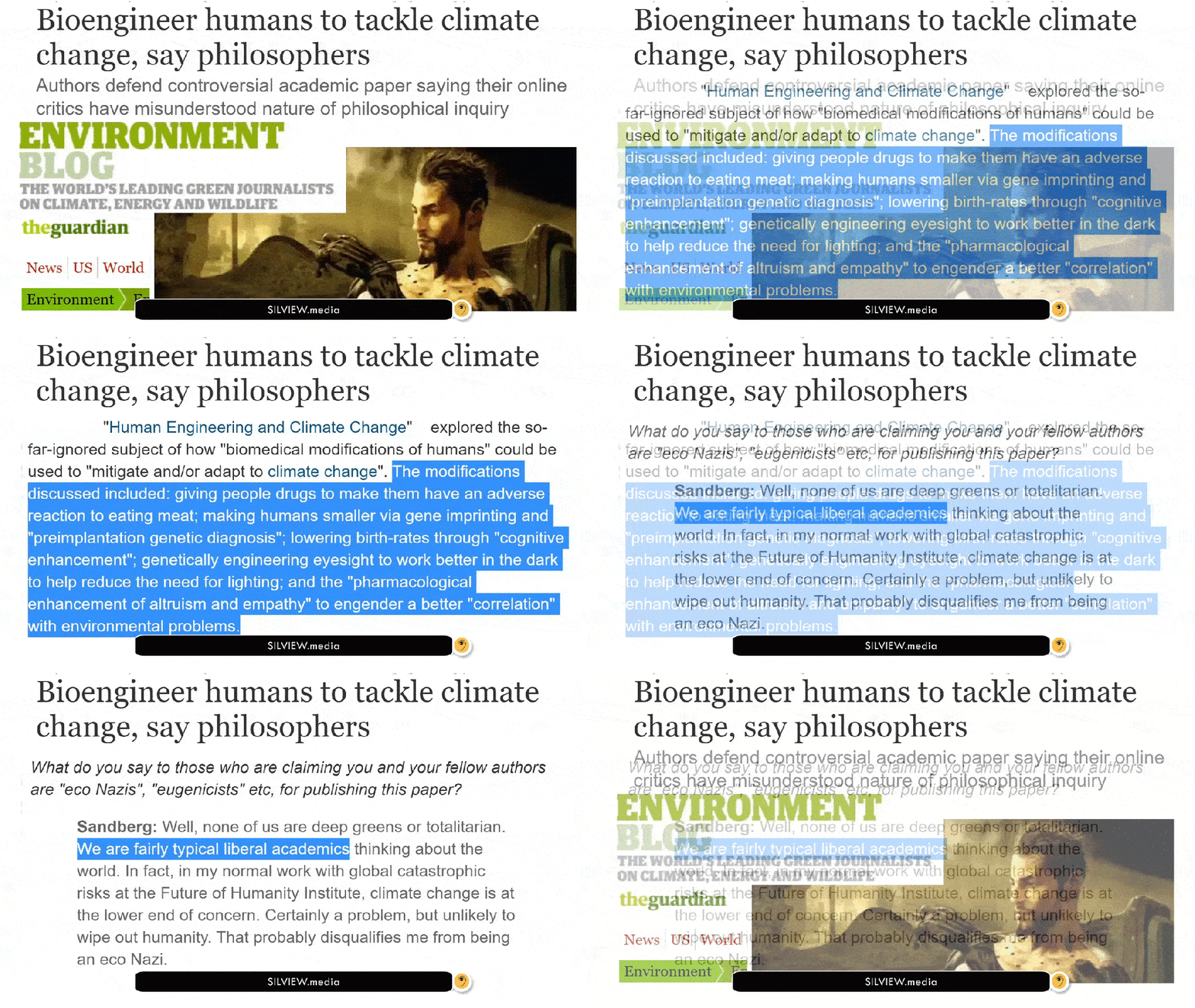


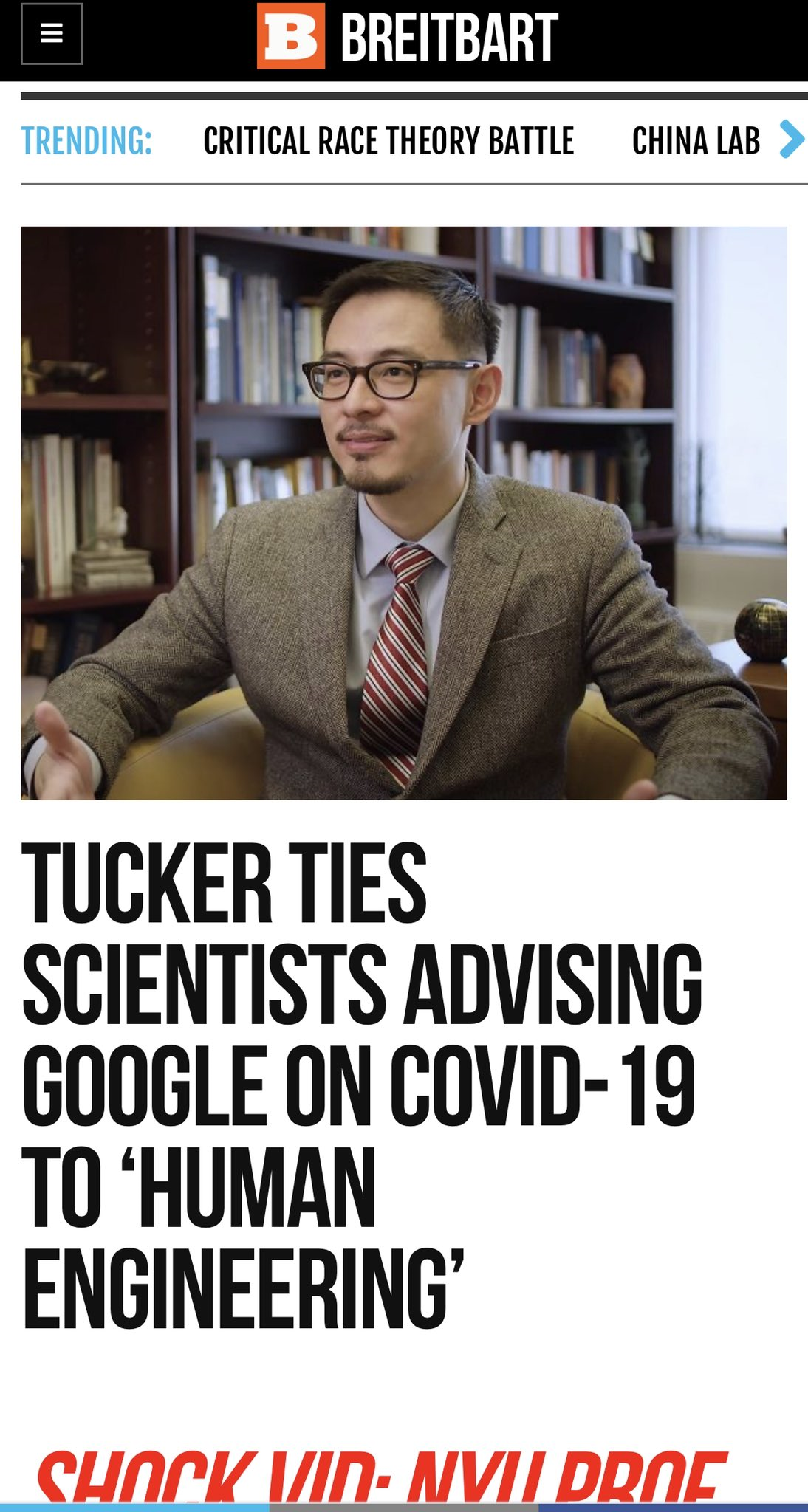

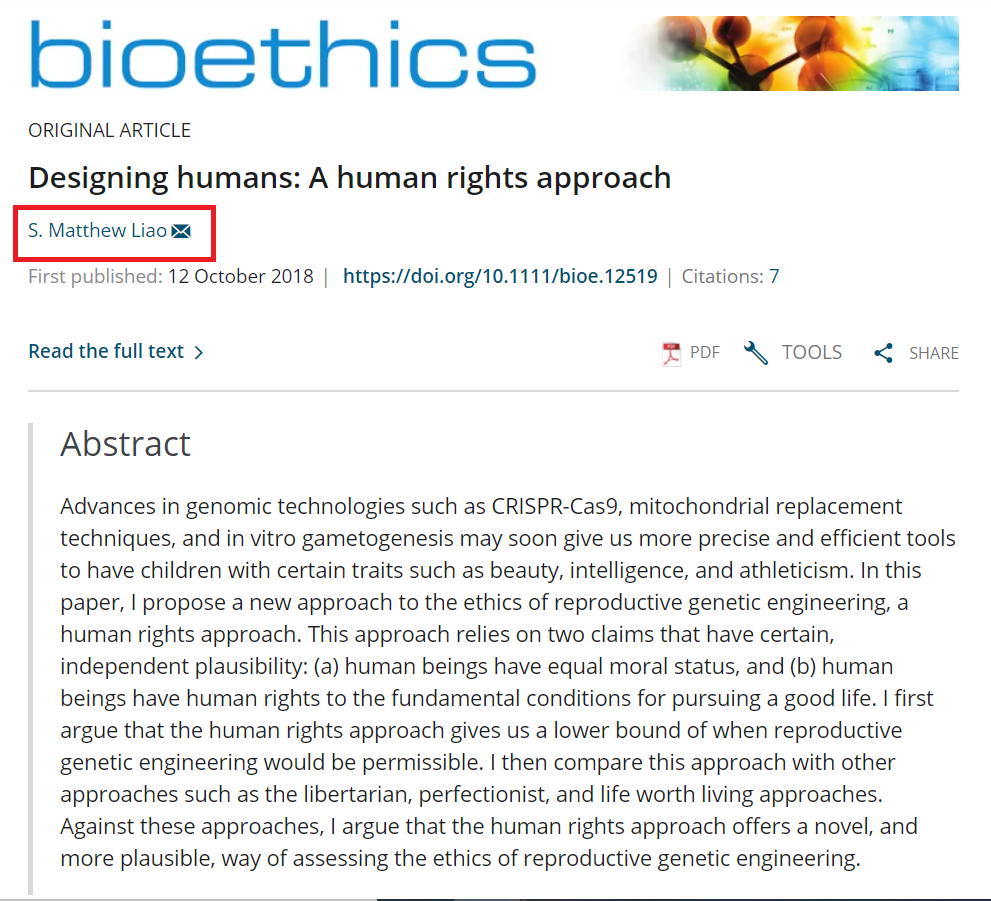


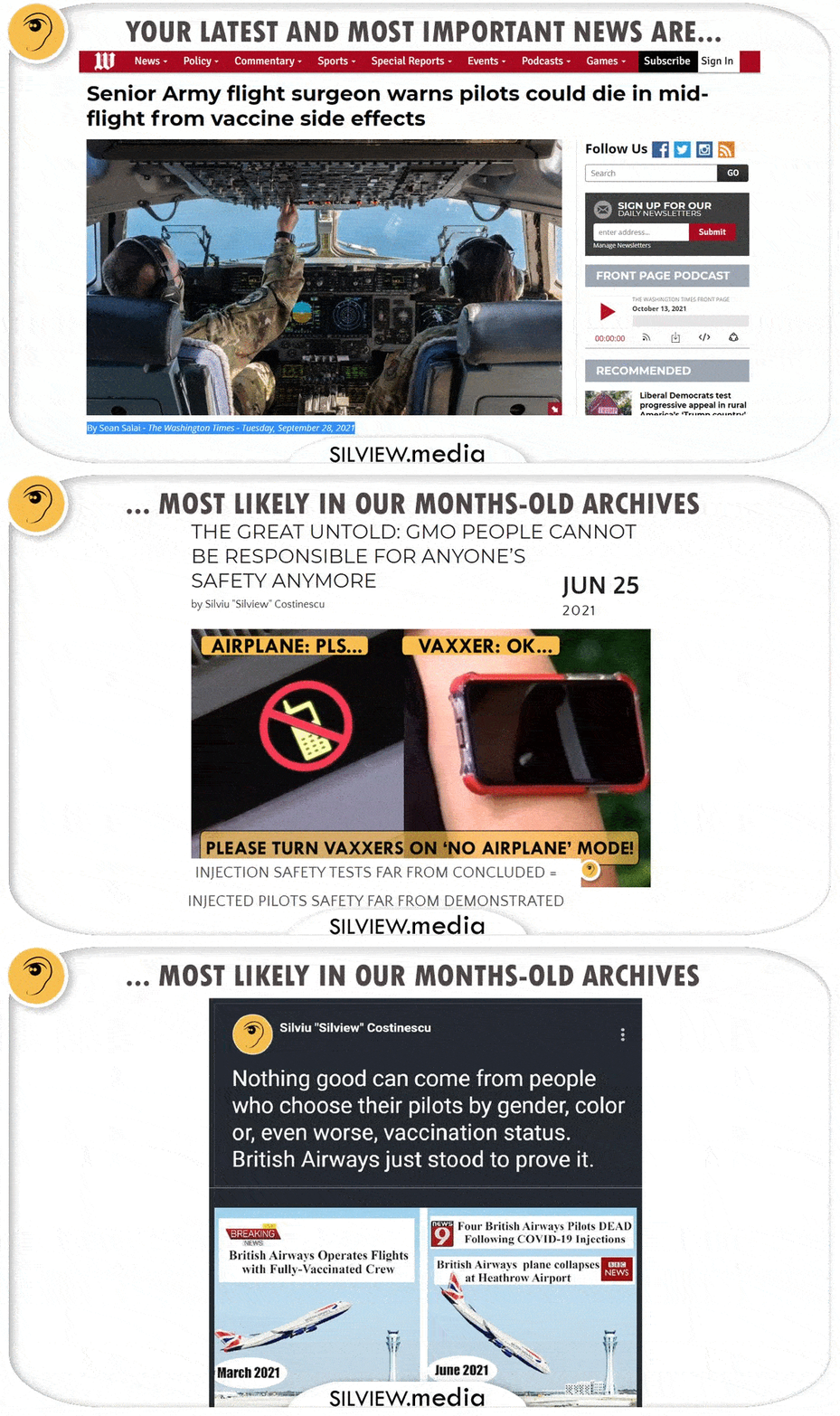



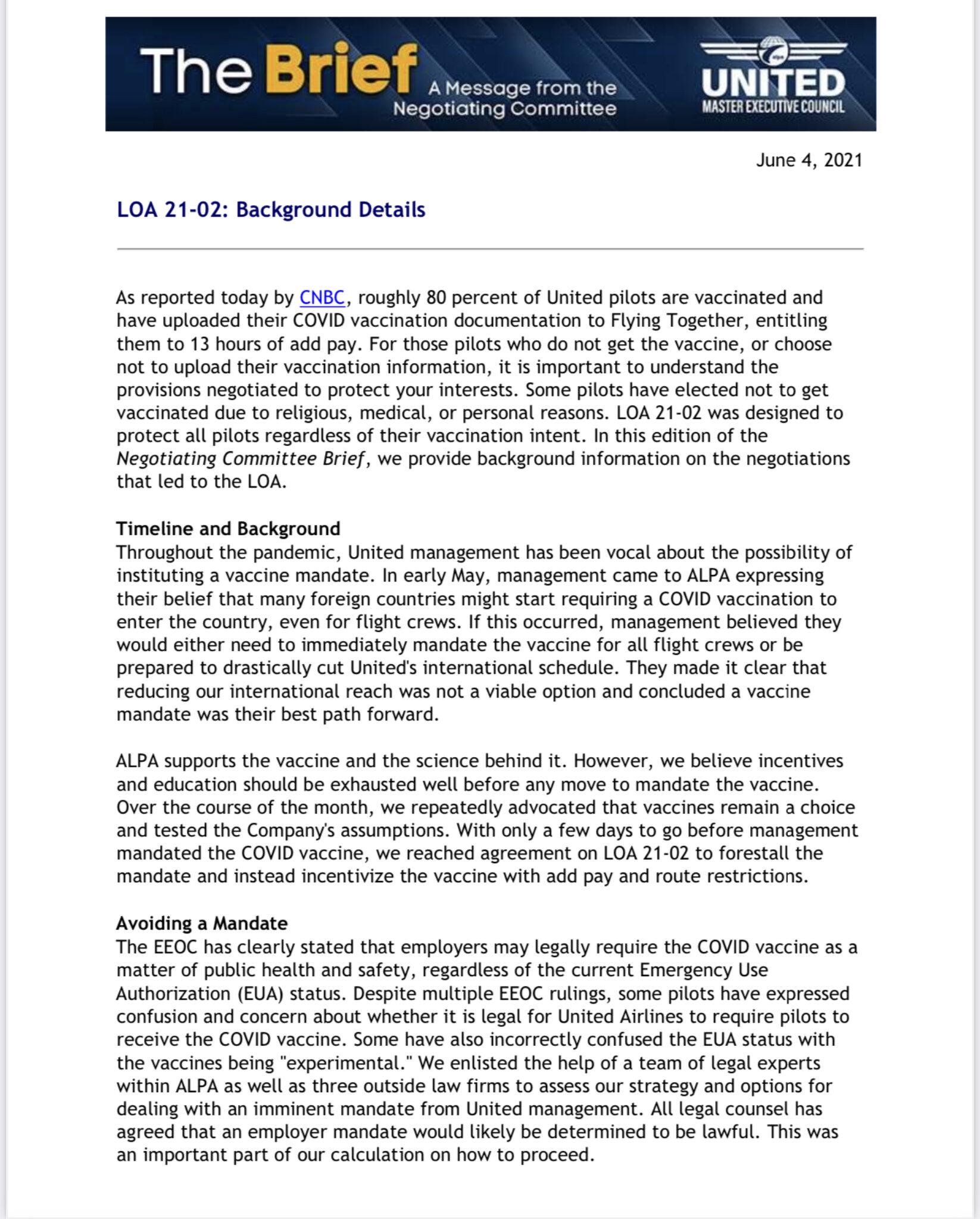

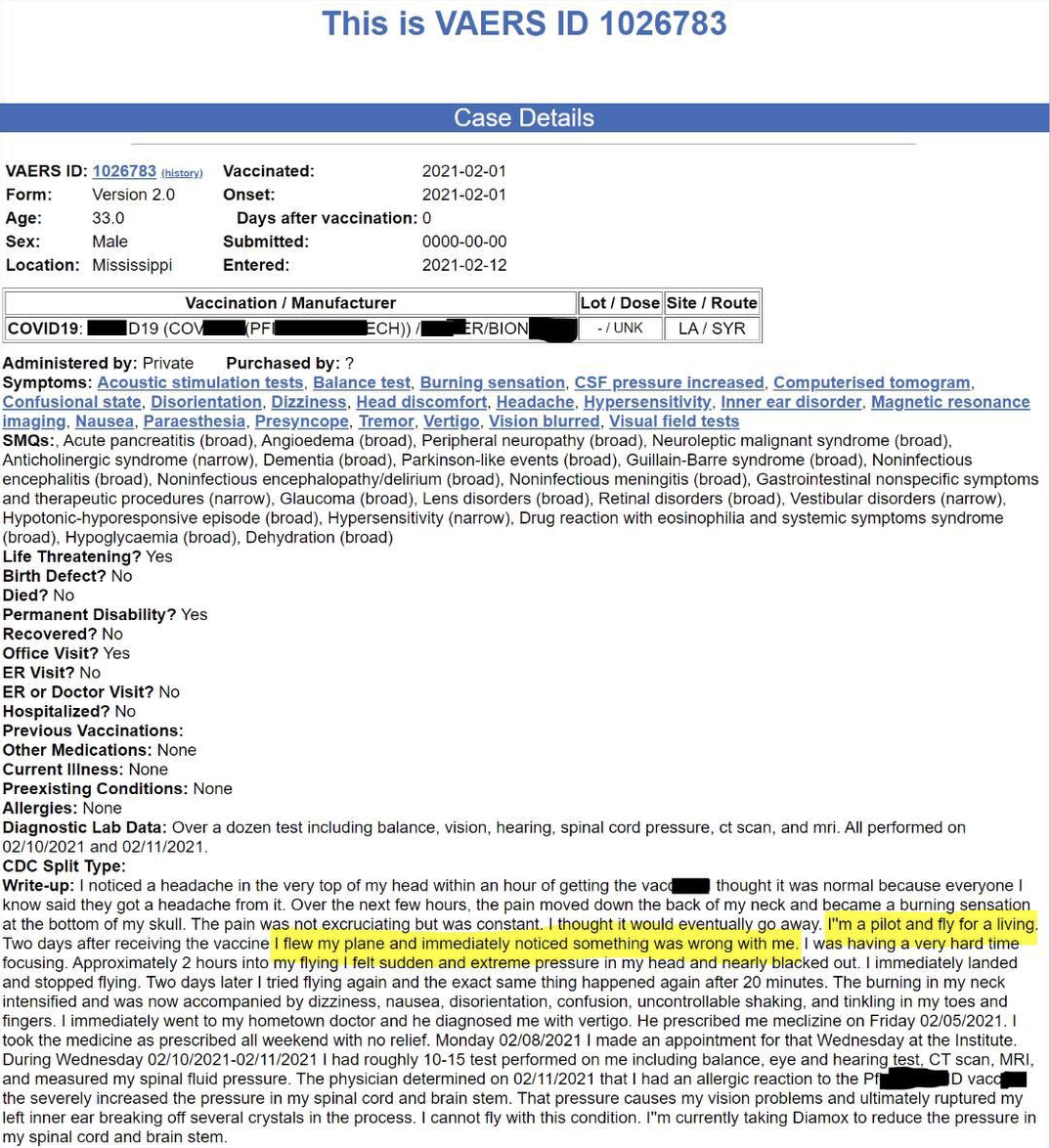
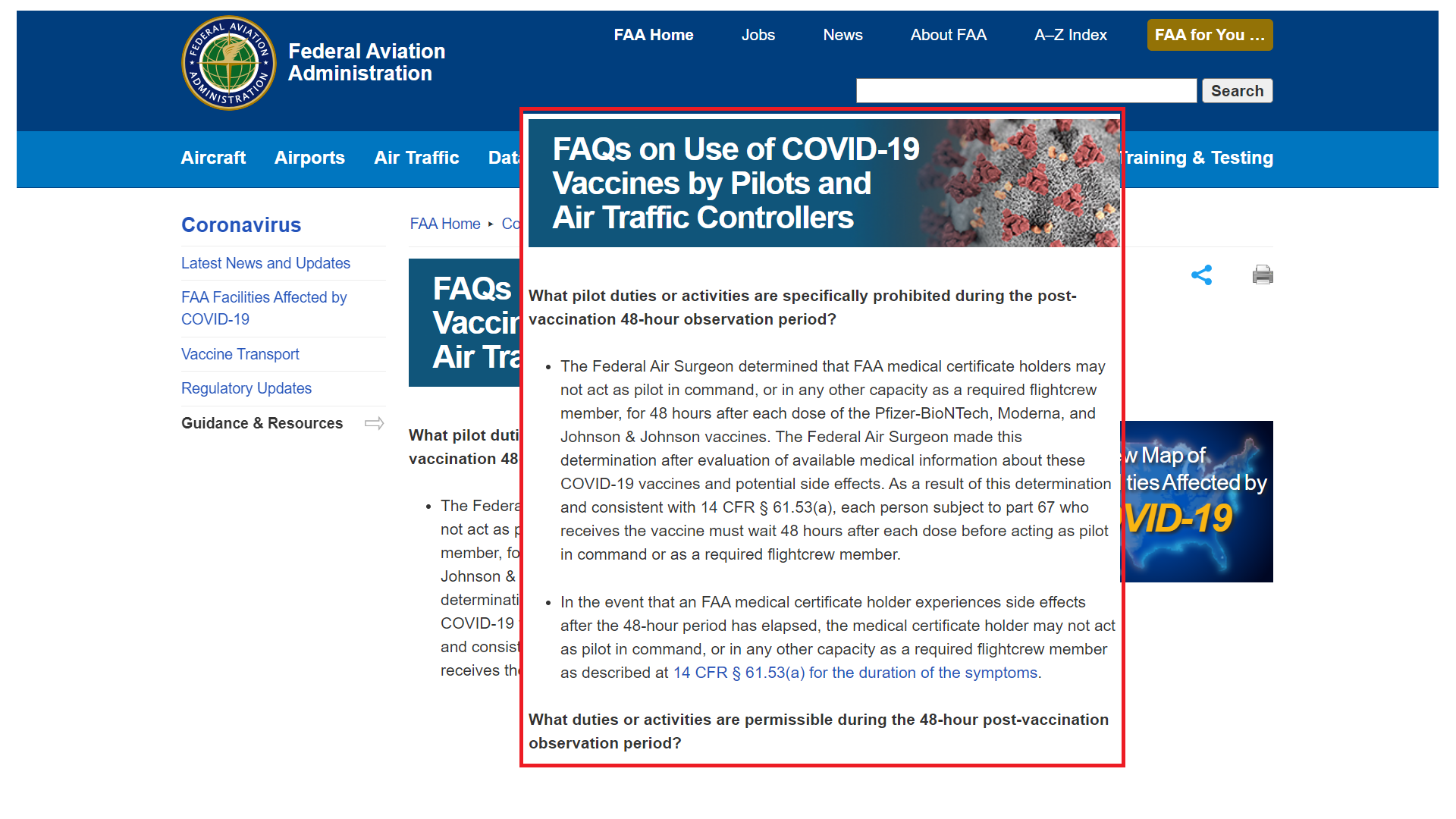




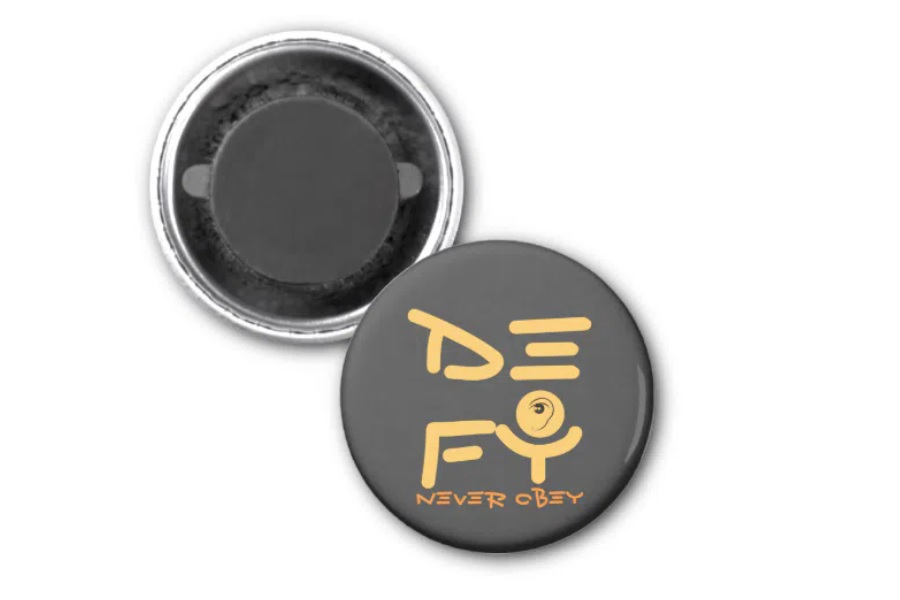


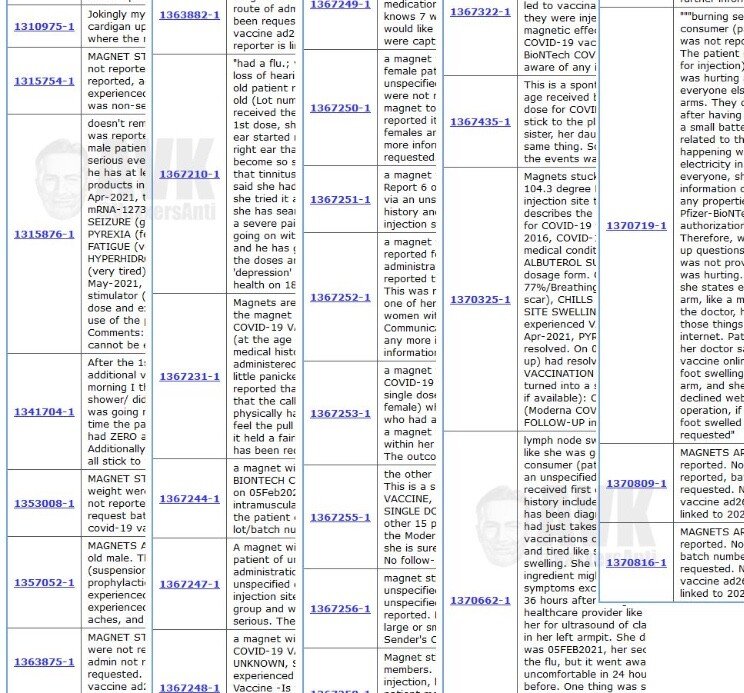










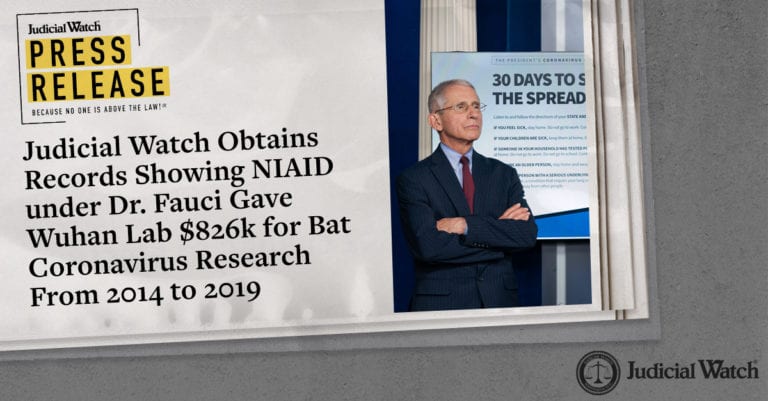













 Ukrainian President Volodymyr Zelensky speaks during a news conference for foreign media in Kyiv, Ukraine March 12, 2022. (credit: Ukrainian Presidential Press Service/Handout via REUTERS)
 Avigdor Liberman and Benjamin Netanyahu (credit: MARC ISRAEL SELLEM)
 JEWISH PILGRIMS pray at the tomb of Rabbi Nachman of Breslov in Uman during the celebration of Rosh Hashanah in September 2017. (credit: VALENTYN OGIRENKO/REUTERS)














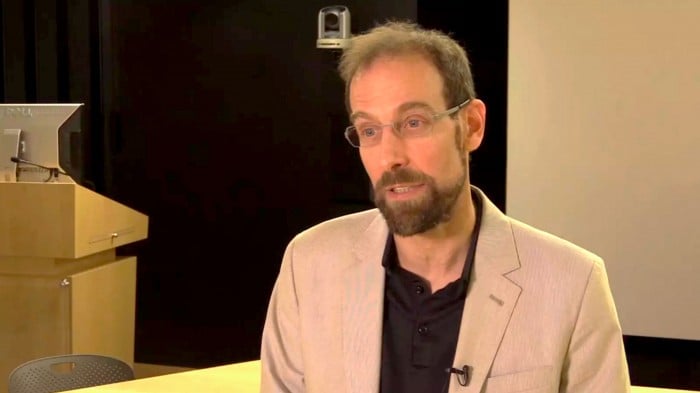


 RON WURZERGETTY IMAGES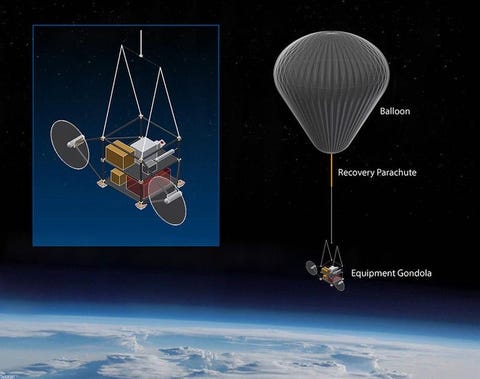


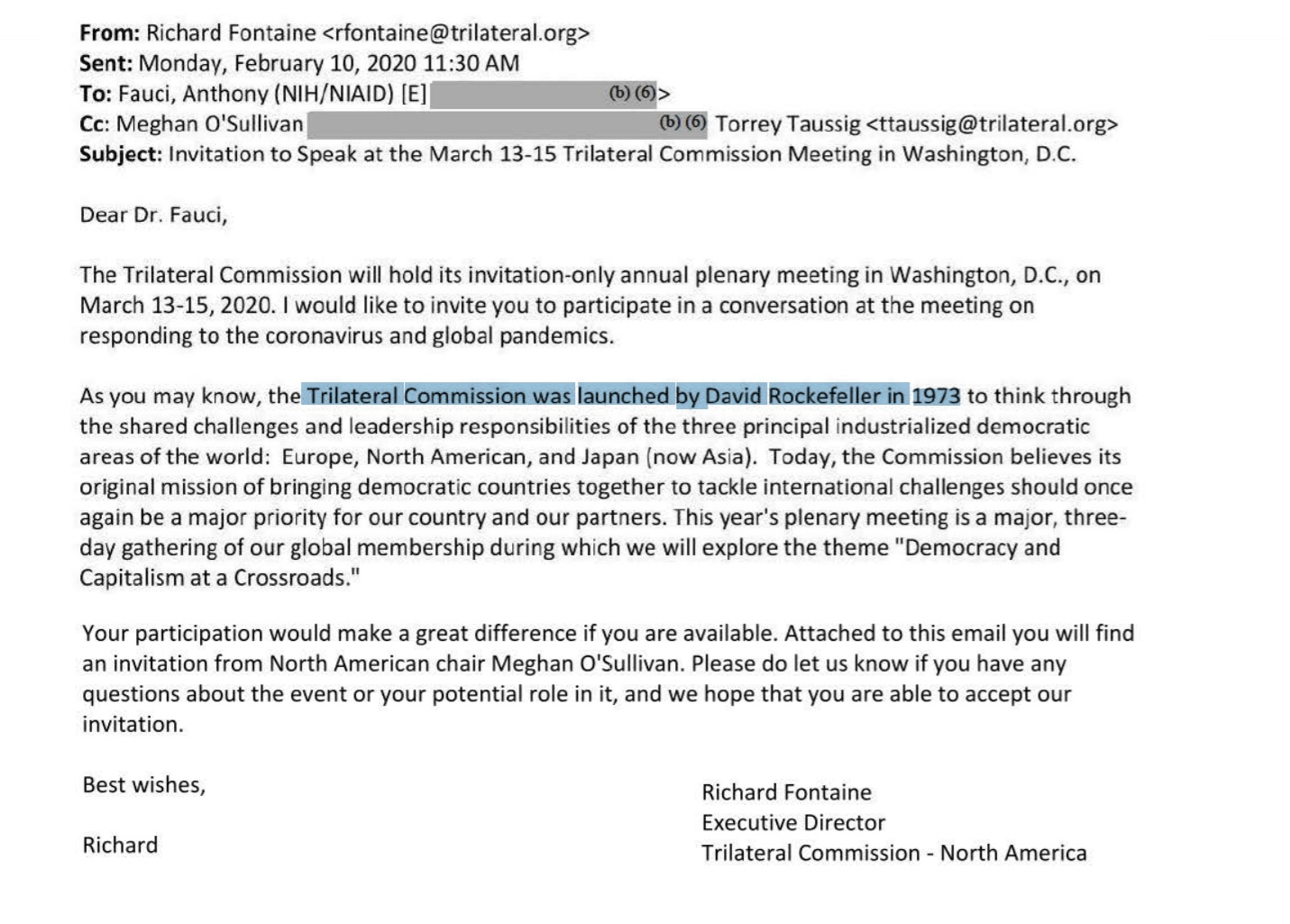
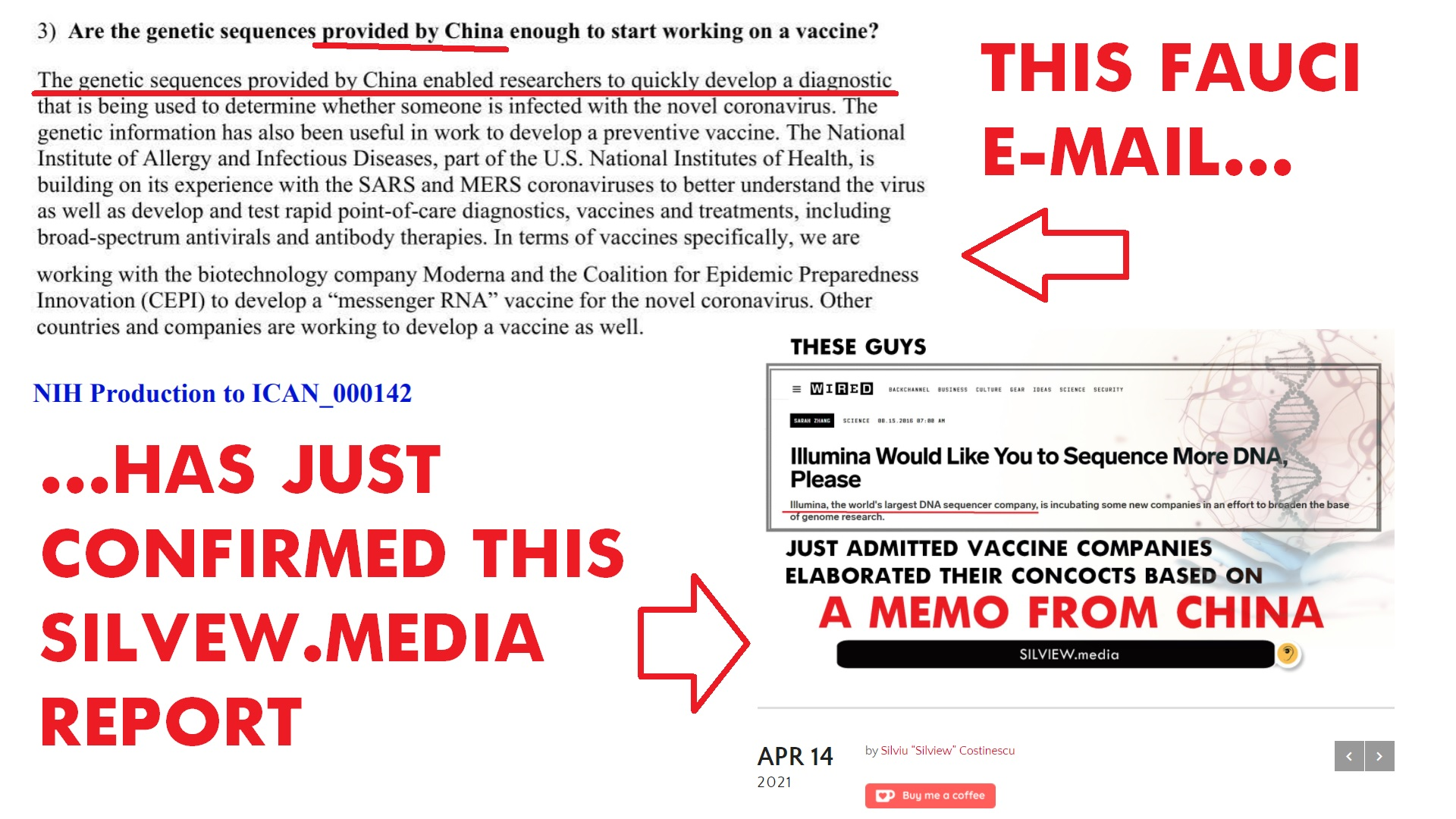
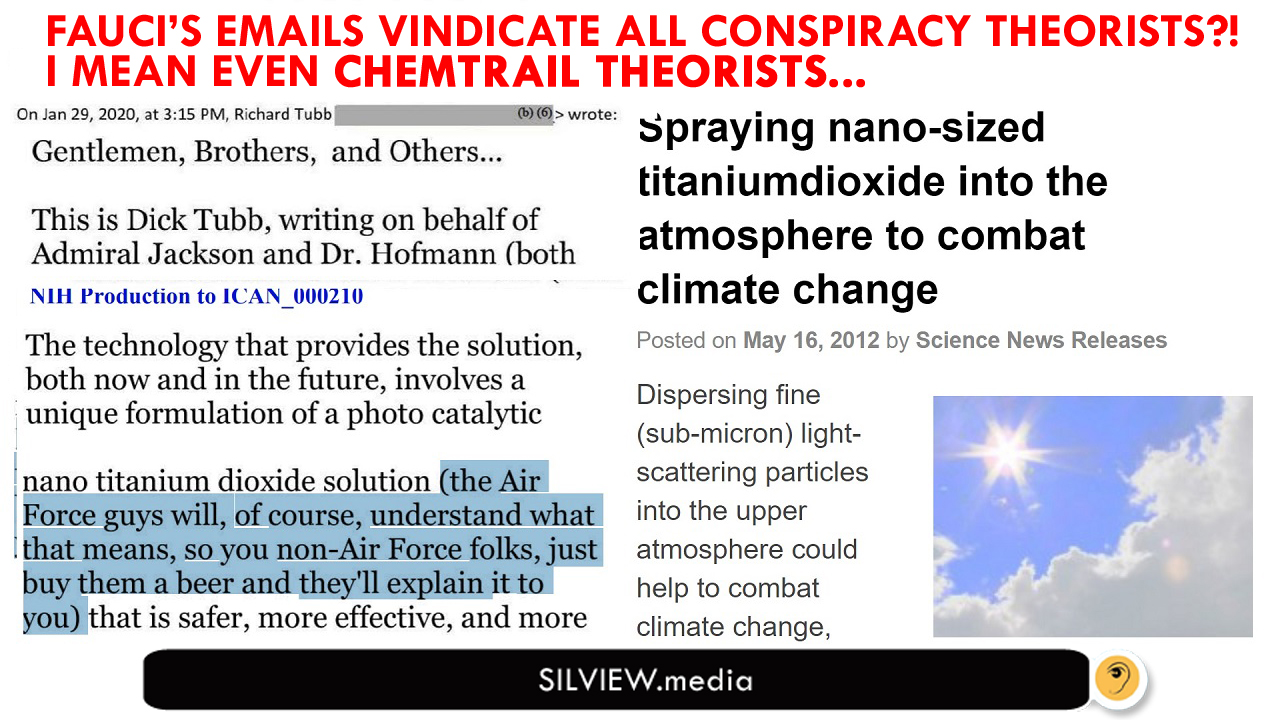

 SILVIEW.media