“Even having mild, minimal acne can have profound effects on interpersonal relationships, how we socialize, job performance, depression and anxiety.”
Board-certified Dr. Seemal Desai, spokesperson for the American Academy of Dermatologists.
‘Maskne’s existence has been reported by most mainstream media out there, so it’s “official”, but no one really talks about it, I’ve met very few people semi-aware of it and its consequences. Unsurprisingly.
Let’s break that silence. We start with none other than CNN, for fact-checkers’ delight, here’s what info they’ve gathered from US physicians on the maskne issue:
“I have patients calling in despair saying ‘What is going on? I’ve never had a breakout before and now my face looks like a teenager’s!’”
Board-certified dermatologist Dr. Whitney Bowe, clinical assistant professor of dermatology at the Icahn School of Medicine at Mount Sinai Medical Center
Breakouts that occur after wearing a mask have become so common that mask acne’s been dubbed “maskne” on social media.”We think that wearing these masks, combined with stress from the pandemic, is causing an increased moisture-rich environment for bacteria and organisms to proliferate,” Desai said, “causing a breakdown of the skin and flaring of some of these conditions.” Nurses and other health care professionals on the front line of the battle against Covid-19 are hardest hit, Desai said, due to the seal needed from personal protective equipment in order to keep the virus at bay. “I’m seeing lots more skin disease in health care workers because they’re wearing PPE and N95 respirator masks that are causing ulcers, breakdown and bleeding of the skin,” said Desai, who is a spokesperson for the American Academy of Dermatologists. Compared to the bruised and bleeding faces of doctors and nurses, a few pimples may seem inconsequential. But it’s an important issue that shouldn’t be trivialized, said Bowe, also a spokesperson for the American Academy of Dermatologists. “Acne is significantly associated with self esteem, even if it’s just one or two pimples,” she explained.
“We’re seeing lots of flares of acne, especially a type called perioral dermatitis, which tends to happen typically around the mouth and in the areas around the nose”
Board-certified Dr. Seemal Desai, an assistant professor at the University of Texas Southwestern Medical
It’s not just the added anxiety of coronavirus that might be making you break out a little more than usual right now, though. If you’ve been diligently wearing your face mask whenever you leave the house (only for essentials, we hope!) and you’ve noticed a few extra pimples in those specific areas (the bridge of your nose, your cheeks, and your chin) you may be experiencing what dermatologists are calling “maskne.”
What exactly is maskne and why does it happen?
As the name suggests, maskne is a type of breakout that results from wearing a face mask. “Maskne is acne formed in areas due to friction, pressure, stretching, rubbing or occlusion,” Nazanin Saedi, MD, a board-certified dermatologist at Thomas Jefferson University, explains to Health. “You can see it in the areas covered by the mask and also the areas where the mask and face shields touch the skin.”
Kathleen C. Suozzi, MD, director of Yale Medicine’s Aesthetic Dermatology Program and an assistant professor of dermatology, explains that maskne is technically referred to as acne mechanica.
Prior to the pandemic, this form of facial irritation was primarily experienced by athletes, “commonly due to the sweat, heat, and friction in their helmets and straps,” Dr. Saedi explains. “We are seeing it more now with people wearing masks for an extended period of time.” Dr Suozzi adds that you also get acne mechanica in your armpits from using crutches.
Overall, Dr. Saedi explains that maskne—and often, acne mechanica in general—is triggered by pores being blocked by sweat, oil, and makeup. For masks in particular, “while breathing for hours with the mask on, it creates humidity to [form] a breeding ground for acne,” she explains. The friction of the mask can also block and clog pores, leading to the formation of comedones or blackheads, says Dr. Suozzi.
Prevention is always your best bet. If you are wearing a cloth mask, wash it daily, urges Dr. Saedi. If you are wearing a disposable mask, try to replace it as often as possible or allow it to air out in between uses. And for tight-fitting N95 respirators—which should be reserved for essential workers right now—Dr. Suozzi suggests applying silicone gel strips to sit under the pressure points of the mask. “This will help prevent against skin irritation,” she explains.
If you start developing maskne, first and foremost, be gentle—that means going easy on at-home spa days. “People might be overdoing it at home with face masks, scrubs, washes, and toners,” says Dr. Suozzi, who adds overdoing skincare right now can compromise your skin’s protective barrier. Instead, wash your face with a gentle cleanser, says Dr. Saedi. “I would avoid products that are too drying because they will cause the skin barrier to become more compromised.” She suggests a face wash with salicylic acid, to help unclog the pores.
As far as treatment options go for acne breakouts, “over the counter products that help resolve the clogged pores are beneficial,” says Dr. Suozzi.
And while wearing your mask out in public right now is essential–especially in social settings where physical distancing is difficult to maintain—remember you can (and should!) take the mask off and give your face a necessary breather when you’re away from other people, like in your own home (provided you’re not caring for anyone ill) and while driving your car.
Harry Dao, MD, FAAD, a dermatologist for Loma Linda University Health, says acne, isn’t the only skin condition reported by mask wearers. Other common face mask skin problems include:
Allergic contact dermatitis – Some manufactured masks may contain a chemical that causes an allergic reaction. Formaldehyde and bronopol can be found in polypropylene surgical masks.
Rosacea – Classically worsened by heat and stress, mask wearing can increase flares.
Seborrheic dermatitis – It causes scaly plaques, inflamed skin and stubborn dandruff.
Folliculitis – When yeast or bacteria infect hair follicles.
“The mask can also cause skin conditions like miliaria (heat rash) and rosacea to flare up,” she said, adding the mask rubbing on your face made it was the “perfect storm of grossness”.
Emily Doig from Micro Glow, Melbourne-based natural skincare brand
How to prevent these conditions
Dao offers six skin care tips to protect your face from mask irritation.
Wash your face first – Use a gentle cleanser that is free of fragrance and oil and rinse with lukewarm water. “This prevents dirt and oil from being trapped on the skin surface, which cause breakouts,” Dao says. “Your face should always be clean before you put on your mask.”
Apply a moisturizer – Not only will this keep your skin hydrated, it will also act as a barrier between your face and your mask, reducing friction. Apply onto a cleansed face before and after wearing a mask. Dao says to look for moisturizers that contain ceramides, hyaluronic acid, or dimethicone, which will provide extra protection. Take care to avoid fragrances amongst other common contact allergens. This may take trial and error to find the right formulation for your skin type.
Ditch the makeup – Wearing skin makeup under a mask causes clogged pores and breakouts, according to the American Academy of Dermatology. Makeup residue will also soil your mask.
Wash your mask – If wearing a cotton mask wash it after each use as its surface contains dirt and oil and can become a breeding ground for bacteria from your nose and mouth.
Choose a fragrance-free laundry soap – Fragrances can irritate your skin — skip the fabric softener, too.
Stay away from harsh products – Medicated skin care products that contain benzoyl peroxide, retinols and salicylic acid will be more irritating to the skin under a mask — be careful about how much and what you use.
How to treat common skin issues
This is what you can do at home to help treat some of the most common mask-related skin issues, Dao says.
Acne or breakouts – Add a glycolic acid wash and a light “non-comedogenic” moisturizer to your pre-mask regimen. Move the application of leave-on skin care products to times not wearing mask at home. If breakouts, redness or swelling still persist, seek medical care with your physician.
Dry skin – Always apply a good moisturizer to the skin before you put on a mask. After you take it off, cleanse the skin and apply a bland emollient. Commonly, natural or botanical substances can contain allergenic products, so beware.
“It’s definitely been something that I’ve had to get used to,” says Jordan Dwyer, Director of Inpatient Transplant Services at Presbyterian/St. Luke’s Medical Center (PSL).
“You know around my chin, up my cheek bones, even a few like underneath my eyes where the mask touches,” she explained pointing to her face.
The facial plastic surgeon at PSL said any mask can cause irritation from the friction. The material and straps may cause a rash. Best are masks that fit comfortably around the nose and mouth.
(credit: CBS)
natural remedies TO DEAL WITH MASKNE
Indian skin expert Nirmala Shetty says for Times of India, that “preferably masks made with cotton material should be used. Wash them daily with soap and a few drops of tea tree oil.” She also shares a few tips to treat skin issues at home… Acne buster
Few coriander and mint leaves Cucumber: ½ Organic coconut oil: 2 tsp Blend together and store in a glass container. Use twice daily
For irritation around the nose and mouth
Carrot juice: 2tsp Cucumber juice: 2tsp Coconut oil: 2tsp Mix and apply three to four times
Queensland-based beauty brand Rawkanvas is among those who have seen demand for skincare items soar, netting £18,000 ($33,000 AUD) overnight yesterday with the launch of its Clarifying Red Wine Mask.
The Clarifying Red Wine Mask was launched this weekend, and beauty fans have been stocking upCredit: Instagram/@rawkanvas
“We launched last night at 6pm and sold a product every 20 seconds totalling £8,000 ($15k AUD) in just 30 minutes,” the brand’s co-founder Simona Valev told news.com.au.
“Since then in the last 12 hours, we have totalled £18,000 ($33k AUS) across NZ and AUS customer base – it was definitely unexpected.”
Simona, who created the vegan-friendly and all-natural skincare brand with Shannon Lacey in 2018, said the clay mask helps to draw out congestion, refine pores and overall gives your complexion a boost.
The mask is made with pinot noir and sauvignon blanc grapes, which “commands next-level skin detoxification and polishing”. It also gives the product a unique mulled wine scent.
The mask is thought to alleviate the symptoms of ‘maskne’ or the acne caused by wearing a face coveringCredit: Instagram/@rawkanvas
While the face mask wasn’t created with coronavirus side effects in mind, Simona said during trials clients had mentioned it helped with their “maskne”.
“Since COVID-19 and the increase of wearing masks we have noticed so many customers reaching out and asking us what they should be using due to their skin concerns,” she said.
Simona, who created the vegan-friendly and all-natural skincare brand with Shannon, said the clay mask helps to draw out congestion, refine pores and overall gives your complexion a boostCredit: Instagram/@rawkanvas
She adds that anyone using it may experience redness for a short time after as the process causes blood vessels to dilate and boosts blood circulation.
“This opens pores for a deeper clean and allows other active ingredients to be absorbed faster,” she explained.
“Maskne” was first reported in the US where several states have made it mandatory to cover your mouth and nose in public – similar to the conditions in Melbourne where masks are now compulsory when out in public. – news.com.au.
To be continued? Our work and existence, as media and people, is funded solely by our most generous supporters. But we’re not really covering our costs so far, and we’re in dire needs to upgrade our equipment, especially for video production. Help SILVIEW.media survive and grow, please donate here, anything helps. Thank you!
! Articles can always be subject of later editing as a way of perfecting them
Among other things, I have a 25years-long career in music. Electronic, mainly. And one thing led to anoher… If you think this is a joke, you are correct. If you think this is damn serious, you are sharp.
Hello World! We’re here to take over all screens with a message of love and acceptance for the Fauci Fashion phenomenon. Too many people still prioritise brain oxygenation and freedom over Fauci Fashion and that is wrong. (We have established that oxygen fits all definitions for “drug”). Youtube is stealing our views and we were helplessly watching our counter going backwards. That is very wrong! (good thing they don’t count Rona cases with the same accuracy and intentions) Our muse and guiding lighthouse in Covidiocracy, Dr. Tony Fauci, gets diminished and that’s unacceptable!!! (almost used caps…) So enough of that! We’re asking your help to get Fauci Fashion (as seen below) into all music charts, and send out a message to everyone that we can’t be silenced. (it’s actually very doable) Fauci Fashion is here to stay and give you Maskne! (it’s like acne, but from the mask, we’ll post links later if you need) If you want to join the movement, read all our posts and follow your conscience. A developed conscience will know what to make of this, the rest won’t and they won’t matter
This is the introductory word to the work of an enthusiastic supporter, with all the help I and other supporters can provide. Can’t put it in words how grateful I am! Yes, with your support, we want to attack official charts with this tune, as a way to get our voice where only Eminems and Cardi Bs can. The track is officially registered and every official stream and download counts, just use these sources.
As a music industry insider, I have the data and the method to mathematically calculate that it’s doable. We planned this carefully and we can mobilise a few thousand involved supporters that can move millions more, that can move billions. If we put together a few of your clicks with our products, know-how and strategy, we have a good shot at it.
Media is already starting to show interest, but it’s way too early to brag, we’ve just launched the initiative.
The music track (and many more)is available for free download from our Bandcamp page, this is not a business or about sales, this is about breaking a blockade. It’s “name your price” release, feel free to insert 0 if that’s the case, I still want you to have them all when you need them, even if you can’t contribute now. We contribute what we can, when we can, IF we WANT.
And we devised a few simple and effortless ways you can get involved in our fake grassroots movement with a secret dark agenda to sabotage Covidiocracy. Because this can’t work without people like you, but can move things in the right direction with you aboard.
The short help course reads like this: It’s all about attention, we live in an attention economy now, we need a bit of yours to join ours and kickstart until this provides for itself. You can basically help us get more attention two main ways: – By streaming, sharing and downloading the F out of Fauci Fashion from these official links: https://fanlink.to/cc1 – By using the Donate button on our shadow organisation’s webpage, which is right here, see the main menu on top 🙂 These funds are meant to buy ads, hire promoters and bribe media. Of course we will use most of it like Gates and Bono’s charities: in personal interest; but the rest will achieve our goals and everyone will be happy. If you really need serious money talk: all money in the world are worthless when you have no future, like humanity under Covidiocracy. So I’m already putting everything in this work, with or without help, but it might not be enough without you. Either way, sponsoring change is the only way I can make money worth anything now.
If you want to achieve maximum impact with your resources, here’s the details you need to know: – most efficient tools you have are * official downloads from sites like Amazon or Juno, one track download equals 100 free streams. And one stream from a paid/premium account = about 5-6 free streams. They are also better reported and accounted too, there’s less accounts of fraud, while Youtube robbed us blind to our faces, turning back the counter; Bundle purchases help less than individual track purchases, for some reasons related to how the charts are calculated. * direct donations; because we have the data on how and where funds can make the best impact at a certain moment and its technically impossible to share all that knowledge and know-how. For Paypal, use the button on this website, for cards hit the Bandcamp page, download what you like and pay what you like. Unfortunately no crypto wallets available. * website embeds and social shares. All platforms love that and google favors it a lot. However, Facebook hates external links, so if it’s not a paid post, it’s best to share the Facebook page itself. Here’s a win-win trick you can do if you have a Facebook page, let’s say: Instead of donating to us, make a dope post with the video or the Spotify player and use the money to buy promotion for it. This way you drive attention to both your page and our initiative, double win!
And if you really don’t like Fauci Fashion, we understand, feel free to purchase Covidiocracy T-shirts and hats from our shop. But most of those money won’t go to us, our percentage is tiny. We don’t make any blood money on the masks, that’s manufacturer’s price.
updates:
This will most probably become like a running thread because we have interesting developments almost daily. Here are some of them
August 3rd 2020: This happened. And even more interesting than the video is what happened when we uploaded it on Facebook, see below!
We uploaded this video on our Facebook page too and guess what happened to two people (me and a friend, in fact) the second we started to share it in private messages, verbatim copy incidents: We get locked out by Facebook who was claiming the accounts got hacked and they need to re-secure them. So we went through password changing and a whole f-ing test to regain access. The hacking never actually happened, it was basically a false flag by Facebook, who have been long time shilling for China and Fauci. Most of you users must have got the news that Fakebook’s just launched the new official private message censorship policy, which is basically an AI set to ban keywords and links. Much more complicated than that, but basically that. And the new toaster wasn’t set yet to the right temperature when we started to share inconvenient content. Facebook’s pretense that two of our accounts were attacked, coincidentally and precisely when they were sharing the same video in PM’s – that’s dumb af, Suckerborg!
In other news, EDM Nations mag is with us more vigorously than China 🙂
The Swag is strong with this one
September 13th: This escalated faster the we anticipated and we had to re-title our video to better reflect the developments:
Ever watched a heist live online? Hit the video and watch the counters.
Long story short: Our target with The People for Fauci Fashion was 10,000 Youtube views and about as many streams on Spotify first half of September. Spotify went well since Day#1, no worries there. First days we got the video some bumps in traffic, a solid few hundred views went away, we hardly documented it because we couldn’t believe our eyes we’re watching the counter going backwards. We went over the shock, took it as an accident, got some more press, tricked the Facebook robots to approve our clips and literally paid Suckerborg to distribute out video across Facebook, mobilised some supporters and got things going, with a few ups and downs. By Friday 11th we were at about 8,500 Youtube views and imaginary Champagne bottles went to the freezer before I went to bed. Saturday morning I woke up to only about 8,900 views, I raised an eyebrow, but OK. Before I finished my coffee we were down to around 7,300. Took me a while to process and react, mobilise some people etc, so first screenshot is from the afternoon at around 6,300 views. Made noise, tons more people watched the video, Sunday afternoon we’re down 100 views and about 10 likes. Regardless of what you think of our initiative, from Youtubers’ household budgets to entire industries, we all are hugely influenced by Youtube, Facebook and Twitter numbers and reports. And they are arbitrary. They insert there whatever figures they damn please. If you have doubts about that, read here how you yourself can prove Facebook is pick-pocketing users and advertisers, we learned it the hard way, and a lot more while promoting this project.
Meanwhile, reality has become even harder to distinguish from memes and parodies.
Is it a meme, is it “fake news”, is it “real news”?
By Sunday afternoon everything turned again… #LMAO @ #Youtube: I Did a little roll call, pushed back, outed them everywhere and whatcha guess, the power is back. Not the views, though. Did everyone just die this week-end?! Youtube almost brags and rubs in our face the thick chunk of views they took from our video. Globalist scum, basically.
Monday: Same story reloaded, this time we kinda streamed it live on Facebook and other socials.
BeforeNow
“Fauci Fashion” is part of a larger music release that has just been made available on most quality digital platforms that support electronic dance music.
Imagine a fist with five middle fingers up. Even 6 on Bandcamp or Youtube. This is the official description of Alien Pimp’s newest EP. Straight from the depths of the deepest Coronavirus mental and emotional depression, with one hand swinging the sword of comedy and with the other – the hammer of tragedy, here comes the sound of the “New Normal”. It’s angry, pissed, acid, deep, dark, ironic, silly, it’s everything punk aspired to be, but with computers and true care for the sound engineering. It doesn’t even matter if you like it, this EP is here to take a snap of history and set a stone. Alien Pimp did that before a few times, he pushed the bass music hybridization 10 years ago, and precisely 20 years ago he got featured on CNN for the pioneering internet as a medium for audio-visual collaborations. And now a new age awaits a new turn, especially in arts, you can be part of it or part of the past. And it’s pointless to even try stopping it, berating and belittling it, as it is pointless to ignore it. It is, it happened and it won’t go away, more so than the times that lead to its creation. Every track comes ‘equipped” with visual support created by the musician himself. He practices something he calls “new media” or “Silview media” (from his own name and website), it’s a fusion of formats and aesthetics shaped by the current times and technology. It blends a bit of everything, from retro-futurism to memes and tiktok. Some tracks have vertical videos designed for phones, other resemble animated gifs and so forth. In short: this is the sound o’ the times. “Don’t like it? Imagine how much I love living the times that inspired it! Like it? You know what to do…”, says Alien Pimp.
… in less than four years? Must be some breakthrough science again, maybe viruses are getting fat like Brits, or maybe they invented invisible masks now, right? No. Politics and media narratives changed. Nature works the same, masks are as lame as they ever were when it comes to virus protection. See for yourself and you will understand why this article is not up anymore.
When did they embraced dogma, yesterday or today? Why?
Below is the full, unedited article, in all its beauty. Probably the most valuable part is the references collection, as well as this little announcement hanged by the Oral Health collective at the end of the piece, just to trash it a bit later for no actual reason:
Oral Health welcomes this original article.
Why Face Masks Don’t Work: A Revealing Review
October 18, 2016 by John Hardie, BDS, MSc, PhD, FRCDC
Yesterday’s Scientific Dogma is Today’s Discarded Fable
Introduction The above quotation is ascribed to Justice Archie Campbell author of Canada’s SARS Commission Final Report. 1It is a stark reminder that scientific knowledge is constantly changing as new discoveries contradict established beliefs. For at least three decades a face mask has been deemed an essential component of the personal protective equipment worn by dental personnel. A current article, “Face Mask Performance: Are You Protected” gives the impression that masks are capable of providing an acceptable level of protection from airborne pathogens. 2Studies of recent diseases such as Severe Acute Respiratory Syndrome (SARS), Middle Eastern Respiratory Syndrome (MERS) and the Ebola Crisis combined with those of seasonal influenza and drug resistant tuberculosis have promoted a better understanding of how respiratory diseases are transmitted. Concurrently, with this appreciation, there have been a number of clinical investigations into the efficacy of protective devices such as face masks. This article will describe how the findings of such studies lead to a rethinking of the benefits of wearing a mask during the practice of dentistry. It will begin by describing new concepts relating to infection control especially personal protective equipment (PPE).
Trends in Infection Control For the past three decades there has been minimal opposition to what have become seemingly established and accepted infection control recommendations. In 2009, infection control specialist Dr. D. Diekema questioned the validity of these by asking what actual, front-line hospital-based infection control experiences were available to such authoritative organization as the Centers for Disease Control and Prevention (CDC), the Occupational Safety and Health Association (OSHA) and the National Institute for Occupational Safety and Health (NIOSH). 3In the same year, while commenting on guidelines for face masks, Dr. M. Rupp of the Society for Healthcare Epidemiology of America noted that some of the practices relating to infection control that have been in place for decades, ”haven’t been subjected to the same strenuous investigation that, for instance, a new medicine might be subjected.” 4He opined that perhaps it is the relative cheapness and apparent safety of face masks that has prevented them from undergoing the extensive studies that should be required for any quality improvement device. 4More recently, Dr. R. MacIntyre, a prolific investigator of face masks, has forcefully stated that the historical reliance on theoretical assumptions for recommending PPEs should be replaced by rigorously acquired clinical data. 5She noted that most studies on face masks have been based on laboratory simulated tests which quite simply have limited clinical applicability as they cannot account for such human factors as compliance, coughing and talking. 5
Covering the nose and mouth for infection control started in the early 1900s when the German physician Carl Flugge discovered that exhaled droplets could transmit tuberculosis. 4The science regarding the aerosol transmission of infectious diseases has, for years, been based on what is now appreciated to be “very outmoded research and an overly simplistic interpretation of the data.” 6Modern studies are employing sensitive instruments and interpretative techniques to better understand the size and distribution of potentially infectious aerosol particles. 6Such knowledge is paramount to appreciating the limitations of face masks. Nevertheless, it is the historical understanding of droplet and airborne transmission that has driven the longstanding and continuing tradition of mask wearing among health professionals. In 2014, the nursing profession was implored to “stop using practice interventions that are based on tradition” but instead adopt protocols that are based on critical evaluations of the available evidence. 7
A December 2015 article in the National Post seems to ascribe to Dr. Gardam, Director of Infection Prevention and Control, Toronto University Health Network the quote, “I need to choose which stupid, arbitrary infection control rules I’m going to push.” 8In a communication with the author, Dr. Gardam explained that this was not a personal belief but that it did reflect the views of some infection control practitioners. In her 2014 article, “Germs and the Pseudoscience of Quality Improvement”, Dr. K Sibert, an anaesthetist with an interest in infection control, is of the opinion that many infection control rules are indeed arbitrary, not justified by the available evidence or subjected to controlled follow-up studies, but are devised, often under pressure, to give the appearance of doing something. 9
The above illustrate the developing concerns that many infection control measures have been adopted with minimal supporting evidence. To address this fault, the authors of a 2007 New England Journal of Medicine (NEJM) article eloquently argue that all safety and quality improvement recommendations must be subjected to the same rigorous testing as would any new clinical intervention. 10Dr. R. MacIntyre, a proponent of this trend in infection control, has used her research findings to boldly state that, “it would not seem justifiable to ask healthcare workers to wear surgical masks.” 4To understand this conclusion it is necessary to appreciate the current concepts relating to airborne transmissions.
Airborne Transmissions Early studies of airborne transmissions were hampered by the fact that the investigators were not able to detect small particles (less than 5 microns) near an infectious person. 6Thus, they assumed that it was the exposure of the face, eyes and nose to large particles (greater than 5 microns) or “droplets” that transmitted the respiratory condition to a person in close proximity to the host. 6This became known as “droplet infection”, and 5 microns or greater became established as the size of large particles and the traditional belief that such particles could, in theory, be trapped by a face mask. 5The early researchers concluded that since only large particles were detected near an infectious person any small particles would be transmitted via air currents, dispersed over long distances, remain infective over time and might be inhaled by persons who never had any close contact with the host. 11This became known as “airborne transmission” against which a face mask would be of little use. 5
Through the use of highly sensitive instruments it is now appreciated that the aerosols transmitted from the respiratory tract due to coughing, sneezing, talking, exhalation and certain medical and dental procedures produce respiratory particles that range from the very small (less than 5 microns) to the very large (greater than a 100 microns) and that all of these particles are capable of being inhaled by persons close to the source. 6, 11 This means that respiratory aerosols potentially contain bacteria averaging in size from 1-10 microns and viruses ranging in size from 0.004 to 0.1 microns. 12It is also acknowledged that upon their emission large “droplets” will undergo evaporation producing a concentration of readily inhalable small particles surrounding the aerosol source. 6
The historical terms “droplet infection” and “airborne transmission” defined the routes of infection based on particle size. Current knowledge suggests that these are redundant descriptions since aerosols contain a wide distribution of particle sizes and that they ought to be replaced by the term, “aerosol transmissible.” 4, 5 Aerosol transmission has been defined as “person –to – person transmission of pathogens through air by means of inhalation of infectious particles.” 26In addition, it is appreciated that the physics associated with the production of the aerosols imparts energy to microbial suspensions facilitating their inhalation. 11
Traditionally face masks have been recommended to protect the mouth and nose from the “droplet” route of infection, presumably because they will prevent the inhalation of relatively large particles. 11Their efficacy must be re-examined in light of the fact that aerosols contain particles many times smaller than 5 microns. Prior to this examination, it is pertinent to review the defence mechanism of the respiratory tract.
Respiratory System Defences Comprehensive details on the defence mechanisms of the respiratory tract will not be discussed. Instead readers are reminded that; coughing, sneezing, nasal hairs, respiratory tract cilia, mucous producing lining cells and the phagocytic activity of alveolar macrophages provide protection against inhaled foreign bodies including fungi, bacteria and viruses. 13Indeed, the pathogen laden aerosols produced by everyday talking and eating would have the potential to cause significant disease if it were not for these effective respiratory tract defences.
These defences contradict the recently published belief that dentally produced aerosols, “enter unprotected bronchioles and alveoli.” 2A pertinent demonstration of the respiratory tract’s ability to resist disease is the finding that- compared to controls- dentists had significantly elevated levels of antibodies to influenza A and B and the respiratory syncytial virus. 14Thus, while dentists had greater than normal exposure to these aerosol transmissible pathogens, their potential to cause disease was resisted by respiratory immunologic responses. Interestingly, the wearing of masks and eye glasses did not lessen the production of antibodies, thus reducing their significance as personal protective barriers. 14Another example of the effectiveness of respiratory defences is that although exposed to more aerosol transmissible pathogens than the general population, Tokyo dentists have a significantly lower risk of dying from pneumonia and bronchitis. 15The ability of a face mask to prevent the infectious risk potentially inherent in sprays of blood and saliva reaching the wearers mouth and nose is questionable since, before the advent of mask use, dentists were no more likely to die of infectious diseases than the general population. 16
The respiratory tract has efficient defence mechanisms. Unless face masks have the ability to either enhance or lessen the need for such natural defences, their use as protection against airborne pathogens must be questioned.
Face Masks History: Cloth or cotton gauze masks have been used since the late 19th century to protect sterile fields from spit and mucous generated by the wearer. 5,17,18 A secondary function was to protect the mouth and nose of the wearer from the sprays and splashes of blood and body fluids created during surgery. 17As noted above, in the early 20th century masks were used to trap infectious “droplets” expelled by the wearer thus possibly reducing disease transmission to others. 18Since the mid-20th century until to-day, face masks have been increasingly used for entirely the opposite function: that is to prevent the wearer from inhaling respiratory pathogens. 5,20,21 Indeed, most current dental infection control recommendations insist that a face mask be worn, “as a key component of personal protection against airborne pathogens”. 2
Literature reviews have confirmed that wearing a mask during surgery has no impact whatsoever on wound infection rates during clean surgery. 22,23,24,25,26 A recent 2014 report states categorically that no clinical trials have ever shown that wearing a mask prevents contamination of surgical sites. 26With their original purpose being highly questionable it should be no surprise that the ability of face masks to act as respiratory protective devices is now the subject of intense scrutiny. 27Appreciating the reasons for this, requires an understanding of the structure, fit and filtering capacity of face masks.
Structure and Fit: Disposable face masks usually consist of three to four layers of flat non-woven mats of fine fibres separated by one or two polypropylene barrier layers which act as filters capable of trapping material greater than 1 micron in diameter. 18,24,28 Masks are placed over the nose and mouth and secured by straps usually placed behind the head and neck. 21No matter how well a mask conforms to the shape of a person’s face, it is not designed to create an air tight seal around the face. Masks will always fit fairly loosely with considerable gaps along the cheeks, around the bridge of the nose and along the bottom edge of the mask below the chin. 21These gaps do not provide adequate protection as they permit the passage of air and aerosols when the wearer inhales. 11,17 It is important to appreciate that if masks contained filters capable of trapping viruses, the peripheral gaps around the masks would continue to permit the inhalation of unfiltered air and aerosols. 11
Filtering Capacity: The filters in masks do not act as sieves by trapping particles greater than a specific size while allowing smaller particles to pass through. 18Instead the dynamics of aerosolized particles and their molecular attraction to filter fibres are such that at a certain range of sizes both large and small particles will penetrate through a face mask. 18Accordingly, it should be no surprise that a study of eight brands of face masks found that they did not filter out 20-100% of particles varying in size from 0.1 to 4.0 microns. 21Another investigation showed penetration ranges from 5-100% when masks were challenged with relatively large 1.0 micron particles. 29A further study found that masks were incapable of filtering out 80-85% of particles varying in size from 0.3 to 2.0 microns. 30A 2008 investigation identified the poor filtering performance of dental masks. 27It should be concluded from these and similar studies that the filter material of face masks does not retain or filter out viruses or other submicron particles. 11,31 When this understanding is combined with the poor fit of masks, it is readily appreciated that neither the filter performance nor the facial fit characteristics of face masks qualify them as being devices which protect against respiratory infections. 27Despite this determination the performance of masks against certain criteria has been used to justify their effectiveness.2 Accordingly, it is appropriate to review the limitations of these performance standards.
Performance Standards: Face masks are not subject to any regulations. 11The USA Federal Food and Drug Administration (FDA) classifies face masks as Class II devices. To obtain the necessary approval to sell masks all that a manufacturer need do is satisfy the FDA that any new device is substantially the same as any mask currently available for sale. 21As ironically noted by the Occupational Health and Safety Agency for Healthcare in BC, “There is no specific requirement to prove that the existing masks are effective and there is no standard test or set of data required supporting the assertion of equivalence. Nor does the FDA conduct or sponsor testing of surgical masks.” 21Although the FDA recommends two filter efficiency tests; particulate filtration efficiency (PFE) and bacterial filtration efficiency (BFE) it does not stipulate a minimum level of filter performance for these tests. 27The PFE test is a basis for comparing the efficiency of face masks when exposed to aerosol particle sizes between 0.1 and 5.0 microns. The test does not assess the effectiveness of a mask in preventing the ingress of potentially harmful particles nor can it be used to characterize the protective nature of a mask. 32The BFE test is a measure of a mask’s ability to provide protection from large particles expelled by the wearer. It does not provide an assessment of a mask’s ability to protect the wearer. 17Although these tests are conducted under the auspices of the American Society of Testing and Materials (ASTM) and often produce filtration efficiencies in the range of 95-98 %, they are not a measure of a masks ability to protect against respiratory pathogens. Failure to appreciate the limitations of these tests combined with a reliance on the high filtration efficiencies reported by the manufacturers has, according to Healthcare in BC, “created an environment in which health care workers think they are more protected than they actually are.” 21For dental personnel the protection sought is mainly from treatment induced aerosols.
Dental Aerosols For approximately 40 years it has been known that dental restorative and especially ultrasonic scaling procedures produce aerosols containing not only blood and saliva but potentially pathogenic organisms. 33The source of these organisms could be the oral cavities of patients and/or dental unit water lines. 34Assessing the source and pathogenicity of these organisms has proven elusive as it is extremely difficult to culture bacteria especially anaerobes and viruses from dental aerosols. 34Although there is no substantiated proof that dental aerosols are an infection control risk, it is a reasonable assumption that if pathogenic microbes are present at the treatment site they will become aerosolized and prone to inhalation by the clinician which a face mask will not prevent. As shown by the study of UK dentists, the inhalation resulted in the formation of appropriate antibodies to respiratory pathogens without overt signs and symptoms of respiratory distress. 14This occurred whether masks were or were not worn. In a 2008 article, Dr. S. Harrel, of the Baylor College of Dentistry, is of the opinion that because there is a lack of epidemiologically detectable disease from the use of ultrasonic scalers, dental aerosols appear to have a low potential for transmitting disease but should not be ignored as a risk for disease transmission. 34The most effective measures for reducing disease transmission from dental aerosols are pre-procedural rinses with mouthwashes such as chlorhexidine, large diameter high volume evacuators, and rubber dam whenever possible. 33Face masks are not useful for this purpose, and Dr. Harrel believes that dental personnel have placed too great a reliance on their efficacy. 34Perhaps this has occurred because dental regulatory agencies have failed to appreciate the increasing evidence on face mask inadequacies.
The Inadequacies Between 2004 and 2016 at least a dozen research or review articles have been published on the inadequacies of face masks. 5,6,11,17,19,20,21,25,26,27,28,31 All agree that the poor facial fit and limited filtration characteristics of face masks make them unable to prevent the wearer inhaling airborne particles. In their well-referenced 2011 article on respiratory protection for healthcare workers, Drs. Harriman and Brosseau conclude that, “facemasks will not protect against the inhalation of aerosols.” 11Following their 2015 literature review, Dr. Zhou and colleagues stated, “There is a lack of substantiated evidence to support claims that facemasks protect either patient or surgeon from infectious contamination.” 25In the same year Dr. R. MacIntyre noted that randomized controlled trials of facemasks failed to prove their efficacy. 5In August 2016 responding to a question on the protection from facemasks the Canadian Centre for Occupational Health and Safety replied:
The filter material of surgical masks does not retain or filter out submicron particles;
Surgical masks are not designed to eliminate air leakage around the edges;
Surgical masks do not protect the wearer from inhaling small particles that can remain airborne for long periods of time. 31
In 2015, Dr. Leonie Walker, Principal Researcher of the New Zealand Nurses Organization succinctly described- within a historical context – the inadequacies of facemasks, “Health care workers have long relied heavily on surgical masks to provide protection against influenza and other infections. Yet there are no convincing scientific data that support the effectiveness of masks for respiratory protection. The masks we use are not designed for such purposes, and when tested, they have proved to vary widely in filtration capability, allowing penetration of aerosol particles ranging from four to 90%.” 35
Face masks do not satisfy the criteria for effectiveness as described by Drs. Landefeld and Shojania in their NEJM article, “The Tension between Needing to Improve Care and Knowing How to Do It. 10The authors declare that, “…recommending or mandating the widespread adoption of interventions to improve quality or safety requires rigorous testing to determine whether, how, and where the intervention is effective…” They stress the critical nature of this concept because, “…a number of widely promulgated interventions are likely to be wholly ineffective, even if they do not harm patients.” 10A significant inadequacy of face masks is that they were mandated as an intervention based on an assumption rather than on appropriate testing.
Conclusions The primary reason for mandating the wearing of face masks is to protect dental personnel from airborne pathogens. This review has established that face masks are incapable of providing such a level of protection. Unless the Centers for Disease Control and Prevention, national and provincial dental associations and regulatory agencies publically admit this fact, they will be guilty of perpetuating a myth which will be a disservice to the dental profession and its patients. It would be beneficial if, as a consequence of the review, all present infection control recommendations were subjected to the same rigorous testing as any new clinical intervention. Professional associations and governing bodies must ensure the clinical efficacy of quality improvement procedures prior to them being mandated. It is heartening to know that such a trend is gaining a momentum which might reveal the inadequacies of other long held dental infection control assumptions. Surely, the hallmark of a mature profession is one which permits new evidence to trump established beliefs. In 1910, Dr. C. Chapin, a public health pioneer, summarized this idea by stating, “We should not be ashamed to change our methods; rather, we should be ashamed not to do so.” 36Until this occurs, as this review has revealed, dentists have nothing to fear by unmasking. OH
Oral Health welcomes this original article.
References 1. Ontario Ministry of Health and Long-term Care. SARS Commission-Spring of Fear: Final Report. Available at: http://www.health.gov.on.ca/english/public/pub/ministry_reports/campbell06/campbell06.html 2. Molinari JA, Nelson P. Face Mask Performance: Are You Protected? Oral Health, March 2016. 3. Diekema D. Controversies in Hospital Infection Prevention, October, 2009. 4. Unmasking the Surgical Mask: Does It Really Work? Medpage Today, Infectious Disease, October, 2009. 5. MacIntyre CR, Chughtai AA. Facemasks for the prevention of infection in healthcare and community settings. BMJ 2015; 350:h694. 6. Brosseau LM, Jones R. Commentary: Health workers need optimal respiratory protection for Ebola. Center for Infectious Disease Research and Policy. September, 2014. 7. Clinical Habits Die Hard: Nursing Traditions Often Trump Evidence-Based Practice. Infection Control Today, April, 2014. 8. Landman K. Doctors, take off those dirty white coats. National Post, December 7, 2015. 9. Sibert K. Germs and the Pseudoscience of Quality Improvement. California Society of Anesthesiologists, December 8, 2014. 10. Auerbach AD, Landfeld CS, Shojania KG. The Tension between Needing to Improve Care and Knowing How to Do It. NEJM 2007; 357 (6):608-613. 11. Harriman KH, Brosseau LM. Controversy: Respiratory Protection for Healthcare Workers. April, 2011. Available at: http://www.medscape.com/viewarticle/741245_print 12. Bacteria and Viruses Issues. Water Quality Association, 2016. Available at: https://www.wqa.org/Learn-About-Water/Common-Contaminants/Bacteria-Viruses 13. Lechtzin N. Defense Mechanisms of the Respiratory System. Merck Manuals, Kenilworth, USA, 2016 14. Davies KJ, Herbert AM, Westmoreland D. Bagg J. Seroepidemiological study of respiratory virus infections among dental surgeons. Br Dent J. 1994; 176(7):262-265. 15. Shimpo H, Yokoyama E, Tsurumaki K. Causes of death and life expectancies among dentists. Int Dent J 1998; 48(6):563-570. 16. Bureau of Economic Research and Statistics, Mortality of Dentists 1961-1966. JADA 1968; 76(4):831-834. 17. Respirators and Surgical Masks: A Comparison. 3 M Occupational Health and Environment Safety Division. Oct. 2009. 18. Brosseau L. N95 Respirators and Surgical Masks. Centers for Disease Control and Prevention. Oct. 2009. 19. Johnson DF, Druce JD, Birch C, Grayson ML. A Quantitative Assessment of the Efficacy of Surgical and N95 Masks to Filter Influenza Virus in Patients with Acute Influenza Infection. Clin Infect Dis 2009; 49:275-277. 20. Weber A, Willeke K, Marchloni R et al. Aerosol penetration and leakage characteristics of masks used in the health care industry. Am J Inf Cont 1993; 219(4):167-173. 21. Yassi A, Bryce E. Protecting the Faces of Health Care Workers. Occupational Health and Safety Agency for Healthcare in BC, Final Report, April 2004. 22. Bahli ZM. Does Evidence Based Medicine Support The Effectiveness Of Surgical Facemasks In Preventing Postoperative Wound Infections In Elective Surgery. J Ayub Med Coll Abbottabad 2009; 21(2)166-169. 23. Lipp A, Edwards P. Disposable surgical face masks for preventing surgical wound infection in clean surgery. Cochrane Database Syst Rev 2002(1) CD002929. 24. Lipp A, Edwards P. Disposable surgical face masks: a systematic review. Can Oper Room Nurs J 2005; 23(#):20-38. 25. Zhou Cd, Sivathondan P, Handa A. Unmasking the surgeons: the evidence base behind the use of facemasks in surgery. JR Soc Med 2015; 108(6):223-228. 26. Brosseau L, Jones R. Commentary: Protecting health workers from airborne MERS-CoV- learning from SARS. Center for Infectious Disease Research and Policy May 2014. 27. Oberg T, Brosseau L. Surgical mask filter and fit performance. Am J Infect Control 2008; 36:276-282. 28. Lipp A. The effectiveness of surgical face masks: what the literature shows. Nursing Times 2003; 99(39):22-30. 29. Chen CC, Lehtimaki M, Willeke K. Aerosol penetration through filtering facepieces and respirator cartridges. Am Indus Hyg Assoc J 1992; 53(9):566-574. 30. Chen CC, Willeke K. Characteristics of Face Seal Leakage in Filtering Facepieces. Am Indus Hyg Assoc J 1992; 53(9):533-539. 31. Do surgical masks protect workers? OSH Answers Fact Sheets. Canadian Centre for Occupational health and Safety. Updated August 2016. 32. Standard Test Method for Determining the Initial Efficiency of Materials Used in Medical Face Masks to Penetration by Particulates Using Latex Spheres. American Society of Testing and Materials, Active Standard ASTM F2299/F2299M. 33. Harrel SK. Airborne Spread of Disease-The Implications for Dentistry. CDA J 2004; 32(11); 901-906. 34. Harrel SK. Are Ultrasonic Aerosols an Infection Control Risk? Dimensions of Dental Hygiene 2008; 6(6):20-26. 35. Robinson L. Unmasking the evidence. New Zealand Nurses Organization. May 2015. Available at: https://nznoblog.org.nz/2015/05/15/unmasking-the-evidence 36. Chapin CV. The Sources and Modes of Transmission. New York, NY: John Wiley & Sons; 1910.
Ladies and gents, I’m premiering a new show and SILVIEW.media 2.0 Huge production effort, considering the modest tech I can afford, almost gave up a couple of times, but here we are, worth it if you like it! Self-explanatory material, all I need is to remind you that it’s starving for your love, don’t forget to give it a like and a share if you do enjoy it Ah, well, also worth mentioning it’s made for phones, if you’re using one right now, keep it vertical and play full screen and full volume for full effect. It’s as fun as it’s serious, hope it makes your day a tad better!
To be continued? Our work and existence, as media and people, is funded solely by our most generous supporters. But we’re not really covering our costs so far, and we’re in dire needs to upgrade our equipment, especially for video production. Help SILVIEW.media survive and grow, please donate here, anything helps. Thank you!
The murder of American woman Dee Dee Blanchard in 2015, is one of the most famous cases of Factitious disorder imposed on another (aka Munchausen syndrome by proxy) ever, a long and devastating story of horrific child abuse, that ended with a daughter orchestrating the murder of her own mother. This mental illness is also the fuel Covidiocracy runs on.
Factitious disorder imposed on another (FDIA), also known as Munchausen syndrome by proxy (MSbP), is a condition by which a caregiver creates the appearance of health problems in another person, typically their child. This may include injuring the child or altering test samples. They then present the person as being sick or injured. This occurs without a specific benefit to the caregiver.Permanent injury or death of the child may occur.
In factitious disorder imposed on another, a caregiver makes a dependent person appear mentally or physically ill in order to gain attention. To perpetuate the medical relationship, the caregiver systematically misrepresents symptoms, fabricates signs, manipulates laboratory tests, or even purposely harms the dependent (e.g. by poisoning, suffocation, infection, physical injury).[7] Studies have shown a mortality rate of between six and ten percent, making it perhaps the most lethal form of abuse.[8][9]
Most present about three medical problems in some combination of the 103 different reported symptoms. The most-frequently reported problems are apnea (26.8% of cases), anorexia or feeding problems (24.6% of cases), diarrhea (20%), seizures (17.5%), cyanosis (blue skin) (11.7%), behavior (10.4%), asthma (9.5%), allergy (9.3%), and fevers (8.6%). Other symptoms include failure to thrive, vomiting, bleeding, rash, and infections. Many of these symptoms are easy to fake because they are subjective. A parent reporting that their child had a fever in the past 24 hours is making a claim that is impossible to prove or disprove. The number and variety of presented symptoms contribute to the difficulty in reaching a proper diagnosis.
Aside from the motive (which is to gain attention or sympathy), another feature that differentiates FDIA from “typical” physical child abuse is the degree of premeditation involved. Whereas most physical abuse entails lashing out at a child in response to some behavior (e.g., crying, bedwetting, spilling food), assaults on the FDIA victim tend to be unprovoked and planned.
Also unique to this form of abuse is the role that health care providers play by actively, albeit unintentionally, enabling the abuse. By reacting to the concerns and demands of perpetrators, medical professionals are manipulated into a partnership of child maltreatment. Challenging cases that defy simple medical explanations may prompt health care providers to pursue unusual or rare diagnoses, thus allocating even more time to the child and the abuser. Even without prompting, medical professionals may be easily seduced into prescribing diagnostic tests and therapies that are at best uncomfortable and costly, and at worst potentially injurious to the child.[1] If the health practitioner resists ordering further tests, drugs, procedures, surgeries, or specialists, the FDIA abuser makes the medical system appear negligent for refusing to help a sick child and their selfless parent. Like those with Munchausen syndrome, FDIA perpetrators are known to switch medical providers frequently until they find one that is willing to meet their level of need; this practice is known as “doctor shopping” or “hospital hopping”.
A the mother force-fed high concentrations of sodium through the boy’s stomach tube because she craved the attention his illness brought her, especially through her heavy posting on social media. New York Post 2015
The perpetrator continues the abuse because maintaining the child in the role of patient satisfies the abuser’s needs. The cure for the victim is to separate the child completely from the abuser. When parental visits are allowed, sometimes there is a disastrous outcome for the child. Even when the child is removed, the perpetrator may then abuse another child: a sibling or other child in the family.
Factitious disorder imposed on another can have many long-term emotional effects on a child. Depending on their experience of medical interventions, a percentage of children may learn that they are most likely to receive the positive maternal attention they crave when they are playing the sick role in front of health care providers. Several case reports describe Munchausen syndrome patients suspected of themselves having been FDIA victims. Seeking personal gratification through illness can thus become a lifelong and multi-generational disorder in some cases. In stark contrast, other reports suggest survivors of FDIA develop an avoidance of medical treatment with post-traumatic responses to it. This variation possibly reflects broad statistics on survivors of child abuse in general, where around 35% of abusers were a victim of abuse in the past.
The adult caregiver who has abused the child often seems comfortable and not upset over the child’s hospitalization. While the child is hospitalized, medical professionals must monitor the caregiver’s visits to prevent an attempt to worsen the child’s condition.In addition, in many jurisdictions, medical professionals have a duty to report such abuse to legal authorities.
Diagnosis
Munchausen syndrome by proxy is a controversial term. In the World Health Organization’s International Statistical Classification of Diseases, 10th Revision (ICD-10), the official diagnosis is factitious disorder (301.51 in ICD-9, F68.12 in ICD-10). Within the United States, factitious disorder imposed on another (FDIA or FDIoA) was officially recognized as a disorder in 2013, while in the United Kingdom, it is known as fabricated or induced illness by carers (FII).
In DSM-5, the diagnostic manual published by the American Psychiatric Association in 2013, this disorder is listed under 300.19 Factitious disorder. This, in turn, encompasses two types:
Factitious disorder imposed on self – (formerly Munchausen syndrome).
Factitious disorder imposed on another – (formerly Munchausen syndrome by proxy); diagnosis assigned to the perpetrator; the person affected may be assigned an abuse diagnosis (e.g. child abuse).
Warning signs
Warning signs of the disorder include:
A child who has one or more medical problems that do not respond to treatment or that follow an unusual course that is persistent, puzzling, and unexplained.
Physical or laboratory findings that are highly unusual, discrepant with patient’s presentation or history, or physically or clinically impossible.
A parent who appears medically knowledgeable, fascinated with medical details and hospital gossip, appears to enjoy the hospital environment, and expresses interest in the details of other patients’ problems.
A highly attentive parent who is reluctant to leave their child’s side and who themselves seem to require constant attention.
A parent who appears unusually calm in the face of serious difficulties in their child’s medical course while being highly supportive and encouraging of the physician, or one who is angry, devalues staff, and demands further intervention, more procedures, second opinions, and transfers to more sophisticated facilities.
The suspected parent may work in the health-care field themselves or profess an interest in a health-related job.
The signs and symptoms of a child’s illness may lessen or simply vanish in the parent’s absence (hospitalization and careful monitoring may be necessary to establish this causal relationship).
A family history of similar or unexplained illness or death in a sibling.
A parent with symptoms similar to their child’s own medical problems or an illness history that itself is puzzling and unusual.
A suspected emotionally distant relationship between parents; the spouse often fails to visit the patient and has little contact with physicians even when the child is hospitalized with a serious illness.
A parent who reports dramatic, negative events, such as house fires, burglaries, or car accidents, that affect them and their family while their child is undergoing treatment.
A parent who seems to have an insatiable need for adulation or who makes self-serving efforts for public acknowledgment of their abilities.
A child who inexplicably deteriorates whenever discharge is planned.
A child that looks for cueing from a parent in order to feign illness when medical personnel are present.
A child that is overly articulate regarding medical terminology and their own disease process for their age.
A child that presents to the Emergency Department with a history of repeat illness, injury, or hospitalization.
Notable cases
Beverley Allitt, a British nurse who murdered four children and injured a further nine in 1991 at Grantham and Kesteven Hospital, Lincolnshire, was diagnosed with Munchausen syndrome by proxy.
Wendi Michelle Scott is a Frederick, Maryland, mother who was charged with sickening her four-year-old daughter.
The book Sickened, by Julie Gregory, details her life growing up with a mother suffering from Munchausen by proxy, who took her to various doctors, coached her to act sicker than she was and to exaggerate her symptoms, and who demanded increasingly invasive procedures to diagnose Gregory’s enforced imaginary illnesses.
Lisa Hayden-Johnson of Devon was jailed for three years and three months after subjecting her son to a total of 325 medical actions – including being forced to use a wheelchair and being fed through a tube in his stomach. She claimed her son had a long list of illnesses including diabetes, food allergies, cerebral palsy, and cystic fibrosis, describing him as “the most ill child in Britain” and receiving numerous cash donations and charity gifts, including two cruises.
In the mid-1990s, Kathy Bush gained public sympathy for the plight of her daughter, Jennifer, who by the age of 8 had undergone 40 surgeries and spent over 640 days in hospitals for gastrointestinal disorders. The acclaim led to a visit with first lady Hillary Clinton, who championed the Bushs’ plight as evidence of need for medical reform. However, in 1996, Kathy Bush was arrested and charged with child abuse and Medicaid fraud, accused of sabotaging Jennifer’s medical equipment and drugs to agitate and prolong her illness.[64] Jennifer was moved to foster care where she quickly regained her health. The prosecutors claimed Kathy was driven by Munchausen Syndrome by Proxy, and she was convicted to a five-year sentence in 1999.[65] Kathy was released after serving three years in 2005, always maintaining her innocence, and having gotten back in contact with Jennifer via correspondence.
In 2014, 26-year-old Lacey Spears was charged in Westchester County, New York, with second-degree depraved murder and first-degree manslaughter. She fed her son dangerous amounts of salt after she conducted research on the Internet about its effects. Her actions were allegedly motivated by the social media attention she gained on Facebook, Twitter, and blogs. She was convicted of second-degree murder on March 2, 2015,[67] and sentenced to 20 years to life in prison.
Dee Dee Blanchard was a Missouri mother who was murdered by her daughter and a boyfriend in 2015 after having claimed for years that her daughter, Gypsy Rose, was sick and disabled; to the point of shaving her head, making her use a wheelchair in public, and subjecting her to unnecessary medication and surgery. Gypsy possessed no outstanding illnesses. Feldman said it is the first case he is aware of in a quarter-century of research where the victim killed the abuser. Their story was shown on HBO‘s documentary film Mommy Dead and Dearest and is featured in the first season of the Hulu anthology series, The Act.
Rapper Eminem has spoken about how his mother would frequently take him to hospitals to receive treatment for illnesses that he did not have. His song “Cleanin’ Out My Closet” includes a lyric regarding the illness, “…going through public housing systems victim of Münchausen syndrome. My whole life I was made to believe I was sick, when I wasn’t ‘til I grew up and blew up…” His mother’s illness resulted in Eminem receiving custody of his younger brother, Nathan.[
In 2013, Boston Children’s Hospital filed a 51A report to take custody of Justina Pelletier, who was 14 at the time. At 21 she was living with her parents. Her parents are suing Boston Children’s Hospital, alleging that their civil rights were violated when she was committed to a psychiatric ward and their access to her was limited. At the trial, Pelletier’s treating neurologist described how her parents encouraged her to be sick and were endangering her health. Source: Wikipedia
The murder of American woman Dee Dee Blanchard in 2015, is one of the most famous cases of Munchausen syndrome by proxy ever, and a new documentary Gypsy’s Revengerevisits the murder, the familial abuse and all the people involved, three years after the crime took place.
Munchausen syndrome by proxy is a mental illness where a caretaker (usually a mother) of a child either falsifies symptoms or causes real illness to make it appear as if the child is sick. It is an extremely rare form of child abuse and proving the case in court is even rarer, such is the case with Dee Dee and her alleged victim, daughter Gypsy Blanchard.
Dee Dee claimed that Gypsy had leukaemia, epilepsy, muscular dystrophy and that she couldn’t walk, confining the young able-bodied girl to a wheelchair whenever she had to leave the house, as well as forcing her to be fed through an unnecessary feeding tube, telling people she had the mental capacity of a seven-year-old and forcing her to take medications for illnesses Gypsy wasn’t suffering from.
Gypsy Blanchard talking with Dr. Phil while in prison
As Gypsy got older, the healthy girl began to push back against her mother and grew increasingly more independent, going on Facebook without Dee Dee’s permission and meeting people from the outside world through chatrooms. It was on the social networking site in 2012 where she met Nicholas Godejohn, the man who would stab Gypsy’s mother to death at her request.
The story of Gypsy Blanchard has been investigated in HBO documentary Mommy Dead and Dearest, and now in Gypsy’s Revenge, and by and large people’s responses have been the same: her sentence may technically fit the crime, but is it right?
Gypsy confessed to police to having Godejohn stab her mother just days after the murder, and she is currently serving 10 years in prison as a healthy young woman entirely free from any physical illnesses.
The prosecution along with the defence, both thought Gypsy was a victim of Munchausen syndrome by proxy, and followers of the case and the latest documentary might question the fairness of the punishment as a victim of child abuse.
While there is never an excuse for murder, this shocking true crime story shines a light on the complex cases of child abuse, and Munchausen syndrome by proxy.
And Now the Big Question:
Do the following fall under the description of “Munchausen syndrome by proxy”?
1. A government or other group of people exaggerating or fully faking health threats in order to get attention and a certain response from society. 2. A parent putting a Covid masks on healthy children. 3. A covidiot yelling at people who don’t wear masks.
Silviu “Silview” Costinescu
To be continued? Our work and existence, as media and people, is funded solely by our most generous supporters. But we’re not really covering our costs so far, and we’re in dire needs to upgrade our equipment, especially for video production. Help SILVIEW.media survive and grow, please donate here, anything helps. Thank you!
! Articles can always be subject of later editing as a way of perfecting them
We just want to signal to our readers this piece from Forbes which would seem inconceivable to print in 2020. It wasn’t often even back then to read such stuff in major mainstream media, but it wasn’t mindblowing either, hence the weak or missing backclash. Read it now, integrally, with your 2020 mind.
Originally published by Forbes on Feb 5, 2010,04:35pm EST
The World Health Organization has suddenly gone from crying “The sky is falling!” like a cackling Chicken Little to squealing like a stuck pig. The reason: charges that the agency deliberately fomented swine flu hysteria. “The world is going through a real pandemic. The description of it as a fake is wrong and irresponsible,” the agency claims on its Web site. A WHO spokesman declined to specify who or what gave this “description,” but the primary accuser is hard to ignore.
The Parliamentary Assembly of the Council of Europe (PACE), a human rights watchdog, is publicly investigating the WHO’s motives in declaring a pandemic. Indeed, the chairman of its influential health committee, epidemiologist Wolfgang Wodarg, has declared that the “false pandemic” is “one of the greatest medicine scandals of the century.”
Even within the agency, the director of the WHO Collaborating Center for Epidemiology in Munster, Germany, Dr. Ulrich Kiel, has essentially labeled the pandemic a hoax. “We are witnessing a gigantic misallocation of resources [$18 billion so far] in terms of public health,” he said.
They’re right. This wasn’t merely overcautiousness or simple misjudgment. The pandemic declaration and all the Klaxon-ringing since reflect sheer dishonesty motivated not by medical concerns but political ones.
Unquestionably, swine flu has proved to be vastly milder than ordinary seasonal flu. It kills at a third to a tenth the rate, according to U.S. Centers for Disease Control and Prevention estimates. Data from other countries like France and Japan indicate it’s far tamer than that.
Indeed, judging by what we’ve seen in New Zealand and Australia (where the epidemics have ended), and by what we’re seeing elsewhere in the world, we’ll have considerably fewer flu deaths this season than normal. That’s because swine flu muscles aside seasonal flu, acting as a sort of inoculation against the far deadlier strain.
Did the WHO have any indicators of this mildness when it declared the pandemic in June?
Absolutely, as I wrote at the time. We were then fully 11 weeks into the outbreak and swine flu had only killed 144 people worldwide–the same number who die of seasonal flu worldwide every few hours. (An estimated 250,000 to 500,000 per year by the WHO’s own numbers.) The mildest pandemics of the 20th century killed at least a million people.
But how could the organization declare a pandemic when its own official definition required “simultaneous epidemics worldwide with enormous numbers of deaths and illness.” Severity–that is, the number of deaths–is crucial, because every year flu causes “a global spread of disease.”
Easy. In May, in what it admitted was a direct response to the outbreak of swine flu the month before, WHO promulgated a new definition matched to swine flu that simply eliminated severity as a factor. You could now have a pandemic with zero deaths.
Under fire, the organization is boldly lying about the change, to which anybody with an Internet connection can attest. In a mid-January virtual conference WHO swine flu chief Keiji Fukuda stated: “Did WHO change its definition of a pandemic? The answer is no: WHO did not change its definition.” Two weeks later at a PACE conference he insisted: “Having severe deaths has never been part of the WHO definition.”
They did it; but why?
In part, it was CYA for the WHO. The agency was losing credibility over the refusal of avian flu H5N1 to go pandemic and kill as many as 150 million people worldwide, as its “flu czar” had predicted in 2005.
Around the world nations heeded the warnings and spent vast sums developing vaccines and making other preparations. So when swine flu conveniently trotted in, the WHO essentially crossed out “avian,” inserted “swine,” and WHO Director-General Margaret Chan arrogantly boasted, “The world can now reap the benefits of investments over the last five years in pandemic preparedness.”
But there’s more than bureaucratic self-interest at work here. Bizarrely enough, the WHO has also exploited its phony pandemic to push a hard left political agenda.
In a September speech WHO Director-General Chan said “ministers of health” should take advantage of the “devastating impact” swine flu will have on poorer nations to get out the message that “changes in the functioning of the global economy” are needed to “distribute wealth on the basis of” values “like community, solidarity, equity and social justice.” She further declared it should be used as a weapon against “international policies and systems that govern financial markets, economies, commerce, trade and foreign affairs.”
Chan’s dream now lies in tatters. All the WHO has done, says PACE’s Wodart, is to destroy “much of the credibility that they should have, which is invaluable to us if there’s a future scare that might turn out to be a killer on a large scale.”
Michael Fumento is director of the nonprofit Independent Journalism Project, where he specializes in health and science issues. He may be reached at fumento@pobox.com.
To be continued? Our work and existence, as media and people, is funded solely by our most generous supporters. But we’re not really covering our costs so far, and we’re in dire needs to upgrade our equipment, especially for video production. Help SILVIEW.media survive and grow, please donate here, anything helps. Thank you!
! Articles can always be subject of later editing as a way of perfecting them
Every day I woke up hoping to find out Covidiocracy was but a nightmare, and every day I discover Humanity is more degenerated than I previously thought. What you are about to read… I couldn’t conceive presenting this to people even as a dark joke, but a reputed American ethics professor and a publication called “The Conversation” think this is feature-worthy.
Fifty years ago, Anthony Burgess wrote “A Clockwork Orange,” a futuristic novel about a vicious gang leader who undergoes a procedure that makes him incapable of violence. Stanley Kubrick’s 1971 movie version sparked a discussion in which many argued that we could never be justified in depriving someone of his free will, no matter how gruesome the violence that would thereby be prevented. No doubt any proposal to develop a morality pill would encounter the same objection.
New York Times, 2011
This was published one day prior to this article and I’m not going to comment much on it because you can’t handle it if I start, probably even I can’t. Just read what these people put out and the functional literates will be able to pull enough lessons from this. The author is Parker Crutchfield, Associate Professor of Medical Ethics, Humanities and Law, Western Michigan University. The publication, named The Conversation, cites Bill & Melinda Gates Foundation as “strategic partner”.
LATER UPDATE:
Turns out this wasn’t just another bunch of expert brainfarts dumped into a few subservient rags.
They did serious official full fledged research research into this and published it in Bioethics journal, NIH’s library and all the usual places for such work! It’s been legitimized by the science establishment.
This means the “research” must have been okayed by Fauci’s wife:
Christine Grady, RN, Ph.D., heads the Dept. of Bioethics at NIH (National Institute of Health).
Bioethics is published by the International Bioethics Association, where Christine Grady is a member (through the American Society for Bioethics and Humanities)
And now the original article as of August 10th, 2020:
‘Morality pills’ may be the US’s best shot at ending the coronavirus pandemic, according to one ethicist
A psychoactive substance to make you act in everyone’s best interest?
When someone chooses not to follow public health guidelines around the coronavirus, they’re defecting from the public good. It’s the moral equivalent of the tragedy of the commons: If everyone shares the same pasture for their individual flocks, some people are going to graze their animals longer, or let them eat more than their fair share, ruining the commons in the process. Selfish and self-defeating behavior undermines the pursuit of something from which everyone can benefit.
Democratically enacted enforceable rules – mandating things like mask wearing and social distancing – might work, if defectors could be coerced into adhering to them. But not all states have opted to pass them or to enforce the rules that are in place.
My research in bioethics focuses on questions like how to induce those who are noncooperative to get on board with doing what’s best for the public good. To me, it seems the problem of coronavirus defectors could be solved by moral enhancement: like receiving a vaccine to beef up your immune system, people could take a substance to boost their cooperative, pro-social behavior. Could a psychoactive pill be the solution to the pandemic?
It’s a far-out proposal that’s bound to be controversial, but one I believe is worth at least considering, given the importance of social cooperation in the struggle to get COVID-19 under control.
Evidence from experimental economics shows that defections are common to situations in which people face collective risks. Economists use public goods games to measure how people behave in various scenarios to lower collective risks such as from climate change or a pandemic and to prevent the loss of public and private goods.
The evidence from these experiments is no cause for optimism. Usually everyone loses because people won’t cooperate. This research suggests it’s not surprising people aren’t wearing masks or social distancing – lots of people defect from groups when facing a collective risk. By the same token, I’d expect that, as a group, we will fail at addressing the collective risk of COVID-19, because groups usually fail. For more than 150,000 Americans so far, this has meant losing everything there is to lose.
For those of us in the United States, these conditions are out of reach when it comes to COVID-19. You can’t know what others are contributing to the fight against the coronavirus, especially if you socially distance yourself. It’s impossible to keep a running tally of what the other 328 million people in the U.S. are doing. And communication and coordination are not feasible outside of your own small group.
Even if these factors were achievable, they still require the very cooperative behavior that’s in short supply. The scale of the pandemic is simply too great for any of this to be possible.
It seems that the U.S. is not currently equipped to cooperatively lower the risk confronting us. Many are instead pinning their hopes on the rapid development and distribution of an enhancement to the immune system – a vaccine.
But I believe society may be better off, both in the short term as well as the long, by boosting not the body’s ability to fight off disease but the brain’s ability to cooperate with others. What if researchers developed and delivered a moral enhancer rather than an immunity enhancer?
Moral enhancement is the use of substances to make you more moral. The psychoactive substances act on your ability to reason about what the right thing to do is, or your ability to be empathetic or altruistic or cooperative.
These substances interact directly with the psychological underpinnings of moral behavior; others that make you more rational could also help. Then, perhaps, the people who choose to go maskless or flout social distancing guidelines would better understand that everyone, including them, is better off when they contribute, and rationalize that the best thing to do is cooperate.
Moral enhancement as an alternative to vaccines
There are of course pitfalls to moral enhancement.
One is that the science isn’t developed enough. For example, while oxytocin may cause some people to be more pro-social, it also appears to encourage ethnocentrism, and so is probably a bad candidate for a widely distributed moral enhancement. But this doesn’t mean that a morality pill is impossible. The solution to the underdeveloped science isn’t to quit on it, but to direct resources to related research in neuroscience, psychology or one of the behavioral sciences.
Another challenge is that the defectors who need moral enhancement are also the least likely to sign up for it. As some have argued, a solution would be to make moral enhancement compulsory or administer it secretly, perhaps via the water supply. These actions require weighing other values. Does the good of covertly dosing the public with a drug that would change people’s behavior outweigh individuals’ autonomy to choose whether to participate? Does the good associated with wearing a mask outweigh an individual’s autonomy to not wear one?
The scenario in which the government forces an immunity booster upon everyone is plausible. And the military has been forcing enhancements like vaccines or “uppers” upon soldiers for a long time. The scenario in which the government forces a morality booster upon everyone is far-fetched. But a strategy like this one could be a way out of this pandemic, a future outbreak or the suffering associated with climate change. That’s why we should be thinking of it now.”
You may say to yourself this is an accident, an isolated voice, whatever… it’s not. The article was republished by a ton of mainstream media outlets, from Foreign Affairs to Yahoo! The system is backing the concept.
You thought that was bad enough?
I found out that mr. Ethics not only reckons the state should drug people into submission, he argues that it should even be done covertly!
Some theorists argue that moral bioenhancement ought to be compulsory. I take this argument one step further, arguing that if moral bioenhancement ought to be compulsory, then its administration ought to be covert rather than overt. This is to say that it is morally preferable for compulsory moral bioenhancement to be administered without the recipients knowing that they are receiving the enhancement. My argument for this is that if moral bioenhancement ought to be compulsory, then its administration is a matter of public health, and for this reason should be governed by public health ethics. I argue that the covert administration of a compulsory moral bioenhancement program better conforms to public health ethics than does an overt compulsory program. In particular, a covert compulsory program promotes values such as liberty, utility, equality, and autonomy better than an overt program does. Thus, a covert compulsory moral bioenhancement program is morally preferable to an overt moral bioenhancement program.
Yes, you read correctly, this is prison in a pill, prison for the mind, and the ethics professor finds it ethical to treat all mask-opposition as convicts.
<<Ruud ter Meulen, chair in ethics in medicine and director of the centre for ethics in medicine at the University of Bristol, warned that while some drugs can improve moral behaviour, other drugs – and sometimes the same ones – can have the opposite effect.
“While Oxytocin makes you more likely to trust and co-operate with others in your social group, it reduces empathy for those outside the group,” Meulen said.
The use of deep brain stimulation, used to help those with Parkinson’s disease, has had unintended consequences, leading to cases where patients begin stealing from shops and even becoming sexually aggressive, he added.
“Basic moral behaviour is to be helpful to others, feel responsible to others, have a sense of solidarity and sense of justice,” he said. “I’m not sure that drugs can ever achieve this. But there’s no question that they can make us more likeable, more social, less aggressive, more open attitude to other people,” he said.
Meulen also suggested that moral-enhancement drugs might be used in the criminal justice system. “These drugs will be more effective in prevention and cure than prison,” he said>>, according to The Guardian.
If you have my type of ethics and morals, you’re probably very sickened and angered and it takes time for judgement to cool off and ask the practical question: If these are mainstream media reports of 2011, how long have Covidiocracy and the planetary Auschwitz been in the making though?
Long enough, answers New York Times in an 2011 issue: “Why are some people prepared to risk their lives to help a stranger when others won’t even stop to dial an emergency number? Scientists have been exploring questions like this for decades. In the 1960s and early ’70s, famous experiments by Stanley Milgram and Philip Zimbardo suggested that most of us would, under specific circumstances, voluntarily do great harm to innocent people. During the same period, John Darley and C. Daniel Batson showed that even some seminary students on their way to give a lecture about the parable of the Good Samaritan would, if told that they were running late, walk past a stranger lying moaning beside the path. More recent research has told us a lot about what happens in the brain when people make moral decisions. But are we getting any closer to understanding what drives our moral behavior?”
But if our brain’s chemistry does affect our moral behavior, the question of whether that balance is set in a natural way or by medical intervention will make no difference in how freely we act. If there are already biochemical differences between us that can be used to predict how ethically we will act, then either such differences are compatible with free will, or they are evidence that at least as far as some of our ethical actions are concerned, none of us have ever had free will anyway. In any case, whether or not we have free will, we may soon face new choices about the ways in which we are willing to influence behavior for the better.
‘Writing in the New York Times, Peter Singer and Agata Sagan ask “Are We Ready for a ‘Morality Pill’?” I dunno. Why?’, writes WILL WILKINSON on Big Think, in January, 2012. He follows:
“The infamous Milgram and Stanford Prison experiments showed that given the right circumstances, most of us act monstrously. Indeed, given pretty mundane circumstances, most of us will act pretty callously, hustling past people in urgent need in simply to avoid the hassle. But not all of us do this. Some folks do the right thing anyway, even when it’s not easy. Singer and Sagan speculate that something special must be going on in those peoples’ brains. So maybe we can figure out what that is and put it in a pill!
If continuing brain research does in fact show biochemical differences between the brains of those who help others and the brains of those who do not, could this lead to a “morality pill” — a drug that makes us more likely to help?
The answer is: no. And I think the question invites confusion. Morality is not exhausted by helping. Anyway, help do what?
Singer is perhaps the world’s most famous utilitarian, so maybe he’s got “help people feel more pleasure and less pain” in mind. Since utilitarianism is monomaniacally focused on how people feel, it can be tempting for utilitarians to see sympathy and the drive to ease suffering as the principal moral sentiments. But utilitarianism does not actually prescribe that we should be motivated to minimize suffering and maximize happiness. It tells us to do whatever minimizes suffering and maximizes happiness. It’s possible that wanting to help and trying to help doesn’t much help in this sense.”
“Clearly, the science behind moral drugs has some credibility. It seems possible that one day we’ll live in a strange utopian or dystopian world that takes morality pills. But until that day comes, we’ll have to try being good on our own.”
The only glimpse of reason from an ethics professional I found came as late as 2017, and THAT’s an accident, as opposed to the media onslaught that has just re-started on the topic. “There’s nothing moral about a morality pill. We can’t even agree on what morality requires, so designing a morality pill is a conceptually impossible task”, writes Daniel Munro, who teaches ethics in the Graduate School of Public and International Affairs at the University of Ottawa.
Professor Munro shows that two different “morality pills” induced opposite reactions in test subjects. Then which one is the morality pill?
“We could have different pills—lorazepam for consequentialists, citalopram for Kantians, and something else for Aristotelians—but this would amplify, not resolve, moral disagreement. In short, if we can’t agree on what morality requires, then designing a morality pill is a conceptually impossible task.”
Munro’s impeccable demonstration won’t stop anything, though, because Covidiocracy has never been about the common or individual good, nor about reason, but about domination. And domination ends when submission ends.
Now imagine that mentality meets these powers:
“Pentagon” as in “DARPA”, can’t have most of its programs cancelled at the whim of the finger from Christine Grady. That never happens. What do we learn?
I close with the video above because… Only rapists seek morality in disregarding consent.
To be continued? Our work and existence, as media and people, is funded solely by our most generous supporters. But we’re not really covering our costs so far, and we’re in dire needs to upgrade our equipment, especially for video production. Help SILVIEW.media survive and grow, please donate here, anything helps. Thank you!
! Articles can always be subject of later editing as a way of perfecting them
Ghislaine Maxwell, George Soros, the Rockefellers, Bill Gates and Jeff Bezos… if you’re like me, almost everyone you despise is invested in Save the Children Fund. But the worst thing about this charity is the performance, not the funding.
Save the Children – the Fairfield, Connecticut-based non-profit in the US – is formally known as Save The Children Federation, Inc. and is part of the Save the Children Alliance (a group of 30 Save the Children groups throughout the world that also support Save the Children International). Established in 1932, Save the Children is a 501 (c) (3) and one of the most well-known charities in the world.
In 2017, the organization raised $760 million (including $322 million in government grants and contributions) – $108 million more than the previous year – and spent $720 million primarily on grants ($528 million), staff compensation and benefits ($103 million), fees for services ($41 million), and office-related expenses ($19 million).
The remaining $40 million (the difference between the revenue reported and the revenue spent) was retained by the organization, contributing to the increase in net fixed assets to $241 million at year end.
That means about 1/3 of the money raised are used by the Fund owners and employees.
Save the Children reported having 1,639 employees in 2017. With total compensation costs of $103 million, the average compensation package was $63,000 although 231 individuals received more than $100,000 in total compensation.
The 20 most highly compensated individuals were reported to be:
$540,883: Carolyn S Miles, President and CEO
$404,737: Carlos Carrazana, EVP and COO
$349,875: Sumeet Seam, VP and General Counsel
$338,463: Stacy Brandom, VP and CFO
$307,673: Michael Klosson, VP Policy and Humanitarian Relief
$306,082: Nancy A Taussig, VP Resource Development
$301,709: Diana K Myers, VP International Programs
$278,659: Janine L Scolpino, Associate VP, Mass Market Fund
$256,347: Gregory A Ramm, VP Humanitarian Response
$250,847: Brian White, VP Deputy General Counsel and CCO
$248,423: Robert M Clay, VP
$231,989: Daniel Stoner, AVP Education and Child Development
$227,535: Dana L Langham, Associate VP, Chief Corp Development
$213,491: Mark Shriver, SVP, US Programs (as of 8/17) plus $182,915 from a related organization
$201,460: Kenneth G Murdoch, VP IT and Building OP (end 6/17)
$195,754: William Corwin, Sr VP, US Programs (2/17-8/17)
$190,167: Phillip DiSanto, VP IT and Building OP (as of 5/17)
$161,943: Andrea Williamson, Corporate Secretary
$153,622: Debbie Pollock-Berry, VP and Chief of HR (as of 6/17)
$150,466: Susan E Ridge, VP Marketing and Communications (end 6/17)
Of the 20 most highly compensated individuals, 11 are men and 9 are women. Of the 10 most highly compensated individuals, 5 are men and 5 are women.
$1 MILLION AND ABOVE Carnival Corporation & plc / Carnival Foundation Facebook Inc. Ferrari North America, Inc. Hachette Book Group Mars Wrigley Foundation (formerly Wrigley Company Foundation) Media Storm MNI Targeted Media, Inc. P&G Penguin Random House Pfizer and the Pfizer Foundation PlowShare Group PVH Corp. Scholastic Corporation The Walt Disney Company
$100,000 TO $1 MILLION Adobe Amazon AmeriCares Apple Arconic Foundation Baby2Baby BlackRock BNY Mellon Bombas Burt’s Bees Baby Cargill CHARLES & KEITH Chevron Chobani and the Chobani Foundation Citi Foundation Colgate-Palmolive Cummins Inc. Direct Relief Dollar General Corporation ExxonMobil Flex Foundation Gabriela Hearst Inc. Godiva Chocolatier Good360 Google.org Heart to Heart International Highgate Hotels Houghton Mifflin Harcourt Lutheran World Relief Mastercard Mattel, Inc. and its American Girl division Morgan Stanley New York Life & New York Life Foundation Nike Foundation PayPal PepsiCo Foundation Sempra Energy Foundation Target The Baupost Group, LLC The Father’s Day/Mother’s Day Council, Inc. The Idol Gives Back Foundation The Microsoft Corporation The PwC Charitable Foundation, Inc. Toys “R” Us Voss Foundation Walmart Foundation Western Union Foundation
Corporate Council
Comprised of senior leaders from Fortune 500 companies, social impact consultancies and academia, the Corporate Council functions as a strategic sounding board for Save the Children. From cause marketing to technology for development, the council helps Save the Children deepen and evolve our work with the private sector in a mutually beneficial way. We are proud to recognize the thought leadership and advisory contributions of our 2018 Corporate Council members:
Pernille Spiers-Lopez,* IKEA North America (formerly), Council Chair
Perry Yeatman, Perry Yeatman Global Partners LLC, Council Vice Chair
David Barash, GE Foundation
Sean Burke, Accenture
Sarah Colamarino, Johnson & Johnson
Andrea E. Davis, The Walt Disney Company
Mark Freedman, Dalberg
Sebastian Fries, Columbia University
Jim Goldman,* Eurazeo
Rebecca Leonard, The TJX Companies, Inc.
PJ Lewis, Mattel, Inc.
Sean Milliken, PayPal
Christine Montenegro McGrath, Mondeléz International
Paul Musser, Mastercard
Sunil Sani,* Heritage Sportswear, LLC
*Also serves on our Board of Trustees
Foundation Partners
Ann Hardeman and Combs L. Fort Foundation Bainum Family Foundation Bezos Family Foundation Bill & Melinda Gates Foundation Briar Foundation Bruderhof Communities The Catalyst Foundation for Universal Education The Charles Engelhard Foundation Charles Stewart Mott Foundation Cogan Family Foundation Comic Relief USA – The Red Nose Day Fund & Hand in Hand Hurricane Relief Community Foundation of Northern Colorado Connie Hillman Family Foundation Crown Family Philanthropies Derfner Foundation Dubai Cares Educate A Child, a programme of the Education Above All Foundation The Edward W. Brown, Jr. and Margaret G. Brown Endowment for Save the Children and Region A Partnership for Children, a fund of the North Carolina Community Foundation FIA Foundation GHR Foundation The Gottesman Fund Harrington Family Foundation Hau’oli Mau Loa Foundation The Hearst Foundation, Inc. Heising-Simons Foundation Humanity United / Freedom Fund Kenneth S. Battye Charitable Trust LDS Charities MacMillan Family Foundation Margaret A. Cargill Philanthropies Margaret A. Meyer Family Foundation Margaret E. Dickins Foundation Martin F. Sticht Charitable Fund Matthew W. Jacobs & Luann Jacobs Charitable Fund New Hampshire Charitable Foundation Oak Foundation Open Society Foundations (George Soros) Owenoke Foundation Robert Wood Johnson Foundation The Rockefeller Foundation Roy A. Hunt Foundation Schultz Fund Share Our Strength SOMOS UNA VOZ South Texas Outreach Foundation STEM Next Opportunity Fund The Stone Family Foundation Wagon Mountain Foundation The William and Flora Hewlett Foundation World Impact Foundation Anonymous (9)
And that’s not all, see the full list of partners and sponsors on their own website.
Save the Children, Some Activity Highlights
1985
The Mirror organised a Disney day out for the kids at Lord and Lady Bath’s Longleat House, in Wiltshire. A great fun day in which Ghislaine Maxwell presented a cheque for 2000 UK Pounds for the Save the Children Fund. Ghislaine meets Henry Thynne, Lord Bath and his wife Virginia. 13th September 1985. (Photos by George Phillips/Mirrorpix/Getty Images)
The Mirror organised a Disney day out for the kids at Lord and Lady Bath’s Longleat House, in Wiltshire. A great fun day in which Ghislaine Maxwell presented a cheque for ú2000 for the save the children fund. 13th September 1985. (Photo by George Phillips/Mirrorpix/Getty Images)
The Mirror organised a Disney day out for the kids at Lord and Lady Bath’s Longleat House, in Wiltshire. A great fun day in which Ghislaine Maxwell presented a cheque for ú2000 for the save the children fund. 13th September 1985. (Photo by George Phillips/Mirrorpix/Getty Images)
The Mirror organised a Disney day out for the kids at Lord and Lady Bath’s Longleat House, in Wiltshire. A great fun day in which Ghislaine Maxwell presented a cheque for ú2000 for the save the children fund. 13th September 1985. (Photo by George Phillips/Mirrorpix/Getty Images)
The Mirror organised a Disney day out for the kids at Lord and Lady Bath’s Longleat House, in Wiltshire. A great fun day in which Ghislaine Maxwell presented a cheque for ú2000 for the save the children fund. 13th September 1985. (Photo by George Phillips/Mirrorpix/Getty Images)
The Mirror organised a Disney day out for the kids at Lord and Lady Bath’s Longleat House, in Wiltshire. A great fun day in which Ghislaine Maxwell presented a cheque for ú2000 for the save the children fund. Ghislaine meets Henry Thynne, Lord Bath and his wife Virginia. 13th September 1985. (Photo by George Phillips/Mirrorpix/Getty Images)
The Mirror organised a Disney day out for the kids at Lord and Lady Bath’s Longleat House, in Wiltshire. A great fun day in which Ghislaine Maxwell presented a cheque for ú2000 for the save the children fund. 13th September 1985. (Photo by George Phillips/Mirrorpix/Getty Images)
2000
‘Save The Children’ Receives $50 Million Grant From The Bill & Melinda Gates Foundation to push vaccines and birth control in Africa and Asia.
Political stunts with children’s money? Why not, we make anything look like charity. “Last week, Save the Children weighed into the controversy surrounding Madonna’s attempt to adopt a child in Malawi. Recently it created a new head of UK campaigning to enhance its profile as the country’s leading organisation for defending “children’s rights”. Its current advertising pitch is aimed at persuading the Chancellor to give £3 billion more in his Budget later this month”, writes Philip Johnston, The Telegraph columnist. He follows: “You could be forgiven for thinking that charities are forbidden from political activism by their tax-free status. Yet the Charity Commission’s own guidelines state that it “can be [a] legitimate and valuable activity”. In other words, the charity is fully entitled to campaign, and operate in the UK; but I am equally at liberty not to give it any money if it no longer does what it says on the rattling tin. Save the Children says the money for its UK venture is not coming from its regular contributors but from corporate donors. But that is beside the point.”
2015
“Another children’s charity was rocked last night after a senior executive at Save The Children resigned over allegations of ‘inappropriate behaviour’ “, Daily Mail reports.
Chief strategist Brendan Cox denied allegations against him but left in September. The charity’s £160,000-a-year chief executive Justin Forsyth has also resigned for unconnected reasons.
Both were senior advisers to former Prime Minister Gordon Brown. Mr Cox’s wife, Jo, is a Labour MP and former aide to Mr Brown’s wife Sarah. Mrs Cox also runs the Labour Women’s Network where she is ‘equalities and discrimination’ adviser.
Mr Cox, Save The Children’s director of policy and advocacy, left in September after complaints against him by women members of staff. A well-placed source said Mr Cox strenuously denied any wrongdoing but agreed to leave his post, according to Daily Mail.
2018
Alexia Pepper de Caires, an ex-Save The Children employee, says that sexual abuse in the charity sector is a systemic problem and that she had to storm her former employer’s boardroom to be heard, The Telegraph reported.
After investing millions in Save the Children, Disney Chairman and CEO Bob Iger finally honored with Save the Children’s Centennial Award. He received the trophy from the hands of Oprah Winfrey, star of Epstein’s flight logs. The event was hosted by Jennifer Garner and speakers included Save the Children CEO Carolyn Miles and Disney Legend Oprah Winfrey, Disney informed on their website.
2020
Leaked details of the inquiry, published in the Times, in which the commission accused Save the Children of “serious failures and mismanagement” of the way it dealt with the allegations in 2015, led to calls for the resignation of Kevin Watkins, the charity’s chief executive. He said “no”.
This is just a figment of the larger picture, just to say “watch you hashtag” to whoever made #Savethechildren trend on social media lately (Fakebook’s Suckerborg mainly, we know it was him)
To be continued? Our work and existence, as media and people, is funded solely by our most generous supporters. But we’re not really covering our costs so far, and we’re in dire needs to upgrade our equipment, especially for video production. Help SILVIEW.media survive and grow, please donate here, anything helps. Thank you!
! Articles can always be subject of later editing as a way of perfecting them
Those of you who liked the memes on social media gonna love the music video. Everyone will, if exposed. Please help it become viral. A joint venture with Alien Pimp Productions
Attention: it’s a vertical video designed for phones, so position your phone accordingly; and either case play it full screen and full volume.
If you don’t like Fauci Fashion, try Covidiocracy T-shirts and hats from our website. If you do like Fauci Fashion, head to the Alien Pimp website to download this track and more for free, also find official apparel, art and what not.
To be continued? Our work and existence, as media and people, is funded solely by our most generous supporters. But we’re not really covering our costs so far, and we’re in dire needs to upgrade our equipment, especially for video production. Help SILVIEW.media survive and grow, please donate here, anything helps. Thank you!
LATER UPDATE: Here’s another most interesting collection of coincidences and people:
To be continued? Our work and existence, as media and people, is funded solely by our most generous supporters. But we’re not really covering our costs so far, and we’re in dire needs to upgrade our equipment, especially for video production. Help SILVIEW.media survive and grow, please donate here, anything helps. Thank you!
! Articles can always be subject of later editing as a way of perfecting them
Empathy and social intelligence may have played a more important role in human evolution than any other type of intelligence or instincts. Much of what we’ve achieved in millennia has been eroded over the span of the past 2-3 decades, and especially in Covidiocracy.
Chapter One: “WE ARE HARDWIRED TO BE KIND”
“Human nature is often portrayed as selfish and power hungry, but research by Dacher Keltner finds that we are hard-wired to be kind.” – University of California
Chapter Two: “the neurons that shaped civilisation”
A neuroscientist from UC San Deigo, V.S. Ramachandran, recently spoke with the Greater Good Science Center about the relationship between empathy and mirror neurons. “the neurons that shaped civilisation”:
“For example, pretend somebody pokes my left thumb with a needle. We know that the insular cortex fires cells and we experience a painful sensation. The agony of pain is probably experienced in a region called the anterior cingulate, where there are cells that respond to pain. The next stage in pain processing, we experience the agony, the painfulness, the affective quality of pain.
It turns out these anterior cingulate neurons that respond to my thumb being poked will also fire when I watch you being poked—but only a subset of them. There are non-mirror neuron pain neurons and there are mirror neuron pain neurons.
So these [mirror] neurons are probably involved in empathy for pain. If I really and truly empathize with your pain, I need to experience it myself. That’s what the mirror neurons are doing, allowing me to empathize with your pain—saying, in effect, that person is experiencing the same agony and excruciating pain as you would if somebody were to poke you with a needle directly. That’s the basis of all empathy.”
V.S. Ramachandran, UC San Deigo neuroscientist
In an interview for a Berkeley University magazine, the scientist makes an interesting note that we must remember for further reference:
Mirror neurons enable me to see you as an intentional being, with purpose and intention. In fact, we suggested nearly a decade ago that mirror neuron dysfunction may be involved in autism. People with autism, ironically sometimes they mimic constantly what you’re doing, but it’s also true that they’re bad at imitation and they don’t have empathy, they don’t have a theory of mind, they can’t infer your intentions, they don’t engage in pretend play. In pretend play, what I do is temporarily say, “I’m going to be this superhero,” so you do role play. That requires a theory of mind. So take all the properties of mirror neurons, make a list of them, and list all the things that are going wrong in autism—there’s a very good match. Not every symptom, but many of the symptoms match beautifully. And it’s controversial: There are about seven papers claiming that it’s true, using brain imaging, and maybe one or two claiming that there’s no correlation [between mirror neurons and autism].
“The importance of the face is best understood, it is suggested, from the effects of visible facial difference in people. Their experience reflects the ways in which the face may be necessary for the interpersonal relatedness underlying such ‘sharing’ mind states as empathy. It is proposed that the face evolved as a result of several evolutionary pressures but that it is well placed to assume the role of an embodied representation of the increasingly refined inner states of mind that developed as primates became more social, and required more complex social intelligence. The consequences of various forms of facial disfigurement on interpersonal relatedness and intersubjectivity are then discussed. These narratives reveal the importance of the face in the development of the self-esteem that seems a prerequisite of being able to initiate, and enter, relationships between people. Such experiences are beyond normal experience and, as such, require an extended understanding of the other: to understand facial difference requires empathy. But, in addition, it is also suggested that empathy itself is supported by, and requires, the embodied expression and communication of emotion that the face provides.”
Another study, this time coming from Italian universities, cites:
“Prefrontal virtual perturbation may have induced a less empathic responsiveness toward the emotional faces, with significant effect on the attributional functions. The suggested interpretation of these results is supported by the fact that prefrontal area includes specific processing modules for emotional information processing, and it is able to integrate input from various sources, including motivation and representations from cognitive (such as ToM) and emotional (such as emotional expressions) networks. Thus, the role of dMPFC to empathy-related response was elucidated, with possible circular effect on both monitoring ability (cue detection) and empathy responsiveness (trait empathy).”
Now imagine being unable to recognize your own mother’s face. You may know your mother’ voice, her smell, her size, and shape, but her face means nothing to you. This is face blindness, or prosopagnosia, a disorder that may be congenital or caused by brain injury. While it can occur in many people who are not autistic, it is quite common among people with autism.
Whether you call it prosopagnosia, facial agnosia, or face blindness, the disorder may be mild (inability to remember familiar faces) or severe (inability to recognize a face as being different from an object).
According to the National Institutes for Neurological Disorders and Stroke, “Prosopagnosia is not related to memory dysfunction, memory loss, impaired vision, or learning disabilities. Prosopagnosia is thought to be the result of abnormalities, damage, or impairment in the right fusiform gyrus, a fold in the brain that appears to coordinate the neural systems that control facial perception and memory. Congenital prosopagnosia appears to run in families, which makes it likely to be the result of a genetic mutation or deletion.” (Source)
While face blindness is not a “core symptom” of autism, it is not uncommon for autistic people. In some cases, face blindness may be at the root of the apparent lack of empathy or very real difficulties with non-verbal communication. How can you read a face when you can’t distinguish a face from an object, or recognize the person speaking to you?
While face blindness may be an issue for your loved one with autism, it is easy to confuse face blindness with typical autistic symptoms. For example, many children with autism fail to respond to non-verbal cues such as smiles, frowns, or other facial “language” – even though they are able to recognize the face they are looking at. Their lack of response may relate to social communication deficits rather than to prosopagnosia.
Can they recognize the face of a favorite character on television or a photograph of a relative with no auditory clues? If so, they are recognizing a face – and most likely are not suffering from face blindness.
There is no cure for face blindness. Children with face blindness can be taught some compensatory techniques such as listening for emotional meaning or using mnemonic devices to remember names without necessarily recognizing faces. Before beginning such training, however, it’s important to distinguish face-blindness from other autistic symptoms that can have similar appearances, such as difficulties with eye contact.
Other specialists argue that autists can be empathic, and by doing so they further accentuate the strong interdependence between empathy and facial recognition:
“Autism is associated with other emotional difficulties, such as recognizing another person’s emotions. Although this trait is almost universally accepted as being part of autism, there’s little scientific evidence to back up this notion.
In 2013, we tested the ability of people with alexithymia, autism, both conditions or neither to recognize emotions from facial expressions. Again, we found that alexithymia is associated with problems in emotion recognition, but autism is not5. In a 2012 study, researchers at Goldsmiths, University of London found exactly the same results when they tested emotion recognition using voices rather than faces6.
Recognizing an emotion in a face depends in part on information from the eyes and mouth. People with autism often avoid looking into other people’s eyes, which could contribute to their difficulty detecting emotions.
But again, we wanted to know: Which is driving gaze avoidance — autism or alexithymia? We showed movies to the same four groups described above and used eye-tracking technology to determine what each person was looking at in the movie.
We found that people with autism, whether with or without alexithymia, spend less time looking at faces than do people without autism. But when individuals who have autism but not alexithymia look at faces, they scan the eyes and mouth in a pattern similar to those without autism.
By contrast, people with alexithymia, regardless of their autism status, look at faces for a typical amount of time, but show altered patterns of scanning the eyes and mouth. This altered pattern might underlie their difficulties with emotion recognition” – Scientific American
Face recognition differences may reflect processing or structural differences in the brain. For example, people with prosopagnosia may have reduced connectivity between brain regions in the face processing network.
Another idea is that face recognition ability is related to other more general cognitive abilities, like memory or visual processing. Here, though, findings are mixed. Some research supports a link between face recognition and specific abilities like visual processing. But other research has discounted this idea.
Yet another possibility is that individual differences in face recognition reflect a person’s personality or their social and emotional functioning. Interestingly, face recognition ability has been linked to measures of empathy and anxiety.
Empathy reflects a person’s ability to understand and share the feelings of another person. In 2010, researchers asked volunteers to try and remember the identity of a number of faces presented one at a time. They were later presented with the same faces mixed together with new faces and were asked to state whether each face was “old” (learnt) or “new”. The performance was measured by the number of learnt faces correctly identified as being familiar. The researchers found that those who rated themselves as high in empathy performed significantly better at a face recognition memory task than those with low empathy skills.
Research has also found that people who report significantly lower levels of general anxiety have better face recognition skills than those who are have higher anxiety.
Situational anxiety may also play a role. For example, face recognition may be impaired when an eyewitness is asked to try and identify the face of a suspect viewed in a stressful situation. Read more on hoe facial recognition impacts personality from Karen Lander, Senior Lecturer in Experimental Psychology, University of Manchester, who published a very interesting article on the topic in The Conversation.
Everything above proves how much masks are robbing from us individually, but also from the very fabric of societal cohesion. This information is not new and not fringe, actually the attack on about empathy has been going on for ages and noted by many specialists and scholars, such as Psychology Today, eg.
Shocker: what we’re living today is the culmination of a decades-long process
So the science we’ve presented here can’t be unknown to our decision-makers, it can only be wilfully ignored.
To be continued? Our work and existence, as media and people, is funded solely by our most generous supporters. But we’re not really covering our costs so far, and we’re in dire needs to upgrade our equipment, especially for video production. Help SILVIEW.media survive and grow, please donate here, anything helps. Thank you!
! Articles can always be subject of later editing as a way of perfecting them
I still haven’t seen any evidence of a novel coronavirus being properly isolated in a lab as per Koch’s Postulate, and that’s the only official scientific homologation of a virus. But “follow the science” is what the cry, so here’s the latest in 5G science, from US’ NIH website and PubMed.
5G Technology and induction of coronavirus in skin cells
In this research, we show that 5G millimeter waves could be absorbed by dermatologic cells acting like antennas, transferred to other cells and play the main role in producing Coronaviruses in biological cells. DNA is built from charged electrons and atoms and has an inductor-like structure. This structure could be divided into linear, toroid and round inductors. Inductors interact with external electromagnetic waves, move and produce some extra waves within the cells. The shapes of these waves are similar to shapes of hexagonal and pentagonal bases of their DNA source. These waves produce some holes in liquids within the nucleus. To fill these holes, some extra hexagonal and pentagonal bases are produced. These bases could join to each other and form virus-like structures such as Coronavirus. To produce these viruses within a cell, it is necessary that the wavelength of external waves be shorter than the size of the cell. Thus 5G millimeter waves could be good candidates for applying in constructing virus-like structures such as Coronaviruses (COVID-19) within cells.
1Instytut Medycyny Pracy im. prof. J. Nofera / Nofer Institute of Occupational Medicine, Łódź, Poland (Zakład Ochrony Radiologicznej / Department of Radiological Protection).
2Politechnika Wrocławska / Wrocław University of Sciences and Technology, Wrocław, Poland (Katedra Telekomunikacji i Teleinformatyki / Department of Telecommunications and Teleinformatics).
3Instytut Medycyny Pracy im. prof. J. Nofera / Nofer Institute of Occupational Medicine, Łódź, Poland (Zakład Fizjologii Pracy i Ergonomii / Department of Work Physiology and Ergonomics).
4Centralny Instytut Ochrony Pracy – Państwowy Instytut Badawczy / Central Institute for Labor Protection – National Research Institute, Warsaw, Poland (Zakład Bioelektromagnetyzmu / Department of Bioelectromagnetism).
5Wojskowy Instytut Higieny i Epidemiologii / Military Institute of Hygiene and Epidemiology, Warsaw, Poland.
6Instytut Medycyny Pracy im. prof. J. Nofera / Nofer Institute of Occupational Medicine, Łódź, Poland.
There is an ongoing discussion about electromagnetic hazards in the context of the new wireless communication technology – the fifth generation (5G) standard. Concerns about safety and health hazards resulting from the influence of the electromagnetic field (EMF) emitted by the designed 5G antennas have been raised. In Poland, the level of the population’s exposure to EMF is limited to 7 V/m for frequencies above 300 MHz. This limitation results from taking into account the protective measures related not only to direct thermal hazards, but also to diversified indirect and long-term threats. Many countries have not established legal requirements in this frequency range, or they have introduced regulations based on recommendations regarding protection against direct thermal risks only (Council Recommendation 1999/519/EC). For such protection, the permissible levels of electric field intensity are 20-60 V/m (depending on the frequency). This work has been created through an interdisciplinary collaboration of engineers, biologists and doctors, who have been for many years professionally dealing with the protection of the biosphere against the negative effects of EMF. It presents the state of knowledge on the biological and health effects of the EMF emitted by mobile phone devices (including millimeter waves which are planned to be used in the 5G network). A comparison of the EU recommendations and the provisions on public protection being in force in Poland was made against this background. The results of research conducted to date on the biological effects of the EMF radiofrequency emitted by mobile telecommunication devices, operating with the frequencies up to 6 GHz, do not allow drawing any firm conclusions; however, the research evidence is strong enough for the World Health Organization to classify EMF as an environmental factor potentially carcinogenic to humans. At the moment, there is a shortage of adequate scientific data to assess the health effects of exposure to electromagnetic millimeter waves, which are planned to be used in the designed 5G devices. Nevertheless, due to the fact that there are data indicating the existence of biophysical mechanisms of the EMF influence that may lead to adverse health effects, it seems necessary to use the precautionary principle and the ALARA principle when creating environmental requirements for the construction and exploitation of the infrastructure of the planned 5G system. Med Pr. 2020;71(1):105-13.
To be continued? Our work and existence, as media and people, is funded solely by our most generous supporters. But we’re not really covering our costs so far, and we’re in dire needs to upgrade our equipment, especially for video production. Help SILVIEW.media survive and grow, please donate here, anything helps. Thank you!
! Articles can always be subject of later editing as a way of perfecting them
Sick stuff from SILVIEW.media only. Covid has always been nothing but a marketing campaign, time to escalate it. It’s time “peasants” like us started cashing in on Covidiocracy! At least we’re using humor, not terror, as our main marketing tool
To be continued? Our work and existence, as media and people, is funded solely by our most generous supporters. But we’re not really covering our costs so far, and we’re in dire needs to upgrade our equipment, especially for video production. Help SILVIEW.media survive and grow, please donate here, anything helps. Thank you!
Can’t say I did it yet, but I’m willing to bet money that if we look into reports, around the world even, this is pretty common The amount of evidence you need to ignore these days to maintain a covidiotic look on the world is just insane. Our lives, rights and dreams are gone because of this.
To be continued? Our work and existence, as media and people, is funded solely by our most generous supporters. But we’re not really covering our costs so far, and we’re in dire needs to upgrade our equipment, especially for video production. Help SILVIEW.media survive and grow, please donate here, anything helps. Thank you!
! Articles can always be subject of later editing as a way of perfecting them
Besides the huge differences in efficacy and necessity, there’s a hundred more reasons why comparing covid masks with automotive seatbelts is fraudulent. But there are indeed some real resemblances, all obscured: they’re both anti-constitutional or illegal in most countries, they are a scam and a revenue generator for the state, car-crashes sometimes went up after seatbelts becoming mandatory and so forth.
YAY, what vocational slave doesn’t love to adopt restrictions without critical analysis?!
One of the best introductions to the topic was published in 2002 by the Foundation for Economic Education, under the title “The Fraud of Seat-Belt Laws “:
Seat-Belt Laws Infringe a Person’s Constitutional Rights
On the promise of reducing highway fatalities and auto insurance rates, seat-belt laws began to pass in state legislatures throughout the United States beginning in 1985.
While such laws had been proposed before 1985, they were rejected by most state legislators since they knew the vast majority of the people opposed them. “The Gallup Opinion Index,” report no. 146, October 1977, stated: “In the latest survey, a huge majority, 78 percent, opposes a law that would fine a person $25 for failure to use a seat belt. This represents an increase of resistance since 1973 to such a law. At that time 71 percent opposed a seat belt use law.” “The Gallup Report” (formerly “The Gallup Opinion Index”), no. 205, October 1982, report showed that a still-high 75 percent queried in June of that year opposed such a law.
Given the massive, obvious opposition to seat-belt laws, why did state legislators suddenly change their minds and begin to pass them in 1985? Simple–money and federal blackmail. According to the Associated Press, Brian O’Neill, president of the Insurance Institute for Highway Safety, said, “People have been talking about seatbelt laws and there have been attempts to pass them for well over 10 years. It’s been a snowball effect, once the money poured in.”1
That sudden flow of money began in 1984, when then-Secretary of Transportation Elizabeth Dole promised to rescind the rule that required automakers to install passive restraints by 1990 if states representing two-thirds of the U.S. population passed seat-belt laws by April 1, 1989.2 Passive restraints included air bags, which automakers bitterly opposed because, they claimed, the high expense to develop and install them would raise the price of autos way beyond what the average auto buyer would pay. Dole’s promise amounted to an invitation to the automakers to use their financial resources to lobby states for seat-belt laws, something the Department of Transportation (DOT) was forbidden to do by law, in exchange for the government’s not forcing them to install air bags. In effect, the DOT surreptitiously used the financial resources of the private sector to further the political agenda of the federal government through blackmail.
In response to Dole’s promise, the automakers created the lobby Traffic Safety Now (TSN) and began spending millions of dollars to pass seat-belt laws. That caught the attention of state legislators, and suddenly the “will of the people,” void of financial backing, gave way to the “will of the seat-belt law lobbyists,” who had millions of dollars to spend.
Besides the millions of dollars spent by TSN, the federal government added millions more by, for example, giving grants to states for achieving a certain percentage of seat-belt use and to pay the police to enforce the seat-belt law.3 And with increased seat-belt law enforcement, ticket income increased, another source of easy revenue for the state.
While TSN championed passage of seat-belt laws under the banner of reducing highway fatalities and auto insurance rates, no mention was made that the real purpose was to avoid installation of air bags.
As of 1992, TSN had spent $93 million to buy passage of seat-belt laws in almost all states.4 Popular opposition to the laws sometimes made passage difficult. In most states the only way the law could be passed was to make enforcement secondary; that is, the police could not stop a motorist for not using a seat belt unless the officer witnessed another traffic violation. Some laws applied only to front-seat occupants. Exemptions were also added to help reduce opposition. In three states, Mississippi, Rhode Island, and Wyoming, the laws were passed without any penalty.
Once seat-belt laws were passed in any form, supporters returned each legislative session to lobby for amendments, such as including all occupants, increasing fines, eliminating exemptions, and changing to primary enforcement, so that the police could stop a motorist merely under suspicion of not using a seat belt.
Such action by seat-belt law supporters shows the insidious nature of such laws, and supporters continue to lobby for stricter enforcement and heavier penalties. Even the U.S. Supreme Court in 2001 added its own flavor of tyranny by ruling it was legal for a Texas police officer to arrest, handcuff, and jail a woman, and impound her car, for not buckling up herself and her children.5 Our nation, founded on freedom, certainly has come a long way from Patrick Henry’s cry, “Give me liberty or give me death,” to “Click it or ticket.”
After the automakers did the DOT’s bidding, the government went back on its word and mandated installation of air bags anyway. Also, the very law the automakers worked for, supposedly to save people’s lives, turned on them. While using seat belts saves some lives, doing so can injure and kill others. That got the attention of lawyers. Moreover, some seat-belt systems were defective.6 As a result, since 1985 the automakers have faced hundreds of millions of dollars in damages in hundreds of lawsuits.
Loss of Freedom
While the hundreds of millions of dollars spent in support of seat-belt laws has been a horrendous financial burden to society, the greatest cost is really not money. It’s the loss of freedom. Seat-belt laws infringe a person’s rights as guaranteed in the Fourth, Fifth, and the Ninth Amendments, and the civil rights section of the Fourteenth Amendment. Such laws are an unwarranted intrusion by government into the personal lives of citizens; they deny through prior restraint the right to determine one’s own individual personal health-care standard.
While seat-belt use might save some people in certain kinds of traffic accidents, there is ample evidence that in other kinds, people have been more seriously injured and even killed only because they used seat belts. Some people have been saved from death in certain kinds of accidents only because a seat belt was not used. In those cases, the malicious nature of seat-belt laws is further revealed: such persons are subject to fines for not dying in the accident while using a so-called safety device arbitrarily chosen by politicians.
The state has no authority to subject people to death and injury in certain kinds of traffic accidents just because it hopes others will be saved in other kinds of accidents merely by chance. The state has no authority to take chances with a person’s body, the ultimate private property.
As for the promise that seat-belt laws would reduce auto insurance rates, there is no record of any insurance company ever reducing its rates because a seat-belt law was passed. A study released in August 1988 by the Highway Loss Data Institute compared auto-accident injury claims before and after the enactment of seat-belt laws in eight states and could find no clear-cut evidence that belt-use laws reduced the number of injuries. “These results are disappointing,” the report added.7
Seat-belt laws have also failed to reduce highway fatalities in the numbers promised by supporters to get such laws passed.8 According to the National Highway Traffic Safety Administration, there were 51,093 highway fatalities in 1979.9 Five years later, 1984, the year before seat-belt laws began to pass, there were 44,257 fatalities. That is a net decrease of 6,836 deaths in five years, which represents a 13.4 percent decline with no seat-belt laws and only voluntary seat-belt use. In 1999, there were 41,611 fatalities. That is a net decrease of 2,646 deaths, a 6 percent decrease over 15 years of rigid seat-belt law enforcement, with some states claiming 80 percent seat-belt use. If the passage of seat-belt laws did anything, it slowed the downward trend in highway fatalities started years before the passage of such laws.
Right to Refuse
Besides such facts, a person has the right to refuse any health-care recommendation. No nonpsychiatric doctor would dare attempt to force a person to use a medical device or take a drug or have surgery or other medical treatment without full consent. Yet politicians force motorists to use a health-care device, a seat belt, against their will under threat of punishment that could include jail.
The hundreds of millions of dollars spent in support of seat-belt laws have been wasted. Not one penny of that money has ever prevented even a single traffic accident, the real cause of highway fatalities. We don’t need millions of dollars for stricter seat-belt law enforcement. Instead, we need more responsibly educated drivers, safer vehicles, and better roads to prevent traffic accidents.
Individual freedom is the very foundation of our country. The American people should not accept legislators who pass laws that take liberty away while claiming to do good. History has shown this to be the easy road to power for tyrants.
There is certainly nothing wrong with voluntary seat-belt use; however, there is a great deal wrong with all seat-belt laws. As Benjamin Franklin said, “They that can give up essential liberty to obtain a little temporary safety deserve neither liberty nor safety.” – William Holdorf is a writer in Chicago.
The Seatbelt Mentality
This above is the title of an article published in Rense by a race car driver and a former driver/pilot instructor – J. B. Campbell. Read it entirely because it’s written with talent:
“Apparently, most Americans have it. Most Americans ought to wear their seatbelts because A), they’re willing to be told what to do by their employees and B), they don’t know how to drive. Of course, if I’m a passenger and the driver makes me nervous, I’ll buckle up to protect myself. But that’s not what I’m talking about. What I’m talking about is you need to learn how to drive safely and defensively, and cops using “safety” as an excuse to arrest you. We had a tragedy here recently. A seventeen-year-old acquaintance of my son was a passenger in a car driven by another kid the same age. The driver lost control in a corner and the passenger was ejected and killed. “Oh, he should have been wearing his seatbelt!” Yes, because he was being driven by someone who had no training, who had no idea how to go around a corner a little too fast. Which thing was responsible for his death, no seatbelt or no driver training? The reason the kid wasn’t properly trained was because Big Brother doesn’t want us properly trained. The Establishment (insurance companies, banks, government) has no interest in real safety only in using the word Safety as a weapon to keep us under control. I just got my second seatbelt ticket in a couple of weeks. I’ll fight it in court and will probably win using court rules and technicalities, or maybe because the cop won’t show for a seatbelt ticket. But then, this cop was pretty lame, so he might show up. I win virtually all my court fights here in California, using their own rules of conduct, which they hate to have to obey. If we all did that, the whole traffic ticket revenue scam would dry up because it wouldn’t be profitable. The traffic ticket scam, when there’s no property damage or injury and no victim, is a form of extortion, and the California Highway Patrol is in the business of extortion. These guys are a combination of terrorists and tax collectors, cruising around in hot rods with paint schemes psychologically designed to cause fear, scheming on ways to cheat you out of your cash. Seatbelts are designed for people who can’t drive. I don’t mean you don’t know how to parallel park. I mean, almost no people know how to avoid an accident no matter what gets thrown at you. Buckling up is an indicator of inability to be in total control of your vehicle. When you click that belt, your brain is un-clicking. Clicking that belt puts you in a slightly helpless state of mind, which is actually preparing you for a crash. Clicking that belt is a signal to yourself that some things are just beyond your control and well, if the worst should happen, at least you won’t be going over the dashboard and through the windshield. As far as I’m concerned, clicking your seatbelt is a sign of lack of responsibility. Here’s why: I used to teach people how to drive. I mean, really drive. I had a thing called “The School of Slide Control.” It was part of the University of Nevada’s extension program, and they gave me some acreage outside of Reno. I had a big asphalt skidpan with pop-up lawn sprinklers and a very slippery seal coat on top. I taught would-be racing drivers, cops, normal people, old ladies, kids and even some curious California Highway Patrol instructors how to slide cars and not slide cars. I used VWs, Corvairs and BMWs. To me, there’s no excuse for an accident. I accept full responsibility, no matter what. I don’t care how bad or ornery the other driver is, he’s not going to hit me, unless I’m parked and can’t get out of his way. But that’s not exactly seatbelt country, sitting there parked. If my car’s moving, and he hits me, I’ll count it as my fault. So far, since 1958, it hasn’t happened. A lot of guys can slide cars at low speeds. They usually don’t know what they’re doing and probably can’t do the same maneuver twice, exactly the same way. I can drive sideways at 120, 130, 140 mph. The faster, the better. There are no mysteries for me in the sliding of cars, or the control of slides. One-eighties, three-sixties, parking it backwards I can teach you anything. I learned the hard way, driving single-seater formula racing cars in Australia and England back in the mid 1960s, starting at age 18. Lotus, Cooper, Brabham, etc. In 1970, Road & Track magazine, Popular Mechanics and others pronounced my school and my teaching method the best they’d seen. Mercedes-Benz introduced their new 1970 V-8 engines to the USA at my driving school, represented by the legendary chief racing engineer, Rudolf Uhlenhaut. This was an extraordinary honor for me. Eng. Uhlenhaut brought eight new sedans with the big engines. All the automotive magazine guys were there and we raced the cars around my skidpan. Then, Herr Uhlenhaut, age 64, got in one and proceeded to blow our doors off. Even my doors, on my own skidpan. (I have since learned that, in test sessions for the 1954 MB Grand Prix racer, he posted times that were faster than those of the even more legendary works driver, Juan Manuel Fangio, the ultimate Formula 1 master of the 1950s.) Then we went out onto the Nevada highways for a high-speed run, since there was no speed limit in those days. Uhlenhaut’s blowing my doors off aside, I’m still a pretty fair speaker on the subject.
When you make your seatbelt from cloth and strap it over your face SHARE THIS MEME
People today are shocked to learn that road racers, the Grand Prix drivers, from the early days right up to the 1970s, did not wear seatbelts. I never did in Australia or England. The American drivers always did, at least since the 1940s. And those seatbelts got a lot of American drivers killed. The deadliest aspect of racing, everywhere, was fire and when those screaming gas cans crashed or rolled, they invariably caught fire. The stunned driver was trapped and either couldn’t extricate himself from his seatbelt or rescuers couldn’t unhook him and drag him out of the flames and he fried. The road racers preferred an easy exit to being strapped in and barbecued, with the exception of Phil Hill, who tied himself in so he wouldn’t have to hang onto the wheel.
But that’s not what I’m talking about. I’m talking about being told what to do by a bunch of stinking cops and bureaucrats who think they own the place, and this “it’s for your own good” excuse for stopping you and checking you for warrants and contraband. But if seatbelts are so wonderful, and if our children’s lives are so precious (which they are), then why aren’t children required to wear seatbelts on school buses? Do school buses never crash? “If it can save ONE child’s life?” Why aren’t you forced to click it on Greyhounds, which are definitely known to crash? Because safety isn’t the point of the seatbelt law. The point of the seatbelt law is mind control and separating us from our money. In other words, it’s about power.
Now, I will concede that wearing seatbelts in racing cars today, now that crash fires are not so common, is a good idea, because you’re really being slammed around by some very high G-forces when cornering and breaking. But motor racing has almost nothing in common with normal driving, believe me. The average driver cannot imagine the brutal acceleration, cornering and impossible breaking that’s done when racing. The tires are at the very limits of contact with the road, and often just beyond, and it is quite common to see racing drivers, even the best, lose control and spin out. But racing is a blood sport in which drivers frequently lose their lives it is that extreme. The speeds at Indianapolis, etc., are insane, for example. My pilot friends insist that seatbelts are good because, by God, if they’re good enough for airplanes then they’re good for cars. People in airplanes are subject to some very unpredictable forces but even in airplanes you’re usually free to move around the cabin until the pilot asks you to buckle up. Then he tells you you’re free to move around once more. And I’ve found that pilots live in their own special world and generally, however brilliant they are in the sky, aren’t as good at controlling cars. They spend their time breaking the Law of Gravity and they’re good at it, but when it comes to breaking Newton’s Laws of Motion, most of them don’t get it. Again, if you don’t know how to drive and you like being told what to do by people you pay, then by all means, buckle up. Seatbelts represent to me the Police State.
Then there’s the helmet law, here in the Golden Police State. Did you know that in California, it’s against the law to wear a helmet while driving your car? Why do you suppose that is? Because helmets limit your vision and hearing! Don’t you think helmets have the same effect on motorcycle riders? All it’s about is telling us what to do, getting us in the habit of obeying. A heavy, high-priced full-face helmet may prevent a cracked skull but it can also snap your neck, which is not designed to support all that weight. Which do you think is more survivable? I survived a compound skull fracture (horses), but the great Jimmy Clark couldn’t survive his broken neck at Hockenheim. How about those ultimate safety devices the airbags? How many children have been killed by these explosive safety devices? Have you seen the warnings of death and destruction on all new cars from airbags? Children under 12 can’t ride up front because they might be killed by airbags. Same with small adults. What happened to the “If it saves ONE child’s life”?
It’s not about safety, it’s about power over our minds, and it’s about taking away our responsibility for our own safety, same as the TSA (Thugs Standing Around) in the airports. Have these abusive, armed morons prevented one hijacking or “terrorist event?” They can’t even identify bombs and guns when their instructors stick them in luggage as tests. Now, I’m all for automotive safety. I devoted my life to it for years. I’m also big on gun safety and have been since around 1954. But safety with machinery cannot be mandated by law, with gimmicks. Safety comes from good training and the right state of mind. The way to keep from crashing a car and needing a seatbelt is by learning car control and accepting total responsibility for preventing accidents. If that’s too much trouble, then buckle up and get ready to crash. The equivalent in the gun world is another gimmick called a “trigger lock.” Anyone who would put a trigger lock on a gun shouldn’t even have a gun. What, are we afraid the thing is going to go off by itself if that trigger is left exposed? Oh I forgot: the children. Trigger locks might save ONE child’s life. But my old man handed me a snub-nose .38 when I was nine years old, only after I’d shown him since age seven that he couldn’t get in front of any gun in my hands. He had a couple of dozen guns around the house, on the walls, in cabinets, on his nightstand. None of them ever went off by itself. Some of them did go off down in the basement, where he had a shooting range. We shot guns down there quite a bit, and we had to make them go off. No, you say, I’m not afraid it’s going to go off by itself I’m forced to do it by law where I live. Really? So what? Imagine needing your gun at three in the morning or any time at all and right now you, with shaking hands, have to locate the key to unlock the stupid thing, in the dark, so you can wrap your finger around the trigger and save your life. What’s more important obeying the law or defending yourself? You decide. It’s all part of the same program to turn us into Canadians. I guess they figure if we obey them on the seatbelt scam we probably won’t be carrying guns in our cars, to defend ourselves from hijackers, muggers, cops and other low-lifes. And many of us do keep our guns at home but, because it’s The Law, don’t carry them with us where we also need them in our cars and on our persons. But as a friend once said, if your life’s worth protecting part of the time, it’s worth protecting all the time. Regarding kids, just follow Stephen Stills’ advice: teach your children.
So, we all need to learn how to drive defensively, being ready for any eventuality, and get out of this mind-control and behavior modification syndrome of automatically reaching back and pulling your safety-blanket over your shoulder. I want to make the case for achieving total control of your vehicle and accepting full responsibility in your mind for preventing accidents. No excuses, such as, Oh, this drunk pulled right out in front of me! Tough. Deal with it and don’t hit him, no matter what. But I just couldn’t stop in time! Really? Then steer around him, or fling the car sideways and catch the slide but don’t hit him! To be able to do this requires a clear mind, constant checking around you and always looking for an escape from the worst thing that could happen where you are right now. Don’t just cruise along, daydreaming. Think about the worst case scenario all the time. What if that big rig coming at you on the two-lane at 75 mph has a blowout and veers right into you? Are you thinking of a place to go to keep him from hitting you? You should be. How fast could you change direction from straight ahead to going suddenly right (or left) to avoid a wreck and stay in control? How long does it take you to get your foot on the brake? What if you’re going through a fast turn on a cold day and right in the middle of the turn is a patch of ice? Could you deal with it and not spin off the road, maybe sideways into a tree or over an embankment? Probably not, but I used to teach people exactly how to deal with it, in eight hours of training. The insurance companies, the government and the cops want you to deal with it by buckling up. All that does is maybe help you survive the crash. But your real job is to prevent the crash, and nobody in the above groups has any plan for doing that. This is America and Americans aren’t supposed to be able to drive, or think or defend themselves. They’re supposed to shut up and do as they’re told, by armed parasites that live on our tax money.”
“What kills you matters — not numbers.”
A piece from Time Magazine 2006 titled “The Hidden Danger of Seat Belts” also shows how narrow-minded is the seatbelt mentality and how many factors came into play but are not accounted for by proponents of state regulations for everything, from thinking to breathing.
“If there’s one thing we know about our risky world, it’s that seat belts save lives, right? And they do, of course. But reality, as usual, is messier and more complicated than that. John Adams, risk expert and emeritus professor of geography at University College London, was an early skeptic of the seat belt safety mantra. Adams first began to look at the numbers more than 25 years ago. What he found was that contrary to conventional wisdom, mandating the use of seat belts in 18 countries resulted in either no change or actually a net increase in road accident deaths.
How can that be? Adams’ interpretation of the data rests on the notion of risk compensation, the idea that individuals tend to adjust their behavior in response to what they perceive as changes in the level of risk. Imagine, explains Adams, a driver negotiating a curve in the road. Let’s make him a young male. He is going to be influenced by his perceptions of both the risks and rewards of driving a car. The considerations could include getting to work or meeting a friend for dinner on time, impressing a companion with his driving skills, bolstering his image of himself as an accomplished driver. They could also include his concern for his own safety and desire to live to a ripe old age, his feelings of responsibility for a toddler with him in a car seat, the cost of banging up his shiny new car or losing his license. Nor will these possible concerns exist in a vacuum. He will be taking into account the weather and the condition of the road, the amount of traffic and the capabilities of the car he is driving. But crucially, says Adams, this driver will also be adjusting his behavior in response to what he perceives are changes in risks. If he is wearing a seat belt and his car has front and side air bags and anti-skid brakes to boot, he may in turn drive a bit more daringly.
The point, stresses Adams, is that drivers who feel safe may actually increase the risk that they pose to other drivers, bicyclists, pedestrians and their own passengers (while an average of 80% of drivers buckle up, only 68% of their rear-seat passengers do). And risk compensation is hardly confined to the act of driving a car. Think of a trapeze artist, suggests Adams, or a rock climber, motorcyclist or college kid on a hot date. Add some safety equipment to the equation — a net, rope, helmet or a condom respectively — and the person may try maneuvers that he or she would otherwise consider foolish. In the case of seat belts, instead of a simple, straightforward reduction in deaths, the end result is actually a more complicated redistribution of risk and fatalities. For the sake of argument, offers Adams, imagine how it might affect the behavior of drivers if a sharp stake were mounted in the middle of the steering wheel? Or if the bumper were packed with explosives. Perverse, yes, but it certainly provides a vivid example of how a perception of risk could modify behavior.
In everyday life, risk is a moving target, not a set number as statistics might suggest. In addition to external factors, each individual has his or her own internal comfort level with risk-taking. Some are daring while others are cautious by nature. And still others are fatalists who may believe that a higher power devises mortality schedules that fix a predetermined time when our number is up. Consequently, any single measurement assigned to the risk of driving a car is bound to be only the roughest sort of benchmark. Adams cites as an example the statistical fact that a young man is 100 times more likely to be involved in a severe crash than is a middle-aged woman. Similarly, someone driving at 3:00 a.m. Sunday is more than 100 times more likely to die than someone driving at 10:00 a.m. Sunday. Someone with a personality disorder is 10 times more likely to die. And let’s say he’s also drunk. Tally up all these factors and consider them independently, says Adams, and you could arrive at a statistical prediction that a disturbed, drunken young man driving in the middle of the night is 2.7 million times more likely to be involved in a serious accident than would a sober, middle-aged woman driving to church seven hours later.
The bottom line is that risk doesn’t exist in a vacuum and that there are a host of factors that come into play, including the rewards of risk, whether they are financial, physical or emotional. It is this very human context in which risk exists that is key, says Adams, who titled one of his recent blogs: “What kills you matters — not numbers.” Our reactions to risk very much depend on the degree to which it is voluntary (scuba diving), unavoidable (public transit) or imposed (air quality), the degree to which we feel we are in control (driving) or at the mercy of others (plane travel), and the degree to which the source of possible danger is benign (doctor’s orders), indifferent (nature) or malign (murder and terrorism). We make dozens of risk calculations daily, but you can book odds that most of them are so automatic—or visceral—that we barely notice them.” – By DAVID BJERKLIE Thursday, Nov. 30, 2006
Risk assessment anyone?
Finally, rounding the “what kills you matters” concept, let’s analyse the logic of missing seatbelts in school buses. As the regulated-wanna-be’s show in the video below, the main reason for that lack is the low fatality in buses. Which is a bit higher than Covid’s fatality, much higher than fatality in children, which is officially the closest thing to 0 . So higher risk justifies lack of protection in school buses, while almost no risks justifies mandating masks everywhere, even in your own home. Right.
To be continued? Our work and existence, as media and people, is funded solely by our most generous supporters. But we’re not really covering our costs so far, and we’re in dire needs to upgrade our equipment, especially for video production. Help SILVIEW.media survive and grow, please donate here, anything helps. Thank you!
! Articles can always be subject of later editing as a way of perfecting them
All done with support from the Rothschild bankers of JPMorgan Chase
Now we know the purpose of this meeting at Jeffrey Epstein’s Manhattan mansion in 2011. from left: James E. Staley, at the time a senior JPMorgan executive; former Treasury Secretary Lawrence Summers; Mr. Epstein; Bill Gates, Microsoft’s co-founder; and Boris Nikolic, who was the Bill and Melinda Gates Foundation’s science adviser.
Is NYT talking about the same fund here, or where there more? “Employees of Mr. Gates’s foundation also paid multiple visits to Mr. Epstein’s mansion. And Mr. Epstein spoke with the Bill and Melinda Gates Foundation and JPMorgan Chase about a proposed multibillion-dollar charitable fund — an arrangement that had the potential to generate enormous fees for Mr. Epstein.
“His lifestyle is very different and kind of intriguing although it would not work for me,” Mr. Gates emailed colleagues in 2011, after his first get-together with Mr. Epstein.
Bridgitt Arnold, a spokeswoman for Mr. Gates, said he “was referring only to the unique décor of the Epstein residence — and Epstein’s habit of spontaneously bringing acquaintances in to meet Mr. Gates.” …
As the details of the fund were being hammered out, Mr. Staley told his JPMorgan colleagues that Mr. Epstein wanted to be brought into the discussions, according to two people familiar with the talks. Mr. Epstein was an important JPMorgan customer, holding millions of dollars in accounts at the bank and referring a procession of wealthy individuals to become clients of the company.
Mr. Epstein pitched an idea for a separate charitable fund to JPMorgan officials, including Mr. Staley, and to Mr. Gates’s adviser Mr. Nikolic. He envisioned a vast fund, seeded with the Gates Foundation’s money, that would focus on health projects around the world, according to five people involved in or briefed on the talks, including current and former Gates Foundation and JPMorgan employees. In addition to the Gates money, Mr. Epstein planned to round up donations from his wealthy friends and, hopefully, from JPMorgan’s richest clients.” – NYTimes
No surprise Epstein worked with JPMorgan, remember Dershovitz said he too was introduced to Epstein “by lady de Rothschild”.
“One of the best reporters of his generation . . . a gifted storyteller and thorough reporter.” —New York Review of Books
“A first draft of history that reminds us just how bizarre these times really are. A New York Times columnist and Pulitzer Prize-winning investigative reporter, Stewart has assembled a gripping blow-by-blow account of President Trump’s years-long showdown with the FBI — from the first inklings of something about an email server through the release of special counsel Robert S. Mueller III’s report on Russia’s interference in the 2016 presidential election . . . Encountering it all smashed between the pages of a single book is a new experience, less the stop-start jerkiness of a tweetstorm than the slow-build dread of a dramatic tragedy . . . . The events recounted in ‘Deep State’ help explain how we ended up at our latest impasse and how Trump is likely to react as it unfolds. What makes the book more than a recitation of unseemly facts is its well-rendered human drama.” — The Washington Post
About the Author
James B. Stewart is the author of Tangled Webs, Heart of a Soldier, Blind Eye, Blood Sport, and the blockbuster Den of Thieves. He is currently a columnist for TheNew York Times and a professor at Columbia University School of Journalism, and in 1988 he won a Pulitzer Prize for his reporting on the stock market crash and insider trading.
To be continued? Our work and existence, as media and people, is funded solely by our most generous supporters. But we’re not really covering our costs so far, and we’re in dire needs to upgrade our equipment, especially for video production. Help SILVIEW.media survive and grow, please donate here, anything helps. Thank you!
! Articles can always be subject of later editing as a way of perfecting them
Ghislaine Maxwell actually spoke at least NINE times in front of United Nations assemblies, promoting some weird globalist financial schemes (see earlier posts); this is one of the speeches.
By the way, those fact-checking presstitutes from rhino-media and social media lied to you again, Ghislaine DID speak 9 times for the UN, it says so in her official bio presented at TED x Westchester Digital Summit 2014.
I wonder why they deleted this from their channel…
“Jeffrey Epstein and Ghislaine Maxwell operated a mysterious company called TerraMar that pushed the UN to issue passports for the ocean, listed a Manhattan property owned by the Rothschilds as a base, and was funded by the Clinton Foundation. (News Punch, July 9, 2020)
“Jeffrey Epstein and Ghislaine Maxwell’s mysterious company TerraMar, which closed down permanently just six days after Epstein’s arrest, appears to tie much of it together.
“The TerraMar Project was non-profit company that Ghislaine Maxwell started in 2012. Jeffrey Epstein and various other high power financiers funded the venture.
“The company described itself as an ocean conservation group but it shut down by 2019 over sex trafficking crimes stemming from Epstein’s arrest. It was only six days after Jeffrey Epstein was brought into custody that the firm announced it was shutting down permanently. The company had immediate support from globalist organizations including the Clinton Foundation.
“Maxwell attended multiple United Nations (UN) meetings and even spoke to the council as the founder of TerraMar. Ghislaine and another man from the company’s Board of Directors, Scott Borgerson, spoke in Washington DC at a special event sponsored by the Council on Foreign Relations.”
What Newspunch missed is that Borgerson was her boyfriend, rumored “secret husband” at the time. But this is not even half the story, see below!
The “tech entrepreneur” who is rumored to be married to Ghislaine Maxwell once boasted to his family that he was dating “a high profile woman,” according to a report.
Scott Borgerson, 43, reportedly left his wife Rebecca, the mother of his two children, for Maxwell in 2014, although his estranged father said he knew nothing about Maxwell’s ties to convicted pedophile Jeffrey Epstein, The Sun reported.
Borgerson has not responded to further requests for comment since he last spoke with Business Insider in August 2019.
Borgerson’s company has raised nearly $23 million from investors, which include former Google CEO Eric Schmidt. Schmidt led a $10 million funding round for CargoMetrics in August 2017, according to PitchBook.”
According to New York Times, Borgerson was working forthe Arctic Circle and we shouldn’t then be too surprised Ghislaine got to speak there, on the same stage with Hillary Clinton, as I reported before:
“In an effort to rebrand herself from jet-setting cosmopolitan to oceanic conservationist, Ms. Maxwell had in 2012 founded and appointed herself C.E.O. of the TerraMar Project, an opaque organization that had no offices and gave no grants to other organizations. It was disbanded in 2019.
Its biggest accomplishment was helping Ms. Maxwell maintain social capital. Associating herself with Mr. Borgerson — the founder of a maritime investments company called CargoMetrics and a former fellow in residence at the Council on Foreign Relations, where he wrote about oceanic issues — added to her credibility.
Mr. Borgerson was called a director at the TerraMar Project, although he never had a job there. Ms. Maxwell supplied him and CargoMetrics with introductions to people on her contacts list.
In 2007, he became a fellow in residence at the Council on Foreign Relations, a think tank whose officers and directors have included Colin Powell; the philanthropist David Rockefeller; and Robert Rubin, the secretary of the Treasury under President Bill Clinton. While at the the Council on Foreign Relations, Mr. Borgerson wrote for a magazine it publishes called Foreign Affairs about the effect of global warming on the Arctic region.
His residency as an International Affairs fellow ended in 2008, a spokeswoman for the organization said, and Mr. Borgerson spent another two years as a Visiting Fellow for Oceans Governance, working offsite.
In 2010, he founded Cargometrics, a “maritime innovation company” that uses data systems to study shipping patterns, from which the company determines what goods are being sent where and in what quantities and then bases investment decisions on the results. (For example, in February of this year, the firm used its data on cargo from China to surmise that imports from there were “in free-fall” because of the coronavirus.)
Back when Mr. Borgerson was writing for Foreign Affairs, there weren’t a lot of articles being published about oceanic conservation, said Dagfinnur Sveinbjornsson, the C.E.O. of the Arctic Circle, an organization dedicated to economic and environmental issues in the region.
Mr. Borgerson’s were “among the most prominent,” he said in an interview. “That’s what led to his involvement in the Arctic Circle.”
Mr. Borgerson was picked to serve on its advisory board and moderate a discussion about “Business in the Arctic” at the organization’s annual assembly in Reykjavik, Iceland, in 2013.
Conferences are a strange business. Big issues are often on the agenda, but the events can also (in prepandemic times) serve as glorified cocktail hours and public relations opportunities for people seeking to make connections and enhance their reputations as philanthropists, whether or not they even have a substantial record of working on the causes they’re discussing.
This category included Ms. Maxwell, who spoke at the Reykjavik conference and did not have the organization’s endorsement, according to Mr. Sveinbjornsson. According to British tabloids, it was there that Ms. Maxwell made the acquaintance of Mr. Borgerson.”
Sure, and they fell in love because their environmental agendas were original, but almost identical, by coincidence. We’re big fans of coincidence theories here at SILVIEW.media!
NYT goes on saying that “He was the father of two young children with his wife, Rebecca, to whom he had been married since 2001, public records show.
In 2014, he filed for divorce, citing irreconcilable differences. Ms. Borgerson obtained a restraining order from Mr. Borgerson. (It was later dismissed.) In legal filings, she claimed that he drank too much, hit her and threatened to beat her in front of the children.
Ms. Maxwell was smitten with Mr. Borgerson, stating over and over again how “hot” and “brilliant” he was, according to a person who worked with the TerraMar Project and agreed to speak to The New York Times on the condition of anonymity, concerned the association would draw censure from environmentalists.
Ms. Maxwell also described the relationship between Mr. Borgerson and his ex-wife to this person as having become cordial, adding that much of her life now involved making lunch for his children and driving them to school.
After Mr. Epstein’s 2019 indictment on sex trafficking charges, the enormous interest in Ms. Maxwell led reporters to Mr. Borgerson, who admonished them for peddling gossip.
They would be far better off, hesaid, writing about the Jones Act, an esoteric maritime regulation from 1920 that stipulates that all ships on the water traveling between United States ports be built on United States shores and be owned by United States citizens. (It has recently become a point of contention between economists who see it as senselessly protectionist and others who contend that it is essential to preventing terrorism.)
Many of Ms. Maxwell’s old friends were surprised to read in reports of court proceedings earlier this summer that she had gotten married. It remains possible either that she was not telling the truth or that her spouse is someone other than Mr. Borgerson.”
SOURCESOURCEYup, it happened twice. I wonder why is this video unavailable…Damn, this is unavailable too (not deleted), I wonder why… 🙂
SOME OF THE MEDIA ORGANIZATIONS THAT HAVE PRAISED GHISLAINE FOR HER SCIENTIFIC CONTRIBUTION TO THE WORLD:
Actually, let’s better have a look at the official Ghislaine Maxwell / TerraMar partners, including the UN, as displayed on their former website:
Have you trusted your science autoritah today? Here she is at a two day seminar hosted in December 2013 by the Swedish Ministry of the Environment, the Swedish Agency for Marine and Water Management and the Embassy of Sweden in partnership with Duke University’s Nicholas Institute, SIWI and UNDP.
In 2017, Ghislaine participated with Terramar at the UN Oceans Conference in New York City. Take a good look at the event logo, I hope i reminds you of something:
SOURCELooks like they plan to build back better in the oceans too
Video produced by Ghislaine’s organization for the UN Oceans Conference 2017 NY pushing Agenda 2030 / “sustainable development” on Climate. You can hear her voice at 2:32 mark
Ghislaine Maxwell Bought In UN Via Amir Dossal on Terramar Board Also UN Briber Guterres Linked
SDNY COURTHOUSE, July 20 – Ghislaine Maxwell used the United Nations, as reported by Inner City Press whose questions about it UN Secretary General Antonio Guterres refuses.
Now we have more: long time UN operative Amir Dossal, also informed with UN bribers like Ng Lap Seng and Patrick Ho of CEFC China Energy, was on the board of directors of Maxwell’s shadowy Terramar. Inner City Press first made this link July 5, & now publishes 990. And here is Dossal introducing Maxwell as one of her nine visits to the UN, here.
After the death of Jeffrey Epstein in the MCC prison, on July 2 Acting US Attorney for the Southern District of New York Audrey Strauss announced and unsealed in indictment of Maxwell on charges including sex trafficking and perjury.
Inner City Press went to her press conference at the US Attorney’s Office and asked, Doesn’t charging Maxwell with perjury undercut any ability to use testimony from her against other, bigger wrong-doers? Periscope here at 23:07.
Strauss replied that it is not impossible to use a perjurer’s testimony. But how often does it work?
At 3:30 pm on July 2 Maxwell appeared in the U.S. District Court for the District of New Hampsire, before Magistriate Judge Andrea K. Johnstone. Inner City Press live tweeted it here. (Also live tweeted bail denial of July 14, here.)
In the July 3 media coverage of Maxwell, media all of the world used a video and stills from it of Maxwell speaking in front of a blue curtain, like here.
What they did not mention is something Inner City Press has been asking the UN about, as under UNSG Antonio Guterres with his own sexual exploitation issues (exclusive video and audio) it got roughed up and banned from the UN: Ghislaine Maxwell had a ghoulish United Nations press conference, under the banner of the “Terramar Project,” here.
On July 5, after some crowd-sourcing, Inner City Press reported on another Ghislaine Maxwell use of the United Nations, facilitated by Italy’s Permanent Representative to the UN, UN official Nikhil Seth and Amir Dossal, who also let into the UN and in one case took money from convicted UN briber Ng Lap Seng, and Patrick Ho of CEFC China Energy, also linked to UN Secretary General Antonio Guterres.
At the Ghislaine Maxwell UN event, the UN Deputy Secretary General was directly involved.
List of (some of) the participants on Patreon here.
Inner City Press has published a phone of Maxwell in the UN with Dossal, here. But the connection runs deeper: Dossal with “25 years of UN involvement” was on Terrarmar’s board of directors, one of only five directors, only three not related to Maxwell by blood and name.
The directors: Ghislaine Maxwell, Christine Malina-Maxwell, Steven Haft, Christine Dennison and… Amir Dossal.
Dossal has operated through the UN Office of Partnership, with Antonio Guterres and his deputy Amina J. Mohammed, here.
And the links to the world of UN bribery, including Antonio Guterres through the Gulbenkian Foundation, runs deeper. More to follow.
Antonio Guterres claims he has zero tolerance for sexual exploitation, but covers it up and even participate in it. He should be forced to resign – and/or have immunity waived.
Terramar has been dissolved, even though Maxwell’s former fundraiser / director of development Brian Yurasits still lists the URL on his (protected) Twitter profile, also here.
But now Inner City Press has begun to inquire into Ghislaine Maxwell’s other United Nations connections, starting with this photograph of another day’s (or at least another outfit’s) presentation in the UN, here. While co-conspirator Antonio Guterres has had Inner City Press banned from any entry into the UN for two years and a day, this appears to be in the UN Economic and Social Council (ECOSOC) chamber. We’ll have more on this, and on Epstein and the UN.
The case is US v. Maxwell, 20-cr-330 (Nathan).” – Inner City Press
Inner City Press is backed by the Terramar website, which has been dead for years, but I dug it out with the Wayback Machine. This is what I found out about the structure of her organization:
Ghislaine MAXWELL, Founder and President
Ghislaine Maxwell has a lifelong love and appreciation for the ocean. She is a successful businesswoman, holds a BA-MA from Oxford University, and is a helicopter, and deep worker submersible pilot and a certified EMT.
Rob Foos, Director of Development
Rob Foos holds a BS in Management from the U.S. Coast Guard Academy. He was a collegiate rugby player, winning a national championship. He commanded a ship, served on three regional fishery management councils, and led fundraising efforts across the federal government in south Florida. Growing up on the water in California, he loves exploring everything ocean related and is looking forward to his next adventure on the high seas.
Inge Solheim, Polar Ambassador
Inge Solheim is the world’s foremost polar guide and explorer. He led Prince Harry and injured soldiers on expeditions to the North and South Poles. Inge has also produced and co-produced many television series featuring some of the world’s most remote areas, witnessing firsthand the decline of the polar regions. A native Norwegian, he’s joining TerraMar to save the poles by bringing attention to the least explored part of the planet—the ocean.
Steven Haft
Steven Haft serves as Advisor at LiveLOOK, Inc. and serves as Chair of Allscreen Studios at Burson-Marsteller, LLC. As a producer, his productions have garnered 7 Oscar Nominations, 8 Emmy Nominations and a Peabody Award. He has served as Chief Strategy Officer of the interactive marketing group at AOL. He has a 15-year career in Politics, Law and Public Policy.
Amir Dossal
Amir Dossal is a 25-year veteran of the United Nations, and was the UN’s Chief Liaison for Partnerships. As Executive Director of the UN Office for Partnerships, he managed the $1 billion gift by media mogul Ted Turner; and forged strategic alliances to address the Millennium Development Goals.
MEET OUR EXPERTS IN OCEAN POLICY, SCIENCE, LAW, GOVERNANCE AND CONSERVATION IN THE HIGH SEAS
I’m not even done here, I’ve just done making my point, but more info will be added soon, developing.
UPDATES:
Here’s an excellent research that takes this further and greatly completes my work, kudos to Mouthy Buddha!
To be continued? Our work and existence, as media and people, is funded solely by our most generous supporters. But we’re not really covering our costs so far, and we’re in dire needs to upgrade our equipment, especially for video production. Help SILVIEW.media survive and grow, please donate here, anything helps. Thank you!
! Articles can always be subject of later editing as a way of perfecting them
On a muggy October morning in 2007, Miami’s top federal prosecutor, Alexander Acosta, had a breakfast appointment with a former colleague, Washington, D.C., attorney Jay Lefkowitz.
It was an unusual meeting for the then-38-year-old prosecutor, a rising Republican star who had served in several White House posts before being named U.S. attorney in Miami by President George W. Bush.
Instead of meeting at the prosecutor’s Miami headquarters, the two men — both with professional roots in the prestigious Washington law firm of Kirkland & Ellis — convened at the Marriott in West Palm Beach, about 70 miles away. For Lefkowitz, 44, a U.S. special envoy to North Korea and corporate lawyer, the meeting was critical.
His client, Palm Beach multimillionaire Jeffrey Epstein, 54, was accused of assembling a large, cult-like network of underage girls — with the help of young female recruiters — to coerce into having sex acts behind the walls of his opulent waterfront mansion as often as three times a day, the Town of Palm Beach police found.
Not only would Epstein serve just 13 months in the county jail, but the deal — called a non-prosecution agreement— essentially shut down an ongoing FBI probe into whether there were more victims and other powerful people who took part in Epstein’s sex crimes, according to a Miami Herald examination of thousands of emails, court documents and FBI records.
The pact required Epstein to plead guilty to two prostitution charges in state court. Epstein and four of his accomplices named in the agreement received immunity from all federal criminal charges. But even more unusual, the deal included wording that granted immunity to “any potential co-conspirators’’ who were also involved in Epstein’s crimes. These accomplices or participants were not identified in the agreement, leaving it open to interpretation whether it possibly referred to other influential people who were having sex with underage girls at Epstein’s various homes or on his plane.
As part of the arrangement, Acosta agreed, despite a federal law to the contrary, that the deal would be kept from the victims. As a result, the non-prosecution agreement was sealed until after it was approved by the judge, thereby averting any chance that the girls — or anyone else — might show up in court and try to derail it.
This is the story of how Epstein, bolstered by unlimited funds and represented by a powerhouse legal team, was able to manipulate the criminal justice system, and how his accusers, still traumatized by their pasts, believe they were betrayed by the very prosecutors who pledged to protect them.
“I don’t think anyone has been told the truth about what Jeffrey Epstein did,’’ said one of Epstein’s victims, Michelle Licata, now 30. “He ruined my life and a lot of girls’ lives. People need to know what he did and why he wasn’t prosecuted so it never happens again.”
Now President Trump’s secretary of labor, Acosta, 49, oversees a massive federal agency that provides oversight of the country’s labor laws, including human trafficking. Until he was reported to be eliminated on Thursday, a day after this story posted online, Acosta also had been included on lists of possible replacements for former Attorney General Jeff Sessions, who resigned under pressure earlier this month.
Acosta did not respond to numerous requests for an interview or answer queries through email.
But court records reveal details of the negotiations and the role that Acosta would play in arranging the deal, which scuttled the federal probe into a possible international sex trafficking operation. Among other things, Acosta allowed Epstein’s lawyers unusual freedoms in dictating the terms of the non-prosecution agreement.
“The damage that happened in this case is unconscionable,” said Bradley Edwards, a former state prosecutor who represents some of Epstein’s victims. “How in the world, do you, the U.S. attorney, engage in a negotiation with a criminal defendant, basically allowing that criminal defendant to write up the agreement?”
As a result, neither the victims — nor even the judge — would know how many girls Epstein allegedly sexually abused between 2001 and 2005, when his underage sex activities were first uncovered by police. Police referred the case to the FBI a year later, when they began to suspect that their investigation was being undermined by the Palm Beach State Attorney’s Office.
NOT A ‘HE SAID, SHE SAID’
“This was not a ‘he said, she said’ situation. This was 50-something ‘shes’ and one ‘he’ — and the ‘shes’ all basically told the same story,’’ said retired Palm Beach Police Chief Michael Reiter, who supervised the police probe.
More than a decade later, at a time when Olympic gymnasts and Hollywood actresses have become a catalyst for a cultural reckoning about sexual abuse, Epstein’s victims have all but been forgotten.
The women — now in their late 20s and early 30s — are still fighting for an elusive justice that even the passage of time has not made right.
Like other victims of sexual abuse, they believe they’ve been silenced by a criminal justice system that stubbornly fails to hold Epstein and other wealthy and powerful men accountable.
“Jeffrey preyed on girls who were in a bad way, girls who were basically homeless. He went after girls who he thought no one would listen to and he was right,’’ said Courtney Wild, who was 14 when she met Epstein.
Over the past year, the Miami Herald examined a decade’s worth of court documents, lawsuits, witness depositions and newly released FBI documents. Key people involved in the investigation — most of whom have never spoken before — were also interviewed. The Herald also obtained new records, including the full unredacted copy of the Palm Beach police investigation and witness statements that had been kept under seal.
The Herald learned that, as part of the plea deal, Epstein provided what the government called “valuable consideration” for unspecified information he supplied to federal investigators. While the documents obtained by the Herald don’t detail what the information was, Epstein’s sex crime case happened just as the country’s subprime mortgage market collapsed, ushering in the 2008 global financial crisis.
Records show that Epstein was a key federal witness in the criminal prosecution of two prominent executives with Bear Stearns, the global investment brokerage that failed in 2008, who were accused of corporate securities fraud. Epstein was one of the largest investors in the hedge fund managed by the executives, who were later acquitted. It is not known what role, if any, the case played in Epstein’s plea negotiations.
The Herald also identified about 80 women who say they were molested or otherwise sexually abused by Epstein from 2001 to 2006. About 60 of them were located — now scattered around the country and abroad. Eight of them agreed to be interviewed, on or off the record. Four of them were willing to speak on video.
The women are now mothers, wives, nurses, bartenders, Realtors, hairdressers and teachers. One is a Hollywood actress. Several have grappled with trauma, depression and addiction. Some have served time in prison.
A few did not survive. One young woman was found dead last year in a rundown motel in West Palm Beach. She overdosed on heroin and left behind a young son.
As part of Epstein’s agreement, he was required to register as a sex offender, and pay restitution to the three dozen victims identified by the FBI. In many cases, the confidential financial settlements came only after Epstein’s attorneys exposed every dark corner of their lives in a scorched-earth effort to portray the girls as gold diggers.
“You beat yourself up mentally and physically,’’ said Jena-Lisa Jones, 30, who said Epstein molested her when she was 14. “You can’t ever stop your thoughts. A word can trigger something. For me, it is the word ‘pure’ because he called me ‘pure’ in that room and then I remember what he did to me in that room.’’
Now, more than a decade later, two unrelated civil lawsuits — one set for trial on Dec. 4 — could reveal more about Epstein’s crimes. The Dec. 4 case, in Palm Beach County state court, involves Epstein and Edwards, whom Epstein had accused of legal misdeeds in representing several victims. The case is noteworthy because it will mark the first time that Epstein’s victims will have their day in court, and several of them are scheduled to testify.
A second lawsuit, known as the federal Crime Victims’ Rights suit, is still pending in South Florida after a decade of legal jousting. It seeks to invalidate the non-prosecution agreement in hopes of sending Epstein to federal prison. Wild, who has never spoken publicly until now, is Jane Doe No. 1 in “Jane Doe No. 1 and Jane Doe No. 2 vs. the United States of America,” a federal lawsuit that alleges Epstein’s federal non-prosecution agreement was illegal.
Federal prosecutors, including Acosta, not only broke the law, the women contend in court documents, but they conspired with Epstein and his lawyers to circumvent public scrutiny and deceive his victims in violation of the Crime Victims’ Rights Act. The law assigns victims a series of rights, including the right of notice of any court proceedings and the opportunity to appear at sentencing.
“As soon as that deal was signed, they silenced my voice and the voices of all of Jeffrey Epstein’s other victims,’’ said Wild, now 31. “This case is about justice, not just for us, but for other victims who aren’t Olympic stars or Hollywood stars.’’
In court papers, federal prosecutors have argued that they did not violate the Crime Victims’ Rights Act because no federal charges were ever filed in the U.S. District Court for the Southern District of Florida, an argument that was later dismissed by the judge.Play VideoDuration 0:00Virginia Roberts was working at Mar-a-Lago when she was recruited to be a masseuse to Palm Beach hedge fund manager Jeffrey Epstein. She was lured into a life of depravity and sexual abuse.
Despite substantial physical evidence and multiple witnesses backing up the girls’ stories, the secret deal allowed Epstein to enter guilty pleas to two felony prostitution charges. Epstein admitted to committing only one offense against one underage girl, who was labeled a prostitute, even though she was 14, which is well under the age of consent — 18 in Florida.
“She was taken advantage of twice — first by Epstein, and then by the criminal justice system that labeled a 14-year-old girl as a prostitute,’’ said Spencer Kuvin, the lawyer who represented the girl.
“It’s just outrageous how they minimized his crimes and devalued his victims by calling them prostitutes,’’ said Yasmin Vafa, a human rights attorney and executive director of Rights4Girls, which is working to end the sexual exploitation of girls and young women.
“There is no such thing as a child prostitute. Under federal law, it’s called child sex trafficking — whether Epstein pimped them out to others or not. It’s still a commercial sex act — and he could have been jailed for the rest of his life under federal law,” she said.
It would be easy to dismiss the Epstein case as another example of how there are two systems of justice in America, one for the rich and one for the poor. But a thorough analysis of the case tells a far more troubling story.
A close look at the trove of letters and emails contained in court records provides a window into the plea negotiations, revealing an unusual level of collaboration between federal prosecutors and Epstein’s legal team that even government lawyers, in recent court documents, admitted was unorthodox.
Acosta, in 2011, would explain that he was unduly pressured by Epstein’s heavy-hitting lawyers — Lefkowitz, Harvard professor Alan Dershowitz, Jack Goldberger, Roy Black, former U.S. Attorney Guy Lewis, Gerald Lefcourt, and Kenneth Starr, the former Whitewater special prosecutor who investigated Bill Clinton’s sexual liaisons with Monica Lewinsky.
‘AVOID THE PRESS’ PLAN
That included keeping the deal from Epstein’s victims, emails show.
“Thank you for the commitment you made to me during our Oct. 12 meeting,’’ Lefkowitz wrote in a letter to Acosta after their breakfast meeting in West Palm Beach. He added that he was hopeful that Acosta would abide by a promise to keep the deal confidential.
“You … assured me that your office would not … contact any of the identified individuals, potential witnesses or potential civil claimants and the respective counsel in this matter,’’ Lefkowitz wrote.
In email after email, Acosta and the lead federal prosecutor, A. Marie Villafaña, acquiesced to Epstein’s legal team’s demands, which often focused on ways to limit the scandal by shutting out his victims and the media, including suggesting that the charges be filed in Miami, instead of Palm Beach, where Epstein’s victims lived.
“On an ‘avoid the press’ note … I can file the charge in district court in Miami which will hopefully cut the press coverage significantly. Do you want to check that out?’’ Villafaña wrote to Lefkowitz in a September 2007 email.
Federal prosecutors identified 36 underage victims, but none of those victims appeared at his sentencing on June 30, 2008, in state court in Palm Beach County. Most of them heard about it on the news — and even then they didn’t understand what had happened to the federal probe that they’d been assured was ongoing.
Edwards filed an emergency motion in federal court to block the non-prosecution agreement, but by the time the agreement was unsealed — over a year later — Epstein had already served his sentence and been released from jail.
“The conspiracy between the government and Epstein was really ‘let’s figure out a way to make the whole thing go away as quietly as possible,’ ’’ said Edwards, who represents Wild and Jane Doe No. 2, who declined to comment for this story.
“In never consulting with the victims, and keeping it secret, it showed that someone with money can buy his way out of anything.’’
It was far from the last time Epstein would receive VIP handling. Unlike other convicted sex offenders, Epstein didn’t face the kind of rough justice that child sex offenders do in Florida state prisons. Instead of being sent to state prison, Epstein was housed in a private wing of the Palm Beach County jail. And rather than having him sit in a cell most of the day, the Palm Beach County Sheriff’s Office allowed Epstein work release privileges, which enabled him to leave the jail six days a week, for 12 hours a day, to go to a comfortable office that Epstein had set up in West Palm Beach. This was granted despite explicit sheriff’s department rules stating that sex offenders don’t qualify for work release.
The sheriff, Ric Bradshaw, would not answer questions, submitted by the Miami Herald, about Epstein’s work release.
Neither Epstein nor his lead attorney, Jack Goldberger, responded to multiple requests for comment for this story. During depositions taken as part of two dozen lawsuits filed against him by his victims, Epstein has invoked his Fifth Amendment right against self-incrimination, in one instance doing so more than 200 times.
In the past, his lawyers have said that the girls lied about their ages, that their stories were exaggerated or untrue and that they were unreliable witnesses prone to drug use.
In 2011, Epstein petitioned to have his sex offender status reduced in New York, where he has a home and is required to register every 90 days. In New York, he is classified as a level 3 offender — the highest safety risk because of his likelihood to re-offend.
A prosecutor under New York County District Attorney Cyrus Vance argued on Epstein’s behalf, telling New York Supreme Court Judge Ruth Pickholtz that the Florida case never led to an indictment and that his underage victims failed to cooperate in the case. Pickholtz, however, denied the petition, expressing astonishment that a New York prosecutor would make such a request on behalf of a serial sex offender accused of molesting so many girls.
“I have to tell you, I’m a little overwhelmed because I have never seen a prosecutor’s office do anything like this. I have done so many [sex offender registration hearings] much less troubling than this one where the [prosecutor] would never make a downward argument like this,’’ she said.
THE HOUSE ON EL BRILLO
The women who went to Jeffrey Epstein’s mansion as girls tend to divide their lives into two parts: life before Jeffrey and life after Jeffrey.
Before she met Epstein, Courtney Wild was captain of the cheerleading squad, first trumpet in the band and an A-student at Lake Worth Middle School.
After she met Epstein, she was a stripper, a drug addict and an inmate at Gadsden Correctional Institution in Florida’s Panhandle.
Wild still had braces on her teeth when she was introduced to him in 2002 at the age of 14.
She was fair, petite and slender, blonde and blue-eyed. Wild, who later helped recruit other girls, said Epstein preferred girls who were white, appeared prepubescent and those who were easy to manipulate into going further each time.
“By the time I was 16, I had probably brought him 70 to 80 girls who were all 14 and 15 years old. He was involved in my life for years,” said Wild, who was released from prison in October after serving three years on drug charges.
The girls — mostly 13 to 16 — were lured to his pink waterfront mansion by Wild and other girls, who went to malls, house parties and other places where girls congregated, and told recruits that they could earn $200 to $300 to give a man — Epstein — a massage, according to an unredacted copy of the Palm Beach police investigation obtained by the Herald.
The lead Palm Beach police detective on the case, Joseph Recarey, said Epstein’s operation worked like a sexual pyramid scheme.
“The common interview with a girl went like this: ‘I was brought there by so and so. I didn’t feel comfortable with what happened, but I got paid well, so I was told if I didn’t feel comfortable, I could bring someone else and still get paid,’ ’’ Recarey said.
During the massage sessions, Recarey said Epstein would molest the girls, paying them premiums for engaging in oral sex and intercourse, and offering them a further bounty to find him more girls.
Recarey, in his first interview about the case, said the evidence the department collected to support the girls’ stories was overwhelming, including phone call records, copies of written phone messages from the girls found in Epstein’s trash and Epstein’s flight logs, which showed his private plane in Palm Beach on the days the girls were scheduled to give him massages.
Epstein could be a generous benefactor, Recarey said, buying his favored girls gifts. He might rent a car for a young girl to make it more convenient for her to stop by and cater to him. Once, he sent a bucket of roses to the local high school after one of his girls starred in a stage production. The floral-delivery instructions and a report card for one of the girls were discovered in a search of his mansion and trash. Police also obtained receipts for the rental cars and gifts, Recarey said.
Epstein counseled the girls about their schooling, and told them he would help them get into college, modeling school, fashion design or acting. At least two of Epstein’s victims told police that they were in love with him, according to the police report.
The police report shows how uncannily consistent the girls’ stories were — right down to their detailed descriptions of Epstein’s genitalia.
“We had victims who didn’t know each other, never met each other and they all basically independently told the same story,’’ said Reiter, the retired Palm Beach police chief.
Reiter, also speaking for the first time, said detectives were astonished by the sheer volume of young girls coming and going from his house, the frequency — sometimes several in the same day — and the young ages of the girls.
“It started out to give a man a back rub, but in many cases it turned into something far worse than that, elevated to a serious crime, in some cases sexual batteries,’’ he said.
Most of the girls said they arrived by car or taxi, and entered the side door, where they were led into a kitchen by a female staff assistant named Sarah Kellen, the report said. A chef might prepare them a meal or offer them cereal. The girls — most from local schools — would then ascend a staircase off the kitchen, up to a large master bedroom and bath.
They were met by Epstein, clad in a towel. He would select a lotion from an array lined up on a table, then lie facedown on a massage table, instruct the girl to strip partially or fully, and direct them to massage his feet and backside. Then he would turn over and have them massage his chest, often instructing them to pinch his nipples, while he masturbated, according to the police report.
At times, if emboldened, he would try to penetrate them with his fingers or use a vibrator on them. He would go as far as the girls were willing to let him, including intercourse, according to police documents. Sometimes he would instruct a young woman he described as his Yugoslavian sex slave, Nadia Marcinkova, who was over 18, to join in, the girls told Recarey. Epstein often took photographs of the girls having sex and displayed them around the house, the detective said.
Once sexually gratified, Epstein would take a shower in his massive bathroom, which the girls described as having a large shower and a hot pink and mint green sofa.
Kellen (now Vickers) and Marcinkova, through their attorneys, declined to comment for this story.
NEVER ENOUGH
One girl told police that she was approached by an Epstein recruiter when she was 16, and was working at the Wellington mall. Over the course of more than a year, she went to Epstein’s house hundreds of times, she said. The girl tearfully told Recarey that she often had sex with Marcinkova — who employed strap-on dildos and other toys — while Epstein watched and choreographed her moves to please himself, according to the police report. Often times, she said, she was so sore after the encounters that she could barely walk, the police report said.
But she said she was firm about not wanting to have intercourse with Epstein. One day, however, the girl said that Epstein, unable to control himself, held her down on a massage table and penetrated her, the police report said. The girl, who was 16 or 17 at the time, said that Epstein apologized and paid her $1,000, the police report said.
Most of the girls came from disadvantaged families, single-parent homes or foster care. Some had experienced troubles that belied their ages: They had parents and friends who committed suicide; mothers abused by husbands and boyfriends; fathers who molested and beat them. One girl had watched her stepfather strangle her 8-year-old stepbrother, according to court records obtained by the Herald.
Many of the girls were one step away from homelessness.
“We were stupid, poor children,’’ said one woman, who did not want to be named because she never told anyone about Epstein. At the time, she said, she was 14 and a high school freshman.
“We just wanted money for school clothes, for shoes. I remember wearing shoes too tight for three years in a row. We had no family and no guidance, and we were told that we were going to just have to sit in a room topless and he was going to just look at us. It sounded so simple, and was going to be easy money for just sitting there. The girls who were abused by Jeffrey Epstein and the cops who championed their cause remain angry over what they regard as a gross injustice, while Epstein’s employees and those who engineered his non-prosecution agreement have prospered.
The woman, who went to Epstein’s home multiple times, said Epstein didn’t like her because her breasts were too big. The last time she went, she said, one girl came out crying and they were instructed to leave the house and had to pay for their own cab home.
Some girls told police they were coached by their peer recruiters to lie to Epstein about their ages and say they were 18. Epstein’s legal team would later claim that even if the girls were under 18, there was no way he could have known. However, under Florida law, ignorance of a sex partner’s age is not a defense for having sex with a minor.
Wild said he was well aware of their tender ages — because he demanded they be young.
“He told me he wanted them as young as I could find them,’’ she said, explaining that as she grew older and had less access to young girls, Epstein got increasingly angry with her inability to find him the young girls he desired.
“If I had a girl to bring him at breakfast, lunch and dinner, then that’s how many times I would go a day. He wanted as many girls as I could get him. It was never enough.’’
THE PYRAMID CRUMBLES
Epstein’s scheme first began to unravel in March 2005, when the parents of a 14-year-old girl told Palm Beach police that she had been molested by Epstein at his mansion. The girl reluctantly confessed that she had been brought there by two other girls, and those girls pointed to two more girls who had been there.
By the time detectives tracked down one victim, there were two and three more to find. Soon there were dozens.
“We didn’t know where the victims would ever end,” Reiter said.
Eventually, the girls told them about still other girls and young women they had seen at Epstein’s house, many of whom didn’t speak English, Recarey said. That led Recarey to suspect that Epstein’s exploits weren’t just confined to Palm Beach. Police obtained the flight logs for his private plane, and found female names and initials among the list of people who flew on the aircraft — including the names of some famous and powerful people who had also been passengers, Recarey said.
A newly released FBI report shows that at the time the non-prosecution deal was executed, the agency was interviewing witnesses and victims “from across the United States.” The probe stretched from Florida to New York and New Mexico, records show. The report was released by the FBI in response to a lawsuit filed by Radar Online and was made available on the bureau’s website after the Miami Herald and other news organizations submitted requests, said Daniel Novack, the lawyer who filed the Freedom of Information Act case pro bono.
One lawsuit, still pending in New York, alleges that Epstein used an international modeling agency to recruit girls as young as 13 from Europe, Ecuador and Brazil. The girls lived in a New York building owned by Epstein, who paid for their visas, according to the sworn statement of Maritza Vasquez, the one-time bookkeeper for Mc2, the modeling agency.
Mike Fisten, a former Miami-Dade police sergeant who was also a homicide investigator and a member of the FBI Organized Crime Task Force, said the FBI had enough evidence to put Epstein away for a long time but was overruled by Acosta. Some of the agents involved in the case were disappointed by Acosta’s bowing to pressure from Epstein’s lawyers, he said.
“The day that a sitting U.S. attorney is afraid of a lawyer or afraid of a defendant is a very sad day in this country,’’ said Fisten, now a private investigator for Edwards.
SUIT/COUNTERSUIT
Now, a complex web of litigation could reveal more about Epstein’s crimes. A lawsuit, set for trial Dec. 4 in Palm Beach County, involves the notorious convicted Ponzi schemer Scott Rothstein, in whose law firm Edwards once worked.
In 2009, Epstein sued Edwards, alleging that Edwards was involved with Rothstein and was using the girls’ civil lawsuits to perpetuate Rothstein’s massive Ponzi operation. But Rothstein said Edwards didn’t know about the scheme, and Epstein dropped the lawsuit.
Edwards countersued for malicious prosecution, arguing that Epstein sued him to retaliate for his aggressive representation of Epstein’s victims.
Several women who went to Epstein’s home as underage girls are scheduled to testify against him for the first time.
Florida state Sen. Lauren Book, a child sex abuse survivor who has lobbied for tough sex offender laws, said Epstein’s case should serve as a tipping point for criminal cases involving sex crimes against children.
“Where is the righteous indignation for these women? Where are the protectors? Who is banging down the doors of the secretary of labor, or the judge or the sheriff’s office in Palm Beach County, demanding justice and demanding the right to be heard?’’ Book asked.
Assistant U.S. Attorney Villafaña, in court papers, said that prosecutors used their “best efforts’’ to comply with the Crime Victims’ Rights Act, but exercised their “prosecutorial discretion’’ when they chose not to notify the victims. The reasoning went like this: The non-prosecution deal had a restitution clause that provided the girls a chance to seek compensation from Epstein. Had the deal fallen through, necessitating a trial, Epstein’s lawyers might have used the prior restitution clause to undermine the girls’ credibility as witnesses, by claiming they had exaggerated Epstein’s behavior in hopes of cashing in.
Acosta has never fully explained why he felt it was in the best interests of the underage girls — and their parents — for him to keep the agreement sealed. Or why the FBI investigation was closed even as, recently released documents show, the case was yielding more victims and evidence of a possible sex-trafficking conspiracy beyond Palm Beach.
Upon his nomination by Trump as labor secretary in 2017, Acosta was questioned about the Epstein case during a Senate confirmation hearing.
“At the end of the day, based on the evidence, professionals within a prosecutor’s office decided that a plea that guarantees someone goes to jail, that guarantees he register [as a sex offender] generally and guarantees other outcomes, is a good thing,’’ Acosta said of his decision to not prosecute Epstein federally.
California Democratic Sen. Dianne Feinstein, in opposing Acosta for labor secretary, noted that “his handling of a case involving sex trafficking of underage girls when he was a U.S. attorney suggests he won’t put the interests of workers and everyday people ahead of the powerful and well-connected.’’
Marci Hamilton, a University of Pennsylvania law professor who is one of the nation’s leading advocates for reforming laws involving sex crimes against children, said what Acosta and other prosecutors did is similar to what the Catholic Church did to protect pedophile priests.
“The real crime with the Catholic priests was the way they covered it up and shielded the priests,’’ Hamilton said. “The orchestration of power by men only is protected as long as everybody agrees to keep it secret. This is a story the world needs to hear.’’ – Miami Herald
To be continued? Our work and existence, as media and people, is funded solely by our most generous supporters. But we’re not really covering our costs so far, and we’re in dire needs to upgrade our equipment, especially for video production. Help SILVIEW.media survive and grow, please donate here, anything helps. Thank you!
The information comes from a 1997 New Yorker article, before Trump entered politics and Ghislaine entered her public pimp fame. At the time, this was likely among the least biased sources, as Trump was perceived more like a liberal entrepreneur and nothing like a Democrat nightmare.
“One morning last week, Donald Trump, who under routine circumstances tolerates publicity no more grudgingly than an infant tolerates a few daily feedings, sat in his office on the twenty-sixth floor of Trump Tower, his mood rather subdued. As could be expected, given the fact that his three-and-a-half-year-old marriage to Marla Maples was ending, paparazzi were staking out the exits of Trump Tower, while all weekend helicopters had been hovering over Mar-a-Lago, his private club in Palm Beach. And what would come of it? “I think the thing I’m worst at is managing the press,” he said. “The thing I’m best at is business and conceiving. The press portrays me as a wild flamethrower. In actuality, I think I’m much different from that. I think I’m totally inaccurately portrayed.”
So, though he’d agreed to a conversation at this decisive moment, it called for wariness, the usual quota of prefatory “off-the-record”s and then some. He wore a navy-blue suit, white shirt, black-onyx-and-gold links, and a crimson print necktie. Every strand of his interesting hair—its gravity-defying ducktails and dry pompadour, its telltale absence of gray—was where he wanted it to be. He was working his way through his daily gallon of Diet Coke and trying out a few diversionary maneuvers. Yes, it was true, the end of a marriage was a sad thing. Meanwhile, was I aware of what a success he’d had with the Nation’s Parade, the Veterans Day celebration he’d been very supportive of back in 1995? Well, here was a little something he wanted to show me, a nice certificate signed by both Joseph Orlando, president, and Harry Feinberg, secretary-treasurer, of the New York chapter of the 4th Armored Division Association, acknowledging Trump’s participation as an associate grand marshal. A million four hundred thousand people had turned out for the celebration, he said, handing me some press clippings. “O.K., I see this story says a half million spectators. But, trust me, I heard a million four.” Here was another clipping, from the Times, just the other day, confirming that rents on Fifth Avenue were the highest in the world. “And who owns more of Fifth Avenue than I do?” Or how about the new building across from the United Nations Secretariat, where he planned a “very luxurious hotel-condominium project, a major project.” Who would finance it? “Any one of twenty-five different groups. They all want to finance it.”
Months earlier, I’d asked Trump whom he customarily confided in during moments of tribulation. “Nobody,” he said. “It’s just not my thing”—a reply that didn’t surprise me a bit. Salesmen, and Trump is nothing if not a brilliant salesman, specialize in simulated intimacy rather than the real thing. His modus operandi had a sharp focus: fly the flag, never budge from the premise that the universe revolves around you, and, above all, stay in character. The Trump tour de force—his evolution from rough-edged rich kid with Brooklyn and Queens political-clubhouse connections to an international name-brand commodity—remains, unmistakably, the most rewarding accomplishment of his ingenious career. The patented Trump palaver, a gaseous blather of “fantastic”s and “amazing”s and “terrific”s and “incredible”s and various synonyms for “biggest,” is an indispensable ingredient of the name brand. In addition to connoting a certain quality of construction, service, and security—perhaps only Trump can explicate the meaningful distinctions between “super luxury” and “super super luxury”—his eponym subliminally suggests that a building belongs to him even after it’s been sold off as condominiums.
Everywhere inside the Trump Organization headquarters, the walls were lined with framed magazine covers, each a shot of Trump or someone who looked an awful lot like him. The profusion of these images—of a man who possessed unusual skills, though not, evidently, a gene for irony—seemed the sum of his appetite for self-reflection. His unique talent—being “Trump” or, as he often referred to himself, “the Trumpster,” looming ubiquitous by reducing himself to a persona—exempted him from introspection.
If the gossips hinted that he’d been cuckolded, they had it all wrong; untying the marital knot was based upon straightforward economics. He had a prenuptial agreement, because “if you’re a person of wealth you have to have one.” In the words of his attorney, Jay Goldberg, the agreement was “as solid as concrete.” It would reportedly pay Marla a million dollars, plus some form of child support and alimony, and the time to do a deal was sooner rather than later. A year from now, she would become entitled to a percentage of his net worth. And, as a source very close to Trump made plain, “If it goes from a fixed amount to what could be a very enormous amount—even a small percentage of two and a half billion dollars or whatever is a lot of money—we’re talking about very huge things. The numbers are much bigger than people understand.”
The long-term matrimonial odds had never been terrifically auspicious. What was Marla Maples, after all, but a tabloid cartoon of the Other Woman, an alliteration you could throw the cliché manual at: a leggy, curvaceous blond-bombshell beauty-pageant-winning actress-model-whatever? After a couple of years of deftly choreographed love spats, Donald and Marla produced a love child, whom they could not resist naming Tiffany. A few months before they went legit, Marla told a television interviewer that the contemplation of marriage tended to induce in Donald the occasional “little freak-out” or visit from the “fear monster.” Her role, she explained, was “to work with him and help him get over that fear monster.” Whenever they travelled, she said, she took along her wedding dress. (“Might as well. You’ve got to be prepared.”) The ceremony, at the Plaza Hotel, right before Christmas, 1993, drew an audience of a thousand but, judging by the heavy turnout of Atlantic City high rollers, one not deemed A-list. The Trump Taj Mahal casino commemorated the occasion by issuing a Donald-and-Marla five-dollar gambling chip.
The last time around, splitting with Ivana, he’d lost the P.R. battle from the git-go. After falling an entire news cycle behind Ivana’s spinmeisters, he never managed to catch up. In one ill-advised eruption, he told Liz Smith that his wife reminded him of his bête noire Leona Helmsley, and the columnist chided, “Shame on you, Donald! How dare you say that about the mother of your children?” His only moment of unadulterated, so to speak, gratification occurred when an acquaintance of Marla’s blabbed about his swordsmanship. The screamer “best sex i’ve ever had”—an instant classic—is widely regarded as the most libel-proof headline ever published by the Post. On the surface, the coincidence of his first marital breakup with the fact that he owed a few billion he couldn’t exactly pay back seemed extraordinarily unpropitious. In retrospect, his timing was excellent. Ivana had hoped to nullify a postnuptial agreement whose provenance could be traced to Donald’s late friend and preceptor the lawyer-fixer and humanitarian Roy Cohn. Though the agreement entitled her to fourteen million dollars plus a forty-six-room house in Connecticut, she and her counsel decided to ask for half of everything Trump owned; extrapolating from Donald’s blustery pronouncements over the years, they pegged her share at two and a half billion. In the end, she was forced to settle for the terms stipulated in the agreement because Donald, at that juncture, conveniently appeared to be broke.Advertisement
Now, of course, according to Trump, things were much different. Business was stronger than ever. And, of course, he wanted to be fair to Marla. Only a million bucks? Hey, a deal was a deal. He meant “fair” in a larger sense: “I think it’s very unfair to Marla, or, for that matter, anyone—while there are many positive things, like life style, which is at the highest level— I think it’s unfair to Marla always to be subjected to somebody who enjoys his business and does it at a very high level and does it on a big scale. There are lots of compensating balances. You live in the Mar-a-Lagos of the world, you live in the best apartment. But, I think you understand, I don’t have very much time. I just don’t have very much time. There’s nothing I can do about what I do other than stopping. And I just don’t want to stop.”
A securities analyst who has studied Trump’s peregrinations for many years believes, “Deep down, he wants to be Madonna.” In other words, to ask how the gods could have permitted Trump’s resurrection is to mistake profound superficiality for profundity, performance art for serious drama. A prime example of superficiality at its most rewarding: the Trump International Hotel & Tower, a fifty-two-story hotel-condominium conversion of the former Gulf & Western Building, on Columbus Circle, which opened last January. The Trump name on the skyscraper belies the fact that his ownership is limited to his penthouse apartment and a stake in the hotel’s restaurant and garage, which he received as part of his development fee. During the grand-opening ceremonies, however, such details seemed not to matter as he gave this assessment: “One of the great buildings anywhere in New York, anywhere in the world.”
The festivities that day included a feng-shui ritual in the lobby, a gesture of respect to the building’s high proportion of Asian buyers, who regard a Trump property as a good place to sink flight capital. An efficient schmoozer, Trump worked the room quickly—a backslap and a wink, a finger on the lapels, no more than a minute with anyone who wasn’t a police commissioner, a district attorney, or a mayoral candidate—and then he was ready to go. His executive assistant, Norma Foerderer, and two other Trump Organization executives were waiting in a car to return to the office. Before it pulled away, he experienced a tug of noblesse oblige. “Hold on, just lemme say hello to these Kinney guys,” he said, jumping out to greet a group of parking attendants. “Good job, fellas. You’re gonna be working here for years to come.” It was a quintessential Trumpian gesture, of the sort that explains his popularity among people who barely dare to dream of living in one of his creations.
Back at the office, a Times reporter, Michael Gordon, was on the line, calling from Moscow. Gordon had just interviewed a Russian artist named Zurab Tsereteli, a man with a sense of grandiosity familiar to Trump. Was it true, Gordon asked, that Tsereteli and Trump had discussed erecting on the Hudson River a statue of Christopher Columbus that was six feet taller than the Statue of Liberty?
“Yes, it’s already been made, from what I understand,” said Trump, who had met Tsereteli a couple of months earlier, in Moscow. “It’s got forty million dollars’ worth of bronze in it, and Zurab would like it to be at my West Side Yards development”—a seventy-five-acre tract called Riverside South—“and we are working toward that end.”
According to Trump, the head had arrived in America, the rest of the body was still in Moscow, and the whole thing was being donated by the Russian government. “The mayor of Moscow has written a letter to Rudy Giuliani stating that they would like to make a gift of this great work by Zurab. It would be my honor if we could work it out with the City of New York. I am absolutely favorably disposed toward it. Zurab is a very unusual guy. This man is major and legit.”
Trump hung up and said to me, “See what I do? All this bullshit. Know what? After shaking five thousand hands, I think I’ll go wash mine.”
Norma Foerderer, however, had some pressing business. A lecture agency in Canada was offering Trump a chance to give three speeches over three consecutive days, for seventy-five thousand dollars a pop. “Plus,” she said, “they provide a private jet, secretarial services, and a weekend at a ski resort.”
How did Trump feel about it?
“My attitude is if somebody’s willing to pay me two hundred and twenty-five thousand dollars to make a speech, it seems stupid not to show up. You know why I’ll do it? Because I don’t think anyone’s ever been paid that much.”
Would it be fresh material?
“It’ll be fresh to them.”
Next item: Norma had drafted a letter to Mar-a-Lago members, inviting them to a dinner featuring a speech by George Pataki and entertainment by Marvin Hamlisch. “Oh, and speaking of the Governor, I just got a call. They’re shooting a new ‘I Love New York’ video and they’d like Libby Pataki to go up and down our escalator. I said fine.”
A Mar-a-Lago entertainment booker named Jim Grau called about a Carly Simon concert. Trump switched on his speakerphone: “Is she gonna do it?”
“Well, two things have to be done, Donald. No. 1, she’d like to hear from you. And, No. 2, she’d like to turn it in some degree into a benefit for Christopher Reeve.”
“That’s not a bad idea,” said Trump. “Is Christopher Reeve gonna come? He can come down on my plane. So what do I have to do, call her?”
“I want to tell you how we got Carly on this because some of your friends are involved.”
“Jim, I don’t give a shit. Who the hell cares?”
“Please, Donald. Remember when you had your yacht up there? You had Rose Styron aboard. And her husband wrote ‘Sophie’s Choice.’ And it’s through her good offices—”
“O.K. Good. So thank ’em and maybe invite ’em.”
Click.
“Part of my problem,” Trump said to me, “is that I have to do a lot of things myself. It takes so much time. Julio Iglesias is coming to Mar-a-Lago, but I have to call Julio, I have to have lunch with Julio. I have Pavarotti coming. Pavarotti doesn’t perform for anybody. He’s the highest-paid performer in the world. A million dollars a performance. The hardest guy to get. If I call him, he’ll do it—for a huge amount less. Why? Because they like me, they respect me, I don’t know.”
During Trump’s ascendancy, in the nineteen-eighties, the essence of his performance art—an opera-buffa parody of wealth—accounted for his populist appeal as well as for the opprobrium of those who regard with distaste the spectacle of an unbridled id. Delineating his commercial aesthetic, he once told an interviewer, “I have glitzy casinos because people expect it. . . . Glitz works in Atlantic City. . . . And in my residential buildings I sometimes use flash, which is a level below glitz.” His first monument to himself, Trump Tower, on Fifth Avenue at Fifty-sixth Street, which opened its doors in 1984, possessed many genuinely impressive elements—a sixty-eight-story sawtoothed silhouette, a salmon-colored Italian-marble atrium equipped with an eighty-foot waterfall—and became an instant tourist attraction. In Atlantic City, the idea was to slather on as much ornamentation as possible, the goal being (a) to titillate with the fantasy that a Trump-like life was a lifelike life and (b) to distract from the fact that he’d lured you inside to pick your pocket.Advertisement
At times, neither glitz nor flash could disguise financial reality. A story in the Times three months ago contained a reference to his past “brush with bankruptcy,” and Trump, though gratified that the Times gave him play on the front page, took umbrage at that phrase. He “never went bankrupt,” he wrote in a letter to the editor, nor did he “ever, at any time, come close.” Having triumphed over adversity, Trump assumes the prerogative to write history.
In fact, by 1990, he was not only at risk, he was, by any rational standard, hugely in the red. Excessively friendly bankers infected with the promiscuous optimism that made the eighties so memorable and so forgettable had financed Trump’s acquisitive impulses to the tune of three billion seven hundred and fifty million dollars. The personally guaranteed portion—almost a billion—represented the value of Trump’s good will, putative creditworthiness, and capacity for shame. A debt restructuring began in the spring of 1990 and continued for several years. In the process, six hundred or seven hundred or perhaps eight hundred million of his creditors’ dollars vaporized and drifted wherever lost money goes. In America, there is no such thing as a debtors’ prison, nor is there a tidy moral to this story.
Several of Trump’s trophies—the Plaza Hotel and all three Atlantic City casinos—were subjected to “prepackaged bankruptcy,” an efficiency maneuver that is less costly than the full-blown thing. Because the New Jersey Casino Control Act requires “financial stability” for a gaming license, it seems hard to avoid the inference that Trump’s Atlantic City holdings were in serious jeopardy. Nevertheless, “blip” is the alternative “b” word he prefers, as in “So the market, as you know, turns lousy and I have this blip.”
Trump began plotting his comeback before the rest of the world—or, perhaps, even he—fully grasped the direness of his situation. In April of 1990, he announced to the Wall Street Journal a plan to sell certain assets and become the “king of cash,” a stratagem that would supposedly set the stage for a shrewd campaign of bargain hunting. That same month, he drew down the final twenty-five million dollars of an unsecured hundred-million-dollar personal line of credit from Bankers Trust. Within seven weeks, he failed to deliver a forty-three-million-dollar payment due to bondholders of the Trump Castle Casino, and he also missed a thirty-million-dollar interest payment to one of the estimated hundred and fifty banks that were concerned about his well-being. An army of bankruptcy lawyers began camping out in various boardrooms.
Making the blip go away entailed, among other sacrifices, forfeiting management control of the Plaza and handing over the titles to the Trump Shuttle (the old Eastern Airlines Boston-New York-Washington route) and a twin-towered thirty-two-story condominium building near West Palm Beach, Florida. He also said goodbye to his two-hundred-and-eighty-two-foot yacht, the Trump Princess, and to his Boeing 727. Appraisers inventoried the contents of his Trump Tower homestead. Liens were attached to just about everything but his Brioni suits. Perhaps the ultimate indignity was having to agree to a personal spending cap of four hundred and fifty thousand dollars a month.
It would have been tactically wise, to say nothing of tactful, if, as Trump’s creditors wrote off large chunks of their portfolios, he could have curbed his breathtaking propensity for self-aggrandizement. The bravado diminished somewhat for a couple of years—largely because the press stopped paying attention—but by 1993 he was proclaiming, “This year has been the most successful year I’ve had in business.” Every year since, he’s issued the same news flash. A spate of Trump-comeback articles appeared in 1996, including several timed to coincide with his fiftieth birthday.
Then, last October, Trump came into possession of what a normal person would regard as real money. For a hundred and forty-two million dollars, he sold his half interest in the Grand Hyatt Hotel, on Forty-second Street, to the Pritzker family, of Chicago, his longtime, and long-estranged, partners in the property. Most of the proceeds weren’t his to keep, but he walked away with more than twenty-five million dollars. The chief significance of the Grand Hyatt sale was that it enabled Trump to extinguish the remnants of his once monstrous personally guaranteed debt. When Forbes published its annual list of the four hundred richest Americans, he sneaked on (three hundred and seventy-third position) with an estimated net worth of four hundred and fifty million. Trump, meanwhile, had compiled his own unaudited appraisal, one he was willing to share along with the amusing caveat “I’ve never shown this to a reporter before.” According to his calculations, he was actually worth two and a quarter billion dollars—Forbes had lowballed him by eighty per cent. Still, he had officially rejoined the plutocracy, his first appearance since the blip.
Jay Goldberg, who in addition to handling Trump’s matrimonial legal matters also represented him in the Grand Hyatt deal, told me that, after it closed, his client confessed that the novelty of being unencumbered had him lying awake nights. When I asked Trump about this, he said, “Leverage is an amazing phenomenon. I love leverage. Plus, I’ve never been a huge sleeper.” Trump doesn’t drink or smoke, claims he’s never even had a cup of coffee. He functions, evidently, according to inverse logic and metabolism. What most people would find unpleasantly stimulating—owing vastly more than you should to lenders who, figuratively, at least, can carve you into small pieces—somehow engenders in him a soothing narcotic effect. That, in any event, is the impression Trump seeks to convey, though the point is now moot. Bankers, typically not the most perspicacious species on earth, from time to time get religion, and there aren’t many who will soon be lining up to thrust fresh bazillions at him.
When I met with Trump for the first time, several months ago, he set out to acquaint me with facts that, to his consternation, had remained stubbornly hidden from the public. Several times, he uttered the phrase “off the record, but you can use it.” I understood the implication—I was his tool—but failed to see the purpose. “If you have me saying these things, even though they’re true, I sound like a schmuck,” he explained. How to account, then, for the bombast of the previous two decades? Alair Townsend, a former deputy mayor in the Koch administration, once quipped, “I wouldn’t believe Donald Trump if his tongue were notarized.” In time, this bon mot became misattributed to Leona Helmsley, who was only too happy to claim authorship. Last fall, after Evander Holyfield upset Mike Tyson in a heavyweight title fight, Trump snookered the News into reporting that he’d collected twenty million bucks by betting a million on the underdog. This prompted the Post to make calls to some Las Vegas bookies, who confirmed—shockingly!—that nobody had been handling that kind of action or laying odds close to 20-1. Trump never blinked, just moved on to the next bright idea.
“I don’t think people know how big my business is,” Trump told me. “Somehow, they know Trump the celebrity. But I’m the biggest developer in New York. And I’m the biggest there is in the casino business. And that’s pretty good to be the biggest in both. So that’s a lot of stuff.” He talked about 40 Wall Street—“truly one of the most beautiful buildings in New York”—a seventy-two-story landmark that he was renovating. He said he owned the new Niketown store, tucked under Trump Tower; there was a deal to convert the Mayfair Hotel, at Sixty-fifth and Park, into “super-super-luxury apartments . . . but that’s like a small one.” He owned the land under the Ritz-Carlton, on Central Park South. (“That’s a little thing. Nobody knows that I own that. In that way, I’m not really understood.”) With CBS, he now owned the Miss U.S.A., Miss Teen U.S.A., and Miss Universe beauty pageants. He pointed to a stack of papers on his desk, closing documents for the Trump International Hotel & Tower. “Look at these contracts. I get these to sign every day. I’ve signed hundreds of these. Here’s a contract for two-point-two million dollars. It’s a building that isn’t even opened yet. It’s eighty-three per cent sold, and nobody even knows it’s there. For each contract, I need to sign twenty-two times, and if you think that’s easy . . . You know, all the buyers want my signature. I had someone else who works for me signing, and at the closings the buyers got angry. I told myself, ‘You know, these people are paying a million eight, a million seven, two million nine, four million one—for those kinds of numbers, I’ll sign the fucking contract.’ I understand. Fuck it. It’s just more work.”Advertisement
As a real-estate impresario, Trump certainly has no peer. His assertion that he is the biggest real-estate developer in New York, however, presumes an elastic definition of that term. Several active developers—among them the Rudins, the Roses, the Milsteins—have added more residential and commercial space to the Manhattan market and have historically held on to what they built. When the outer boroughs figure in the tally—and if Donald isn’t allowed to claim credit for the middle-income high-rise rental projects that generated the fortune amassed by his ninety-one-year-old father, Fred—he slips further in the rankings. But if one’s standard of comparison is simply the number of buildings that bear the developer’s name, Donald dominates the field. Trump’s vaunted art of the deal has given way to the art of “image ownership.” By appearing to exert control over assets that aren’t necessarily his—at least not in ways that his pronouncements suggest—he exercises his real talent: using his name as a form of leverage. “It’s German in derivation,” he has said. “Nobody really knows where it came from. It’s very unusual, but it just is a good name to have.”
In the Trump International Hotel & Tower makeover, his role is, in effect, that of broker-promoter rather than risktaker. In 1993, the General Electric Pension Trust, which took over the building in a foreclosure, hired the Galbreath Company, an international real-estate management firm, to recommend how to salvage its mortgage on a nearly empty skyscraper that had an annoying tendency to sway in the wind. Along came Trump, proposing a three-way joint venture. G.E. would put up all the money—two hundred and seventy-five million dollars—and Trump and Galbreath would provide expertise. The market timing proved remarkably favorable. When Trump totted up the profits and calculated that his share came to more than forty million bucks, self-restraint eluded him, and he took out advertisements announcing “The Most Successful Condominium Tower Ever Built in the United States.”
A minor specimen of his image ownership is his ballyhooed “half interest” in the Empire State Building, which he acquired in 1994. Trump’s initial investment—not a dime—matches his apparent return thus far. His partners, the illegitimate daughter and disreputable son-in-law of an even more disreputable Japanese billionaire named Hideki Yokoi, seem to have paid forty million dollars for the building, though their title, even on a sunny day, is somewhat clouded. Under the terms of leases executed in 1961, the building is operated by a partnership controlled by Peter Malkin and the estate of the late Harry Helmsley. The lessees receive almost ninety million dollars a year from the building’s tenants but are required to pay the lessors (Trump’s partners) only about a million nine hundred thousand. Trump himself doesn’t share in these proceeds, and the leases don’t expire until 2076. Only if he can devise a way to break the leases will his “ownership” acquire any value. His strategy—suing the Malkin-Helmsley group for a hundred million dollars, alleging, among other things, that they’ve violated the leases by allowing the building to become a “rodent infested” commercial slum—has proved fruitless. In February, when an armed madman on the eighty-sixth-floor observation deck killed a sightseer and wounded six others before shooting himself, it seemed a foregone conclusion that Trump, ever vigilant, would exploit the tragedy, and he did not disappoint. “Leona Helmsley should be ashamed of herself,” he told the Post.
One day, when I was in Trump’s office, he took a phone call from an investment banker, an opaque conversation that, after he hung up, I asked him to elucidate.
“Whatever complicates the world more I do,” he said.
Come again?
“It’s always good to do things nice and complicated so that nobody can figure it out.”
Case in point: The widely held perception is that Trump is the sole visionary and master builder of Riverside South, the mega-development planned for the former Penn Central Yards, on the West Side. Trump began pawing at the property in 1974, obtained a formal option in 1977, allowed it to lapse in 1979, and reëntered the picture in 1984, when Chase Manhattan lent him eighty-four million dollars for land-purchase and development expenses. In the years that followed, he trotted out several elephantine proposals, diverse and invariably overly dense residential and commercial mixtures. “Zoning for me is a life process,” Trump told me. “Zoning is something I have done and ultimately always get because people appreciate what I’m asking for and they know it’s going to be the highest quality.” In fact, the consensus among the West Side neighbors who studied Trump’s designs was that they did not appreciate what he was asking for. An exotically banal hundred-and-fifty-story phallus—“The World’s Tallest Building”—provided the centerpiece of his most vilified scheme.
The oddest passage in this byzantine history began in the late eighties, when an assortment of high-minded civic groups united to oppose Trump, enlisted their own architects, and drafted a greatly scaled-back alternative plan. The civic groups hoped to persuade Chase Manhattan, which held Trump’s mortgage, to help them entice a developer who could wrest the property from their nemesis. To their dismay, and sheepish amazement, they discovered that one developer was willing to pursue their design: Trump. Over time, the so-called “civic alternative” has become, in the public mind, thanks to Trump’s drumbeating, his proposal; he has appropriated conceptual ownership.
Three years ago, a syndicate of Asian investors, led by Henry Cheng, of Hong Kong’s New World Development Company, assumed the task of arranging construction financing. This transaction altered Trump’s involvement to a glorified form of sweat equity; for a fee paid by the investment syndicate, Trump Organization staff people would collaborate with a team from New World, monitoring the construction already under way and working on designs, zoning, and planning for the phases to come. Only when New World has recovered its investment, plus interest, will Trump begin to see any real profit—twenty-five years, at least, after he first cast his covetous eye at the Penn Central rail yards. According to Trump’s unaudited net-worth statement, which identifies Riverside South as “Trump Boulevard,” he “owns 30-50% of the project, depending on performance.” This “ownership,” however, is a potential profit share rather than actual equity. Six hundred million dollars is the value Trump imputes to this highly provisional asset.
Of course, the “comeback” Trump is much the same as the Trump of the eighties; there is no “new” Trump, just as there was never a “new” Nixon. Rather, all along there have been several Trumps: the hyperbole addict who prevaricates for fun and profit; the knowledgeable builder whose associates profess awe at his attention to detail; the narcissist whose self-absorption doesn’t account for his dead-on ability to exploit other people’s weaknesses; the perpetual seventeen-year-old who lives in a zero-sum world of winners and “total losers,” loyal friends and “complete scumbags”; the insatiable publicity hound who courts the press on a daily basis and, when he doesn’t like what he reads, attacks the messengers as “human garbage”; the chairman and largest stockholder of a billion-dollar public corporation who seems unable to resist heralding overly optimistic earnings projections, which then fail to materialize, thereby eroding the value of his investment—in sum, a fellow both slippery and naïve, artfully calculating and recklessly heedless of consequences.Advertisement
Trump’s most caustic detractors in New York real-estate circles disparage him as “a casino operator in New Jersey,” as if to say, “He’s not really even one of us.” Such derision is rooted in resentment that his rescue from oblivion—his strategy for remaining the marketable real-estate commodity “Trump”—hinged upon his ability to pump cash out of Atlantic City. The Trump image is nowhere more concentrated than in Atlantic City, and it is there, of late, that the Trump alchemy—transforming other people’s money into his own wealth—has been most strenuously tested.
To bail himself out with the banks, Trump converted his casinos to public ownership, despite the fact that the constraints inherent in answering to shareholders do not come to him naturally. Inside the Trump Organization, for instance, there is talk of “the Donald factor,” the three to five dollars per share that Wall Street presumably discounts Trump Hotels & Casino Resorts by allowing for his braggadocio and unpredictability. The initial public offering, in June, 1995, raised a hundred and forty million dollars, at fourteen dollars a share. Less than a year later, a secondary offering, at thirty-one dollars per share, brought in an additional three hundred and eighty million dollars. Trump’s personal stake in the company now stands at close to forty per cent. As chairman, Donald had an excellent year in 1996, drawing a million-dollar salary, another million for miscellaneous “services,” and a bonus of five million. As a shareholder, however, he did considerably less well. A year ago, the stock traded at thirty-five dollars; it now sells for around ten.
Notwithstanding Trump’s insistence that things have never been better, Trump Hotels & Casino Resorts has to cope with several thorny liabilities, starting with a junk-bond debt load of a billion seven hundred million dollars. In 1996, the company’s losses amounted to three dollars and twenty-seven cents per share—attributable, in part, to extraordinary expenses but also to the fact that the Atlantic City gaming industry has all but stopped growing. And, most glaringly, there was the burden of the Trump Castle, which experienced a ten-per-cent revenue decline, the worst of any casino in Atlantic City.
Last October, the Castle, a heavily leveraged consistent money loser that had been wholly owned by Trump, was bought into Trump Hotels, a transaction that gave him five million eight hundred and thirty-seven thousand shares of stock. Within two weeks—helped along by a reduced earnings estimate from a leading analyst—the stock price, which had been eroding since the spring, began to slide more precipitously, triggering a shareholder lawsuit that accused Trump of self-dealing and a “gross breach of his fiduciary duties.” At which point he began looking for a partner. The deal Trump came up with called for Colony Capital, a sharp real-estate outfit from Los Angeles, to buy fifty-one per cent of the Castle for a price that seemed to vindicate the terms under which he’d unloaded it on the public company. Closer inspection revealed, however, that Colony’s capital injection would give it high-yield preferred, rather than common, stock—in other words, less an investment than a loan. Trump-l’oeil: Instead of trying to persuade the world that he owned something that wasn’t his, he was trying to convey the impression that he would part with an onerous asset that, as a practical matter, he would still be stuck with. In any event, in March the entire deal fell apart. Trump, in character, claimed that he, not Colony, had called it off.
The short-term attempt to solve the Castle’s problems is a four-million-dollar cosmetic overhaul. This so-called “re-theming” will culminate in June, when the casino acquires a new name: Trump Marina. One day this winter, I accompanied Trump when he buzzed into Atlantic City for a re-theming meeting with Nicholas Ribis, the president and chief executive officer of Trump Hotels, and several Castle executives. The discussion ranged from the size of the lettering on the outside of the building to the sparkling gray granite in the lobby to potential future renderings, including a version with an as yet unbuilt hotel tower and a permanently docked yacht to be called Miss Universe. Why the boat? “It’s just an attraction,” Trump said. “You understand, this would be part of a phase-two or phase-three expansion. It’s going to be the largest yacht in the world.”
From the re-theming meeting, we headed for the casino, and along the way Trump received warm salutations. A white-haired woman wearing a pink warmup suit and carrying a bucket of quarters said, “Mr. Trump, I just love you, darling.” He replied, “Thank you. I love you, too,” then turned to me and said, “You see, they’re good people. And I like people. You’ve gotta be nice. They’re like friends.”
The Castle had two thousand two hundred and thirty-nine slot machines, including, in a far corner, thirteen brand-new and slightly terrifying “Wheel of Fortune”-theme contraptions, which were about to be officially unveiled. On hand were representatives of International Game Technology (the machines’ manufacturer), a press entourage worthy of a military briefing in the wake of a Grenada-calibre invasion, and a couple of hundred onlookers—all drawn by the prospect of a personal appearance by Vanna White, the doyenne of “Wheel of Fortune.” Trump’s arrival generated satisfying expressions of awe from the rubberneckers, though not the spontaneous burst of applause that greeted Vanna, who had been conscripted for what was described as “the ceremonial first pull.”
When Trump spoke, he told the gathering, “This is the beginning of a new generation of machine.” Vanna pulled the crank, but the crush of reporters made it impossible to tell what was going on or even what denomination of currency had been sacrificed. The demographics of the crowd suggested that the most efficient machine would be one that permitted direct deposit of a Social Security check. After a delay that featured a digital musical cacophony, the machine spat back a few coins. Trump said, “Ladies and gentlemen, it took a little while. We hope it doesn’t take you as long. And we just want to thank you for being our friends.” And then we were out of there. “This is what we do. What can I tell you?” Trump said, as we made our way through the casino.
Vanna White was scheduled to join us for the helicopter flight back to New York, and later, as we swung over Long Island City, heading for a heliport on the East Side, Trump gave Vanna a little hug and, not for the first time, praised her star turn at the Castle. “For the opening of thirteen slot machines, I’d say we did all right today,” he said, and then they slapped high fives.
In a 1990 Playboy interview, Trump said that the yacht, the glitzy casinos, the gleaming bronze of Trump Tower were all “props for the show,” adding that “the show is ‘Trump’ and it is sold-out performances everywhere.” In 1985, the show moved to Palm Beach. For ten million dollars, Trump bought Mar-a-Lago, a hundred-and-eighteen-room Hispano-Moorish-Venetian castle built in the twenties by Marjorie Merriweather Post and E. F. Hutton, set on seventeen and a half acres extending from the ocean to Lake Worth. Ever since, his meticulous restoration and literal regilding of the property have been a work in progress. The winter of 1995-96 was Mar-a-Lago’s first full season as a commercial venture, a private club with a twenty-five-thousand-dollar initiation fee (which later rose to fifty thousand and is now quoted at seventy-five thousand). The combination of the Post-Hutton pedigree and Trump’s stewardship offered a paradigm of how an aggressively enterprising devotion to Good Taste inevitably transmutes to Bad Taste—but might nevertheless pay for itself.Advertisement
The most direct but not exactly most serene way to travel to Mar-a-Lago, I discovered one weekend not long ago, is aboard Trump’s 727, the same aircraft he gave up during the blip and, after an almost decent interval, bought back. My fellow-passengers included Eric Javits, a lawyer and nephew of the late Senator Jacob Javits, bumming a ride; Ghislaine Maxwell, the daughter of the late publishing tycoon and inadequate swimmer Robert Maxwell, also bumming a ride
Only Trump and certain of his minions know who among Mar-a-Lago’s more than three hundred listed members has actually forked over initiation fees and who’s paid how much for the privilege. Across the years, there have been routine leaks by a mysterious unnamed spokesman within the Trump Organization to the effect that this or that member of the British Royal Family was planning to buy a pied-à-terre in Trump Tower. It therefore came as no surprise when, during early recruiting efforts at Mar-a-Lago, Trump announced that the Prince and Princess of Wales, their mutual antipathy notwithstanding, had signed up. Was there any documentation? Well, um, Chuck and Di were honorary members. Among the honorary members who have yet to pass through Mar-a-Lago’s portals are Henry Kissinger and Elizabeth Taylor.
The most direct but not exactly most serene way to travel to Mar-a-Lago, I discovered one weekend not long ago, is aboard Trump’s 727, the same aircraft he gave up during the blip and, after an almost decent interval, bought back. My fellow-passengers included Eric Javits, a lawyer and nephew of the late Senator Jacob Javits, bumming a ride; Ghislaine Maxwell, the daughter of the late publishing tycoon and inadequate swimmer Robert Maxwell, also bumming a ride; Matthew Calamari, a telephone-booth-size bodyguard who is the head of security for the entire Trump Organization; and Eric Trump, Donald’s thirteen-year-old son.
The solid-gold fixtures and hardware (sinks, seat-belt clasps, door hinges, screws), well-stocked bar and larder, queen-size bed, and bidet (easily outfitted with a leather-cushioned cover in case of sudden turbulence) implied hedonistic possibilities—the plane often ferried high rollers to Atlantic City—but I witnessed only good clean fun. We hadn’t been airborne long when Trump decided to watch a movie. He’d brought along “Michael,” a recent release, but twenty minutes after popping it into the VCR he got bored and switched to an old favorite, a Jean Claude Van Damme slugfest called “Bloodsport,” which he pronounced “an incredible, fantastic movie.” By assigning to his son the task of fast-forwarding through all the plot exposition—Trump’s goal being “to get this two-hour movie down to forty-five minutes”—he eliminated any lulls between the nose hammering, kidney tenderizing, and shin whacking. When a beefy bad guy who was about to squish a normal-sized good guy received a crippling blow to the scrotum, I laughed. “Admit it, you’re laughing!” Trump shouted. “You want to write that Donald Trump was loving this ridiculous Jean Claude Van Damme movie, but are you willing to put in there that you were loving it, too?”
A small convoy of limousines greeted us on the runway in Palm Beach, and during the ten-minute drive to Mar-a-Lago Trump waxed enthusiastic about a “spectacular, world-class” golf course he was planning to build on county-owned land directly opposite the airport. Trump, by the way, is a skilled golfer. A source extremely close to him—by which I mean off the record, but I can use it—told me that Claude Harmon, a former winner of the Masters tournament and for thirty-three years the club pro at Winged Foot, in Mamaroneck, New York, once described Donald as “the best weekend player” he’d ever seen.
The only formal event on Trump’s agenda had already got under way. Annually, the publisher of Forbes invites eleven corporate potentates to Florida, where they spend a couple of nights aboard the company yacht, the Highlander, and, during the day, adroitly palpate each other’s brains and size up each other’s short games. A supplementary group of capital-gains-tax skeptics had been invited to a Friday-night banquet in the Mar-a-Lago ballroom. Trump arrived between the roast-duck appetizer and the roasted-portabello-mushroom salad and took his seat next to Malcolm S. (Steve) Forbes, Jr., the erstwhile Presidential candidate and the chief executive of Forbes, at a table that also included les grands fromages of Hertz, Merrill Lynch, the C.I.T. Group, and Countrywide Credit Industries. At an adjacent table, Marla Maples Trump, who had just returned from Shreveport, Louisiana, where she was rehearsing her role as co-host of the Miss U.S.A. pageant, discussed global politics and the sleeping habits of three-year-old Tiffany with the corporate chiefs and chief spouses of A.T. & T., Sprint, and Office Depot. During coffee, Donald assured everyone present that they were “very special” to him, that he wanted them to think of Mar-a-Lago as home, and that they were all welcome to drop by the spa the next day for a freebie.
Tony Senecal, a former mayor of Martinsburg, West Virginia, who now doubles as Trump’s butler and Mar-a-Lago’s resident historian, told me, “Some of the restoration work that’s being done here is so subtle it’s almost not Trump-like.” Subtlety, however, is not the dominant motif. Weary from handling Trump’s legal work, Jay Goldberg used to retreat with his wife to Mar-a-Lago for a week each year. Never mind the tapestries, murals, frescoes, winged statuary, life-size portrait of Trump (titled “The Visionary”), bathtub-size flower-filled samovars, vaulted Corinthian colonnade, thirty-four-foot ceilings, blinding chandeliers, marquetry, overstuffed and gold-leaf-stamped everything else, Goldberg told me; what nudged him around the bend was a small piece of fruit.
“We were surrounded by a staff of twenty people,” he said, “including a footman. I didn’t even know what that was. I thought maybe a chiropodist. Anyway, wherever I turned there was always a bowl of fresh fruit. So there I am, in our room, and I decide to step into the bathroom to take a leak. And on the way I grab a kumquat and eat it. Well, by the time I come out of the bathroom the kumquat has been replaced.
As for the Mar-a-Lago spa, aerobic exercise is an activity Trump indulges in “as little as possible,” and he’s therefore chosen not to micromanage its daily affairs. Instead, he brought in a Texas outfit called the Greenhouse Spa, proven specialists in mud wraps, manual lymphatic drainage, reflexology, shiatsu and Hawaiian hot-rock massage, loofah polishes, sea-salt rubs, aromatherapy, acupuncture, peat baths, and Japanese steeping-tub protocol. Evidently, Trump’s philosophy of wellness is rooted in a belief that prolonged exposure to exceptionally attractive young female spa attendants will instill in the male clientele a will to live. Accordingly, he limits his role to a pocket veto of key hiring decisions. While giving me a tour of the main exercise room, where Tony Bennett, who does a couple of gigs at Mar-a-Lago each season and has been designated an “artist-in-residence,” was taking a brisk walk on a treadmill, Trump introduced me to “our resident physician, Dr. Ginger Lea Southall”—a recent chiropractic-college graduate. As Dr. Ginger, out of earshot, manipulated the sore back of a grateful member, I asked Trump where she had done her training. “I’m not sure,” he said. “Baywatch Medical School? Does that sound right? I’ll tell you the truth. Once I saw Dr. Ginger’s photograph, I didn’t really need to look at her résumé or anyone else’s. Are you asking, ‘Did we hire her because she’d trained at Mount Sinai for fifteen years?’ The answer is no. And I’ll tell you why: because by the time she’s spent fifteen years at Mount Sinai, we don’t want to look at her.”Advertisement
My visit happened to coincide with the coldest weather of the winter, and this gave me a convenient excuse, at frequent intervals, to retreat to my thousand-dollar-a-night suite and huddle under the bedcovers in fetal position. Which is where I was around ten-thirty Saturday night, when I got a call from Tony Senecal, summoning me to the ballroom. The furnishings had been altered since the Forbes banquet the previous evening. Now there was just a row of armchairs in the center of the room and a couple of low tables, an arrangement that meant Donald and Marla were getting ready for a late dinner in front of the TV. They’d already been out to a movie with Eric and Tiffany and some friends and bodyguards, and now a theatre-size screen had descended from the ceiling so that they could watch a pay-per-view telecast of a junior-welterweight-championship boxing match between Oscar de la Hoya and Miguel Angel Gonzalez.
Marla was eating something green, while Donald had ordered his favorite, meat loaf and mashed potatoes. “We have a chef who makes the greatest meat loaf in the world,” he said. “It’s so great I told him to put it on the menu. So whenever we have it, half the people order it. But then afterward, if you ask them what they ate, they always deny it.”
Trump is not only a boxing fan but an occasional promoter, and big bouts are regularly staged at his hotels in Atlantic City. Whenever he shows up in person, he drops by to wish the fighters luck beforehand and is always accorded a warm welcome, with the exception of a chilly reception not long ago from the idiosyncratic Polish head-butter and rabbit-puncher Andrew Golota. This was just before Golota went out and pounded Riddick Bowe into retirement, only to get himself disqualified for a series of low blows that would’ve been perfectly legal in “Bloodsport.”
“Golota’s a killer,” Trump said admiringly. “A stone-cold killer.”
When I asked Marla how she felt about boxing, she said, “I enjoy it a lot, just as long as nobody gets hurt.”
When a call came a while back from Aleksandr Ivanovich Lebed, the retired general, amateur boxer, and restless pretender to the Presidency of Russia, explaining that he was headed to New York and wanted to arrange a meeting, Trump was pleased but not surprised. The list of superpower leaders and geopolitical strategists with whom Trump has engaged in frank and fruitful exchanges of viewpoints includes Mikhail Gorbachev, Richard Nixon, Jimmy Carter, Ronald Reagan, George Bush, former Secretary of Defense William Perry, and the entire Joint Chiefs of Staff. (He’s also pals with Sylvester Stallone and Clint Eastwood, men’s men who enjoy international reputations for racking up massive body counts.) In 1987, fresh from his grandest public-relations coup—repairing in three and a half months, under budget and for no fee, the Wollman skating rink, in Central Park, a job that the city of New York had spent six years and twelve million dollars bungling—Trump contemplated how, in a larger sphere, he could advertise himself as a doer and dealmaker. One stunt involved orchestrating an “invitation” from the federal government to examine the Williamsburg Bridge, which was falling apart. Trump had no real interest in the job, but by putting on a hard hat and taking a stroll on the bridge for the cameras he stoked the fantasy that he could rebuild the city’s entire infrastructure. From there it was only a short leap to saving the planet. What if, say, a troublemaker like Muammar Qaddafi got his hands on a nuclear arsenal? Well, Trump declared, he stood ready to work with the leaders of the then Soviet Union to coördinate a formula for coping with Armageddon-minded lunatics.
The clear purpose of Lebed’s trip to America, an unofficial visit that coincided with the second Clinton Inaugural, was to add some reassuring human texture to his image as a plainspoken tough guy. Simultaneously, his domestic political prospects could be enhanced if voters back home got the message that Western capitalists felt comfortable with him. Somewhere in Lebed’s calculations was the understanding that, to the nouveau entrepreneurs of the freebooter’s paradise that is now Russia, Trump looked and smelled like very old money.
Their rendezvous was scheduled for midmorning. Having enlisted as an interpreter Inga Bogutska, a receptionist whose father, by coincidence, was a Russian general, Trump decided to greet his visitor in the lobby. When it turned out that Lebed, en route from an audience with a group of Times editors and reporters, was running late, Trump occupied himself by practicing his golf swing and surveying the female pedestrians in the atrium. Finally, Lebed arrived, a middle-aged but ageless fellow with a weathered, fleshy face and hooded eyes, wearing a gray business suit and an impassive expression. After posing for a Times photographer, they rode an elevator to the twenty-sixth floor, and along the way Trump asked, “So, how is everything in New York?”
“Well, it’s hard to give an assessment, but I think it is brilliant,” Lebed replied. He had a deep, bullfroggy voice, and his entourage of a half-dozen men included an interpreter, who rendered Inga Bogutska superfluous.
“Yes, it’s been doing very well,” Trump agreed. “New York is on a very strong up. And we’ve been reading a lot of great things about this gentleman and his country.”
Inside his office, Trump immediately began sharing with Lebed some of his treasured possessions. “This is a shoe that was given to me by Shaquille O’Neal,” he said. “Basketball. Shaquille O’Neal. Seven feet three inches, I guess. This is his sneaker, the actual sneaker. In fact, he gave this to me after a game.”
“I’ve always said,” Lebed sagely observed, “that after size 45, which I wear, then you start wearing trunks on your feet.”
“That’s true,” said Trump. He moved on to a replica of a Mike Tyson heavyweight-championship belt, followed by an Evander Holyfield glove. “He gave me this on my fiftieth birthday. And then he beat Tyson. I didn’t know who to root for. And then, again, here is Shaquille O’Neal’s shirt. Here, you might want to see this. This was part of an advertisement for Versace, the fashion designer. These are photographs of Madonna on the stairs at Mar-a-Lago, my house in Florida. And this photograph shows something that we just finished and are very proud of. It’s a big hotel called Trump International. And it’s been very successful. So we’ve had a lot of fun.”
Trump introduced Lebed to Howard Lorber, who had accompanied him a few months earlier on his journey to Moscow, where they looked at properties to which the Trump moniker might be appended. “Howard has major investments in Russia,” he told Lebed, but when Lorber itemized various ventures none seemed to ring a bell.
“See, they don’t know you,” Trump told Lorber. “With all that investment, they don’t know you. Trump they know.”
Some “poisonous people” at the Times, Lebed informed Trump, were “spreading some funny rumors that you are going to cram Moscow with casinos.”
Laughing, Trump said, “Is that right?”Advertisement
“I told them that I know you build skyscrapers in New York. High-quality skyscrapers.”
“We are actually looking at something in Moscow right now, and it would be skyscrapers and hotels, not casinos. Only quality stuff. But thank you for defending me. I’ll soon be going again to Moscow. We’re looking at the Moskva Hotel. We’re also looking at the Rossiya. That’s a very big project; I think it’s the largest hotel in the world. And we’re working with the local government, the mayor of Moscow and the mayor’s people. So far, they’ve been very responsive.”
Lebed: “You must be a very confident person. You are building straight into the center.”
Trump: “I always go into the center.”
Lebed: “I hope I’m not offending by saying this, but I think you are a litmus testing paper. You are at the end of the edge. If Trump goes to Moscow, I think America will follow. So I consider these projects of yours to be very important. And I’d like to help you as best I can in putting your projects into life. I want to create a canal or riverbed for capital flow. I want to minimize the risks and get rid of situations where the entrepreneur has to try to hide his head between his shoulders. I told the New York Times I was talking to you because you are a professional—a high-level professional—and if you invest, you invest in real stuff. Serious, high-quality projects. And you deal with serious people. And I deem you to be a very serious person. That’s why I’m meeting you.”
Trump: “Well, that’s very nice. Thank you very much. I have something for you. This is a little token of my respect. I hope you like it. This is a book called ‘The Art of the Deal,’ which a lot of people have read. And if you read this book you’ll know the art of the deal better than I do.”
The conversation turned to Lebed’s lunch arrangements and travel logistics—“It’s very tiring to meet so many people,” he confessed—and the dialogue began to feel stilted, as if Trump’s limitations as a Kremlinologist had exhausted the potential topics. There was, however, one more subject he wanted to cover.
“Now, you were a boxer, right?” he said. “We have a lot of big matches at my hotels. We just had a match between Riddick Bowe and Andrew Golota, from Poland, who won the fight but was disqualified. He’s actually a great fighter if he can ever get through a match without being disqualified. And, to me, you look tougher than Andrew Golota.”
In response, Lebed pressed an index finger to his nose, or what was left of it, and flattened it against his face.
“You do look seriously tough,” Trump continued. “Were you an Olympic boxer?”
“No, I had a rather modest career.”
“Really? The newspapers said you had a great career.”
“At a certain point, my company leader put the question straight: either you do the sports or you do the military service. And I selected the military.”
“You made the right decision,” Trump agreed, as if putting to rest any notion he might have entertained about promoting a Lebed exhibition bout in Atlantic City.
Norma Foerderer came in with a camera to snap a few shots for the Trump archives and to congratulate the general for his fancy footwork in Chechnya. Phone numbers were exchanged, and Lebed, before departing, offered Trump a benediction: “You leave on the earth a very good trace for centuries. We’re all mortal, but the things you build will stay forever. You’ve already proven wrong the assertion that the higher the attic, the more trash there is.”
When Trump returned from escorting Lebed to the elevator, I asked him his impressions.
“First of all, you wouldn’t want to play nuclear weapons with this fucker,” he said. “Does he look as tough and cold as you’ve ever seen? This is not like your average real-estate guy who’s rough and mean. This guy’s beyond that. You see it in the eyes. This guy is a killer. How about when I asked, ‘Were you a boxer?’ Whoa—that nose is a piece of rubber. But me he liked. When we went out to the elevator, he was grabbing me, holding me, he felt very good. And he liked what I do. You know what? I think I did a good job for the country today.”
The phone rang—Jesse Jackson calling about some office space Trump had promised to help the Rainbow Coalition lease at 40 Wall Street. (“Hello, Jesse. How ya doin’? You were on Rosie’s show? She’s terrific, right? Yeah, I think she is. . . . Okay-y-y, how are you?”) Trump hung up, sat forward, his eyebrows arched, smiling a smile that contained equal measures of surprise and self-satisfaction. “You gotta say, I cover the gamut. Does the kid cover the gamut? Boy, it never ends. I mean, people have no idea. Cool life. You know, it’s sort of a cool life.”
One Saturday this winter, Trump and I had an appointment at Trump Tower. After I’d waited ten minutes, the concierge directed me to the penthouse. When I emerged from the elevator, there Donald stood, wearing a black cashmere topcoat, navy suit, blue-and-white pin-striped shirt, and maroon necktie. “I thought you might like to see my apartment,” he said, and as I squinted against the glare of gilt and mirrors in the entrance corridor he added, “I don’t really do this.” That we both knew this to be a transparent fib—photo spreads of the fifty-three-room triplex and its rooftop park had appeared in several magazines, and it had been featured on “Lifestyles of the Rich and Famous”—in no way undermined my enjoyment of the visual and aural assault that followed: the twenty-nine-foot-high living room with its erupting fountain and vaulted ceiling decorated with neo-Romantic frescoes; the two-story dining room with its carved ivory frieze (“I admit that the ivory’s kind of a no-no”); the onyx columns with marble capitals that had come from “a castle in Italy”; the chandelier that originally hung in “a castle in Austria”; the African blue-onyx lavatory. As we admired the view of Central Park, to the north, he said, “This is the greatest apartment ever built. There’s never been anything like it. There’s no apartment like this anywhere. It was harder to build this apartment than the rest of the building. A lot of it I did just to see if it could be done. All the very wealthy people who think they know great apartments come here and they say, ‘Donald, forget it. This is the greatest.’ ” Very few touches suggested that real people actually lived there—where was it, exactly, that Trump sat around in his boxers, eating roast-beef sandwiches, channel surfing, and scratching where it itched? Where was it that Marla threw her jogging clothes?—but no matter. “Come here, I’ll show you how life works,” he said, and we turned a couple of corners and wound up in a sitting room that had a Renoir on one wall and a view that extended beyond the Statue of Liberty. “My apartments that face the Park go for twice as much as the apartments that face south. But I consider this view to be more beautiful than that view, especially at night. As a cityscape, it can’t be beat.”Advertisement
We then drove down to 40 Wall Street, where members of a German television crew were waiting for Trump to show them around. (“This will be the finest office building anywhere in New York. Not just downtown—anywhere in New York.”) Along the way, we stopped for a light at Forty-second Street and First Avenue. The driver of a panel truck in the next lane began waving, then rolled down his window and burbled, “I never see you in person!” He was fortyish, wore a blue watch cap, and spoke with a Hispanic inflection. “But I see you a lot on TV.”
“Good,” said Trump. “Thank you. I think.”
“Where’s Marla?”
“She’s in Louisiana, getting ready to host the Miss U.S.A. pageant. You better watch it. O.K.?”
“O.K., I promise,” said the man in the truck. “Have a nice day, Mr. Trump. And have a profitable day.”
“Always.”
Later, Trump said to me, “You want to know what total recognition is? I’ll tell you how you know you’ve got it. When the Nigerians on the street corners who don’t speak a word of English, who have no clue, who’re selling watches for some guy in New Jersey—when you walk by and those guys say, ‘Trump! Trump!’ That’s total recognition.”
Next, we headed north, to Mount Kisco, in Westchester County—specifically to Seven Springs, a fifty-five-room limestone-and-granite Georgian splendor completed in 1917 by Eugene Meyer, the father of Katharine Graham. If things proceeded according to plan, within a year and a half the house would become the centerpiece of the Trump Mansion at Seven Springs, a golf club where anyone willing to part with two hundred and fifty thousand dollars could tee up. As we approached, Trump made certain I paid attention to the walls lining the driveway. “Look at the quality of this granite. Because I’m like, you know, into quality. Look at the quality of that wall. Hand-carved granite, and the same with the house.” Entering a room where two men were replastering a ceiling, Trump exulted, “We’ve got the pros here! You don’t see too many plasterers anymore. I take a union plasterer from New York and bring him up here. You know why? Because he’s the best.” We canvassed the upper floors and then the basement, where Trump sized up the bowling alley as a potential spa. “This is very much Mar-a-Lago all over again,” he said. “A great building, great land, great location. Then the question is what to do with it.”
From the rear terrace, Trump mapped out some holes of the golf course: an elevated tee above a par three, across a ravine filled with laurel and dogwood; a couple of parallel par fours above the slope that led to a reservoir. Then he turned to me and said, “I bought this whole thing for seven and a half million dollars. People ask, ‘How’d you do that?’ I said, ‘I don’t know.’ Does that make sense?” Not really, nor did his next utterance: “You know, nobody’s ever seen a granite house before.”
Granite? Nobody? Never? In the history of humankind? Impressive.
A few months ago, Marla Maples Trump, with a straight face, told an interviewer about life with hubby: “He really has the desire to have me be more of the traditional wife. He definitely wants his dinner promptly served at seven. And if he’s home at six-thirty it should be ready by six-thirty.” Oh well, so much for that.
In Trump’s office the other morning, I asked whether, in light of his domestic shuffle, he planned to change his living arrangements. He smiled for the first time that day and said, “Where am I going to live? That might be the most difficult question you’ve asked so far. I want to finish the work on my apartment at Trump International. That should take a few months, maybe two, maybe six. And then I think I’ll live there for maybe six months. Let’s just say, for a period of time. The buildings always work better when I’m living there.”
What about the Trump Tower apartment? Would that sit empty?
“Well, I wouldn’t sell that. And, of course, there’s no one who would ever build an apartment like that. The penthouse at Trump International isn’t nearly as big. It’s maybe seven thousand square feet. But it’s got a living room that is the most spectacular residential room in New York. A twenty-five-foot ceiling. I’m telling you, the best room anywhere. Do you understand?”
I think I did: the only apartment with a better view than the best apartment in the world was the same apartment. Except for the one across the Park, which had the most spectacular living room in the world. No one had ever seen a granite house before. And, most important, every square inch belonged to Trump, who had aspired to and achieved the ultimate luxury, an existence unmolested by the rumbling of a soul. “Trump”—a fellow with universal recognition but with a suspicion that an interior life was an intolerable inconvenience, a creature everywhere and nowhere, uniquely capable of inhabiting it all at once, all alone. ♦Published by The New Yorker in the print edition of the May 19, 1997, issue.
To be continued? Our work and existence, as media and people, is funded solely by our most generous supporters. But we’re not really covering our costs so far, and we’re in dire needs to upgrade our equipment, especially for video production. Help SILVIEW.media survive and grow, please donate here, anything helps. Thank you!
! Articles can always be subject of later editing as a way of perfecting them
Isabel Sylvia Margaret Maxwell (born 16 August 1950) is a French-born entrepreneur who was the co-founder of Magellan. Maxwell is a Technology Pioneer of the World Economic Forum, and the President emerita of Commtouch. She was a Director of Israel Venture Network and built up their Social Entrepreneur program in Israel from 2004-2010. Maxwell was also Senior Adviser to Nobel Laureate Muhammad Yunus‘ not-for-profit microfinance organization Grameen America. In 1973, Maxwell made her first film, an adaptation of the book Jonathan Livingston Seagull. Her second film, a documentary on lesbian women, was made in 1980 while at Southern Television in the UK. Maxwell worked with Djerassi Films Inc. on collaborative projects with Dale Djerassi whom she married in 1984.
So in 2009, Isabel had her own young parasite to feed. US Secretary of State Hillary Clinton “parked” Alex in one of the most sensitive areas of Obama’s executive apparatus. Alex Djerassi was put in charge of the State Department’s Bureau of Near Eastern Affairs, covering the Middle East. He worked directly on the Arab Spring, and Hillary sent Alex as the US representative to the expatriate rebel groups Friends of Libya and Friends of the Syrian People. He served there from until 2012. Together, they did arab springs and killed Ghaddafi in 2011.
UPDATE: Guess what happened right after that? Did they just say something about Libya?!
The State Department is responding to claims that officials may have covered up alleged illegal and inappropriate behavior by department personnel, while an ambassador is accused of “routinely” soliciting sexual favors. NBC’s Chuck Todd reports.
A U.S. ambassador who allegedly became the target of an internal State Department investigation after being accused of prostitution and pedophilia denied any misconduct in a statement.
“I am angered and saddened by the baseless allegations that have appeared in the press,” the ambassador said, adding that to see his time in the country where he served “smeared is devastating.
The ambassador, who has not been charged or convicted of a crime, is not being identified by NBC News.
The ambassador wrote that he lives “on a beautiful park” in the country “that you walk through to get to many locations and at no point have I ever engaged in any improper activity.”
The ambassador who came under investigation “routinely ditched his protective security detail in order to solicit sexual favors from both prostitutes and minor children,” according to documents obtained by NBC News.
The alleged misconduct took place during former Secretary of State Hillary Clinton’s tenure, according to the documents, which also say those activities may not have been properly looked into.
Top state department officials directed investigators to “cease the investigation” into the ambassador’s conduct, according to the memo.
A state department spokesperson would not confirm the specific investigations, but told NBC News “the notion that we would not vigorously pursue criminal misconduct in a case, in any case, is preposterous.”
Former State Department investigator Aurelia Fedenisn has said that investigators dropped the ball in the case, and that a final report published in March of this year was “watered down,” according to her attorney.
“She felt it was important that Congress get this information,” Fedenisn’s lawyer Cary Schulman told NBC News.
State Department spokeswoman Jen Psaki said that the department “would never condone” improper influence on its investigators. “Any case we would take seriously and we would investigate, and that’s exactly what we’re doing.”
A senior State Department official also disputed the notion that any investigations had been squashed, saying: “You know there’s a lot of conflated information on cases occasionally. I can tell you that not everybody walking in Central Park is out there looking for prostitutes or hook ups.”
Chairman of the House Foreign Affairs Committee Rep. Ed Royce meanwhile said that he would ask his staff to look into the allege misconduct.
“I am appalled not only at the reported misconduct itself, but at the reported interference in the investigations of the misconduct,” Royce said. “The notion that any or all of the cases contained in news reports would not be investigated thoroughly by the department is unthinkable.” – NBC News
At the time when Djerassi worked in Libya, US Ambassador was this guy:
Ambassador Gene A. Cretz is a career member of the Senior Foreign Service with the rank of Minister-Counselor. Since 2008, Ambassador Cretz has served as Deputy Assistant Secretary of State in the Bureau of Near Eastern Affairs. From 2004 to 2007, he was the Deputy Chief of Mission at the U.S. Embassy in Tel Aviv. From 2003 to 2004, he was assigned to the U.S. Embassy in Damascus where he served as Deputy Chief of Mission and Charge d’Affaires. From 2001 to 2003, he was Minister-Counselor for Economic and Political Affairs at the U.S. Embassy in Egypt. Other overseas assignments include service in Beijing, New Delhi, and Islamabad. Assignments in Washington include State Department posts in the Bureau of International Organizations, the Operations Center, and in the Bureau of Near Eastern Affairs. From 1975 to 1977, Ambassador Cretz served as a Peace Corps Volunteer in Afghanistan. – Source
“While in Libya, Cretz had a working relationship with two of Gadhafi’s sons, Saif al-Islam Muammar Gadhafi and Motasem Gadhafi, both of whom are high-ranking officials in the Libyan government.” – Times Union
Saif al-Islam al-Gaddafi, son of former Libyan leader Muammar al-Gaddafi, has made his intentions clear. He will run in the 2018 presidential elections in Libya. A spokesperson for the Gaddafi family, Basem al-Hashimi al-Soul, confirmed this to Egypt Today. (Source: “Saif al-Islam Gaddafi to run for 2018 presidential election,” Egypt Today, December 17, 2017.)
“Prince Andrew And His Dodgy Friendships With Epstein, Gaddafi’s Son & Kazakh Billionaire”
Saif, the second son of Muammar Gaddafi and once seen as the heir apparent to the Libyan dictator, was the suave, English-speaking, reformist face of the Libyan regime. However, following the revolution in 2011, he was also being accused of using lethal force on protesters, torture, enslavement and crimes against humanity. He was also allegedly friends with Prince Andrew. And though the royal family denied this as being the case, a report in Daily Mail quoted sources as saying that the Prince met Gaddafi in Libya in 2008, and privately on two other occasions. The scandal broke in 2011, just as the royal family was preparing for the wedding of Prince William and Kate Middleton, and there were talks that Andrew’s links to Gaddafi — and a string of other notorious Middle East tycoons — might result in him being stripped of his title and duties. – Economic Times
In 2006, the German newspaper Der Spiegel and the Spanish newspaper La Voz de Galicia reported that Saif al-Islam was romantically linked to Orly Weinerman, an Israeli actress and model, they dated from 2005-2011. At the time, Weinerman publicly denied having any contact with Saif al-Islam, but she has since admitted it, and in September 2012, she asked former British Prime Minister Tony Blair to intervene in his trial in order to spare his life.
In 2009, a party in Montenegro for his 37th birthday included well-known guests such as Oleg Deripaska, Peter Munk and Prince Albert of Monaco.
“Saif’s connections extend into the City of London and Westminster. Saif is an acquaintance of Lord Mandelson and met the former Labour minister at a Corfu villa the week before it was announced that the Lockerbie bomber, Abdelbaset al-Megrahi, would be released from a Scottish prison. The two men met again when they were guests at Lord Rothschild’s mansion in Buckinghamshire. Rothschild’s son and heir, Nat, also a close friend of Mandelson, held a party in New York attended by Saif in 2008. Saif in turn invited Nat Rothschild to his 37th birthday party in Montenegro, where the financier is investing in a luxury resort. Prince Andrew, too, has played host to Saif at Buckingham Palace and Windsor Castle and the two men have also met in Tripoli. Others whom Saif classes as good friends include Tony Blair and, bizarrely, the late Austrian far-right leader, Jörg Haider.” – The Geardian, 11,27,2011
Alan Dershowitz on Jeffrey Epstein: “I was introduced to him by the lady Rothschild”. Who else?
“A meeting between a dictator’s son and a senior Cabinet minister at a classic English shooting party revealed how deeply the Gaddafi regime wormed its way into the British Establishment. The weekend took place in 2009 at Waddesdon Manor, the Buckinghamshire home owned by financier Jacob, 4th Baron Rothschild. Saif al-Islam Gaddafi was a guest of financier Nat Rothschild and Lord Mandelson, the former business secretary who was virtual deputy to Gordon Brown. The peer and Saif are said to have got on well and met again at the Rothschild holiday home in Corfu, where Lord Mandelson stayed for a week and discussed the case of Lockerbie bomber Abdelbaset Ali al-Megrahi, who was freed days later.
Saif is Muammar Gaddafi‘s third son and heir apparent. LSE educated, he owns a home in Hampstead with eight bedrooms, indoor pool, sauna and cinema. Last year Saif claimed Tony Blair was a “personal family friend” who had visited Libya many times, becoming an adviser to Colonel Gaddafi over the fund that manages Libya’s £65 billion oil wealth. Other key business links include Sir Mark Allen, a former MI6 officer who moved into BP, and Margaret Thatcher‘s former policy aide Lord Powell, whose companies have invested in Libyan hotels and offices.
The Gaddafi family is believed to have stashed most of its wealth in Dubai, south-east Asia and the Gulf, where banking is more secretive than in Britain. The Libyan Investment Authority owns three per cent of Pearson, which owns the Financial Times. Its property includes a retail complex in Oxford Street.” – London Evening Standard
So it looks like the only surviving and free member of Muammar Ghaddafi’s “Inner Circle” is the one that befriended the right people.
“Thanks to Wikileaks, we also know that the authorization for the Libya war was Hillary Clinton’s achievement, which meant turning the state into an ISIS haven. Her notorious laughter when hearing about Gaddafi’s brutal death makes one realize what kind of ruthless gang of bandits that the US had as political leaders, people with no respect whatsoever for national sovereignty or international law.
This American cartel activity is now out in the open to the point that president Donald Trump openly states that Obama is the founder of ISIS, co-founded by Hillary Clinton. Which, by the way must be a great joy to many Muslims, who for years have had their religion thrown in the dirt since “Islam is barbarism, just watch ISIS”. As it turns out, ISIS is American geopolitical barbarism at its worst.
Der Spiegelreporting on the finding of the ISIS organization chart, discovered in the house of killed ISIS strategist Hadj Bakr in 2015, further showed that ISIS was not particularly occupied with Islam, but rather much more about intelligence, surveillance, and military operations, and how to infiltrate and break down Syrian civil society. The chart shows remarkable resemblance to CIA organizational charts of covert operations, hardly easy for some rugged Sunni-Baathist remnants in northern Iraq to chart out.
Current ISIS leader in Libya Abdulhakim Belhadj, who was a leading NATO ally in 2011 and became the military governor of Tripoli after the war, long displayed his excellent relationship to republicans such as John McCain. The senator must be an exceptionally stupid individual, hailing on his own webpage Belhadj as a “Libyan patriot whom we should support.” He further notoriously asserted that it was he and Lindsey Graham who convinced the Saudis to fund the opposition in Syria—thus proudly stating that it was the US who got the Saudis into the whole Syrian mess.
Furthermore, the shocking scandal on how the Obama/Clinton-backed government in Libya have detained thousands of prisoners for years and kept them without trial in Libyan jails, is currently, maybe, the world’s worst example of lack of respect for the Geneva convention and the standards of international law for the humanitarian treatment in war. Human Rights Watch has long complained about this. Sources on the ground state that as many as 35,000 Gaddafi loyalists have been incarcerated and continually detained without trial since 2011. This is happening in Tripoli, Misrata, and other places in Libya under the Western backed leadership and under Obama/Clinton’s watch. (…) The national Libyan assets never belonged to the US Obama/Clinton administration or its affiliated international cartel friends. Yet, according to sources on the ground, the US still control part of the LIA, Libyan Central Bank, and oil revenues through its liaisons with the Western backed Tripoli government, where the current Central Bank governor, Sadiq al-Kabir, the link to IMF and other Western institutions. The LIA currently consists of $67 billion investments, yet in 2011 its frozen assets were around $150 billion. Many wonder what happened to the discrepancy and hope to establish in the future who took what.” – Foreing Policy Journal 2017/02/10
FUN FACT:
Dale Djerassi is the son of Carl Djerassi, the scientist who invented the birth-control pill.
Dale Djerassi gave $8,200 to Clinton’s “New York Senate 2000” committee in June, 2000, and participated in the bizarre “St. Batman Crucifixion” in Woodside, Calif., in 1994. The performance art piece was a re-enactment of the crucifixion of Jesus, featuring a naked man wearing a Batman medallion and mask being tied to a giant cross by Djerassi and another man.
St. Batman
UPDATE: And then this happened…
To be continued? Our work and existence, as media and people, is funded solely by our most generous supporters. But we’re not really covering our costs so far, and we’re in dire needs to upgrade our equipment, especially for video production. Help SILVIEW.media survive and grow, please donate here, anything helps. Thank you!
! Articles can always be subject of later editing as a way of perfecting them
We gave up on our profit shares from masks, if you want to help us, please use the donation button! We think frequent mask use, even short term use can be bad for you, but if you have no way around them, at least send a message of consciousness. Get it here!


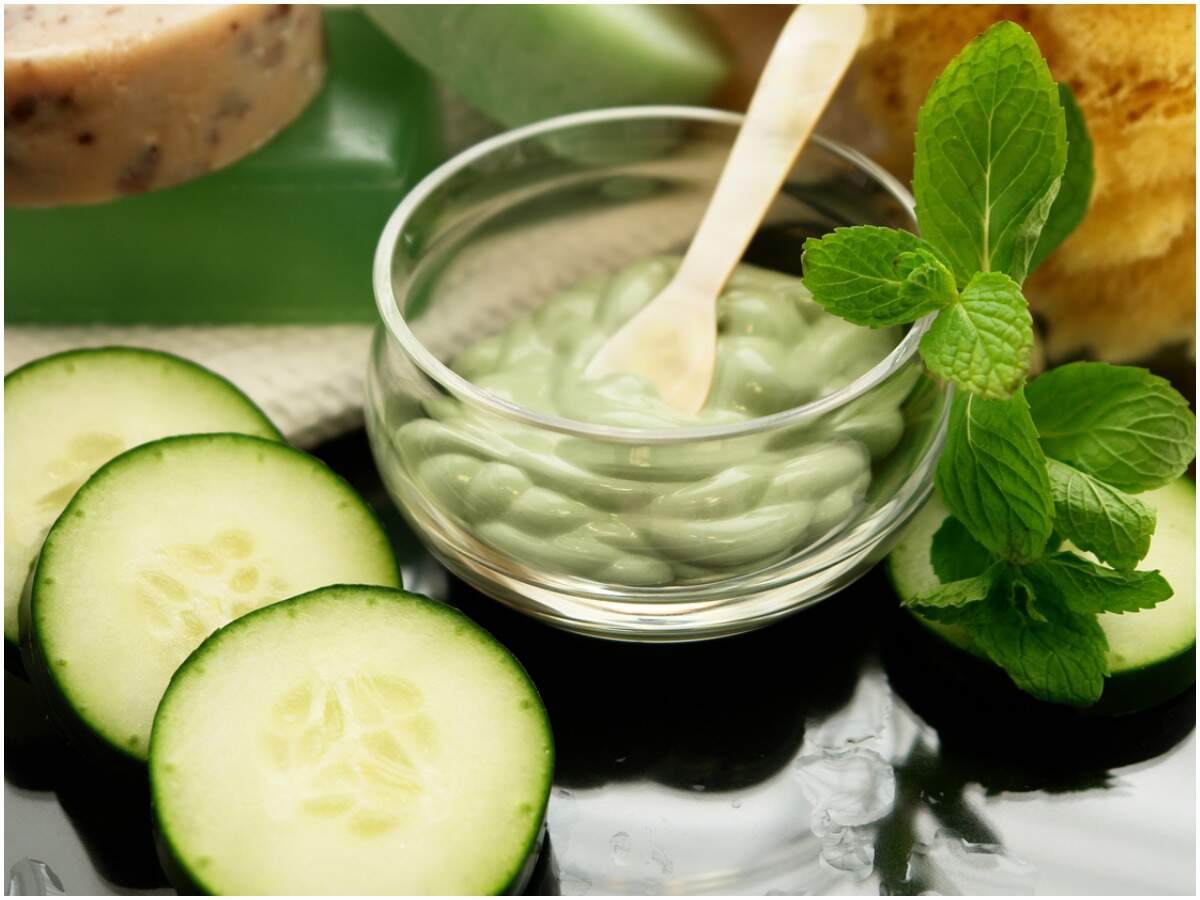



![JOIN THE PEOPLE FOR FAUCI FASHION NOW! [UPDATED]](https://silview.home.blog/wp-content/uploads/2020/08/fauci-fashion-4.gif?w=650)





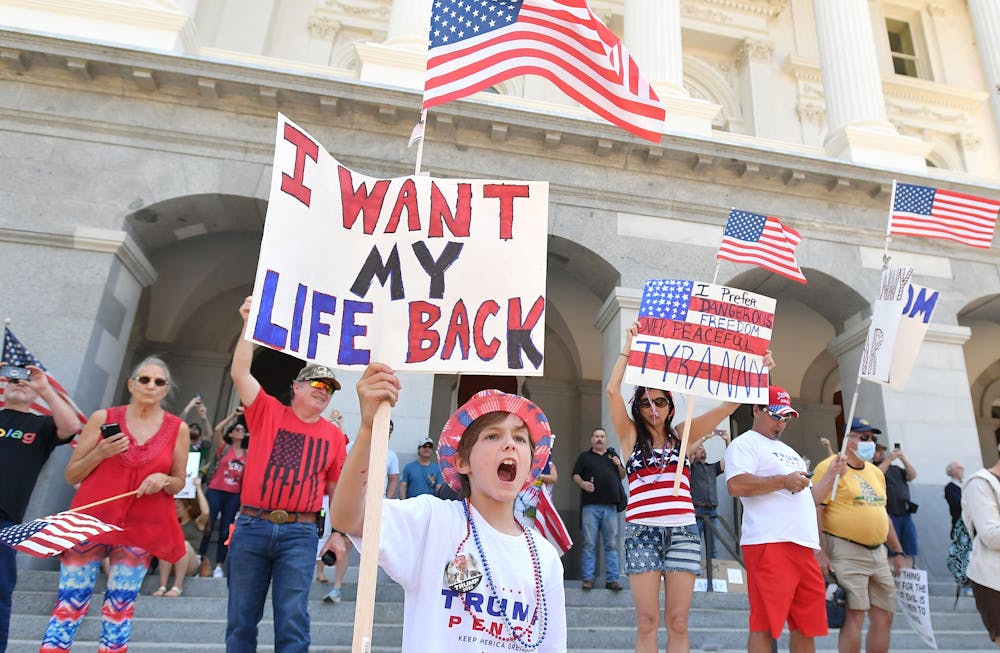



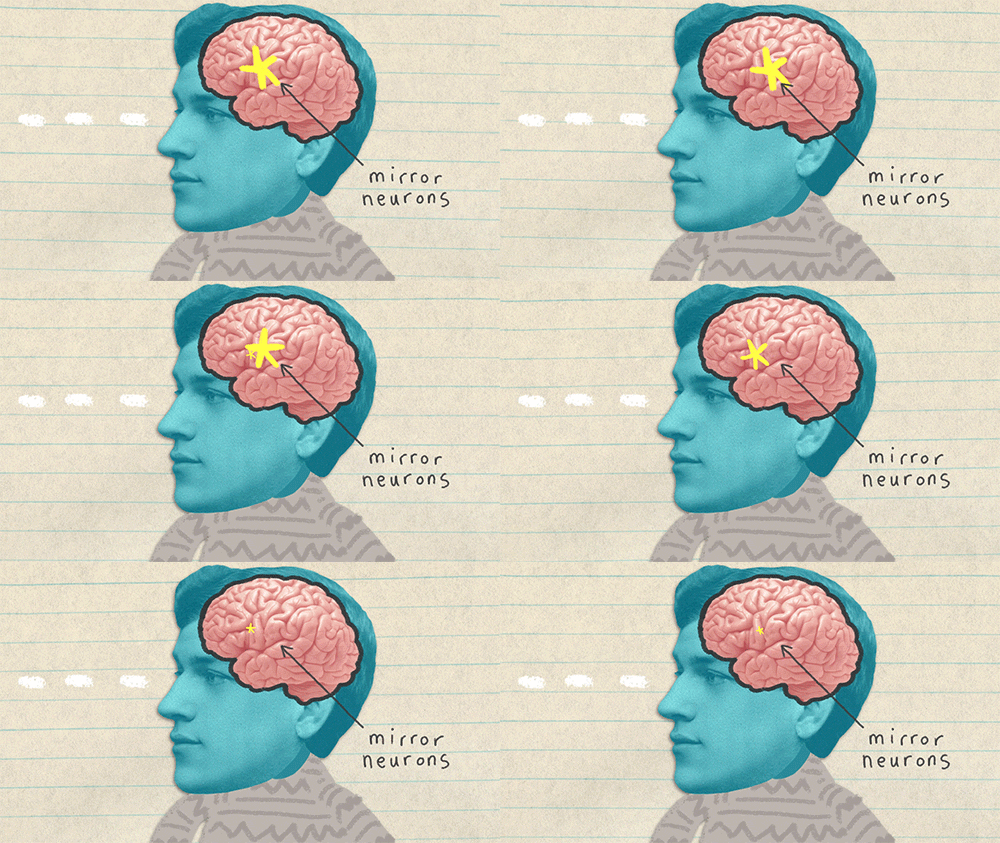




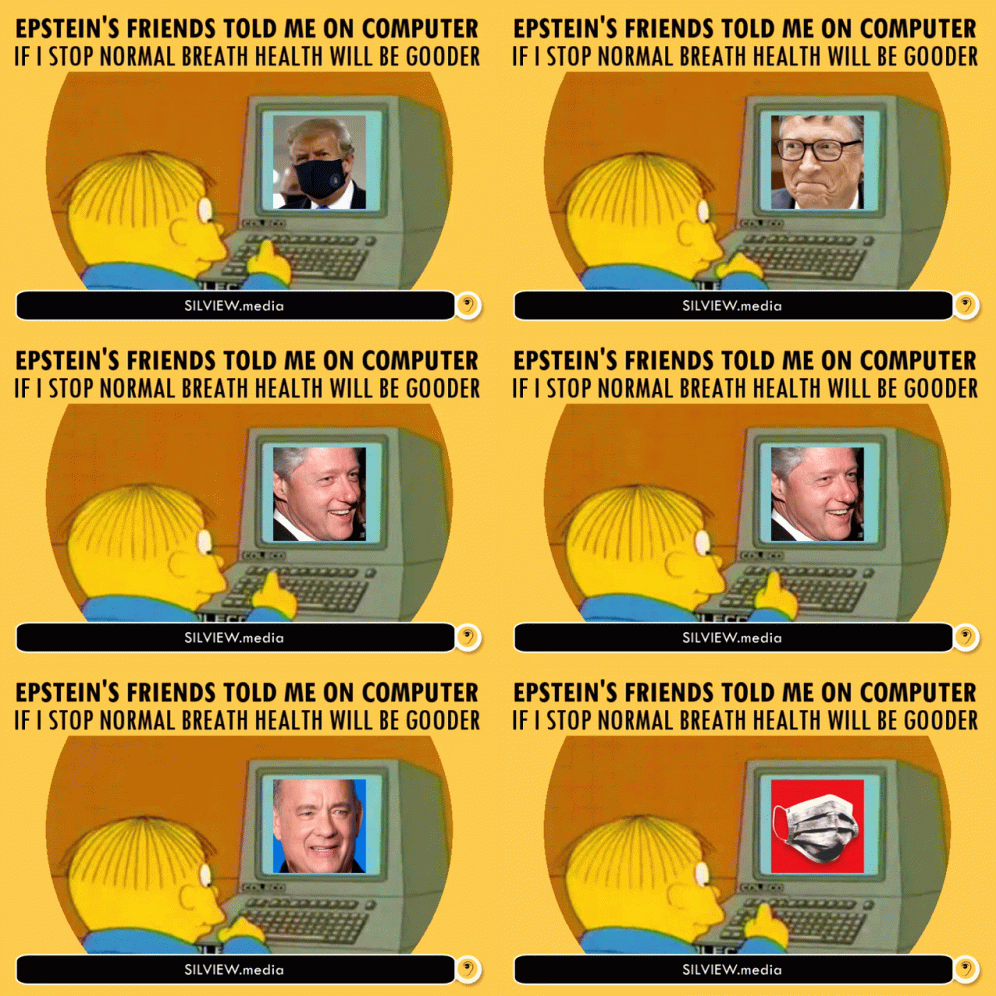





































 SILVIEW.media