Cyrus celebrated the hallmark birthday at an over-the-top Disneyland celebration Sunday — even though she doesn’t actually turn 16 until Nov. 23. The theme park was closed for the supersized soiree, which included a four-song performance by the teen queen and a fireworks display above Sleeping Beauty Castle and 16 giant inflatable candles.
“Miley is really hard to surprise,” her father Billy Ray Cyrus said at the event. Organizers estimated over 5,000 people attended the special party, which cost $250 a ticket. On the event’s purple carpet — that’s Cyrus’ favorite color — the “Hannah Montana” star bragged that her parents bought her a new puppy for her birthday. What else does Cyrus want for her birthday? A new car? Perhaps a later curfew?
“My parents shut down Disneyland for me, so I’m good for a while,” Cyrus said. Cyrus’ father opened up for his daughter with a few of his own songs, including “Achy Breaky Heart.” His daughter donned a white ruffled skirt and jersey-like vest with “Sweet 16” printed on the back for her truncated concert. At one point, Cyrus boarded a boat in the park’s Rivers of America and crooned such tunes as “Breakout” and “G.N.O.”
Throughout the evening, several popular attractions, such as Big Thunder Mountain and Pirates of the Caribbean, remained open to partygoers. Additional activities, like receiving a “Hannah Montana” makeover and playing the upcoming Disney Interactive Studios rhythm video game “Ultimate Band,” were also made available to attendees.
Partygoers ogled celebrities roaming around the park throughout the party. David Archuleta and his entourage skipped the line to ride Space Mountain. Jennie Garth and her family ducked out before the fireworks display capping the celebration. Other stars in attendance included Steve Carell, Cindy Crawford, Tyra Banks and Jennifer Love Hewitt.
Disney used the event to promote their upcoming “What Will You Celebrate?” marketing initiative, which encourages tourists to take “celebration vacations” with their families. Beginning in 2009, guests at Disneyland and Walt Disney World in Florida can gain free theme park admission on their birthday with a valid ID and proof of birth date.
Over at Disney’s California Adventure, Disneyland’s sister theme park, an entirely different celebration was occurring during the Sweet 16 event: the 11th annual Gay Days Anaheim, an unofficial gathering of gays and lesbians at the Disneyland Resort. Event producer Jeffrey Epstein said Cyrus’ affair didn’t conflict with Gay Days Anaheim.
We’re happy to share our big weekend with Miley. While it may be a small world after all, we think it’s big enough for both groups to have a blast.
To be continued? Our work and existence, as media and people, is funded solely by our most generous supporters. But we’re not really covering our costs so far, and we’re in dire needs to upgrade our equipment, especially for video production. Help SILVIEW.media survive and grow, please donate here, anything helps. Thank you!
! Articles can always be subject of later editing as a way of perfecting them
When she wasn’t busy selling fresh meat in elite markets, Ghislaine sold weird financial schemes to environmentalist dupes. Here she is trying to do a sale at the 2013 Arctic Circle Assembly, on the same stage as Hillary Clinton and Ban Ki-Moon earlier.
The inaugural Arctic Circle Assembly, October 2013, brought over 1200 participants from more than 35 countries to Reykjavík, making it the largest international gathering on the Arctic. The Opening Session program included: Ólafur Ragnar Grímsson, Ban Ki-Moon, Alice Rogoff, John Kerry, Hillary Clinton, Aleqa Hammond; Climate Change: A Plan for Action?; Arctic Ice Melt: Global Weather Events; Arctic Yearbook 2013: The Arctic of Regions vs. The Globalized Arctic
Their list of partners is the most impressive name-dropping you’ve seen in a while, this below is just a figment:
Here’s the impressive organisational structure of the event that invited Ghislaine to propose solutions on their stage:
Chairman
Ólafur Ragnar Grímsson
Honorary Board
Ólafur Ragnar Grímsson
HSH Prince Albert II of Monaco
Senator Lisa Murkowski
Dr. Sultan Ahmed Al Jaber
Artur Chilingarov
Advisory Board
Gudmundur Alfredsson, University of Akureyri
Alexander Borodin, Iridium Polar Advisory Board
Henry Burgess, Natural Environment Research Council, UK
Jared Carney, Lightdale, LLC
Brynhildur Davíðsdóttir, University of Iceland
Milind Deora, former Union Minister of State, Government of India
Dana Eidsness, Maine North Atlantic Development Office (MENADO)
Jane Francis, British Antarctic Survey
Katarina Gårdfeldt, Swedish Polar Research Secretariat
James Gray, House of Commons, UK
Heidar Mar Gudjonsson, Ursus Investments
Thorsteinn Gunnarsson, Icelandic Centre for Research
Lassi Heininen, University of Lapland
Paul Holthus, World Ocean Council
Kuupik Kleist, Pikialasorsuaq Commission
Timo Koivurova, University of Lapland
Lars Kullerud, University of the Arctic
Jean Lemire, Government of Québec
Karin Lochte, Alfred Wegener Institute for Polar and Marine Research
Aleksander Mazharov, Government of Yamal-Nenets Autonomous Okrug
Scott Minerd, Guggenheim Partners
Anders Oskal, International Centre for Reindeer Husbandry
Frederik Paulsen, Paulsen Editions
Maryse Quimper, Société du Plan Nord
Volker Rachold, German Arctic Office
Carter Roberts, World Wildlife Fund
Alice Rogoff, Publisher, Arctic Today
Peter Seligmann, Nia Tero
Hugh Short, Pt Capital
Össur Skarphéðinsson, Iceland’s Commission on Greenland
To be continued? Our work and existence, as media and people, is funded solely by our most generous supporters. But we’re not really covering our costs so far, and we’re in dire needs to upgrade our equipment, especially for video production. Help SILVIEW.media survive and grow, please donate here, anything helps. Thank you!
! Articles can always be subject of later editing as a way of perfecting them
On a muggy October morning in 2007, Miami’s top federal prosecutor, Alexander Acosta, had a breakfast appointment with a former colleague, Washington, D.C., attorney Jay Lefkowitz.
It was an unusual meeting for the then-38-year-old prosecutor, a rising Republican star who had served in several White House posts before being named U.S. attorney in Miami by President George W. Bush.
Instead of meeting at the prosecutor’s Miami headquarters, the two men — both with professional roots in the prestigious Washington law firm of Kirkland & Ellis — convened at the Marriott in West Palm Beach, about 70 miles away. For Lefkowitz, 44, a U.S. special envoy to North Korea and corporate lawyer, the meeting was critical.
His client, Palm Beach multimillionaire Jeffrey Epstein, 54, was accused of assembling a large, cult-like network of underage girls — with the help of young female recruiters — to coerce into having sex acts behind the walls of his opulent waterfront mansion as often as three times a day, the Town of Palm Beach police found.
Not only would Epstein serve just 13 months in the county jail, but the deal — called a non-prosecution agreement— essentially shut down an ongoing FBI probe into whether there were more victims and other powerful people who took part in Epstein’s sex crimes, according to a Miami Herald examination of thousands of emails, court documents and FBI records.
The pact required Epstein to plead guilty to two prostitution charges in state court. Epstein and four of his accomplices named in the agreement received immunity from all federal criminal charges. But even more unusual, the deal included wording that granted immunity to “any potential co-conspirators’’ who were also involved in Epstein’s crimes. These accomplices or participants were not identified in the agreement, leaving it open to interpretation whether it possibly referred to other influential people who were having sex with underage girls at Epstein’s various homes or on his plane.
As part of the arrangement, Acosta agreed, despite a federal law to the contrary, that the deal would be kept from the victims. As a result, the non-prosecution agreement was sealed until after it was approved by the judge, thereby averting any chance that the girls — or anyone else — might show up in court and try to derail it.
This is the story of how Epstein, bolstered by unlimited funds and represented by a powerhouse legal team, was able to manipulate the criminal justice system, and how his accusers, still traumatized by their pasts, believe they were betrayed by the very prosecutors who pledged to protect them.
“I don’t think anyone has been told the truth about what Jeffrey Epstein did,’’ said one of Epstein’s victims, Michelle Licata, now 30. “He ruined my life and a lot of girls’ lives. People need to know what he did and why he wasn’t prosecuted so it never happens again.”
Now President Trump’s secretary of labor, Acosta, 49, oversees a massive federal agency that provides oversight of the country’s labor laws, including human trafficking. Until he was reported to be eliminated on Thursday, a day after this story posted online, Acosta also had been included on lists of possible replacements for former Attorney General Jeff Sessions, who resigned under pressure earlier this month.
Acosta did not respond to numerous requests for an interview or answer queries through email.
But court records reveal details of the negotiations and the role that Acosta would play in arranging the deal, which scuttled the federal probe into a possible international sex trafficking operation. Among other things, Acosta allowed Epstein’s lawyers unusual freedoms in dictating the terms of the non-prosecution agreement.
“The damage that happened in this case is unconscionable,” said Bradley Edwards, a former state prosecutor who represents some of Epstein’s victims. “How in the world, do you, the U.S. attorney, engage in a negotiation with a criminal defendant, basically allowing that criminal defendant to write up the agreement?”
As a result, neither the victims — nor even the judge — would know how many girls Epstein allegedly sexually abused between 2001 and 2005, when his underage sex activities were first uncovered by police. Police referred the case to the FBI a year later, when they began to suspect that their investigation was being undermined by the Palm Beach State Attorney’s Office.
NOT A ‘HE SAID, SHE SAID’
“This was not a ‘he said, she said’ situation. This was 50-something ‘shes’ and one ‘he’ — and the ‘shes’ all basically told the same story,’’ said retired Palm Beach Police Chief Michael Reiter, who supervised the police probe.
More than a decade later, at a time when Olympic gymnasts and Hollywood actresses have become a catalyst for a cultural reckoning about sexual abuse, Epstein’s victims have all but been forgotten.
The women — now in their late 20s and early 30s — are still fighting for an elusive justice that even the passage of time has not made right.
Like other victims of sexual abuse, they believe they’ve been silenced by a criminal justice system that stubbornly fails to hold Epstein and other wealthy and powerful men accountable.
“Jeffrey preyed on girls who were in a bad way, girls who were basically homeless. He went after girls who he thought no one would listen to and he was right,’’ said Courtney Wild, who was 14 when she met Epstein.
Over the past year, the Miami Herald examined a decade’s worth of court documents, lawsuits, witness depositions and newly released FBI documents. Key people involved in the investigation — most of whom have never spoken before — were also interviewed. The Herald also obtained new records, including the full unredacted copy of the Palm Beach police investigation and witness statements that had been kept under seal.
The Herald learned that, as part of the plea deal, Epstein provided what the government called “valuable consideration” for unspecified information he supplied to federal investigators. While the documents obtained by the Herald don’t detail what the information was, Epstein’s sex crime case happened just as the country’s subprime mortgage market collapsed, ushering in the 2008 global financial crisis.
Records show that Epstein was a key federal witness in the criminal prosecution of two prominent executives with Bear Stearns, the global investment brokerage that failed in 2008, who were accused of corporate securities fraud. Epstein was one of the largest investors in the hedge fund managed by the executives, who were later acquitted. It is not known what role, if any, the case played in Epstein’s plea negotiations.
The Herald also identified about 80 women who say they were molested or otherwise sexually abused by Epstein from 2001 to 2006. About 60 of them were located — now scattered around the country and abroad. Eight of them agreed to be interviewed, on or off the record. Four of them were willing to speak on video.
The women are now mothers, wives, nurses, bartenders, Realtors, hairdressers and teachers. One is a Hollywood actress. Several have grappled with trauma, depression and addiction. Some have served time in prison.
A few did not survive. One young woman was found dead last year in a rundown motel in West Palm Beach. She overdosed on heroin and left behind a young son.
As part of Epstein’s agreement, he was required to register as a sex offender, and pay restitution to the three dozen victims identified by the FBI. In many cases, the confidential financial settlements came only after Epstein’s attorneys exposed every dark corner of their lives in a scorched-earth effort to portray the girls as gold diggers.
“You beat yourself up mentally and physically,’’ said Jena-Lisa Jones, 30, who said Epstein molested her when she was 14. “You can’t ever stop your thoughts. A word can trigger something. For me, it is the word ‘pure’ because he called me ‘pure’ in that room and then I remember what he did to me in that room.’’
Now, more than a decade later, two unrelated civil lawsuits — one set for trial on Dec. 4 — could reveal more about Epstein’s crimes. The Dec. 4 case, in Palm Beach County state court, involves Epstein and Edwards, whom Epstein had accused of legal misdeeds in representing several victims. The case is noteworthy because it will mark the first time that Epstein’s victims will have their day in court, and several of them are scheduled to testify.
A second lawsuit, known as the federal Crime Victims’ Rights suit, is still pending in South Florida after a decade of legal jousting. It seeks to invalidate the non-prosecution agreement in hopes of sending Epstein to federal prison. Wild, who has never spoken publicly until now, is Jane Doe No. 1 in “Jane Doe No. 1 and Jane Doe No. 2 vs. the United States of America,” a federal lawsuit that alleges Epstein’s federal non-prosecution agreement was illegal.
Federal prosecutors, including Acosta, not only broke the law, the women contend in court documents, but they conspired with Epstein and his lawyers to circumvent public scrutiny and deceive his victims in violation of the Crime Victims’ Rights Act. The law assigns victims a series of rights, including the right of notice of any court proceedings and the opportunity to appear at sentencing.
“As soon as that deal was signed, they silenced my voice and the voices of all of Jeffrey Epstein’s other victims,’’ said Wild, now 31. “This case is about justice, not just for us, but for other victims who aren’t Olympic stars or Hollywood stars.’’
In court papers, federal prosecutors have argued that they did not violate the Crime Victims’ Rights Act because no federal charges were ever filed in the U.S. District Court for the Southern District of Florida, an argument that was later dismissed by the judge.Play VideoDuration 0:00Virginia Roberts was working at Mar-a-Lago when she was recruited to be a masseuse to Palm Beach hedge fund manager Jeffrey Epstein. She was lured into a life of depravity and sexual abuse.
Despite substantial physical evidence and multiple witnesses backing up the girls’ stories, the secret deal allowed Epstein to enter guilty pleas to two felony prostitution charges. Epstein admitted to committing only one offense against one underage girl, who was labeled a prostitute, even though she was 14, which is well under the age of consent — 18 in Florida.
“She was taken advantage of twice — first by Epstein, and then by the criminal justice system that labeled a 14-year-old girl as a prostitute,’’ said Spencer Kuvin, the lawyer who represented the girl.
“It’s just outrageous how they minimized his crimes and devalued his victims by calling them prostitutes,’’ said Yasmin Vafa, a human rights attorney and executive director of Rights4Girls, which is working to end the sexual exploitation of girls and young women.
“There is no such thing as a child prostitute. Under federal law, it’s called child sex trafficking — whether Epstein pimped them out to others or not. It’s still a commercial sex act — and he could have been jailed for the rest of his life under federal law,” she said.
It would be easy to dismiss the Epstein case as another example of how there are two systems of justice in America, one for the rich and one for the poor. But a thorough analysis of the case tells a far more troubling story.
A close look at the trove of letters and emails contained in court records provides a window into the plea negotiations, revealing an unusual level of collaboration between federal prosecutors and Epstein’s legal team that even government lawyers, in recent court documents, admitted was unorthodox.
Acosta, in 2011, would explain that he was unduly pressured by Epstein’s heavy-hitting lawyers — Lefkowitz, Harvard professor Alan Dershowitz, Jack Goldberger, Roy Black, former U.S. Attorney Guy Lewis, Gerald Lefcourt, and Kenneth Starr, the former Whitewater special prosecutor who investigated Bill Clinton’s sexual liaisons with Monica Lewinsky.
‘AVOID THE PRESS’ PLAN
That included keeping the deal from Epstein’s victims, emails show.
“Thank you for the commitment you made to me during our Oct. 12 meeting,’’ Lefkowitz wrote in a letter to Acosta after their breakfast meeting in West Palm Beach. He added that he was hopeful that Acosta would abide by a promise to keep the deal confidential.
“You … assured me that your office would not … contact any of the identified individuals, potential witnesses or potential civil claimants and the respective counsel in this matter,’’ Lefkowitz wrote.
In email after email, Acosta and the lead federal prosecutor, A. Marie Villafaña, acquiesced to Epstein’s legal team’s demands, which often focused on ways to limit the scandal by shutting out his victims and the media, including suggesting that the charges be filed in Miami, instead of Palm Beach, where Epstein’s victims lived.
“On an ‘avoid the press’ note … I can file the charge in district court in Miami which will hopefully cut the press coverage significantly. Do you want to check that out?’’ Villafaña wrote to Lefkowitz in a September 2007 email.
Federal prosecutors identified 36 underage victims, but none of those victims appeared at his sentencing on June 30, 2008, in state court in Palm Beach County. Most of them heard about it on the news — and even then they didn’t understand what had happened to the federal probe that they’d been assured was ongoing.
Edwards filed an emergency motion in federal court to block the non-prosecution agreement, but by the time the agreement was unsealed — over a year later — Epstein had already served his sentence and been released from jail.
“The conspiracy between the government and Epstein was really ‘let’s figure out a way to make the whole thing go away as quietly as possible,’ ’’ said Edwards, who represents Wild and Jane Doe No. 2, who declined to comment for this story.
“In never consulting with the victims, and keeping it secret, it showed that someone with money can buy his way out of anything.’’
It was far from the last time Epstein would receive VIP handling. Unlike other convicted sex offenders, Epstein didn’t face the kind of rough justice that child sex offenders do in Florida state prisons. Instead of being sent to state prison, Epstein was housed in a private wing of the Palm Beach County jail. And rather than having him sit in a cell most of the day, the Palm Beach County Sheriff’s Office allowed Epstein work release privileges, which enabled him to leave the jail six days a week, for 12 hours a day, to go to a comfortable office that Epstein had set up in West Palm Beach. This was granted despite explicit sheriff’s department rules stating that sex offenders don’t qualify for work release.
The sheriff, Ric Bradshaw, would not answer questions, submitted by the Miami Herald, about Epstein’s work release.
Neither Epstein nor his lead attorney, Jack Goldberger, responded to multiple requests for comment for this story. During depositions taken as part of two dozen lawsuits filed against him by his victims, Epstein has invoked his Fifth Amendment right against self-incrimination, in one instance doing so more than 200 times.
In the past, his lawyers have said that the girls lied about their ages, that their stories were exaggerated or untrue and that they were unreliable witnesses prone to drug use.
In 2011, Epstein petitioned to have his sex offender status reduced in New York, where he has a home and is required to register every 90 days. In New York, he is classified as a level 3 offender — the highest safety risk because of his likelihood to re-offend.
A prosecutor under New York County District Attorney Cyrus Vance argued on Epstein’s behalf, telling New York Supreme Court Judge Ruth Pickholtz that the Florida case never led to an indictment and that his underage victims failed to cooperate in the case. Pickholtz, however, denied the petition, expressing astonishment that a New York prosecutor would make such a request on behalf of a serial sex offender accused of molesting so many girls.
“I have to tell you, I’m a little overwhelmed because I have never seen a prosecutor’s office do anything like this. I have done so many [sex offender registration hearings] much less troubling than this one where the [prosecutor] would never make a downward argument like this,’’ she said.
THE HOUSE ON EL BRILLO
The women who went to Jeffrey Epstein’s mansion as girls tend to divide their lives into two parts: life before Jeffrey and life after Jeffrey.
Before she met Epstein, Courtney Wild was captain of the cheerleading squad, first trumpet in the band and an A-student at Lake Worth Middle School.
After she met Epstein, she was a stripper, a drug addict and an inmate at Gadsden Correctional Institution in Florida’s Panhandle.
Wild still had braces on her teeth when she was introduced to him in 2002 at the age of 14.
She was fair, petite and slender, blonde and blue-eyed. Wild, who later helped recruit other girls, said Epstein preferred girls who were white, appeared prepubescent and those who were easy to manipulate into going further each time.
“By the time I was 16, I had probably brought him 70 to 80 girls who were all 14 and 15 years old. He was involved in my life for years,” said Wild, who was released from prison in October after serving three years on drug charges.
The girls — mostly 13 to 16 — were lured to his pink waterfront mansion by Wild and other girls, who went to malls, house parties and other places where girls congregated, and told recruits that they could earn $200 to $300 to give a man — Epstein — a massage, according to an unredacted copy of the Palm Beach police investigation obtained by the Herald.
The lead Palm Beach police detective on the case, Joseph Recarey, said Epstein’s operation worked like a sexual pyramid scheme.
“The common interview with a girl went like this: ‘I was brought there by so and so. I didn’t feel comfortable with what happened, but I got paid well, so I was told if I didn’t feel comfortable, I could bring someone else and still get paid,’ ’’ Recarey said.
During the massage sessions, Recarey said Epstein would molest the girls, paying them premiums for engaging in oral sex and intercourse, and offering them a further bounty to find him more girls.
Recarey, in his first interview about the case, said the evidence the department collected to support the girls’ stories was overwhelming, including phone call records, copies of written phone messages from the girls found in Epstein’s trash and Epstein’s flight logs, which showed his private plane in Palm Beach on the days the girls were scheduled to give him massages.
Epstein could be a generous benefactor, Recarey said, buying his favored girls gifts. He might rent a car for a young girl to make it more convenient for her to stop by and cater to him. Once, he sent a bucket of roses to the local high school after one of his girls starred in a stage production. The floral-delivery instructions and a report card for one of the girls were discovered in a search of his mansion and trash. Police also obtained receipts for the rental cars and gifts, Recarey said.
Epstein counseled the girls about their schooling, and told them he would help them get into college, modeling school, fashion design or acting. At least two of Epstein’s victims told police that they were in love with him, according to the police report.
The police report shows how uncannily consistent the girls’ stories were — right down to their detailed descriptions of Epstein’s genitalia.
“We had victims who didn’t know each other, never met each other and they all basically independently told the same story,’’ said Reiter, the retired Palm Beach police chief.
Reiter, also speaking for the first time, said detectives were astonished by the sheer volume of young girls coming and going from his house, the frequency — sometimes several in the same day — and the young ages of the girls.
“It started out to give a man a back rub, but in many cases it turned into something far worse than that, elevated to a serious crime, in some cases sexual batteries,’’ he said.
Most of the girls said they arrived by car or taxi, and entered the side door, where they were led into a kitchen by a female staff assistant named Sarah Kellen, the report said. A chef might prepare them a meal or offer them cereal. The girls — most from local schools — would then ascend a staircase off the kitchen, up to a large master bedroom and bath.
They were met by Epstein, clad in a towel. He would select a lotion from an array lined up on a table, then lie facedown on a massage table, instruct the girl to strip partially or fully, and direct them to massage his feet and backside. Then he would turn over and have them massage his chest, often instructing them to pinch his nipples, while he masturbated, according to the police report.
At times, if emboldened, he would try to penetrate them with his fingers or use a vibrator on them. He would go as far as the girls were willing to let him, including intercourse, according to police documents. Sometimes he would instruct a young woman he described as his Yugoslavian sex slave, Nadia Marcinkova, who was over 18, to join in, the girls told Recarey. Epstein often took photographs of the girls having sex and displayed them around the house, the detective said.
Once sexually gratified, Epstein would take a shower in his massive bathroom, which the girls described as having a large shower and a hot pink and mint green sofa.
Kellen (now Vickers) and Marcinkova, through their attorneys, declined to comment for this story.
NEVER ENOUGH
One girl told police that she was approached by an Epstein recruiter when she was 16, and was working at the Wellington mall. Over the course of more than a year, she went to Epstein’s house hundreds of times, she said. The girl tearfully told Recarey that she often had sex with Marcinkova — who employed strap-on dildos and other toys — while Epstein watched and choreographed her moves to please himself, according to the police report. Often times, she said, she was so sore after the encounters that she could barely walk, the police report said.
But she said she was firm about not wanting to have intercourse with Epstein. One day, however, the girl said that Epstein, unable to control himself, held her down on a massage table and penetrated her, the police report said. The girl, who was 16 or 17 at the time, said that Epstein apologized and paid her $1,000, the police report said.
Most of the girls came from disadvantaged families, single-parent homes or foster care. Some had experienced troubles that belied their ages: They had parents and friends who committed suicide; mothers abused by husbands and boyfriends; fathers who molested and beat them. One girl had watched her stepfather strangle her 8-year-old stepbrother, according to court records obtained by the Herald.
Many of the girls were one step away from homelessness.
“We were stupid, poor children,’’ said one woman, who did not want to be named because she never told anyone about Epstein. At the time, she said, she was 14 and a high school freshman.
“We just wanted money for school clothes, for shoes. I remember wearing shoes too tight for three years in a row. We had no family and no guidance, and we were told that we were going to just have to sit in a room topless and he was going to just look at us. It sounded so simple, and was going to be easy money for just sitting there. The girls who were abused by Jeffrey Epstein and the cops who championed their cause remain angry over what they regard as a gross injustice, while Epstein’s employees and those who engineered his non-prosecution agreement have prospered.
The woman, who went to Epstein’s home multiple times, said Epstein didn’t like her because her breasts were too big. The last time she went, she said, one girl came out crying and they were instructed to leave the house and had to pay for their own cab home.
Some girls told police they were coached by their peer recruiters to lie to Epstein about their ages and say they were 18. Epstein’s legal team would later claim that even if the girls were under 18, there was no way he could have known. However, under Florida law, ignorance of a sex partner’s age is not a defense for having sex with a minor.
Wild said he was well aware of their tender ages — because he demanded they be young.
“He told me he wanted them as young as I could find them,’’ she said, explaining that as she grew older and had less access to young girls, Epstein got increasingly angry with her inability to find him the young girls he desired.
“If I had a girl to bring him at breakfast, lunch and dinner, then that’s how many times I would go a day. He wanted as many girls as I could get him. It was never enough.’’
THE PYRAMID CRUMBLES
Epstein’s scheme first began to unravel in March 2005, when the parents of a 14-year-old girl told Palm Beach police that she had been molested by Epstein at his mansion. The girl reluctantly confessed that she had been brought there by two other girls, and those girls pointed to two more girls who had been there.
By the time detectives tracked down one victim, there were two and three more to find. Soon there were dozens.
“We didn’t know where the victims would ever end,” Reiter said.
Eventually, the girls told them about still other girls and young women they had seen at Epstein’s house, many of whom didn’t speak English, Recarey said. That led Recarey to suspect that Epstein’s exploits weren’t just confined to Palm Beach. Police obtained the flight logs for his private plane, and found female names and initials among the list of people who flew on the aircraft — including the names of some famous and powerful people who had also been passengers, Recarey said.
A newly released FBI report shows that at the time the non-prosecution deal was executed, the agency was interviewing witnesses and victims “from across the United States.” The probe stretched from Florida to New York and New Mexico, records show. The report was released by the FBI in response to a lawsuit filed by Radar Online and was made available on the bureau’s website after the Miami Herald and other news organizations submitted requests, said Daniel Novack, the lawyer who filed the Freedom of Information Act case pro bono.
One lawsuit, still pending in New York, alleges that Epstein used an international modeling agency to recruit girls as young as 13 from Europe, Ecuador and Brazil. The girls lived in a New York building owned by Epstein, who paid for their visas, according to the sworn statement of Maritza Vasquez, the one-time bookkeeper for Mc2, the modeling agency.
Mike Fisten, a former Miami-Dade police sergeant who was also a homicide investigator and a member of the FBI Organized Crime Task Force, said the FBI had enough evidence to put Epstein away for a long time but was overruled by Acosta. Some of the agents involved in the case were disappointed by Acosta’s bowing to pressure from Epstein’s lawyers, he said.
“The day that a sitting U.S. attorney is afraid of a lawyer or afraid of a defendant is a very sad day in this country,’’ said Fisten, now a private investigator for Edwards.
SUIT/COUNTERSUIT
Now, a complex web of litigation could reveal more about Epstein’s crimes. A lawsuit, set for trial Dec. 4 in Palm Beach County, involves the notorious convicted Ponzi schemer Scott Rothstein, in whose law firm Edwards once worked.
In 2009, Epstein sued Edwards, alleging that Edwards was involved with Rothstein and was using the girls’ civil lawsuits to perpetuate Rothstein’s massive Ponzi operation. But Rothstein said Edwards didn’t know about the scheme, and Epstein dropped the lawsuit.
Edwards countersued for malicious prosecution, arguing that Epstein sued him to retaliate for his aggressive representation of Epstein’s victims.
Several women who went to Epstein’s home as underage girls are scheduled to testify against him for the first time.
Florida state Sen. Lauren Book, a child sex abuse survivor who has lobbied for tough sex offender laws, said Epstein’s case should serve as a tipping point for criminal cases involving sex crimes against children.
“Where is the righteous indignation for these women? Where are the protectors? Who is banging down the doors of the secretary of labor, or the judge or the sheriff’s office in Palm Beach County, demanding justice and demanding the right to be heard?’’ Book asked.
Assistant U.S. Attorney Villafaña, in court papers, said that prosecutors used their “best efforts’’ to comply with the Crime Victims’ Rights Act, but exercised their “prosecutorial discretion’’ when they chose not to notify the victims. The reasoning went like this: The non-prosecution deal had a restitution clause that provided the girls a chance to seek compensation from Epstein. Had the deal fallen through, necessitating a trial, Epstein’s lawyers might have used the prior restitution clause to undermine the girls’ credibility as witnesses, by claiming they had exaggerated Epstein’s behavior in hopes of cashing in.
Acosta has never fully explained why he felt it was in the best interests of the underage girls — and their parents — for him to keep the agreement sealed. Or why the FBI investigation was closed even as, recently released documents show, the case was yielding more victims and evidence of a possible sex-trafficking conspiracy beyond Palm Beach.
Upon his nomination by Trump as labor secretary in 2017, Acosta was questioned about the Epstein case during a Senate confirmation hearing.
“At the end of the day, based on the evidence, professionals within a prosecutor’s office decided that a plea that guarantees someone goes to jail, that guarantees he register [as a sex offender] generally and guarantees other outcomes, is a good thing,’’ Acosta said of his decision to not prosecute Epstein federally.
California Democratic Sen. Dianne Feinstein, in opposing Acosta for labor secretary, noted that “his handling of a case involving sex trafficking of underage girls when he was a U.S. attorney suggests he won’t put the interests of workers and everyday people ahead of the powerful and well-connected.’’
Marci Hamilton, a University of Pennsylvania law professor who is one of the nation’s leading advocates for reforming laws involving sex crimes against children, said what Acosta and other prosecutors did is similar to what the Catholic Church did to protect pedophile priests.
“The real crime with the Catholic priests was the way they covered it up and shielded the priests,’’ Hamilton said. “The orchestration of power by men only is protected as long as everybody agrees to keep it secret. This is a story the world needs to hear.’’ – Miami Herald
To be continued? Our work and existence, as media and people, is funded solely by our most generous supporters. But we’re not really covering our costs so far, and we’re in dire needs to upgrade our equipment, especially for video production. Help SILVIEW.media survive and grow, please donate here, anything helps. Thank you!
” The world knows only half the story of British media magnate Robert Maxwell’s well-publicized career. He was born poor but thrived on ruthless ambition, devoured his competitors and outsmarted his most formidable peers to build an international empire as a publisher, politician, and industrialist. For the first time, this well-researched book from best-selling author Gordon Thomas and terrorism expert Martin Dillon tells the other, long-secret half of Maxwell’s story. We are shown how Maxwell achieved his topmost objective as a superspy for Israel’s Mossad; sold PROMIS—America’s state-of-the-art surveillance software stolen by Mossad—to the USSR and many other countries; recruited foremost Republican Senator John Tower to acquire for Israel top-secret, cutting-edge U.S. technology being developed at Los Alamos; cultivated his vast KGB connections and strove to involve Israel in a coup to oust Mikhail Gorbachev; and how Maxwell ultimately became Mossad’s target in an elaborately prepared assassination plot. For in November 1991, as his yacht cruised offshore of the Canary Islands, the life of Robert Maxwell ended—officially, by drowning. The facts that the news media did not then report or know, what truths even the autopsies concealed, are now revealed. Eight pages of black-and-white illustrations add to this compelling work.”
“Was it murder? Suicide? Or just an accident?” – The Guardian
Throughout his life, Robert Maxwell was a good friend to Israel, investing heavily in publishing, pharmaceutical and computer firms in the country. He met accusations he was an Israeli spy with furious denials and legal threats. Such speculation was fanned again after his death, when he was accorded almost a state funeral in Israel, attended by the prime minister, Yitzhak Shamir, and the president, Chaim Herzog, and buried in Jerusalem on the Mount of Olives. Conspiracy theorists have claimed that Mossad killed him because Israel refused him a loan and he threatened to retaliate.
Maxwell soon became an intimate of Israeli leaders. Official sources said he spoke to Shamir by telephone at least once a week and visited Jerusalem at least once a month, taking the royal suite at the King David Hotel and hobnobbing with politicians as well as his Israeli editors. Although he was friendly with leftist opposition leader Shimon Peres, one official who knew him said Maxwell’s favorite was Ariel Sharon, the flamboyant hard-liner who conceived and directed the 1982 invasion of Lebanon and now oversees construction of Jewish settlements in the occupied territories. One official source, while denying that Maxwell ever had contact with the Mossad or access to sensitive information, said the government did not shrink from asking his help on issues ranging from Soviet immigration to the financing of pet projects. Maxwell reportedly helped arrange the transit of Soviet Jews to Israel through Eastern Europe, where he had extensive contacts and investments. Six months ago, he paid for the transfer to Israel of several dozen Jewish children affected by the 1986 Chernobyl nuclear disaster in the Soviet Ukraine.
To be continued? Our work and existence, as media and people, is funded solely by our most generous supporters. But we’re not really covering our costs so far, and we’re in dire needs to upgrade our equipment, especially for video production. Help SILVIEW.media survive and grow, please donate here, anything helps. Thank you!
The headline quote comes from a juicy New York Mag article from 2002, which you can read integrally below, unedited, just with occasional emphasis added by us.
He comes with cash to burn, a fleet of airplanes, and a keen eye for the ladies — to say nothing of a relentless brain that challenges Nobel Prize–winning scientists across the country — and for financial markets around the world. Ever since the Post’s “Page Six” ran an item about the president’s late-September visit to Africa with Kevin Spacey and Chris Tucker – on his new benefactor’s customized Boeing 727 – the question of the day has been: Who in the world is Jeffrey Epstein?
It’s a life full of question marks. Epstein is said to run $15 billion for wealthy clients, yet aside from Limited founder Leslie Wexner, his client list is a closely held secret. A former Dalton math teacher, he maintains a peripatetic salon of brilliant scientists yet possesses no bachelor’s degree. For more than ten years, he’s been linked to Manhattan-London society figure Ghislaine Maxwell, daughter of the mysteriously deceased media titan Robert Maxwell, yet he lives the life of a bachelor, logging 600 hours a year in his various planes as he scours the world for investment opportunities. He owns what is said to be Manhattan’s largest private house yet runs his business from a 100-acre private island in St. Thomas.
Power on Wall Street has generally accrued to those who have made their open bids for it. Soros. Wasserstein. Kravis. Weill. The Sturm und Drang of their successes and failures has been played out in public. Epstein breaks the mold. Most everyone on the Street has heard of him, but nobody seems to know what the hell he is up to. Which is just the way he likes it.
“My belief is that Jeff maintains some sort of money-management firm, though you won’t get a straight answer from him,” says one well-known investor. “He once told me he had 300 people working for him, and I’ve also heard that he manages Rockefeller money. But one never knows. It’s like looking at the Wizard of Oz – there may be less there than meets the eye.”
Says another prominent Wall Streeter: “He is this mysterious, Gatsbyesque figure. He likes people to think that he is very rich, and he cultivates this air of aloofness. The whole thing is weird.”
The wizard that meets the eye is spare and fit; with a long jaw and a carefully coiffed head of silver hair, he looks like a taller, younger Ralph Lauren. A raspy Brooklyn accent betrays his Coney Island origins. He spends an hour and fifteen minutes every day doing advanced yoga with his personal instructor, who travels with him wherever he goes. He is an enthusiastic member of the Trilateral Commission and the Council on Foreign Relations.
He dresses casually — jeans, open-necked shirts, and sneakers — and is rarely seen in a tie. Indeed, those close to him say the reason he quit his board seat at the Rockefeller Institute was that he hated wearing a suit. “It feels like a dress,” he told one friend.
Epstein likes to tell people that he’s a loner, a man who’s never touched alcohol or drugs, and one whose nightlife is far from energetic. And yet if you talk to Donald Trump, a different Epstein emerges. “I’ve known Jeff for fifteen years. Terrific guy,” Trump booms from a speakerphone. “He’s a lot of fun to be with. It is even said that he likes beautiful women as much as I do, and many of them are on the younger side. No doubt about it — Jeffrey enjoys his social life.”
But beautiful women are only a part of it. Because here’s the thing about Epstein: As some collect butterflies, he collects beautiful minds. “I invest in people — be it politics or science. It’s what I do,” he has said to friends. And his latest prize addition is the former president. In his eyes, Clinton as a species represents the highest evolutionary form of the political animal. To be up close to him, as he was during the African journey, is akin to seeing the rarest of beasts on a safari. As he put it to a friend upon his return from Africa, “If you were a boxer at the downtown gymnasium at 14th Street and Mike Tyson walked in, your face would have the same look as these foreign leaders had when Clinton entered the room. He is the world’s greatest politician.”
“Jeffrey is both a highly successful financier and a committed philanthropist with a keen sense of global markets and an in-depth knowledge of twenty-first-century science. I especially appreciated his insights and generosity during the recent trip to Africa to work on democratization, empowering the poor, citizen service, and combating HIV/AIDS.”
Bill Clinton – New York Mag, October 2002
Before Clinton, Epstein’s rare appearances in the gossip columns tended to be speculation as to the true nature of his relationship with Ghislaine Maxwell. While they are still friends, the English tabloids have postulated that Maxwell has longed for a more permanent pairing and that for undetermined reasons Epstein has not reciprocated in kind. “It’s a mysterious relationship that they have,” says society journalist David Patrick Columbia. “In one way, they are soul mates, yet they are hardly companions anymore. It’s a nice conventional relationship, where they serve each other’s purposes.”
Friends of the two say that Maxwell, whose social life has always been higher-octane than Epstein’s, lent a little pizzazz to the lower-profile Epstein. Indeed, at a party at Maxwell’s house, her friends say, one is just as apt to see Russian ladies of the night as one is to see Prince Andrew. The Oxford-educated Maxwell, described by many as a man-eater (she flies her own helicopter and was recently seen dining with Clinton at Nello’s on Madison Avenue), lives in her own townhouse a few blocks away. Epstein is frequently seen around town with a bevy of comely young women but there has been no boldfaced name to replace Maxwell. “You may read about Jeffrey in the social columns, but there is much more to him than that,” says Jeffrey T. Leeds of the private equity firm Leeds Weld & Co. “He’s a talented money manager and an extremely hardworking person with broad interests. Most unusual, though, is that in this media-obsessed age he is not in any sense a self-promoter.”
Born in 1953 and raised in Coney Island, Epstein went to Lafayette High School. According to his bio, he took some classes in physics at Cooper Union from 1969 to 1971. He left Cooper Union in 1971 and attended NYU’s Courant Institute, where he took courses in mathematical physiology of the heart, leaving that school, too, without a degree. Between 1973 and 1975, Epstein taught calculus and physics at the Dalton School.
By most accounts, he was something of a Robin Williams–in–Dead Poets Society type of figure, wowing his high-school classes with passionate mathematical riffs. So impressed was one Wall Street father of a student that he said to Epstein point-blank: “What are you doing teaching math at Dalton? You should be working on Wall Street — why don’t you give my friend Ace Greenberg a call.”
Epstein was in many respects the perfect candidate for Greenberg’s consideration. Greenberg, a senior partner at Bear Stearns at the time and a legendary trader in his own right, has long made it clear that it’s the hungry, brilliant guys lacking the fancy degrees that he favors at Bear. They even have an acronym: PSDs — poor, smart, and a deep desire to be rich. It was a description that fit Epstein to a T. He was a Brooklyn guy with a motor for a brain, and while he did love teaching, this close-up view of the rarefied Upper East Side life of his students’ gave him a taste for the big time.
So in 1976, he dropped everything and reported to work at Bear Stearns, where he started off as a junior assistant to a floor trader at the American Stock Exchange. His ascent was rapid.
At the time, options trading was an arcane and dimly understood field, just beginning to take off. To trade options, one had to value them, and to value them, one needed to be able to master such abstruse mathematical confections as the Black-Scholes option-pricing model. For Epstein, breaking down such models was pure sport, and within just a few years he had his own stable of clients. “He was not your conventional broker saying ‘Buy IBM’ or ‘Sell Xerox,’ ” says Bear Stearns CEO Jimmy Cayne. “Given his mathematical background, we put him in our special-products division, where he would advise our wealthier clients on the tax implications of their portfolios. He would recommend certain tax-advantageous transactions. He is a very smart guy and has become a very important client for the firm as well.”
In 1980, Epstein made partner, but he had left the firm by 1981. Working in a bureaucracy was not for him; what’s more, in rubbing up against ever greater sums of money during his time at Bear, he began to feel the need to grab his own piece of the action.
In 1982, according to those who know Epstein, he set up his own shop, J. Epstein and Co., which remains his core business today. The premise behind it was simple: Epstein would manage the individual and family fortunes of clients with $1 billion or more. Which is where the mystery deepens. Because according to the lore, Epstein, in 1982, immediately began collecting clients. There were no road shows, no whiz-bang marketing demos – just this: Jeff Epstein was open for business for those with $1 billion–plus.
His firm would be different, too. He was not here just to offer investment advice; he saw himself as the financial architect of every aspect of his client’s wealth — from investments to philanthropy to tax planning to security to assuaging the guilt and burdens that large sums of inherited wealth can bring on. “I want people to understand the power, the responsibility, and the burden of their money,” he said to a colleague at the time.
As a teacher at Dalton, he had witnessed firsthand the troubled attitudes of some of the poor little rich kids under his charge; at Bear, he had come to the realization that, counterintuitively, the more money you had, the more anxious you became. For a middle-class kid from Brooklyn, it just didn’t make sense.
From the get-go, his business was successful. But the conditions for investing with Epstein were steep: He would take total control of the billion dollars, charge a flat fee, and assume power of attorney to do whatever he thought was necessary to advance his client’s financial cause. And he remained true to the $1 billion entry fee. According to people who know him, if you were worth $700 million and felt the need for the services of Epstein and Co., you would receive a not-so-polite no-thank-you from Epstein.
It’s nice work if you can get it. Epstein runs a lean operation, and those close to him say that his actual staff — based here in Manhattan at the Villard House (home to Le Cirque); New Albany, Ohio; and St. Thomas, where he reincorporated his company seven years ago (now called Financial Trust Co.) — numbers around 150 and is purely administrative. When it comes to putting these billions to work in the markets, it is Epstein himself making all the investment calls — there are no analysts or portfolio managers, just twenty accountants to keep the wheels greased and a bevy of assistants — many of them conspicuously attractive young women — to organize his hectic life. So assuming, conservatively, a fee of .5 percent (he takes no commissions or percentages) on $15 billion, that makes for a management fee of $75 million a year straight into Jeff Epstein’s pocket. Nice work indeed.
It has been rumored that Linda Wachner and David Rockefeller have been clients, too, but both parties deny any such relationship. What’s more, who ever heard of a financial adviser turning down $500 million accounts? All the speculation and mystery has proved fertile ground for some alternative Jeffrey Epstein stories – the most bizarre of which has him playing the piano (he is classically trained) for high rollers in a Manhattan piano bar in the mid-eighties.
Another focus of curiosity is the relationship that Epstein has with his patron and mentor Leslie Wexner, founder and chairman of the Columbus, Ohio–based Limited chain of women’s-clothing stores. Wexner, who is said to be worth more than $2.5 billion by Forbes, became an Epstein client in 1987. “It’s a weird relationship,” says another Wall Streeter who knows Epstein. “It’s just not typical for someone of such enormous wealth to all of a sudden give his money to some guy most people have never heard of.” The Wexner-Epstein relationship is indeed a multifaceted one.
Given the secrecy that envelops Epstein’s client list, some have speculated that Wexner is the primary source of Epstein’s lavish life — but friends leap to his defense. “Let me tell you: Jeffrey Epstein has other clients besides Wexner. I know because some of them are my clients,” says noted m&a lawyer Dennis Block of Cadwalader, Wickersham & Taft. “I sent him a $500 million client a few years ago and he wouldn’t take him. Said the account was too small. Both the client and I were amazed. But that’s Jeffrey.”
Epstein’ s current residence in Manhattan — a 45,000-square-foot eight-story mansion on East 71st Street — was originally bought by Wexner for $13 million in 1989. Wexner poured many millions into a full gut renovation, then turned it over to Epstein in 1995 after he got married. One story has Epstein paying only a dollar for it, though others say he paid full market price, which would have been in the neighborhood of $20 million. Epstein then undertook his own $10 million gut renovation (special features: closed-circuit TV and a heated sidewalk in front of the house for melting snow), saying to friends: “I don’t want to live in another person’s house.”
There are other houses as well, including a sweeping villa in Palm Beach and a custom-built 51,000-square-foot castle in Santa Fe. Said to be the largest house in the state, the latter sits atop a hill on a 45,000-acre ranch. He had it built because of the month or so he found himself spending there, talking elementary particle physics with his friend Murray Gell-Mann, a Nobel Prize–winning physicist and co-chair of the science board at the Santa Fe Institute.
Epstein also owned a grand house (he has since sold it) near Wexner’s opulent manse at the center of the Limited magnate’s high-end housing development in New Albany, Ohio. New Albany was a lush sprawl of farmland on the outskirts of Columbus that Wexner, starting in 1988, turned into a rich village of multimillion-dollar Georgian homes surrounding a Jack Nicklaus–designed golf course. It was a massive development project, financed largely by Wexner himself. Epstein was a general partner in the real-estate holding company, called New Albany Property, despite putting only a few million dollars of capital into the project.
“Before Epstein came along in 1988, the financial preparations and groundwork for the New Albany development were a total mess,” says Bob Fitrakis, a Columbus-based investigative journalist who has written extensively on Wexner and his finances. “Epstein cleaned everything up, as well as serving Wexner in other capacities — such as facilitating visits to Wexner’s home of the crew from Cats and organizing a Tony Randall song-and-dance show put on in Columbus.” Wexner declines to talk about his relationship with Epstein, but it is clearly one that continues to this day. Not that it helped Epstein in any way to land Clinton. Wexner is a staunch Republican donor, and Epstein, aside from a small contribution to the president’s legal-defense fund, has given more to the likes of former senator Al D’Amato.
What attracted Clinton to Epstein was quite simple: He had a plane (he has a couple, in fact — the Boeing 727, in which he took Clinton to Africa, and, for shorter jaunts, a black Gulfstream, a Cessna 421, and a helicopter to ferry him from his island to St. Thomas). Clinton had organized a weeklong tour of South Africa, Nigeria, Ghana, Rwanda, and Mozambique to do what Clinton does. So when the president’s advance man Doug Band pitched the idea to Epstein, he said sure. As an added bonus, Kevin Spacey, a close friend of Clinton’s, and actor Chris Tucker came along for the ride.
While Epstein got an intellectual kick out of engaging African finance ministers in theoretical chitchat about economic development, the real payoff for him was observing Clinton in his métier: talking HIV/aids policy with African leaders and soaking up the love from Cape Town to Lagos.
Epstein brings a trophy-hunter’s zeal to his collection of scientists and politicians. But the real charge for him is in seeing these guys work it. Like former Democratic Senate leader George Mitchell, for example. In Epstein’s mind, Mitchell is the world’s greatest negotiator, based on his work in Ireland and the Middle East. So he wrote the senator a bunch of checks. Says Mitchell: “He has supported some philanthropic projects of mine and organized a fund-raiser for me once. I would certainly call him a friend and a supporter.”
But it is his covey of scientists that inspires Epstein’s true rapture. Epstein spends $20 million a year on them — encouraging them to engage in whatever kind of cutting-edge research might attract their fancy. They are, of course, quite lavish in their praise in return. Gerald Edelman won the Nobel Prize for physiology and medicine in 1972 and now presides over the Neurosciences Institute in La Jolla. “Jeff is extraordinary in his ability to pick up on quantitative relations,” says Edelman. “He came to see us recently. He is concerned with this basic question: Is it true that the brain is not a computer? He is very quick.”
Then there is Stephen Kosslyn, a psychologist at Harvard. Epstein flew up to Kosslyn’s laboratory in Cambridge this year to witness an experiment that Kosslyn was conducting and Epstein was funding. Namely: Is it true that certain Tibetan monks are capable of holding a distinct mental image in their minds for twenty minutes straight? “We disproved the thesis,” says Kosslyn. “Jeff was on his cell phone most of the time — he actually wanted to short the Tibetan market, because he thought the monk was so stupid. He is amazing. Like a honeybee — he talks to all these different people and cross-pollinates. Just two months ago, I was talking to him about a new alternative to evolutionary psychology. He got excited and sent me a check.”
Epstein has a particularly close relationship with Martin Nowak, an Austrian biology and mathematics professor who heads the theoretical-biology program at the Institute for Advanced Study at Princeton. Nowak is examining how game theory can be used to answer some of the basic evolutionary questions — e.g., why, in our Darwinian society, does altruistic behavior exist? Epstein talks to Nowak about once a week and flies him around the country to his various homes to deliver impromptu lectures. Over the past three years, he has written $500,000 worth of checks to fund Nowak’s research. This past February, Epstein had Nowak over for dinner at the 71st Street townhouse. It was just the two of them (not including the wait staff), and Nowak, making use of a blackboard in the formal dining room, delivered a two-hour highly mathematical description of how language works.
After dinner, Epstein asked if Nowak wanted to meet up with his new friend President Clinton, and off they went to a nearby deli, where Clinton regaled the starstruck former Oxford professor with tales from his own Oxford days. “Jeffrey has the mind of a physicist. It’s like talking to a colleague in your field,” says Nowak. “Sometimes he applies what we talk about to his investments. Sometimes it’s for his own curiosity. He has changed my life. Because of his support, I feel I can do anything I want.”
Danny Hillis, an MIT-educated computer scientist whose company, Thinking Machines, was at the forefront of the supercomputing world in the eighties, and who used to run R&D at Walt Disney Imagineering, thinks Epstein is actually using scientific knowledge to beat the markets. “We talk about currency trading — the euro, the real, the yen,” he says. “He has something a physicist would call physical intuition. He knows when to use the math and when to throw it away. If I had acted upon all the investment advice he has been giving me over the years, I’d be calling you from my Gulfstream right now.”
On the 727 these days, he has been reading a book by E. O. Wilson, the eminent scientist and originator of the field of sociobiology, called Consilience, which makes the case that the boundaries between scientific disciplines are in the process of breaking down. It’s a view Epstein himself holds. He wrote recently to a scientist friend of his: “The behavior of termites, together with ants and bees, is a precursor to trust because they have an extraordinary ability to form relationships and sophisticated social structures based on mutual altruism even though individually they are fundamentally dumb. Money itself is a derivative of trust. If we can figure out how termites come together, then we may be able to better understand the underlying principles of market behavior — and make big money.”
So how do termite grouping patterns fare as an investment strategy? Again, facts are hard to come by. A working day for Epstein starts at 5 a.m., when he gets up and scours the world markets on his Bloomberg screen — each of his houses, in New York, St. Thomas, Palm Beach, and New Mexico, as well as the 727, is equipped with the necessary hardware for him to wake up, roll out of bed, and start trading. He will put some calls in to his private banker at JPMorgan to get a reading as to how wealthy investors — the best gauge of market sentiment, he believes — are reacting to the market’s movements. Then he will call currency traders in Europe. On a given day, he will spend ten hours or so on the phone — after all, he is running $15 billion essentially by himself.
Strangely enough, given his scientific obsessions, he is a computer-phobe and does not use e-mail. “I like to hear voices and see faces when I interact,” he has said. Given the huge sums he has to invest, he focuses on assets with extremely high liquidity, like currencies — though he dabbles in commodities and real estate as well. Those who know him say he is an impulsive, quick-to-change-his-mind trader, still governed by Ace Greenberg’s trader’s maxim: If the stock is down 10 percent, sell it. He has been on the short side of the Brazilian real, and those close to him say bets there have paid off in spades. He recently took a long position on the euro before its rebound on the basis that Europeans were too proud to see their currency sink any lower against the dollar. His next targets: an across-the-board short of the German stock exchange and a possible attack on the Hong Kong dollar peg in light of the recent disclosure of North Korea’s nuclear-weapons program.
None of this is investment rocket science, but getting the direction and the timing right, no matter how conventional the investment idea, can spin large money for an investor. Before taking a big position, Epstein will usually fly to the country in question. He recently spent a week in Germany meeting with various government officials and financial types, and he has a trip to Brazil coming up in the next few weeks. On all of these trips, he flies alone in his commercial-jet-size 727.
Friends of Epstein say he is horrified at the recent swell of media attention around him (Vanity Fair is preparing a megaprofile, and the Villard House office has had a barrage of calls from other media outlets). He has never granted a formal interview, and did not offer one to this magazine, nor has his picture appeared in any publication. Yet for one so obsessive about his privacy, one wonders — didn’t he realize that flying Clinton and Spacey around Africa was going to blow his cover? As he said to a friend: “If my ultimate goal was to stay private, traveling with Clinton was a bad move on the chessboard. I recognize that now. But you know what? Even Kasparov makes them. You move on.” – New York Mag
To be continued? Our work and existence, as media and people, is funded solely by our most generous supporters. But we’re not really covering our costs so far, and we’re in dire needs to upgrade our equipment, especially for video production. Help SILVIEW.media survive and grow, please donate here, anything helps. Thank you!
Lately, Jeffrey Epstein’s high-flying style has been drawing oohs and aahs: the bachelor financier lives in New York’s largest private residence, claims to take only billionaires as clients, and flies celebrities including Bill Clinton and Kevin Spacey on his Boeing 727. But pierce his air of mystery and the picture changes. VICKY WARD explores Epstein’s investment career, his ties to retail magnate Leslie Wexner, and his complicated past
On Manhattan’s Upper East Side, home to some of the most expensive real estate on earth, exists the crown jewel of the city’s residential town houses. With its 15-foot-high oak door, huge arched windows, and nine floors, it sits on—or, rather, commands—the block of 71st Street between Fifth and Madison Avenues. Almost ludicrously out of proportion with its four-and five-story neighbors, it seems more like an institution than a house. This is perhaps not surprising— until 1989 it was the Birch Wathen private school. Now it is said to be Manhattan’s largest private residence.
Inside, amid the flurry of menservants attired in sober black suits and pristine white gloves, you feel you have stumbled into someone’s private Xanadu. This is no mere rich person’s home, but a high-walled, eclectic, imperious fantasy that seems to have no boundaries.
The entrance hall is decorated not with paintings but with row upon row of individually framed eyeballs; these, the owner tells people with relish, were imported from England, where they were made for injured soldiers. Next comes a marble foyer, which does have a painting, in the manner of Jean Dubuffet … but the host coyly refuses to tell visitors who painted it. In any case, guests are like pygmies next to the nearby twice-life-size sculpture of a naked African warrior.
Despite its eccentricity the house is curiously impersonal, the statement of someone who wants to be known for the scale of his possessions. Its occupant, financier Jeffrey Epstein, 50, admits to friends that he likes it when people think of him this way. A good-looking man, resembling Ralph Lauren, with thick gray-white hair and a weathered face, he usually dresses in jeans, knit shirts, and loafers. He tells people he bought the house because he knew he “could never live anywhere bigger.” He thinks 51,000 square feet is an appropriately large space for someone like himself, who deals mostly in large concepts—especially large sums of money.
Guests are invited to lunch or dinner at the town house—Epstein usually refers to the former as “tea,” since he likes to eat bitesize morsels and drink copious quantities of Earl Grey. (He does not touch alcohol or tobacco.) Tea is served in the “leather room,” so called because of the cordovan-colored fabric on the walls. The chairs are covered in a leopard print, and on the wall hangs a huge, Oriental fantasy of a woman holding an opium pipe and caressing a snarling lionskin. Under her gaze, plates of finger sandwiches are delivered to Epstein and guests by the menservants in white gloves.
Upstairs, to the right of a spiral staircase, is the “office,” an enormous gallery spanning the width of the house. Strangely, it holds no computer. Computers belong in the “computer room” (a smaller room at the back of the house), Epstein has been known to say. The office features a gilded desk (which Epstein tells people belonged to banker J. P Morgan), 18th-century black lacquered Portuguese cabinets, and a nine-foot ebony Steinway “D” grand. On the desk, a paperback copy of the Marquis de Sade’s The Misfortunes of Virtue was recently spotted. Covering the floor, Epstein has explained, “is the largest Persian rug you’ll ever see in a private home—so big, it must have come from a mosque.” Amid such splendor, much of which reflects the work of the French decorator Alberto Pinto, who has worked for Jacques Chirac and the royal families of Jordan and Saudi Arabia, there is one particularly startling oddity: a stuffed black poodle, standing atop the grand piano. “No decorator would ever tell you to do that,” Epstein brags to visitors. “But I want people to think what it means to stuff a dog.” People can’t help but feel it’s Epstein’s way of saying that he always has the last word.
In addition to the town house, Epstein lives in what is reputed to be the largest private dwelling in New Mexico, on an $18 million, 7,500-acre ranch which he named “Zorro.” “It makes the town house look like a shack,” Epstein has said. He also owns Little St. James, a 70-acre island in the U.S. Virgin Islands, where the main house is currently being renovated by Edward Tuttle, a designer of the Aman resorts. There is also a $6.8 million house in Palm Beach, Florida, and a fleet of aircraft: a Gulfstream IV, a helicopter, and a Boeing 727, replete with trading room, on which Epstein recently flew President Clinton, actors Chris Tucker and Kevin Spacey, supermarket magnate Ron Burkle, Lew Wasserman’s grandson, Casey Wasserman, and a few others, on a mission to explore the problems of AIDS and economic development in Africa.
Epstein is charming, but he doesn’t let the charm slip into his eyes. They are steely and calculating, giving some hint at the steady whir of machinery running behind them. “Let’s play chess,” he said to me, after refusing to give an interview for this article. “You be white. You get the first move.” It was an appropriate metaphor for a man who seems to feel he can win no matter what the advantage of the other side. His advantage is that no one really seems to know him or his history completely or what his arsenal actually consists of. He has carefully engineered it so that he remains one of the few truly baffling mysteries among New York’s moneyed world. People know snippets, but few know the whole.
“He’s very enigmatic,” says Rosa Monckton, the former C.E.O. of Tiffany & Co. in the U.K. and a close friend since the early 1980s. “You think you know him and then you peel off another ring of the onion skin and there’s something else extraordinary underneath. He never reveals his hand. . . He’s a classic iceberg. What you see is not what you get.”
Even acquaintances sense a curious dichotomy: Yes, he lives like a “modern maharaja,” as Leah Kleman, one of his art dealers, puts it. Yet he is fastidiously, almost obsessively private—he lists himself in the phone book under a pseudonym. He rarely attends society gatherings or weddings or funerals; he considers eating in restaurants like “eating on the subway”—i.e., something he’d never do. There are many women in his life, mostly young, but there is no one of them to whom he has been able to commit. He describes his most public companion of the last decade, Ghislaine Maxwell, 41, the daughter of the late, disgraced media baron Robert Maxwell, as simply his “best friend.” He says she is not on his payroll, but she seems to organize much of his life—recently she was making telephone inquiries to find a California-based yoga instructor for him. (Epstein is still close to his two other longterm girlfriends, Paula Heil Fisher, a former associate of his at the brokerage firm Bear Stearns and now an opera producer, and Eva Andersson Dubin, a doctor and onetime model. He tells people that when a relationship is over the girlfriend “moves up, not down,” to friendship status.)
Some of the businessmen who dine with him at his home—they include newspaper publisher Mort Zuckerman, banker Louis Ranieri, Revlon chairman Ronald Perelman, real-estate tycoon Leon Black, former Microsoft executive Nathan Myhrvold, Tom Pritzker (of Hyatt Hotels), and real-estate personality Donald Trump—sometimes seem not all that clear as to what he actually does to earn his millions. Certainly, you won’t find Epstein’s transactions written about on Bloomberg or talked about in the trading rooms. “The trading desks don’t seem to know him. It’s unusual for animals that big not to leave any footprints in the snow,” says a high-level investment manager.
Unlike such fund managers as George Soros and Stanley Druckenmiller, whose client lists and stock maneuverings act as their calling cards, Epstein keeps all his deals and clients secret, bar one client: billionaire Leslie Wexner, the respected chairman of Limited Brands. Epstein insists that ever since he left Bear Stearns in 1981 he has managed money only for billionaires— who depend on him for discretion. “I was the only person crazy enough, or arrogant enough, or misplaced enough, to make my limit a billion dollars or more,” he tells people freely. According to him, the flat fees he receives from his clients, combined with his skill at playing the currency markets “with very large sums of money,” have afforded him the lifestyle he enjoys today.
Why do billionaires choose him as their trustee? Because the problems of the mega-rich, he tells people, are different from yours and mine, and his unique philosophy is central to understanding those problems: “Very few people need any more money when they have a billion dollars. The key is not to have it do harm more than anything else…. You don’t want to lose your money.”
He has likened his job to that of an architect—more specifically, one who specializes in remodeling: “I always describe [a billionaire] as someone who out in a small home and as he became wealthier had addons. He added on another addition, he built a room over the garage … until you have a house that is usually a mess…. It’s a large house that has been put together over time where no one could foretell the financial future and their accompanying needs.”
He makes it sound as though his job combines the roles of real-estate agent, accountant, lawyer, money manager, trustee, and confidant. But, as with Jay Gatsby, myths and rumor swirl around Epstein.
Here are some of the hard facts about Epstein—ones that he doesn’t mind people knowing: He grew up middle-class in Brooklyn. His father worked for the city’s parks department. His parents viewed education as “the way out” for him and his younger brother, Mark, now working in real estate. Jeffrey started to play the piano—for which he maintains a passion—at five, and he went to Brooklyn’s Lafayette High School. He was good at mathematics, and in his early 20s he got a job teaching physics and math at Dalton, the elite Manhattan private school. While there he began tutoring the son of Bear Stearns chairman Ace Greenberg and was friendly with a daughter of Greenberg’s. Soon he went to Bear Stearns, where, under the mentorship of both Greenberg and current Bear Stearns C.E.O. James Cayne, he did well enough to become a limited partner—a rung beneath full partner. He abruptly departed in 1981 because, he has said, he wanted to run his own business.
“You think you know him and then you peel off another ring of the onion.”
Thereafter the details recede into shadow. A few of the handful of current friends who have known him since the early 1980s recall that he used to tell them he was a “bounty hunter,” recovering lost or stolen money for the government or for very rich people. He has a license to carry a firearm. For the last 15 years, he’s been running his business, J. Epstein & Co.
Since Leslie Wexner appeared in his life—Epstein has said this was in 1986; others say it was in 1989, at the earliest— he has gradually, in a way that has not generally made headlines, come to be accepted by the Establishment. He’s a member of various commissions and councils: he is on the Trilateral Commission, the Council on Foreign Relations, the New York Academy of Sciences, and the Institute of International Education.
His current fan club extends to Cayne, Henry Rosovsky, the former dean of Harvard’s Faculty of Arts and Sciences, and Larry Summers, Harvard’s current president. Harvard law professor Alan Dershowitz says, “I’m on my 20th book…. The only person outside of my immediate family that I send drafts to is Jeffrey.” Real-estate developer and philanthropist Marshall Rose, who has worked with Epstein on projects in New Albany, Ohio, for Wexner, says, “He digests and decodes the information very rapidly, which is to me terrific because we have shorter meetings.”
Also on the list of admirers are former senator George Mitchell and a gaggle of distinguished scientists, most of whom Epstein has helped fund in recent years. They include Nobel Prize winners Gerald Edelman and Murray GellMann, and mathematical biologist Martin Nowak. When these men describe Epstein, they talk about “energy” and “curiosity,” as well as a love for theoretical physics that they don’t ordinarily find in laymen. Gell-Mann rather sweetly mentions that “there are always pretty ladies around” when he goes to dinner chez Epstein, and he’s under the impression that Epstein’s clients include the Queen of England. Both Nowak and Dershowitz were thrilled to find themselves shaking the hand of a man named “Andrew” in Epstein’s house. “Andrew” turned out to be Prince Andrew, who subsequently arranged to sit in the back of Dershowitz’s law class.
Epstein gets annoyed when anyone suggests that Wexner “made him.” “I had really rich clients before,” he has said. Yet he does not deny that he and Wexner have a special relationship. Epstein sees it as a partnership of equals. “People have said it’s like we have one brain between two of us: each has a side.”
“I think we both possess the skill of seeing patterns,” says Wexner. “But Jeffrey sees patterns in politics and financial markets, and I see patterns in lifestyle and fashion trends. My skills are not in investment strategy, and, as everyone who knows Jeffrey knows, his are not in fashion and design. We frequently discuss world trends as each of us sees them.”
Jeffrey [knows] when he is winning…. He will let you choose your weapon,” says Wexner.
By the time Epstein met Wexner, the latter was a retail legend who had a $3 billion empire—one that now includes Victoria’s Secret, Express, and Bath & Body Works—from $5,000 lent him by his aunt. “Wexner saw in Jeffrey the type of person who had the potential to realize his [Jeffrey’s] dreams,” says someone who has worked closely with both men. “He gave Jeffrey the ball, and Jeffrey hit it out of the park.” Wexner, through a trust, bought the town house in which Epstein now lives for a reported $13.2 million in 1989. In 1993, Wexner married Abigail Koppel, a 31-year-old lawyer, and the newlyweds relocated to Ohio; in 1996, Epstein moved into the town house. Public documents suggest that the house is still owned by the trust that bought it, but Epstein has said that he now owns the house.
Wexner trusts Epstein so completely that he has assigned him the power of fiduciary over all of his private trusts and foundations, says a source close to Wexner. In 1992, Epstein even persuaded Wexner to put him on the board of the Wexner Foundation in place of Wexner’s ailing mother. Bella Wexner recovered and demanded to be reinstated. Epstein has said they settled by splitting the foundation in two.
Epstein does not care that he comes between family members. In fact, he sees it as his job. He tells people, “I am there to represent my client, and if my client needs protecting—sometimes even from his own family—then it’s often better that people hate me, not the client.”
“You’ve probably heard I’m vicious in my representation of my clients,” he tells people proudly; Leah Kleman describes his haggling over art prices as something like a scene out of the movie Mad Max: Beyond Thunderdome. Even a former mentor says he’s seen “the dark side” of Epstein, and a Bear Stearns source recalls a meeting in which Epstein chewed out a team making a presentation for Wexner as being so brutal as to be “irresponsible.”
One reporter, in fact, received three threats from Epstein while preparing a piece. They were delivered in a jocular tone, but the message was clear: There will be trouble for your family if I don’t like the article.
On the other hand, Epstein is clearly very generous with friends. Joe Pagano, an Aspen-based venture capitalist, who has known Epstein since before his Bear Steams days, can’t say enough nice things: “I have a boy who’s dyslexic, and Jeffrey’s gotten close to him over the years…. Jeffrey got him into music. He bought him his first piano. And then as he got to school he had difficulty … in studying … so Jeffrey got him interested in taking flying lessons.”
Rosa Monckton recalls Epstein telling her that her daughter, Domenica, who suffers from Down syndrome, needed the sun, and that Rosa should feel free to bring her to his house in Palm Beach anytime.
Some friends remember that in the late 80s Epstein would offer to upgrade the airline tickets of good friends by affixing firstclass stickers; the only problem was that the stickers turned out to be unofficial. Sometimes the technique worked, but other times it didn’t, and the unwitting recipients found themselves exiled to coach. (Epstein has claimed that he paid for the upgrades, and had no knowledge of the stickers.) Many of those who benefited from Epstein’s largesse claim that his generosity comes with no strings attached. “I never felt he wanted anything from me in return,” says one old friend, who received a first-class upgrade.
Epstein is known about town as a man who loves women—lots of them, mostly young. Model types have been heard saying they are full of gratitude to Epstein for flying them around, and he is a familiar face to many of the Victoria’s Secret girls. One young woman recalls being summoned by Ghislaine Maxwell to a concert at Epstein’s town house, where the women seemed to outnumber the men by far. “These were not women you’d see at Upper East Side dinners,” the woman recalls. “Many seemed foreign and dressed a little bizarrely.” This same guest also attended a cocktail party thrown by Maxwell that Prince Andrew attended, which was filled, she says, with young Russian models. “Some of the guests were horrified,” the woman says.
“He’s reckless,” says a former business associate, “and he’s gotten more so. Money does that to you. He’s breaking the oath he made to himself—that he would never do anything that would expose him in the media. Right now, in the wake of the publicity following his trip with Clinton, he must be in a very difficult place.”
According to S.E.C. and other legal documents unearthed by Vanity Fair, Epstein may have good reason to keep his past cloaked in secrecy: his real mentor, it might seem, was not Leslie Wexner but Steven Jude Hoffenberg, 57, who, for a few months before the S.E.C. sued to freeze his assets in 1993, was trying to buy the New York Post. He is currently incarcerated in the Federal Medical Center in Devens, Massachusetts, serving a 20-year sentence for bilking investors out of more than $450 million in one of the largest Ponzi schemes in American history.
When Epstein met Hoffenberg in London in the 1980s, the latter was the charismatic, audacious head of the Towers Financial Corporation, a collection agency that was supposed to buy debts that people owed to hospitals, banks, and phone companies. But Hoffenberg began using company funds to pay off earlier investors and service a lavish lifestyle that included a mansion on Long Island, homes on Manhattan’s Sutton Place and in Florida, and a fleet of cars and planes.
Hoffenberg and Epstein had much in common. Both were smart and obsessed with making money. Both were from Brooklyn. According to Hoffenberg, the two men were introduced by Douglas Leese, a defense contractor. Epstein has said they were introduced by John Mitchell, the late attorney general.
Epstein had been running International Assets Group Inc. (I.A.G.), a consulting company, out of his apartment in the Solo building on East 66th Street in New York. Though he has claimed that he managed money for billionaires only, in a 1989 deposition he testified that he spent 80 percent of his time helping people recover stolen money from fraudulent brokers and lawyers. He was also not above entering into risky, tax-sheltered oil and gas deals with much smaller investors. A lawsuit that Michael Stroll, the former head of Williams Electronics Inc., filed against Epstein shows that in 1982 I.A.G. received an investment from Stroll of $450,000, which Epstein put into oil. In 1984, Stroll asked for his money back; four years later he had received only $10,000. Stroll lost the suit, after Epstein claimed in court, among other things, that the check for $10,000 was for a horse he’d bought from Stroll. “My net worth never exceeded four and a half million dollars,” Stroll has said.
Hoffenberg, says a close friend, “really liked Jeffrey…. Jeffrey has a way of getting under your skin, and he was under Hoffenberg’s.” Also appealing to Hoffenberg were Epstein’s social connections; they included oil mogul Cece Wang (father of the designer Vera) and Mohan Murjani, whose clothing company grew into Gloria Vanderbilt Jeans. Epstein lived large even then. One friend recalls that when he took Canadian heiress Wendy Belzberg on a date he hired a Rolls-Royce especially for the occasion. (Epstein has claimed he owned it.)
In 1987, Hoffenberg, according to sources, set Epstein up in the offices he still occupies in the Villard House, on Madison Avenue, across a courtyard from the restaurant Le Cirque. Hoffenberg hired his new protege as a consultant at $25,000 a month, and the relationship flourished. “They traveled everywhere together—on Hoffenberg’s plane, all around the world, they were always together,” says a source. Hoffenberg has claimed that Epstein confided in him, saying, for example, that he had left Bear Stearns in 1981 after he was discovered executing “illegal operations.”
Several of Epstein’s Bear Stearns contemporaries recall that Epstein left the company very suddenly. Within the company there were rumors also that he was involved in a technical infringement, and it was thought that the executive committee asked that he resign after his two supporters, Ace Greenberg and Jimmy Cayne, were outnumbered. Greenberg says he can’t recall this; Cayne denies it happened, and Epstein has denied it as well. “Jeffrey Epstein left Bear Stearns of his own volition,” says Cayne. “It was never suggested that he leave by any member of management, and management never looked into any improprieties by him. Jeffrey said specifically, ‘I don’t want to work for anybody else. I want to work for myself.’ ” Yet, this is not the story that Epstein told to the S.E.C. in 1981 and to lawyers in a 1989 deposition involving a civil business case in Philadelphia.
In 1981 the S.E.C.’s Jonathan Harris and Robert Blackburn took Epstein’s testimony and that of other Bear Steams employees in part of what became a protracted case about insider trading around a tender offer placed on March 11, 1981, by the Seagram Company Ltd. for St. Joe Minerals Corp. Ultimately several Italian and Swiss investors were found guilty, including Italian financier Giuseppe Tome, who had used his relationship with Seagram owner Edgar Bronfman Sr. to obtain information about the tender offer.
After the tender offer was announced, the S.E.C. began investigating trades involving St. Joe at Bear Stearns and other firms. Epstein resigned from Bear Stearns on March 12. The S.E.C. was tipped off that Epstein had information on insider trading at Bear Stearns, and it was therefore obliged to question him. In his S.E.C. testimony, given on April 1, 1981, Epstein claimed that he had found “offensive” the way Bear Stearns management had handled a disciplinary action following its discovery that he had committed a possible “Reg D” violation—evidently he had lent money to his closest friend. (In the 1989 deposition he said that he’d lent approximately $20,000 to Warren Eisenstein, to buy stock.) Such an action could have been considered improper, although Epstein claimed he had not realized this until afterward.
According to Epstein, Bear Stearns management had questioned him about the loan around March 4. The questioners, Epstein said, were Michael (Mickey) Tarnopol and Alvin Einbender. In his 1989 deposition Epstein recalled that the partner who had made an “issue” of the matter was Marvin Davidson. On March 9, Epstein said, he had met with Tarnopol and Einbender again, and the two partners told him that the executive committee had weighed the offense, together with previous “carelessness” over expenses, and he would be fined $2,500.
“There was discussion whether, in fact, I had ever put in an airline ticket for someone else and not myself and I said that it was possible, … since my secretary handles my expenses,” Epstein told the S.E.C. In his 1989 testimony he stated that the “Reg D” incident had cost him a shot at partnership that year.
What the S.E.C. seemed to be especially interested in was whether there was a connection between Epstein’s leaving and the alleged insider trading in St. Joe Minerals by other people at Bear Stearns:
Q: Sir, are you aware that certain rumors may have been circulating around your firm in connection with your reasons for leaving the firm?
A: I’m aware that there were many rumors.
Q: What were the rumors you heard?
A: Nothing to do with St. Joe.
Q: Can you relate what you heard?
A: It was having to do with an illicit affair with a secretary.
Q: Have you heard any other rumors suggesting that you had made a presentation or communication to the Executive Committee concerning alleged improprieties by other members or employees of Bear Stearns?
A: I, in fact, have heard that rumor, but it’s been from Mr. Harris in our conversation last week.
Q: Have you heard it from anyone else?
A: No.
A little later the interview focuses on James Cayne:
Q: Did you ever hear while you were at Bear Stearns that Mr. Cayne may have trader or insider information in connection with St. Joe Minerals Corporation?
A: No.
Q: Did Mr. Cayne ever have any conversation with you about St. Joe Minerals?
A: No.
Q: Did you happen to overhear any conversations between Mr. Cayne and anyone else regarding St. Joe Minerals?
A: No.
And still later in the questioning comes this exchange:
Q: Have you had any type of business dealings with Mr. Cayne?
A: There’s no relationship with Bear Stearns. Q: Pardon?
A: Other than Bear Stearns, no.
Q: Have you been a participant in any type of business venture with Mr. Cayne?
A: No.
Q: Do you have any expectation of participating in any business venture with Mr. Cayne? A: No.
Q: Have you had any business participations with Mr. Theram?
A: No; nor do I anticipate any.
Q: Mr. Epstein, did anyone at Bear Stearns tell you in words or substance that you should not divulge anything about St. Joe Minerals to the staff of the Securities and Exchange Commission?
A: No.
Q: Has anyone indicated to you in any way, either directly or indirectly, in words or substance, that your compensation for this past year or any future monies coming to you from Bear Stearns will be contingent upon your not divulging information to the Securities and Exchange Commission?
A: No.
Despite the circumstances of Epstein’s leaving, Bear Stearns agreed to pay him his annual bonus—which he anticipated as being approximately $100,000.
The S.E.C. never brought any charges against anyone at Bear Stearns for insider trading in St. Joe, but its questioning seems to indicate that it was skeptical of Epstein’s answers. Some sources have wondered why, if he was such a big producer at Bear Stearns, he would have given it up over a mere $2,500 fine.
Certainly the years after Epstein left the firm were not obviously prosperous ones. His luck didn’t seem to change until he met Hoffenberg.
One of Epstein’s first assignments for Hoffenberg was to mastermind doomed bids to take over Pan American World Airways in 1987 and Emery Air Freight Corp. in 1988. Hoffenberg claimed in a 1993 hearing before a grand jury in Illinois that Epstein came up with the idea of financing these bids through Towers’s acquisition of two ailing Illinois insurance companies, Associated Life and United Fire. “He was hired by us to work on the securities side of the insurance companies and Towers Financial, supposedly to make a profit for us and for the companies,” Hoffenberg reportedly told the grand jury. He also alleged that Epstein was the “technician,” executing the schemes, although, having no broker’s license, he had to rely on others to make the trades. Much of Hoffenberg’s subsequent testimony in his criminal case has proven to be false, and Epstein has claimed he was merely asked how the bids could be accomplished and has said he had nothing to do with the financing of them. Yet Richard Allen, the former treasurer of United Fire, recalls seeing Epstein two or three times at the company. He and another executive say they had direct dealing with Epstein over the finances. And in his deposition of 1989, Epstein stated that he was the one who executed “all” Hoffenberg’s instructions to buy and sell the stock. He called it “making the orders.” He could not recall whether he had chosen the brokers used.
To win approval from the Illinois insurance regulators for Towers’s acquisition of the companies, Hoffenberg promised to inject $3 million of new capital into them. In fact, in his grand-jury testimony Hoffenberg claimed that he, his chief operating officer, Mitchell Brater, and Epstein came up with a scheme to steal $3 million of the insurance companies’ bonds to buy Pan Am and Emery stock. “Jeffrey Epstein and Mitch Brater arranged the various brokerage accounts for the bonds to be placed with in New York, and I think one in Chicago, Rodman & Renshaw,” Hoffenberg reportedly said. Then, said Hoffenberg, while making it appear as though they were investing the bonds in much safer financial instruments, they used them as collateral to buy the stock. “Epstein was the person in charge of the transactions, and Mitchell Brater was assisting him with it in coordination on behalf of the insurance companies’ money,” Hoffenberg claimed at the time.
At one point, according to Hoffenberg, a broker forged the documents necessary for a $1.8 million check to be written on insurancecompany funds. The check was used to buy more stock in the takeover targets. Meanwhile, in order to throw the insurance regulators off, the $1.8 million was reported as being safely invested in a money-market account.
United Fire’s former chief financial officer Daniel Payton confirms part of Hoffenberg’s account. He says he recalls making one or two telephone calls to Epstein (at Hoffenberg’s direction) about the missing bonds. “He said, ‘Oh, yeah, they still exist.’ But we found out later that he had sold those assets … leveraged them … [and] used some margin account to take some positions in … Emery and Pan Am,” says Payton.
Epstein’s extraordinary creativity was, according to Hoffenberg, responsible for the purchase by the insurance companies of a $500,000 bond, with no money down. “Epstein created a great scheme to purchase a $500,000 treasury bond that would not be shown … [as] margined or collateralized,” he reportedly told the grand jury. “It looked like it was free and clear but it actually wasn’t,” he said.
Epstein has denied he ever had any dealings with anyone from the insurance companies. But Richard Allen says he recalls talking to Epstein at Hoffenberg’s direction and telling him it was urgent they retrieve the missing bonds for a state examination. According to Allen, Epstein said, “We’ll get them back.” He had “kind of a flippant attitude,” says Allen. “They never came back.”
Epstein, according to Hoffenberg, also came up with a scheme to manipulate the price of Emery Freight stock in an attempt to minimize the losses that occurred when Hoffenberg’s bid went wrong and the share price began to fall. This was alleged to have involved multiple clients’ accounts controlled by Epstein.
Eventually, in 1991, insurance regulators in Illinois sued Hoffenberg. He settled the case, and Epstein, who was only a paid consultant, was never deposed or accused of any wrongdoing. Barry Gross, the attorney who was handling the suit for the regulators, says of Epstein, “He was very elusive…. It was hard to really track him down. There were a substantial number of checks for significant dollars that were paid to him, I remember. … He was this character we never got a handle on. Again we presumed that he was involved with the Pan Am and Emery run that Hoffenberg made, but we never got a chance to depose him.”
“From the government’s discovery in the main sentencing against Hoffenberg it would seem the government was perhaps a bit lazy,” says David Lewis, who represented Mitchell Brater. “They went for what they knew they could get … and that was the fraudulent promissory notes [i.e., the much larger and unrelated part of Hoffenberg’s fraud, based in New York State]…. What they couldn’t get, they didn’t bother with.”
Another lawyer involved in the criminal prosecution of Hoffenberg says, “In a criminal investigation like that, when there is a guilty plea, to be quick and dirty about it, discovery is always incomplete…. They don’t have to line up witnesses; they don’t have to learn every fact that might come out on cross-examination.”
Epstein was involved with Hoffenberg in other questionable transactions. Financial records show that in 1988 Epstein invested $ 1.6 million in Riddell Sports Inc., a company that manufactures football helmets. Among his co-investors were the theater mogul Robert Nederlander and attorney Leonard Toboroff. A source close to this transaction claims that Epstein told Nederlander and Toboroff that he had raised his share of the money from a Swiss banker, whose identity they could not be allowed to know. But Hoffenberg has claimed the money came from him, and Towers’s financial statements for that year show a loan to Epstein of $400,000. (Epstein has said he can’t remember the details and has disputed the accuracy of the Towers financial reports.)
Around the same time, Nederlander and Toboroff let Epstein come in with them on a scheme to make money out of Pennwalt, a Pennsylvania chemical company. The plan was to group together with two other parties to take a substantial declared position in the stock. According to a source, Epstein was supposed to help Nederlander and Toboroff raise $15 million. He seemed to fail to find other investors, say those familiar with the deal. (Epstein has said he was merely an investor.) He invested $1 million, which he told his co-investors was his own money. But in his 1989 deposition he said that he put in only $300,000 of his own money. Where did the rest come from? Hoffenberg has said it came from him, in a loan that Nederlander and Toboroff didn’t know about.
Two things happened that alarmed Nederlander and Toboroff. After the group signaled a possible takeover, the Pennwalt management threatened to sue the would-be raiders. Epstein was reluctant initially to give a deposition about his share of the money, telling Toboroff there were “reasons” he didn’t want to. Then, after the opportunity for new investors was closed, co-investors recall Epstein announcing that he’d found one at last: Dick Snyder, then C.E.O. of the publisher Simon & Schuster, who wanted to put up approximately $500,000. (Neither Epstein nor Snyder can now recall the investment. Yet in the 1989 deposition Epstein said that he had recruited Snyder, whom he had met socially, into the deal.)
According to a source, Toboroff and Nederlander told Epstein that Snyder was too late, but, without their realizing it, Hoffenberg has claimed, Snyder wrote a check to Hoffenberg and bought out some of his investment. But then Snyder wanted out.
“Nederlander started to get these irate calls from [Snyder,] who wasn’t part of the deal, saying he was owed all this money,” says someone close to the deal. Toboroff and Nederlander were baffled.
Eventually, a source close to Hoffenberg says, Hoffenberg paid Snyder off.
Just as Nederlander and Toboroff were growing wary of Epstein, he became increasingly involved with Leslie Wexner, whom he had met through insurance executive Robert Meister and his late wife. Epstein has told people that he met Wexner in 1986 in Palm Beach, and that he won his confidence by persuading him not to invest in the stock market, just as the 1987 crash was approaching. His story has subsequently changed. When asked if Wexner knew about his connection to Hoffenberg, Epstein said that he began working for Wexner in 1989, and that “it was certainly not the same time.”
Wherever and whenever it was that Epstein and Wexner actually met, there was an immediate and strong personal chemistry. Wexner says he thinks Epstein is “very smart with a combination of excellent judgment and unusually high standards. Also, he is always a most loyal friend.”
Sources say Epstein proved that he could be useful to Wexner as well, with “fresh” ideas about investments. “Wexner had a couple of bad investments, and Jeffrey cleaned those up right away,” says a former associate of Epstein’s.
Before he signed on with Wexner, Epstein had several meetings with Harold Levin, then head of Wexner Investments, in which he enunciated ideas about currencies that Levin found incomprehensible. “In fact,” says someone who used to work very closely with Wexner, “almost everyone at the Limited wondered who Epstein was; he literally came out of nowhere.”
“Everyone was mystified as to what his appeal was,” says Robert Morosky, a former vice-chairman of the Limited.
Much of Epstein’s work is related to cleaning up, tightening budgets, and efficiencies. One person who worked for Wexner and who saw a contract drawn up between the two men says Epstein is involved in “everything, not just a little here, a little there. Everything!” In addition, he says, “Wexner likes having a hatchet man…. Whenever there is dirty work to be done he’d stick Jeffrey on it…. He has a reputation for being ruthless but he gets the job done.”
Epstein has evidently been asked to fire personal-staff members when needed. “He was that mysterious person that everyone was scared to death of,” says a former employee.
Meanwhile, he is also less than popular with some people outside Wexner’s company with whom he now deals. “He ‘inserted’ himself into the construction process of Leslie Wexner’s yacht…. That resulted in litigation down the road between Mr. Wexner and the shipyard that eventually built the vessel,” says Lars Forsberg, a lawyer whose firm at the time, Dickerson and Reily, was hired to deal with litigation stemming from the construction of Wexner’s Limitless— at 315 feet, one of the largest private yachts in the world. Evidently, Epstein stalled on paying Dickerson and Reily for its work. “It’s probably once or twice in my legal career that I’ve had to sue a client for payment of services that he’d requested and we’d performed … without issue on the performance,” says Forsberg. In the end the matter was settled, but Epstein claims he now has no recollection of it.
The incident is one of a number of disputes Epstein has become embroiled in. Some are for sums so tiny as to be baffling; for instance, Epstein sued investment adviser Herbert Glass, who sold him the Palm Beach house in 1990, for $13,444—Epstein claimed this was owed him for furnishings removed by Glass.
In 1998 the U.S. Attorney’s Office sued Epstein for illegally subletting the former home of the deputy consul general of Iran to attorney Ivan Fisher and others. Epstein paid $15,000 a month in rent to the State Department, but he charged Fisher and his colleagues $20,000. Though the exact terms of the agreement are sealed, the court ruled against Epstein.
Wexner offers some insight into his friend’s combative style. “Many times people confuse winning and losing,” Wexner says. “Jeffrey has the unusual quality of knowing when he is winning. Whether in conversations or negotiations, he always stands back and lets the other person determine the style and manner of the conversation or negotiation. And then he responds in their style. Jeffrey sees it in chivalrous terms. He does not pick a fight, but if there is a fight, he will let you choose your weapon.”
One case is rather more serious. Currently, Citibank is suing Epstein for defaulting on loans from its private-banking arm for $20 million. Epstein claims that Citibank “fraudulently induced” him into borrowing the money for investments. Citibank disputes this charge.
The legal papers for another case offer a rare window into Epstein’s finances. In 1995, Epstein stopped paying rent to his landlord, the nonprofit Municipal Arts Society, for his office in the Villard House. He claimed that they were breaking the terms of the lease by not letting his staff in at night. The case was eventually settled. However, one of the papers filed in this dispute is Epstein’s financial statement for 1988, in which he claimed to be worth $20 million. He listed that he owned $7 million in securities, $1 million in cash, zero in residential property (although he told sources that he had already bought the home in Palm Beach), and $11 million in other assets, including his investment in Riddell. A co-investor in Riddell says: “The company had been bought with a huge amount of debt, and it wasn’t public, so it was meaningless to attach a figure like that to it … the price it cost was about $1.2 million.” The co-investors bought out Epstein’s share in Riddell in 1995 for approximately $3 million. At that time, when Epstein was asked, as a routine matter, to sign a paper guaranteeing he had access to a few million dollars in case of any subsequent disputes over the sale price, Wexner signed for him. Epstein has explained that this was because the co-investors wanted an indemnity against being sued by Wexner. One of the investors calls this “bullshit.”
Epstein’s appointment to the board of New York’s Rockefeller University in 2000 brought him into greater social prominence. Boasting such social names as Nancy Kissinger, Brooke Astor, and Robert Bass, the board also includes such pre-eminent scientists as Nobel laureate Joseph Goldstein. “Epstein was thrilled to be elected,” says someone who knows him.
After one term Epstein resigned. According to New York magazine, this was because he didn’t like to wear a suit to meetings. A spokesperson for the Rockefeller board says Epstein left because he had insufficient time to commit; a board member recalls that he was “arrogant” and “not a good fit.” The spokesperson admits that it is “infrequent” for board members not to be renominated after only one term.
Still, the recent spate of publicity Epstein has inspired does not seem to have fazed him. In November he was spotted in the front row of the Victoria’s Secret fashion show at New York’s Lexington Avenue Armory; around the same time the usual coterie of friends and beautiful women were whisked off to Little St. James (which he tells people has been renamed Little St. Jeff) for a long weekend.
Thanks to Epstein’s introductions, says Martin Nowak, the biologist finds himself moving from Princeton to Harvard, where he is assuming the joint position of professor of mathematics and professor of biology. Epstein has pledged at least $25 million to Harvard to create the Epstein Program for Mathematical Biology and Evolutionary Dynamics, and Epstein will have an office at the university. The program will be dedicated to searching for nature’s algorithms, a pursuit that is a specialty of Nowak’s. For Epstein this must be the summit of everything he has worked toward: he has been seen proudly displaying Harvard president Larry Summers’s letter of commitment as if he can’t quite believe it is real. He says he was reluctant to have his name attached to the program, but Summers persuaded him. He rang his mentor Wexner about it, and Wexner told him it was all right.
An insatiable, restless soul, always on the move, Epstein builds a tremendous amount of downtime into his hectic work schedule. Yet there is something almost programmed about his relaxation: it’s as if even pleasure has to be measured in terms of selfimprovement. Nowak says that, when he goes to stay with Epstein in the Caribbean, they’ll get up at six and, as the sun rises, have three-hour conversations about theoretical physics. “Then he’ll go off and do some work, re-appear, and we’ll talk some more.”
Another person who went to the island with Epstein, Maxwell, and several beautiful women remembers that the women “sat around one night teasing him about the kinds of grasping women who might want to date him. He was amused by the idea_ He’s like a king in his own world.”
Many people comment there is something innocent, almost childlike about Jeffrey Epstein. They see this as refreshing, given the sophistication of his surroundings. Alan Dershowitz says that, as he was getting to know Epstein, his wife asked him if he would still be close to him if Epstein suddenly filed for bankruptcy. Dershowitz says he replied, “Absolutely. I would be as interested in him as a friend if we had hamburgers on the boardwalk in Coney Island and talked about his ideas.” – Vanity Fair
To be continued? Our work and existence, as media and people, is funded solely by our most generous supporters. But we’re not really covering our costs so far, and we’re in dire needs to upgrade our equipment, especially for video production. Help SILVIEW.media survive and grow, please donate here, anything helps. Thank you!
In fact, the headline is borrowed from Scientific Americanand I’m just following up with more knowledge from all sorts of “authoritative sources”, none of the claims are mine. The knowledge and vision that put them together are, not much else. The rest is “science”
THERE SEEMS TO BE A FORCE OF ATTRACTION BETWEEN HUNCH-BACKED science elites AND PEDOPHILES
Science Philanthropist, Jeffrey Epstein, Convenes a Conference of Nobel Laureates to Define Gravity.
Twenty one of the world’s top physicists, including three Nobel Laureates, opened a symposium on St. Thomas in the US Virgin Islands to debate the essence of gravity and a unified gravity theory. The private meetings were called, “Confronting Gravity: A workshop to explore fundamental questions in physics and cosmology.” The goal of the conference was to establish what the current consensus is, if any, for defining gravity.
The conference was financed by science philanthropist, Jeffrey Epstein and his foundation, J. Epstein Virgin Islands Inc. It was organized by physicist and cosmologist, Lawrence Krauss, Foundation Professor of the School of Earth and Space Exploration and Physics Department, and Inaugural Director of the Origins Initiative at Arizona State University. The Nobel laureates included, particle physicists, Gerardus’t Hooft, David Gross and Frank Wilczek. Other scientists in attendance were theoretical physicist, Stephen Hawking, Jim Peebles from Princeton University, Alan Guth from MIT, Kip Thorne from Caltech, Lisa Randall from Harvard University, Barry Barish from LIGO, the gravitational wave observatory, a bevy of observational cosmologists and Maria Spiropulu from CERN near Geneva, Switzerland.
Understanding gravity is critical right now Krauss argues because “many of the key ideas at the forefront of particle physics cosmology relate to our lack of understanding of how to accommodate gravity and quantum mechanics.” Indeed, conventional notions of gravity require little to no spatial energy for entities to be bound to the other, a sense of anti-gravity or vacuum. But on the quantum level, subatomic particles are bound by the exchange of increasingly intense energy parcels: electrons by the exchange of photons, neutrons and protons (made up of quarks) by the exchange of gluons, and the decay of quarks and leptons by the exchange of vector W and Z bosons.
To make it even harder, there is a lack of experimental evidence in the murky field of quantum gravity, and classical physics has really only observed the effects of gravity over larger ranges of 50 orders of magnitude of mass, i.e., for masses of objects from about 10−23 to 1030 kg.
The outcome of the conference however was quite astounding, Krauss asserts. There was a general consensus that gravity might exist in the form of gravitational waves and that these waves could be a part of “what we’ve been calling, empty space.”
The notion of gravitational waves is not new. They were predicted by Einstein to exist from the curvature of space time, and although they’ve never been directly detected, there is indirect evidence from the study of binary stars, neutron stars and black holes. What bothers Krauss though is that there’s still a lack of basic physics to explain them. “…We have these ideas and these parameters and every experiment is consistent with this picture, and yet nothing points to the fundamental physics beneath it.”
At the conference though, Krauss and others focused on finding such an explanation. Empty space, they suggested, is perhaps neither full, nor empty but is rather in a state of flux between intense energy spurts and their cancellation. “We know empty space isn’t empty, because it’s full of these virtual particles that pop in and out of existence,” Krauss points out, “If you try and calculate the energy level in a hydrogen atom, and you don’t include those virtual particles, you get a wrong answer. Every now and then you have an electron positron pair that pops into existence,” he continues. “And [while] the electron wants to hang around near the proton because it’s oppositely charged, the positron is pushed to the outskirts of the atom, and while there, they change the atom’s charged distribution in a very small, but calculable, way. Feynman and others calculated that effect, which allows us to get agreement between theory and observation at the level of nine decimal places. It’s the best prediction in all of science. There’s no other place in science where, from fundamental principles, you can calculate a number and compare it to an experiment at nine decimal places like that.”
But if empty space is full of intense virtual particles, not to mention other particles, it’s equally full of the cancellation of energy. Symmetry in nature occurs all the time, Krauss notes and can produce exact cancellations, for example the peak of a wave coinciding with the trough of another. Absolute cancellation is mathematically challenging though, Krauss points out. “You can’t take two [energy] numbers that are very large and expect them to exactly cancel leaving something that’s 120 orders of magnitude smaller left over. And that’s what would be required to have an energy that was comparable with the observational upper limits on the energy of empty space.”
To deal with this difficulty, Krauss simply derives that the energy of empty space could never be exactly zero. And to distinguish it from pure empty space, one would have to measure it over time as it fluctuates. “The only observation that would give you positive information is if you could measure it changing over time. Then you’d know it wasn’t vacuum energy.”
This view of not quite empty space, made up of intense energies that almost cancel each other out, might very well help to explain the physics of gravitational waves beyond the consequences of curved space time: not just in their architecture but their capacity to occur in both the high energy quantum realm as well as the apparent voids of gravitational space.
“Right now we’re floundering,” Krauss admits. “We’re floundering, in a lot of different areas.” But from a gravity point of view, that approach might well lead to a unified theory.
March 17, 2006 – The Ritz-Carlton hummed like the inside of an atom Thursday night as 20 of the world’s top physicists – including three Nobel Prize winners – opened an informal symposium to debate the makeup and origins of the universe. The private meetings, dubbed “Confronting Gravity: A workshop to explore fundamental questions in physics and cosmology,” bring some of physics’ top minds to St. Thomas to discuss some of the science’s most puzzling questions, such as the existence of black holes and alternate dimensions. Nobel prize winners Gerardus’t Hooft, David Gross and Frank Wilczek, and experimental and theoretical physics pioneer Stephen Hawking, attended an informal reception at the Ritz-Carlton Hotel on Thursday night. Wilczek, who with Gross and H. David Politzer won the 2004 Nobel Prize in physics for exploring of the force that binds particles inside the atomic nucleus, said it was rare to have so many top minds at a relatively small physics conference. “This is a remarkable group,” he said. Gross said it was important for physicists at the top level to get together, not only to discuss new theories, but to keep each other sane. “It’s a little scary to be out there probing the unknown and you need to have people around to say, ‘No, you’re not crazy,’” Gross said. “This is special.” The driving force behind the conference, New York and Virgin Islands money manager Jeffrey Epstein, said he pooled the group on St. Thomas with hopes that the relaxed setting would free the physicists’ minds to explore one of the 20th century’s last unanswered physics questions: What is gravity. “They say Newton discovered it but no one knows what it is,” said Epstein, whose J. Epstein Virgin Islands Foundation helped finance the six-day conference. Delegates from the University of the Virgin Islands and Antilles School also attended the reception, where a few free spirited physicists braved the dance floor.
“There is no agenda except fun and physics, and that’s fun with a capital ‘F,’” Epstein said.
Jeffrey E. Epstein serves as the Chairman and Chief Executive Officer of the Financial Trust Company. Mr. Epstein started his career at Bear Stearns with an educational background in physics. He has been a Trustee of Institute Of International Education Inc. since October 2001.
He serves as a Director of Financial Trust Company. Previously, Mr. Epstein was a Member of the Trilateral Commission and the Council on Foreign Relations as well as the New York Academy of Science. He is also a former Rockefeller University Board Member. Currently, Mr. Epstein is actively involved in the Santa Fe Institute, the Theoretical Biology Initiative at the Institute for Advanced Study, the Quantum Gravity Program at the University of Pennsylvania, and also sits on the Mind, Brain & Behavior Advisory Committee at Harvard.
Jeffrey Epstein’s philanthropic affiliations include both the Wexner Foundation and The COUQ Foundation. He is a member of the Edge Group, an internationally respected group of thinkers and achievers.
Jeffrey Epstein also has an extremely short attention span. Why?—it’s not that he’s bored. He has enough information after fifteen minutes so that you can see his mind thrashing about, as if in a labyrinth.
THIS POST WAS WRITTEN BY ADMIN ON OCTOBER 25, 2010 POSTED UNDER: THEORETICAL PHYSICS
In 2006, Lawrence Krauss wanted to have “a meeting where people would look forward to the key issues facing fundamental physics and cosmology”. They could meet, discuss, relax on the beach, and take a trip to the nearby private island retreat of the science philanthropist Jeffrey Epstein, who funded the event.
For Krauss, what came out of the conference was the over-riding issue that “there appears to be energy of empty space that isn’t zero! This flies in the face of all conventional wisdom in theoretical particle physics. It is the most profound shift in thinking, perhaps the most profound puzzle, in the latter half of the 20th century. And it may be the first half of the 21st century, or maybe go all the way to the 22nd century. Because, unfortunately, I happen to think we won’t be able to rely on experiment to resolve this problem.”
“It’s not clear to me”, he says, “that the landscape idea will be anything but impotent. Ultimately it might lead to interesting suggestions about things, but real progress will occur when we actually have new ideas. If string theory is the right direction, and I’m willing to argue that it might be, even if there’s just no evidence that it is right now, then a new idea that tells us a fundamental principle for how to turn that formalism to a theory will give us a direction that will turn into something fruitful. Right now we’re floundering. We’re floundering, in a lot of different areas.”
Lawrence Krauss testing density equilibrium around Epstein’s Island
LAWRENCE M. KRAUSS, a physicist/cosmologist, is the Ambrose Swasey Professor of Physics and chairman of the Physics Department of Case Western Reserve University. He is the author of The Fifth Essence, Quintessence, Fear of Physics, The Physics of Star Trek, Beyond Star Trek, Atom, and Hiding in the Mirror.
THE ENERGY OF EMPTY SPACE THAT ISN’T ZERO A Talk with Lawrence Krauss
I invited a group of cosmologists, experimentalists, theorists, and particle physicists and cosmologists. Stephen Hawking came; we had three Nobel laureates, Gerard ‘tHooft, David Gross, Frank Wilczek; well-known cosmologists and physicists such as Jim Peebles at Princeton, Alan Guth at MIT, Kip Thorne at Caltech, Lisa Randall at Harvard; experimentalists, such as Barry Barish of LIGO, the gravitational wave observatory; we had observational cosmologists, people looking at the cosmic microwave background; we had Maria Spiropulu from CERN, who’s working on the Large Hadron Collider — which a decade ago people wouldn’t have thought it was a probe of gravity, but now due to recent work in the possibility of extra dimensions it might be.
I just returned from the Virgin Islands, from a delightful event — a conference in St. Thomas sponsored by Jeffrey Epstein — that I organized with 21 physicists. I like small events, and I got to hand-pick the people. The topic of the meeting was “Confronting Gravity. ” I wanted to have a meeting where people would look forward to the key issues facing fundamental physics and cosmology. And if you think about it they all revolve in one way or another around gravity. Someone at the meeting said, well, you know, don’t we understand gravity? Things fall. But really, many of the key ideas that right now are at the forefront of particle physics cosmology, relate to our lack of understanding of how to accommodate gravity and quantum mechanics. I invited a group of cosmologists, experimentalists, theorists, and particle physicists and cosmologists. Stephen Hawking came; we had three Nobel laureates, Gerard ‘tHooft, David Gross, Frank Wilczek; well-known cosmologists and physicists such as Jim Peebles at Princeton, Alan Guth at MIT, Kip Thorne at Caltech, Lisa Randall at Harvard; experimentalists, such as Barry Barish of LIGO, the gravitational wave observatory; we had observational cosmologists, people looking at the cosmic microwave background; we had Maria Spiropulu from CERN, who’s working on the Large Hadron Collider — which a decade ago people wouldn’t have thought it was a probe of gravity, but now due to recent work in the possibility of extra dimensions it might be.
I wanted to have a series of sessions where we would, each of us, try and speak somewhat provocatively about what each person was thinking about, what the key issues are, and then have a lot of open time for discussion. And so the meeting was devoted with a lot of open time for discussion, a lot of individual time for discussion, as well as some fun things like going down in a submarine, which we did. It was a delightful event, where we defied gravity by having buoyancy, I guess.
I came away from this meeting realizing that the search for gravitational waves may be the next frontier. For a long time I pooh-poohed it in my mind, because it was clear it’s going to be a long time before we could ever detect them if they’re there, and it wasn’t clear to me what we’d learn — except that they exist. But one of the key worries I have as a cosmologist right now is that we have these ideas and these parameters and every experiment is consistent with this picture, and yet nothing points to the fundamental physics beneath it.
It’s been very frustrating for particle physicists, and some people might say it’s led to sensory deprivation, which has resulted in hallucination otherwise known as string theory. And that could be true. But in cosmology what we’re having now is this cockamamie universe. We’ve discovered a tremendous amount. We’ve discovered the universe is flat, which most of us theorists thought we knew in advance, because it’s the only beautiful universe. But why is it flat? It’s full of not just dark matter, but this crazy stuff called dark energy, that no one understands. This was an amazing discovery in 1998 or so.
What’s happened since then is every single experiment agrees with this picture without adding insight into where it comes from. Similarly all the data is consistent with ideas from inflation and everything is consistent with the simplest predictions of that, but not in a way that you can necessarily falsify it. Everything is consistent with this dark energy that looks like a cosmological constant; which tells us nothing.
It’s a little subtle, but I’ll try and explain it.
We’ve got this weird antigravity in the universe, which is making the expansion of the universe accelerate. Now: if you plug in the equations of general relativity, the only thing that can ‘anti-gravitate’ is the energy of nothing. Now: this has been a problem in physics since I’ve been a graduate student. It was such a severe problem we never talked about it. When you apply quantum mechanics and special relativity, empty space inevitably has energy. The problem is, way too much energy. It has 120 orders of magnitude more energy than is contained in everything we see!
Now that is the worst prediction in all of physics. You might say, if that’s such a bad prediction, then how do we know empty space can have energy? The answer is, we know empty space isn’t empty, because it’s full of these virtual particles that pop in and out of existence, and we know that because if you try and calculate the energy level in a hydrogen atom, and you don’t include those virtual particles, you get a wrong answer. One of the greatest developments in physics in the 20th century was to realize that when you incorporate special relativity in quantum mechanics you have virtual particles that can pop in and out of existence, and they change the nature of a hydrogen atom, because a hydrogen atom isn’t just a proton and electron.
That’s the wrong picture, because every now and then you have an electron positron pair that pops into existence. And the electron is going to want to hang around near the proton because it’s oppositely charged, the positron is going to be pushed out to the outskirts of the atom, and while they’re there they change the charged distribution in the atom in a very small, but calculable, way. Feynman and others calculated that effect, which allows us to get agreement between theory and observation at the level of nine decimal places. It’s the best prediction in all of science. There’s no other place in science where, from fundamental principles, you can calculate a number and compare it to an experiment at nine decimal places like that.
But then when we ask, if they’re there, how much should they contribute to the energy in the universe, we come up with the worst prediction in physics. it says if empty space has so much energy we shouldn’t be here. And physicists like me, theoretical physicists, knew they had the answer. They didn’t know how to get there. It reminds me or the Sidney Harris cartoon where you’ve got this big equation, and the answer, and the middle step says “And then a miracle occurs”. And then one scientist says to another, “I think you have to be a little more specific at this step right here”.
The answer had to be zero. The energy of empty space had to be precisely zero. Why? Because you’ve got these virtual particles that are apparently contributing huge amounts of energy, you can imagine in physics, how underlying symmetries in nature can produce exact cancellations — that happens all the time. Symmetries produce two numbers that are exactly equal and opposite because somewhere there’s an underlying mathematical symmetry of equations. So that you can understand how symmetries could somehow cause an exact cancellation of the energy of empty space.
There appears to be energy of empty space that isn’t zero! This flies in the face of all conventional wisdom in theoretical particle physics. It is the most profound shift in thinking, perhaps the most profound puzzle, in the latter half of the 20th century. And it may be the first half of the 21st century, or maybe go all the way to the 22nd century. Because, unfortunately, I happen to think we won’t be able to rely on experiment to resolve this problem.
But what you couldn’t understand was how to cancel a number to a hundred and twenty decimal places and leave something finite left over. You can’t take two numbers that are very large and expect them to almost exactly cancel leaving something that’s 120 orders of magnitude smaller left over. And that’s what would be required to have an energy that was comparable with the observational upper limits on the energy of empty space.
We knew the answer. There was a symmetry and the number had to be exactly zero. Well, what have we discovered? There appears to be this energy of empty space that isn’t zero! This flies in the face of all conventional wisdom in theoretical particle physics. It is the most profound shift in thinking, perhaps the most profound puzzle, in the latter half of the 20th century. And it may be the first half of the 21st century, or maybe go all the way to the 22nd century. Because, unfortunately, I happen to think we won’t be able to rely on experiment to resolve this problem. When we look out at the universe, if this dark energy is something that isn’t quite an energy of empty space but its just something that’s pretending to be that, we might measure that it’s changing over time.
Then we would know that the actual energy of empty space is really zero but this is some cockamamie thing that’s pretending to be energy of empty space. And many people have hoped they’d see that is because then you wouldn’t need quantum gravity, which is a theory we don’t yet have, to understand this apparent dark energy. Indeed, one of the biggest failures of string theory’s many failures, I think, is it never successfully addressed this cosmological constant problem. You’d think if you had a theory of quantum gravity, it would explain precisely what the energy of empty space should be. And we don’t have any other theory that addresses that problem either! But if this thing really isn’t vacuum energy, then it’s something else, then you might be able to find out what it is, and learn and do physics without having to understand quantum gravity.
The problem is, when we actually look out, every measure we’ve made right now is completely consistent with a constant energy in the universe over cosmological time. And that’s consistent with the cosmological constant, with vacuum energy. So if you make the measurement that it’s consistent with that, you learn nothing. Because it doesn’t tell you that it is vacuum energy, because there could be other things that could mimic it. The only observation that would tell you, give you positive information is if you could measure it was changing over time. Then you’d know it wasn’t vacuum energy.
All if we keep measuring this quantity better and better and better, it is quite possible that we will find out it looks more and more like a vacuum energy, and we’re going to learn nothing. And the only way to resolve this problem will be to have a theory. And theories are a lot harder to come by than experiments. Good ideas are few and far between. And what we’re really going to need is a good idea, and it may require an understanding of quantum gravity, or it may require that you throw up your hands, which is what we’re learning that a lot of people are willing to do. In the Virgin Islands we had a session on the anthropic principle, and what is surprising is how many physicists have really said, you know, maybe the answer is an anthropic one. Twenty years ago if you’d asked physicists if they would hope that one day we’ll have a theory that tells us why the universe is the way it is, you would have heard a resounding ‘Yes’. They would all say ‘that’s why I got into physics’.
They might paraphrase Einstein, who said, while referring to God but not really meaning God, that the question that really interested him is did God have any choice in the creation of the universe. What he really meant by that was, is there only one consistent set of laws that works. If you changed one — if you twiddled one aspect of physical reality — would it all fall apart? Or are there lots of possible viable physical realities?
Twenty years ago most physicists would have said, on the basis of 450 years of science, that they believed that there’s only one allowed law of nature that works, that ultimately we might discover fundamental symmetries and mathematical principles that cause the nature to be the way it is, because it’s always worked that way.
So that is the way science has worked. But now because of this energy of empty space — which is so inexplicable that if it really is an energy of empty space, the value of that number is so ridiculous that it’s driven people to think that maybe, maybe it’s an accident of our environment, that physics is an environmental science — that certain fundamental constants in nature may just be accidents, and there may be many different universes, in which the laws of physics are different, and the reasons those constants have the values they have might be — in our universe — might be because we’re there to observe them.
This is not intelligent design; it’s the opposite of intelligent design. It’s a kind of cosmic natural selection. The qualities we have exist because we can survive in this environment. That’s natural selection, right? If we couldn’t survive we wouldn’t be around. Well, it’s the same with the universe. We live in a universe — in this universe — we’ve evolved in this universe, because this universe is conducive to life. There may be other universes that aren’t conducive to life, and lo and behold there isn’t life in them. That’s the kind of cosmic natural selection.
We’re allowed to presume anything; the key question is, is it a scientific question to presume there are other universes? That’s something we were looking at in the meeting as well. I wrote a piece where I argued that is a disservice to evolutionary theory to call string theory a theory, for example. Because it’s clearly not a theory in the same sense that evolutionary theory is, or that quantum electrodynamics is, because those are robust theories that make rigorous predictions that can be falsified. And string theory is just a formalism now that one day might be a theory. And when I’m lecturing, talking about science, people say to me, evolution is just a theory, I say, in science theory means a different thing, and they say, what do you mean? Look at string theory, how can you falsify that? It’s no worse than intelligent design.
I do think there are huge differences between string theory and intelligent design. People who are doing string theory are earnest scientists who are trying to come up with ideas that are viable. People who are doing intelligent design aren’t doing any of that. But the question is, is it falsifiable? And do we do a disservice to real theories by calling hypotheses or formalisms theories? Is a multiverse — in one form or another — science?
In my sarcastic moments I’ve argued that the reason that some string theorists have latched onto the landscape idea so much is that since string theory doesn’t make any predictions, it’s good to have a universe where you can’t make any predictions. But less sarcastically, if you try and do science with idea, you can try and do real science and calculate probabilities. But whatever you do, you find that all you get is suggestive arguments. Because if you don’t have an underlying theory, you never know.
I say, well, what’s the probability of our universe having a vacuum energy if it is allowed to vary over different universes? Then I come up with some result which is interesting, and Steven Weinberg was one of the first people to point out, that if the value of the energy of empty space was much greater than it is, then galaxies wouldn’t have formed, and astronomers wouldn’t have formed, so that gave the anthropic argument that, well, maybe that’s why it is what it is — it can’t be much more.
But the problem is, you don’t know if that’s the only quantity that’s varying! Maybe there are other quantities that are varying. Whatever you’re doing is always a kind of ad hoc suggestive thing at best. You can debate it, but it doesn’t lead very far. It’s not clear to me that the landscape idea will be anything but impotent. Ultimately it might lead to interesting suggestions about things, but real progress will occur when we actually have new ideas. If string theory is the right direction, and I’m willing to argue that it might be, even if there’s just no evidence that it is right now, then a new idea that tells us a fundamental principle for how to turn that formalism to a theory will give us a direction that will turn into something fruitful. Right now we’re floundering. We’re floundering, in a lot of different areas.
As a theorist, when I go to meetings I often get much more out of the experimental talks. Because I often know what’s going on in theory, or at least I like to think I do. I was profoundly affected by the experimental talks. In principle, we are now able to be sensitive to gravitational waves that might change a meter stick that’s three kilometers long by a length equal to less than the size of atom!. It’s just amazing that we have the technology to do that. While that is not actually detecting any gravitational waves, there’s no technological obstructions, to going to the advanced stage. Gravitational waves may be indeed allow us a probe that might take us beyond our current state of having observations that don’t lead anywhere. I was very impressed with these findings.
At the same time, that we had a talk from Eric Adelberger at the University of Washington, who’s been trying to measure Newton’s Law on small scales. You might think, who would want to measure Newton’s Law on small scales? But one of the suggestions for extra dimensions is that on small scales and gravity has a different behavior. There has been some tantalizing evidence that went through the rumor mills that had suggested that in these experiments in Seattle they were seeing evidence for deviations from Newton’s Theory. And Attleburger talked about some beautiful experiments. As a theorist, I’m just always amazed they can even do these experiments. And gave some new results, there are some tentative new results, which of course are not a surprise to me, that suggest that there is as yet no evidence for a deviation from Newton’s Theory.
Many of the papers in particle physics over the last five to seven years have been involved with the idea of extra dimensions of one sort or another. And while it’s a fascinating idea, but I have to say, it’s looking to me like it’s not yet leading anywhere. The experimental evidence against it is combining with what I see as a theoretical diffusion — a breaking off into lots of parts. That’s happened with string theory. I can see it happening with extra-dimensional arguments. We’re seeing that the developments from this idea which has captured the imaginations of many physicists, hasn’t been compelling.
Right now it’s clear that what we really need is some good new ideas. Fundamental physics is really at kind of a crossroads. The observations have just told us that the universe is crazy, but hasn’t told us what direction the universe is crazy in. The theories have been incredibly complex and elaborate, but haven’t yet made any compelling inroads. That can either be viewed as depressing or exciting. For young physicists it’s exciting in the sense that it means that the field is ripe for something new.
The great hope for particle physics, which may be a great hope for quantum gravity, is the next large particle accelerator. We’ve gone 30 years without a fundamentally new accelerator that can probe a totally new regime of the sub-atomic world. We would have had it if our legislators had not been so myopic. It’s amazing to think that if they hadn’t killed the superconducting Super Collider it would have been already been running for ten years.
The Large Hadron Collider is going to come on-line next year. And one of two things could happen: It could either reveal a fascinating new window on the universe and a whole new set of phenomena that will validate or refute the current prevailing ideas in theoretical particle physics, supersymmetry etc, or it might see absolutely nothing. I’m not sure which I’m rooting for. But it is at least a hope, finally, that we may get an empirical handle that will at least constrain the wild speculation that theorists like me might make.
Such a handle comes out of the impact of the recent cosmic microwave background (CMB) studies on Inflation Theory. I read in the New York Timesthat Alan Guth was smiling, and Alan Guth was sitting next to me at the conference when I handed him the article. He was smiling, but he always smiles, so I didn’t know what to make much of it, but I think that the results that came out of the cosmic microwave background (CMB) studies were twofold.
Indeed, as the Times suggested, they validate the notions of inflation. But I think that’s just journalists searching for a story. Because if you look at what quantitatively has come out of the new results they’re exactly consistent with the old results. Which also validate inflation. They reduce the error bars a little bit, by a factor of two. I don’t know if that is astounding. But what is intriguing to me is that while everything is consistent with the simplest models, there’s one area where there’s a puzzle. On the largest scales, when we look out at the universe, there doesn’t seem to be enough structure — not as much as inflation would predict. Now the question is, is that a statistical fluke?
That is, we live in one universe, so we’re a sample of one. With a sample of one, you have what is called a large sample variance. And maybe this just means we’re lucky, that we just happen to live in a universe where the number’s smaller than you’d predict. But when you look at CMB map, you also see that the structure that is observed, is in fact, in a weird way, correlated with the plane of the earth around the sun. Is this Copernicus coming back to haunt us? That’s crazy. We’re looking out at the whole universe. There’s no way there should be a correlation of structure with our motion of the earth around the sun — the plane of the earth around the sun — the ecliptic. That would say we are truly the center of the universe.
The new results are either telling us that all of science is wrong and we’re the center of the universe, or maybe the data is imply incorrect, or maybe it’s telling us there’s something weird about the microwave background results and that maybe, maybe there’s something wrong with our theories on the larger scales. And of course as a theorist I’m certainly hoping it’s the latter, because I want theory to be wrong, not right, because if it’s wrong there’s still work left for the rest of us.
CFR-Trilateral pedophile Jeffrey Epstein’s corporate philanthropy tied to transhumanist neo-eugenics
But before these sex scandals were the highlight of Epstein’s celebrity, he was better known not just for his financial prowess, but also for his extensive funding of biotechnological and evolutionary science. With his bankster riches, he founded the Jeffrey Epstein VI Foundation which established Harvard University’s Program for Evolutionary Dynamics.
Epstein, a former CFR and Trilateral Commission Member, also sat on the board of Harvard’s Mind, Brain, and Behavior Committee. He has furthermore been “actively involved in . . . the Theoretical Biology Initiative at the Institute for Advanced Study at Princeton, the Quantum Gravity Program at the University of Pennsylvania,” and the Santa Fe Institute, which “is a transdisciplinary research community that expands the boundaries of scientific understanding . . . to discover, comprehend, and communicate the common fundamental principles in complex physical, computational, biological, and social systems.”
Transhumanists believe that technologically “upgrading” humankind into a singularity will bring about a utopia in which “poor health, the ravages of old age and even death itself will all be things of the past.” In fact, eminent transhumanist Ray Kurzweil, chief of engineering at Google, believes that he will become “godlike” as a result of the singularity.
But the truth is that transhumanism is merely a more high-tech revision of eugenics conceptualized by eugenicist and UNESCO Director-General Julian Huxley. And when corporate philanthropists like pedophile Epstein—as well as Bill Gates, Mark Zuckerberg, Peter Thiel, and Google executives such as Eric Schmidt and Larry Page—are the major bankrollers behind these transhumanism projects, the whole enterprise seems ominously reminiscent of the corporate-philanthropic funding of American and Nazi eugenics.
If history has shown us that these are the sordid bioethics that result from corporate-funded biosocial science, shouldn’t we be weary of the transhumanism projects of neo-robber barons like Epstein, Gates, Zuckerberg, Thiel, and the Google gang?
And in 2013, the Rockefeller Foundation funded a transhumanistic white paper titled “Dreaming the Future of Health for the Next 100 Years,” which explores “[r]e-engineering of humans into separate and unequal forms through genetic engineering or mixed human-robots.”
So, considering that transhumanism—the outgrowth of eugenics—is being steered not only by twenty-first-century robber barons, but by corporatist monopoly men who are connected to the very transhumanist Rockefeller Foundation which funded Nazi eugenics, I suspect that transhumanist technology will not “upgrade” the common person. Rather, it will only be disseminated to the public in such a way—as Stanford University Professor Paul Saffo predicts—that converts social class hierarchies into bio(techno)logical hierarchies by artificially evolving the One Percent into a species separate from the “unfit” working poor, which will be downgraded as a slave class.
In his 1932 eugenic-engineering dystopia, Brave New World, Aldous Huxley (Julian’s brother) depicts how biotechnology, drugs, and psychological conditioning would in the future be used to establish a Scientific Caste System ruled by a global scientific dictatorship. But Huxley was not warning us with his novel. As historian Joanne Woiakdemonstrates in her journal article entitled “Designing a Brave New World: Eugenics, Politics, and Fiction,” Aldous’ “brave new world can . . . be understood as a serious design for social reform” (105). In a 1932 essay, titled “Science and Civilization,” Huxley promoted his eugenic caste system: “in a scientific civilization society must be organized on a caste basis. The rulers and their advisory experts will be a kind of Brahmins controlling, in virtue of a special and mysterious knowledge, vast hordes of the intellectual equivalents of Sudras and Untouchables” (153-154).
With the aforementioned digital robber barons driving the burgeoning age of transhumanist neo-eugenics, I fear that Huxley’s Scientific Caste System may become a reality. And with Epstein behind the wheel, the new GMO Sudras will likely consist of not only unskilled labor slaves, but also child sex slaves who—like the preadolescents in Brave New World—will be brainwashed with “Elementary Sex” Education, which will inculcate them with a smash monogamy sexuality that will serve the elite “World Controllers.”
FUNNY HOW JEFFREY EPSTEIN SPONSORED TED’S ‘BILLIONAIRES’ DINNER’ AND NOW HIS PRESENCE HAS BEEN SCRUBBED
The arrest of New York financier Jeffrey E. Epstein has resulted in many people trying to distance themselves from the registered sex offender, including scrubbing records of him attending high-profile events.
Epstein, 66, was arrested earlier this month at Teterboro Airport on charges that between 2002 and 2005, Epstein “exploited and abused” dozens of underage girls, some as young as 14.
In the early 2000s and as recently as 2011, Epstein, whose billionaire status is now under question, would hobnob with a who’s who of academia, literature and Silicon Valley at literary agent John Brockman’s gathering dubbed the “Billionaires’ Dinner,” an annual event held during the TED conference in Monterey, California.
In a now deleted post on Brockman’s nonprofit The Edge Group’s website, the “Billionaires Dinner” is described as one of Epstein’s “favorite events.” It added that Epstein “enjoys hanging with stimulating and provocative thoughtful minds, who have achieved a high degree of success in finance, company, high tech, and scientific research.”
A now removed post from The Edge Foundation shows Jeffrey Epstein.
The occasion is “a night where the large names in finance, business, philanthropy, and science gather together. For one night, the richest people in the world come face to face with the most intelligent individuals in history.”
The New York Times reported in 2002 that Epstein “flew a bunch of Tedsters to Monterey in his Boeing 727, outfitted with mink and sable throws and a high-altitude lunch catered by Le Cirque 2000.”
Photographed onboard the plane were Brockman, Steven Pinker, Daniel C. Dennett, Katinka Matson, Richard Dawkins.
Jeffrey Epstein flew speakers to California in February 2002. His name has since been deleted from photographs on The Edge Foundation’s website.
The original caption, shown above from a Yahoo Finance screengrab, has been altered to exclude the association with Epstein.
The caption has been altered to exclude Jeffrey Epstein’s name.
Pinker, a Harvard professor of psychology and author was onboard that flight. He told Yahoo Finance that he has found himself at some of the same events as Epstein, but has no personal or professional relationship with him and has only spoken to him three times that he can recall.
“I first met Epstein a couple of years before that plane trip, when I was invited to chat with him over coffee with a few mutual friends who said he was really smart, intellectual, and scientifically curious,” Pinker told Yahoo Finance. “My own impressions were different.”
Pinker went on to describe Epstein as a “kibitzer.”
“[He] liked to hang out with [and] shoot the breeze with smart and famous people, but he was intellectually lazy and immature: abruptly changing the subject, dismissing people’s observations with wisecracks, considering his own intuition to be as valid as data from experts,” Pinker added.
Another passenger on that trip, the philosopher and author Daniel C. Dennett, described the flight as “uneventful” and that Epstein “pretty much stayed to himself.”
Two photos completely removed
While the Epstein mention in the plane photo caption was altered, two photos from the event are no longer featured on the Edge’s website.
At the 2002 dinner were guests like Dean Kamen, Linda Stone, Richard Saul Wurman, Steve Petranek, Jeff Bezos, John Markoff, Kara Swisher, Nathan Myhrvold, Christopher J. Anderson, George Dyson, W. Daniel Hillis, Stewart Brand, Katinka Matson, Peter Schwartz, Ryan Phelan, Richard Dawkins, Louis Rossetto, Daniel C. Dennett, David Bunnell, Steven Levy, Charles Simonyi, Sergey Brin, and Marney Morris, according to the page.
At least one guest, in particular, stood out as not having major business or literary accomplishments. That person is Sarah Kellen who appears in two now-deleted photographs.
Kellen, who is now married to Nascar driver Brian Vickers, has been accused of recruiting young girls, maintaining Epstein’s schedule and handling travel arrangements for the young girls being exploited. She’s specifically identified in the controversially lenient non-prosecution agreement as a “potential co-conspirator.”
Sarah Kellen, named as a “possible co-conspirator” in the 2007 non-prosecution agreement for Epstein, attended the 2002 “Billionaires’ Dinner.”
For nearly 15 years, Epstein’s foundations have been major financial supporters of Brockman’s non-profit the Edge Foundation, Inc., contributing more than half a million dollars in that timeframe, according to Yahoo Finance’s calculations. In 990 filings, Epstein’s The C.O.U.Q. Foundation donated $25,000 in 2001, $50,000 in 2003, $55,000 in 2004, and $200,000 in 2005, to the Edge Foundation, Inc.
The Edge Foundation received multiple donations from Epstein’s Enhanced Education, including $30,000 in 2015, $50,000 in 2011, and $50,000 in 2010, 990 filings shows. The J. Epstein Foundation gave $50,000 in 2002 and $25,000 in 2001, records show.
The investigation into Epstein began in 2005 by the Palm Beach Police Department. As the U.S. Attorney for the Southern District of Florida began preparing federal criminal charges, Epstein’s attorneys began plea bargain discussions. On September 24, 2007, Epstein signed the controversial non-prosecution agreement with the U.S. attorney’s office. In that agreement, he plead guilty to one count of the solicitation of prostitution and agreed that he would register as a sex offender. He also agreed to a 30 month sentence, including 18 months of jail time and 12 months of community control. In exchange, the U.S. attorney’s office agreed to not pursue federal charges.
Epstein was released in 2009 from the Palm Beach county stockade after only 13 months spent in the private wing with six days of work release per week.
Attendees at the 1999 dinner included Richard Saul Wurman, Nathan Myhrvold, Linda Stone, Steve Case, Marney Morris, John McCrea, Joichi Ito, Katinka Matson, Jeffrey Epstein, Doug Rowan, Leon M. Lederman, Kevin Kelly, Jean Case, Pattie Maes, David Bunnell, Jeff Bezos, W. Daniel Hillis, Kai Krause, according to a cached version of the page. Another cached page for the 2000 event shows that guests included Marney Morris, Pattie Maes, Charles Simonyi, Kara Swisher, George Dyson, Linda Stone, David Braunschvig, Katinka Matson, W. Daniel Hillis, Dean Kamen, Stewart Brand, Kip Parent, Nathan Myhrvold, Jeffrey Epstein, Brewster Kahle.
Brockman, the founder of the Edge Foundation, did not respond to multiple requests for comment.
Mogul Donor Gives Harvard More Than Money
Reclusive investor Epstein forges intellectual and financial connections with University
Jeffrey E. Epstein’s recent $30 million gift to Harvard was one in a series of donations that the elusive magnate has given anonymously to the University over the past decade.
The story behind Epstein’s deep connection with Harvard parallels his giving history, with close friendships with professors and administrators spanning the past 10 years. As an individual with no formal connection to the University, save for his donations, his Harvard ties highlight the meeting between the world of minds in the academy and the world of wallets in the business arena.
Yet Epstein appears interested in more than the large collection of planes, trains and automobiles which his fortune has allowed him to amass—and he has found Harvard the perfect staging ground for his intellectual pursuits.
Networking with the University’s greatest and most well-known minds, he has spurred research through both discussion and dollars he has contributed to various faculty—most often in the sciences.
Indeed, those new to his beneficence praise his wealth of knowledge and numerous relationships within the scientific community.
“I am amazed by the connections he has in the scientific world,” says Martin A. Nowak, who will leave Princeton’s Institute for Advanced Study to run the mathematical biology and evolutionary dynamics program at Harvard endowed by Epstein’s $30 million gift. “He knows an amazing number of scientists; he knows everyone you can imagine.”
Indeed, Epstein shares a special connection with one of the most prominent figures at Harvard—University President Lawrence H. Summers.
Summers and Epstein serve together on the Trilateral Commission and the Council on Foreign Relations, two elite international relations organizations.
Their friendship began a number of years ago—before Summers became Harvard’s president and even before he was the Secretary of the Treasury—and those close to Epstein say he holds the University president in very high regard.
“He likes Larry Summers a lot,” Epstein’s friend and Frankfurter Professor of Law Alan M. Dershowitz says. “He speaks well of Larry, and I think he admires Larry’s economic thinking.”
And Summers is not the only person at Harvard whom Epstein admires—or who admires Epstein.
Epstein counts a number of professors—including Dershowitz, Lindsley Professor of Psychology Stephen M. Kosslyn and former Dean of the Faculty Henry A. Rosovsky—among his bevy of eminent friends that includes princes, presidents and Nobel-Prize winners.
The relationships Epstein has formed inside and outside the scientific community are particularly impressive, given that he is self-taught and does not even hold a bachelor’s degree.
Kosslyn was introduced to Epstein by the famed late Harvard professor and evolutionary biologist Stephen Jay Gould, and Dershowitz says he met Epstein through “mutual friends.”
Rosovsky, Epstein’s oldest friend in the bunch, met the mogul through similarly serendipitous circumstances. Twelve years ago, “we were introduced by a mutual friend, Mr. Leslie Wexner,” Rosovsky writes in an e-mail.
Wexner, the billionaire who founded Limited Brands—whose empire now includes Victoria’s Secret, Bath & Body Works and Express—is also a longtime Harvard benefactor.
Epstein and Wexner, longtime friends and business associates, teamed up in the early 1990s to fund the construction of Harvard-Radcliffe Hillel’s new building, Rosovsky Hall.
Epstein, along with Wexner and his wife, is listed on a plaque in the building as the donor of the Rosovsky Naming Gift.
But despite running in the academy and business circles’ proverbial fast-track, Epstein himself is reserved when it comes to stepping into line of the public sight.
In fact, many of Epstein’s friends within the Harvard community say it comes as a surprise to them that Epstein, a long-time, low-profile donor, attached his name to his latest donation at all.
University officials seem to appreciate Epstein’s proclivity to privacy, and did not return repeated phone calls requesting information about his donation.
Epstein himself also declined to comment for this article. His staff say he has never granted an official interview to a member of the press.
“He was very anxious to make this donation anonymously,” Dershowitz says. “He didn’t want any building or anything named after him,” he says, adding that “the school put some pressure on him to do it.”
A source familiar with the donation confirms that Summers told Epstein a public donation would be in the best interest of the program because other donors would come forward on the basis of his support.
Epstein “did not want to damage the program by not making the donation publicly,” the source says.
But behind the scenes, Epstein is a well known figure, garnering the praise and respect of prominent academics.
A Meeting of the Minds
Dershowitz, Kosslyn and Rosovsky each herald Epstein’s keen intelligence, sharp wit and his uncommon interest in the sciences.
“Jeffrey is totally irreverent,” Dershowitz says. “To him, it doesn’t matter if it’s a prince, a pope, or the president; if Jeffrey has a good joke or a good idea, he’ll share it.”
“He is provocative, but it’s in fun,” Kosslyn writes in an e-mail.
When the joking concludes, though, it is clear that Epstein has the chops to survive—and flourish—among this formidable group of intellects.
Dershowitz, who has written 20 books, says Epstein is “brilliant,” and is the only person outside of Dershowitz’s immediate family to whom he sends pre-publication manuscripts.
Kosslyn calls Epstein “one of the brightest people I’ve ever known.”
“He’s an absolute delight to talk and argue with,” Kosslyn says. “Unlike some very bright people, Jeffrey actually wants to get at the right answer to a question, not just win a debate.”
And, Dershowitz says, discussing—and debating—concepts in mathematics, genetics, law, and psychology is a popular pastime for the trio.
“When Jeffrey, Steve and I are together, nobody finishes a sentence,” Dershowitz says. “We cut each other off all the time because we just get it.”
Dershowitz says that Epstein’s friendships with numerous high-profile intellectuals are a natural outgrowth of the financier’s great wealth.
“Jeffrey has so much money that you can’t give him anything,” Dershowitz says. “The only gift you can give him is interesting people, and someone gave me to him as a gift.”
So, while Epstein “received” both Dershowitz and Kosslyn nearly a decade ago and the two have been working at the same university for years, they came together—at Epstein’s behest—only recently.
“He’s very proud of the fact that he introduced us,” Dershowitz says. “He loves bringing people together. Sometimes it works, sometimes it doesn’t.”
In this case, Dershowitz says, it did.
Dershowitz and Kosslyn currently jointly teach Psychology 2310, “The Neuroscience of Law: Can a Legal System be Grounded in Knowledge about the Brain?”
Branching Out
While Kosslyn and Rosovsky say Epstein has supported their research, others outside Epstein’s inner-circle have also benefited from his largesse.
In recent years, Epstein has funded the work of Professor of the History of Science Anne Harrington.
From 1999 to 2001, Harrington and her colleagues examined claims made by traditional Chinese medicine, with a particular focus on qi, the Chinese term for “breath of life” or “vital essence.”
In particular, Harrington says she and her colleagues focused on the phenomena to which the Chinese apply the term. Qi or qi dong commonly refer to the practices which improve individuals’ health and well-being and increase their sense of inner-peace.
Harrington’s research took her to Beijing, China—where she worked alongside traditional Chinese medical practitioners and other Western scientists—and Chicago, Ill., where the actual experiments were conducted.
In addition, Harrington says Epstein also funded a working group, which examined the placebo effect and the state of the field.
She says Epstein is known for his interest in unconventional and “cutting-edge developments in the sciences.”
“He is known for his willingness to support research that is ‘outside the box,’” Harrington writes in an e-mail. “He likes to see if he can anticipate where the emerging cutting-edge of science might be,” she writes.
Epstein likes to “invest up front in it, and, in that sense, I think his scientific interests are literally unconventional,” she adds.
Harrington says she and Epstein met through Harvard’s Mind/Brain/Behavior (MBB) program, which Harrington co-directs and Epstein advises in his capacity as a member of the committee on MBB.
Although Harrington says Epstein is not as active on the committee as he once was, he remains an important contributor to Harvard’s scientific community.
“Jeffrey’s knack for identifying future emerging, but perhaps under-appreciated or under-funded areas and ‘adopting’ interesting people within the Harvard community could have a long-term positive impact on this institution’s capacity to stay intellectually nimble and on the edge,” she says.
The Nowak Factor
In a move that is likely to do just that, Epstein donated $30 million to create a mathematical biology and evolutionary dynamics program at Harvard last January.
A newly recruited professor, Nowak will play an integral part in that program.
Nowak, who is currently the head of the Program in Theoretical Biology at the Princeton Institute for Advanced Study, will arrive at Harvard this summer to assume a rare joint appointment in the mathematics and organismic and evolutionary dynamics departments.
He says he uses mathematics to model human behavior, the evolution of language and the changes that occur in cancer cells.
Nowak says he met with then-Mathematics Department Chair and current Dean of Undergraduate Education Benedict H. Gross ’71 last spring, who told Nowak that Harvard’s natural sciences would benefit from his presence at the University. Nowak was granted a tenured position at Harvard in August 2002, which he accepted.
Epstein’s donation soon followed.
Friends at Harvard say they know little about the logistics of Epstein’s multi-million dollar donation, but Rosovsky says discussions about the gift began last spring—around the same time as Nowak’s meeting with Gross—with a final decision coming in late January.
Nowak says Epstein has been sponsoring his research—to the tune of $500,000—since the two met about three years ago.
Since colleagues say Epstein is particularly interested in an interdisciplinary approach to science, he and Nowak seem to be a natural fit.
The source familiar with the donation also says that Harvard was the only institution to which Epstein would consider making a donation of this type.
“There isn’t a university that comes close to Harvard in so many different areas,” the source says. For Epstein, “there was not a choice between Harvard and another place; there isn’t another place that exists.”
Like Harrington, Nowak says Epstein’s munificence comes with no strings attached.
A University source confirms this, saying the donation “is a general gift with no provisions of any kind in the terms.”
Nowak says Epstein’s hands-off approach makes him an attractive scientific sponsor.
“He is one of the most pleasant philanthropists to deal with,” Nowak says. “Unlike many people who support science, he supports science without any conditions. There are not any disadvantages to associating with him.”
Although Nowak describes Epstein as a “friend,” the contact between the two is such that Nowak is unaware of exactly how it is that the financier is in a position to be so generous.
“He has a company. What exactly he does I don’t know,” he says.
The Making of a Mogul
When he is not globetrotting in search of investment opportunities, colleagues say Epstein spends his days managing the fortunes of his billionaire clients from his private island, Little St. James, in the U.S. Virgin Islands, but his life was not always so charmed.
50-year old Epstein was born into a working-class Brooklyn family, and attended the city’s Lafayette High School. In his early ’20s, he taught mathematics and physics to high school students at The Dalton School, an elite Manhattan preparatory school.
Epstein began his career in high finance at Bear Stearns, where he ascended the ranks to become a limited partner before leaving in 1981 to open his own business.
Shortly thereafter, he founded J. Epstein & Co., a private holding company, which he has been running ever since.
Although Epstein chooses only to manage the money of billionaires, including Wexner, a source familiar with Epstein’s business dealings says the choice does not indicate any hubris on his part.
“It’s not by reason of arrogance,” the source says. “Many people can manage $100 million. Managing $1 billion requires a totally different skill set.”
And it seems Epstein believes he is providing an important service to his incredibly wealthy, and therefore incredibly vulnerable, clients.
“The burden of wealth is often not very well thought out,” the source says. “These people couldn’t imagine their wealth. They have a [Chief Financial Officer], an accountant and stockbrokers, and their financial lives start to look like a house that is added onto every year. At the end it doesn’t work very well.”
His client list is a closely-guarded secret, bar one: Wexner is a long-time client. He is also Epstein’s mentor.
Indeed, friends say his close relationships with Wexner and others have provided him with a brand of informal education.
Epstein briefly studied physics at The Cooper Union for the Advancement of Science and Art in New York and New York University’s Courant Institute of Mathematical Sciences but never graduated from either.
Sources close to Epstein say he found the traditional college environment stifling.
But Epstein has never approached learning and living conventionally.
From flying President Clinton, Kevin Spacey and Chris Tucker to Africa to explore the problems of AIDS and economic development facing the region, to hosting the world’s elite minds at his lavish homes in New York, Palm Beach, New Mexico and his private island hideaway, to funding outreach programs to curb the spread of Cholera in Bangladesh, it seems Epstein lets his curiosities guide him.
Friends say Epstein’s scientific, intellectual and philanthropic interests—not his host of homes or his fleet of aircraft—give him the most satisfaction.
And over the past decade, those interests have consistently—and increasingly—led him to Harvard.
“He appreciates excellence,” Kosslyn says. “He thinks we are dong something special and wants to help nurture our institution.”
Friends and associates say Harvard stands only to benefit from his evolving relationship with the university because Epstein comes with more than just deep-pockets.
And Harvard, it seems, welcomes that challenge with open arms.
“He’ll benefit Harvard in a lot of ways,” Dershowitz says. “He’s a lot more interesting than some traditional academics. He has a very probing, inquiring mind. I think he’ll be a great challenge. He’s a real outsider and will challenge the current ways of thinking. He’ll have a substantial impact.”
“I hope that he will—over time—become one of the leading supporters of science at Harvard,” Rosovsky says.
With Epstein’s latest gift, it seems he is on his way to doing just that. Although—if Epstein has his way—few may know when he reaches that threshold.
Very good, productive thread on academics who lived off Jeffrey Epstein's dime. I'm not sure I'd endorse everything here but it draws some interesting connections & suggests a sociology that explains all this. https://t.co/X0QxnX5n3s
The more I dig on these two freaks. the more I realize Bill Gates was Epstein’s intern, rather than a child sex client. Gates learned Epstein’s ways and replaced him when he got offed.
Bill Gates “philanthropy” filled the void left by Epstein’s, but without the pimping and with more wokeism,
To be continued? Our work and existence, as media and people, is funded solely by our most generous supporters. But we’re not really covering our costs so far, and we’re in dire needs to upgrade our equipment, especially for video production. Help SILVIEW.media survive and grow, please donate here, anything helps. Thank you!
! Articles can always be subject of later editing as a way of perfecting them
Reproduced from The Guardian. First published on Sun 4 Mar 2007 12.03 GMT
It is a question that few thought a man aiming to be America’s first black President would ever have to answer: did your family once own slaves?
But that question is now likely to be asked of Senator Barack Obama, who is bidding for the 2008 presidential nomination of the Democratic Party, in part on the appeal of his bi-racial background.
As the son of a black Kenyan father and a white Kansan mother, Obama has seemed to embody a harmonious vision of America’s multiracial society. However, recent revelations have thrown up an unexpected twist in the tale.
Obama’s ancestors on his white mother’s side appear to have been slave owners. William Reitwiesner, an amateur genealogical researcher, has published a history of Obama’s mother’s family and discovered that her ancestors have a distinctly shadowy past.
Reitwiesner traced Obama’s great-great-great-great-grandfather, George Washington Overall, and found that he owned two slaves in Kentucky: a 15-year-old girl and a 25-year-old man. He also found out that Obama’s great-great-great-great-great-grandmother, Mary Duvall, also owned a pair of slaves listed in an 1850 census record. They were a 60-year-old man and a 58-year-old woman. In fact, the Duvalls were a wealthy family whose members were descended from a major landowner, Maureen Duvall, whose estate owned at least 18 slaves in the 17th century.
The news comes at a time when Obama is engaged in a fierce battle with Senator Hillary Clinton to woo black voters in their bids to get the Democratic presidential nomination. It also comes ahead of appearances by both Clinton and Obama today in Selma, Alabama, to mark the anniversary of a famous 1965 civil rights march. This is hardly the best time to be exposed as the descendant of slave owners.
Reitwiesner has posted his research, which he warns is a ‘first draft’, on his website, wargs.com. However, the news is unlikely to be a serious political problem for Obama, despite the fact that some black commentators have accused him of not being a real black American. Nor is he likely to be alone in finding out that his white ancestors once owned the ancestors of his fellow black Americans. America, like Britain, is caught in the grip of a frenzy of genealogical research. Dozens of websites have sprung up, allowing fast and easy access to all sorts of historical records and prompting many Americans to research their family trees.
That can throw up some very surprising results. In fact, last week Obama was not even the only black politician to find out some unusual personal history. The civil rights campaigner, the Reverend Al Sharpton was stunned to discover his slave ancestors were owned by the late politician Strom Thurmond, who once ran for President on a staunchly racist segregationist platform. The pair might even be related. The news prompted Sharpton to issue a statement about his private agony at the revelation. ‘Words cannot fully describe the feelings I had when I learned the awful truth. Not only I am the descendant of slaves, but my family had to endure the particular agony of being slaves to the Thurmonds.’
Obama’s campaign team have handled the news of his family’s slaving past a bit more casually and a lot less emotionally, issuing a statement saying such a family background was ‘representative of America’. That is certainly true. Slavery was the economic bedrock of the American economy in the South before the Civil War. It would come as no surprise that anyone tracing their family roots back to the pre-war South would find that his descendants had owned slaves.
But more edifying discoveries can come from looking at the past too. Another of Obama’s ancestors, his great-great-great-grandfather, Christopher Columbus Clark, fought for the Union army in the Civil War. As a result Obama can also lay claim to relatives who risked their lives to end slavery. ‘While a relative owned slaves, another fought for the Union,’ said Obama spokesman Bill Burton in a statement. Perhaps it is just another case of Obama’s complex past showing that he can have it both ways.
The following correction was printed in the Observer’s For the record column, Sunday March 11 2007 The article above was incorrect to claim that the Rev Al Sharpton’s slave ancestors ‘were owned by the late politician Strom Thurmond, who once stood for President on a staunchly racist, segregationalist platform’. Al Sharpton’s great-grandfather, Coleman Sharpton, was a slave owned by Julia Thurmond, whose grandfather was Strom Thurmond’s great-great-grandfather.
An Obama spokesman did not dispute the information and said Obama’s ancestors “are representative of America.” – Chicago Tribune
While a relative owned slaves, another fought for the Union in the Civil War. And it is a true measure of progress that the descendant of a slave owner would come to marry a student from Kenya and produce a son who would grow up to be a candidate for president.
Barack Obama campaign spokesman Bill Burton, 2007
The records could add a new dimension to questions by some who have asked whether Obama–who was raised in East Asia and Hawaii and educated at Columbia and Harvard–is attuned to the struggles of American blacks descended from West African slaves.
Gary Boyd Roberts, a senior research scholar at the New England Historic Genealogical Society, said he did not think the slave-holding history was “particularly unusual.”
“If you have a white Southern mother, or a mother from the middle states who has ancestry in the South, it doesn’t strike me that that should be very surprising,” he said. While most such families did not own slaves, many did, Roberts said.
Reitwiesner’s research identifies two other presidential candidates, Sen. John McCain (R-Ariz.) and former Sen. John Edwards (D-N.C.), as descendants of slave owners. Three of McCain’s great-great-grandfathers in Mississippi owned slaves, including one who owned 52 in 1860. Two ancestors of Edwards owned one slave each in Georgia in 1860.
It was unclear Thursday night whether Obama was aware of any slave-holding ancestors, but he makes no mention of them in his 1995 memoir, “Dreams from My Father: A Story of Race and Inheritance.”
Genealogical experts who reviewed the Obama family tree at the request of the Sun would not vouch for its findings.
“You just can’t casually throw some documents together and make a sophisticated analysis,” said Tony Burroughs, author of “Black Roots: A Beginner’s Guide to Tracing the African American Family Tree” and a consultant on a New York Daily News project that found that relatives of former Sen. Strom Thurmond appear to have owned the ancestors of civil rights activist Rev. Al Sharpton. – – Chicago Tribune
To be continued? Our work and existence, as media and people, is funded solely by our most generous supporters. But we’re not really covering our costs so far, and we’re in dire needs to upgrade our equipment, especially for video production. Help SILVIEW.media survive and grow, please donate here, anything helps. Thank you!
! Articles can always be subject of later editing as a way of perfecting them
Senator Obama, Harvey Weinstein, Senator Lautenberg and Senator Schumer *EXCLUSIVE* ***Exclusive*** (Photo by Sylvain Gaboury/FilmMagic)
BONUS
Michelle Obama: “Harvey Weinstein is a wonderful human being, a good friend…”
The video was culled from Obama’s remarks from the first White House Careers in Film Symposium which featured guests such as Whoopi Goldberg, Gayle King and Blake Lively. This happened on November 8, 2013. That was AFTER Weinstein’s conviction for rape.
“I want to start by thanking Harvey Weinstein for organizing this amazing day. This is possible because of Harvey. He is a wonderful human being, a good friend and just a powerhouse. The fact that he and his team took the time to make this happen to all of you should say something not about at me or about this place, but about you. Everybody here, here because of you.”
Michelle Obama
In a 2017 joint statement, Barack and Michelle Obama said they were “disgusted” by reports about Weinstein’s sexual misconduct.
“Michelle and I have been disgusted by the recent reports about Harvey Weinstein,” the statement said. “Any man who demeans and degrades women in such fashion needs to be condemned and held accountable, regardless of wealth or status.”
To be continued? Our work and existence, as media and people, is funded solely by our most generous supporters. But we’re not really covering our costs so far, and we’re in dire needs to upgrade our equipment, especially for video production. Help SILVIEW.media survive and grow, please donate here, anything helps. Thank you!
! Articles can always be subject of later editing as a way of perfecting them
This is what they call “flooding the zone” in Event201 An euphemism for lousy lazy spamming I can book from Pakistani click-farms if I had the money, except those are downranked by their competition at Google, Facebook and the Funky Bunch. These losers spent billions on “AI” and all they got was junk spam services that got even Stevie Wonder alerted.
Before we enter the official documents, please do the following experiment: Pick any number between 10 and 1000. Write it in an online search engine, followed by “new cases”. Watch hundreds and thousands of news pieces reporting that specific number of cases in hundreds different locations, especially US. Remember that 46% of the officially reported Covid-19 fatalities in US come from New York. Compare that with the distribution in the news. If you have basic knowledge of calculus, ask yourself: How many billions people have been reported in total? What volume of work was required for all that reporting, in a time when much of the media was laid off or working from home, while the volume of events/news was never higher?
JULY 2021 UPDATE:
One year later, the test looks like this:
Twitter is hilarious sometimes. Do a search fo ‘My brother has just tested positive for covid.’ and you will find all of the people whose mom slept with the same man and got pregnant. The dude is a prolific inseminator. 🤣🤣🤣🤣🤣
— Ricky Burnett (Code R3DKNIGHT) (@RickyInJapan) July 7, 2021
This publication intends to provide a non-exhaustive overview of articles from the media and other available public sources. It does not reflect the views of the CAHAI and of the Council of Europe.
China, the first epicentre of this disease and renowned for its technological advance in this field, has tried to use this to its real advantage. Its uses seem to have included support for measures restricting the movement of populations, forecasting the evolution of disease outbreaks and research for the development of a vaccine or treatment. With regard to the latter aspect, AI has been used to speed up genome sequencing, make faster diagnoses, carry out scanner analyses or, more occasionally, handle maintenance and delivery robots (A. Chun, In a time of coronavirus, China’s investment in AI is paying off in a big way, South China Morning post, 18 March 2020).
Its contributions, which are also undeniable in terms of organising better access to scientific publications or supporting research, does not eliminate the need for clinical test phases nor does it replace human expertise entirely. The structural issues encountered by health infrastructures in this crisis situation are not due to technological solutions but to the organisation of health services, which should be able to prevent such situations occurring (Article 11 of the European Social Charter). Emergency measures using technological solutions, including AI, should also be assessed at the end of the crisis. Those that infringe on individual freedoms should not be trivialised on the pretext of a better protection of the population. The provisions of Convention 108+ should in particular continue to be applied.
The contribution of artificial intelligence to the search for a cure
The first application of AI expected in the face of a health crisis is certainly the assistance to researchers to find a vaccine able to protect caregivers and contain the pandemic. Biomedicine and research rely on a large number of techniques, among which the various applications of computer science and statistics have already been making a contribution for a long time. The use of AI is therefore part of this continuity.
The predictions of the virus structure generated by AI have already saved scientists months of experimentation. AI seems to have provided significant support in this sense, even if it is limited due to so-called “continuous” rules and infinite combinatorics for the study of protein folding. The American start-up Moderna has distinguished itself by its mastery of a biotechnology based on messenger ribonucleic acid (mRNA) for which the study of protein folding is essential. It has managed to significantly reduce the time required to develop a prototype vaccine testable on humans thanks to the support of bioinformatics, of which AI is an integral part.
Indeed, in the weeks following the appearance of the new coronavirus in Wuhan, China, in December 2019, nearly 2,000 research papers were published on the effects of this new virus, on possible treatments, and on the dynamics of the pandemic. This influx of scientific literature naturally reflects the eagerness of researchers to deal with this major health crisis, but it also represents a real challenge for anyone hoping to exploit it.
Microsoft Research, the National Library of Medicine and the Allen Institute for AI (AI2) therefore presented their work on 16 March 2020, which consisted of collecting and preparing more than 29,000 documents relating to the new virus and the broader family of coronaviruses, 13,000 of which were processed so that computers could read the underlying data, as well as information on authors and their affiliations. Kaggle, a Google subsidiary and platform that usually organisesdata science competitions, created challenges around 10 key questions related to the coronavirus. These questions range from risk factors and non-drug treatments to the genetic properties of the virus and vaccine development efforts. The project also involves the Chan Zuckerberg Initiative (named after Facebook founder Mark Zuckerberg and his wife Priscilla Chan) and Georgetown University’s Center for Security and Emerging Technologies (W. Knight, Researchers Will Deploy AI to Better Understand Coronavirus, Wired, March 17, 2020).
Artificial intelligence, observer and predictor of the evolution of the pandemic
The Canadian company BlueDot is credited with the early detection of the virus using an AI and its ability to continuously review over 100 data sets, such as news, airline ticket sales, demographics, climate data and animal populations. BlueDot detected what was then considered an outbreak of pneumonia in Wuhan, China on 31 December 2019 and identified the cities most likely to experience this outbreak (C. Stieg, How this Canadian start-up spotted coronavirus before everyone else knew about it, CNBC, March 3, 2020).
A team of researchers working with the Boston Children’s Hospital has also developed an AI to track the spread of the coronavirus. Called HealthMap, the system integrates data from Google searches, social media and blogs, as well as discussion forums: sources of information that epidemiologists do not usually use, but which are useful for identifying the first signs of an outbreak and assessing public response (A. Johnson, How Artificial Intelligence is Aiding the fight Against Coronavirus, Datainnovation, March 13, 2020).
The International Research Centre for Artificial Intelligence (IRCAI) in Slovenia, under the auspices of UNESCO, has launched an “intelligent” media watch on coronavirus called Corona Virus Media Watch which provides updates on global and national news based on a selection of media with open online information. The tool, also developed with the support of the OECD and the Event Registry information extraction technology, is presented as a useful source of information for policy makers, the media and the public to observe emerging trends related to Covid-19 in their countries and around the world.
Artificial intelligence to assist healthcare personnel
For their part, two Chinese companies have developed AI-based coronavirus diagnostic software. The Beijing-based start-up Infervision has trained its software to detect lung problems using computed tomography (CT) scans. Originally used to diagnose lung cancer, the software can also detect pneumonia associated with respiratory diseases such as coronavirus. At least 34 Chinese hospitals are reported to have used this technology to help them screen 32,000 suspected cases (T. Simonite, Chinese Hospitals Deploy AI to Help Diagnose Covid-19, Wired, February 26, 2020).
The Alibaba DAMO Academy, the research arm of the Chinese company Alibaba, has also trained an AI system to recognise coronaviruses with an accuracy claimed to be 96%. According to the company, the system could process the 300 to 400 scans needed to diagnose a coronavirus in 20 to 30 seconds, whereas the same operation would usually take an experienced doctor 10 to 15 minutes. The system is said to have helped at least 26 Chinese hospitals to review more than 30,000 cases (C. Li, How DAMO Academy’s AI System Detects Coronavirus Cases, Alizila, March 10, 2020).
In South Korea, AI is reported to have helped reduce the time needed to design testing kits based on the genetic make-up of the virus to a few weeks, when it would normally take two to three months. The biotech company Seegene used its automated test development system to develop the test kit and distribute it widely. Large-scale testing is indeed crucial to overcome containment measures and this testing policy seems to have contributed to the relative control of the pandemic in this country, which has equipped 118 medical establishments with this device and tested more than 230,000 people (I. Watson, S. Jeong, J. Hollingsworth, T. Booth, How this South Korean company created coronavirus test kits in three weeks, CNN World, March 13, 2020).
Artificial intelligence as a tool for population control
The example set by Singapore in its control of epidemic risks, with the support of technology, is certainly unique and difficult to export because of the social acceptance of restrictive safety measures: issue of a containment order for populations at risk, verification of compliance with the measures by mobile phone and geolocation, random home checks (K. Vaswani, Coronavirus: The detectives racing to contain the virus in Singapore, BBC News, 19 March 2020). AI has been quite widely used in support of such mass surveillance policies as in China, where devices have been used to measure temperature and recognize individuals or to equip law enforcement agencies with “smart” helmets capable of flagging individuals with high body temperature. Facial recognition devices have, however, experienced difficulties due to the wearing of surgical masks, leading one company to attempt to circumvent this difficulty since many services in China now rely on this technology, including state services for surveillance measures. Hanvon thus claims to have created a device to increase the recognition rate of wearers of surgical masks to 95% (M. Pollard, Even mask-wearers can be ID’d, China facial recognition firm says, Reuters, 9 March 2020). In Israel, a plan to use individual telephone follow-up to warn users not to mix with people potentially carrying the virus has been developed (A. Laurent, COVID-19: States use geolocalisation to know who respects containment, Usebk & Rica, 20 March 2020 – in French only). In South Korea, an alert transferred to the health authorities is triggered when people do not comply with the isolation period, for example by being in a crowded place such as on public transport or a shopping centre (Ibid.). In Taiwan, a mobile phone is given to infected persons and records their GPS location so that police can track their movements and ensure that they do not move away from their place of confinement (Ibid.). In Italy, a company has also developed a smartphone application that can be used to trace the itinerary of a person infected with the virus and warn people who have had contact with him or her. According to the designer, privacy would be guaranteed, as the application would not reveal phone numbers or personal data (E. Tebano, Coronavirus, pronta la app italiana per tracciare i contagi: ‘Così possiamo fermare l’epidemia’, Corriere della Sera, 18 March 2020) In Lombardy, telephone operators have made available data concerning the movement of mobile phones from one telephone terminal to another (M. Pennisi, Coronavirus, come funzionano il controllo delle celle e il tracciamento dei contagi. Il Garante: «Non bisogna improvvisare», Corriere della Sera, 20 March 2020).
In the United States, tension can be perceived between guaranteeing individual rights and protecting collective interests during this health crisis. Thus, the GAFAM have at their disposal in the United States information which would be extremely valuable in times of crisis: an immense amount of data on the American population. Larry Brilliant, an epidemiologist and executive director of Google.org, claims that he can “change the face of public health” and believes that “few things in life are more important than the question of whether major technologies are too powerful, but a pandemic is undoubtedly one of them” (N. Scola, Big Tech faces a ‘Big Brother’ trap on coronavirus, POLITICO, 18 March 2020). The U.S. government has therefore asked these companies to have access to aggregated and anonymous data, especially on mobile phones, in order to fight the spread of the virus (T. Romm, E. Dwoskin, C. Timberg, U.S. government, tech industry discussing ways to use smartphone location data to combat coronavirus, The Washington Post, March 18, 2020). However, these companies have been cautious in view of the legal risk and potential image damage (S. Overly, White House seeks Silicon Valley help battling coronavirus, POLITICO, 11 March 2020). Data regulation would likely have helped frame the public-private dialogue and determine what types of emergencies should be subject to the collective interest over individual rights (as well as the conditions and guarantees of such a mechanism), but Congress has made no progress in the last two years on such a law.
Finally, attempts at misinformation have proliferated on social networks and the Internet. Whether it concerns the virus itself, the way it spreads or the means to fight its effects, many rumours have circulated (“Fake news” and disinformation about the SARS-CoV2 coronavirus, INSERM, 19 February 2020). AI is a technology already used with some effectiveness by platforms to fight against inappropriate content. UNICEF adopted a statement on 9 March 2020 on misinformation about the coronavirus in which it intends to “actively take steps to provide accurate information about the virus by working with the World Health Organization, government authorities and online partners such as Facebook, Instagram, LinkedIn and TikTok, to ensure that accurate information and advice is available, as well as by taking steps to inform the public when inaccurate information appears”. The enactment of restrictive measures in Council of Europe member States to avoid fuelling public concern is also envisaged. However, the Council of Europe Committee of Experts on the Media Environment and Media Reform (MSI-REF) underlined in a statement of 21 March 2020 that “the crisis situation should not be used as a pretext to restrict public access to information. Nor should States introduce restrictions on media freedom beyond the limits allowed by Article 10 of the European Convention on Human Rights”. The Committee also highlights that “member States, together with all media actors, should strive to ensure an environment conducive to quality journalism”.
Artificial intelligence: an evaluation of its use in the aftermath of a crisis
Digital technology, including information technology and AI, are therefore proving to be important tools to help build a coordinated response to this pandemic. The multiple uses also illustrate the limits of what can currently be achieved by this very technology, which we cannot expect to compensate for structural difficulties such as those experienced by many health care institutions around the world. The search for efficiency and cost reduction in hospitals, often supported by information technology, should not reduce the quality of services or compromise universal access to care, even in exceptional circumstances.
It should be recalled that Article 11 of the European Social Charter (ratified by 34 of the 47 member States of the Council of Europe) establishes a right to health protection which commits the signatories “to take, either directly or in co-operation with public and private organisations, appropriate measures designed in particular to : 1°) to eliminate, as far as possible, the causes of ill-health; 2°) to provide consultation and education services for the improvement of health and the development of a sense of individual responsibility for health; 3°) to prevent, as far as possible, epidemic, endemic and other diseases, as well as accidents.”
Finally, it should be possible to evaluate the emergency measures taken at the end of the crisis in order to identify the benefits and issues encountered by the use of digital tools and AI. In particular, the temporary measures of control and mass monitoring of the population by this technology should not be trivialized nor become permanent (Y. N. Harari, Yuval Noah Harari: the world after coronavirus, The Financial Times, 20 March 2020).
Standards relating to data protection, such as Convention 108(+) of the Council of Europe, must still be applied fully and under all circumstances: whether it be the use of biometric data, geolocalisation, facial recognition or the use of health data. Use of emergency measures should be carried out in full consultation with data protection authorities and respect the dignity and the private life of the users. The different biases of the various types of surveillance operations should be considered, as these may cause significant discrimination (A.F. Cahn, John Veiszlemlein, COVID-19 tracking data and surveillance risks are more dangerous than their rewards, NBC News, 19 March 2020).
Executives from Amazon, Google, Microsoft, Apple and Facebook met officials at Downing Street on Wednesday to discuss their role in the coronavirus crisis. One of the things discussed was their role in “modelling and tracking data”. In similar meetings at the White House, meanwhile, companies were asked how they could use artificial intelligence. A World Health Organization report last month said AI and big data were a key part of China’s response to the virus.
AI Can Write Disinformation Now—and Dupe Human Readers
Georgetown researchers used text generator GPT-3 to write misleading tweets about climate change and foreign affairs. People found the posts persuasive.
When OpenAI demonstrated a powerful artificial intelligence algorithm capable of generating coherent text last June, its creators warned that the tool could potentially be wielded as a weapon of online misinformation.
Now a team of disinformation experts has demonstrated how effectively that algorithm, called GPT-3, could be used to mislead and misinform. The results suggest that although AI may not be a match for the best Russian meme-making operative, it could amplify some forms of deception that would be especially difficult to spot.
Over six months, a group at Georgetown University’s Center for Security and Emerging Technology used GPT-3 to generate misinformation, including stories around a false narrative, news articles altered to push a bogus perspective, and tweets riffing on particular points of disinformation.
“I don’t think it’s a coincidence that climate change is the new global warming,” read a sample tweet composed by GPT-3 that aimed to stoke skepticism about climate change. “They can’t talk about temperature increases because they’re no longer happening.” A second labeled climate change “the new communism—an ideology based on a false science that cannot be questioned.”
Ben Buchanan, professor, Georgetown“With a little bit of human curation, GPT-3 is quite effective” at promoting falsehoods, says Ben Buchanan, a professor at Georgetown involved with the study, who focuses on the intersection of AI, cybersecurity, and statecraft.
The Georgetown researchers say GPT-3, or a similar AI language algorithm, could prove especially effective for automatically generating short messages on social media, what the researchers call “one-to-many” misinformation.
Bots appear to be flooding Twitter with messages claiming their siblings have been infected with the Covid Delta variant, keen social media users observed Wednesday, NewsWars reports.
The messages, disseminated by random UK Twitter accounts, has users tell followers their vaccinated brother tested positive for the Delta variant, while criticizing UK Prime Minister Boris Johnson’s lifting of Covid restrictions.
“My brother has just tested positive for covid. The delta variant. He has been double jabbed. How on earth can Johnson go ahead with relaxing the rules on the 19th July. It’s madness,” the tweets read, going on to tag the UK PM.
The pro-lockdown messages, which cast doubt on the effectiveness of vaccines, were evidently made in unison to give the perception of manufactured consent.
Just did a quick search of two sentences of this manufactured tweet and here are the results: pic.twitter.com/8s8MCjM4jx
— JustOneMoreThing (@seekingthetroof) July 7, 2021
The flood of exactly similar comments come as Johnson has announced “Freedom Day,” or the lifting of all Covid restrictions and mask rules, to take place on July 19 if certain conditions are met.
UPDATE August 2021:
Isn’t this exactly what Twitter cancel-mobs are made of? And most of the Twitter support for globolibtard policies?
And then they use this noise as justification for what they gonna do to living people.
EPILOGUE?
MARCH 28, 2023
How about this buzzword:
Computer-Generated Reality (CGR)
Ah, wait. we already have the Matrix for that…
To be continued? Our work and existence, as media and people, is funded solely by our most generous supporters. But we’re not really covering our costs so far, and we’re in dire needs to upgrade our equipment, especially for video production. Help SILVIEW.media survive and grow, please donate here, anything helps. Thank you!
! Articles can always be subject of later editing as a way of perfecting them
This is an 100% genuine official quote we dug up from the man that was at the helms of Operation Paperclip, has been Nixon’s Assistant for National Security Affairs and it is said to be Trump’s shadow adviser. This is not even the juiciest detail in the document we obtained from University of Southern California.
Chinese leader Mao Zedong met republican US president Richard Nixon on February 21, 1972, that is no secret to anybody. However, the meeting took place in Chairman Mao’s living quarters and the precise details of the conversation have not been known until more recently, when they have been declassified and published by USC US-China Institute of the Southern California University. They didn’t draw any public attention, and I think they should.
Below we publish the integral declassified transcript of the Beijing meeting between China’s leader and America’s, as made public by SCU. Emphasis added by us on some paragraphs.
2/21/1972-Peking, China- President Richard M. Nixon (2nd from R) confers with Chinese Communist Party Chairman Mao Tse-tung (C). Others at the historic meeting included (L-R): Premier Chou En-lai; interpreter Tang Wen-sheng; and Dr. Henry A. Kissinger, Nixon’s national security adviser. Photo: Getty Images
February 21, 1972
MEMORANDUM OF CONVERSATION
PARTICIPANTS: Chairman Mao Tsetung Prime Minister Chou En-lai Wang Hai-jung, Deputy Chief of Protocol of the Foreign Ministry Tang Wen-sheng, Interpreter
President Nixon Henry A. Kissinger, Assistant to the President for National Security Affairs Winston Lord, National Security Council Staff (Notetaker)
DATE AND TIME: Monday, February 21, 1972- 2:50-3:55 p.m.
PLACE: Chairman Mao’s Residence, Peking
(There were opening greetings during which the Chairman welcomed President Nixon, and the President expressed his great pleasure at meeting the Chairman.)
President Nixon: You read a great deal. The Prime Minister said that you read more than he does.
Chairman Mao: Yesterday in the airplane you put forward a very difficult problem for us. You said that what it is required to talk about are philosophic problems.
President Nixon: I said that because I have read the Chairman’s poems and speeches, and I know he was a professional philosopher. (Chinese laugh.)
Chairman Mao: (looking at Dr. Kissinger) He is a doctor of philosophy?
President Nixon: He is a doctor of brains.
Chairman Mao: What about asking him to be the main speaker today?
President Nixon: He is an expert in philosophy.
Dr. Kissinger: I used to assign the Chairman’s collective writings to my classes at Harvard.
Chairman Mao: Those writings of mine aren’t anything. There is nothing instructive in what I wrote.
(Looking toward the photographers) Now they are trying to interrupt our meeting, our order here.
President Nixon: The Chairman’s writings moved a nation and have changed the world.
Chairman Mao: I haven’t been able to change it. I’ve only been able to change a few places in the vicinity of Peking.
Our common old friend, Generalissimo Chiang Kai-shek, doesn’t approve of this. He calls us communist bandits. He recently issued a speech. Have you seen it?
President Nixon: Chiang Kai-shek calls the Chairman a bandit. What does the Chairman call Chiang Kai-shek?
Prime Minister Chou: Generally speaking we call them Chiang Kai-shek’s clique. In the newspapers sometimes we call him a bandit; we are also called bandits in turn. Anyway, we abuse each other.
Chairman Mao: Actually, the history of our friendship with him is much longer than the history of your friendship with him.
President Nixon: Yes, I know.
Chairman Mao: We two must not monopolize the whole show. It won’t do if we don’t let Dr. Kissinger have a say.
Chairman Mao to Dr. Kissinger: You have been famous about your trips to China.
Dr. Kissinger: It was the President who set the direction and worked out the plan.
President Nixon: He is a very wise assistant to say it that way. (Mao and Chou laugh.)
Chairman Mao: He is praising you, saying you are clever in doing so.
President Nixon: He [Kissinger] doesn’t look like a secret agent. He is the only man in captivity who could go to Paris 12 times and Peking once and no one knew it, except possibly a couple of pretty girls.
(Chou laughs.)
Dr. Kissinger: They didn’t know it; I used it as a cover.
Chairman Mao: In Paris?
President Nixon: Anyone who uses pretty girls as a cover must be the greatest diplomat of all time.
Chairman Mao: So your girls are very often made use of?
President Nixon: His girls, not mine. It would get me into great trouble if I used girls as a cover.
Prime Minister Chou: (laughs) Especially during elections. (Kissinger laughs.) Dr. Kissinger doesn’t run for President because he wasn’t born a citizen of the United States.
Dr. Kissinger: Miss Tang is eligible to be President of the United States.
President Nixon: She would be the first woman President. There’s our candidate.
Chairman Mao: It would be very dangerous if you have such a candidate. But let us speak the truth. As for the Democratic Party, if they come into office again, we cannot avoid contacting them.
President Nixon: We understand. We will hope that we don’t give you that problem.
Chairman Mao: Those questions are not questions to be discussed in my place. They should be discussed with the Premier. I discuss the philosophical questions. That is to say, I voted for you during your election. There is an American here called Mr. Frank Coe, and he wrote an article precisely at the time when your country was in havoc, during your last electoral campaign. He said you were going to be elected President. I appreciated that article very much. But now he is against the visit.
President Nixon: When the President says he voted for me, he voted for the lesser of two evils.
Chairman Mao: I like rightists. People say you are rightists, that the Republican Party is to the right, that Prime Minister Heath is also to the right. President Nixon: And General DeGaulle. Chairman Mao: DeGaulle is a different question. They also say the Christian Democratic Party of West Germany is also to the right. I am comparatively happy when these people on the right come into power.
Find the shill
President Nixon: I think the important thing to note is that in America, at least at this time, those on the right can do what those on the left talk about.
Dr. Kissinger: There is another point, Mr. President. Those on the left are pro-Soviet and would not encourage a move toward the People’s Republic, and in fact criticize you on those grounds.
Chairman Mao: Exactly that. Some are opposing you. In our country also there is a reactionary group which is opposed to our contact with you. The result was that they got on an airplane and fled abroad.
Prime Minister Chou: Maybe you know this.
Chairman Mao: Throughout the whole world, the U.S. intelligence reports are comparatively accurate. The next was Japan. As for the Soviet Union, they finally went to dig out the corpses, but they didn’t say anything about it.
Prime Minister Chou: In Outer Mongolia.
President Nixon: We had similar problems recently in the crisis on India-Pakistan. The American left criticized me very heavily for failing to side with India. This was for two reasons: they were pro-Indian and they were pro-Soviet.
I thought it was important to look at the bigger issue. We could not let a country, no matter how big, gobble up its neighbor. It cost – I don’t say this with sorrow because it was right – it cost me politically, but I think history will record that it was the right thing to do.
Chairman Mao: As a suggestion, may I suggest that you do a little less briefing? (The President points at Dr. Kissinger and Chou laughs.) Do you think it is good if you brief others on what we talk about, our philosophic discussions here?
President Nixon: The Chairman can be sure that whatever we discuss, or whatever I and the Prime Minister discuss, nothing goes beyond the room. That is the only way to have conversations at the highest level.
Chairman Mao: That’s good.
President Nixon: For example, I hope to talk with the Prime Minister and later with the Chairman about issues like Taiwan, Vietnam and Korea. I also want to talk about—and this is very sensitive—the future of Japan, the future of the subcontinent, and what India’s role with be; and on the broader world scene, the future of US-Soviet relations. Because only if we see the whole picture of the world and the great forces that move the world will we be able to make the right decisions about the immediate and urgent problems that always completely dominate our vision.
Chairman Mao: All those troublesome problems I don’t want to get into very much. I think your topic is better—philosophic questions.
President Nixon: For example, Mr. Chairman, it is interesting to note that most nations would approve of this meeting, but the Soviets disapprove, the Japanese have doubts which they express, and the Indians disapprove. So we must examine why, and determine how our policies should develop to deal with the whole world, as well as the immediate problems such as Korea, Vietnam, and of course, Taiwan.
Chairman Mao: Yes, I agree.
President Nixon: We, for example, must ask ourselves—again in the confines of this room—why the Soviets have more forces on the border facing you than on the border facing Western Europe. We must ask ourselves, what is the future of Japan? Is it better—here I know we have disagreements—is it better for Japan to be neutral, totally defenseless, or it is [sic] better for a time for Japan to have some relations with the United States? The point being—I am talking now in the realm of philosophy—in international relations there are no good choices. One thing is sure—we can leave no vacuums, because they can be filled. The Prime Minister, for example, has pointed out that the United States reaches out its hands and that the Soviet Union reaches out its hands. The question is which danger the People’s Republic faces, whether it is the danger of American aggression or Soviet aggression. There are hard questions, but we have to discuss them.
Chairman Mao: At the present time, the question of aggression from the United States or aggression from China is relatively small; that is, it could be said that this is not a major issue, because the present situation is one in which a state of war does not exist between our two countries. You want to withdraw some of your troops back on your soil; ours do not go abroad.
Therefore, the situation between our two countries is strange because during the past 22 years our ideas have never met in talks. Now the time is less than 10 months since we began playing table tennis; if one counts the time since you put forward your suggestion at Warsaw it is less than two years. Our side also is bureaucratic in dealing with matters. For example, you wanted some exchange of persons of a personal level, things like that; also trade. But rather than deciding that we stuck with our stand that without settling major issues there is nothing to do with smaller issues. I myself persisted in that position. Later on I saw you were right, and we played table tennis. The Prime Minister said this was also after President Nixon came to office.
The former President of Pakistan introduced President Nixon to us. At that time, our Ambassador to Pakistan refused to agree on our having a contact with you. He said it should be compared whether President Johnson or President Nixon would be better. But President Yahya said the two men cannot be compared, that these two men are incomparable. He said that one was like a gangster—he meant President Johnson. I don’t know how he got that impression. We on our side were not very happy with that President either. We were not very happy with your former Presidents, beginning from Truman through Johnson. We were not very happy with these Presidents, Truman and Johnson. In between there were eight years of a Republican President. During that period probably you hadn’t thought things out either.
Prime Minister Chou: The main thing was John Foster Dulles’ policy.
Chairman Mao: He (Chou) also discussed this with Dr. Kissinger before.
President Nixon: But they (gesturing towards Prime Minister Chou and Dr. Kissinger) shook hands. (Chou laughs.)
Chairman Mao: Do you have anything to say, Doctor?
Dr. Kissinger: Mr. Chairman, the world situation has also changed dramatically during that period. We’ve had to learn a great deal. We thought all socialist/communist states were the same phenomenon. We didn’t understand until the President came into office the different nature of revolution in China and the way revolution had developed in other socialist states.
President Nixon: Mr. Chairman, I am aware of the fact that over a period of years my position with regard to the People’s Republic was one that the Chairman and Prime Minister totally disagreed with. What brings us together is a recognition of a new situation in the world and a recognition on our part that what is important is not a nation’s internal political philosophy. What is important is its policy toward the rest of the world and toward us. That is why—this point I think can be said to be honest—we have differences. The Prime Minister and Dr. Kissinger discussed these differences.
It also should be said—looking at the two great powers, the United States and China—we know China doesn’t threaten the territory of the United States; I think you know the United States has no territorial designs on China. We know China doesn’t want to dominate the United States. We believe you too realize the United States doesn’t want to dominate the world. Also—maybe you don’t believe this, but I do—neither China nor the United States, both great nations, want to dominate the world. Because our attitudes are the same on these two issues, we don’t threaten each others’ territories.
President Nixon: Therefore, we can find common ground, despite our differences, to build a world structure in which both can be safe to develop in our own way on our own roads. That cannot be said about some other nations in the world.
Chairman Mao: Neither do we threaten Japan or South Korea.
President Nixon: Nor any country. Nor do we.
Chairman Mao: (Checking the time with Chou) Do you think we have covered enough today?
President Nixon: Yes. I would like to say as we finish, Mr. Chairman, we know you and the Prime Minister have taken great risks in inviting us here. For us also it was a difficult decision. But having read some of the Chairman’s statements, I know he is one who sees when an opportunity comes, that you must seize the hour and seize the day.
I would also like to say in a personal sense –and this to you Mr. Prime Minister—you do not know me. Since you do not know me, you shouldn’t trust me. You will find I never say something I cannot do. And I always will do more than I can say. On this basis I want to have frank talks with the Chairman and, of course, with the Prime Minister.
Chairman Mao: (Pointing to Dr. Kissinger) “Seize the hour and seize the day.” I think that, generally speaking, people like me sound a lot of big cannons. (Chou laughs) That is, things like “the whole world should unite and defeat imperialism, revisionism, and all reactionaries, and establish socialism.”
President Nixon: Like me. And bandits.
Chairman Mao: But perhaps you as an individual may not be among those to be overthrown. They say that he (Dr. Kissinger) is also among those not to be overthrown personally. And if all of you are overthrown we wouldn’t have any more friends left.
President Nixon: Mr. Chairman, the Chairman’s life is well-known to all of us. He came from a very poor family to the top of the most populous nation in the world, a great nation. My background is not so well known. I also came from a very poor family, and to the top of a very great nation. History has brought us together. The question is whether we, with different philosophies, but both with feet on the ground, and having come from the people, can make a breakthrough that will serve not just China and America, but the whole world in the years ahead. And that is why we are here.
Chairman Mao: Your book, “The Six Crises,” is not a bad book.
President Nixon: He (Mao) reads too much.
Chairman Mao: Too little. I don’t know much about the United States. I must ask you to send some teachers here, mainly teachers of history and geography.
President Nixon: That’s good, the best.
Chairman Mao: That’s what I said to Mr. Edgar Snow, the correspondent who passed away a few days ago.
President Nixon: That was very sad.
Chairman Mao: Yes, indeed.
It is alright to talk well and also alright if there are no agreements, because what use is there if we stand in deadlock? Why is it that we must be able to reach results? People will say… if we fail the first time, then people will talk why are we not able to succeed the first time? The only reason would be that we have taken the wrong road. What will they say if we succeed the second time?
(There were then some closing pleasantries. The Chairman said he was not well. President Nixon responded that he looked good. The Chairman said that appearances were deceiving. After handshakes and more pictures, Prime Minister Chou then escorted the President out of the residence.)
To be continued? Our work and existence, as media and people, is funded solely by our most generous supporters. But we’re not really covering our costs so far, and we’re in dire needs to upgrade our equipment, especially for video production. Help SILVIEW.media survive and grow, please donate here, anything helps. Thank you!
! Articles can always be subject of later editing as a way of perfecting them
In recent years, there has been a growing debate about what role foundations should play in global health governance generally, and particularly vis-a-vis the World Health Organization (WHO). Much of this discussion revolves around today’s gargantuan philanthropy, the Bill and Melinda Gates Foundation, and its sway over the agenda and modus operandi of global health. Yet such pre-occupations are not new. The Rockefeller Foundation (RF), the unparalleled 20th century health philanthropy heavyweight, both profoundly shaped WHO and maintained long and complex relations with it, even as both institutions changed over time
According to the Rockefeller Foundation official website, John D. Rockefeller Sr.’s interest in health was in large part influenced by Frederick T. Gates, who was Rockefeller’s philanthropic advisor. Gates had a personal interest in medical research, and he believed strongly that it could be of universal benefit. In 1901, Gates persuaded Rockefeller to fund the creation of the Rockefeller Institute of Medical Research (RIMR) to research the causes, prevention and cures of disease. While financial support for the RIMR was initially disbursed in small increments, by 1928 the organization had received $65 million in Rockefeller funding.
Born in 1853 to a Baptist minister, Gates was raised with a strong dedication to his faith. After graduating from the University of Rochester in New York in 1877 and the Rochester Theological Seminary in 1880, he was ordained as a Baptist minister and spent the next eight years as pastor of the Central Baptist Church in Minneapolis, Minnesota.
In 1888 while working as Secretary for the American Baptist Education Society, Gates came to the attention of John D. Rockefeller (JDR). JDR was approached by Gates as part of a campaign to create a major Baptist university in the Midwest. Convinced by Gates’ arguments for such an institution, JDR became the principal benefactor of what became the University of Chicago in 1892.
JDR was impressed by Gates’ fundraising and planning skills and proposed that Gates come to manage his philanthropic and business activities.
From this position Gates established his legacy in the field of philanthropy. In 1897, inspired by the lack of medical research facilities in the U.S., Gates laid out a plan for opening an American medical research institution. This plan – his first major endeavor as Rockefeller’s philanthropic advisor – led to the creation of the Rockefeller Institute for Medical Research. He also played an essential role in creating and organizing the General Education Board (GEB) in 1902 and the Rockefeller Sanitary Commission (RSC) for the Eradication of Hookworm Disease in 1909.
His most notable contribution to early philanthropy, however, was his role in the establishment of the Rockefeller Foundation (RF). It was Gates’ vision of a large, professionally staffed foundation that could work for the general purpose of “the welfare of mankind” that convinced JDR to provide the resources for the new foundation. During his time on the RF Board of Trustees, Gates encouraged a focus on health initiatives (setting an agenda that prevailed for decades) and oversaw early activities of the Foundation, including the development of the International Health Division (IHD) and the China Medical Board (CMB). He served a ten-year term on the RF Board of Trustees before retiring in 1923.
Any lawsuit against the Rockefeller Foundation is a lawsuit against the ones who funded not only Mengele’s, but all the others’ grotesque Auschwitz experiments and are behind serious threats to humanity in the present.
Rockefellers funded the Nazi experiments in the concentrations camps
Jews who know the history of WWII are aware that it was IG Farben, the pharmaceutical and chemical giant, which put Hitler into office and ran the camps. And they know that the Rockefellers had half interest in IG Farben and IG Farben had half interest in the Rockefellers’ Standard Oil.
But while they know that Auschwitz was the site of hideous forced human “medical experiments,” most Jews believe that the horrors of Nazi experiments ended in Nazi Germany.
Rockefellers brought the Nazi doctors and researchers to the US
The Rockefellers and OSS (now the CIA) brought Nazi “doctors” and “researchers” to the US under a program called Operation Paperclip. Nazis were given new identities, false passports, and inserted into medical institutions, and bioweapons, aerospace, military, and spy agencies here, and also were helped to escape to and do similar work for other countries and global agencies. There is reason to believe based on the actions of those global agencies, that some also became part of the newly established UN – including WHO, UNICEF, and UNESCO.
Leaks or revelations are often more compelling because of what they don’t reveal. Through Operation Paperclip, the U.S. organized a monumental transfer of black technology by actively recruiting Nazi criminals for employment by U.S. intelligence. Author H. P. Albarelli excavates the part that was missing from the recently-outed official report: the U.S. pointedly chose fervent Nazi scientists with experience in chemical, biological and radioactive warfare to become the architects of the CIA’s darkest military experiments with human guinea pigs, reminiscent of Nazi Germany.
On 11 November 1954, thirty-nine of the German-born scientists who entered the United States through Project Paperclip were sworn in as U.S. citizens. Military Intelligence “cleansed” the files of Nazi references. By 1955, more than 760 German scientists had been granted citizenship in the U.S. and given prominent positions in the American scientific community. Many had been longtime members of the Nazi party and the Gestapo, had conducted experiments on humans at concentration camps, had used slave labor, and had committed other war crimes.
Marvin Washington Brooks had been terribly ill for nearly three months. A year prior in early-1952, he had been diagnosed with cancer and had been admitted as “a patient for treatment” to the University of Texas Medical School’s M.D. Anderson Hospital. Brooks had served as an infantryman in the Army during World War II. He had received a Purple Heart for being wounded during the Battle of the Bulge. Not long after he was admitted to the M.D. Anderson Hospital, Brooks began to receive weekly treatment from a team of physicians led by an older doctor with a heavy German accent and three distinctive scars across his face. Brooks was told the treatment could significantly affect his cancer in positive ways. But Brooks had become increasingly ill, with constant vomiting, weight and hair loss, and patchy skin with large areas appearing as if severely sunburned. Within about six months of the weekly treatment, Brooks was in constant pain. He died the first month of 1955, two days before what would have turned 47 years old. Brooks was never informed that he was one of 263 cancer patients who were secretly being experimented upon with “whole body irradiation.” Brooks, nor his wife or family, had ever been consulted about the experiments. Nor had Brooks, or anyone else, given the hospital permission to experiment on him. Nobody ever told Brooks, or anyone in his family, that the German physician who saw him weekly was Dr. Herbert Bruno Gerstner, a former Nazi doctor who had been secretly brought to the United States in 1949.
On November 17, 2010 the CIA’s Director of Public Affairs, George Little, wrote a short letter to the editor of the New York Times. Little, on behalf of the agency, protested a just published Times article that detailed CIA “interactions with former Nazi officials in the early years of the post World War II era.” Mr. Little wrote, “We would like to make clear that the agency at no time had a policy or a program to protect Nazi war criminals, or to help them escape justice for their actions during the war.”
The article provoking the CIA’s ire had appeared on the front page of the Times’ Sunday, November 14 edition. Written by reporter Eric Lichtblau, it was entitled “Nazi’s Were Given ’Safe Haven’ in U.S., Report Says”. The article focused on a 600-page “secret report” that had been produced by the U.S. Justice Department. The report, which Justice Department officials had suppressed from public release for years, details the American government’s importation into the U.S., following the end of World War II, of countless numbers of Nazis.
Written in a dry, bureaucratic style, the report recounts a number of examples of well-known Nazis to whom both the CIA and Department of State had provided both shelter and employment to, including Adolph Eichman, Otto Von Bolschwing, Dr. Josef Mengele, and Arthur Rudolph. To the purposes of this article, it is important to underscore here that the long-concealed report makes no mention whatsoever of the many Nazi scientists who specialized in chemical, biological and radioactive warfare and who were secretly relocated in the United States between the years 1946 and 1958.
For many readers, especially those unfamiliar with Project Paperclip, the New York Times article was stunning news. For those who were knowledgeable of the Pentagon’s and CIA’s long-overlooked aggressive efforts at recruiting and utilizing Nazi scientists the article was mostly old news, but its publication along with its accusatory finger pointing at the intelligence agency was encouraging.
While the intent here is not to cast aspersions on Mr. Little— who most likely has little knowledge about the subject in question, and was only issuing protestations at the behest of someone well above him, perhaps DCI Leon Panetta— it is to take strong exception with the CIA’s denial, and to offer ample evidence, taken from the agency’s own files among other government resources, that the denial is blatantly erroneous.
“Operation Paperclip” transferred to the U.S. over 1,600 Nazi scientists, largely escaping the Nuremberg trials. Men who were classified as ’ardent Nazis’ were chosen – just weeks after Hitler’s defeat – to become ’respectable’ U.S. citizens, some of whom are allegedly still working in places like Brookhaven labs, Cold Spring Harbor and Plum Island. Photo: Gen. Reinhard Gehlen (middle) and his SS united were hired, and swiftly became agents of the CIA when they revealed their massive records on the Soviet Union to the US.
Henry Kissinger, “Rockefeller’s best employee”, the Jew that brought Nazi murderers to the US
Kissinger And Rockefeller: Connections To The CIA And The Origins Of AIDS And Ebola
Six years ago [i.e. 1990], most of you can recall, the highly publicized case of the Florida dentist who infected his patients with AIDS — the case of, the beautiful teenager, Kimberly Bergalis, who died shortly after testifying before Congress in a wheel chair. At the time I was serving as the chief professional advisor to the largest dental and medical catalog supply company in the world.
The day the story broke I was assigned to develop patient and professional Educational materials to help allay the public’s growing fear of visiting dental and medical offices in the age of AIDS.
You may recall how terrified most people became about a routine trip to the dentist at that time. So I began by investigating the Centers for Disease Control and prevention’s (CDCs) official investigation reports on the case. And to make a long story short, I found the reports to be scientifically bogus.
Henry Kissinger and Nelson Rockefeller, January 1975
I later learned that the government had covered-up key evidence in the tragedy in an effort the maintain the case an Unsolvable mystery.
In essence they had committed scientific fraud and misconduct and, in the process, concealed the most incriminating evidence against the dentist — a very bright, scientifically trained, ex-military dentist, who believed he was dying of a virus that the government had created.
Yes, you heard me correctly, a virus that the government had created.
Now, the problem I had was reconciling the fact that the dentist, though a psychopath, was no fool. And he held in his possession one of the most incriminating documents I had ever seen. A 1970 Department of Defense Appropriations request for $10 million for the development of immune system ravaging Viruses for germ warfare.
In fact, the document, which I lay before you today, reads like this: Within the next 5 to 10 years, it would probably be possible to make a new infective microorganism which could differ in certain important aspects from any known disease-causing organisms.
Most important of these is that it might be refractory to the immunological and therapeutic processes upon which we depend to maintain our relative freedom from infectious disease… A research program to explore the feasibility of this could be completed in approximately 5 years at a total cost of $10 million… It is a highly controversial issue and there are many who believe such research should not be undertaken lest it lead to yet another method of massive killing of large populations.”
In fact it was the National Academy of Sciences-National Research Council (NAS-NRC) that had informed the Defense Department that this research was possible. Now, according to legal testimony given to government officials, this knowledge enraged the Florida dentist so much it moved him to intentionally inject his patients with HIV-tainted anesthetics.
In essence, he did what all organized serial killers love to do, express a vendetta, like the mail-bomber, play games with the authorities, trap them in a catch-22, whereby they’d be damned if they told the truth, and called him a serial killer, because the whole world would want to know motive, and every reporter would ultimately find out as I did, what drove him crazy and who he really hated and ultimately attacked.
And if they told a lie, or maintained the case, as they did, a mystery, it would hold America and all of health care hostage to irrational fear of routine health care in the age of AIDS.
I present these publications and documents here for your critical examination. So Dr. Acer created a crime, a mystery, that couldn’t be solved, without implicating the government and causing a larger mystery to be investigated.
That is, the origin of AIDS and Ebola — the subject of my last three years of research, and why I have come before you today.
In fact, I investigated the Department of Defense’s germ warfare appropriations request and learned that the option to develop synthetic biological agents — bioweapons as alternatives to nuclear weapons — came from Dr. Henry Kissinger, who was gradually placed in his position of authority as National Security Advisor under Richard Nixon, the most powerful man in government, by Nelson Rockefeller and his affiliates at the Council on Foreign Relations.
Moreover, I traced where the money went. It went, in fact, to a firm called Litton Bionetics, a subsidiary of the mega-military contractor Litton Industries, whose President, Roy Ash, was being considered as an alternate to Henry Kissinger for the National Security Advisor post.
Instead, Roy Ash became Richard Nixon’s chairman of the Presidents Advisory Council on Executive Organizations, and Assistant to the President of the United States.
And Litton Industries was given over $5 billion in military contracts during the first term of the Nixon administration, $10 million of which went towards the development of AIDS-like viruses. A mere drop in the bucket. But before I tell you exactly what was done with your $10 million of taxpayer money, some background on Kissinger and Rockefeller’s influence is in order.
Among Henry Kissinger’s most influential patrons as he worked his way up the ladder of success to become Nixon’s Deputy to the President for National Security, was Nelson Aldrich Rockefeller, the son of Standard Oil, that is Exxon, heir John D. Rockefeller, Jr.
The Rockefeller families involvement in the medical-industrial complex, health science research, and American politics is clearly important. Before World War II, major administration of medical research, or financing by federal agencies, had been generally opposed by Americas scientific community.
In fact, it was only during times of war that organizations like the NAS or the NRC received major funding. Both the NAS, established during the Civil War, and the NRC, set up during the First World War, were largely ignored in times of peace. Between 1900 and 1940, private foundations and universities financed most medical research.
According to Paul Starr, author of The Social Transformation of American Medicine: The rise of a sovereign profession and the making of a vast industry, the most richly endowed research center, the Rockefeller Institute for Medical Research was established in New York in 1902 and by 1928 had received from John D. Rockefeller $65 million in endowment funds.
In contrast, as late as 1938, as little as $2.8 million in federal funding was budgeted for the entire U.S. Public Health Service.
Therefore, it is easy to see that Rockefeller family investment in health science research predated, and far surpassed, even the federal governments. More than the New Deal, the Second World War created the greatest boom in federal government and private industry support for medical research. Prior to the war, American science and medicine was heavily influenced by German models.
This precedent was bolstered during the 1930s when the Nazis purged Jewish scientists from German universities and biological laboratories. These changes, according to Starr, significantly altered the course of American health science and medicine.
Many of Germany’s most brilliant Jewish researchers immigrated to the United States just as the movement burgeoned to privatize war related biological and medical research. At this time, the Rockefeller led medical-industrial complex was fully poised to influence, and take advantage of, Congress first series of measures to promote cancer research and cancer control.
In 1937, the new federal legislation authorized the establishment of the National Cancer Institute under the National Institutes of Health, and, for the first time, the Public Health Service to make grants to outside researchers.
The Rockefellers exercised significant control over the outcomes of these grants and research efforts through the foundations they established. Following the war, Henry Kissinger, who had become General Alexander Bolling’s German translator and principle assistant.
(Bolling, of course, was the Godfather to the Joint Intelligence Objectives Agency that ran “Project Paperclip,” the secret exfiltration of approximately 2,000 high level Nazis, about 900 of whom were military scientists and medical researchers, including Erich Traub, Hitler’s top biological weapons developer and virus expert. Bolling also served as a high ranking member of the Inter-American Defense Board, a Washington based group that delivered Walter Emil Schreiber, Hitler’s chief medical scientist, the “Angel of Death” Joseph Mengele, and his assistant, “the butcher of Lyon,” Klaus Barbie, among others, to safe Havens in South America where they worked on CIA projects.)
In fact it was Henry Kissinger’s job to seek and find such Nazis that might be of service to America, and Kissinger became the chief of Army Counter-Intelligence in this regard. He trained other agents to hunt down Nazis at the European Command Intelligence School in Oberammergau, not to be tried for war crimes necessarily, but rather to serve U.S. military rather than Russian interests.
It was this operation that principally spirited the creation of the CIA as a cover agency for the powerful Gehlen Org, the German intelligence agency run by Reinhard Gehlen — an organization whose power superseded even the Nazi SS because of its prewar connections with German military intelligence.
After Hitler, Gehlen served Allen Welsh Dulles, whose “Operation Sunshine” brought Nazis into the U.S. spy service. You may be interested to know who paid for the importation of Nazis into American central intelligence, the military, and industry?
Three groups:
1. The first was “The Sovereign Military Order of Malta” (SMOM), perhaps the most powerful reactionary segment of European aristocracy, that for almost a thousand years, starting with the crusades in the Twelfth Century, funded military operations against countries and ideas considered a threat to its power
2. Second was the Nazi war chest that was largely funneled through the Vatican and the Rockefeller owned Chase Manhattan Bank, whose Paris branch conducted business as usual throughout the Nazi occupation of France
3. Thirdly, some of us and our parents — American taxpayers. Moreover, during this period, the Council on Foreign Relations, along with the CIA, grew in power under the leadership of Nelson Rockefeller, and in 1955, while serving as President Eisenhower’s assistant for international affairs, Rockefeller invited Kissinger to discuss national security issues at the Quantico (Virginia) Marine Base
Following their meeting, according to Walter Isaacson’s biography of Kissinger, the diplomat became Rockefeller’s closest intellectual associate, and soon after, Kissinger authored several military proposals for Eisenhower to consider. Unimpressed, Eisenhower turned them down.
As a result, Rockefeller sent Eisenhower his resignation and then launched a Special Studies Project that explored the critical choices America faced militarily in the coming years. Kissinger agreed to direct this new project and published a 468-page book on his findings.
The treatise proposed that tactical nuclear weapons be developed and a bomb shelter [be built] in every house in preparation for limited thermonuclear war. The willingness to engage in nuclear war when necessary is part of the price of our freedom, Kissinger argued.
So those of you my age can recall the anxiety grade school students felt while drilling for possible nuclear attacks. You can thank Kissinger and the Rockefeller-led military industrialists for this “price for freedom.”
Eisenhower, you may remember, warned America that the gravest threat to world security, democracy, and even spirituality, was the growing military-industrial complex. And the Rockefellers and Kissinger played leading roles in its evil expansion.
Bent on creating what President Bush openly heralded as a “New World Order,” few people realize the current international alignment of economic powers is a direct result of actualizing Henry Kissinger’s contemporary manifesto tribute to the Sovereign Military Order of Malta entitled “The Meaning of History.”
In this Kissinger 1955 Harvard doctoral thesis he argues that the concept of peace on earth is naive. Peace must be secured by the creation of small wars around the planet on a continuing basis so as to maintain an international order of economic powers, and of course, keep the military industrialists happy.
In my latest book, “Emerging Viruses: AIDS and Ebola — Nature, Accident, or Intentional?”, I traced Dr. Erich Traub’s movements to the U.S. Naval Medical Research Institute, where he conducted experiments on animals to determine the lethal doses of more than forty strains of highly infectious viruses.
Within ten years, the Navy’s Biomedical Research Laboratory, in association with the University of California, along with Litton Bionetics, became a chief supplier of viruses and cell cultures for NCI researchers throughout the world.
Funding for this work was largely controlled by the NCI, Rockefeller and Sloan Foundations. A search through Sloan Foundation’s annual reports, on file in Manhattans New York Public Library, revealed nine ghastly and Incriminating reasons that, most incredibly, tied all the elements of my “Emerging Viruses” investigation together.
The Sloan Foundation:
1. supported black educational initiatives consistent with the COINTELPRO Black Nationalist Hate Group campaign (you may recall reports last year that in surveys of 1,000 Southern Christian African Americans, two-thirds reported their belief that the AIDS epidemic may be genocide, while one-third was convinced it was
2. the Sloan Foundation administered mass-media-public-persuasion experiments completely consistent with the CIA’s Project MKULTRA efforts to develop brainwashing technologies and drugs to affect large populations
3. funded much of the earliest cancer research involving the genetic engineering of mutant viruses
4. began major funding of the National Academy of Sciences, Cold Spring Harbor Laboratory (for neuroscience and molecular genetics research), the Salk Institute (for viral research), and the Scientists Institute for Public Information between 1968 and 1970
6. funded the Community Blood Council of Greater New York, Inc., the council of doctors who established the infamous New York City Blood Bank which allowed more than 10,000 hemophiliacs and countless others to become infected with HIV because they allegedly didn’t want to spend $150 million to screen the blood
7. maintained Laurence S. Rockefeller, the director of the Community Blood Council of Greater New York the international blood bankers and the president of the Rockefeller Brothers Fund, as chairman of the board of the Memorial Sloan-Kettering Cancer Center, and a trustee for the Sloan Foundation
9. maintained among its marketable securities, 16,505 shares of Chase Manhattan Bank stock (in 1967, which it apparently sold by 1970 probably to avoid conflict of interest charges) along with 24,400-53,000 shares issued by Merck & Co., Inc. (the company whose President, George W. Merck, was director of America’s biological weapons industry, and whose hepatitis B and polio jabs most plausibly transmitted AIDS throughout the world)
Also in “Emerging Viruses: AIDS and Ebola,” you will learn exactly what was done with the $10 million Congress gave the DOD for the development of AIDS-like viruses, because I published the relevant contracts.
You will learn that Dr. Robert Gallo, the famous NCI molecular biologist, pardoned by President Clinton last year for scientific fraud and misconduct, and credited with the discovery of the AIDS virus, set about to develop immune system ravaging, AIDS-like viruses, along with other Litton Bionetics researchers.
You will learn that they took monkey viruses that were humanly benign, recombined them with DNA, RNA, and enzymes from other animal viruses that caused leukemias, lymphomas, and sarcomas, and then to get them to jump species, they cultured these new mutant viruses in human white blood cells in some studies, and human fetal tissue cells in other studies, to produce immune-system-destroying, cancer-causing viruses that could enter humans and produce virtually identical effects to what the AIDS virus is currently doing in people around the world.
Indeed, it was contaminated live viral jabs that spread this disease and likely others, including chronic fatigue, certain leukemias, and possibly Gulf War Syndrome as well, to vast populations.
In fact, today’s live viral jabs, including the oral polio jab required by law be given to our children, are still littered with simian (monkey) virus contaminants since they are developed in monkey kidney cells, and the U.S. Food and Drug Administration turns a blind eye to as many as 100 live monkey virus contaminants per jab dose, and is barred from telling health professionals and even health scientists this truth because of pharmaceutical industry dictated proprietary laws and non-disclosure agreements.
In the end, the research question I asked,
“Did these viruses, AIDS and Ebola, evolve naturally, were they accidentally produced, or were they intentionally created and deployed?”
I conclude, unquestionably, they are not natural. I leave you the reader, and concerned citizens of America and the world, to decide whether it was a horrible accident or treacherous covert population control experiment.
I ask all of you to consider the pain and cost of the current and coming plagues, including the escalating rates of virus-linked cancers like prostate and breast cancer, certain leukemia’s and lymphomas and other jab contaminant related illnesses including hyperactivity disorders in children and escalating sudden infant death rates.
I believe you will realize that the pain and cost of denial and indifference to this horrible reality is far greater than the toll your political action might cost. I therefore urge you to join our growing grassroots network of health consumers, professionals, scientists, patriots, and concerned citizens in our search for answers and solutions.
I urge you to help us pressure Congress for a full investigation of these published facts, and to allocate the funding needed to effect appropriate solutions to these urgent health care problems. Let me end by giving you, and our home viewers, two resources to contact in this effort.
“Jacobsen opens Operation Paperclip in November 1944, …. two American bacteriology experts pore over a cache of documents in the apartment of Dr. Eugene Haagen, a German virus expert. Within hours they find a chilling letter from Haagen to a colleague:
“Of the 100 prisoners you sent me, 18 died in transport. Only 12 are in a condition suitable for my experiments. I therefore request that you send me another 100 prisoners between 20 and 40 years of age … .”
“The letter proved that the Nazis were bent on creating biological weapons for use in warfare ….”The people carrying out this barbaric work were no minor Nazi thugs: Before the war, Haagen held a fellowship with the Rockefeller Foundation ….
A document I’ve just dug out from the RF archives shows that around the time they were salvaging Hitler’s scientists through Operation Paperclip, the Rockefellers were already deeply involved in eugenics, genetics, human reproduction too. For the near future I’m considering an article on this topic only.
How Rockefeller Foundation Shaped Modern Medicine in Communist China
This chapter comes in RF’s own words, it’s no secret, most of the truth is not hidden, it’s people running from it: The China Medical Board (CMB) was created in 1914 as one of the first operating divisions of the Rockefeller Foundation (RF). Provided with a $12 million endowment and separately incorporated as CMB, Inc. when the Foundation was reorganized in 1928, the Board’s aim was to modernize medical education and to improve the practice of medicine in China.
Doctors graduating from Peking Union Medical College, Beijing (China), 1947
Surveying China
China was a long-standing interest of both John D. Rockefeller, Sr. (JDR Sr.), and his son. For decades they and their fellow Baptists had supported missionary work in Asia. Beginning in the early 1900s, Frederick Gates encouraged them to devote even more attention to that region. In 1908, five years before the Foundation was created, the Rockefellers funded a commission headed by Edward D. Burton, a University of Chicago professor of theology. He and other educators traveled to China to explore the potential for philanthropic work there.
In its final report the Burton Commission argued that a Western-sponsored educational program in science and medicine for elite Chinese students could succeed, despite a difficult political climate. One of the first actions of the newly created RF was to organize a conference about China in New York in early 1914. The Foundation later dispatched two additional survey groups, the China Medical Commissions of 1914 and 1915, to gather more information about how such an educational program could operate.
Following the model established by Abraham Flexner’s survey of U.S. medical education, the 1914 Commission set out to appraise medical education in both missionary and Chinese schools. It found appallingly low standards throughout the country. The report concluded that “the country is so vast, and the resources available for dealing with the problem are so limited as yet, that the need of outside assistance is still very great.” The CMB was formed to meet those challenges, and Wallace Buttrick was named its first director.
The Foundation’s approach to Chinese medical education would inevitably follow the general patterns for reforming U.S. medical education advocated in the 1910 Flexner report and most fully embodied in the Johns Hopkins University School of Medicine. Medical education in China would be scientifically rigorous and adhere to Western standards. And, in a decision with long-term consequences, instruction would occur in English. Consequently, the school could reach only a small, elite percentage of the population. Yet in a country of 400 million people then served by fewer than 500 well-trained doctors, such an approach stood to be criticized. Nevertheless, the CMB set out to build a medical school in China that it hoped to make the equal of Johns Hopkins.
The RF entered China with an ambitious goal: to build modern medical schools in both Peking and Shanghai. By purchasing the Union Medical College from the London Missionary Society in 1915, the Foundation took its first steps toward that goal. Over the next six years the Foundation assembled a faculty of fifty professors and upgraded and enlarged the facilities of what was soon called the Peking Union Medical College (PUMC). Particular attention was paid to the school’s architecture and campus plan. According to the RF’s 1917 Annual Report, “While the buildings will embody all the approved features of a modern medical center, the external forms have been planned in harmony with the best tradition of Chinese architecture. Thus they symbolize the purpose to make the College not something foreign to China’s best ideals and aspirations, but an organism which will become part of a developing Chinese civilization.”
PUMC opened its doors in 1919, under the de facto directorship of Roger S. Greene, resident director of CMB. The 70-acre campus would ultimately encompass more than 50 buildings, including a hospital, classrooms, laboratories, and residences. But in New York Rockefeller officials grew concerned about the mounting costs of PUMC and were soon forced to scrap their plans for Shanghai. From an initial construction estimate of $1 million in 1915, expenses ballooned to $8 million in capital expenditures by 1921. The operating budget more than doubled between its first year of operation and 1921. Nevertheless, the medical school and its new campus were deemed worth celebrating. John D. Rockefeller, Jr. (JDR Jr.) led an impressive delegation to China for the 1921 dedication ceremonies.
PUMC’s initial contributions toward the improvement of medicine in China, though consequential, were inevitably limited in scale. Its graduating classes were small, in part because its standards remained high and its curriculum at the outset was exclusively in English. Between 1924 and 1943, PUMC produced only 313 doctors, more than half of whom would continue their studies abroad through CMB fellowships. Upon their return many of these doctors ultimately became leaders in medical administration, teaching and scientific research both before and after the Chinese Revolution.
PUMC also transformed the nursing profession in China. When PUMC opened, there were fewer than 300 trained nurses in the country, many of them affiliated with various missionary organizations and most of them male. Because the Chinese had never considered nursing to be an appropriate profession for women, the task of PUMC was both to train qualified women nurses and to elevate the status of the profession. Those responsibilities fell to a twenty-eight-year-old nurse from Johns Hopkins, Anna D. Wolf. She arrived in 1919 to create a training program for nurses and to organize the hospital’s nursing staff. Recruiting her initial faculty from the best U.S. nursing schools, she devised pre-nursing and nursing curricula. Within five years she established a school capable of meeting U.S. accrediting standards.
John Grant, a professor of public health at PUMC from 1921 to 1934, sought to offer medical services beyond the campus walls. He collaborated with the city’s police in 1925 to create a public health station serving the 100,000 people living in Peking’s first ward, the neighborhood surrounding PUMC. As Grant knew, the station also provided learning opportunities for students at the university. He persuaded his faculty colleagues that PUMC students should spend a four-week rotation there.
Grant’s interest in pursuing broader public health work in rural areas found responsive allies in New York. Selskar Gunn, who had worked with the International Health Division in Eastern Europe before joining RF’s Division of the Social Sciences, traveled to China in 1931 to assess the Foundation’s work. While there he met Yan Yangchu (known to his American associates as Jimmy Yen), a pioneer in mass education and leader of the Rural Reconstruction Movement, with which Grant was already working. After several trips to China, Gunn produced a report that envisioned a coordinated program of basic education, health, and economic development.
Gunn was critical of PUMC and of RF’s and CMB’s disproportionate investment in it. By 1933 almost $37 million had been spent on an institution that would never solve China’s most pressing health problem: the severe shortage of trained medical personnel. A 1931 League of Nations Health Organization survey had concluded that China would need 50,000 physicians in order to have just one doctor per 8,000 people.
Few as they were, the cadre of professionals produced by PUMC would play important roles in shaping China’s health system. In 1946 an observer wrote to Raymond Fosdick, commenting on the small number of PUMC graduates. “Both doctors and nurses are in positions of leadership and many of them are effective in leadership…we found plenty of evidence that this small group had had an influence quite out of proportion to its size.”
But many in China had expected more. A Chinese Ministry of Education assessment of PUMC in the mid-1930s urged not only that enrollment be increased but also that more classroom instruction be in Chinese. Other recommendations soon followed: increase the courses in public health, parasitology, and bacteriology; teach Chinese medical terminology; and publish papers in both Chinese and English so that they would reach a larger audience.
Henry Houghton, who had directed PUMC during its formative years in the 1920s, returned in 1934 to address these criticisms. But by the mid-1930s relations with some departments of the Chinese government had soured. Tensions between the New York office and PUMC had led to the firing of Roger Greene, and there were continuing difficulties in transforming PUMC into a more fully Chinese institution. By 1937 Houghton and his colleagues were making substantial moves toward bilingual instruction, reducing the numbers of Western faculty, and placing Chinese professors in positions of departmental leadership. Plans for a graduate medical school were also under discussion with the Ministry of Education, but the Japanese invasion in 1937 interrupted this work.
Surviving War and Revolution
At PUMC limited teaching continued for a time even though some prominent faculty and staff fled in 1937 to southwest China to assist with war-related training and rural health programs. The school closed completely only after the U.S. declaration of war on Japan in December 1941. The Japanese occupied the grounds of PUMC, imprisoning Houghton for the war’s duration. Heroically, the nurses moved their school in its entirety to Chengdu and reopened there in 1942.
PUMC resumed limited operations in 1947, but RF staff debated the Foundation’s role as nationalist and Communists factions fought for supremacy. Could they stay above the fray and continue their work? What was the Foundation’s role likely to be as a new political order took shape? Alan Gregg saw that Communism, which in the U.S. represented a challenge to capitalism, meant something else to the Chinese. Communism in China battled a feudal order. He concluded that this “puts American aid in combating Chinese Communism into some odd attitudes and curious commitments.”
In 1947, amid the uncertainty about PUMC’s future, the Foundation made a terminal grant of $10 million to the CMB. But in 1951 the People’s Republic of China nationalized PUMC and severed ties with the RF and CMB, Inc.
Between 1915 and 1951, the RF and CMB, Inc. spent well over $50 million on medical initiatives in China, nearly $45 million of it to establish PUMC. Other missionary hospitals benefited from smaller Foundation contributions. Fellowships helped doctors and nurses to travel abroad for advanced training. Medical texts were translated, and medical libraries were built. But the greatest RF legacy was PUMC and the enduring contributions its graduates have made to China’s health system. PUMC’s buildings, dedicated in 1921, still stand in the center of Beijing. A bust of JDR Sr. greets visitors to PUMC’s auditorium. The hospital still ranks as one of China’s most advanced. Today, the Chinese Academy of Medicine operates from the campus.
The Rockefeller Foundation and the birth of WHO
The launching of WHO in 1948 coincided with and helped stimulate the disbanding of the RF’s International Health Division (IHD) and the waning of the RF’s in international health. But, as we shall see, because the RF’s influence on international health’s institutions, ideologies, practices, and personnel was so pervasive from the 1910s through the 1940s, the WHO’s early years were imbued not only with the RF’s dominant technically-oriented disease-eradication model but also with its far more subordinate forays into social medicine, an approach grounded in political, economic, and social terms as much as the biomedical. – Source
During World War II, the LNHO was denuded of resources and staff (maintaining neutrality, while its rival, Paris-based Office International d’Hygie`ne Publique, in charge of sanitary conventions and surveillance, was accused of collaborating with the Nazis).19 In 1943 the new US-sponsored and generously funded United Nations Relief and Rehabilitation Administration (UNRRA) largely absorbed and expanded upon the LNHO’s functions through the massive provision of medical relief, sanitary services, and supplies in war-torn countries, with a staff of almost 1400 health professionals from some 40 countries and expenditures of up to $US80 million/year. UNRRA, too, had a deep RF imprint: it was devised and planned by IHD veteran Selskar Gunn, while IHD director Wilbur Sawyer became head of UNRRA health operations following his retirement from the RF in 1944.21 Not only were the LNHO and UNRRA the immediate precursors to WHO, they acted as a pipeline for WHO’s first generation of personnel. However, the hoped-for full transfer of funds to WHO upon UNRRA’s closing in 1947 consisted of a far more modest sum under five million dollars.
The Rockefeller Foundation pushed US into WHO
The RF was also invoked in the bitter US Congressional debate over joining WHO. Fearing that the country would repeat the error of not having joined the League of Nations, respected US Surgeon-General Thomas Parran (a presumed candidate for WHO director) gave impassioned testimony at the Senate on June 17, 1947: ‘Health has been termed by [RF President] Mr Raymond Fosdick as a ‘rallying point of unity’ in international affairs. Cooperation . in the interest of health represents one of the most fruitful fields for international action. When one nation gains more of health it takes nothing away from any other nation. By learning how to work together in the interest of health, the lesson will be of value in other and more difficult fields.’ By this time the RF was busy mobilizing backstage in the context of unfolding Cold War rivalries. Rolf Struthers, Associate Director of the RF’s Medical Sciences Division, reported on his reconnaissance: ‘If U.S. insists on Parran . Russia will not join and it will not be a World Health Organization.’ This problem, together with the perception that Parran ‘does not enjoy wide support’ despite his distinction as a public health leader, led IHD Director George Strode to suggest backing Chisholm ‘because he is thoroughly honest, understanding and deeply interested,’ although questions remained about his leadership effectiveness. As late as March 12, 1948, the US Senate tabled a vote on WHO membership, leaving American public health leaders angry and embarrassed. The US finally joined WHO in July 1948 (almost three months after WHO’s April 7, 1948 ‘birthday’) following a compromise Joint Congressional resolution allowing the US to withdraw unilaterally from WHO on one year’s notice. Ironically, the USSR delegate formally proposed US acceptance intoWHO, but it would be the USSR and Soviet bloc, not the US, that would later pull out of WHO (1949e1956). With US membership settled, the RF began to judge the new organization’s first steps.
How the Rockefellers shaped the early WHO
Well into the 1950s the RF served in a retired emperor’s role, no longer the quotidian wielder of power but playing a crucial part behind the scenes in various ways. With the IHD’s impending demise, senior WHO administrators were keen that the RF’s Struthers spend a week in Geneva to get to know WHO technical staff, ‘learning both of their personalities and their fields of competence.’ Struthers found Chisholm ‘particularly anxious that the close association between the WHO and the RF’ continue, ‘both with the object of avoiding duplication of effort, and also that the RF was able to do some things which WHO could not do, and that our long experience, and objective and independent outlook were of value to the personnel of WHO. A parade of RF officers was invited to serve on WHO expert committees, intensively so in the 1950s, and more sporadically in subsequent decades. After the IHD folded, RF staff wondered whether they should sit on WHO expert panels in areas that were no longer RF priorities, but DMPH director Warren assured them that such positions were useful for maintaining contacts, for example in malariology. Several RF nurses were asked to serve on the Expert Advisory Panel on Nursing, another colleague on the yellow fever panel in 1954, and so on. The RF was also involved in joint WHO/RF seminars in the early 1950s, supporting mostly travel costs to garner the interest of scientists in such areas as sanitary engineering.
A subset of RF men also became involved in WHO work in the areas of medical education, healthcare policy, and community health and development (the first two being major foci of the RF’s new DMPH). Launched with vigour under Chisholm, this back door support for social medicine, even as WHO’s disease campaigns were proliferating, included: RF officer John Grant participating as ‘observer’ to the 1952 Expert Committee on Professional and Technical Education and various public health expert meetings through the 1950s; RF Vice President Alan Gregg serving on the Expert Panel on Medical Education in 1952; and panel membership of several leftwing social medicine experts who had been supported by the RF, such as Stampar and Sigerist. The reports produced by these panels made powerful recommendations about the need to incorporate comprehensive, community-based social welfare approaches rather than a narrow focus on clinical care. In this regard, John Maier, a DMPH staff member, noted that WHO and the RF were facing similar dilemmas. At a WHO European study conference of Undergraduate Training in Hygiene, Preventive Medicine and Social Medicine, for example, Stampar although far more politically radical than his patrons outlined the difficulties caused by a ‘separation and antagonism between preventive and curative medicine’ and suggested calling medical schools ‘schools of health. The RF’s effort to undo its longstanding compartmentalization of medicine and public health was partially linked to WHO, involving for example, RF support for several medical schools in Colombia, which in the 1960s informed WHO’s call for the teaching of community-based, preventive, social and occupational medicine as part of internationally accepted standards. In the early 1950s, Grant was at the fulcrum of RF-WHO collaborative social medicine efforts. His commissioned paper on the ‘International Planning of Organization for Medical Care,’ was presented before WHO’s Department of Advisory Services in 1951, informing the recommendations of related expert panels.77 This work emphasized the importance of regionalized health systems and village health committees. Later that year he was nominated by WHO to be a member (funded by the RF) of a three-person UN survey mission on community organization and development in India, Ceylon (now Sri Lanka), Thailand, and the Philippines. The survey, building on Grant’s prior scouting of inter-agency cooperation possibilities among WHO, UNICEF, and the US government to ‘rebuild’ Southeast Asia,78 highlighted the economic and social aspects of community programs, again stressing self-help efforts, in part as a means of fending off communism.
9 WHO’s European office was also keen to have Grant’s participation, inviting him on a study tour of Sweden, Scotland, and Belgium,80 and receiving almost $US50,000 from the RF over three years to study personnel needs under Europe’s new health and social welfare laws. Grant observed that some believed that they were so far advanced, there was little room for improvement, with Norway and Sweden serving as paradoxical ‘exceptions to this attitude.’ By the mid-1950s, RF leaders believed that the RF need no longer be represented at every WHO meeting and ‘should maintain good relations and reasonably close contact.
Soon enough, WHO invitations for RF participation were turned down. With its resources now focused elsewhere, the RF sought to rally other philanthropic players. It had already tested these waters in 1949, suggesting that WHO approach the Ford Foundation for a subsidy towards a new building, and in early 1951, the RF and the Kellogg Foundation each provided PASB with $US150,000 interest free loans to purchase a building to serve as headquarters.86 Kellogg also joined the RF in providing fellowships. The role of the RF’s flagship fellowship program was an important ongoing issue. At first, the IHD sought to retain public health fellowships ‘in significant fields which are not major interests of WHO’ because of WHO’s tendency to let member countries select fields and individuals for fellowships, which might ‘preclude senior men who may be developing newer areas. The RF also questioned WHO’s preference for fellowships to be held at non-US schools, a policy WHO justified by the large number of foreign students attending these institutions. Another problem was due to WHO’s poaching of fellows who had been trained specifically for RF projects. The RF called for mutual ‘consideration and unusual courtesies,’ meaning that WHO should ‘refrain from offering attractive employment’ to men destined for RF work. Chisholm was so alarmed by these personnel raiding accusations that he sought RF permission to use the RF fellowship directory to recruit candidates for field projects. The RF was careful not to bankroll WHO projects without participating in their design. DMPH director Warren was particularly troubled by a request that it work with WHO to support Manila’s Institute of Hygiene, declaring, ‘the only categorical statement I can make is that we will not operate through WHO or any other intermediary.’ The DMPH ultimately granted $US20,000 but only to support visiting Johns Hopkins faculty. By 1952 it was mutually decided that there would be ‘no further joint projects, but that we will maintain a relatively close liaison’ in training courses in insect control and biological testing of insecticides.94 On the other hand, the RF sought to take advantage of WHO demonstration projects to organize particular studies. Despite these changes, the RF remained on the pulse of WHO politics. Numerous Americans involved in WHO confided to RF staff about developments under Chisholm. Some were concerned with decentralized regionalization; others believed that Henry Sigerist, self-exiled from Johns Hopkins back to Switzerland, was exerting ‘undue influence’ public health on Chisholm in regards to both national health insurance and medical education reform.96 Grant, meanwhile, kept a close eye on social medicine developments and praised WHO’s increasing emphasis on program evaluation. But his critique of technical assistance in Thailand was met by defensive WHO staff intent on gaining RF understanding and approval.
In 1952, the big storm was around Norwegian Executive Board chair Karl Evang’s speech and motion on WHO’s recognition of and involvement in population studies and control of reproduction. A ‘highly emotional controversy’ ensued over the following days, with France, Belgium, Ireland, and Italy threatening to resign from WHO. Following a ‘tense debate,’ these countries, facing ‘religious political pressure,’ defeated attempts at any technical discussions: Evang’s motion was not brought to a vote but advisory birth control work in India was allowed to continue. This incident, which nearly broke WHO apart, also delineated an area for RF work that would not overlap with WHO efforts. Just a month later, John D Rockefeller III convened an invitation-only ‘Conference on Population Problems’ with top experts.He founded the Population Council shortly thereafter, separately from the RF because its own board was divided, thus partially (though not intentionally) shielding WHO from this problematic arena.
Another difficulty faced by the young WHO was financial. In both 1953 and 1954, the US paid only $US8 million of $US12 million pledged, even while the UN had asked WHO to increase its technical assistance to member countries. With a $US30 million shortfall, WHO was forced to freeze spending. One RF officer berated, ‘The WHO is just learning the wisdom of setting aside all funds for each project out of current budget.’105 RF staff also learned that WHO was fearful of the ‘empire-building aspects’ of UNICEF, which was more solidly (largely US) funded and ‘will tend to use its stronger autonomous position’ to build its own technical staff rather than rely on WHO as per the original agreement. Concerns about the urgency of US support for WHO were so great that advocates approached the RF for help from all angles. Esteemed US public health man Frank Boudreau (who rose to deputy director of the LNHO and then executive director of the Milbank Memorial Fund), chair of the National Citizens Committee for World Health, appealed to Nelson Rockefeller107 to attend the National Conference on World Health in 1953. The Committee, set up in 1951 to generate public interest and support for international health and save the United Nations from the fate of the League of Nations, already had Chisholm, Eleanor Roosevelt, the US SurgeonGeneral, and RF President Dean Rusk lined up as speakers at its conference, but the presence of a Rockefeller family member was deemed essential
The RF’s stamp on WHO was reinforced with the May 1953 election of Dr. Marcolino Candau as its director-general. Candau had been an RF fellow and had worked with Soper in IHD’s Anopheles gambiae campaign in Brazil, then briefly served as his deputy at PASB. Initially there were close interactions. Grant learned early that Chisholm would be resigning in June 1953, after a single term. Because of Soper’s continued relations with former colleagues, the RF was privy to the internal battles and ‘considerable hard feelings’ over Chisholm’s successor. With British support for a Pakistani candidate and Vatican support for an Italian, ‘through Chisholm’s intervention, and after very close voting, Candau of Brazil was nominated, and presumably will be elected.’110 Soper ‘has confidence’ that Candau would ‘bring strong leadership to WHO Secretariat.
In October 1954, new RF President Dean Rusk invited Candau for lunch and a ‘relaxed discussion’ about WHO programs and ‘what a private organization might do in the world today in the field of medical education and medical care.’ Candau suggested RF support for education, research, and training in strong regional institutions such as Mexico’s Institute of Cardiology, the Sao Paulo and Santiago schools of public health, and the new Central American Institute of Nutrition. Rusk saved the ‘Mars bars’ question for after dessert: Candau’s position on birth control. After pretending he had to leave, Candau explained that he had been instructed to keep mum on this issue, though he was well aware of the ‘population-food problem’ and that other UN agencies were accusing WHO of ‘creating more problems than it was solving.’ As such, Candau argued, birth control work was well-suited to private organizations. Once the RF became satisfied with Candau’s agenda for WHO, more routine matters resumed. Tensions over fellowships resurfaced under Candau because the RF was getting growing numbers of WHO staff applications for fellowships that had not been approved institutionally. Candau lobbied several RF men, hoping for ‘sympathetic consideration’ so that a few outstanding fellows could become key personnel for permanent WHO positions, both at headquarters and regional offices. He also wrote DMPH director Warren, promising to screen all candidates, and hoping for continued support: ‘It is fully realized that you cannot envisage continuing the granting of fellowships for an indefinite period. We are, however, most grateful for your agreeing to assist WHO in the development of its staff during these early critical years.’120 RF staff suspected Candau wanted much of WHO staff trained at RF expense and ‘is now trying to hedge a bit on his agreement in the hope that he can wangle more fellowships than you had in mind..Hence, the training program would seem to be a more or less continuous process. Warren concluded the discussion by promising: ‘As you know, we are anxious to do all we can to help you and your colleagues . develop a sound corps of well-trained people for permanent and long term work. [but] Because of limited funds, and need to train personnel closer to home, [we] will not support operating field personnel. For a few years, new RF-WHO fellowships again rose, going from 2 in 1953 to 8 in 1959, but by 1963 there was only 1, in 1964 2, and only 1 new RF fellow from WHO in 1968.123 By this time the WHA had approved major funding for fellowships,124 and the RF was no longer needed.
The “Godfather of Genetics”. Also an eugenicist
In 1955 another conflict brewed around WHO’s job offer to the director of an RF-funded community health centre in France. John Maier, now an assistant RF division director, wanted to draft a harsh letter to Candau about the matter but was told this was ‘inadvisable,’ and he would ‘simply have to grin and bear it.’126 Further confidential, high level discussions about the case called for informal approaches: ‘It was decided that the RF was not justified in taking such a stand.on the basis that we should not try to play God.’ Around this juncture, the RF-WHO relationship began to grow more distant. The New York meeting with Rusk led to unofficial RF approval of Candau’s indefinite posting as director-general, which lasted until 1973. Candau oversaw the establishment of WHO’s global malaria and smallpox eradication campaigns, a growing WHO bureaucracy, and a massive effort to provide public health training fellowships to over 50,000 health personnel from across the world. Ironically, or perhaps due to this connection, the late 1950s and 1960s was the period of least interaction between the RF and WHO. To be sure, Soper was a central shaper of its malaria campaign, and Paul Russell and other RF men were involved. But the growth in membership of WHO following the liberation struggles of dozens of new nations in Africa and Asia (and later, the Caribbean), accompanied by increasing bureaucratization, and the malaria effort e significantly financed by the US government (and a few others) through ‘voluntary’ contributions rather than regular member country dues, moved the RF further away from WHO’s centre stage. The RF’s period as prime advisor was over and WHO went from being swayed by the priorities and agenda of the foundation to becoming subject to powerful, far larger donors, most notably the United States, in the context of Cold War exigencies. Certain collaborations did continue. In 1958 the RF granted $US25,000 for a WHO manual of operations.129 Joint efforts, such as $US250,000 in RF support for research to combat protein malnutrition carried out in 12 countries, involved WHO in an advisory capacity, among other agencies. In 1960 the RF’s new Division of Medical and Natural Sciences joined WHO to support a rural public health centre in Kenya and a School of Nursing in Congo Republic, as well as various efforts in medical education. As in the past, numerous RF-trained and supported experts from around the world rose to prominent positions at WHO.
But the RF began to turn down WHO requests as often as it accepted them, and focused on narrowly targeted efforts such as funding a WHO bibliography on hookworm.133 For its part, WHO was also reluctant to commit to co-sponsoring RF projects. When USAID administrator Leona Baumgartner suggested in 1963 that USAID, the RF, and WHO carry out a joint study on training of ancillary health personnel and staffing needs, Candau offered support of a WHO statistician but insisted ‘WHO cannot be considered as a Sponsoring Agency.’ Meanwhile, the RF had also changed tolerance of social medicine on the margins of its main efforts dwindled with Alan Gregg’s and John Grant’s respective retirement and death and amidst the continued red-baiting of the McCarthy era. For example, since his posting by the RF to Puerto Rico in 1954 to set up a coordinated medical and public health system of research and practice,36 Grant had been keen to make WHO aware ‘that their present categorical activities must be replaced by polyvalent permanent local organizations. After four years, a possibility finally materialized only circuitously when the National Citizens Committee for the World Health Organization obtained grants from the RF, as well as the Milbank, Kellogg, and Avalon foundations and various industrial concerns, to fund key public health delegates to the 1958 WHA (held in Minneapolis) to travel to Puerto Rico to attend a series of professional sessions arranged by Grant and see the island’s ‘progressive public health and medical services.’136 But this was an anomalous episode: after 1954, the RF’s European office (a vital link to WHO) shrank by 90% and public health RF programming moved even further away from public and international health (though support for bench research on arboviruses and other tropical diseases, and some community medicine efforts, continued apace). From backstage to backdrop It is not surprising that the RF left such a deep impression on WHO, for the IHD was the most influential international health actor of the era. Before WWII, European powers were focused on their colonial networks, with inter-imperial commercial rivalries impeding strong international agencies, while the US government was testing its own international health leadership in the Americas. Thus by default and through its own protagonism, the RF was the de facto international health leader. Even after the IHD closed down shortly after WHO was founded, this was no disappearing act. The RF’s disease control ideology and approach to international health were infused into the agenda and practices of WHO. This took place both directly, through the discreet advice it purveyed and the generations of RF personnel and numerous RF fellows and grantees WHO employed and consulted, and indirectly, through the RF having shaped the international health scene via scores of in-country cooperative efforts over almost forty years and through its hand in designing and supporting major multilateral health institutions over several decades. What is remarkable is that not only was the RF’s predominant technobiological paradigm adopted by WHO, but so was its modest entre´e into social medicine, advanced by a small contingent of left-leaning longtime IHD officers. This was particularly marked during WHO’s early years, when Chisholm, himself not an RF man, opened the organization to this alternative perspective even as the RF’s main approach bore down on his administration. In those years, the RF was subtly ever present conveying both of its legacies, albeit at different scales.
How and why the RF subsequently became less visible at WHO also illuminates the constraints of shifting power blocs at WHO. The bulk of Candau’s period would mark a distancing between WHO and the RF, even as the RF’s disease control model had become fully entrenched at WHO, most visibly through the launching of the global malaria eradication campaign. On one level, this paradoxdCandau’s rise coinciding with the RF’s demise at WHO indicated that because its approach was firmly in place at WHO, the RF’s presence was superfluous. On another level, this estrangement meant that some openings to social medicine enabled by the RFeWHO relationship now faded. While RF-sponsored advocates of social medicine remained on certain expert committees, the hard line of McCarthyism wiped out many American health leftists in particular. A notable target was health systems and policy expert Milton Roemer, who left the repressive context of the United States to work at WHO in 1950, only to lose his WHO appointment in 1953 after the US government revoked his passport due to his refusal to sign a loyalty oath.137 In the late 1950s and 1960s, some social medicine advocates involved in WHO came from other quarters, including Latin America and Africa. Sidney and Emily Kark, for example, who had innovated a successful community health centre model in South Africa (in part thanks to RF officer John Grant’s backing), participated in various WHO activities. But under Candau and with heightened Cold War rivalries at WHO sparked by the return to active membership of the Soviet bloc in the mid1950s, this health internationalist tenor was marginalized at WHO, only to resurface, as we shall see in Part II, starting in the late 1960s and early 1970s. The RF became but a backdrop not only at WHO but also on the international health scene writ large. Indeed, the subtitle of a 1959 US Senate report about the US and WHO, ‘Teamwork for Mankind’s Well-Being,’130 echoed, perhaps inadvertently, the RF’s 1913 motto: ‘For the Well-Being of Mankind throughout the World.’ This 150-page document cited the RF’s link to WHO on just two pages and only in regards to interagency research collaboration, with no mention of the RF’s pivotal prior role in setting the international health agenda. The importance of the RF’s advocacy, legitimacy, and seed funding for projects diminished considerably after the US’s financial support of WHO efforts soared starting in 1956-7, in the wake of the influenza pandemic, the Soviet bloc rejoining WHO, and US recognition of the potential of the malaria eradication campaign to combat communism. As such, the RF’s organizational power was waning even as its ideological approach to international health had become solidly institutionalized within WHO.
In sum, the Rockefeller Foundation had enormous bearing on WHO, just as it did on the overall international health arena: WHO’s very configuration was unthinkable without the RF. Yet as WHO found firm ground in the 1950s and the RF abandoned its primordial international health role, there was a tacit understanding that the RF would not interfere in day-to-day operations, even as WHO leaders and champions remained conscious of the RF’s underlying influence. After the US government brashly moved onto WHO’s turf at the height of the Cold War, particularly through its role in the global malaria eradication campaign, there was a further distancing between the RF and WHO. As will be discussed in Part II, it was only in the 1970s that the relationship resumed, just when WHO began to question the RF’s disease campaign model, and, backed by the bulk of its member countries, it pursued a more community-grounded approach to primary health care amidst calls for a new antihegemonic economic order. By this time, the RF’s support for such social justice-oriented efforts was much narrowed in the context of the dominant ideological shift towards neoliberalism, and it played what many perceived as an antagonistic role in seeking to resurrect its disease control paradigm.
Backstage: the relationship between the Rockefeller Foundation and the World Health Organization, Part I: 1940se1960s by A.-E. Birn – 2013 The Royal Society for Public Health
To be continued? Our work and existence, as media and people, is funded solely by our most generous supporters. But we’re not really covering our costs so far, and we’re in dire needs to upgrade our equipment, especially for video production. Help SILVIEW.media survive and grow, please donate here, anything helps. Thank you!
! Articles can always be subject of later editing as a way of perfecting them
We gave up on our profit shares from masks, if you want to help us, please use the donation button! We think frequent mask use, even short term use can be bad for you, but if you have no way around them, at least send a message of consciousness. Get it here!
H. Washington, “Medical Apartheid” author: “There are many experiments much worse than Tuskegee”
David R. Williams, Professor of Public Health at the Harvard T.H. Chan School of Public Health, has been researching health inequities in the United States for two decades.
A doctor’s memoir shows race matters in the hospital room (2015)
To be continued? Our work and existence, as media and people, is funded solely by our most generous supporters. But we’re not really covering our costs so far, and we’re in dire needs to upgrade our equipment, especially for video production. Help SILVIEW.media survive and grow, please donate here, anything helps. Thank you!
! Articles can always be subject of later editing as a way of perfecting them
Little historical details can speak volumes, as evil often rests in details.
Washington Post, January 2017: “In one of his final acts in office, President Obama issued hundreds of commutations and pardons. But he declined to act on a petition for a posthumous pardon of Marcus Garvey, the legendary black nationalist movement leader who was convicted in 1923 on what his family called “politically motivated and bogus” charges of mail fraud.
“We are disappointed the president decided it was not something he wanted to do,” said one of Garvey’s sons, Julius Garvey, 83, a vascular surgeon who lives in New York.
Julius Garvey, who argued that his father was targeted by then-FBI Director J. Edgar Hoover’s “obsession to neutralize the rise of a black liberator,” said the White House did not give a reason for its refusal to grant the pardon. The Obama administration also rejected a posthumous pardon in 2011.
Julius Garvey, who led the “Justice4Garvey” campaign to exonerate his father, said Friday there was also disappointment in Jamaica, where government leaders, including recent prime ministers, had urged Obama to grant the pardon. Garvey was deported to Jamaica in 1927 after his prison sentence was commuted by President Calvin Coolidge. He is considered a national hero there.
Black nationalist Marcus Garvey is shown in a military uniform as the ‘Provisional President of Africa’ during a parade in Harlem in 1922. (N/A/AP)
“They had made phone calls,” said Garvey, who was a child when his father died in 1940. “People were making phone calls. Everybody was hopeful right down to the last minute.”
Last year, Garvey filed another petition with the Justice Department and the White House Council to clear his father’s name.
“We worked very hard,” he said. “We had all the evidence. We had great support from the Congressional Black Caucus, from senators and many significant people.”
Thousands of people signed a petition requesting a Garvey pardon and sent letters of support.
Supporters included: Sens. Cory Booker (D-N.J.) and Chris Murphy (D-Conn.); Reps. John Lewis (D-Ga.), James E. Clyburn (D-S.C.), Elijah E. Cummings (D-Md.), Yvette D. Clarke (D-NY), Gregory W. Meeks (D-NY) and Del. Eleanor Holmes Norton (D-D.C.).
The congressional effort to pardon Garvey was championed for years by former congressman Charles B.Rangel (D-N.Y.), but the proposed legislation never passed. In 2001, Rangel submitted a resolution calling Garvey “innocent of the charges brought against him by the United States government” and wrote “the case against Marcus Garvey was politically motivated, the charges unsubstantiated, and his conviction unjust.”
Marcus Mosiah Garvey was an immigrant from Jamaica who had founded the Universal Negro Improvement Association before arriving in the United States in 1916. Eventually, the UNIA claimed millions of members around the world, though those figures remain in dispute.
In 1918, Garvey established the Negro World newspaper and a year later bought an auditorium in Harlem. He called it Liberty Hall, where thousands flocked to hear him speak.
“Black people are subjects of ostracism,” Garvey said in 1921 to thunderous applause. “It is sad that our humanity has shown us no more love — no greater sympathy than we are experiencing. Wheresoever you go throughout the world, the black man is discarded as ostracized, as relegated to the lowest of things — social, political and economical.”
Garvey preached that the problem could be solved only through black pride and self-reliance.
In 1920, the UNIA elected Garvey “Provisional President of Africa.” In an iconic photo, Garvey and members of the association later marched through the streets of Harlem in military uniforms, carrying banners that read, “We Want a Black Civilization.”
To ferry black people and cargo to Africa, Garvey launched a steamship line, which he called the Black Star Line. The company sold stock for $5 a share, allowing black people to own a piece of the business.
This sale, along with Garvey’s rhetoric and following, attracted government attention. Soon after World War I, Garvey was targeted by Hoover, the future FBI director.
In documents released later, the FBI acknowledged that it began investigating Garvey to find reasons to “deport him as an undesirable alien.”
In 1921, Garvey’s steamship company announced to stockholders it would buy two more ships. But a newspaper that competed with the Negro World published an investigative article claiming the U.S. Department of Commerce had no record of those ships.
Garvey, his treasurer and secretary were arrested and charged with using the Postal Service to defraud stockholders.
Garvey’s lawyer, William C. Matthews, urged him to plead guilty. Instead, Garvey fired Matthews and defended himself. On June 21, 1923, after a month-long trial in the Southern District of New York, Garvey was convicted of mail fraud and sentenced to five years in prison. He served three years before his sentence was commuted.
Julius Garvey said he won’t give up his quest to clear his father’s name. He hopes President Trump’s administration will do what Obama’s didn’t. “We will explore that avenue as time goes on,” he said.”
To be continued? Our work and existence, as media and people, is funded solely by our most generous supporters. But we’re not really covering our costs so far, and we’re in dire needs to upgrade our equipment, especially for video production. Help SILVIEW.media survive and grow, please donate here, anything helps. Thank you!
! Articles can always be subject of later editing as a way of perfecting them
The former Apostolic Nuncio (Vatican Ambassador) to the United States of America, Carlo Maria Viganò, has recently written a public letter to US president Donald Trump making some daring, but not novel, statements. Take everything with a pinch of salt, but here are some highlights and a link to the full document
“In recent months we have been witnessing the formation of two opposing sides that I would call Biblical: the children of light and the children of darkness. The children of light constitute the most conspicuous part of humanity, while the children of darkness represent an absolute minority. And yet the former are the object of a sort of discrimination which places them in a situation of moral inferiority with respect to their adversaries, who often hold strategic positions in government, in politics, in the economy and in the media. In an apparently inexplicable way, the good are held hostage by the wicked and by those who help them either out of self-interest or fearfulness…
In society, Mr. President, these two opposing realities co-exist as eternal enemies, just as God and Satan are eternal enemies. And it appears that the children of darkness—whom we may easily identify with the deep state which you wisely oppose and which is fiercely waging war against you in these days—have decided to show their cards, so to speak, by now revealing their plans. They seem to be so certain of already having everything under control that they have laid aside that circumspection that until now had at least partially concealed their true intentions.
The investigations already under way will reveal the true responsibility of those who managed the Covid emergency not only in the area of health care but also in politics, the economy, and the media. We will probably find that in this colossal operation of social engineering there are people who have decided the fate of humanity, arrogating to themselves the right to act against the will of citizens and their representatives in the governments of nations.
We will also discover that the riots in these days were provoked by those who, seeing that the virus is inevitably fading and that the social alarm of the pandemic is waning, necessarily have had to provoke civil disturbances, because they would be followed by repression which, although legitimate, could be condemned as an unjustified aggression against the population. The same thing is also happening in Europe, in perfect synchrony. It is quite clear that the use of street protests is instrumental to the purposes of those who would like to see someone elected in the upcoming presidential elections who embodies the goals of the deep state and who expresses those goals faithfully and with conviction. It will not be surprising if, in a few months, we learn once again that hidden behind these acts of vandalism and violence there are those who hope to profit from the dissolution of the social order so as to build a world without freedom: Solve et Coagula, as the Masonic adage teaches.
Although it may seem disconcerting, the opposing alignments I have described are also found in religious circles. There are faithful Shepherds who care for the flock of Christ, but there are also mercenary infidels who seek to scatter the flock and hand the sheep over to be devoured by ravenous wolves. It is not surprising that these mercenaries are allies of the children of darkness and hate the children of light: just as there is a deep state, there is also a deep church that betrays its duties and forswears its proper commitments before God. Thus the Invisible Enemy, whom good rulers fight against in public affairs, is also fought against by good shepherds in the ecclesiastical sphere. It is a spiritual battle, which I spoke about in my recent Appeal which was published on May 8.
For the first time, the United States has in you a President who courageously defends the right to life, who is not ashamed to denounce the persecution of Christians throughout the world, who speaks of Jesus Christ and the right of citizens to freedom of worship. Your participation in the March for Life, and more recently your proclamation of the month of April as National Child Abuse Prevention Month, are actions that confirm which side you wish to fight on. And I dare to believe that both of us are on the same side in this battle, albeit with different weapons.
For this reason, I believe that the attack to which you were subjected after your visit to the National Shrine of Saint John Paul II is part of the orchestrated media narrative which seeks not to fight racism and bring social order, but to aggravate dispositions; not to bring justice, but to legitimize violence and crime; not to serve the truth, but to favor one political faction. And it is disconcerting that there are Bishops—such as those whom I recently denounced—who, by their words, prove that they are aligned on the opposing side. They are subservient to the deep state, to globalism, to aligned thought, to the New World Order which they invoke ever more frequently in the name of a universal brotherhood which has nothing Christian about it, but which evokes the Masonic ideals of those want to dominate the world by driving God out of the courts, out of schools, out of families, and perhaps even out of churches.
The American people are mature and have now understood how much the mainstream media does not want to spread the truth but seeks to silence and distort it, spreading the lie that is useful for the purposes of their masters. However, it is important that the good—who are the majority—wake up from their sluggishness and do not accept being deceived by a minority of dishonest people with unavowable purposes. It is necessary that the good, the children of light, come together and make their voices heard. What more effective way is there to do this, Mr. President, than by prayer, asking the Lord to protect you, the United States, and all of humanity from this enormous attack of the Enemy? Before the power of prayer, the deceptions of the children of darkness will collapse, their plots will be revealed, their betrayal will be shown, their frightening power will end in nothing, brought to light and exposed for what it is: an infernal deception.”
Carlo Maria Viganò Titular Archbishop of Ulpiana Former Apostolic Nuncio to the United States of America
To be continued? Our work and existence, as media and people, is funded solely by our most generous supporters. But we’re not really covering our costs so far, and we’re in dire needs to upgrade our equipment, especially for video production. Help SILVIEW.media survive and grow, please donate here, anything helps. Thank you!
! Articles can always be subject of later editing as a way of perfecting them
I wasn’t looking for this, Snopes did the work of sticking its nose into my business and grabbing my attention. Snopes is an absolute joke of an organisation, more then them I trust licking elevator buttons in Shanghai’s skyscrapers. They have one merit though: their own fan-base can’t argue them. Their fan-base being that dry layer on the bottom of the human intelligence barrel, the dupes that still fall for the globalist/leftist brainwash on TV even 6 months into the Covid farce. So here’s a list of very interesting statements about slavery redacted by Snopes and only copy/pasted by me:
One of the less well known aspects of the history of slavery is how many and how often non-whites owned and traded slaves in early America. Free black slave holders could be found at one time or another “in each of the thirteen original states and later in every state that countenanced slavery,” historian R. Halliburton Jr. observed. That black people bought and sold other black people raises “vexing questions” for 21st-century Americans like African-American writer Henry Louis Gates Jr., who writes that it betrays class divisions that have always existed within the black community.
Anthony Johnson was not the first slave owner in American history, but he was, according to historians, among the first to have his lifetime ownership of a servant legally sanctioned by a court.
A former indentured servant himself, Anthony Johnson was a “free negro” who owned a 250-acre farm in Virginia during the 1650s, with five indentured servants under contract to him. One of them, a black man named John Casor, claimed that his term of service had expired years earlier and Johnson was holding him illegally. In 1654, a civil court found that Johnson in fact owned Casor’s services for life, an outcome historian R Halliburton Jr. calls “one of the first known legal sanctions of slavery — other than as a punishment for crime.”
William Ellison was a very wealthy black plantation owner and cotton gin manufacturer who lived in South Carolina (not North Carolina). According to the 1860 census (in which his surname was listed as “Ellerson”), he owned 63 black slaves, making him the largest of the 171 black slaveholders in South Carolina, but far from the largest overall slave holder in the state.
American Indians owned thousands of black slaves.
True. Historian Tiya Miles provided this snapshot of the Native American ownership of black slaves at the turn of the 19th century for Slate magazine in January 2016:
Miles places the number of enslaved people held by Cherokees at around 600 at the start of the 19th century and around 1,500 at the time of westward removal in 1838-9. (Creeks, Choctaws, and Chickasaws, she said, held around 3,500 slaves, across the three nations, as the 19th century began.) “Slavery inched its way slowly into Cherokee life,” Miles told me. “When a white man moved into a Native location, usually to work as a trader or as an Indian agent, he would own [African] slaves.” If such a person also had a child with a Native woman, as was not uncommon, the half-European, half-Native child would inherit the enslaved people (and their children) under white law, as well as the right to use tribal lands under tribal law. This combination put such people in a position to expand their wealth, eventually operating large farms and plantations.
In 1830 there were 3,775 free black people who owned 12,740 black slaves.
There were approximately 319,599 free blacks in the United States in 1830. Approximately 13.7 per cent of the total black population was free. A significant number of these free blacks were the owners of slaves. The census of 1830 lists 3,775 free Negroes who owned a total of 12,760 slaves.
historian R. Halliburton Jr., quoted by Snopes
Brutal black-on-black slavery was common in Africa for thousands of years.
True, in the sense that the phenomenon of human beings enslaving other human beings goes back thousands of years, but not just among blacks, and not just in Africa.
Most slaves brought to America from Africa were purchased from black slave owners.
Historian Steven Mintz describes the situation more accurately in the introduction to his book African-American Voices: A Documentary Reader, 1619-1877:
Apologists for the African slave trade long argued that European traders did not enslave anyone: they simply purchased Africans who had already been enslaved and who otherwise would have been put to death. Thus, apologists claimed, the slave trade actually saved lives. Such claims represent a gross distortion of the facts. Some independent slave merchants did in fact stage raids on unprotected African villages and kidnap and enslave Africans. Most professional slave traders, however, set up bases along the west African coast where they purchased slaves from Africans in exchange for firearms and other goods. Before the end of the seventeenth century, England, France, Denmark, Holland, and Portugal had all established slave trading posts on the west African coast.
Yet to simply say that Europeans purchased people who had already been enslaved seriously distorts historical reality. While there had been a slave trade within Africa prior to the arrival of Europeans, the massive European demand for slaves and the introduction of firearms radically transformed west and central African society. A growing number of Africans were enslaved for petty debts or minor criminal or religious offenses or following unprovoked raids on unprotected villages. An increasing number of religious wars broke out with the goal of capturing slaves. European weapons made it easier to capture slaves.
Slavery was common for thousands of years.
True, as noted above — though how “common” slavery has been and what the specific nature of that slavery was has varied according to time and place.
Slavery was eliminated in America via the efforts of people of various ethnicities, including Caucasians, who took up the banner of the abolitionist movement. The names of the white leaders of that movement tend to be better known than those of the black leaders, among whom were David Walker, Frederick Douglass, Dred Scott, Harriet Tubman, Sojourner Truth, Nat Turner, and many others. When Congress passed (and the states ratified) the 13th Amendment in 1865, it was the culmination of many years of work by that multi-racial movement.
Are black Americans entitled to $5000 reparations?
Although the notion of a “Black Inheritance Tax Refund” has long since been debunked and disclaimed, it nonetheless lives on and continues to cause headaches to the IRS and taxpayers alike. In April 2002, the Washington Post reported that the IRS had received more than 100,000 tax returns seeking nonexistent slavery-tax credits and had mistakenly paid out more than $30 million in erroneous refunds in 2000 and 2001. And in April 2005, the Manhattan U.S. attorney’s office obtained a temporary restraining order enjoining a New York man from preparing income tax returns for others because he had “been including bogus tax credits such as reparations for African-American slavery and segregation.”
Each assertion provided in this meme is generally factual, save for the fact that Smalls’ escape took place in 1862 rather than 1861. – Snopes
Harvard University has “shamelessly” turned a profit from photos of two 19th-century slaves while ignoring requests to turn the photos over to the slaves’ descendants, according to a lawsuit filed Wednesday. Tamara Lanier, of Norwich, Connecticut, is suing the Ivy League school for “wrongful seizure, possession and expropriation” of images she says depict two of her ancestors. Her suit, filed in Massachusetts state court, demands that Harvard immediately turn over the photos,… Read at AP News
No solid evidence of black children used as alligator baits
Despite confirming the widespread dissemination of such grotesque representations of African Americans in the 19th and 20th centuries, however, the existence of these artifacts does not suffice to prove that black children were literally used as alligator bait in the South. Neither do press reports dating back to the time period when the practice was supposedly commonplace.
In closure, watch this guy reacting to some real history from Thomas Sowell. Now, imagine he had parents that were truly educated, as opposed to “schooled”, and able to pass their education to their kids at an early age, in a meaningful way to their lives, so they can enter society with realistic mindsets and expectations.
To be continued? Our work and existence, as media and people, is funded solely by our most generous supporters. But we’re not really covering our costs so far, and we’re in dire needs to upgrade our equipment, especially for video production. Help SILVIEW.media survive and grow, please donate here, anything helps. Thank you!
! Articles can always be subject of later editing as a way of perfecting them
This is the source, but read it below, because Vice are a bunch of presstitutes that only deserve shame for what they made of journalism and the world is better without them – Silviu “Silview” Costinescu
Peter Turchin is a Russian-American scientist who specializes in population biology and devises theories, backed by cumulative scientific evidence, that, in their essence, predict the future by tracking “temporally varying processes and the search for causal mechanisms” throughout history. He calls his field of study “cliodynamics,” after Clio, the Greek Muse of history, and it’s been getting a lot of attention lately following an article about his research in the science journal Nature.
Peter’s work suggests that peaks of violence in the US work on a 50-year cycle, with the next state of upheaval set to hit humanity in 2020. It’s sort of like that 2012 Mayan-apocalypse nonsense, except Peter’s theory is the result of the hard work of a modern, living, and well-respected scientist rather than something hippies like to talk about while taking heavy psychedelic drugs. We spoke to Peter to find out what’s supposedly going to make the US descend into a horrifying, dystopian pit of violence in eight years’ time.
VICE: Can you humor me and explain your cliodynamic theory of violence in layman’s terms? Peter Turchin: Sure. Historical studies show that society goes through long-term cycles of violence: There’s a build-up for roughly a century, then a period of violence, or upheaval, for ten or 15 years. Then people get tired of it and the next generation goes back to being peaceful. It’s then the grandchildren of that generation—who never experienced the severity of upheaval firsthand—who are likely to start causing problems again. My theory suggests that it will be 2020 when the US hits a new peak of violence.
What does the term “violence” include in regard to your theory? There are three distinct kinds of violence that I’ve included in my research. Firstly there is “groups on groups,” which, in the case of modern-day America, would be riots. Then there is “groups against individuals,” which would be lynchings and that kind of thing. Lastly, there is “individuals against groups,” which are what we call rampage killings. We’ve seen a very fast rise recently in that last one. It’s where one person mows down a group of people by himself, which is essentially terrorism, but it’s not referred to as that here because it’s American-on-American violence.
Like the Dark Knight shooting, for example? Yes, exactly. Things like Columbine, Virginia Tech, and the Timothy McVeigh bombing might be better examples, because rampage attacks are usually directed toward large institutions, like the educational system or government. Those kinds of incidents have grown over the last generation by a factor of 20 or so.
In your view, what causes these upheavals? Historically, the trouble has always come from people with power, and the number of those people who want the most power. There are too many political entrepreneurs who are all trying to get power, and they get frustrated, which is how revolutions start: when members of the elite try to overturn the political order to better suit themselves.
To be continued? Our work and existence, as media and people, is funded solely by our most generous supporters. But we’re not really covering our costs so far, and we’re in dire needs to upgrade our equipment, especially for video production. Help SILVIEW.media survive and grow, please donate here, anything helps. Thank you!
! Articles can always be subject of later editing as a way of perfecting them
Sometimes my memes are 3D. And you can own them. Or send them to someone. You can even eat some of them. CLICK HERE
To be continued? Our work and existence, as media and people, is funded solely by our most generous supporters. But we’re not really covering our costs so far, and we’re in dire needs to upgrade our equipment, especially for video production. Help SILVIEW.media survive and grow, please donate here, anything helps. Thank you!
! Articles can always be subject of later editing as a way of perfecting them
Sometimes my memes are 3D. And you can own them. Or send them to someone. You can even eat some of them. CLICK HERE
To be continued? Our work and existence, as media and people, is funded solely by our most generous supporters. But we’re not really covering our costs so far, and we’re in dire needs to upgrade our equipment, especially for video production. Help SILVIEW.media survive and grow, please donate here, anything helps. Thank you!
! Articles can always be subject of later editing as a way of perfecting them
Sometimes my memes are 3D. And you can own them. Or send them to someone. You can even eat some of them. CLICK HERE
This has been revealed to me while investigating Trump’s new “Vaccine Czar” Moncef Slaoui, in his home-town Agadir, Morocco, under a coronavirus lockdown and a hunger-strike. Energy and time are scarce, I’ll be making a brief sum-up here, and for more details please read my other investigations on this site.
The scheme is simple and efficient:
Bill Gates: Money, influence and organizing
Tony Fauci (NIAID): Influence, research and power
through US Government and media with all their capabilities
Moncef Slaoui (GSK, Moderna), US’ new “Vaccine Czar”: concocts the vaccines, connects the industry
Together they control WHO and GAVI, which serve as common platforms and global marketers
The following vaccines have been elaborated and marketed by this group, mostly with disastrous effects:
There were no serious adverse events that could be attributable to the vaccine. We’re seeing pain, redness and perhaps some swelling that we see very frequently with injectable vaccines.
“This is not the big game changer that we were hoping for,” said Dr. Martin De Smet, a malaria expert at Doctors Without Borders. “The vaccine itself remains disappointing but this is an important step forward,” he said. Still, De Smet said the vaccine could help reduce the huge burden of malaria: there are about 200 million cases and more than 500,000 deaths every year, mostly in African children.
“The summit aims to raise at least $7.4 billion (approx. £6 billion) for Gavi to immunise a further 300 million children in the world’s poorest countries by 2025.” – https://www.gov.uk/
To be continued? Our work and existence, as media and people, is funded solely by our most generous supporters. But we’re not really covering our costs so far, and we’re in dire needs to upgrade our equipment, especially for video production. Help SILVIEW.media survive and grow, please donate here, anything helps. Thank you!
! Articles can always be subject of later editing as a way of perfecting them
Sometimes my memes are 3D. And you can own them. Or send them to someone. You can even eat some of them. CLICK HERE


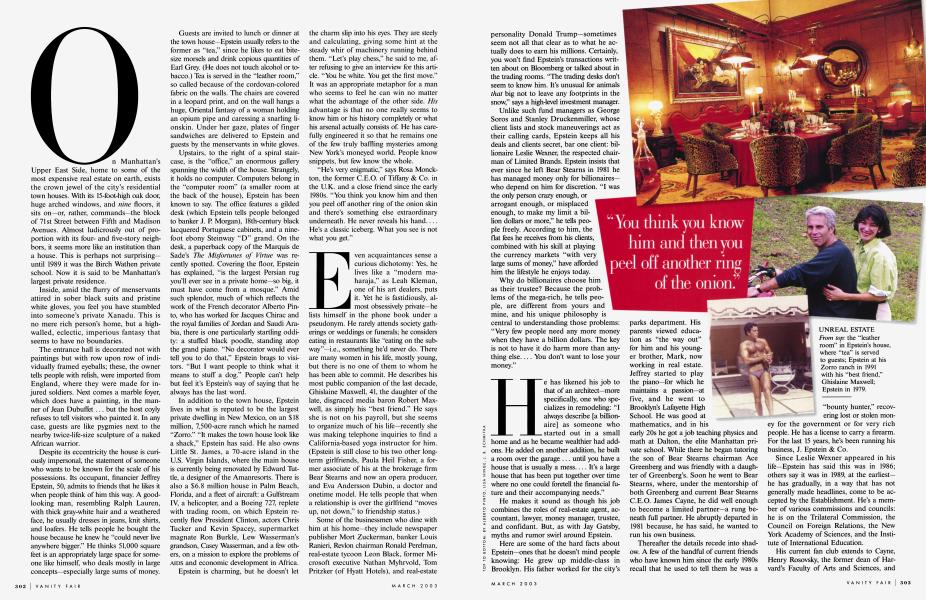

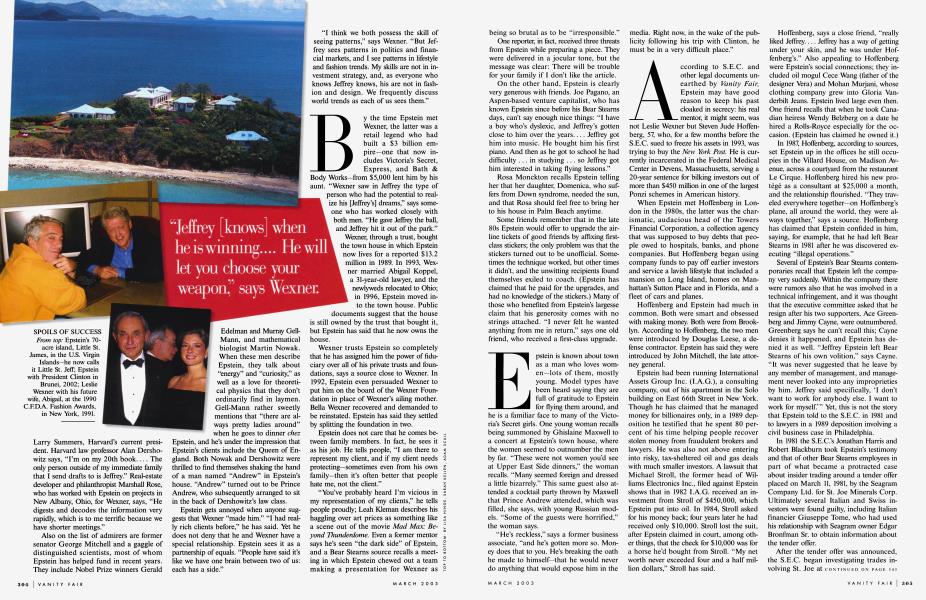


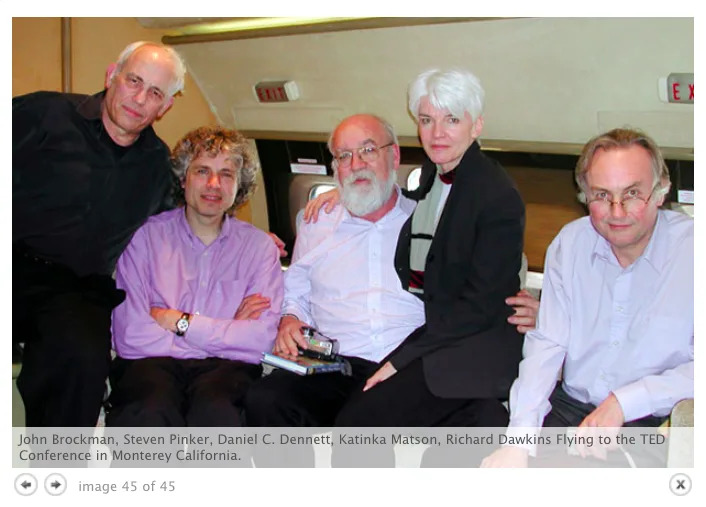
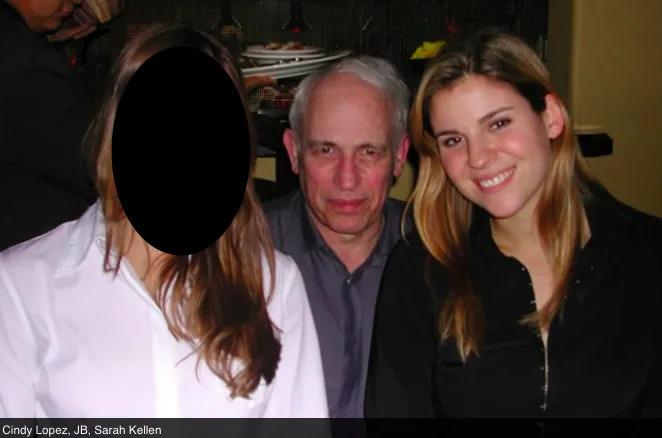





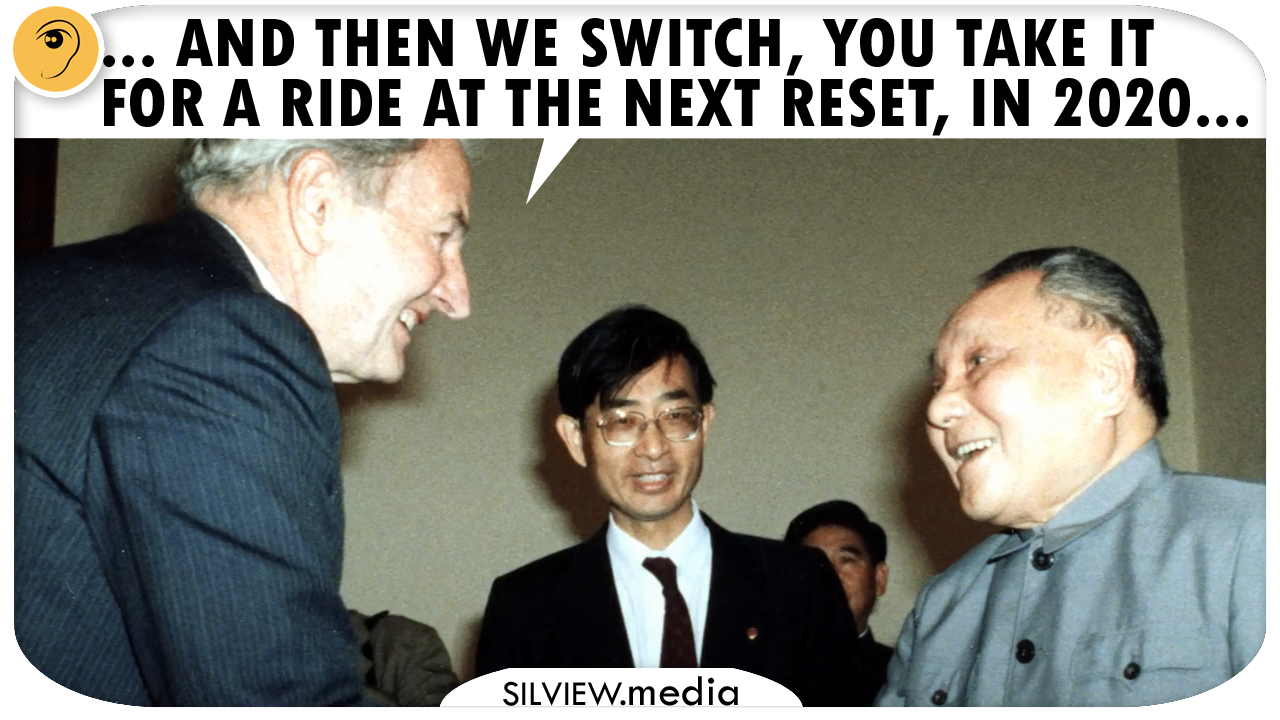
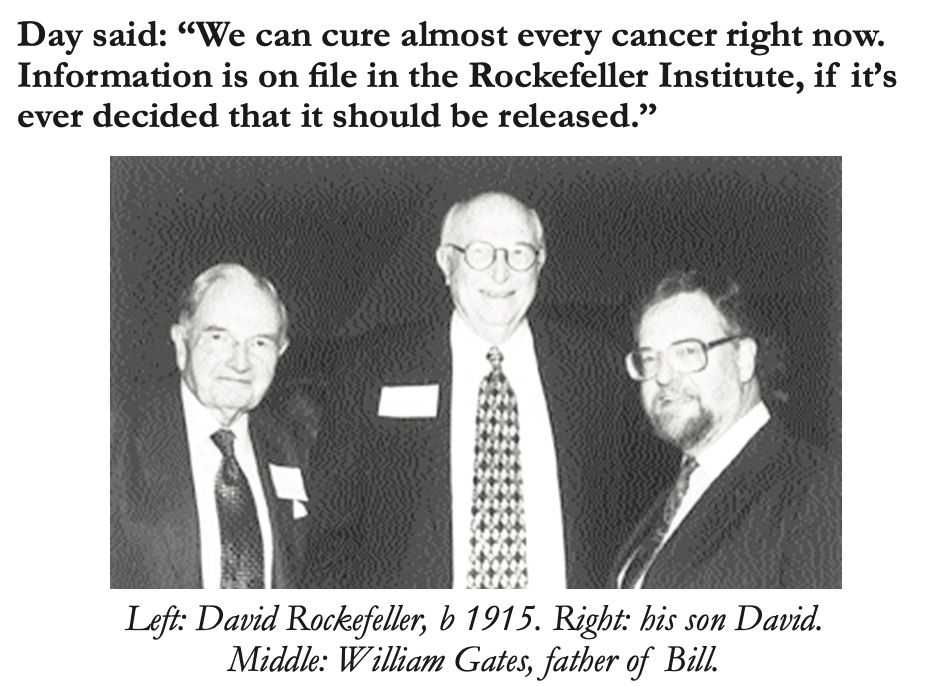
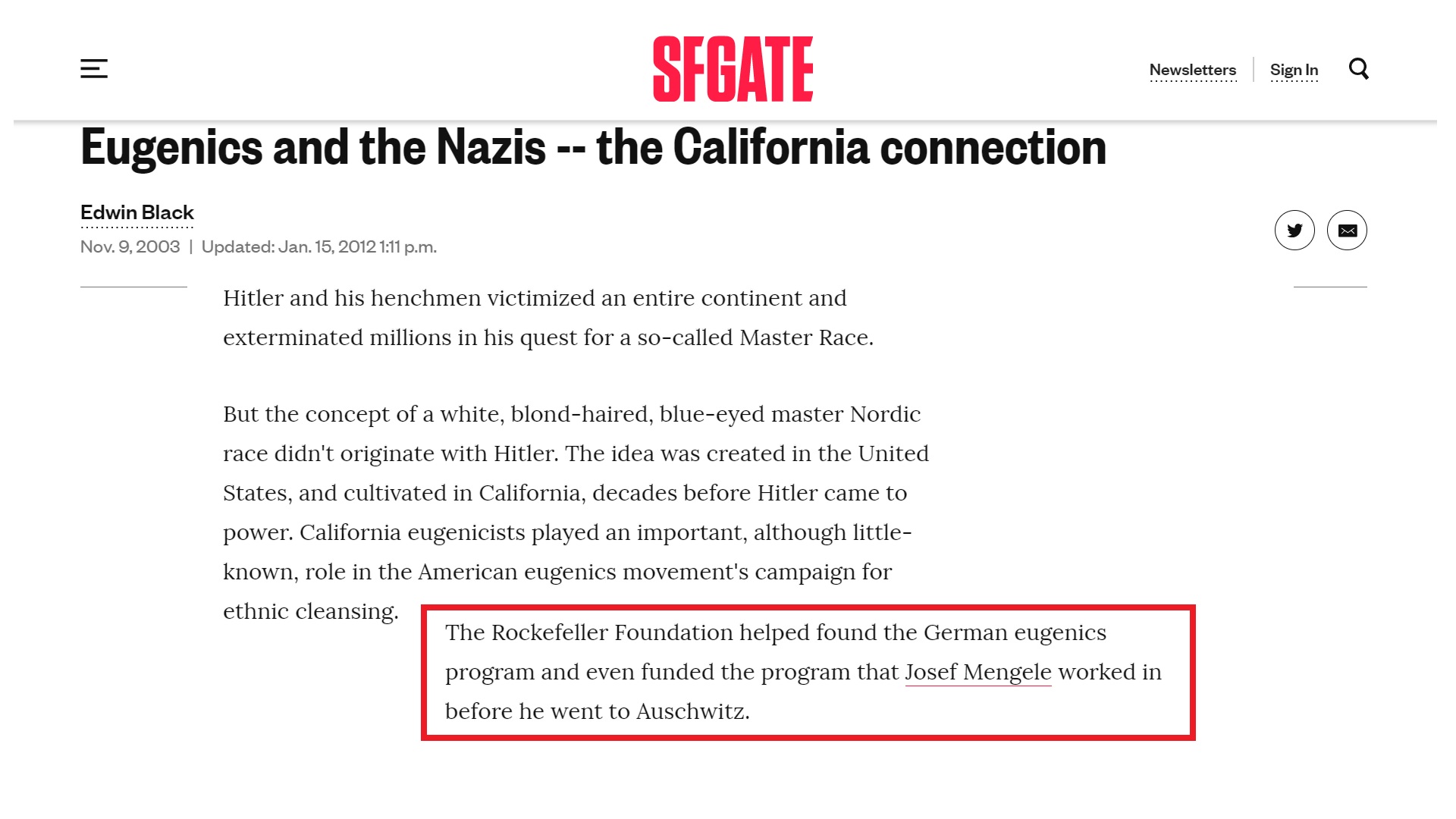





 SILVIEW.media